Category Archives: media news

Melania is MIA on her key issue as first lady

Melania Trump made a big speech during her husband’s campaign for the presidency.

She said she wanted to craft a theme as first lady that dealt with cyber bullying. Too many children are being bullied over the Internet and that if Donald Trump were elected president, she would take up the important cause of ending the scourge. She would use her position as first lady as a bully pulpit.

That’s what she said.

Since then? Well, she’s gone missing in action.

Yes, yes. I know about all the snickering and tittering about Mrs. Trump’s first lady theme.

“You need to start at home, Mrs. Trump. Tell that husband of yours to quit using Twitter to insult others,” came some of the response. I took note of the irony, too, in this blog at the time of her declaration.

Setting all that aside, the issue is an important one and the first lady of the United States — whoever she is — maintains a high-level platform to deal squarely and forthrightly with the key issues of our time.

Cyber bullying is one of them.

I’m still waiting to hear about the formation of a task force. Or about high-powered meetings with Internet executives at the White House. To my knowledge, the first lady hasn’t scheduled highly visible meetings with educators about what they are doing in their schools to deal with this crisis.

The first lady has dropped off the grid. She has kept a low profile while her husband continues to make outrageous statements about his political foes, his immediate predecessor, the media and anyone else who says critical things about him.

I am one American who would welcome at least a temporary diversion from all this chaos and madness. The first lady pledged to use her office for a seriously important public cause.

Many of us are still waiting, Mrs. Trump.

Former life offers humbling reminder

This is the latest in an occasional series of blog posts commenting on upcoming retirement.

I am living a life in two parts.

The first was geared toward crafting a career; the second is developing a life beyond that career.

As I move farther into the second part of life, I find myself intersecting with what I used to do, when I “worked for a living.”

I work part-time for an auto dealership in Amarillo. My job is to work with customers as a service department “concierge.” I wear a name badge. Customers walk into our service waiting area and some of them spot my name tag and will say something like, “Hey, aren’t you the guy who worked at the newspaper?” I tell them yes.

We engage in some small talk that involves my former job, which I left more than four years ago.

Why mention all of this? I guess it is to acknowledge publicly how humbling it is to realize that what I used to do — which was write editorials and columns while editing the Opinion page of the local newspaper — had some measure of impact on people’s lives.

I find that gratifying and — as I think about it — a bit unnerving.

The gratification comes as people still recognize my name all these years after I resigned my post at the Amarillo Globe-News. It gives me no small level of satisfaction to believe I had some impact on those who see a name they recognize from the newspaper.

I don’t presume that the impact was always a positive one. I occasionally hear from those I meet who tell me “I didn’t usually agree with your point of view, but I read it.”

They read it. That’s all that matters. I am not kidding about that. I always knew that people’s minds don’t change because of something they read. I also know that most of us have our own world view and I never should expect to change anyone’s mind any more than my own mind would change if I read something with which I disagree.

To be sure I get a bit unnerved about these meetings, too. I don’t freeze. I like to think I can engage most perfect strangers in collegial conversation. The unnerving comes when I try to cope with these perfect strangers recognizing my name in the first place.

I joke with some of them that the ethnic sound to my name is what sticks in their memory. Oh, no, they respond. That’s not it. OK. I’ll accept your answer.

The second part of the life I intend to pursue with my wife awaits. It’s just difficult at times to shake that first part loose. I enjoy reliving that prior life.

The first part is likely to disappear when we move on down the road.

We are getting ready for that moment.

Getting ‘conversant’ in computer speak

This next blog post is going to sound perhaps a bit boastful.

If so … that’s just too damn bad.

High Plains Blogger crashed inexplicably this morning. I couldn’t open it up. I couldn’t post anything new. I was struck. Frozen. High-centered. I called one of my sons, who’s in the business of trouble-shooting people’s computers. He pointed me to the outfit that “hosts” this blog.

I called GoDaddy. Three clicks on the cell phone and I was speaking to a human being, a living, breathing young man.

He asked me about the nature of my call. I told him.

Then, as I was explaining the situation with my blog, how it crashed and how frustrated I was becoming at being unable to restore it, it occurred to me — in real time — that I was communicating effectively with a young man who is fluent in another language altogether.

Computer speak is a language that I do not to this very moment understand fully. It contains a lot of jargon that only computer techs/geeks understand. It’s almost like lawyers, doctors, engineers — for that matter, journalists — only understand. They speak in coded language designed to facilitate problem-solving.

I’ve had previous discussions with computer techs in which I’ve had serious trouble making my case. I have unable to state with any clarity the issue at hand. I’ve apologized more times than I can remember to these 20- or 30-somethings about my ignorance. Without fail, they chuckle and tell me, “That’s all right, sir. I understand. Take … your … time.”

So, I do.

However, today I was able to blurt it out with relative ease — with “relative” being the key word.”

I will make zero pretense at being fluent in this kind of language. I will consider myself to be minimally conversant.

Both of my sons are much better at this language than I am. I get it. That’s the way it is. And I expect my 4-year-old granddaughter to pick up on this language in due course. Indeed, she well might be learning the basics already.

However, today marked something of a milestone for this old timer as I got through two relatively painless phone conversations with young computer techs.

I don’t speak their language entirely. At least, though, I can declare myself to no longer be a total and utter doofus as it regards this computer lingo.

Don’t ask me, though, what “widget” means. I’ll need more time.

Hoping for a cure for Trump Fatigue

I am going to steel myself for a lengthy, winding and probably tiresome period as the media continue to report on the myriad troubles bedeviling the Donald John Trump administration.

Is there a cure out there for what looks like a case of acute Trump Fatigue?

If someone can find it, let me know … please!

Trump’s time in office is all of six weeks old now. Every single day seems to produce something of consequence. It might be relatively minor. It might be, oh, yuuuge.

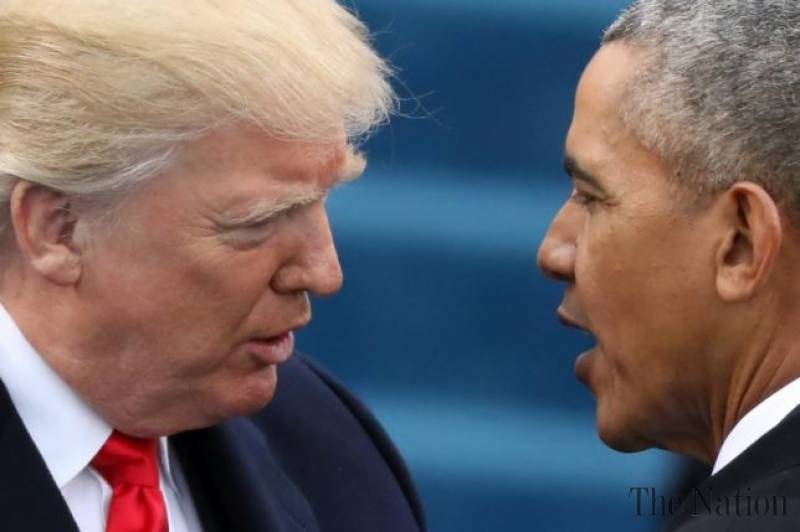
The biggest event so far has been the president’s baseless, evidence-free assertion that his predecessor, Barack H. Obama, ordered a wiretap of the Trump Tower offices in New York City.

The former president has denied it. The FBI director, James Comey, has asked the Justice Department to ignore it. Now the president has called on Congress to investigate it.

It all centers on those damn Russians and whether they sought to influence the 2016 election — and whether they colluded with candidate Trump and his team as they were seeking to undermine Hillary Clinton’s campaign.

Folks, this battle is just beginning and for those of us out here who have an interest in good government, public service and the once-noble craft of politics, we are heading for an ugly, raucous, tumultuous, possibly critical time in our nation’s history.

As the essay attached to this blog notes, we are entering uncharted waters as it regards the presidency of the United States.

Here it is.

So, the Trump administration begins where — as some have noted — the Nixon administration ended in August 1974. Think about this for just a moment.

The Watergate break-in occurred in June 1972. The media barely covered it at first. Then one tip led to another and two years later, the House Judiciary Committee approved articles of impeachment, a key Republican senator — Barry Goldwater — told President Nixon he didn’t have any Senate support to acquit him if the case went to trial, and then the president quit.

Trump has been in office for just a few weeks and the questions are swirling around him with increasing volume and velocity.

The president seemingly always has been keyed toward finding ways to bring attention to himself. Well, now he has the whole world watching and waiting for the next chapter to unfold in this amazing drama.

If only we can stand it.

In the meantime, I will await the miracle cure for Trump Fatigue.

Tweets diminish Trump’s ‘moral authority’

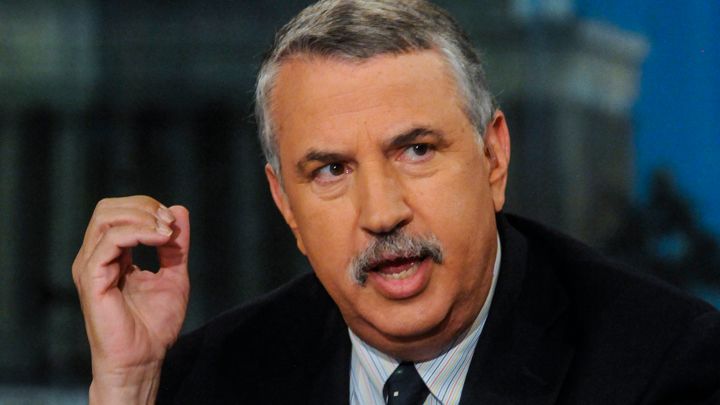
Thomas Friedman is a journalist of considerable reputation.

He might, in the words of Donald J. Trump, be an “enemy of the people,” but the New York Times columnist has a well-established base of knowledge of world affairs.

Consider his take on the president’s use of Twitter as a primary form of communication.

Friedman appeared this morning on “Meet the Press” and he asserted that Trump’s “moral authority” is being damaged by his random rants that go out in the wee hours from wherever he happens to be at the moment.

He noted that the president is going to Europe soon to meet with other heads of government and heads of state. They are our allies. Our friends. Our partners.

How will the U.S. president respond to these meetings? What might he say about President So-and-So or about Prime Minister What’s-His-Name?

Does the president’s Twitter fetish diminish the trust that these world leaders have in the head of the greatest nation on Earth?

Friedman believes Trump’s use of this social medium ultimately could cause great damage to this country’s standing among other world leaders who depend on America to be the source of reason, strength and wisdom.

Trump’s demonstrated careless use of Twitter undermines all of it.

The president is playing a dangerous game.

It’s official: Trump has blown himself apart

After the latest and “greatest” Donald J. Trump tweet-storm — this time regarding his immediate predecessor as president of the United States — I am compelled to ask a simple question.

Can someone explain to me as if I’m a 5-year-old why in the name of all that is holy did 62 million Americans vote for Trump as president?

Trump now says Barack Obama wiretapped the new president’s offices at Trump Tower in New York. He once again offered no evidence. No proof. Nothing to substantiate a single idiotic word he sent out via Twitter.

What’s more, then we get U.S. Sen. Lindsey Graham, a South Carolina Republican — and former GOP presidential opponent of Trump, saying he is “worried” about the president’s moronic accusation.

What the hell does that mean, senator? Worried? About what?

I can’t tell if he’s worried that the president would resort to such idiocy or he’s worried that there might be something to what he has alleged.

“Terrible! Just found out that Obama had my ‘wires tapped’ in Trump Tower just before the victory. Nothing found. This is McCarthyism!” Trump said in one of his tweets.

President Obama, of course, has denied any such thing ever occurred.

At issue, in case you’ve forgotten, is whether the Trump campaign had any improper or illegal contact with Russian government officials during the campaign or immediately afterward — and before Trump took office. Did they talk about the sanctions that the Obama administration had leveled against the Russians because 17 U.S. intelligence agencies believe they sought to influence the outcome of the election?

Trump now has flipped his beanie. His butter has slipped off his noodles.

Some of us out here warned about Trump’s temperament, his judgment, his fitness for the job he won. The very idea that the president of the United States would launch this Twitter tirade and accuse his predecessor of breaking the law is — all by itself — enough to disqualify this individual from holding any public office.

Then again, I thought so way back when he said Sen. John McCain was a “war hero only because he was captured” by the North Vietnamese and beaten to within an inch of his life while being held captive during the Vietnam War.

My question still stands: How did this clown win a presidential election?

Twitter becomes a disgusting weapon

This is one of the things I hate about Twitter.

It can be used for disgraceful purposes, such as what a Chicago man did the other day. Fortunately, it cost him his job.

Daniel Grilo went on Twitter to make a disgusting commentary on the widow of a Navy SEAL who (a) had been killed in combat and (b) had been invited to hear Donald Trump’s speech to a joint session of Congress.

The president called attention to Carryn Owens, wife of slain SEAL William “Ryan” Owens. She stood and cried while the audience cheered for her. I guess Grilo didn’t like it. So he posted something utterly distasteful about what he had witnessed on television. He tweeted: “Sorry Owens’ wife, you’re not helping yourself or your husband’s memory by standing there and clapping like an idiot. Trump just used you.”

That’s the bad news. The good news — from my standpoint — is that the financial firm for which he was set to start work dismissed him.

I hate a lot of things about Twitter … although I do use it myself. I have fired off more than 14,600 tweets over the years, but I have sought to avoid the kind of personal insults that we too often read on this social medium.

We all get 140 characters to say whatever it is we want to say. I try to be more discreet than the idiocy fired into cyberspace by the likes of Daniel Grilo.

Grilo did apologize to Mrs. Owens and to the president in subsequent tweets. I’m sorry to inform you, dude, the damage was done and as an old friend once told me, “You cannot unhonk a horn.”

VP used his private e-mail server? Why, I never …

Do you mean to say that Vice President Mike Pence, when he was governor of Indiana, used his private e-mail account to conduct public business?

Moreover, do you assert that then-Gov. Pence’s private server was hacked and that some sensitive material might have gotten out, possibly into the wrong hands?

OK. Where are the calls to “Lock him up!” Do you hear them? Neither do I. Nor do I expect to hear them.

Still, this is pretty serious stuff. If it was serious enough for those on the right to chant “Lock her up!” when it involved Hillary Rodham Clinton’s use of a private server while she was secretary of state, then does the former governor of one of our 50 states deserve to be roughed up in such a manner?

The Indianapolis Star first reported it.

Pence’s office said other Indiana governors had used their private servers as well. I guess that means it was OK for Pence to do it. Indiana law doesn’t prohibit such an occurrence. For that matter, there’s no federal law that prohibits secretaries of state from doing so, either. Indeed, Clinton said previous secretaries had used personal e-mail accounts.

I do not yet know to what extent the Indiana governor’s office produces material that would jeopardize national security. As for Clinton, her use of a private account was scrutinized thoroughly by the FBI, which determined — not once, but twice — that she didn’t do anything illegal.

This matter involving the vice president, though, does interest a lot of us because he was so very vocal during the 2016 presidential campaign about Clinton’s e-mail habits.

Karma can bite one right in the rear end.

NPR far from being a ‘propaganda’ vehicle

I hate disagreeing with one of the great editorialists of our time, but I feel the need to make a point or two about a news medium that is about to expand its presence in the Texas Panhandle.

Paul Greenberg, a winner of the Pulitzer Prize and a man I consider to be a friend, has referred to National Public Radio as “National Propaganda Radio.”

Ouch, man!

Greenberg is a noted conservative columnist who works these days for the (Little Rock) Arkansas Democrat-Gazette. So, his view of NPR perhaps is tainted a bit by his own political leaning.

The Panhandle version of NPR, High Plains Public Radio headquartered in Garden City, Kan., is set to launch an expanded news/information service that will be located at 94.9 FM on the radio dial. It will broadcast news 24/7. HPPR is having a ceremony on Monday at its downtown Amarillo office to mark the occasion.

This is a big deal on a number of levels.

Understand that the Texas Panhandle is as right wing in its outlook as any region in the country. It once was known to be fertile ground for isolationist groups such as the John Birch Society, the folks who disdain the United Nations, fearing it’s a cover for a worldwide takeover of every nation’s sovereignty.

But HPPR sought contributions from listeners in the region to launch the all-news system. It received them.

Public radio long has been the bogeyman of right wingers, who insist that it’s nothing but a liberal mouthpiece, that is spouts lies, tilts the news toward the left, that it serves as a propaganda organ for squishy liberal thinkers.

As Col. Sherman T. Potter would say: buffalo bagels!

A friend and former colleague of mine who used to work at HPPR in Amarillo once told me that NPR’s gurus made sure that on-air news presenters and reporters avoided using the term “reform” to describe the Affordable Care Act. “Reform,” my friend said, implies an improvement over existing policy and NPR wanted to be sure to avoid the appearance of bias in its reporting of this highly controversial public policy. NPR’s preferred term was “overhaul,” he said. Fair enough.

I learned long ago when I started my career in print journalism that bias — without exception — is a product of one’s own world view. If you disagree with someone else’s view, then that person is “biased.” One rarely sees or hears of people acknowledging their own bias. I received a good bit of that sort of criticism during nearly four decades in journalism, most of which I spent writing opinions for newspapers.

Do I have my own bias? Sure I do. Do I gravitate toward certain news media over others because I perceive some media taint their news with “bias”? Yes again.

Public radio, though, is a different animal altogether. Its presentation of news is as fair as fair gets. It even has fans and followers who often don’t want to acknowledge it.

I recall a conversation I had with a key aide to U.S. Rep. Mac Thornberry, the Clarendon Republican who has represented the 13th Congressional District since 1995. This source — who also happens to be a friend — actually whispered to me over the phone that many on Thornberry’s staff “listen to NPR.”

Why are you whispering? I asked. My friend said, “Oh, I don’t know. It’s just what we do around here.”

Fear not. NPR isn’t out to poison anyone’s mind. It’s here only to provide news we can use … in whatever way we choose.

And it damn sure isn’t propaganda.

Journalists enter increasingly hostile environment

Those of who toiled as journalists — whether print or broadcast — have been forced to cope with the perception that the public hasn’t thought too much of us and the work we do.

There was a longstanding joke in the old days that reporters and used-car sales reps battled it out for the bottom spot on the public opinion totem pole.

These days, we now have the president of the United States tossing dung on top of reporters, calling them the “enemy of the people,” accusing them of outright dishonesty, suggesting they conspire to make up “fake news” and peddle it as the real thing.

Man, it’s even tougher these days to do the job I did for nearly 37 years.

I recently made the acquaintance of two young reporters for the Amarillo Globe-News, my final stop along my lengthy journalism journey — which ended on Aug. 31, 2012. They are both earnest and eager young reporters. I don’t know this as fact, but my sense is that the AGN is their first job out of college.

It’s a different type of profession now than it was when I got pointed in that direction way back when, before The Flood, or so it seems.

I never considered myself to be anyone’s “enemy.” My desire was to make a difference in the world and to chronicle events in my community and report them to the public. I spent most of my career in opinion journalism, but many of the principles that apply to reporting — such as fairness and accuracy — surely applied.

That was in the early 1970s. I had just finished a two-year hitch in the U.S. Army. I came home in the late summer of 1970, settled in with Mom and Dad and prepared to re-enroll in college the following January.

One evening, at dinner with my parents, Dad asked me if I had considered what my college major should be. I said I hadn’t thought it through. He asked, “Have you considered journalism?” I asked him, “Why that?”

He complimented me on the letters I wrote from Virginia and Vietnam, where I had served during my time in the Army. He called them “descriptive” and said he would share them with family members and friends. He thought journalism would be a good fit, enabling me to put my writing ability to good use.

“Sure thing, Dad,” I said. “I’ll consider that.” I did. I enrolled. I signed up for some mass communications classes. The bug bit me in the rear and, by golly, I was hooked. Of course, I learned right away that journalism isn’t just about whether one can write clearly; one needs to be able to learn how to gather information and determine its importance to the public.

I wonder today how many parents are having that kind of discussion with their college-bound children. I wonder if moms and dads are telling their kids to pursue this craft. Or have they bought into the tripe being peddled by the president that to be a reporter is to declare war on “the people,” to be their “enemy.”

For that matter, did those two young reporters I met recently whether they got that kind of pep talk from Mom or Dad at the dinner table.

The craft is changing rapidly. Newspapers are emphasizing their “digital content.” They are becoming — to borrow a distasteful term — “click whores” that are more interested in how many people click on their websites than in the number of people purchasing a newspaper.

I do wish all young reporters the very best as they seek to make their own way in this changing — and increasingly hostile — climate.