Category Archives: media news

Happy to be relieved of this media stress

Those of us who studied journalism in college and prepared to take up that noble craft never saw it coming. None of us knew in the Olden Days what might lie ahead for media in all forms.

Thus, it is with great relief that I heard this week about another possible mega-media merger involving two significant newspaper groups: Gannett and Gatehouse Media.

I got a message from a good friend, a seasoned reporter in Corpus Christi, who told me about talks involving Gannett and Gatehouse. The Caller-Times’s parent company, Gannett, well might “merge” with Gatehouse, creating — to say the least — a highly uncertain climate among the professionals who work for both media companies.

It’s been an unsteady voyage over many years for media outlets all across the nation, indeed the world!

Merger on its way?

My friend believes he’ll survive the turmoil. He has plenty of skills that he thinks will transfer to whichever company takes the reins at the Corpus Christi Caller-Times. But he says the uncertainty among staffers is causing plenty of heartburn, sleeplessness and worry.

I got out of the business in August 2012. The Amarillo Globe-News, the final stop on my 37-year journey in print journalism, was suffering from the consequences of competing in the new media age. The G-N corporate ownership at the time, Morris Communications, sought to make the transition from largely print to mostly digital presentation of news and commentary. It didn’t work out for Morris, which sold all 13 of its newspapers to Gatehouse, which has managed to decimate the G-N reporting and advertising staffs. That all happened, of course, after I bid farewell; I got chewed up in a company “reorganization” launched by Morris.

That was then. The here and now has put me — along with my wife — into a whole new environment. We are retired, enjoying life and watching with a fair amount of trepidation as the media waters continue to roil.

I pray for my former colleagues. I wish them well and hope they and their corporate gurus can look farther into the future than any of us ever did back when we were starting out.

Fox & Friends turns ‘big loss’ into a ‘big win,’ go figure

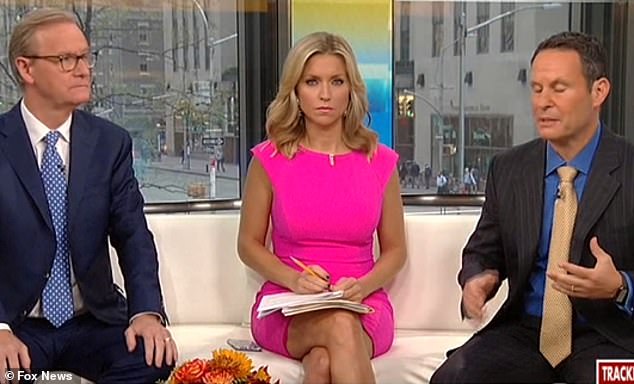
If you had any doubt at all — which is impossible, of course — about why Donald Trump loves the Fox News Channel, you ought to get a load of some of the commentary that came from the co-hosts of “Fox & Friends,” the network’s morning gab show.

The New York Times published a report chronicling how Trump lost more than $1 billion for a decade leading up to 1994; for eight of those years he didn’t pay any federal income taxes. The report has been seen generally by political, business and media analysts as a big-time embarrassment for the self-proclaimed deal making genius.

Oh, but then the “Fox & Friends” sycophants weighed in the other morning. Ainsley Earhardt gushed to her “Friends” colleagues Steve Doocy and Brian Kilmeade that the losses show what an “impressive” risk-taker Trump was at the time. “If anything, you read this and you’re like ‘wow, it’s pretty impressive, all the things that he’s done in his life,'” Earnhardt gushed.

No, it’s not impressive, Ms. Earnhardt. It reveals that Trump has been lying through his teeth at Americans about his business acumen.

That won’t dissuade the president’s amen chorus at Fox. They love the guy. They give him a pass on all the hideous behavior he has exhibited during his brief time in politics. One of FNC’s more egregious examples of pro-Trump obsequiousness occurred when commentator Sean Hannity acted as an emcee at a Trump political rally.

So it’s no surprise that “Fox & Friends” would grovel at Trump’s feet when a major American newspaper blows the lid off the president’s miserable business failures.

Hey, I believe we ought to call the “Fox & Friends” critique what it is: fake news!

Some critics actually do hand out credit

I had a fascinating exchange of messages recently with a gentleman who is a frequent critic of this blog. He lives in Amarillo and he thinks I am too harsh and hateful toward Donald Trump . . . and he tells me so quite frequently.

I don’t have a problem with this fellow’s comments. During our brief private exchange of messages, though, I did tell him something I want to share with the rest of the readers of High Plains Blogger.

I told this fellow — who, by the way, I don’t really know — that I appreciate that he is willing on occasion to give me credit for the blog posts with which he might agree. I also mentioned to him that I have a number of critics who don’t extend that courtesy.

Why mention this? I do so to illustrate, I suppose, the ups and downs of writing this blog. Sure, I appreciate the kind words I get from those who might lean in the same political direction that I do. I also appreciate the criticism of those who tilt in the other direction. Many of their critiques are thoughtful and I do heed them.

I adopted the philosophy quite a while ago when I started this blog that I would avoid (most of the time) engaging in a back/forth dialogue with critics. The way I look at it, this blog gives me a forum to throw out my point of view and offers those who care to respond to do exactly that. I believe that once is enough, whether it’s from me or from someone who wants to challenge a point of view I have expressed.

I told my critic, too, that arguing with those with contrary views usually is unproductive. I won’t change their mind; they won’t change mine. So, there’s next to zero point in trying to persuade someone I am totally virtuous and that they’re full of sh**.

This individual and I have expressed a desire to meet one day. That might happen. My wife and I get back to Amarillo on occasion. I do hope our paths cross one day.

As for his criticism, keep it coming . . . especially if he’s willing to give me some credit even once in great while.

Time of My Life, Part 32: In the company of media greatness

The name of a one-time Texas media giant came up today during a discussion I had with a dear friend of mine and it prompts me to look back on an extraordinary meeting I had with this individual back when I wrote editorials and edited the opinion page of the Beaumont Enterprise in Southeast Texas.

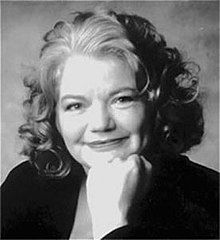
You remember the great Molly Ivins, I’m sure. She died of cancer in 2007. She was just 62 years of age.

Ivins was an unreconstructed liberal. And she was damn proud of it! She is the originator of at least two quintessential quips regarding politicians she railed against regularly: She was fond of referring to Texas Gov. George W. Bush as “Shrub”; then she hung the label of “Gov. Goodhair” on Bush’s successor as governor, Rick Perry.

Those legendary nicknames came after I had left Beaumont for the Texas Panhandle. But one afternoon in the Beaumont Enterprise newsroom brought me up close and personal with Molly Ivins.

She had come to Beaumont from Austin to cover the state of politics in the Gulf Coast community. She wanted to watch the Beaumont City Council in action. Ivins was not impressed, as I recall, with the quality of Beaumont’s municipal leadership, let alone its governing body.

I recall one column she wrote at the time in which she ridiculed the late Councilman Andrew P. Cokinos, the youngest of four brothers, all of whom had been players on the Beaumont political stage. She wondered about the middle initial “P.” that all the brothers used. She knew the “P” stood for “Pete,” and poked fun at them in general, and at Andrew in particular.

She wandered into our newsroom one afternoon. My memory is shaky at times, so I cannot recall the precise date of that meeting. I believe it was in the late 1980s or early 1990s.

She held court in the newsroom for well more than an hour. She regaled the journalists gathered around her with story after story of the characters she encountered during her years as a Texas journalist.

She got away somehow with crafting copy that no one else could. She wrote with biting humor, but lurking just below her trademark sarcasm one could find a serious theme to her commentary, as she was a serious journalist, although political conservatives (chiefly Republicans) usually found a way to belittle her.

However, in those days when newspapers actually mattered greatly, when they were relevant to telling communities’ stories, Molly Ivins was a giant among Texas journalists.

To be candid, I always envied her writing skill and more than once I lamented under my breath, “Damn, I wish I could write like that.” I was glad I was able to tell Molly Ivins that very thing to her face that day in Beaumont, Texas.

Redefining the term ‘cutthroat’

John and Dathel Georges are trying to redefine the term “cutthroat” as it applies to describing media purchases.

The couple that owns the New Orleans Advocate has just purchased the once-might New Orleans Times-Picayune — and has laid off the entire Times-Picayune staff! All of ’em are gone, or will be gone soon.

This is the way it has become, it seems, in the world of print media.

The Times-Picayune once was the newspaper of record for The Big Easy. It became a media powerhouse, reporting on the ravages brought by Hurricane Katrina in 2005.

Then social media, the Internet and cable news began taking its toll. The T-P reduced its publication schedule to three days a week. Its circulation plummeted. As did its ad revenue.

The Advocate continued on. It became the scrappy alternative the Newhouse family’s once-formidable media presence.

Now the Advocate — owned by Mr. and Mrs. Georges — has taken over the T-P. It will restore its seven-day-a-week publishing schedule.

The T-P staff, though, won’t be part of the story.

Oh, my, this story hurts.

Sadly, though, it is just yet another example of how media companies operate. I once worked for a company, Morris Communications, that made a ton of bad business decisions at the top of the chain of command. When the company’s initiatives failed to bear sufficient fruit, the execs at the top decided to “punish” the staff by invoking pay cuts across the board and eliminating the company match toward staffers’ retirement accounts.

I also worked for another media group, the Hearst Corporation, that around 1988 decided to settle a major newspaper war in San Antonio. Hearst owned the San Antonio Light, which was battling with the Rupert Murdoch-owned Express-News. Hearst then purchased the Express-News.

However, Hearst then extended its “thanks” and expressions of gratitude for the battle fought by its Light staff by closing the Light and laying off its employees.

What’s about to happen in New Orleans, therefore, is not a newly contrived event. It’s happened many times before in the media business. It doesn’t make it any less disgraceful or dispiriting.

Working in the media world these days is tough, man!

I am so glad, delighted and relieved, to be free of that pressure.

Time of My Life, Part 31: Y2K? The ‘worst’ never arrived

We all remember Y2K, right? That was when Earth was supposed to fly off its axis, the sun would rise in the west, hell would freeze over and the world we knew would come to an end.

It didn’t happen. Planet Earth is still spinning around the sun, which continues to rise in the east; hell is still hotter’n hell and the world — with all its troubles — continues to keep on.

I was on duty at the Amarillo Globe-News in Texas when we entered the 21st century, but in the run-up to that big event, I was afraid for the worst. What’s more, so was my boss, G-N Publisher Garet von Netzer.

Happily, the worst never happened. However, von Netzer — a cautious, deeply conservative and hard-driving man — wasn’t about to take any chances. Yes, he hoped for the best and prepared for the worst.

We weren’t the only business in the world to go through that kind of pre-Y2K preparation. Man, it was a hell of a ride.

Our day prior the dawn of The Year 2000 unfolded quite differently than other days. We started producing pages for print before we put the afternoon Globe-Times to bed around noon on Dec. 31, 1999.

Von Netzer feared that computer systems worldwide would lock up, they would vaporize, they wouldn’t know how to log the next day’s arrival. He was concerned about whether they would even recognize “2000” as a year.

So, he decided we would button up the next morning’s Daily News early that evening. There would be no breaking news in the first edition of the Daily News to mark the new century. There would be what we called “time copy,” feature stories with no time element attached to them.

Our sports pages would have no game-day coverage. They, too, would be full of feature material.

The editorial page, which I was in charge of publishing, wasn’t affected quite so dramatically. We had plenty of appropriate commentary that didn’t depend on any time element. Our editorial for the next morning’s newspaper heralded the arrival of the 21st century and gave appropriate recognition to its importance in the history of humankind.

But by golly, we shut it all down early. I cannot recall the precise time, but I believe it was around 8 p.m.

After producing our final pages for the next day, von Netzer ordered all the computers shut down, powered off, unplugged from the wall sockets. Every computer terminal in our business went dark.

What happened when the clock struck midnight was, well, a serious non-event. Electronic calendars logged the correct year. Time didn’t stand still. The sun rose the next morning.

We went to work. Flipped the switches back to the “on” position. We were in business once again, per usual.

The frenetic pace of the previous day proved to be all for naught. Then again, what if the worst had happened?

Time of My Life, Part 30: Remembering all those colleagues

When I read stories these days about newspapers’ shrinking newsrooms, I remember how it used to be in print journalism.

I was fortunate enough to be part of two newspapers that sold enough copies each day and raked in enough advertising money to invest deeply in personnel who were assigned to cover specific issues, work specific “beats.”

The most recent present-day tale I read came from Politico and it tells the story of the Des Moines (Iowa) Register, the one-time media titan in a state where presidential politics kicks off every four years with those vaunted Iowa caucuses. The Register, as are all newspapers these days, is retrenching. It is doing as much with fewer individuals to do it.

Read the Politico story here.

In the 1980s and into the 1990s, newspapers were flush with cash. I went from a small, five-day-a-week afternoon suburban daily in Oregon City, Ore., in 1984 to a mid-sized newspaper in Beaumont, Texas. I couldn’t believe my good fortune. The Beaumont Enterprise had a huge staff of reporters. They were assigned many specific beats.

The paper had an education reporter, police reporter, entertainment reporter, environmental reporter, courts reporter, someone to cover City Hall, someone to cover county government, reporters assigned to cover surrounding communities, we had a business editor who had a reporter working under his supervision. Then we had a sports department with about 10 reporters, including someone who covered “outdoor sports,” meaning chiefly huntin’ and fishin’. We had a photo staff of around six photographers.

Then, of course, we had copy editors, line editors who assigned stories to the reporters.

Then we had an editorial page staff, of which I was a member. I went to work in Beaumont as an editorial writer. The page had an editor and a cartoonist.

The Beaumont Enterprise, as the saying goes, was a “cash cow” for Jefferson Pilot, the owners who ran the paper when I got there and then for the Hearst Corporation, which bought the paper late in 1984.

I stayed for nearly 11 years before gravitating from the Gulf Coast to the Texas Panhandle. My professional journey then took me to a post where I served as editorial page editor for two papers in Amarillo, the morning Daily News and the evening Globe-Times.

The Globe-News, as everyone called it, was as rich as the Enterprise. The staff there was as diversified and exclusive as the paper I had departed. Its reach was enormous, covering the Panhandle, eastern New Mexico, the Oklahoma Panhandle and a small slice of southwestern Kansas.

Then the bottom started to fall out. It happened in the early 2000s. The Globe-Times was shuttered. The paper began to retrench. I heard that the Beaumont Enterprise did the same thing.

But the good old days were grand, indeed. They brought lots of fun, fellowship with colleagues and a joint pride in being able to assemble a publication each day of the week.

I don’t sense as much pride these days in the publications that employed me. Neither paper has nearly the staff they had back when they were flush with money.

I just recall all those friends and colleagues who have gone on to “pursue other interests.” I think of them often and hope they’re all as happy I am now that it’s over.

Biden should channel G.W. Bush?

Mark Shields is well-known to watchers of PBS’s “NewsHour” as a regular commentator and pundit who, along with his pal David Brooks, regularly assesses the week’s political goings-on.

Shields had some good advice for Vice President Joe Biden: Don’t talk too much when trying to explain yourself over questions regarding how you “invade others’ space” by getting too touch-feely.

Biden entered the 2020 presidential race amid questions and complaints from those who said he was a bit too, um, ebullient in his treatment of them.

Even now, the former VP tends to over-talk himself while explaining his actions. Shields had a reasonable option for Biden to consider: Model your response after former President George W. Bush’s manner in dealing with some of his own past behavior.

Shields noted (and it’s in the video attached to this blog post) that when Bush ran for president in 2000, he was dogged by questions from the media about his drunk driving arrest, how he drank too much alcohol and about how he found religion and sobriety at the age of 40.

Bush developed a pat answer, Shields said, which was: “When I was young and foolish, I was young and foolish.” 

Shields said that the future president recited that mantra with such regularity and frequency that reporters got tired of asking him about it. The issue effectively faded away during the course of the 2000 campaign.

Good advice to follow? Oh, sure . . . but only if the media still lack the staying power to keep harping on an issue that can be explained in a single sentence or two.

Still hoping to serve on a trial jury

I am mildly envious of Jennifer Emily, a reporter for the Dallas Morning News.

Why? Not because she’s working and I am not. I enjoy my retired life and I trust she enjoys her gig at the DMN covering crime and the courts.

My envy is the result of Emily being selected to serve on a trial jury. She sat on a trial involving a murder case. Wow! That’s fascinating in the extreme, given that — as she wrote in today’s newspaper — she has covered more criminal trials than she can remember.

But she got the call anyway. She earned $6 for her first day in the jury box and $40 for every successive day.

Why the envy? I’ve never served on a trial jury. I want to do so in the worst way. Every time I get a summons, I call the office the day before I’m supposed to “report,” but then I’m told all jurors have been dismissed.

Damn! I have lived in five counties in two states since becoming an adult: Multnomah and Clackamas counties in Oregon; Jefferson, Randall and Collin counties in Texas. None of those jurisdictions has seen fit to seat me on a trial jury.

Emily’s story today notes that she believes her job excluded her from serving on a jury. She knows too much about the court system, she noted. I long believed I had the same cloud following me around during my years as a journalist in Oregon and Texas.

I know that my exclusion is mostly just blind, dumb luck.

Emily does note, though, that too many Texans are finding excuses not to serve. They seek excuses from the state to avoid service. She believes it’s their duty as citizens to sit in judgment of their “peers” when the call comes.

I agree with her wholeheartedly. “They want someone else to make the tough calls and take responsibility for punishing that person,” Emily writes in describing those who shirk their civic duty.

The way I look at it, good citizenship requires more of us to participate, not fewer of us. It’s much like voting. We don’t take part in elections for any number of reasons, leaving these decisions to people we don’t know . . . and those who might not share our view of where government should take us.

Jury duty is a big deal. Except that it doesn’t require too much of us.

I’m glad to see that Jennifer Emily got the call to serve. I am delighted to see that she answered that call.

I’m still waiting for my chance.

What about all those other important matters, Mr. POTUS?

I accepted long ago that Donald J. Trump prefers to communicate with Americans via Twitter. He does so frequently and too often inarticulately. His syntax is mangled. He can’t spell his way out of a wet paper bag.

But I get why he prefers that medium to talk to us. It’s unfiltered. Boy, howdy, is it ever unfiltered.

Here’s the question of the day. This individual is the president of the United States, someone with a heaping plate of issues, crises, challenges and opportunities to confront. Why in the name of good government does he spend so much Twitter energy commenting on the media, Robert Mueller, a phony “witch hunt,” or anything having to do with issues from which he claims to be “totally exonerated”?

He launches these tweet storms, attacking everyone under the big, bright sun. Where are the policy pronouncements about, let’s see — Earth Day, Social Security, national security, medical research, international terrorism, gun violence, church burnings in Louisiana (allegedly started by racists)?

You know, these issues are worth the president’s Twitter time. They’re more worth his time, energy and attention than the media and the bogus claims of “fake news,” not to mention Robert Mueller. I mean, c’mon, Trump says Mueller declared there was “no collusion, no obstruction.”

Yeah, I know. Those are highly debatable, but a president who declares extreme comfort in the moment shouldn’t be acting like someone who’s under extreme distress.

Donald Trump won’t stop using Twitter, so I won’t urge him to do so.

However, for the sake of being taken seriously, POTUS needs to redirect his social media attention to issues that matter.