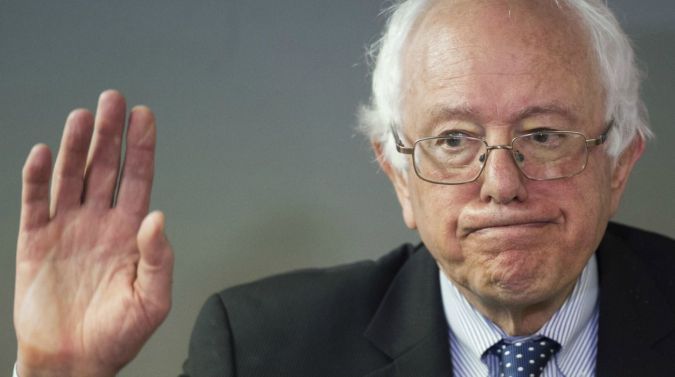
‘Democratic socialist’ sounding more, um, socialist

berniesanders-61515-1434466786

The  more I hear from U.S. Sen. Bernie Sanders, the more convinced I become that it’s time to end the qualifier when describing his economic philosophy.

The presidential candidate calls himself a “democratic socialist.”

I believe I understand the message he’s trying to convey, which is that his brand of socialism isn’t dependent entirely on the government taking care of every American’s needs.

Sanders has been using the democratic socialist label — again, in my view — to take some of the sting out of the s-word that conservatives are fond of using to describe policies such as, oh, the Affordable Care Act.

Then on Thursday night, near the end of the Democratic presidential candidate debate with Hillary Rodham Clinton, Sanders launched into a lengthy riff about the two political leaders he most admired.

He ended with Winston Churchill, but only after he described Franklin Delano Roosevelt’s tenure as president.

He told us how FDR took office in 1933 while 25 percent of Americans were out of work. We were in the throes of the Great Depression.

How did FDR get us moving again? By energizing government to create jobs. The WPA and CCC were government-financed employment programs. The money to pay for them didn’t just materialize. Americans paid for them with taxes.

Social Security became law in 1935.

Gradually, the nation began to work its way out of the Great Depression.

Then came Pearl Harbor in December 1941. Everything changed after that.

But as I listened Thursday night to Sen. Sanders go on and on about FDR’s leadership, I was struck by the belief that he was talking about socialism. Not just a form of it, but the unvarnished version of it.

I happen to share Sanders’ view that 80-plus years ago, President Roosevelt faced a terrible, miserable set of circumstances when he took his seat behind the big desk in the Oval Office. He felt he had to do something dramatic to get the country going.

Sanders also said something else at the end of the debate that I found a bit curious. He seems to believe the nation is ready for another “revolution,” that the income inequality gap of today sets up a need to create some kind of massive government infusion of money to bolster working families who are suffering while the “top 1 percent of Americans” are doing fabulously.

He wants free college education. Sanders vows to bring universal health care to every American. He intends to push for a dramatic increase in the federal minimum wage.

How does he intend to pay for it? He wants to raise taxes on all Americans.

How, then, is he going to do that with Republicans retaining control of the House of Representatives, where all tax legislation must originate?

He sounds like a socialist.

Not a democratic socialist.

He sounds like the real thing.

I believe I heard someone who is overreaching as he pulls the lever on the economic alarm bell.

FDR faced a grave economic crisis the likes of which will not confront the next president.


As GOP field thins out, so might Trump’s support

republican-elephant-668x501

An interesting dynamic might be unfolding as the Republican presidential field continues to thin out.

It involves Donald J. Trump and the support he’s been able to get so far.

I believe it’s fair to ask: Who are the voters supporting the dropouts going to endorse?

The GOP field now is down to seven candidates; it started out at 17, if you’ll recall.

Some of the so-called “establishment” candidates have packed it in. The latest significant casualty was New Jersey Gov. Chris Christie. Others have gone by the wayside and none of them appears to be friends of Trump, who’s managed to insult his way to the top of the GOP heap.

I’m wondering if Trump’s support now will dwindle as Republican voters who were loyal, say, to Christie, or Mike Huckabee, or Rick Santorum, or Bobby Jindal start looking around for someone else to support.

Ted Cruz is mining the ultraconservative voters. Marco Rubio, although now severely damaged by the battering he took in the most recent GOP debate, is on the hunt for the same folks. John Kasich, my favorite Republican, also is beginning to gather some steam. Jeb Bush also could find himself thrust into the game.

All of these individuals stand to gain from the remnants of support that rallied around the candidates who’ve departed the campaign trail.

Where does that leave Trump? With his base of support, comprising voters who somehow are infatuated with the candidate’s brashness and don’t seem to care one little bit that he doesn’t seem to possess a political philosophy on which he would govern.

Let’s just watch this thing continue to play out.

I’ve seen the polls that show Trump still leading in South Carolina. However, as we’ve seen in previous election cycles, the Palmetto State is where the GOP campaign has been known to get nasty … as in real nasty.

I’m now wondering how well Trump will hold up when the mud starts flying.


Lee Atwater’s home state: dirty tricks thrive there

maxresdefault

Lee Atwater has been dead for some time, but his legacy lives on.

The late Republican Party operative — a South Carolina native — was known as an aggressive campaigner. He was so aggressive, in fact, that many observers called him “dirty,” “mean-spirited,” “cheap.”

The GOP presidential dog-and-pony show is heading into the Palmetto State, where it appears to be quite likely that the nastiness that has punctuated the party primary campaign just might get whole lot nastier.

Oh, I remember some of the recent history relating to South Carolina.

Dirty tricks await the candidates

Perhaps the most memorable hatchet job occurred in 2000, when U.S. Sen. John McCain, fresh off his Republican primary victory in New Hampshire, ran into a dirty-trick buzzsaw.

Someone floated a bogus rumor that Cindy McCain — wife of the former Vietnam prisoner of war — had a “drug problem.” Then came another falsehood, that Sen. McCain had fathered an African-American child out of wedlock.

McCain blamed the dirty tricks on Texas Gov. George W. Bush’s campaign. It rankled McCain so badly that at one GOP debate that year, McCain told Bush to “take your hand off” the senator’s arm.

Lee Atwater was known as a tough-as-nails operative. He died of cancer in 1991. Wherever he is today, I’m quite certain he’d wish he could return to take part in what is likely to become a bloodbath.

It’s the South Carolina way.

So much for southern gentility.


Texas AG facing serious ethical probe

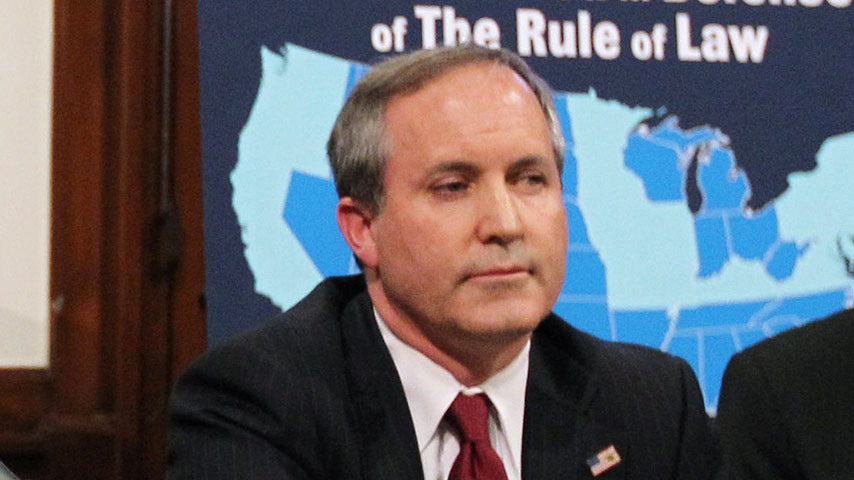
AUSTIN, TX - FEBRUARY 18: Texas Governor Greg Abbott (2nd L) speaks alongside U.S. Sen. Ted Cruz (R-TX) (L), Attorney General Ken Paxton (2nd R), Lieutenant Governor Dan Patrick (R) hold a joint press conference February 18, 2015 in Austin, Texas. The press conference addressed the United States District Court for the Southern District of Texas' decision on the lawsuit filed by a Texas-led coalition of 26 states challenging President Obama's executive action on immigration. (Photo by Erich Schlegel/Getty Images)

Ken Paxton took a serious oath when he became the Texas attorney general.

He put his hand on a Bible and vowed to preserve, protect and defend the Constitution of the United States and of the state.

Then the U.S. Supreme Court did something Paxton — I presume — didn’t expect. It ruled that gay marriage was legal in all 50 states. All of ’em. Including Texas.

How did Paxton react? He said county clerks weren’t bound by the court ruling, that they could refuse to issue marriage licenses to gay couples if the issuance of such documents violated their religious beliefs.

Oops! Can’t do that, said the State Bar of Texas.

It’s now going to launch an ethics investigation to see if Paxton — who’s already been indicted for securities fraud by a Collin County grand jury — violated his oath.

Well, of course he did!

If I were able to make a call on this, I’d declare that the AG broke faith with the oath he took. So did that county clerk in Kentucky, Kim Clark, who refused to issue marriage licenses to gay couples and who spent some time in jail because of that refusal.

What I can’t quite fathom is how these elected public officials feel they can get away with refusing to serve all their constituents. Paxton is a statewide officeholder, representing 26 million Texans. He won election in 2014 and then swore to follow the laws of the land. Not just those with which he agrees.

The Texas bar would seem to have an easy decision on its hands as it regards whether Paxton violated his oath of office. The tougher decision will be in the sanction it should level against him.

I am not going to say he should be removed from office.

Honestly, though, it baffles me constantly that these public officials — who get paid to represent every constituent — think they can select which laws to obey and which laws to flout.

That oath is clear. They cannot make that choice.

At all.


Gov. Christie goes out with a bang

christie-vs-rubio-rivalry-23620

As I ponder the latest round of exits from the Republican Party presidential primary field, I am struck by the nature of one departure in particular.

So long, New Jersey Gov. Chris Christie, but your bowing out is one for the books.

It’s not the statement you made. It was fairly typical.

It was your final act on the stage.

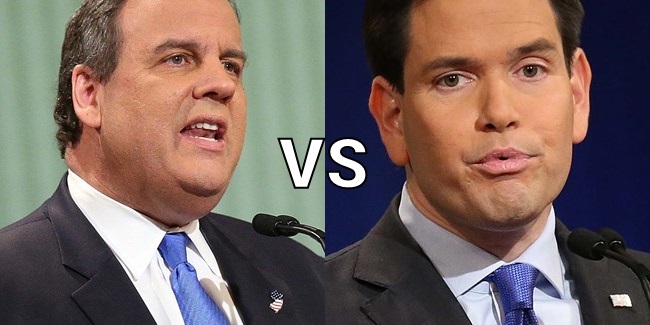
Christie managed to inflict potentially mortal political wounds on Sen. Marco Rubio during a ferocious exchange in advance of the New Hampshire primary. He exposed Rubio’s lack of experience and his robot-like demeanor. Christie questioned whether Rubio had the chops earned during his single term in the Senate to ascend to the highest office in the land.

He did a masterful job of skinning a competitor alive.

What happened then? Rubio finished far back in the field in the primary that was won by Donald J. Trump. As for Christie, he got zero bounce for his effort. He, too, finished in single digits.

I am sorry to see Gov. Christie leave the race. He’s one of the grownups in the GOP field that’s still being dominated by Trump and Sen. Ted Cruz.

At least, though, another man is now making some noise: Ohio Gov. John Kasich, who has emerged as my favorite Republican running for president. Heck, he might even be my favorite candidate … period!

But today, however, I want to doff my cap to the fiery, feisty New Jersey governor who went down swinging.


Amarillo need not replicate other cities’ success

dfwfc_phototour15

When I get a chance to travel to other cities that can boast of robust downtown districts, I often think of the community I’ve called home for more than 21 years.

Amarillo is in the midst of a serious downtown revival. They’ve broken up some pavement, leveled some land, poured some slabs and begun erecting structures downtown.

More of it is on the way.

I just returned from a few days visiting my hometown, Portland, Ore. It’s gone through a decades-long downtown revival that’s still on-going. Heck, it might never end.

That city turned a moribund downtown district into a rousing, sometimes raucous place where people enjoy a robust night life and spend a little time and money shopping in retail establishments.

I’ve written about what I saw on my latest visit to Portland. However, I do not want anyone to presume that I believe what the Rose City has done can be replicated here on the Texas Tundra.

Portland’s municipal population is approaching 625,000 residents, with about 2.2 million folks living in a sprawling metropolitan area that covers several counties — and even reaches across the Columbia River into Washington state.

Amarillo’s population is just a shade less than 200,000, with a metro population nearly double that amount.

Do we have the resources here to replicate what other larger cities have done? No.

My intent in calling attention to what Portland has done, or what Oklahoma City or Fort Worth have done with their downtown districts, is remind us here in little ol’ Amarillo that we must think creatively.

All three of the cities I’ve mentioned — Portland, Fort Worth and OKC — have done so. Oklahoma City used a public investment tax to rebuild warehouse district into Bricktown; Fort Worth used some public/private investment in creating Sundance Square; Portland scrapped a planned highway project and redirected money into creating a robust downtown district.

Amarillo has developed a Strategic Action Plan that took form after years of public hearings and discussion. It, too, involves public and private money. Indeed, the vast majority of downtown Amarillo’s progress has occurred with private money. The city created a downtown Tax Increment Reinvestment Zone that uses money derived from increases in property value within that zone to help finance needed projects.

We’re thinking creatively here. That, I submit, is the first step in a long march toward revival.

Do the city, civic and business brain trusts think we can emulate dollar for dollar what bigger cities have done? I hope not.

They shouldn’t shy away from doing what they can, however,  with what they have.

Making deals = surrender? Hardly

History_Speeches_1123_Lemay_Kennedy_Cuban_Missile_Crisis_still_624x352

Fox News sent this tweet into the Twitterverse just a little while ago: “I don’t think the conservatives in SC want to nominate another dealmaker . . .  someone who’s going to surrender . . . our principles.”

It came about from remarks that U.S. Sen. Ted Cruz made on the network regarding the upcoming South Carolina Republican presidential primary.

I think I’ll try to deconstruct that view.

Cruz, one of the leading candidates for the GOP presidential nomination, seemed to suggest that cutting deals means — necessarily — that one surrenders principles.

I’ll take issue with that premise.

Let’s harken back to the Cuban missile crisis of 1962, about eight years before the young Texas Republican was born. Some of us remember that event.

The Soviet Union began installing strategic missiles in Cuba. Our spy planes discovered them from high above the communist nation. President Kennedy received word of the missiles. He then met with his national security team and — after hearing options that ranged from doing nothing to invading Cuba — settled on a course of action: He ordered a maritime blockade of the island nation; no ships were allowed to dock in Cuba.

Finally, the Soviets “blinked,” according to the parlance of the time. They agreed to remove the missiles. JFK had warned them in a broadcast to the nation that any launch of those missiles from Cuba against any nation in this hemisphere would be seen as an attack on the United States and would result in a “full retaliatory strike” against the Soviet Union.

What did the United States give up in return? We agreed to take down some missiles of our own based in Turkey.

Did the president make a deal? Yes. Did he “surrender” his principles or those of the nation he governed? Not even close.

The tough talk coming from Cruz and others on the right and far right ignore the reality of dealing in a rough-and-tumble world.

There are times when deals provide the only way out of tense confrontations.

And, yes, they can be finalized without compromising one’s principles.


GOP now settling in on (mostly) serious hopefuls

carly and chris

Let’s call it a form of political natural selection.

The presidential primary campaign slogs on from state to state and as each state’s votes are counted, the candidates at or near the pack of the pack, bottom of the heap, end of the line — whatever — find themselves with little to zero support.

Why keep fighting?

Two more Republicans threw in the towel today: Chris Christie and Carly Fiorina called it a campaign. They’re suspended, which is a nicer way of saying they’re kaput.

Now it’s up to the GOP grownups to march on.

Except that the remaining candidates isn’t composed entirely of grownups. Donald J. Trump is the frontrunner. Enough said there.

The Democrats started this race with five hopefuls. Three of them dropped out. Now it’s just Hillary vs. Bernie.

But the Republican field still comprises seven candidates. For the life of me I’m not sure why Jim Gilmore is still in the hunt. Ben Carson also must be assessing his chances of ever attaining the White House. Jeb Bush? I had high hopes for him; silly me. Before he bid adieu to this campaign, Christie did a masterful job of peeling the bark off of Marco Rubio at the most recent GOP debate.

Let’s see, who’s left . . . after Trump?

Don’t get me started on the Cruz Missile, Sen. Cruz of Texas. My disdain for him rivals how I feel toward Trump.

My main man is still John Kasich, the serious-minded Ohio governor who’s now trying to call himself a “staunch conservative,” when in reality he’s demonstrated a nice bipartisan touch that today’s hard-core right-wingers deem to be soft, squishy, RINOish.

There will be more Republican dropouts in the next few days. Then we’ll be down to the real serious contenders.

Just as natural selection works wonders in the wild, it does have its way of creating a race where only the fittest can compete.


Wishing this kind of ‘problem’ for Amarillo

Amarillo downtown

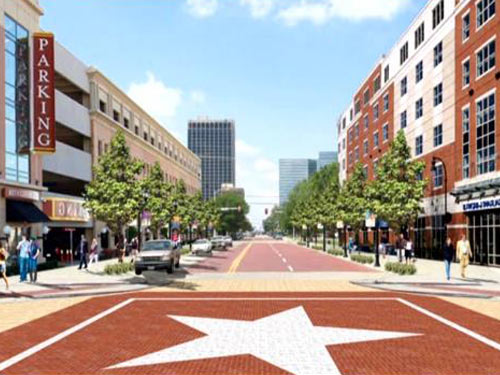
Amarillo’s quest for a new downtown district remains at the top of my awareness whenever I am fortunate enough to travel to other communities that have succeeded in their own journey.

I have just returned from Portland, Ore., a city that is in the midst of constant transition. Its downtown district’s own evolution has been something of a marvel. For my money — and excuse my bias, given that I was born and reared there — every city in America ought to look at downtown Portland’s revival as a blueprint for their effort.

Amarillo has chosen to follow a couple of other closer-to-home examples: Fort Worth and Oklahoma City. Yes, those communities have transformed their own central districts into marvelous attractions.

But I was struck by an interesting dynamic that is driving the latest Portland push. A single developer has announced plans to build several new high-rise offices in the city’s busy, crowded and thriving downtown district.

But there’s a price to pay for it.

Portland has been home to a fairly unique marketing endeavor. It is populated by a number of food carts. Folks set these carts up on street corners and peddle items such as hot dogs, soft pretzels, gourmet coffee and soft drinks.

The downtown construction is going to remove roughly half of the locations for those food carts — and some folks are unhappy with that prospective result.

The food carts have become part of the downtown Portland scene since the 1970s, which is about the time that city’s downtown revival began to draw breath.

Amarillo, of course, is a long, long way from that kind of activity in its downtown district. The recent announcement in Portland brings to mind the interesting possibilities that could become part of Amarillo’s future if its own downtown redevelopment proceeds as many of us hope it does.


Times change, and so do political party dynamics

will rogers

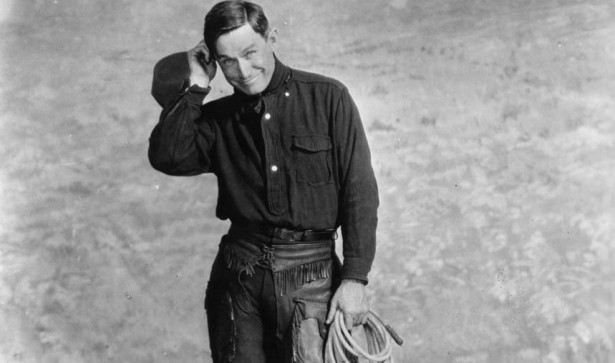
Someone once asked the late, legendary humorist Will Rogers about his political affiliation.

“I don’t belong to an organized political party,” Rogers reportedly answered. “I’m a Democrat.”

Ba-da-boom!

My hunch is that the same answer today could be given as it regards the Republican Party.

The GOP is in a state of chaos. It doesn’t know how to handle the emergence of a reality TV star/real estate mogul as a serious candidate for the Republican Party’s presidential nomination.

Donald J. Trump delivered a serious wedgie to the Republican Party “establishment” Tuesday night with his win in the New Hampshire primary. As the story linked to this blog illustrates, the GOP brass is looking for answers to coping with this guy.

He’s insulted his way to the top of the heap. He has demonstrated — by my way of thinking — zero philosophical grounding. If you’re looking for anything resembling a sophisticated answer to the myriad issues facing the candidates for president, do not expect it to come from Trump. Instead, you can expect a sound bite. A laugh line. A stream-of-consciousness rant about this and/or that.

But hey, whatever works.

It’s working for Trump and the Republican Party is grasping for ways to derail this guy.

Forty-plus years ago, the Democrats were the party in chaos. It’s liberal wing was fighting with the establishment — I suppose much like it is today — but the establishment didn’t have an answer for the insurgencies led by the likes of Sens. Eugene McCarthy, Robert F. Kennedy and George McGovern. The issue then was the Vietnam War.

The issue today is much more complex than the cost of young American lives on a foreign battlefield.

There appears to be a lot of anger among voters, which honestly baffles me. Then again, it takes a lot to make me mad.

These things do run in cycles. I don’t know if the Republican Party high command will find the answers it seeks while trying to cope with Trump. Nor do I know if whatever it is that’s driving Trump will win the day and change the party forever.

All I know for certain is that the once-chaotic Democratic Party — which, yes, has its own conflict underway — is looking peaceful in comparison to what’s roiling the Republicans.


Commentary on politics, current events and life experience