Get ready for the biggest fight of all

Supreme-Court-blue-sky

The fight over immigration?

Or the Affordable Care Act?

Or budget priorities?

How about gay marriage?

All of those battles between President Barack Obama and the U.S. Congress are going to pale in comparison to what’s coming up: the battle to find a suitable nominee to the U.S. Supreme Court.

Justice Antonin Scalia’s sudden and tragic death Saturday has caused political apoplexy in both sides of the divide in Washington.

Democrats want the president to nominate someone sooner rather than later. Republicans want the nomination to wait until after the election, with the hope that one of their own will occupy the White House beginning Jan. 20, 2017.

President Obama indicated last night he’s inclined to move forward, to nominate someone and to insist on a “timely vote.”

He is correct to insist that he be allowed to fulfill his constitutional responsibility and that the Senate fulfill its own duties.

One of the Republican candidates, Sen. Marco Rubio, said last night that no one has been appointed during an election year. He’s half-right. President Reagan appointed Anthony Kennedy to the high court in 1987; a Democratically controlled Senate confirmed him in 1988, which certainly was an election year.

Consider this, though: Justice Kennedy succeeded another GOP nominee, the late Justice Lewis Powell (picked by President Nixon). Kennedy’s appointment and confirmation did not fundamentally change the balance of the court.

This vacancy is different. By a lot.

Justice Scalia was a towering figure among the conservative majority that serves on the court. Whoever Obama selects surely will tilt to the left.

Therein lies the fight.

Senate Majority Leader Mitch McConnell, a Republican, said the vacancy should be filled after the election, adding that the “American people deserve a voice” in determining who sits on the court.

He could not be more off base. Yes, the voters deserve a voice. However, they spoke decisively about that in November 2012 when they re-elected Barack Obama as president.

Indeed, elections have consequences. There can arguably no greater consequence than determining who gets to select candidates to sit on the nation’s highest court.

The president — whoever he or she is — has a constitutional responsibility to act on a timely manner when these vacancies occur. Moreover, the Senate has an equal responsibility to vote up or down on anyone nominated by the president.

I’ve long believed in presidential prerogative — and my belief in that has never wavered regardless of the president’s party affiliation.

So, let’s mourn the death of a distinguished and, in the president’s words “consequential” justice. Then let us allow the president to do the job allowed by the Constitution and then let us demand that the Senate do its job by voting on whoever the president selects to fill this critical court vacancy.
 

What, precisely, does ‘original intent’ mean?

founders

U.S. Sen. Marco Rubio tonight paid glowing tribute to the late U.S. Supreme Court Justice Antonin Scalia.

The praise came while Rubio was taking part in the Republican presidential debate.

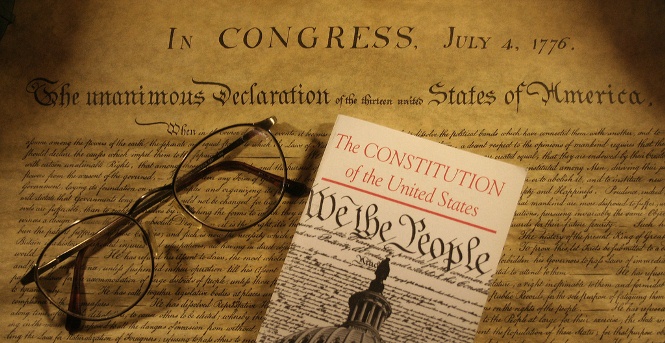
He said something that struck me as, well, fascinating. Rubio said Scalia’s legal brilliance was rooted in his belief that the U.S. Constitution is not a “living document,” but that the Constitution should be interpreted precisely as the founders intended.

I don’t believe for one second that Justice Scalia wanted to roll back the advances that came about in the many years since the founders wrote the Constitution — in the late 18th century.

However, if Rubio’s praise of Scalia is to be taken literally, it seems fair to wonder: Does he believe the founders were right to deny women the right to vote, or that African-Americans should be enslaved?

Of course he doesn’t.

However, we can see the discrepancy — in my view — in the debate over whether the Constitution is a living document. The argument of those who favor the so-called “original intent” of the founders breaks down.

Why? Because of the many reforms approved in the 200-plus years since the Constitution was ratified, the document does indeed evolve as our nation has evolved.

It’s alive, man.


A major battle now looms

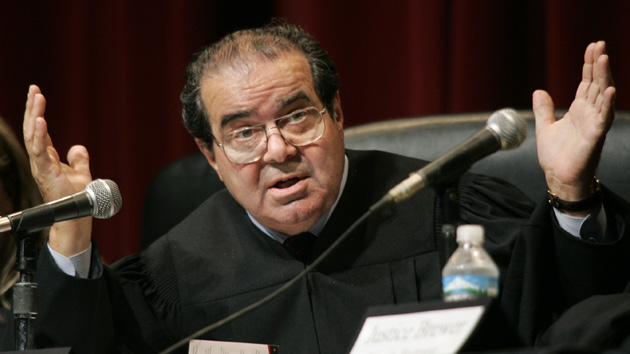
chapman.0830 - 08/29/05 - A Supreme Court headed by Supreme Court Justice Antonin Scalia has questions for Chapman University Law School professor John Eastman as he and California Attorney General Bill Lockyer argue the 1905 ''Lochner v. State of New York'' case during a re-enactment Monday afternoon at Chapman University. (Credit: Mark Avery/Orange County Register/ZUMA Press)
)

Supreme Court Justice Antonin Scalia’s sudden death today has stunned the nation.

As President Obama said this evening, the 30-year member of the nation’s highest court was one of the “most consequential” legal minds of our time.

The president now faces arguably the “most consequential” appointment of his time in office.

To say that Justice Scalia’s passing upsets the ideological balance of the highest court would commit the supreme understatement.

And, oh yes, the partisan divide opened wide immediately upon news of Scalia’s death. Senate Majority Leader Mitch McConnell, a Republican, said the Senate should wait until after Barack Obama leaves office to vote on a replacement; meanwhile, Senate Minority Leader Harry Reid, a Democrat, wants the Senate to act quickly.

Who could have seen that coming?

The president said he’ll make the appointment “in due time.” He wants a thorough, fair hearing and a “timely vote.” As the president — lame duck nor not — Barack Obama deserves the chance to nominate someone of his choosing.

Indeed, the appointment coming from a left-of-center president to fill a vacancy created by the death of a right-of-center Supreme Court justice sets up a huge battle that likely will dwarf any of the many fights Barack Obama has waged already with the U.S. Senate.

The court’s narrow balance has just been shaken to its very foundation.


Kasich gets the nod from a major media outlet

kasich

Newspaper editorial boards have at times been accused of being “homers,” sometimes favoring the home-town or home-state candidates over more qualified challengers.

The Dallas Morning News has chosen, however, to make its recommendation for the Republican presidential nomination — and it’s not U.S. Sen. Ted Cruz of Texas.

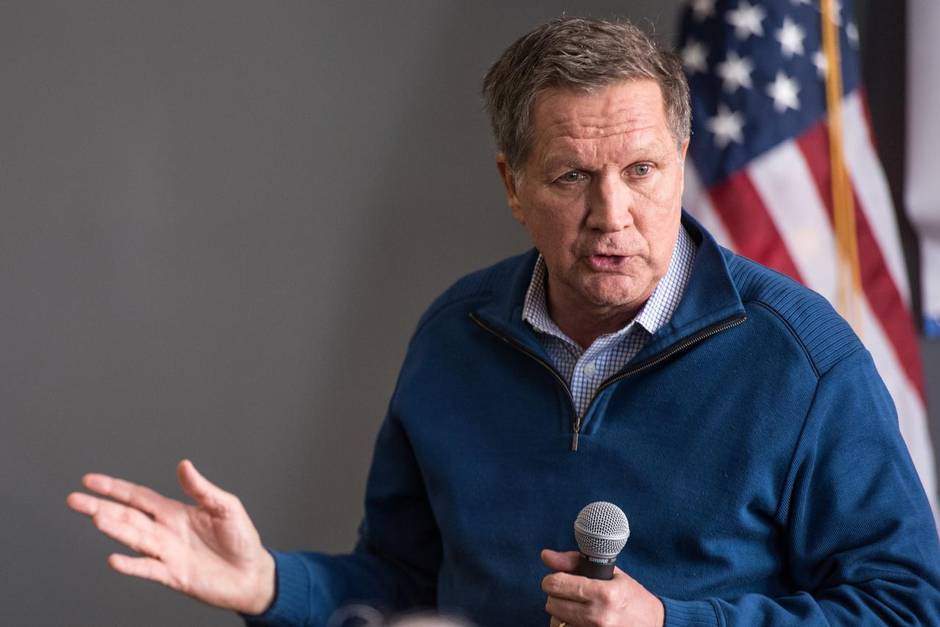
The DMN’s nod goes to Ohio Gov. John Kasich.

The paper likes Kasich’s record of accomplishment and believes it would suit him — and the nation — well if he were to be elected the next president of the United States.

What’s most compelling — to me, at least — is the paper’s nod to Kasich’s ability and willingness to work with Democrats. He did so while serving in Congress, where he chaired the House Budget Committee and helped craft a balanced federal budget.

One does not do such a thing in a vacuum, and Kasich showed his bipartisan chops in that regard.

I’m glad to see the Dallas Morning News climb aboard the Kasich bandwagon, such as it is in Texas.

* *

But what does a newspaper endorsement mean?

More than likely not a damn thing, at least not in this election season.

The leading Republican candidate for president says outrageous things about his foes, other politicians in general, the media, the voters, women — he uses amazingly grotesque language to describe one of his leading opponents — but, what the heck. That’s OK. He scores points for tossing aside “political correctness.”

Kasich remains one of the grownups in this GOP primary contest. A newspaper editorial board endorsement likely won’t be singularly decisive in determining whether he wins the state’s primary on March 1.

I just hope Texas Republicans heed the rationale behind the recommendation.

North Heights getting a fresh look

15064445


Every city in America has them.

Good neighborhoods and, well, not-so-good neighborhoods. Amarillo is just like every other city in that regard.

But there’s a bit of a difference here. Our city is governed by five individuals who represent the entire city; they’re all elected at-large. So, when residents of one part of the city feel as though their neighborhoods are being neglected, they tend to point the finger at the City Council and accuse its members of favoring other parts of the city.

It’s been on-going in Amarillo since, oh, probably The Flood.

Amarillo is now launching — one should hope — a concerted effort to revive, rejuvenate and rediscover the North Heights neighborhood.

It’s one of those areas of the city where residents have felt a bit neglected.

Does this effort require a huge change in local government attitude? The fellows who sit on the City Council say “no.” The city always has been equally concerned about all the neighborhoods, not just those with the more expensive homes or those with the leafy streets.

The Heights is long overdue for a serious makeover. The goal is to make residents proud of where they live.

City officials have planned a series of public meetings with residents. They want to hear from residents what they want. As KFDA NewsChannel 10 reported: “It’s really key to get their input because it’s their input that is going to help us get to where we want to be for this neighborhood,” said City of Amarillo Planning Director Kelley Shaw. “It’s their neighborhood. It’s not the city’s neighborhood, so we really need their input to make it all work.”

It’s good to watch how the city reacts to the concerns it hears. Perhaps the victory can be achieved if the city responds aggressively to what officials hear and start putting some serious effort into lifting up a neighborhood that’s felt neglected.

Think of it as a potential hedge against efforts to overhaul the city’s voting plan to expand the size of the City Council and create a single-member district plan for the city.

Let’s get busy.


What’s in a name?

Obama-Cruz

Social media provide a wonderful — but occasionally maddening — forum for passing around silly quips and observations.

This one came across my Facebook feed the other day.

It noted that President Obama’s critics have been fond of referring to him as “Barack Hussein Obama.” Yet one of those critics doesn’t get the same treatment by his foes who could refer to him as “Rafael Eduardo Cruz.”

To be fair, I don’t recall hearing Texas Republican U.S. senator and presidential candidate Ted Cruz use the president’s full, given name when referring to him. Maybe he did. Whatever …

I have heard the president make plenty of fun of his own name.

During two appearances with Republican rivals at the Al Smith Dinner in New York City — which is a political ritual of sorts, bringing opponents together for a night of fun and bipartisan fellowship — Obama cracked jokes about his name.

In 2008, he said he got his name from “someone who never thought I’d run for president.” Referring to a line that Republican nominee U.S. Sen. John McCain had used in a debate with Sen. Obama, he joked, “Barack is actually Swahili for ‘that one.'”

In 2012, while running for re-election, the president noted something in common with his GOP foe, Mitt Romney. “We both have unusual names,” he said, noting that “Mitt” is Romney’s middle name. “I wish I could use my middle name,” the president quipped with feigned wistfulness, again to huge laughter.

What’s the connection between Obama and Cruz? They both have faced — and are facing — equally ridiculous questions about their eligibility to seek the presidency.

What’s the lesson here?

It might rest in that old saying about something being “sauce for the goose … and the gander.”


About those elected offices …

1407859219000-Election-3-

Let’s take an earlier blog post briefly to the next level.

I questioned why we elect certain officials in Texas on partisan ballots, why we choose between Democrats and Republicans.

Here’s the blog.

A friend poses an excellent question: Why must we elect some of these officials at all?

He makes the excellent point that tax assessor-collectors, district clerks, county clerks and treasurers — all countywide elected offices — don’t set policy. They follow policy set by state legislators and, to a lesser degree, by county commissioners. They are “functionaries,” he says.

I guess I harken back to an earlier point: Texans love to elect people to public office. It’s in our political DNA, I reckon. Perhaps we like to hold them accountable to us exclusively; we don’t want some intermediary standing between these individuals and the people who elect them.

But my friend’s point remains well-taken.

Then again, that would call for an even more drastic leap of faith were we to recommend such a drastic change to our antiquated Texas Constitution.

I’m willing to take it.


Partisan labels ought to go

democrat_republican

I arrived in Texas in the spring of 1984 with my eyes open about the state’s vigorous political climate.

Perhaps I should have opened my eyes just a little bit wider so that I could see something that got past me as I studied up on the way things would be done in my new home state.

I knew that Texans like to elect people to public office. We have more elected offices than I’d ever seen, for instance, at the county level.

What I didn’t quite grasp, though, were the partisan labels that we attach to all the candidates. Perhaps most fascinating is how we elect judges in this state — as Republicans or Democrats.

My new Texas home would be — for my first 11 years in this state — in Beaumont, where Democrats ruled. Indeed, the entire state was still controlled by Democrats, who held most of the elective office statewide.

What I couldn’t quite grasp, though, is why we elect choose Democrats and Republicans among candidates seeking public office.

I’m left now, 32 years later, to keep asking: Can someone identify for me the difference between a Democratic and a Republican tax assessor-collector, or county clerk, or district clerk, or treasurer? For that matter, does a sheriff or district attorney arrest and prosecute criminal suspects differently if they’re Democrat or Republican?

I posed these questions once in a column I wrote for the Amarillo Globe-News. I got an interesting response from a county elected official — a loyal Republican, naturally — who agreed with me. She couldn’t fathom the difference, either, between how individuals of one party would do the job she took an oath to do any differently from individuals of another party.

Judgeships have proved to be the most troublesome.

In the early to mid-1980s, solid Republican were getting booted out of office or were losing elections simply because they were of the wrong party. It was wrong then, just as it is wrong now to see more qualified Democratic candidates losing to Republicans for precisely the same reason.

I don’t intend — yet — to make this a major issue for this blog. I just feel inclined to suggest that a change to a more reasonable and logical election system would serve the state better than the system we have now.

State legislators, governors and other statewide officeholders — except judges — surely can make the case that partisan differences exist. I’m fine with that.

Judges? That’s another matter.

I’ve all but given up arguing for a retention system in which judges are appointed and then stand for retention at the ballot box. At this point, I’d settle for a change in the way we elect judges, simply by having them run on their judicial philosophy rather than on whether they belong to a certain political party.

How would we change all that? Through a constitutional amendment, which requires a vote of all Texans — and which is equally cumbersome, antiquated and nonsensical.

That, though, is a subject for another day.


Next to zero interest in politics? Perhaps

horse race

Incumbent officeholders hate it when I say this, but that’s too bad. I’ll keep saying it.

Hardly ever do they deserve a free ride to re-election. However, that’s what happens with mind-numbing regularity in many of our local communities.

Let’s look at Randall County, for an example.

I mailer came to my house this week. It’s from Paula Hicks, who’s running for the Precinct 4 constable seat occupied by Chris Johnson. She points out that her race is the only contested one in the county.

Wouldn’t you know it. The only contested race in the county where I live involves the one office I care next to nothing about. We shouldn’t even have constables in Randall County, but we do and this year the office is being contested.

What about the rest of the county offices? They’re all uncontested. Even the tax assessor-collector’s office, which is being vacated by a long-time incumbent, Sharon Hollingsworth, doesn’t have a contested race.

Why don’t candidates jump in? Why don’t incumbents get challenged by those who think they can do a better job?

Are they happy with the job being done? Don’t they want the publicity that goes with seeking public office? Do they fear offending someone?

That isn’t the case north of the county line, in Potter County?

The county attorney, Scott Brumley, has a challenger; the 47th District attorney, Randall Sims, has one too. A county commissioner, Leon Church in Precinct 3, is getting a challenge.

But that’s it. Just three incumbents from the entire slate of candidates have to fight to keep their office.

It’s not that I want all the incumbents to get tossed out on their ears. It’s just that I’ve long thought that incumbents build a public record and they ought to face demands that they defend those records.

The past few Amarillo municipal elections have been lively affairs. This past year saw two incumbent City Council members defeated and a third newcomer elected to a seat that had been vacated. I wasn’t happy with the outcome, but I did enjoy listening to the community debate.

Challengers who rise up from the masses need not be negative. They merely need to say how they intend to perform the duties differently from the individual who’s already in the office. Better? Sure.

I get that incumbents don’t like hearing that from folks like me. They think I sit out here in the peanut gallery just relishing the chance to toss the proverbial rotten tomato at them.

Not true. I just like a robust debate. Especially at the local level, where government — and the people who we choose to run it — make decisions that affect our lives most directly.


How does Bernie attract young voters?

Young-Voters-For-Sanders-530x318

Many of my friends seem to think I live, eat, drink and breathe politics.

Not true. I actually have a life outside of the political world. Still, I enjoy the give-and-take of political discussion.

This morning a friend of mine and I were talking about the presidential race. The conversation turned to Bernie Sanders, the independent U.S. senator from Vermont who’s running for the Democratic nomination.

“Why do young people like him so much?” my friend asked.

I haven’t given it that much thought as I’ve watched Sanders chip away at Hillary Rodham Clinton’s one-time inevitability as the Democratic nominee.

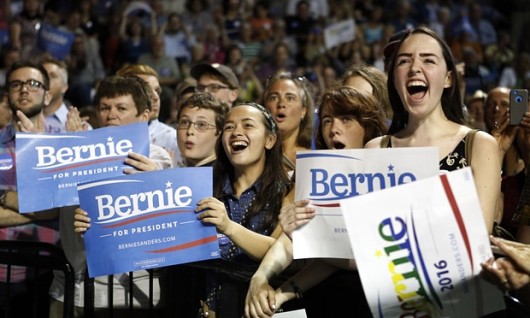
Then it dawned on me as my friend posed the question: Sanders has a grandfatherly appeal.

Back in the very old days, when I was a twentysomething idealist, I joined an army of young voters who supported the late Sen. George McGovern. His campaign centered on a single issue: ending the Vietnam War.

By 1972, the war was still raging. My own interest in the war was a bit different from many of my peers. They faced the prospect of going there. I had been there and returned. I came back after my Army stint as confused and confounded about our mission in ‘Nam as I was when I went over in the spring of 1969.

Sanders’ appeal to young voters today — more than four decades later — is a bit more elusive. I have trouble understanding his economic appeal, but then again, maybe it’s just me; I might be a bit slower on the uptake than I used to be.

I’ve concluded that perhaps a lot of Sanders’ appeal rests on the fact that he’s a bit longer in the tooth than any of the other candidates running for president this year — although Clinton isn’t that much younger.

Hillary Clinton faces an authenticity challenge. Sanders doesn’t. He seems to be precisely how he presents himself: a loveable curmudgeon.

I’ll admit that I haven’t talked to that many young people about Sanders’ candidacy. Another young friend with whom I’ve recently gotten acquainted asked me this morning about Michael Bloomberg — the former New York mayor who’s pondering an independent/third party candidacy for president.

I haven’t a clue what would drive a Bloomberg candidacy, other than be a spoiler, I said. He, too, is an older gentleman. Would my young friend support Bloomberg because he reminds her of Grandpa? I might ask next time I see her.

Yes, this election season is the most unconventional many of us ever have seen. This fascinating love affair that Old Man Bernie has developed with younger voters just might be yet another result of the unrest that’s gripped so many Americans.


Commentary on politics, current events and life experience