Reid weighs in on Rubio’s (lack of) attendance

Senator Marco Rubio of Florida speaks at the Conservative Political Action Conference (CPAC) at National Harbor, Maryland March 14, 2013. Two senators seen as possible candidates for the 2016 presidential election will address a conservative conference where Republicans will try to regroup on Thursday after their bruising election loss last year.  REUTERS/Kevin Lamarque  (UNITED STATES - Tags: POLITICS) - RTR3EZQO

Is it really and truly the business of the Senate minority leader to comment on the attendance record of one of his colleagues?

Well, yes it is.

Harry Reid is a Nevada Democrat; Marco Rubio is a Florida Republican. Reid said this week that Rubio ought to quit his Senate seat if he’s going to keep running for president of the United States.

Why does it matter to Reid?

Well, it matters to Reid because it ought to matter to all Americans. Senator are federal employees. They get paid $174,000 annually from the federal Treasury, into which we all contribute with our tax money.

Rubio has indicated he doesn’t much like serving in the Senate. It’s too, um, tedious for the young man. He wants to become the Leader of the Free World, to make things happen in a hurry. He’s not seeking re-election to the Senate in 2016.

Reid’s call is on point, as Rubio keep racking up no-shows on Senate votes.

A newspaper in Rubio’s home state, the Fort Lauderdale Sun-Sentinel, has called on Rubio to quit. He’s ripping off the state’s taxpayers and his constituents, the Sun-Sentinel said. And this is a paper that endorsed Rubio when he ran for the office in 2010.

Let’s be clear: Rubio isn’t the first rookie senator to take a pass on doing his day job while looking for a better-paying public service gig. Sen. Barack Obama did the same thing in 2007-2008 when he ran for president. Should he have quit his Senate seat when he ran for the White House? Yeah, probably. But that’s all water over the dam now.

What’s on the table now is whether Marco Rubio should keep collecting that fat — taxpayer-subsidized — salary without doing much of the work that’s required of him.

Hit the road, Sen. Rubio. Campaign for president all you want, but do it on your own time … not ours.

 

Marsh’s art now becomes a target

cadillac ranch

Mention the name “Stanley Marsh 3” and you’ll likely get a variety of responses.

Many of them — if not most of them — might be negative.

The late millionaire is back in the news. He’s been dead for more than a year but he left behind some works of art that a number of individuals want removed.

Why? The art reminds the alleged victims of Marsh’s misbehavior of the deeds the late “eccentric” committed.

They want to rid the city of the art work.

I heard about this last night. I slept on it overnight and have concluded: The art work should stay put.

Yes, we’re talking about what arguably is the most iconic symbol of Amarillo: Cadillac Ranch.

The Caddies have been sticking out of the ground west of the city for 40-plus years. They’ve become one of the city’s major tourist attractions. You mention to anyone in the world where you’re from and you might get a response like this: Oh, isn’t the city with that big steak and the cars stuck in the ground?

I sympathize with those who are aggrieved by what Marsh has been accused of doing to them. Before his death and then afterward, allegations came forward about sexual misconduct involving Marsh and some teenage boys.

Removing the art work won’t be a simple task. All of it — and that includes those ubiquitous lawn signs — sits on private property. The individuals who want to remove it will have to get the property owners’ permission to take it all down.

As for Cadillac Ranch, I think that would be a gigantic mistake to wipe them off the Caprock. Eric Miller of the city’s Convention and Visitors Council, doesn’t want the cars taken down. They have become one of the more recognizable symbols of the city and they give us locals a chance to explain to visitors just what the heck they’re doing out there on that vast expanse of ranch land.

One of my sons years ago posited this theory: They are hooked up to underground telecommunications devices that enable Marsh to communicate with extraterrestrials.

I’ve long thought that Marsh was one of those individuals about whom you could say almost anything … and it would have the vaguest ring of believability.

His art work ought to live on.

Your thoughts?

Amarillo: Dysfunction capital of America?

atkinson

I like to think I’m careful when I read critiques about places from folks who don’t live in or near the communities they’re critiquing.

When something comes across my radar, it’s good to check the background of the author. I did that when I saw a pretty scathing critique on a website called Route Fifty. The author is a fellow named Michael Grass.

His background? His “about” page says he’s a former copy editor for Roll Call, a reputable political journal that covers Capitol Hill; he also has experience working with the Washington Post and the New York Observer.

Grass has posted a pretty sizzling analysis of Amarillo. The bottom line? If you’re looking for a local government job and you want to move to Amarillo to fill one of the many openings posted at City Hall … think long and hard before you take the plunge.

Amarillo, he says, might be the “most dysfunctional city” in the country.

The city manager’s exit has caught Grass’s attention.

City Manager Jarrett Atkinson is soon to be out the door. The City Council has to find another person to fill the job. Grass opines that the council is going to have a hard time finding a competent candidate willing to step into what he describes as “a municipal circus.”

He’s done some homework. Three new city council members — Elisha Demerson, Randy Burkett and Mark Nair — took office this spring. Nair then took the unusual step in calling for Atkinson’s resignation right away. Burkett demanded that the entire Amarillo Economic Development Corp. board be fired.

Nair and Burkett backed off their initial demands.

Still, City Attorney Marcus Norris quit; Assistant City Manager Vicki Covey retired.

The new three-member majority then engineered a citywide referendum on a project that’s been in the works for years. The multipurpose event venue will be on the ballot next Tuesday and voters will get to decide whether the $32 million project should include a ballpark.

Grass writes: “While Atkinson’s resignation, which is to take effect later in November, may have surprised some on the City Council—Nair said he ‘didn’t see it coming’—Amarillo Mayor Paul Harpole said that conflict among councilmembers made it very difficult for the city manager to do his job, citing a handful of problems.”

The city is seeking to fill a number of senior administrative positions. The city attorney still needs to be hired. Same with an assistant city manager. The city charter gives the city manager the authority to make those decisions — but hey, we soon won’t have a city manager, either!

The council has been bickering over budget matters, the future of downtown redevelopment, the status of non-profit organizations set up to help the city proceed with its downtown growth.

You name it, the council has been fighting about it.

Grass’s article wonders: Who in their right mind is going to step into that maelstrom?

It’s a question many of us who live here have been asking.


‘Friends’ can become ‘foes’ on Facebook

facebook-banned

This is no big flash to most of you, I’m sure … but Facebook can be a pain in the backside.

Here’s what I mean.

I have a longtime friend who recently “unfriended” me from Facebook. I noticed his absence, so I asked him: Was it something I said?

No, not all, he responded. The issue, he said, was with some of my Facebook “friends.”

You see, my friend — and he’s a real friend, not a Facebook “friend” — and I have differing political slants. I tilt left, he tilts right. I distribute this blog through several social media outlets; Facebook is one of them.

My friend — who I’ve known for more than 20 years — occasionally would respond to my essays with a negative comment. I’m all wet, he would say. I don’t know what I’m talking about, he would declare. He’d lecture me on occasion about where I’m wrong and how he knows better.

That’s all well and good. Then some of my other friends and “friends” would challenge my pal. He’d respond to them. They’d fire back. He’d return another volley.

Back and forth they would go.

Finally, my friend said, he’d had enough. He said his inability to refrain from responding to the critics made him feel “like a crackhead.” He became addicted to the need to answer them all.

So, he quit cold turkey.

I have no answer for that.

Occasionally, I engage in exchanges with individuals who read this blog regularly. I appreciate their interest and I appreciate their passion in speaking out on issues that push their hot button.

However, some of ’em do get a little too personal for my taste — particularly when they go after each other. It doesn’t bother my sensibilities if they aim their fire at my direction. I’ve been taken down by the best. After spending most of my nearly 37 years in daily journalism writing opinions, well, you kind of get used to it.

It does make me feel badly, though, for my friends — namely my actual friends — who get run off by what they perceive to be rude behavior.


What if MPEV debate had that kind of format?

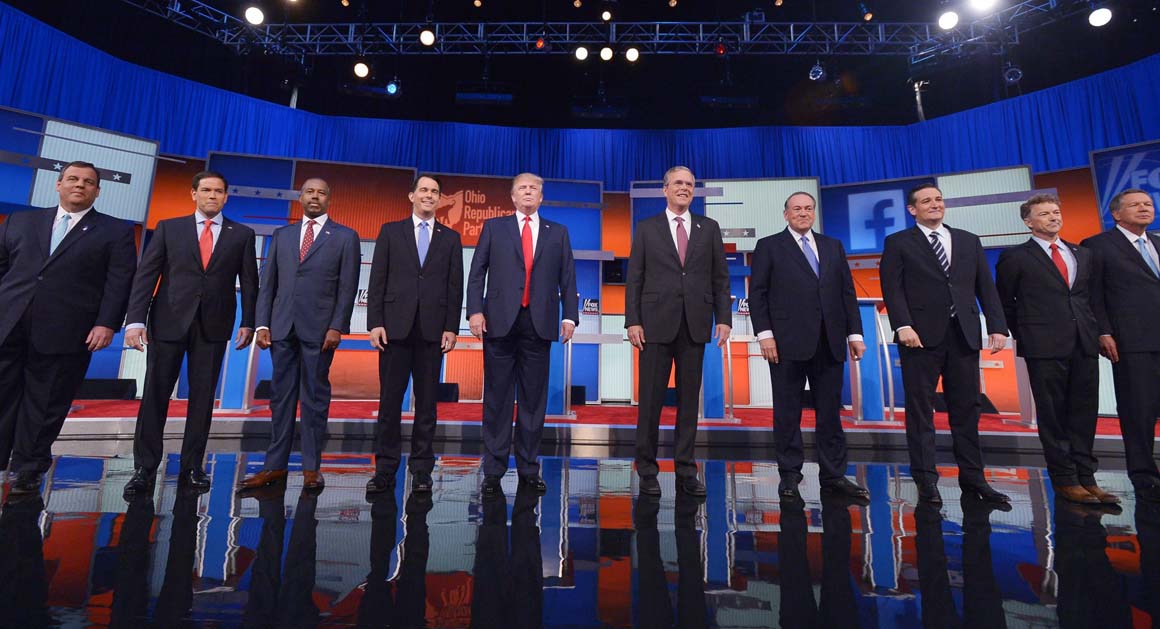
Republican presidential candidates arrive on stage for the Republican presidential debate on August 6, 2015 at the Quicken Loans Arena in Cleveland, Ohio. From left are:  New Jersey Gov. Chris Christie;  Florida Sen. Marco Rubio;  retired neurosurgeon Ben Carson; Wisconsin Gov. Scott Walker; real estate magnate Donald Trump; former Florida Gov. Jeb Bush; former Arkansas Gov. Mike Huckabee; Texas Sen. Ted Cruz; Kentucky Sen. Rand Paul; and Ohio Gov. John Kasich.  AFP PHOTO / MANDEL NGAN        (Photo credit should read MANDEL NGAN/AFP/Getty Images)

I awoke this morning and a curious thought popped into my noggin about last night’s Republican presidential primary debate … so I thought I’d share it here.

What if Amarillo’s hot topic of the day — the upcoming citywide referendum on a proposed multipurpose event venue — had been the subject of a similar debate format between advocates on both sides of this highly controversial issue?

Suppose, then, that the two sides had gathered their forces, sat them in an auditorium, say, at the Civic Center or the Globe-News Center for the Performing Arts. And then imagine how they might try to out-cheer, out-shout and out-jeer each other whenever someone made a point they either liked or loathed.

You know, these kinds of things rattle around in my head from time to time. In this instance, they make me glad we haven’t resorted to the carnival atmosphere that has overtaken the Republican and Democratic presidential debates as they’ve been staged in front of the nation.

The GOP has staged three of these sideshows; the Democrats just one, so far.

The MPEV debates — and there’ve been a couple of them broadcast on Panhandle PBS — have been models of decorum and relatively good manners.

(Disclosure time: I am a freelance blogger for Panhandle PBS, so — as the Texas saying goes — I’ve got a dog in that fight.)

The second of those encounters will air tonight at 7 on Panhandle PBS. It features Amarillo lawyer Vince Nowak speaking against the MPEV and former Amarillo College President Paul Matney arguing in favor of it. This past week, the contestants were Amarillo City Councilmen Brian Eades (pro-MPEV) and Randy Burkett (anti-MPEV) making their respective cases regarding the $32 million sports and entertainment venue planned for construction in downtown Amarillo, across the street from City Hall.

Check both debates out here.

Were there catcalls? Cheers? Jeers? Zingers? None of that. It was just Panhandle PBS content producer Karen Welch grilling the contestants on why they favor and/or oppose the measure. There were differences of opinion, but on the whole the adversaries were courteous and respectful of each other’s time.

One can learn a lot when one is not distracted by crowd noise, glitz and show-biz bling.

Both sides have their share of passionate supporters. I prefer, though, to gauge the merits of an argument on the points made by the principals rather than relying on applause meters.


Political ‘debates’ become show biz

CNBC panel

I might have a solution to returning some decorum and dignity to these presidential joint appearances.

I’ve said it before: Get rid of the audience.

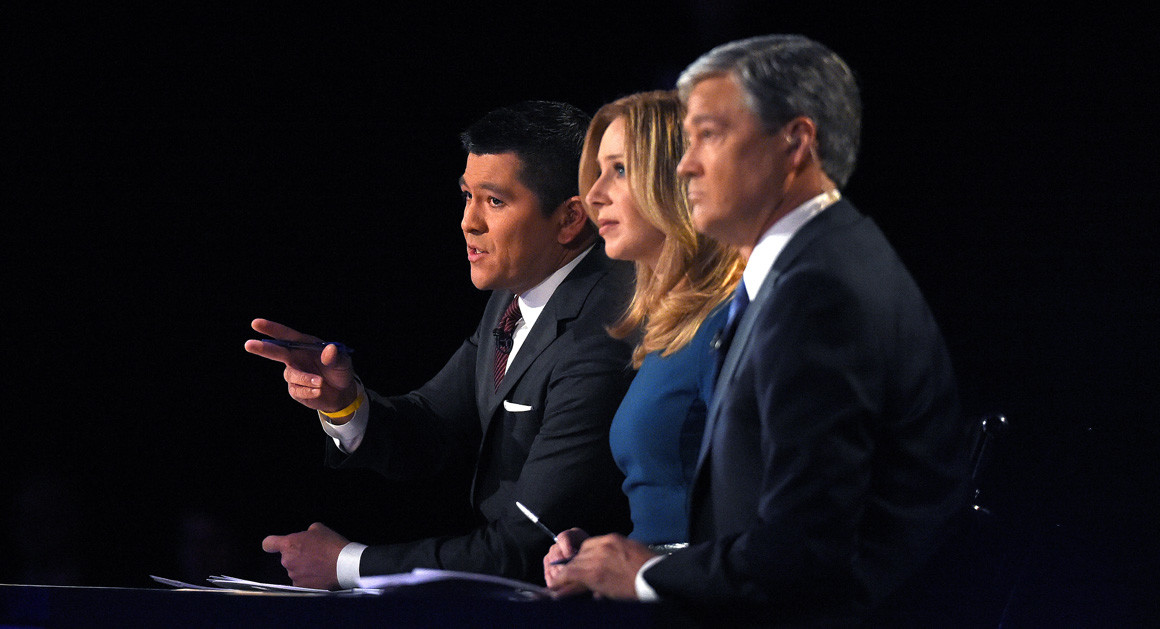
CNBC’s moderators became the target of many of the Republicans running for president at tonight’s so-called debate.

First of all, I concur that the moderators were terrible. They lost control of the event. They let the proverbial tail wag the dog — to borrow a political phrase.

Indeed, the candidates fed off the crowd that gathered at the University of Colorado in Boulder. They cheered ’em on. They provoked the zingers. They roared every time a candidate took a shot at the “mainstream media.”

Tonight’s GOP joint appearance lacked almost any semblance of dignity. It became a circus and the moderators — Becky Quick, John Harwood and Carl Quintanilla — became the ringmasters.

It’s not as though the questioners didn’t ask good questions. They sought to probe the candidates’ backgrounds, prod them to explain previous statements and provoke them to make memorable statements.

It seemed, though, that CNBC debate troika set themselves up to become as much a part of the story as the candidates.

Why is that? The moderators were fueled as much by the audience as the candidates.

I have an intense dislike for what these events have  become.

Both parties have become enamored of the entertainment value that the audiences bring to these confrontations.

I’m old enough to remember the very first televised presidential debates, involving Republican Richard Nixon and Democrat John F. Kennedy. They had three of them. Each one got a little more vigorous than the preceding encounter.

Audiences? None. Just the two men … and Americans learned a lot from them both, without the distraction created by the cheers and catcalls.


VA scandal far from ‘overstated’

veterans affairs

Hillary Rodham Clinton could not be more wrong than she was the other night when she said that the Department of Veterans Affairs health care scandal was “overstated.”

You’ll recall the VA matter. Veterans seeking medical care in Phoenix were made to wait for too long for the care — and then some of the died while waiting.

Meanwhile, the VA cooked the books, so to speak, and hid that information from agency watchdogs in order to protect the medical staff at the VA medical center in Phoenix.

Veterans Affairs Secretary Eric Shinseki had to quit and the agency went under the microscope to correct the hideous situation that resulted in the veterans’ deaths.

News flash to Hillary: None of it — zero — was “overstated.”

Veterans should be offended by what the Democrats’ leading presidential contender told MSNBC’s Rachel Maddow the other evening. I know I am.

Yes, Clinton is right to say that most veterans get good health care. I can attest to the quality of care I am getting in Amarillo at the Thomas Creek VA Medical Center. Then again, I enjoy good health.

My hope is that when I do need some specialized care that it will be available to me in a timely fashion. I damn sure don’t want to die waiting to receive it.

Most veterans do receive good care. The veterans who have died because of too-long wait times, though, did not.

For the Democrats’ leading presidential candidate to suggest it’s all “overstated,” overblown and overplayed is dishonest on its face.

S.C. deputy out of a job

LeonLott

Ben Fields is now a former South Carolina sheriff’s deputy.

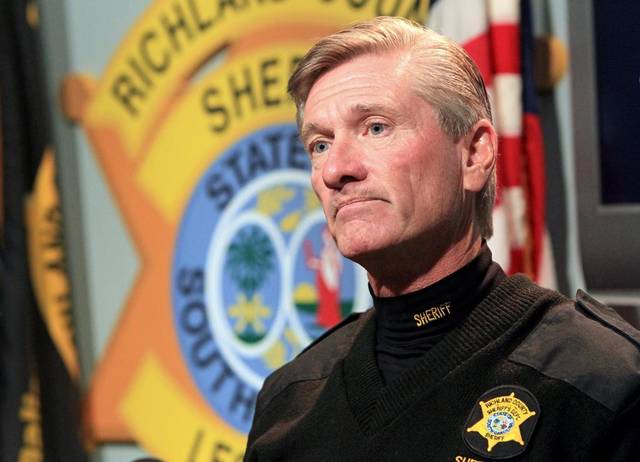
I’ve got to hand it to Sheriff Leon Lott for acting swiftly and decisively in terminating Fields for tossing a high school student across the room in an altercation that erupted at Spring Valley High School in Columbia, S.C.

We’ve all seen the video. It involves — yes, that’s right — an African-American student and a white law enforcement officer.

Video shows brutal response

A female student was disrupting a class. Her teacher told her to put her cell phone away. The girl refused. The teacher called a school administrator. The girl continued to disobey instructions to put the phone away. Then the call went out to Fields, a Richland County deputy sheriff serving as a school resource officer at Spring Valley.

How did Fields respond. The burly deputy picked the girl out of her chair and threw her across the room.

That’s where the deputy messed up, according to Lott.

Surely the girl needs to be punished for her part in escalating the altercation.

Sheriff Lott, though, acted appropriately in terminating Fields. Lott informed the media this morning that deputies receive ample training on de-escalating tensions. Fields, shall we say, did quite the opposite.

Whatever happens next to the girl remains in the hands of the school and her parents.

It appears to me that she needs a visit to the proverbial woodshed … which is a task that belongs to Mom and Dad.

With all the talk these days about slow response from law enforcement agencies to situations such as this, it appears that Sheriff Lott has listened and has acted.

Speaker’s parting gift to country? A budget deal

boehner

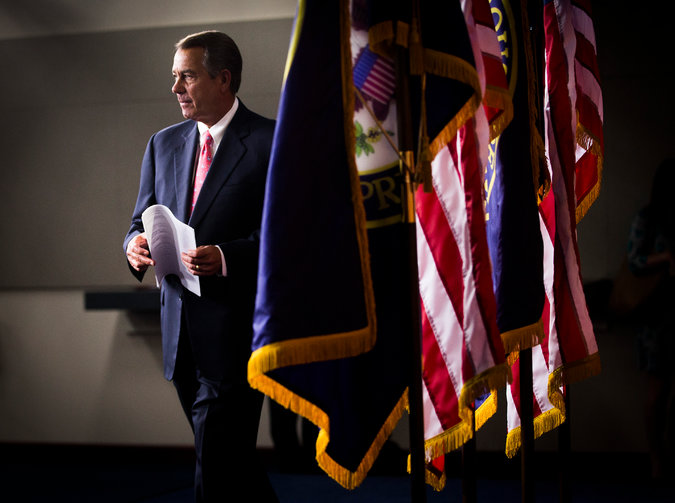
John Boehner is about to leave the House of Representatives’ speakership, but he also is set to leave the country with  thoughtful parting gift.

A two-year budget deal he and the White House hammered out.

What does this mean? It means that President Obama won’t have any more threats of government shutdowns during the remainder of his time in office. It also means — with Congress set to approve the deal — that Boehner is sticking it in the eye of the TEA Party cadre of legislators who have bedeviled him and the White House.

Deal averts crisis

Perhaps the best part of the deal is that is recognizes the need for the United States to honor its debt obligations by increasing the debt ceiling. This is sure to anger the TEA Party folks, who keep insisting on fighting with others in Congress — including the so-called “establishment Republicans” — over whether to honor our obligations or default on them.

Boehner has made no secret of his disdain for this tactic. The pressure from the far right of his party, though, got to him. He packed it in.

The presumed next House speaker, Paul Ryan, is on board with the deal.

Well, I and millions of other Americans will accept the speaker’s parting gift gladly.


Hey, didn’t JFK settle this religious thing already?

deadstate-Ben-Carson

I’ve always thought — or hoped, at least — that John F. Kennedy’s 1960 speech in Houston settled the notion that a candidate’s religion should have no bearing on whether he could serve as president of the United States.

He told some Protestant clergy that the Vatican would not dictate to the Catholic candidate how he should govern, that he would swear to be faithful only to the U.S. Constitution.

Well, silly me. The issue is coming up again. The target this time is Dr. Ben Carson, the famed neurosurgeon whose faith is of the Seventh-day Adventist variety.

Donald Trump raised the issue the other day in typical tactless Trump fashion. Now comes a well-known lefty commentator, David Corn, editor of Mother Jones, to wonder aloud whether Carson’s faith would inform the way he would govern should he “take control of the government.”

This is a ridiculous debate.

First of all, presidents don’t control the government. We have this notion that power is spread among two other governmental branches — the courts and the Congress.

The Constitution says there should be “no religious test” for candidates seeking any public office. That includes the presidency.

Yes, Carson has brought up his own faith. He’s talked about how his faith would guide him. He hasn’t said he would toss the Constitution aside any more than then-Sen. Kennedy said he would more than five decades ago.

Corn is playing to voters’ fears when he says of Carson: “Now, he is running on the basis that he has faith. And I think it’s going to open, you know, a big can here. Because, you know, he does come from a church that believes in end times, prophesies, and he’s said he believes in the church’s teachings.”

A simple declarative question is in order: Dr. Carson, do you vow to uphold the law under the Constitution of the United States?

I believe he’s already pledged to do so.


Commentary on politics, current events and life experience