Give Cubans the dickens, Mr. President

cuba-us-corporation-revolution_si

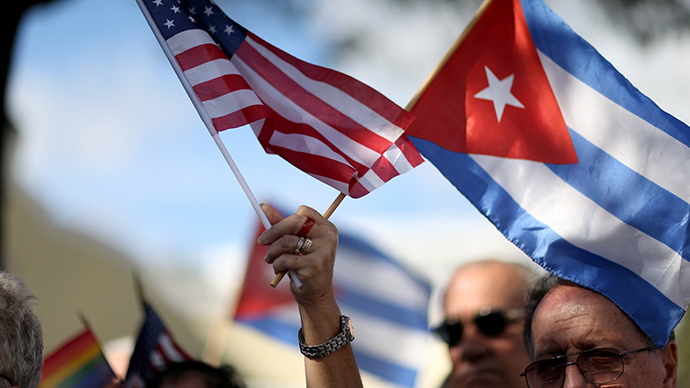
Critics of President Obama’s upcoming visit to Cuba ought to chill out for a moment or two.

They’re raking Obama over the coals because, they say, he’s lending “legitimacy” to the dictators who are running the island nation. They’re a bunch of commie Marxists who don’t deserve a visit from the head of state of the world’s most powerful nation, they say.

Hey, let’s take a breath.

The president is going there to continue the normalization of relations between the nations. The Cold War is over. We won. Cuba no longer presents any kind of threat to this nation. Its benefactor, the Soviet Union, receded into the dustbin more than 20 years ago.

What shouldn’t be lost is the opportunity that the president will have to tell Cuban President Raul Castro of the concerns the United States still has over the communists’ treatment of their citizens. Obama says he’ll bring it up directly. Face to face. Man to man.

Let us also be mindful that the two men will be able to speak outside of earshot of prying media representatives. Does anyone ever really with utter certainty what two leaders ever say to each other when no one is listening?

The president insists that the visit will keep the normalization process moving forward. Part of that movement must depend on assurances that the Cubans are going to do better at recognizing the rights of all human beings — and that should include their own citizens.

Look at it this way as well: Did the Texas Republican governor, Greg Abbott, just visit with Cuba on a trade mission aimed at boosting commerce between Texas and our nation’s former enemy?

Where was the criticism of that visit?


It’s do or die for ‘Jeb!’

Jeb  Bush

Erica Greider, writing for Texas Monthly’s blog, offers an interesting analysis of the stakes for today’s South Carolina Republican presidential primary.

She thinks Sen. Marco Rubio has the most to gain — or lose — from the results.

But she inserted this into her blog:

“The prevailing wisdom is that the alternative with the most at stake tomorrow is Jeb Bush. More specifically, there’s a sense that if he can’t manage a strong third-place finish, at least—despite all his advantages at the outset of the race, a strong performance in the most recent Republican debate, and being joined by his brother, former president George W. Bush, on the trail—that it’s time to pack it in.”

Here’s the rest of what she writes.

I’m going to go with the “prevailing wisdom,” which is that the biggest loser from the South Carolina primary could be John Ellis Bush, aka Jeb!

His brother, W, came out of the shadows to campaign actively for his  younger sibling. The 43rd president — who’d made a vow, like their father had done — to stay out of the political arena once he left office. George W. Bush could remain silent no longer, as Donald J. Trump continued blustering about how W and his bunch had “lied” their way into starting the Iraq War.

Jeb figured that Brother W’s continuing popularity in South Carolina could propel him a strong finish when the votes are counted.

I am not privy to the details or the fine print, but it’s looking as though Jeb Bush might not make the grade.

I’ll just offer this bit of personal privilege. I did not vote for W any of the four times I had the chance: his two elections for Texas governor or his two elections for president of the United States. I do, though, like him personally. I’ve had the privilege of visiting twice with him extensively while he was governor — and once briefly in 1988, before he won his first term as Texas governor.

He’s an engaging and personable fellow.

It was my hope that some of that would rub off on Jeb. It apparently hasn’t. Jeb has been caught in that anti-establishment buzzsaw being wielded by he likes of Trump and — oddly enough — U.S. Sen. Ted Cruz.

I will not dare to predict the outcome of the South Carolina vote today. Jeb Bush had better hope he finishes much nearer to the top of the heap than the bottom of it.

At this moment, I am pessimistic.


President Gingrich, anyone?

1407859219000-Election-3-

How decisive will the South Carolina Republican primary be after the votes are counted?

That remains a matter of considerable discussion.

Donald J. Trump is the frontrunner. The fight now is for second place.

But consider what transpired there four years ago.

Newt Gingrich won the state’s primary, which when you look back shouldn’t have been a huge surprise. The former U.S. House of Reps speaker hails from next-door Georgia. He was more or less a “favorite son” candidate of GOP voters. He then promptly flamed out.

The same theory perhaps applies to Sen. Bernie Sanders’ blowout win in the New Hampshire Democratic primary just a while ago. He represents neighboring Vermont in the U.S. Senate. Familiarity didn’t breed contempt there, either.

This process remains in its early stages.

The Republican field has been winnowed considerably from that massive horde of contenders/pretenders that began the race.

For my money, though, the serious test will occur on March 1 when Texas joins several other states in that big Super Tuesday primary.

Then we’ll see who’s got the chops to keep going.

Let’s all stay tuned.


It’s all about the court balance

90

President Obama picked up the phone today and made a couple of important calls.

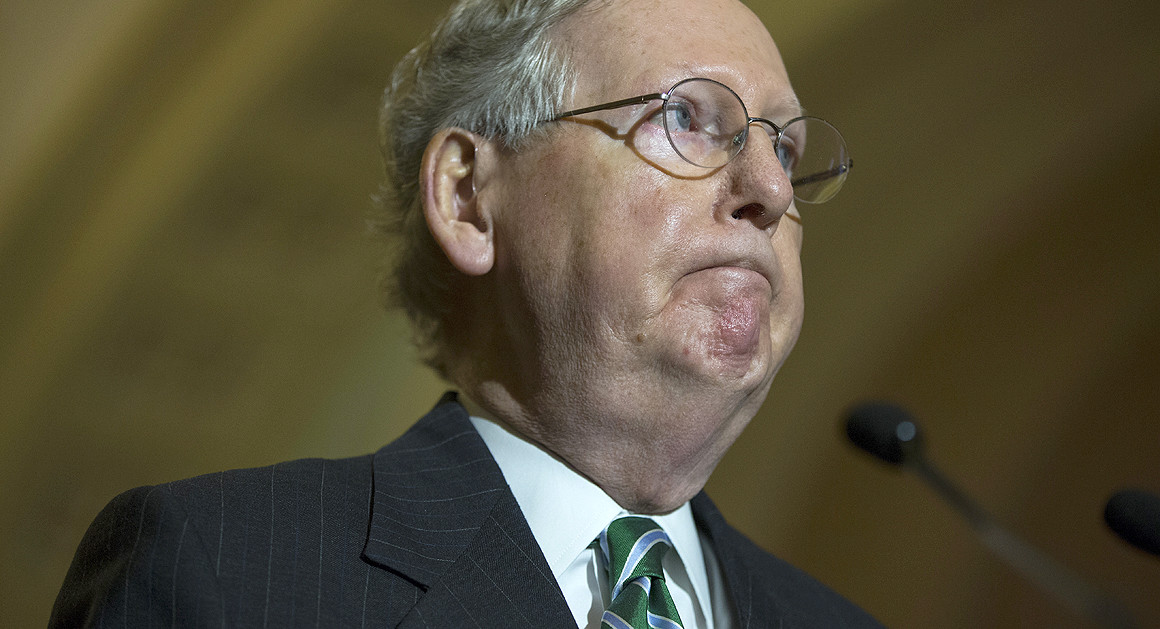
One of them went to Senate Majority Leader Mitch McConnell; the other went to Senate Judiciary Committee Chairman Charles Grassley. Both men are Republicans. The president is a Democrat.

The president informed the senators he intends to make a pick for the U.S. Supreme Court. And, according to White House press secretary Josh Earnest, Sens. McConnell and Grassley both voted in favor of President Reagan’s “lame duck” selection of Anthony Kennedy to join the court in 1988, which was just as much of an election year as 2016.

McConnell, though, says the current president should notpick the next justice. That task belongs to the next president, he said.

What has changed?

It’s the balance of the court. It means everything. Every single thing.

You see, the late Justice Antonin Scalia, the man Obama wants to replace, was a conservative stalwart on the court. The president is not a conservative; therefore, his appointee won’t echo the judicial philosophy of Justice Scalia.

The next justice — if he or she is approved by the current Senate before the end of this year — is likely to change the fundamental balance of the court, which has comprised a thin conservative majority.

Senate Republicans don’t want the court balance to change. They’ll do whatever they can to prevent the president from making the pick.

There’s just this one little issue that, by my way of thinking, should matter more than anything else. The Constitution grants the president the authority to make the appointment, which this president said he’s going to do. It also grants the Senate the authority to vote whether to approve or deny the appointment. It doesn’t require the Senate to act.

If the Republican-controlled Senate is going to stymie the president, then it faces a serious charge of obstruction. Senate Republicans keep denying the obstructionist label.

A failure, though, to act in a timely fashion on this appointment gives even the casual observer ample cause to suggest that, by golly, we have just witnessed a case of political obstruction.

If the president selects someone who is eminently qualified and who has a proven record of judicial moderation — which conservatives still will see a serious break with the conservative judicial record built by the late Justice Scalia — then shouldn’t the Senate give that nominee a fair hearing and a timely vote?

I would say “yes.” Without equivocation.


‘Establishment’ now the target of the right

Vietnam-War-Protests-H

Once upon a time, the term “establishment” became a four-letter word to those on the left.

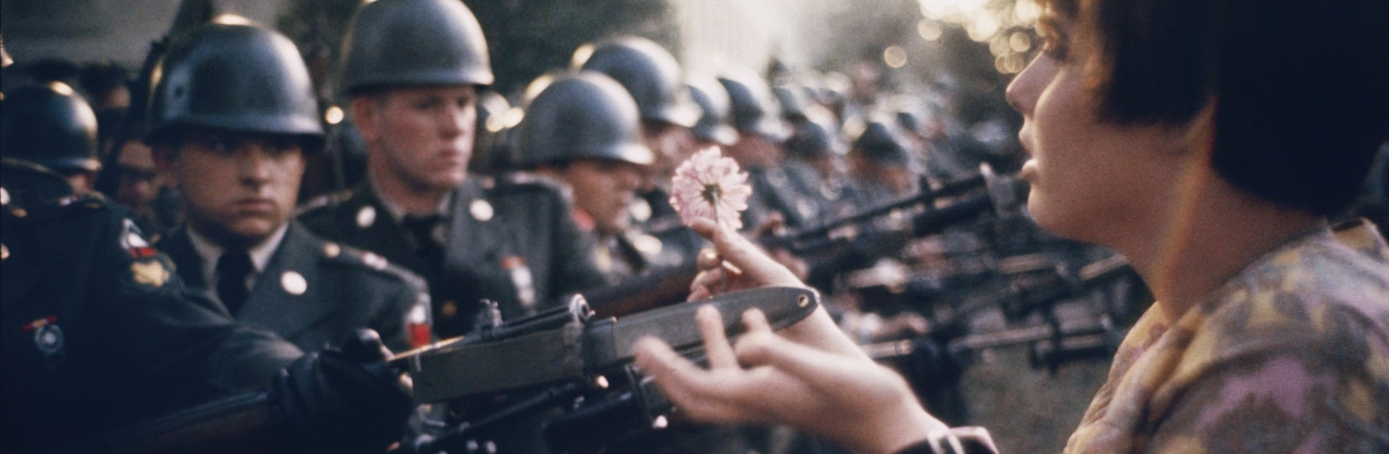
That was during, oh, the Summer of Love — 1967, or thereabouts, the year I graduated from high school. Protesters were taking to the streets to chant slogans and carry signs against the Vietnam War and, yep, the establishment that supported that effort.

Little did I realize at the time that I’d be joining that conflict … but that’s another story for another time — maybe.

The establishment comprised old guys in dark suits who sat around big conference room tables in Washington, D.C., making decisions that affected young people’s lives.

In too many tragic cases, those old guys’ decisions ended young people’s lives — if you know what I mean.

Well, here we are in the present day. Nearly 50 years later, and the term “establishment” is still a four-letter word. Only now the righties have taken up the cudgel. They’re beating the daylights out of establishment politicians because, I reckon, they aren’t radical enough to suit the righties’ point of view.

Presidential candidates are split into two camps: establishment and, well, something else. Outsiders? TEA Party faithful? Rabble rousers?

The establishment is getting pummeled now by those on the right and the far right, much like it got battered in the old days by those on the left and the far left.

To be sure, the establishment is taking its share of hits today from the left. One presidential candidate, the “democratic socialist,” is taking aim at the top 1 percent, the very wealthy and seeks to level the playing field to aid the rest of the country.

The heaviest fire against the establishment these days is coming from the right.

Those poor establishment guys — the fellows who still wear the dark suits — just can’t get a break.

As the song from the old days tells us, “There’s something happenin’ here, what it is ain’t exactly clear.”


More major culling to occur?

republican-elephant-668x501

It’s beginning to look as though the Republican Party primary presidential field is going to endure another serious thinning out … maybe soon.

The South Carolina primary is coming up. Donald Trump continues to lead the pack — for the life of me I don’t know how.

Ted Cruz is in the mix. So is Marco Rubio.

That leaves the three also-rans, one of whom I had high hopes could resurrect his campaign.

Ben Carson should leave the race. John Kasich — my favorite Republican and possibly my favorite candidate in either party — needs to score well if he’s going to continue. Jeb Bush? I fear that he’s done, too.

That will leave us with three men running for the GOP nomination.

Two of them are serious, although none of them — for my money — should be the nominee.

It’s looking like one of them will survive the dogfight.

It’s been said that the primary system is a grueling battle that determines whether the “fittest” of the candidates will survive. I’ve called it a form of political natural selection.

This election cycle is proving to be a test of conventional wisdom, which used to suggest that the fittest candidates were those with the most experience, the most knowledge, and who are the most articulate in explaining their philosophy.

That’s not the case these days.

The fittest candidates are those who scream the loudest and who appeal to the fears of an electorate that has been told they have plenty to fear.


Justice Biden? Maybe?

biden

I’ll toss a name out there for President Obama to consider for the vacancy on the U.S. Supreme Court.

Joseph Biden.

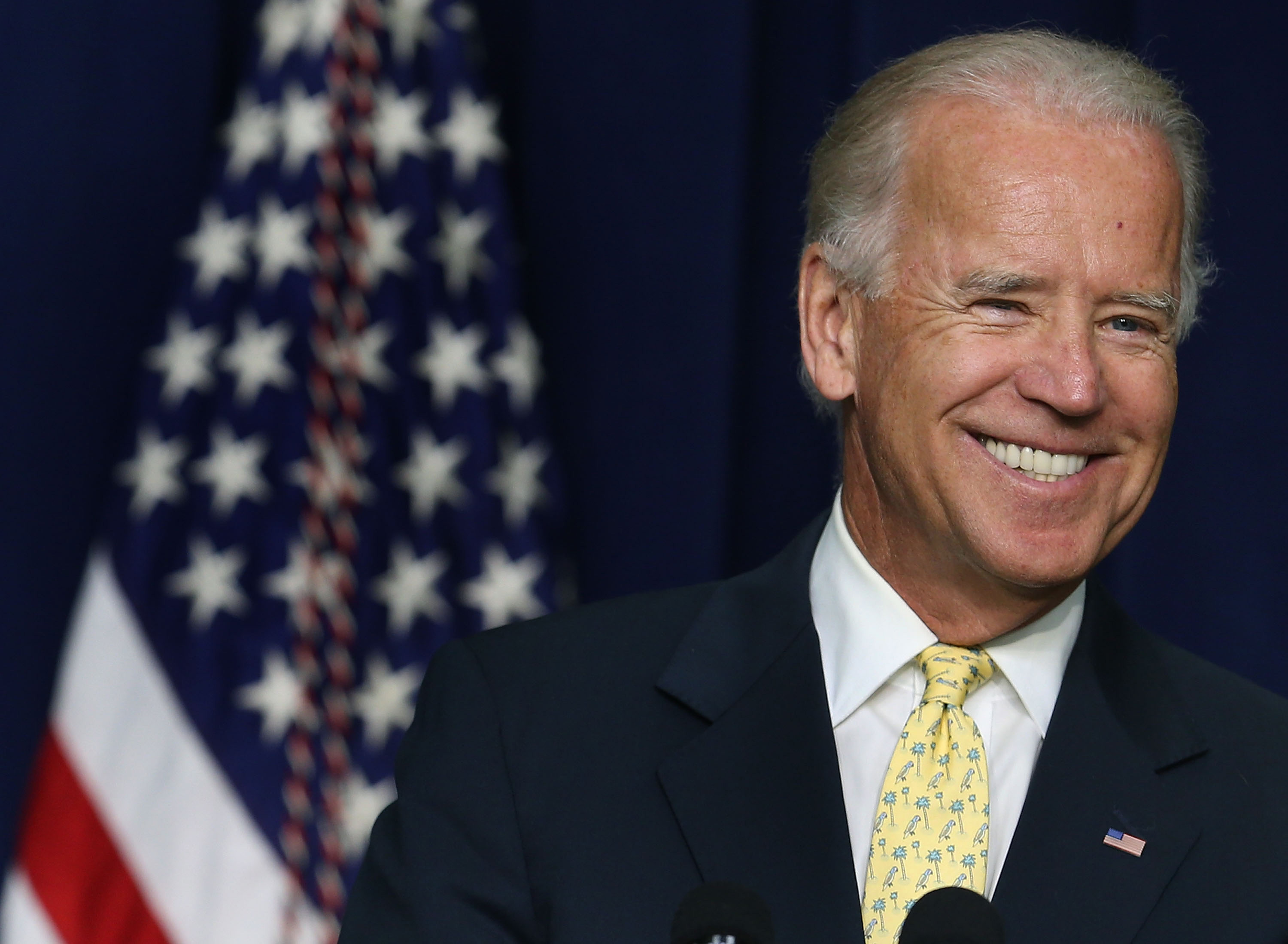
The vice president told Rachel Maddow last night that he has “no interest” in serving on the court. The MSNBC host had asked him directly if he’d consider the appointment if it were offered. He has “no interest.”

Is that a blanket, categorical refusal to serve? No. It isn’t. It means, more or less, the same thing as when a politician says he has “no intention of running” for a particular office.

“No intention” can be parsed to mean that “no intention … at this moment.” So, when a politician says he or she has “no interest” in a particular job, one can possibly suggest that the pol is speaking in the present tense.

Biden predicted that Obama will pick a centrist. He said the president won’t likely pick a flaming liberal jurist in the mold of William Brennan to fill the seat vacated by shocking death of archconservative Justice Antonin Scalia.

He’s also said that a nominee should have GOP support.

Hmmm. Let me think. Who might that be?

Oh, how about the vice president? He’s got many Republican friends in the Senate. He’s proven his ability to work well with GOP lawmakers. He once chaired the Senate Judiciary Committee.

My hunch is that he’d be more of a moderate than a flamer.

OK, he’s also pretty long in the tooth. He might not want to stay in the public eye. The vice president has had a long public service career — and he’s just lost his beloved son, Beau, to cancer. Not only that, the president has given him a task to lead the effort to find a cure for the killer disease.

However, as a fan of the vice president, I happen to think he might be one court candidate who could pass senatorial muster.


Pope’s statement careless, wise all at once

B-5

Pope Francis was correct to suggest that nations shouldn’t build walls, but should instead erect bridges.

That’s as far as his wisdom extends.

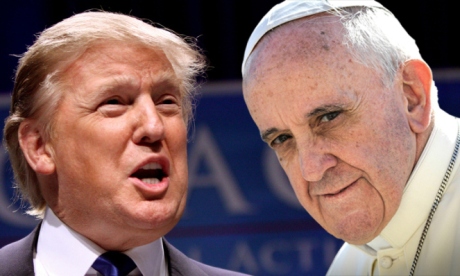
The pontiff demonstrated a remarkably tin political ear when he suggested that “anyone who builds walls” isn’t a Christian, which a clear shot at Republican presidential frontrunner Donald J. Trump.

The pope should have known that Trump would respond as he has done. He should have anticipated the firestorm he would create when he weighed in on the American presidential campaign.

He didn’t do that. Yes, the pope tried to take back some of what he said initially. It was too late to tamp down Trump’s anger — not to mention the anger of those who are supporting his presidential candidacy.

The Washington Post does take note of the fundamental message the pope sought to deliver, which is that we should treat each other with more humanity. We shouldn’t fall into the trap of demonization.

Of course the pope’s comments drew a sharp response from those who have noted the Vatican — where the pope lives — also is surrounded by walls. Hmmm. Well, I would simply add that the comparison isn’t entirely an accurate one, given the security concerns that the pontiff, whoever he is, has faced for centuries from those who would seek to do harm to him and the Catholic Church.

Whatever his noble intentions, the pope — if you’ll pardon the indelicate language — has managed to step in it.


Court to rule on Cruz’s eligibility to run

IMG_0631_JPG_312x1000_q100

It won’t be the “big court” that will decide it, but a judge in Illinois has agreed to hear a case that’s been dogging a major Republican presidential candidate ever since he entered the race.

U.S. Sen. Ted Cruz of Texas was born in Canada; his mother is American, a U.S. citizen. His father is Cuban.

Cruz has maintained that because Mom is an American, he was a U.S. citizen the instant he was born. Thus, says the candidate,  he is eligible to run for president as a “natural born citizen.”

But a fellow who happens to support Ben Carson, another GOP presidential candidate, has filed a lawsuit to challenge Cruz’s assertion.

Of course, we have Donald J. Trump continuing to threaten to sue.

The Circuit Court of Cook County, Ill., has agreed to hear the case. I wish the U.S. Supreme Court would hear it; perhaps it will … eventually.

To be honest, I am tired of this kind of hatchet-job politicking on candidates. I do not want Cruz to become president of the United States. However, I believe he is right to say that he is fully eligible to run for the office.

Let the judge decide.

I’m not a legal or constitutional scholar, but the way I read U.S. law as it refers to citizenship, the senator has made his case.

I doubt a lower court decision is going to provide any closure. Still, I am glad that someone with legal authority — and presumably the educational background — to make an informed decision will take us closer to ending this ridiculous discussion.


Baylor joins universities to ban guns on campus

gunviolence

Another private institution of higher learning has made the correct call.

No guns will be allowed on our campus, according to the folks who run Baylor University.

Baylor President Ken Starr has announced that the school he leads won’t allow students or faculty to pack heat on the Waco campus.

It’s interesting to me that so many private schools have opted out of allowing open-carry of firearms. The law — which takes effect Aug. 1 — pertains to public colleges and universities, although the chancellor of the University of Texas System isn’t exactly a fan of open-carry legislation.

Baylor acts wisely

The private schools are lining up clearly against the law.

I understood the prevailing attitude among Texas legislators who voted to allow firearms to be carried openly in this state. I don’t have serious objection to the open carry law. I’m only a little bit queasy about it.

The college campus provision, though, does give me more serious pause.

The law allows Texans who are certified to carry concealed weapons to pack them in the open. Some foes of campus carry, though, have raised fair concerns: What about the student who gets a grade with which he or she disagrees — vehemently? Would that student react so badly as to do serious harm to the professor while carrying a firearm?

Baylor University has joined the list of private schools that have opted out of allowing guns to be carried openly on campus.

Good.


Commentary on politics, current events and life experience