Tag Archives: Barack Obama

Bergdahl may be POTUS’s most stinging embarrassment

bowe

Barack Obama’s presidency is just about set to head into the home stretch.

I believe history over time will judge the Obama presidency well, even as many Americans now worry about the terror threat that, frankly, has been with us all along.

There likely will be a singular embarrassment, though, for the president that he might have to explain.

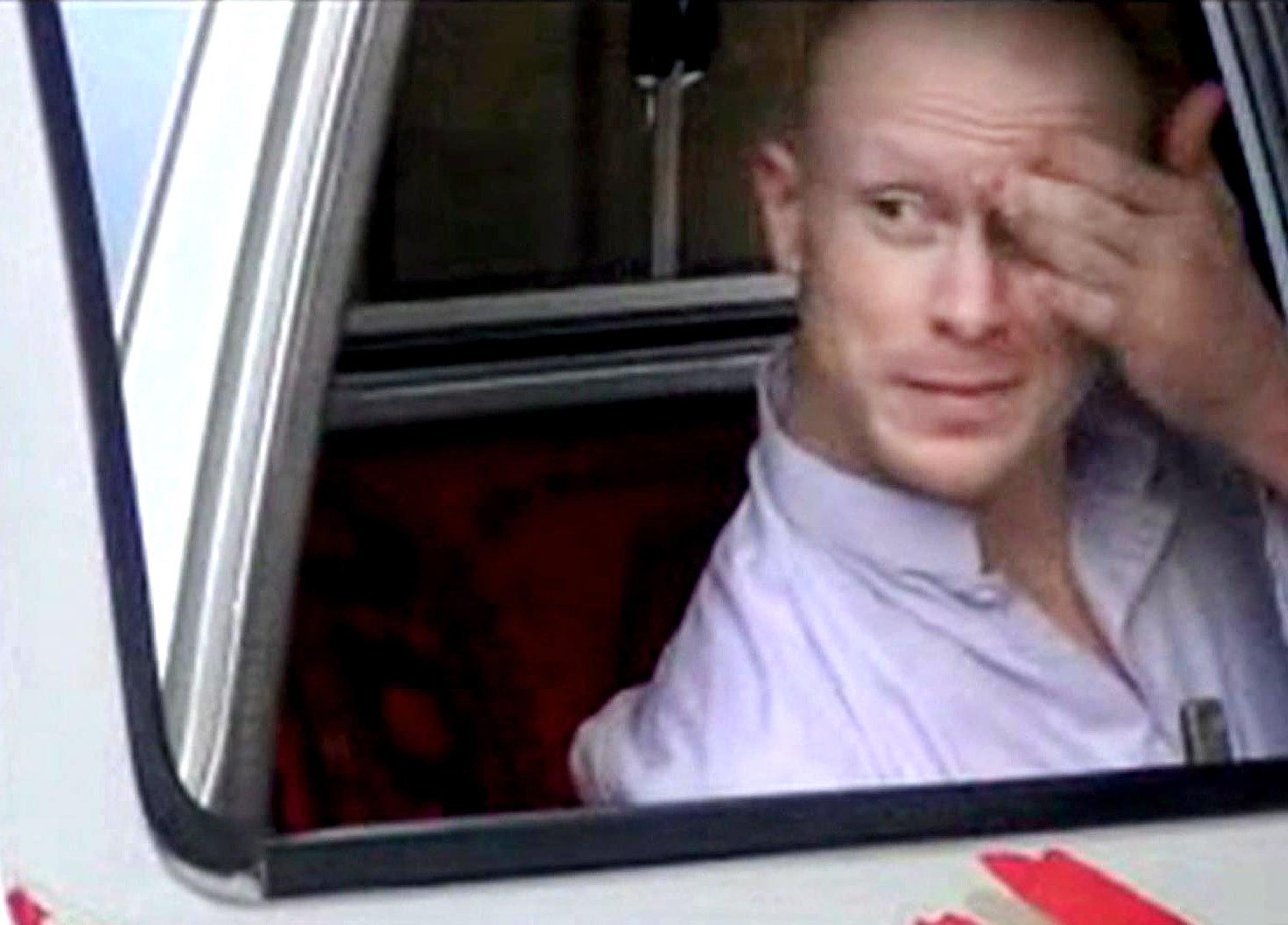
U.S. Army Sgt. Bowe Bergdahl is facing a court-martial on two critical counts: desertion and endangering his unit. Bergdahl was the subject of a prisoner exchange in which our side gave up five Taliban fighters in exchange for Bergdahl, who’d been held by the Taliban for about five years.

Once Bergdahl came out, he was honored by Barack Obama in a White House ceremony that included his parents. The president spoke of how the U.S. military “never leaves comrades behind.” He spoke of Bergdahl as a hero.

Well, a military court is going to decide whether Bergdahl abandoned his post in Afghanistan and whether his conduct put his fellow soldiers in danger.

I’ve sought to withhold judgment on Bergdahl, preferring to let the court decide his guilt or innocence.

If the court-martial convicts him, then the president will have to explain to Americans the reason for giving him such a hero’s welcome. And, of course, there’s the issue of negotiating the release of five known Taliban terrorists — which is what they are, no matter that the administration refuses to label the Taliban as a “terrorist organization.”

This court-martial will be worth the nation’s attention.


Hitting ISIL ‘harder than ever,’ but is it hard enough?

syria-air-strikes-600x376

When the White House announces that the president of the United States is going to the Pentagon to make a statement, I tend to expect something big … maybe really big.

President Obama made a statement today, but I must say it left me wishing for more.

It didn’t come.

The president, though, did restate his anti-Islamic State war strategy but did so with a good bit more vigor.

It looked like a do-over from his brief speech a week ago that left many Americans — even some Democrats who normally support the president — wondering when the commander in chief is going to get seriously worked up over ISIL’s reign of terror.

The numbers add up to significant damage being inflicted on ISIL, the president said. Here’s part of what he said:

“We are hitting ISIL harder than ever. Coalition aircraft, our fighters, bombers and drones have been increasing the pace of airstrikes, nearly 9,000 as of today,” Obama said, adding that ISIL has lost roughly 40 percent of the territory it once held in Iraq.

I happen to agree with Obama that we need not send a huge ground force back into Iraq to fight the Islamic State.

To be honest, though, I’m waiting for evidence that the strategy we’re pursuing is actually forcing ISIL’s retreat. The president said we’ve retaken a large percentage of ISIL territory, but then we see reports of ISIL scoring more battlefield victories.

I’m going to continue hoping that one day we’ll be able to hear a presidential statement — whether it’s the current one or the individual who succeeds him — that ISIL has, in fact, been destroyed.

However, I will not hold my breath.


Why is cutting carbon emissions so bad?

banner_emissions

President Barack Obama is singing high praise for the worldwide climate deal brokered in Paris this past week.

No surprise there, right? The president believes, as many of us out here do — me included — that human activity has contributed to the worsening of our worldwide environment.

However, you know what? I’m not going to debate that point. Skeptics of the climate change crisis have their minds made up; those of us on the other side have made up our minds, too.

So, we’ll go on with the rest of the discussion.

The agreement calls for reducing carbon emissions, those pollutants that come from fossil fuels. They increase carbon dioxide levels in the atmosphere and create a gradual warming of the atmosphere.

Beyond that, though, why is it a bad thing — as some interested parties contend — to cut those fossil fuel emissions.

This deal, they say, is “no better” than the Kyoto Protocol worked out during the Clinton administration in 1997. It never was ratified by Congress. President George W. Bush, Bill Clinton’s successor, said the agreement would cost American jobs and would give emerging powers — such as China and India — a free pass.

I keep coming back to the notion, though, that reductions in these emissions — which are indisputably harmful to Earth’s ecosystem — will produce a net positive impact on the future of the planet.

We can conserve those fossil fuels, which are a finite resource. We can invest in alternative energy sources, such as wind, solar and — yes! — nuclear power.

As Politico reports as well, there was some water down of the language in the agreement, which initially stipulated that developed nations “shall” cut those greenhouse gases; Secretary of State John Kerry got the conferees to change that language to “should” with the hope it would stand a better chance of being ratified by the Republican-controlled Congress.

http://www.politico.com/story/2015/12/paris-climate-talks-tic-toc-216721

Shall or should? Whatever.

The goal remains the same: to reduce greenhouse gases that harm the only planet we have.

How can that be a bad thing?


Executive orders go with the job

Law-Concept-300x270

Presidents serve as the nation’s “chief executive” and, therefore, have the constitutional authority that goes with the title.

An interesting graph came across my radar this afternoon. It comes with a year-old story, but it’s still rather fascinating.

Republicans have been pummeling President Obama by alleging that he’s too quick to issue executive orders, that he circumvents Congress too willingly.

The graph tells a fascinating tale of just how the 44th president has under-utilized the executive authority granted to him by the U.S. Constitution.

Take a look at the graph. You’ll see a number of interesting things.

One is an obvious point. President Franklin Roosevelt is the all-time champ at issuing presidential executive orders. No surprise there: He served three full terms and was elected to a fourth term before dying in office in April 1945.

It’s interesting, though, to look at who’s No. 2 in the executive authority rating. It’s FDR’s immediate predecessor, President Hoover, who served just one term.

A Democrat is No. 1, a Republican is No. 2, while Democratic President Woodrow Wilson is a close third.

That power-hungry and allegedly “lawless” 44th president, Barack H. Obama? He’s issued the fewest executive orders since President Grover Cleveland. (I’ll add here that the numbers of presidential executive orders are as of Oct. 20, 2014.)

So, I guess my question is this: What’s the beef with the current president’s use of the executive authority?

‘Tis the season … of the polls

Polls%20and%20Surveys%20pic

Donald Trump loves polls, especially when they show him leading the still-large pack of Republican presidential candidates.

Barack Obama isn’t so much in love with them.

However, the great underreported story has to be Congress’s continued miserable standing among American voters, according to those pesky polls.

I follow RealClearPolitics summary of polls. I like tracking the president’s poll standing, not to mention the candidates seeking to succeed him a year from January.

But look at how poorly Congress is faring.

The RCP polls are a compilation of leading public opinion surveys. The last one, which I have attached to this blog post, puts Congress’s rating at 12 percent.

Twelve percent!

Nearly nine out of 10 Americans surveyed think Congress is doing a crappy job of governing.

President Obama’s latest poll standing, while not great, is at around 43 percent. There’s an 8-point difference between those who approve of the job he’s doing and those who disapprove. The congressional approval/disapproval spread? How about 63.8 percent?

I’m not usually one to rely too heavily on polls. I understand their nature, that they serve merely as snapshots that capture a political moment. Polls go up and down like Yo-Yos.

However, while Obama’s critics keep lambasting his lackluster poll numbers, they don’t seem to take into account that Congress’s poll standing is far worse — and it, too, hasn’t moved much at all for, oh, about the past three years.

Obama is a member of one party; Congress is controlled by the other party.

The president’s polling isn’t great. Congress’s standing is downright miserable.


Obama fails to channel LBJ

claire

Claire McCaskill calls herself a “friend and supporter” of Barack Obama.

But the Democratic U.S. senator from Missouri has issued a candid assessment of the job her fellow Democrat has done as president of the United States.

The president’s major failing, according to McCaskill? He did not learn how to work with Congress.

The Hill reports on McCaskill’s remarks about Obama: “But one of the president’s shortcomings is that sometimes he sees the world through his eyes and doesn’t do, I think, enough work on being empathetic about how other people view things.”

McCaskill blisters president

In truth, McCaskill might be a bit behind the curve when critiquing the job the president has done.

I don’t think he’d mind my saying this, but a now-retired college administrator told me much the same thing during the president’s first term in office.

Former Amarillo College President Paul Matney and I were having lunch one day when Matney lamented the president’s testy relationship with congressional leaders. Matney wished that the president would employ the skill that the late President Lyndon Johnson used to great effect.

Johnson, of course, rose from the Senate to the executive branch of government, as Obama has done. LBJ served as vice president from 1961 until Nov. 22, 1963. Then he became president in the wake of tragedy.

When LBJ moved into the Oval Office, he harnessed all his legislative skill to shepherd landmark legislation through Congress. He was a master of working not just with fellow Democrats, but with Republicans.

Matney bemoaned that President Obama had not developed that kind of bipartisan rapport and it cost him dearly.

McCaskill now — near the end of Barack Obama’s presidency — echoes much of what Paul Matney said years ago. LBJ’s legacy, which was tainted for many years after he left office in 1969 by the Vietnam War, is beginning to look better all the time.

He understood that he needed the legislative branch to make government work, that he couldn’t do it all alone.

As Sen. McCaskill has noted, Barack Obama hasn’t seemed to have learned that lesson.


Always a political back story

refugees

I am a strong believer in what the Founding Fathers intended by creating an independent federal judiciary.

They gave the president the authority to nominate federal judges for lifetime jobs, pending approval by the U.S. Senate. The intent, as I’ve always understood it, was to de-politicize the judicial branch of government.

It works.

Judge blocks order

Then again, politics always seems to be part of the subplot of every federal judicial decision.

U.S. District Judge David Godbey, for example, today struck down Texas Attorney General Ken Paxton’s ban on Syrian refugees coming to Texas. Paxton cited security concerns in asking for the temporary restraining order. Godbey ruled within hours of the request that Paxton had failed to demonstrate that the refugees posed any kind of threat.

Godbey wrote, according to the Texas Tribune: “The Court finds that the evidence before it is largely speculative hearsay,” the judge wrote. “The [state] has failed to show by competent evidence that any terrorists actually have infiltrated the refugee program, much less that these particular refugees are terrorists intent on causing harm.”

So, it’s fair to ask: Is this judge sitting on the federal bench because a liberal Democratic president, Barack Obama, appointed him? No. He was selected in 2003 by Republican President George W. Bush to serve the Northern District of Texas. Paxton, let’s point out, is a Republican as well.

Does it really matter, then, whether a judge gets picked by a Democrat or a Republican? It shouldn’t. Judges take an oath to uphold the Constitution without regard to political favor. They do, remember, have a lifetime job.

But the politics of this particular issue — the refugee crisis and the political debate swirling all over it — causes one to look carefully at who’s making these decisions.

Judge Godbey appears to have put the law above his political leanings.

OPEC sends a Christmas gift

gas

Bloomberg News reports that the price of gasoline is about to plummet.

Good news, yes? Sure, if you’re a motorist who dislikes pouring money into his motor vehicle fuel tank. I’m one of those.

If you’re a government official who serves a state — such as, say, Texas — that depends on oil revenue to fund government services, well, the news isn’t so great.

My self-interest makes me happy about the news.

OPEC is refusing to cut production of oil. U.S. supplies are at an all-time high. We’re driving more fuel-efficient vehicles these days. We’re developing alternative energy sources. Hey, it’s all good.

I don’t like paying nearly four bucks a gallon for fuel, which is what we were shelling out two years ago. Today, the price of gasoline in Amarillo is around $1.62 per gallon.

It’s interesting, too, to note the silence from Barack Obama’s critics now that fuel prices are heading south. When they were skyrocketing in the other direction about midway through the president’s first term, the critics were blaming him personally for the hardship. These days, he’s getting none of the love.

Does he deserve it? Aww, probably not.

Neither did he deserve the blame when the prices were going the other way.

Thanks, OPEC, for the holiday gift.

Merry Christmas to you, too, OPEC.

Pearl Harbor: Infamy will live forever

attack

Seventy-four years ago today, airplanes swooped in over Honolulu and bombed the U.S. Navy base at Pearl Harbor.

Battleship Row was decimated. The pilots in those planes then took aim at Hickam Field, where the U.S. Army had a substantial air base. More destruction followed.

Japan had committed an act of war against the United States.

The next day, President Roosevelt stood before the Congress and asked for a declaration of war. He got it by the end of the day.

War was a simpler endeavor back then.

One nation attacked another. The victim of that attack then declared war; the nation that did the attacking declared war right back. Both nations mobilized and sent young service personnel to the battlefield to fight it out.

Yes, we remember Pearl Harbor today as a “date which will live in infamy,” as FDR told us.

The young men we sent off to war — or what’s left of them — are old now. They’re in their 90s.

All told, the United States put 16 million men and women into uniform during that terrible period. Last I heard, there were around 2 million of them left.

We owe them everything. Our freedom. Our way of life.

Today, war looks different. We aren’t fighting nations. We are fighting ideologies. We are fighting a cunning and ruthless enemy.

Is a declaration of war possible now, in this era when we’re waging a conflict with an elusive force that stops at nothing to kill innocent victims — in the name of what they call “religion”?

I believe it is. The current president, Barack Obama, has asked Congress for what amounts to a war declaration. He wants a vote to “authorize” continued warfare against an enemy that has committed acts against us that are — in FDR’s words — every bit as “dastardly” as the attack on Pearl Harbor.

War, though, isn’t as simple now as it was then. Politics has gummed up our national resolve.

Still, we ought to keep those brave warriors — the living and those who have passed from the scene — who answered their nation’s call to arms more than seven decades ago in our thoughts today.

Their nation rallied behind them and crushed the tyrants who sought to bring so much harm to the world.


President restates anti-terror policy, and then …

barack

President Obama has asked something of Congress that the legislative branch of government isn’t likely to do.

He wants Congress to authorize the commander in chief to keep up the fight against the Islamic State and other terrorist organizations abroad.

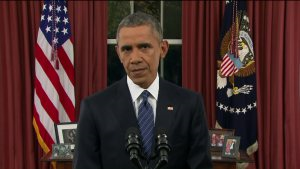
The president’s speech from the Oval Office tonight didn’t break much new ground. He restated what he’s already done in the effort to destroy ISIL.

The bombing campaign will continue; we’ll deploy special forces to work with local ground forces in Iraq and Syria; we’ll keep hunting down terrorist leaders; we will work with allies such as France, the U.K. and Germany to pound terrorist targets; and we will seek to negotiate a ceasefire in Syria so that our allies and “other countries, such as Russia” can concentrate on eliminating international terrorists.

Then came the challenge to the other branch of government that needs to buy into this struggle.

Congress must vote to authorize continued action. The British Parliament enacted a similar authorization this past week and within minutes of the vote, British jets took off to hit ISIL targets in Syria.

The president has asked Congress, in effect, to issue a declaration of war against ISIL. Will it happen? I’m not holding my breath.

Republicans who control both legislative chambers seem to believe we need to commit ground troops to this fight. They want to return American service personnel to the battlefield. Air strikes aren’t enough, they say. So, let’s put “boots on the ground.”

The president won’t do that. He reiterated that view again tonight.

However, he has tendered a reasonable challenge to Congress. Let’s put forward a united front to our enemies, authorize the president to continue the fight and demonstrate that the United States is fully committed to winning this war.

My own view is that we’re at war with the Islamic State, then the president needs to ask Congress to issue the declaration of war … and that Congress needs to act.

What we have now on the table is the next-best thing.

Members of Congress, give the president the authorization he seeks to fight this war.