Tag Archives: media

Time of My Life, Part 48: Still able to keep up with fast-paced story

I have returned to the game of print journalism, even if it isn’t daily print journalism.

Still, writing for a weekly newspaper presents a whole new set of challenges … such as trying to keep pace with a story that is changing damn near hourly.

Forgive the boast, but I am happy to report that I still am able to remain nimble enough to hit a fast-moving target.

The target is the coronavirus, aka COVID-19. They’ve declared it a worldwide pandemic. It is killing thousands of people daily.

How does that affect my freelance gig? The Farmersville Times covers a lovely community in Collin County, Texas, about seven miles east of where my wife and I live in Princeton; I write for the Times. I have spent the past few days keeping pace with the outbreak of COVID-19 in Farmersville.

I was assigned a story to write for the Times that looked at how the community’s first responders — namely firefighters and police officers — are coping with the pandemic. My initial story said there had been no reported infection in Farmersville.

Then it changed. Rapidly.

The publisher, my boss, notified me that Collin County Public Health officials reported several cases in Farmersville. I had to make contact with the police and fire chiefs for updated information. I was able to do so quickly. They provided the information I was seeking.

However, the story likely continues to move even as I write this brief blog post.

Indeed, I have no idea how many — if there are any to report — new cases of coronavirus have been reported in Farmersville just since I filed my amended version of the original story.

By all means, we are experiencing a crisis that tests us all. I just have to stay nimble.

Newspaper industry is changing even more rapidly

To those of you who either have worked in newspapers, known someone who has worked for them, or has had either a passing or passionate interest in the information that newspapers convey … you need to read the article I have attached to this blog post.

A former colleague of mine, a one-time production director for a Texas newspaper, brought it to my attention.

Read the article here.

It’s lengthy, but take my word for it: If you have any interest at any level in a changing — and likely dying — industry, it is worth your time.

I won’t spoil the ending for you, but I will offer this nugget of what the article tells us:

The coronavirus pandemic that has shuttered businesses around the world and probably changed our lives forever and ever has brought about a rapid acceleration in the changes that await the newspaper industry.

Ken Doctor, author of the essay, writes: Make no mistake, though: Many of the decisions being made right now and in the next few weeks will be permanent ones. No newspaper that drops print days of publication will ever add them back. Humpty Dumpty won’t put the 20th-century newspaper back together again. There can be no return to status quo ante; the ante was already vanishing.

The trends that were supposed to occur in, say, 2023 or 2025 are occurring right now.

It ain’t pretty, ladies and gentlemen.

I am a former newspaper guy. I spent nearly four decades practicing a craft that I loved. I am officially saddened by what I fear is coming at us much more rapidly than I ever envisioned.

Media become ‘straw man’ for Trump, supporters

I want to push back against those who have taken to blaming the media for Donald Trump’s wholly inadequate response to the coronavirus pandemic.

Michael Goodwin, a columnist for the New York Post, posited an opinion that the media are more interested in taking Trump down than on reporting the facts. Goodwin writes:

In the real world, events are unfolding at a pace and scale impossible to comprehend. But at too many news outlets, the aim is not to inform. It is to render the harshest possible judgment on the man journalists love to hate.

Goodwin’s mind- and heart-reading ability must be astonishing in the extreme. To my way of thinking, he is letting his own bias get in the way of anything sort of rational analysis.

The media are trying to pry the truth out of a president who so far in his term in office has demonstrated incessantly an inability to offer the truth. Reporters and editors deal with truth. It is what they peddle as they seek to chronicle the news of the day, to inform the public about what their government is doing for them or, sadly, to them.

The coronavirus pandemic has gotten away from the federal government. It is running rampant now throughout the nation. We haven’t seen the worst of it. My hope and the hope of all our citizens — and that includes media representatives — is that we’ll get to the worst far sooner rather than later. Then maybe we can start to return to some semblance of normal life.

The media’s task is to tell the public whether their government is doing what it can to make that happen.

Donald Trump just happens to be the head of the executive branch of government. He hasn’t performed adequately. The media are reporting on his decisions and the processes that lead to them.

Do the media’s reports flatter the president? Do they gloss over the actions he has taken or failed to take? No and no. Is the media’s responsibility to cast the president in a positive light? No. Their responsibility is to tell us the truth.

Period.

I’ll provide Goodwin’s column here. I also will stand by my pushback against those who seek to blame the messenger who insists on doing an unpleasant job, which is to deliver bad news.

Trump resumes feud with media

Well, that was a nice break while it lasted.

Donald Trump took time the other day to offer a good word about the media and their work in covering the coronavirus pandemic. It gave some of us a glimmer of hope that the president was finally beginning to act the part he portrays.

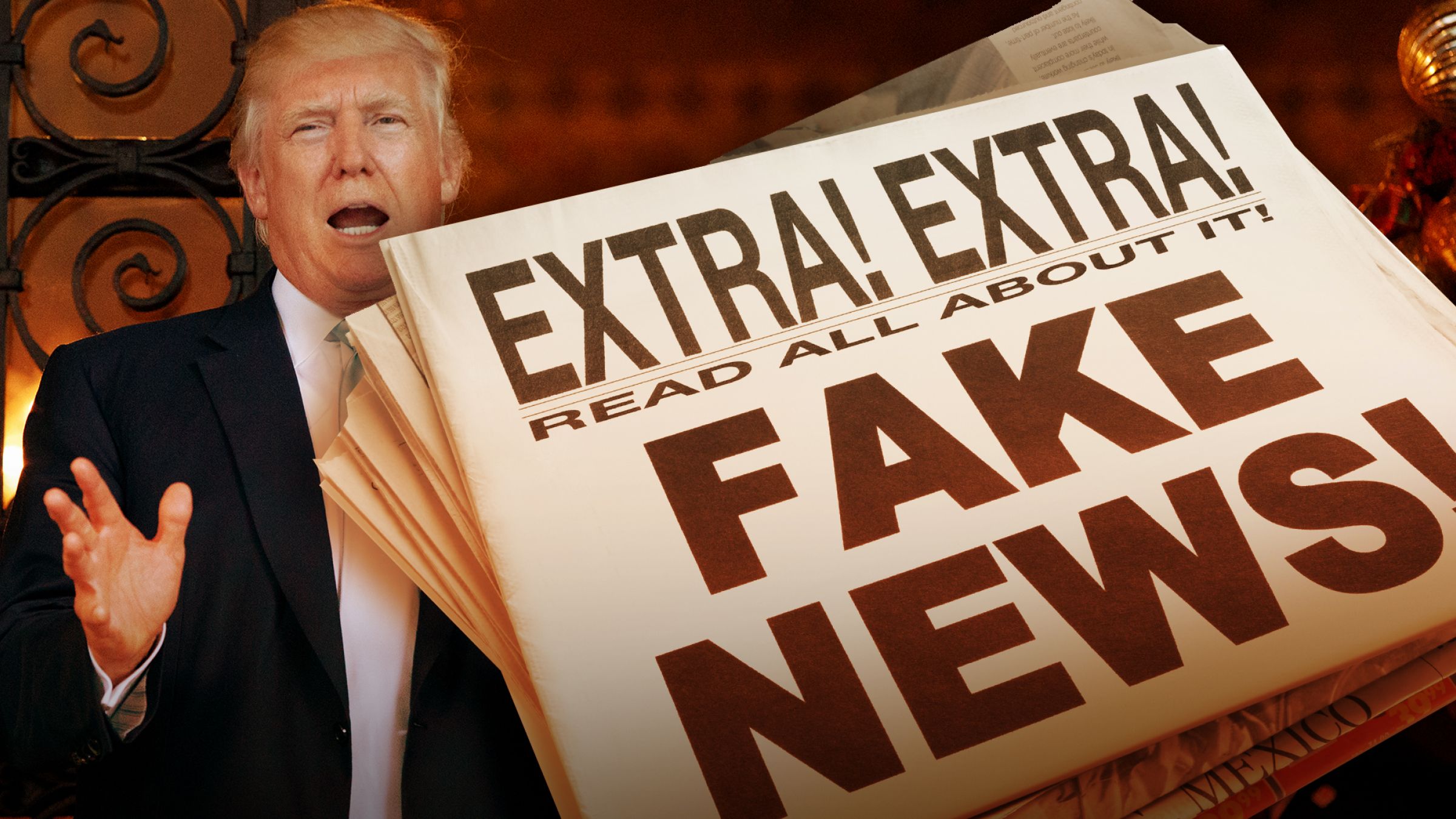
Silly us. He resumed his feud today, blasting the “fake news” the media purportedly conveys. He blasted The New York Times, The Washington Post, The Wall Street Journal, all of which are great newspapers full of dedicated journalists who do their job to the best of their considerable ability.

None of that matters to this president, who passes judgment on media outlets based on whether they report “positive” news about his administration.

Yep, the feud is back on.

Disgusting.

Media earn a shout out on pandemic coverage

I imagine you’ve heard the gripes, mostly from conservatives, who bitch about the media coverage of the coronavirus pandemic.

They complain that the media are covering this matter so intensely for the so political harm to Donald John Trump

Their complaints are without basis. They are dubious in the extreme.

The media have done a spectacular job covering this crisis. And it is a crisis, no matter how many times some of our political leaders — such as The Donald — might seek to understate its impact on the world.

The media coverage arc has tracked like many of these events often do: They report on an incident, give it the attention it deserves; they follow its progression, then report on increases of incidents; then the story explodes when governments start reacting to the increasing instances of illness … and death.

The World Health Organization has weighed in with a declaration that the coronavirus outbreak has reached pandemic status, which quite obviously is a major development. The media have covered the WHO involvement carefully and thoroughly.

What’s more, the media have explored the nuts and bolts, the ins and outs, the zigs and zags of this issue from damn near every angle imaginable. There are quite likely to be even more angles to cover.

As for the political impact, well, let me just declare that the media only have reported the stumbles, bumbles, bungles that have come from the U.S. government’s highest levels. There can be no way for the media to paper it over. Has it harmed Donald Trump? Yes, more than likely. Is it the media’s fault? Hell no! The media are simply the messengers delivering the news.

So it has gone. The media are charged with the responsibility of chronicling what government does for us … and to us. The Constitution protects the rights of a “free press” and the media seek to be true to the document that informs government that it cannot interfere with or manipulate them.

The media will continue to do their job as the pandemic likely worsens. They will report to the world what they see without regard to the political consequences, which are of no concern to journalists who simply are doing their job.

Temporary pay cut? Are they serious?

The Tampa Bay (Fla.) Times has made an announcement likely prompted many of us who toiled in the craft of daily journalism to laugh out loud.

The Times announced a “temporary” pay cut of 10 percent. Temporary? Yes. The times management vows to restore everyone’s pay in June.

Sigh.

Look, I have been through a couple of these pay cuts. They weren’t announced as temporary by Morris Communications, the corporate owner of the paper where I worked at the time. I went through this agony twice, in addition to watching the company cease its corporate match of our retirement fund. Morris’ high command made some bad business decisions and dished out punishment to those of us who had to live with the consequences.

The Tampa Bay Times brass says revenues are down. The newspaper intends to right the ship over the next few months.

Good luck with that. The media climate is changing under their feet. I wish them well. I want my former colleagues to be made whole.

I just fear that the “temporary” pay cut will be nothing of the sort … unless “temporary” morphs into layoffs.

Time of My Life, Part 44: Recalling a time of trust

There once was a time when public officials trusted the media implicitly, they believed the media could have access to information and would know how to handle what they see.

That was long before the age of social media, the Internet and politicians who would label the media as “the enemy of the people.”

My first full-time job as reporter took me in the spring of 1977 from Portland, Ore., to a suburban community about 15 miles south of my hometown. I went to work for the Oregon City Enterprise-Courier, first as a sports writer and then as a general assignment reporter. The E-C was an afternoon newspaper; we published it Monday through Friday.

Given that it was a “p.m.” newspaper, our deadlines required us to report for work early in the day. My work days started before the sunrise, particularly after I moved from the sports desk and started working as a reporter.

My editor assigned me the task of going to police dispatchers’ offices each morning to collect the overnight police activity. The core of our circulation area concerned the Tri-Cities region: Oregon City, West Linn and Gladstone.

I would make the rounds with all three police departments, plus the Clackamas County Sheriff’s Office. The dispatchers would allow me to look at the call logs and — upon request — I could look at the police officers’ reports they had filed on specific calls.

That’s right. The dispatcher would give this grimy reporter access to the cops’ reports. Some of them were amazingly graphic in nature. The reports weren’t, um, often not that well-written. I occasionally had to interpret the messages the officers intended to convey.

But these police reports often provided some amazing stories that I could report to our community. One strange incident stands out, even more than 40 years later. It involved an Oregon City Police Department report about an officer responding to a guy who got stuck in a telephone booth in the wee hours. This poor schlub had used the phone, but couldn’t jimmy the door open so he could exit. He called the cops and an officer — along with a firefighting crew — responded to pry the guy out of the booth.

I followed a simple and straightforward credo: I was able to earn the trust of the dispatchers simply by being faithful to my pledge to treat the information I received with discretion.

Indeed, I never felt like anyone’s “enemy.” Nor do today’s journalists.

In defense of NPR

Secretary of State Mike Pompeo needs yet another lesson in just how the media do their job.

They ask tough questions. They seek direct answers. They also seek to report those answers to the public they serve. You and I depend on the media for answers to our own questions about what our government — especially at its highest levels — are doing ostensibly on our behalf.

National Public Radio reporter Mary Louise Kelly asked Pompeo why he hasn’t defended former Ukraine ambassador Marie Yovanovitch against criticism leveled at her by the current president of the United States, Donald John Trump.

He dodged the question, saying he has defended “everyone” in the State Department. Kelly sought a specific example of how he has defended Yovanovitch. He cut her off, summoned her to his private quarters, then lashed at her with a profanity-laced tirade, saying that NPR is part of the “unhinged” media that demonstrate a hatred for Trump.

Kelly was doing her job. She has not done a thing for which she should apologize.

Time for full disclosure: I work as a freelance blogger for a public radio station, KETR-FM, based at Texas A&M University-Commerce. 

With that out of the way, I want to tell you that NPR goes the extra mile in ensuring that it reports the news fairly and without overt bias.

A friend of mine who works in public radio explained to me once about NPR’s policy that it enforces strictly. He said that during the coverage of the health-care changes that resulted in the Affordable Care Act, NPR reporters were counseled by their editors to refrain from using the term “reform” to describe the ACA. “It isn’t a ‘reform,'” my friend told me. NPR affiliates were told us call it “overhaul.”

You see, the term “reform” implies an improvement over the status quo. Thus, to describe the ACA as a “reform” would be to endorse it as a policy in NPR’s news coverage. That’s how my friend characterizes the ethos that drives NPR’s reporting of important issues of the day.

And so, it is against that backdrop that I find Mike Pompeo’s tirade against a seasoned, well-educated, dedicated reporter such as Mary Louise Kelly to be just another ignorant tirade coming from a senior official in the Donald Trump administration.

Reprehensible.

Listen up! No politics in church!

I have sought to follow a time-honored credo, which is that I don’t discuss politics or my work while I am in church.

My response usually goes like this when someone would challenge something I wrote in the newspaper where I worked at the time: I came here to talk to God, not to you … about my work; call me in the morning, then we’ll chat.

We have relocated in the past year to a lovely community in Collin County, Texas. We have found a new church where we like to worship each Sunday. It’s a small congregation, but it fulfills our need. Everyone is welcoming, warm, hospitable and the place is full of love.

However … we have run into individuals who like to talk politics with us, or I presume just about anyone who’ll listen. It wouldn’t surprise you to learn that the congregation is a pretty conservative bunch, which is all right with me. That’s their call. I adhere to, um, a different point of view.

Thus, when one of our new friends decides to engage us in a political discussion, I am inclined to nudge them away. I change the subject. I haven’t yet offered up my longstanding retort. Hey, I don’t know them well enough yet. Perhaps over time, they’ll get the hint and I won’t need to drop the verbal hammer on ’em.

If not, I am ready to put them into what I perceive to be their place.

‘Liberal hack’ attack is now the new normal?

U.S. Sen. Martha McSally is a supreme disappointment to me, as I once said something nice about the grace she exhibited in losing an earlier race for another vacant Senate seat in Arizona.

Now the Republican seeking election to a seat to which she was appointed is turning into, shall we say, a “conservative hack.” Why? Because she called a CNN reporter a “liberal hack” who had the temerity to ask her a straightforward question devoid of any political taint or bias.

CNN Capitol Hill reporter Manu Raju asked McSally if she supported calling for additional evidence and witnesses in the upcoming impeachment trial of Donald John Trump, the current president of the United States.

“You’re a liberal hack; I’m not talking to you,” McSally snapped at Raju. Huh? That’s how it goes? A working journalist asks a question that requires at minimum a “yes” or a “no.” She chose to bite back at someone who is merely doing his job as a correspondent for a major newsgathering organization.

This is the “media is the enemy of the people” strategy employed by Donald Trump against those in the media who continue to provide critical coverage of events and statements from the president and his allies — when it is deserved!

McSally, a backbench senator who was appointed to replace former Sen. Jon Kyl, who served briefly after the death of the great Sen. John McCain. She earlier had run against Democrat Kyrsten Sinema for a seat vacated by the retirement of Jeff Flake. That race was a nail-biter, but McSally conceded with grace and class to her opponent.

Thus, I had hope she would comport herself with dignity when she got the appointment to succeed Kyl. Silly me.

McSally doubled down on her slap back at Raju, recalling that she was “a fighter pilot.” Indeed, she is U.S. Air Force Academy grad who saw combat duty in Iraq.

Her petulant display, though, bodes grimly for the state of political discourse at least where it involves this federal legislator. Perhaps she is feeling the heat of sagging poll numbers in Arizona, where she is trailing possible Democratic challenger Mark Kelly, a former shuttle astronaut.

Whatever the case, Manu Raju — seeking a simple answer to a direct question — didn’t need the high-profile slap in the face by Sen. McSally. Bad call, senator.