Tag Archives: Amarillo City Hall

Keep the cameras on duty

My request of the Amarillo City Council is simple and straightforward.

It should agree to expand the deployment of red-light cameras to other troublesome intersections in Amarillo.

Council members are reportedly ready to make a decision. They have targeted a half-dozen intersections where motorists are prone to running red lights. The city already has cameras keeping an eagle eye on lawbreakers; the camera snaps pictures of those who run through the lights and the city sends fine notices to the registered owners of the motor vehicle that has been used in the traffic infraction.

The cameras have worked so well at one intersection — Coulter and Elmhurst — that the city is considering disconnecting the cameras at that location.

The council has received some disturbing news at one level. A lot of the fines the city has assessed have gone unpaid. The count is more than 11,000 of them issued in 2017. Of course, the city cannot let those unpaid citations go unaccounted for.

Council members have learned that the Traffic Department has improved signalization at several intersections with the money collected from the red-light cameras. That, I should add, is how the Legislature stipulated the money must be spent in cities that deploy the cameras.

While some cities have cratered under criticism of this technology, I am delighted to see that Amarillo is staying the course … at least for now. My hope is that it stays the course for the long haul.

Motorists need to be aware that intersections are being equipped with this technology. The more the merrier. The cops cannot be everywhere all at once. The city has taken a proactive approach to dealing with a problem that has caused considerable misery, damage and grief because motorists choose to disobey the law.

My hope is that the City Council proceeds with an expansion of red-light camera traffic enforcement.

***

https://highplainsblogger.com/2013/02/stand-your-ground-commissioners/

Yes on Barfield … what about the Herring?

A trip into downtown Amarillo, Texas, today brought to mind a question about the central district’s future.

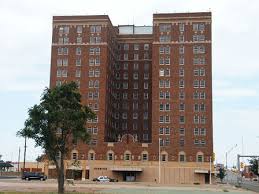
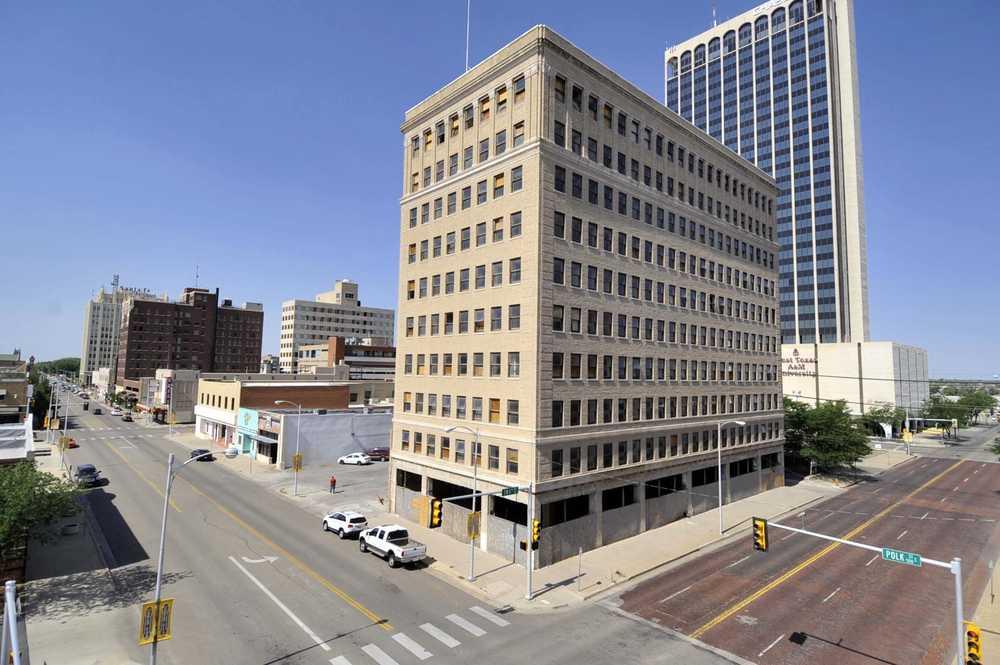
If the Barfield Building — a seriously rotting hulk of a structure — can be targeted for renovation as a Marriott niche hotel, why can’t anyone come forward to revive an even more iconic structure, the Herring Hotel?

I am acutely aware that I am shooting from the hip, that there’s a lot about downtown redevelopment’s nuts and bolts that I don’t know.

I’m going to keep shooting, however.

I made the drive this morning down Third Avenue, past the Herring. I turned left on Polk Street and drove past the Barfield. As I looked at the Barfield’s busted windows and hideous exterior appearance, I thought immediately of the Herring, which looks at first (or even second) glance to be in better physical condition than the Barfield.

Robert Goodrich, a retired college professor of urban planning, has owned the Herring for quite a few years. He pays the taxes on it and seeks to find investors willing to sink some dough into reviving it. I’ve talked many times over the years to my friend Bob about the Herring. He is full of ideas and concepts. They include partial-use retail and apartment living plans.

Don’t misunderstand me. I am glad the Barfield might get a new lease on its long-abandoned life. It’s far from a done deal, even though a recent Amarillo Globe-News article on the Barfield offers encouragement to those who want to see the Barfield restored.

Many others, though, want the same thing for the Herring.

I’ve had the pleasure of walking through the ground floor of the Herring. I was working on a story for KFDA NewsChannel 10’s website when Goodrich took me on a tour of the building. I was stunned to note that the Herring is in relatively good condition. We didn’t walk into any of the upper floors. I’ve been told by city planners over the years that the Herring needs a lot of upgrading to bring it up to current building codes.

OK, now that I’ve emptied my rhetorical six-gun on the Herring, I am going to hope for the best, that my good pal Bob Goodrich — with some help from city economic planners — can restore what many Amarillo residents believe is a municipal treasure.

There is likely to be a time when virtually all of downtown Amarillo is shiny, new and vibrant. I cannot fathom the Herring Hotel standing alone forever as the city’s remaining multi-story eyesore.

What? Barfield is coming back to life? Maybe?

Well, shut my mouth and call me … whatever you want.

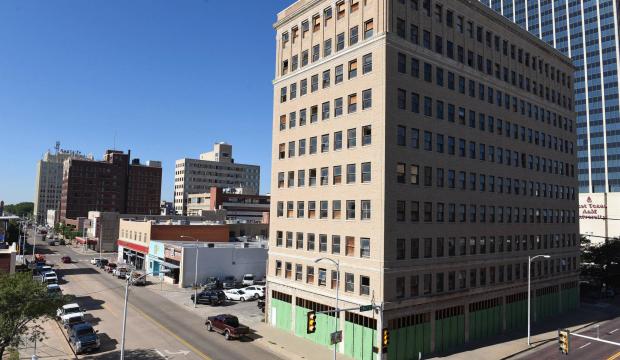
I had written not long ago about my doubts over the future of the long-abandoned Barfield Building in downtown Amarillo, Texas. It stands at the corner of Sixth Avenue and Polk Street. It’s a rotting hulk of its former glory.

https://highplainsblogger.com/?s=Barfield+Building

This morning I awoke to read a story in the Amarillo Globe-News that declares that the Barfield Building is en route to a revival. It will become a luxury hotel, developed by the Marriott Corporation.

Then came the qualifier. “Maybe,” according to the AGN. Maybe it will happen. Maybe … it won’t.

I’m going to pull for the “maybe it will.”

Plans call for the Barfield to morph into a Marriott Autograph Collection Hotel. It’s an upscale concept. As the Globe-News reports: “We want to bring the Barfield back to life and tell its story,” said Mark Brooks, of Brooks Hospitality Consulting. “We want to create something that speaks to Amarilloans. Hopefully, it’s pretty exciting.”

Brooks told the AGN’s Jeff Farris that the interior demolition at the Barfield is nearly done. Next up will be acquiring building permits from the city.

The Barfield has been down similar roads before. It’s been through several ownership changes. There have been reports of progress made to breathe new life into the building. They have been premature. Nothing has occurred there. As the AGN noted, the city came within a whisker of condemning the building.

This fellow Brooks, though, now is delivering some potentially good news about the Barfield. The category of hotel suggests it will be unique. Marriott says that none of its Autograph Collection structures are duplicates of others.

So, with this news, I am anxious to see if downtown Amarillo — which already has seen tremendous change in the past decade — is about to take another huge step forward. The multipurpose event venue is under construction. The Embassy Suites hotel has opened across the street from the Civic Center; Marriott opened another hotel prior to that at the historic Fisk Building. Construction crews are hard at work on new eateries and other business establishments along Polk Street. West Texas A&M University is set to open its downtown Amarillo campus.

And now? The Barfield Building? Is it possibly coming back to life? Might there be signs of activity in that dilapidated structure?

Maybe.

Unconstitutional? Umm. Nope!

An Amarillo resident has joined an amen chorus being sung by those who suggest that red-light cameras, which the city has deployed to deter those who run through stop lights, is “unconstitutional.”

Why is that? Because it violates the Sixth Amendment that guarantees that those who are accused of wrongdoing have the right to confront their accuser.

John Faulkner wrote this, in part, to the Amarillo Globe-News in a letter to the editor: A red-light camera photograph is hearsay, and is therefore inadmissible under the Sixth Amendment. It is hearsay because you cannot cross examine the photograph or the camera. The Sixth Amendment gives defendants the right to confront their accuser. 

Sigh. Actually, it is not “hearsay.” This equipment provides physical evidence that someone has run through a red light when he or she is supposed to obey its “instruction” to stop and not proceed until the light turns green.

Furthermore, the city grants accused red-light runners the opportunity to appeal the fine levied against the alleged lawbreaker. Thus, a defendant is granted the right to face his or her accuser.

The constitutionality argument is funny, except that I ain’t laughing.

The Texas Legislature granted cities the authority to install these cameras. It attached some provisions on it, such as requiring cities to devote revenue collected strictly to traffic improvements. The attorney general’s office is full of bright legal minds who can determine the constitutionality of laws the Legislature enacts. City Hall also employs a legal team that ensures its ordinances pass constitutional muster.

So, let’s toss aside this silly argument.

The red-light cameras are doing what they are intended to do. They are deterring some motorists from misbehaving while they travel along our busy streets. Not all of them, for sure.

I remain a strong supporter of this technology. It works.

Yes, on more red-light cameras!

You go, Amarillo City Council. Go for it! Install more red-light cameras in the ongoing effort to deter motorists from endangering other motorists and pedestrians.

The council is considering whether to install more cameras that traffic engineers have determine to be hazardous. They are places where motorists choose to disobey stop lights. They either run through them while they’re en route, or … they take off from a dead stop and just blaze on through.

Given that police cannot witness every traffic violation as it occurs, the city decided to deploy technology to assist the police department in its effort to make our streets safer for motorists and pedestrians.

I know that the critics of this program are going to gripe about potential expansion of the red-light camera initiative. Some soreheads keep bitching that its sole intent is generate revenue for the city.

To them I would like to speak once again about what state law mandates regarding these cameras. Please read these next few words slowly, let them sink in:

The revenue is dedicated to traffic improvements.

State legislators have been somewhat reluctant over the years to give cities the authority to install these cameras. Once they did, they sought to ensure that any revenue they generate is set aside specifically to improve traffic infrastructure.

Here’s a bit of cheer: The city is considering removal of lights at some locations, such as at Coulter and Elmhurst. According to the Amarillo Globe-News, accidents at that intersection have decreased significantly.

As City Manager Jared Miller told the Globe-News: “When we first put in Elmhurst as a location, the accidents there warranted installing a traffic safety camera,” … Miller said. “Now, it is not worth it. It has accomplished its objective. This is a good example of a location that has had the desired effect. The purpose is not to generate revenue, but improve safety at intersections in the city.”

What in the world of safe driving and driver awareness is wrong with that?

Explanation, please, for this resignation

James Allen isn’t your ordinary, run-of-the-mill anonymous municipal bureaucrat.

He also happens to be a politician of some renown in Amarillo, having served for years on the Amarillo Independent School District board of trustees.

Until recently, Allen served the city as its Community Development administrator. Then he quit. His resignation also comes in the midst of the city’s debate and discussion over how it handles its homeless population, an issue that involves Allen’s former office directly.

The Amarillo Globe-News has called correctly for a more fulsome explanation from the city as to why Allen quit, citing the public’s need to know why one of the city’s more high-profile administrators has walked off the job.

For that matter, you could make the same request of Allen himself. He hasn’t been forthcoming as to his reason for quitting, or whether he was asked to resign.

Allen has been involved in some high-profile matters involving the Amarillo ISD, namely the “changing” (if you want to call it that) the name of Robert E. Lee Elementary School to, um, Lee Elementary School. More recently, Allen has led the board toward a discussion of how it can change its district-wide voting plan to a single-member district plan to ensure more minority representation on the AISD board of trustees.

He is not exactly disappearing from public view.

However, James Allen has departed a municipal administrative post with no explanation yet to the people who foot City Hall’s bill as to why he has resigned.

Let’s have it.

Chief Drain: first-class hire for Amarillo

Terry Childers’s name pretty much is mud around Amarillo, Texas.

The one-time interim city manager came aboard after Jarrett Atkinson quit — and then “distinguished” himself by getting into a major-league snit with the city’s emergency response program in a case that became known as “Briefcasegate.” Childers misplaced his briefcase at a local hotel and then berated a dispatcher for not acting — in Childers’s mind — quickly enough to resolve his issue.

Childers lasted a year on the job, then quit — after calling a constituent a “dumb son of a b****” — and high-tailed it back to Oklahoma City.

But he did make a significant hiring decision while he was here. He hired Ed Drain as the city’s chief of police; Drain was hired initially as a temporary chief, then got the permanent job.

I want to salute Childers’s decision to bring Chief Drain to Amarillo, hiring him the Plano Police Department, where he served as deputy chief.

Why the salute? Because the chief is reinvigorating an important police program that was allowed to go fallow during his immediate predecessor’s time as the city’s top cop. Chief Robert Taylor didn’t think much of “community policing.” He let it go.

Chief Drain thinks differently. He is bringing it back. To his great credit. What’s more, community policing carries great potential for increasing the APD visibility in high-crime neighborhoods while building good relations between beat officers and the citizens they take an oath to “protect and serve.”

Community policing is aimed at exposing officers to residents on an interpersonal level. Officers work with community organizations, seeking to build relationships that build trust. And better trust creates an environment for residents to be more vigilant and to report to police when they suspect someone is doing something illegal in their neighborhood.

Former Police Chief Jerry Neal moved the community policing concept forward. His successor, Taylor, had a different view; Taylor didn’t do a bad job as chief, but I wish he had maintained a program that Neal had started.

This is my way of wishing the current chief, Ed Drain, well as he reinvigorates a progressive policing environment in Amarillo.

What will happen to the Barfield Building? Anything?

I have taken great pleasure in cheering on the progress I’ve witnessed in downtown Amarillo, Texas.

Abandoned buildings have been revived. New structures are being erected. Businesses are coming back into the district. They’ve broken ground on a new minor-league baseball park. Downtown is home to two first-class hotels.

Then we have the Barfield Building.

I drive by it a couple times a week and so help me, it seems as though every time I see that rotting hulk of a structure it looks more dilapidated than it does the previous time I looked at it.

I have lost track of the ownership changes that have occurred there. It’s been vacant for as long as my wife and I have lived in Amarillo; that’s more than 23 years.

An investor once started gutting the ground floor. Then the work stopped. The owner boarded up the floor. Nothing has happened since.

A Dallas-based investor took over the building with a promise to do something with it, or to it.

Then a consortium of local investors took it over.

That’s the last I heard of anything.

This past summer there was some reporting about tax incentives to turn the Barfield into a hotel/apartment structure. The incentives were to total $17 million.

The Amarillo Globe-News reported it as a possibility.

That was then. Nothing has happened.

I cannot help but think that a wrecking ball might be in the building’s future. The old Barfield Building keeps taking on the appearance of a structure that isn’t worth saving.

MPEV job faces tight deadline

They’re supposed to start rolling the heavy equipment soon onto the site of Amarillo’s next big project.

The contractor will bring in the front-end loaders, the backhoes, the dump trucks … all of it.

Then they’ll get to work on the multipurpose event venue, which celebrated a ceremonial groundbreaking this week on the now-vacant lot across the street from City Hall.

Once they get started on the job, they’re going to face some immediate pressure. They’ve got to get the job done in about a year.

You see, they’re going to welcome a minor-league baseball team to Amarillo. The plan is to toss out the first pitch for the start of a AA season that begins in April 2019.

The MPEV will cost about $45 million. It will be paid with hotel occupancy tax and lease money provided by the Elmore Group, owners of the team that is relocating here from San Antonio.

I remain confident they’ll get the job done. My confidence, though, must carry a caveat.

It’s the weather, man.

We’re in a prolonged dry spell in the Texas Panhandle. Not only have not had any snow this winter, we haven’t had any measurable precipitation of any kind.

Can we depend on the weather cooperating with us? Hah! Not a chance, dude! As the saying goes: If you don’t like the weather, just wait 10 minutes …

The weather is likely to become a major determinant on whether the MPEV gets built on time.

I don’t intend to wish bad things with this blog post. I merely intend to forewarn us all that the weather quite possibly can toss a major roadblock in front of the construction crews that will have little room for error — manmade or nature made — as they proceed to get this first-class venue built.

Let’s remember, too, that even though this winter has been bone-dry — so far! — we cannot guarantee what the next winter will bring to the High Plains of Texas.

And, oh yes, we have the unpredictable and occasionally explosive spring season awaiting us just ahead.

Time won’t wait for the work to get done.

Here’s hoping for the very best.

MPEV ground broken; city bolts toward brighter future

A crowd of about 200 or 300 folks came today to a vacant lot across from Amarillo City Hall. There was some back-slapping, congratulatory wishes and plenty of smiles to be seen.

And for a very good reason.

They broke ground today on a $45 million entertainment venue — aka The Ballpark — that is likely to help lead downtown Amarillo toward a future that few of us thought was possible.

I do believe the future is a bright one.

The multipurpose event venue has been called a “catalyst” that would spark downtown Amarillo’s revival and rebirth. They lit that catalyst this afternoon. May the spark now light an economic fire.

City officials welcomed executives from the Elmore Group, owners of the new AA minor-league baseball team that will play ball at the MPEV when it’s done, no later than April 2019. Elmore execs declared their intention to make Amarillo the nation’s top minor-league baseball city.

Given the hope and optimism I witnessed today under a bright winter sun, I have a hunch many of those in attendance today believe that high-minded goal is well within reach. I hope it comes true.

I am acutely aware that a big crowd at a ceremonial groundbreaking doesn’t guarantee success. Construction has to proceed quickly. It should be done at or under budget.

The MPEV will need to open with lots of people sitting in its seats to watch the baseball team that is moving here from San Antonio. Many high-profile supporters of the MPEV — and I can cite retired Amarillo College President Paul Matney as one of them — have contended that Amarillo is a “good baseball town.” We will determine the legitimacy of that claim in due course.

The catalyst also is slated to bring more business into the downtown district. It will help fill a shiny new hotel and a parking garage across the street from the Civic Center. It also might become a good promotional tool for the city to lure more convention business, which will bring presumably deep-pocketed visitors to Amarillo.

That’s all in the immediate future for a city that has embarked on a serious makeover of its central business district.

Today, they broke ground on the next big step on the city’s journey toward a brighter future.

Now … let’s get busy.