Tag Archives: Obamacare

Politics, the art of the payback

The game of politics can be called the game of payback.

Consider the process that has produced something called the American Health Care Act, the Republican-sponsored overhaul of the Affordable Care Act, which the GOP faithful says it wants to repeal.

In 2009, Republicans griped themselves hoarse over the way congressional Democrats “shoved the ACA down our throats.” They bitched that Democrats crafted the ACA in the “dead of night” and then, using their then-congressional majority, got it approved without a single Republican vote.

Fast-forward to 2017. Republicans now are in charge. They control Congress and one of their own occupies the White House. What do they do? They produce the AHCA also in the “dead of night” and then they try to cram it down Democrats’ throats without knowing how much it’s going to cost.

You see, the Congressional Budget Office — the non-partisan agency — hasn’t “scored” the AHCA. We don’t know how much impact it will have on the annual federal budget deficit.

Was it wrong for Democrats to flummox Republicans with a health care overhaul? Sure. Is it wrong now for Republicans do essentially the same thing to their “friends” on the other side of the aisle? Absolutely.

This is yet another demonstration of how much of a contact sport politics can become.

As for the CBO “scoring” of the AHCA, how about waiting to see how much it would cost Americans before putting it to a vote?

Politics can be so very brutal among conservatives

Politics is fickle, unfaithful and cruel.

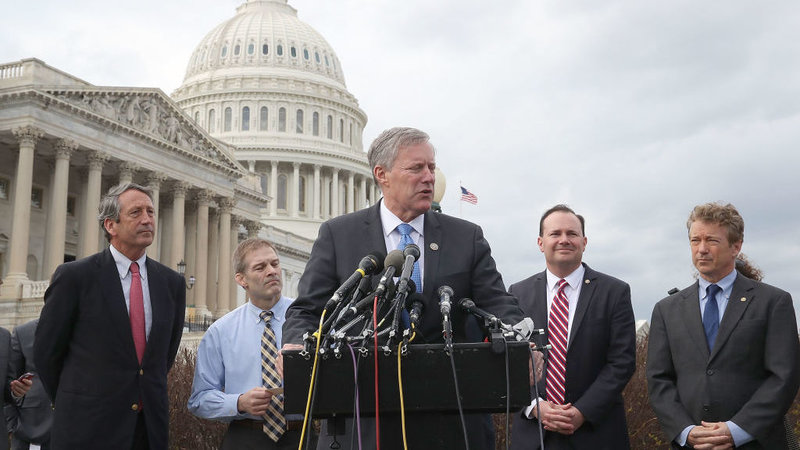
Donald J. Trump scored big election victories in some of the nation’s most conservative congressional districts. And yet … many of those members of Congress representing those districts might be about to turn their guns on the president over his endorsement of what they call a “light” version of the Affordable Care Act.

The American Health Care Act has been put forward. The president is on board with the plan that offers tax credits for people seeking health insurance; it contains many of the features popular with the Affordable Care Act, which the AHCA is designed to replace.

Congress’s more conservative members, though, dislike it. They’re digging in. They’re fighting among themselves, not to mention with the president.

What to do? That’s the problem facing the master negotiator Donald John Trump as he tries to persuade the hard-core among his Republican brethren that the AHCA is worth approving and sending to his desk.

This is a tough sale to make with those among the GOP who just don’t want anything on the books that resembles — even in the slightest sense — something that was enacted at the behest of the former president, Barack Hussein Obama.

We’re likely now to see if the negotiator in chief is as good at this political game as he bragged about incessantly on his way to the White House.

AHCA may be DOA in U.S. Senate

Hey! Wait a second!

Didn’t the Republican majority in Congress promise to “repeal and replace” the Affordable Care Act? Didn’t they assure us they would produce a plan that would provide health insurance for Americans at a cost they can afford?

Wasn’t that their solemn pledge? Didn’t they all but guarantee it once they won the presidency and retained control of both chambers of Congress?

Hah! Guess again. It seems that the American Health Care Act that the GOP rolled out this week doesn’t go far enough, according to the TEA Party wing of the Republican Party. They might launch a big intraparty fight to derail the AHCA.

These right-wingers are making GOP moderates look better all the time.

House Speaker Paul Ryan assures us that he’ll get 218 votes to approve the AHCA. The problem appears to be in the Senate, which has a very small margin for error among GOP senators. Only three of them need to bolt to drive the whole health care overhaul into the ditch.

There appears to be a rebellion building.

As I look at the proposed legislation, it seems to resemble the Affordable Care Act at some level. It does do away with the “mandate” provision that would penalize Americans who fail to have health insurance. It emphasizes tax credits for Americans seeking to buy insurance.

Some Senate GOP moderates don’t like it, either. There also are the conservatives who want the ACA to be repealed fully and that the AHCA doesn’t wipe the ACA off the face of the planet.

I am one who won’t be disappointed if this GOP overhaul doesn’t work. While I understand that the ACA needs tinkering, some fine-tuning, I would say only that we should simply tinker and fine-tune what we have on the books.

Oh, man … the great Winston Churchill had it right when he declared that democracy was the “worst form of government” ever devised — but was better than anything else.

If only he were around today to watch the U.S. Congress tie itself in knots over this health care insurance matter.

AHCA to replace ACA … at what cost?

Finally, the Republicans who run the legislative branch of government have produced a replacement plan for the Affordable Care Act.

I will need some time to digest all of it. It’s a complicated issue, one that requires a lot more brain wattage that I can generate at the moment.

It’s called the American Health Care Act. It’s supposed to be better than the ACA — and no, I won’t refer to the ACA by its colloquial name that attaches it to the name of the 44th president of the United States.

Complications abound with AHCA.

It removes the government mandates that require citizens to have health insurance; it relies heavily on tax credits to enable Americans to purchase insurance; it doesn’t monkey around with pre-existing conditions; it allows young people to stay on their parents’ health insurance plans.

The big question? Its cost.

How will Congress pay for this new program? We haven’t yet heard that explanation.

President Obama has said he’d welcome changes to the ACA that improve it. Yes, we now have a replacement idea on the table. It took Republicans eight years to come up with this alternative. They yapped and yammered during the two terms of the president’s tenure about how “terrible” the ACA was for health care, while pledging to repeal it once they got one of their own into the White House.

Here we are.

The debate will go forward now on whether the AHCA is better than the ACA.

The bottom line — for me, at least — is whether the 20 million or so Americans who now have insurance will be able to keep it at a cost they can afford.

‘Town hall meetings are great … ‘

I want to discuss a brief, concise and pithy message that popped into my Twitter feed this morning.

It comes from my state senator, Kel Seliger, an Amarillo Republican. It says: “Town Hall meetings are a great way to report to and interact with the public we serve. I’ve had 374. At least 37 planned for Q3 2017.”

Bear with me as I parse this statement for just a moment.

Town hall meetings have become something of a story in the past few days as members of Congress have taken their post-Presidents Day break, returned home — in many instances — to meet with their bosses.

They’ve discovered that the folks back home are none too happy with them. They don’t want their “employees,” those members of Congress, to mess with the Affordable Care Act.

Some members of Congress — such as Mac Thornberry, R-Clarendon — have decided to skip the town hall meetings altogether.

Thornberry is meeting instead with local business leaders, trying to assess the impact of federal regulations on their businesses. One of those leaders told me this week the discussion dealt with the difficulty of the rules handed down by the Obama administration and that Thornberry has given them assurances that he would work to loosen government’s regulatory reins.

Thornberry’s Amarillo meeting was a friendly event. I know … it’s shocking, shocking.

It’s fair to wonder if state Sen. Seliger would believe so strongly in the value of town hall meetings if he were forced to face down the beast that’s been awakened by the Republican-controlled Congress’s desire to repeal something that folks need.

Yes, Kel, these events “are a great to  way interact with the people we serve,” which brings me to another critical point.

These government officials do work for us, you and me. Whether we cast our votes for them or for someone else, they answer to us. We pay their salaries, provide them with their staff, pay for their public transportation, their stationery, their telecommunications devices; I almost wrote “typewriters,” then remembered that we don’t use typewriters any longer.

To that end, it is important to remind these individuals of that indisputable, irrefutable fact. The crowds at these town meetings across the land — in “red” and “blue” congressional districts alike — are doing that very thing. Good for them!

No ‘town hall’ meetings; no surprise

I guess this is one of the least-surprising things I’ve heard since Donald J. Trump became president of the United States.

West Texas’s congressional delegation is coming home for a weeklong recess — but none of them is planning any town hall meetings with constituents.

Why do you suppose they’re forgoing these events? My guess — and that’s all it is — would be that they might not ready to withstand the heat that their colleagues have gotten from their constituents when they have had town meetings back home.

U.S. Rep. Mac Thornberry, who has represented the 13th Congressional District since 1995, says he’ll be accessible to voters. Good. I trust he’ll keep his word while he’s back home.

The issue on voters’ minds happens to be the Affordable Care Act. Congressmen and women have been getting a snoot full from constituents about the ACA and what Congress intends to do if it repeals it. They don’t want to lose their health insurance and, near as I can tell, Republicans lack a replacement plan to insert in place of the ACA if they get around to repealing it.

But our West Texas congressional representatives aren’t going to hear from their constituents in a town hall setting.

I hope, though, that they open and read their mail and their staffers listen to phone calls from concerned citizens.

We aren’t brain dead in this part of the country. Indeed, lawmakers representing deep-red, solidly Republican congressional districts are getting their share of gripes.

I doubt we’re any different here.

Obamacare repeal effort losing steam?

Some chatter is beginning to develop that suggests efforts to repeal the Affordable Care Act might be subsiding among congressional Republicans.

A New York Times story lays out what appears to be an interesting scenario. It is that with President Barack Obama now out of power, the repeal-and-replace effort is being replaced by suggestions of tinkering around the edges of the ACA.

What gives?

It appears to me that the issue among House and Senate Republicans might have had more to do with the man who crafted the legislation than the legislation itself.

It’s not an unreasonable view.

ACA also is known as Obamacare, which has been a whipping boy for Republicans and other critics of the former president’s signature domestic policy initiative. Donald J. Trump has called for repeal and replacement of the ACA, calling the insurance plan a “disaster” for the country.

But … is it?

Twenty million Americans now have health insurance who didn’t have it before. Why? They couldn’t afford it prior to enactment of the ACA.

Then we’ve had those town hall meetings across the country. Citizens have been flooding meeting halls and shouting down members of Congress with demands to keep their hands off the ACA out of fear they would lose health insurance coverage.

There might be signs of lawmakers getting spooked by the anger they’re hearing out here among their constituents. Lawmakers also are finding out that crafting a replacement law is far more complicated than simply scrapping the old one. Go figure.

As the Times notes, Obama’s absence from the public stage now has turned attention to potential solutions. According to the Times: “But with President Barack Obama out of office, the debate over ‘Obamacare’ is becoming less about “Obama” and more about ‘care’ — greatly complicating the issue for Republican lawmakers.”

Republicans have had nearly eight years to come up with a replacement plan. However, for virtually the entire length of the Obama presidency, they’ve been hung up on repealing legislation that has the name of the man they detest.

Now they’re learning about the difficulty of replacing it.

Now, those are ‘town hall meetings’

Town hall meetings usually are love fests, at least that’s what transpires when state legislators convene them in the Texas Panhandle.

State Sen. Kel Seliger, R-Amarillo, quite often stages these sessions in communities throughout his sprawling West Texas district. As near as I can tell, they are civil, usually friendly and constituents spend a good bit of energy telling Seliger how much they appreciate his service.

Well, town hall meetings in many congressional districts have turned into something quite different in recent days. They have produced shouting matches between members of Congress and their constituents.

At issue? The Affordable Care Act.

Constituents are showing up in droves to tell their congresspeople to leave the ACA alone. Or, if they’re going to repeal it, they’d damn well better have something to replace it … as in immediately, if not sooner!

U.S. Rep. Gus Billirakis, R-Fla., got a snootful from his constituents, who told him they’d better not mess with “Obamacare.” He’s not alone. Someone uttered the term “death panel” during a town hall event and promptly got booed and shouted down.

I haven’t heard about any such encounters in my congressional district, which would be the 13th, covering the Texas Panhandle. Our member of Congress is a fellow named Mac Thornberry, a Clarendon Republican, chairman of the House Armed Services Committee, a rancher and a self-proclaimed “recovering lawyer.” He has served in the House for 22 years, making him one of the big dogs of Capitol Hill.

Thornberry hasn’t said much in public — above a whisper — about how he would replace the ACA.

Town hall meetings, as I have long understood them, were meant for constituents to speak their minds freely, telling their elected representatives what they think about issues of the day and how their representatives are handling them. The bad comes with the good. Town hall meetings aren’t usually intended to be amen choruses.

Thus, the real deal has broken out in congressional districts across the land.

It’s beginning to sound as though Congress has just discovered a so-called new “third rail.” It used to be that you didn’t mess with Social Security. These days, with 20 million Americans insured through a new government-sponsored insurance program, the third rail might have switched.

Now it’s the Affordable Care Act … maybe.

So much for unity at this inaugural

I have a message to the new president of the United States, if only he receives it.

The campaign is over, Donald John Trump. You won. You’re the president. You promised to unify the country. You could have started when you delivered the inaugural speech. Sadly — in my mind — you didn’t.

What the country heard from the president was a recitation of the themes that won over enough voters to elect him president.

He painted yet again a dark, forbidding portrait of the greatest nation the world has ever known. He talked about job losses, a dispirited military establishment, fear of radical Islamic terrorists, a general feeling that the nation has gone to hell in a hurry.

This wasn’t your typical inaugural speech. It contained little of the high-minded hope that presidents bring to their high office.

Here is the speech in its entirety. Take a look and judge for yourself:

http://www.msn.com/en-us/news/politics/full-speech-president-donald-trump-inaugural-address/ar-AAm3VY0

Believe it or not, I was hoping there would be at least a glimmer of recognition of the progress that President Barack Obama made during his eight years in office: dramatic reduction in the jobless rate; revival of the auto industry; huge reduction in the annual federal budget deficit; success in the war against terrorists — including the killing of Osama bin Laden.

None of that came forward.

Interestingly as well was the lack of mention of the dreaded Affordable Care Act, which Trump has vowed to “repeal and replace.” Nor was there a mention of the Iranian nuclear deal that Obama negotiated to prevent Iran from obtaining nuclear weapons.

He talked instead of restoring jobs, bringing back manufacturing jobs. Here’s a news flash, Mr. President: Those jobs fell victim to automation, not poorly negotiated trade deals; good luck if you think manufacturers are going to forgo robots for human beings.

I’m going to wish the president well — believe it or not. If he succeeds in all that he wants, more power to him, and to the country he now leads.

Failure, as the saying goes, is not an option.

If only he could have lifted our spirits just a little bit.

Why not just repair Obamacare?

All this talk about repealing the Affordable Care Act seems to ignore a possible alternative that’s been done already with other landmark legislation.

Congressional Republicans have been adamant about getting rid of the ACA. They’ve had six years to find a replacement mechanism to provide health insurance to Americans who cannot afford it otherwise. They have failed. They’ve come up with … nothing!

The alternative to flat-out repeal is to repair the ACA.

Congress enacted Medicare in 1965 to provide medical insurance to elderly Americans. It wasn’t perfect, either. Congress and President Johnson got together to tinker with it, to fine-tune it, to make it better. The same can be said of what Congress and other president, Franklin D. Roosevelt, did with Social Security when they created that program in 1935.

Reasonable minds can come together to make landmark laws better. It’s been done. Why not now?

Well, my theory is that it’s because the ACA has President Obama’s name on it. It’s been called Obamacare chiefly by those who use that term as a pejorative. They don’t like something that carries the name of a president who House and Senate Republicans have opposed since the beginning of his time in the White House.

I get that the ACA isn’t perfect. I understand that premiums have increased, that health insurance companies are bailing out, that consumers are having trouble finding doctors who will treat those covered by insurance provided by the ACA.

Aren’t there reasonable solutions to fix these problems? Can’t the ACA opponents huddle with those in Congress who support the plan to repair the law?

Oh, no! They’ve got to toss the ACA into the trash heap. They want to declare victory by calling it a “monumental failure,” a “disaster,” a “terrible idea.”

Twenty million Americans have health insurance today who didn’t have it before the ACA became law in 2010. Congressional Republicans are quite sure they can repeal the ACA. Finding a replacement is a bit more of a hurdle.

They have precedent, though, for seeking ways to repair what many folks believe is a flawed idea.

Compromise, folks! That’s how you govern effectively. You either have Americans’ interests at heart, or you are thinking only of your own political futures.