Tag Archives: Mac Thornberry

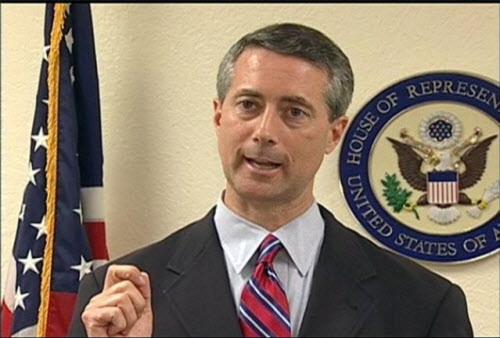
Why the soft-shoe on Trump, congressman?

Thornberry_9

Mac Thornberry is going to be re-elected to the U.S. House of Representatives this fall.

The veteran Republican lawmaker is going to win big. He’d win big even if he had a Democratic opponent. He has represented one of the House’s most reliably Republican congressional districts — the 13th — since 1995.

Why, then, does he waffle on whether he intends to “support” or “endorse” the pending GOP presidential nominee, Donald J. Trump?

http://amarillo.com/news/latest-news/2016-05-05/thornberry-evades-endorsement-urges-voters-watch

He came back to the Texas Panhandle congressional district this week and fielded some questions about whether he intends to endorse Trump.

Thornberry didn’t commit to it.

C’mon, Mac! You’re in zero danger of losing your House seat. Step into it, man.

The chairman of the House Armed Services Committee is playing his cards much too carefully. If he were in any jeopardy, I might understand some reluctance to offer an endorsement.

Instead, he said something about endorsements carrying little weight — and even less so in this election cycle.

Well, tell that to former Gov. Rick Perry, who has announced his endorsement of Trump. For that matter, tell it to other former Trump opponents who’ve gone the other direction by refusing to endorse because they think so little of the presumptive nominee.

So, you might be wondering: Why try to speak for the congressman? Why not let him make up his own mind?

He works for me. He’s my congressman. I believe all his constituents — his bosses — have the right to hold him accountable for issues such as who he plans to endorse to become the next head of state, head of government and commander in chief of the greatest military machine on Earth.

An end to gerrymandering? Sure, let’s do it

250px-TravisCountyDistricts

The Democratic Governors Association wants to back President Obama’s call for an end to gerrymandering.

I’m all for it. However, it’s not because the Democrats are for it. The practice has been used for political purposes since the beginning of the Republic. By both major parties.

The president was correct in his final State of the Union speech to demand an end to the practice of drawing districts to create a desired political outcome.

It’s just that Republicans who control most state legislators these days have turned the practice into an art form. Some of the congressional and state legislative districts in Texas, for example, simply defy all forms of logic.

There used to be a term used to describe how these districts should be constructed. It’s called “community of interest.” It means that all the residents of a particular district should have issues in common. They should be primarily rural or urban in nature. That’s how it’s supposed to go in theory at least.

But some of the districts in this state snake their way around street corners, winding their way from, say, Austin all the way to the Rio Grande Valley. What does someone living in, say, Laredo have in common with someone living in suburban Travis County?

Nothing!

There once was a time when Democrats ran the show in Texas. The 1991 Texas Legislature, thus, redrew congressional districts and created something of a monstrosity right here in the Panhandle. They split Amarillo in half, putting the Potter County part of the city into the 13th Congressional District and the Randall County portion into the 19th Congressional District.

The Legislature’s purpose? It was to protect Democratic U.S. Rep. Bill Sarpalius’s seat in Congress. The Legislature peeled off enough Republicans living in Randall County and put them into a district served by Republican U.S. Rep. Larry Combest, who lived in Lubbock.

The notion worked through one election cycle; Sarpalius was re-elected in 1992. Then came the 1994 Contract With America election. Sarpalius got beat by Republican Mac Thornberry.

There went the notion of protecting a Democrat.

The principle of gerrymandering really does stink, no matter who’s doing it.

There ought to be some rhyme or reason to the districts we create after every census is taking. The way it’s done now is meant to keep power in the hands of whichever party is in control.


C-SPAN worked miracles with this spot

cspan_bus

I want to share a moment regarding my one direct contact with the Cable-Satellite Public Affairs Network . . . aka C-SPAN.

I’ve already sung the praises of Brian Lamb, the founder of the one national network that covers politics and policy without a hint of bias.

Take another look.

But the folks who put together their video presentations are masters of editing, cutting, pasting and making subjects look a whole lot smarter than they really are. In my case, that’s not all that difficult.

I arrived in the Texas Panhandle in January 1995 to take my post as editorial page editor of the Amarillo Globe-News.

That spring, C-SPAN embarked on a project called the “School Bus Tour.” It was sending a yellow bus to every congressional district in the United States. All 435 of them would get a visit from the C-SPAN school bus. Its intent was to educate viewers on the members of Congress representing their constituents living in each of those districts.

The 1991 Texas Legislature had gerrymandered the congressional map in Texas to give Amarillo two House members. The 13th Congressional District comprised the northern portion of the city; the 19th District comprised the southern portion.

The lines were drawn that way to protect the Democrat — Bill Sarpalius — who represented the 13th District. Democrats controlled the Legislature back then, so they sought to rig the lineup to protect their own. The tactic worked until the 1994 election, when Republican Mac Thornberry upset Sarpalius.

But the 19th District remained strongly Republican and was represented by U.S. Rep. Larry Combest of Lubbock.

C-SPAN called one day and wanted to know if I would be willing to be interviewed by the network about the 19th District. I was to talk about Combest and the district he had represented for the past decade.

Holy crap! I thought. I didn’t know much about the district, or about Combest. I was brand new here. I’d lived for the 11 previous years in the Golden Triangle region of Texas, which was represented in the House by Democrats Jack Brooks of Beaumont and Charlie Wilson of Lufkin.

I accepted the offer, then cracked the books to learn more about the 19th Congressional District and about Rep. Combest.

C-SPAN’s school bus crew met me at the newspaper office one Saturday morning and I talked for about 30 minutes or so with a camera rolling. I stuttered, stammered, paused, stopped-and-started my way through it. Hey, I’m not a TV guy.

I was frightened by the prospect of how it would look on TV. The producer assured me, “Don’t worry. You did just fine. We’ll take good care of you.”

Well, they shot their B-roll video, showing scenes of feed lots, ranch land, wind mills and such from around the sprawling district, which stretched from Amarillo all the way to Lubbock, about 120 miles south of us.

They told me when the segment would air.

I waited for it. Sure enough, they managed to make me sound a whole lot more polished than I really am.

What’s more — and this is the real beauty of this kind of skill — they preserved the essence of every comment I made. There was not a single phrase that was aired during the three-minute segment that was out of context or didn’t convey my intended message.

I would have a similar experience later, during the 2008 presidential campaign, with National Public Radio. NPR wanted to interview two journalists about the state of that campaign between Barack Obama and John McCain. I learned once again about the talent and skill it takes to edit someone’s spoken words while preserving the integrity of what one says.

Believe me, it’s a remarkable skill, indeed.

 

How does ‘Speaker Thornberry’ sound?

mac

Mac Thornberry’s name popped into my noggin today around noon when I heard that Kevin McCarthy had dropped out of the race to become the next speaker of the U.S. House of Representatives.

Then I got onto other matters.

Now it turns out that at least one blogger, writing for a major American newspaper, thinks Thornberry would be a good fit as the Man of the House.

Tod Robberson’s blog for the Dallas Morning News seeks to make the case that Thornberry, a Clarendon Republican who’s represented the 13th Congressional District since 1995, might be the man to (a) heal the fractious House GOP caucus and (b) work with President Obama on some of the key issues that need to be resolved.

I happen to like Thornberry on a personal level. We’ve always had a good professional relationship as well. He and I have something in common: We assumed our new Texas Panhandle duties on the same week; I came to work at the Amarillo Globe-News in January 1995 just as Thornberry was taking his oath of office in Washington.

That’s about all we have in common — except that we belong to the same Presbyterian church congregation in Amarillo. But, hey, I thought I’d mention it.

I don’t really buy into the notion that Thornberry even wants to be speaker. He’s never struck me as a media frontrunner, which is what the speaker must be if he or she is to be an effective congressional leader.

Thornberry had long aspired to chair the House Armed Services Committee, which would take yank him off the back bench and into the limelight. He became chairman this year when Buck McKeon retired from the House.

Prior to becoming chairman of the committee, though, Thornberry was one of those lawmakers few folks outside of his West and North Texas district ever saw.

My strong sense is that Thornberry — who is a strong conservative and loyal Republican — simply isn’t wired for the harsh, bright lights that shine on the individual who is third in line to become president of the United States.

However, in this wild and crazy political time in Washington, anything can happen.

Anything!

Thank you, Mr. President, for honoring those victims

President Obama heard the critics and he responded.

Today, the president ordered the White House flag, along with flags flying over all other federal buildings, to be lowered to half-staff in honor of the five men slain in Chattanooga, Tenn. The five men — four Marines and a sailor — were killed by a gunman who then was shot to death by police.

Many had criticized the president for not lowering the flags immediately. His reasons for the delay aren’t clear, but now that he’s acted, I’m glad that he did. Yes, I was one of the critics who said the White House flag needed to be lowered.

Obama lowers White House flag

U.S. House Armed Services Committee Chairman Mac Thornberry, who happens to be my congressman, urged the president to “do the right thing” and lower the flag.

I’m not sure whether this announcement and the president’s stated tribute to the young men will assuage the criticism of those such as Thornberry, who’s been a constant critic of Obama, but we all should now take heed of the act and honor these men’s memories and their dedication to the country they loved.

Troop levels to drop; U.S. is still No. 1

U.S. House Armed Services Committee Chairman Mac Thornberry is worried about reductions in the number of men and women serving in the U.S. Army.

The Pentagon plans to cut the troop strength to 450,000 by September 2017. Thornberry suggested recently that the reduction is part of an on-going strategy to slash defense spending that’s been enacted since the beginning of Barack Obama’s presidency.

He’s concerned about it. So, too, are some in the media, such as the Amarillo Globe-News, which opined on Friday that the troop reduction “is bad news.” It cited “ongoing issues related to Russia and Iran, to name but a couple.”

Then the paper decided to take a cheap shot by noting that “the federal government only spends more than $70 billion a year on food stamps.”

I think a broader question ought to be this: Are we still the world’s No. 1 military power? Yes … by a country mile.

Let us also ponder: Does a reduction in the troop levels make us less able to defend ourselves against terrorists? Given tremendous advances in technology, the use of drones (which this week killed another leading Islamic State officer), our immense intelligence capability and the tremendous skill that our troops employ in the field, we absolutely are able to defend ourselves.

Thornberry wrote: “I have consistently warned about the size and pace of reductions in both end strength and defense spending and the negative impact on our country’s national security.”

Does the presence of more men and women in uniform deter terrorists from striking at us? Do the Islamic State and al-Qaeda leaders really consider the United States defense establishment — taken in its entirety — to be less capable of defending the world’s strongest nation than it was, say, when the 9/11 attacks occurred more than a dozen years ago?

The United States remains by far the pre-eminent military power on the planet.

If we are going to seek some sort of fiscal responsibility, which Thornberry and others in Congress keep insisting we should, then we must look at all aspects of the federal budget.

The day we cannot strike hard at those who seek to do us harm is the day I’ll join the doomsday chorus that includes Chairman Thornberry. We aren’t at that point. Nor do I expect us to get there.

Techno-terrorists elevate threat to U.S., world

Homeland Security Secretary Jeh Johnson issues a stern warning.

International terrorists have become cyber-savvy and are posing a uniquely new threat to the world.

Are we on guard against these guys? And what in the world do we do to stop them?

http://www.msn.com/en-us/news/us/us-security-chief-warns-of-new-phase-in-terror-threat/ar-BBjy1fG

“We’re very definitely in a new environment, because of ISIL’s (IS’s) effective use of social media, the Internet, which has the ability to reach into the homeland and possibly inspire others,” Johnson said in a TV interview this morning.

The Islamic State reportedly is recruiting heavily through the Internet. It’s also posing serious threats to cyber infrastructure.

It’s no longer just madmen with bombs strapped their chests who pose threats to human life. This global war has turned into a battle of wits.

This new threat brings to mind something that congressional leaders sought to bring to national attention. I keep waiting to hear from the Texas Panhandle’s congressman, Republican Mac Thornberry, on how we’re defending ourselves against cyber warriors.

House Speaker John Boehner tasked Thornberry some years ago to lead a congressional committee that would devise strategies to fight Internet hackers and other enemies who would seek to do serious damage to our cyber infrastructure.

When these discussions bring the news to the front pages and gobble up air times on our news networks, I always seem to miss hearing from Rep. Thornberry, who I understand to be an expert on these issues.

I trust he’s working behind the scenes. He’s also become chairman of the House Armed Services panel, which is a huge responsibility all by itself.

Still, our Homeland Security secretary no doubt can use all the help he can muster in protecting “the homeland” against cyber attacks.

Let’s hope this fight transcends the political differences that seem to divide the White House and Capitol Hill … even when it involves national security.


Estate tax is worth keeping on the books

Time for a confession, which some of you might already have suspected.

I used to write editorials for daily newspapers that ran counter to my own beliefs and principles. Why? Well, as a former colleague once told me: If you take the man’s money, you play by the man’s rules.

So, there you have it. I was getting paid to write editorials for newspapers that had different slants than mine, so I wrote the words, gritted my teeth on occasion — and then accepted the paycheck.

One issue with which I had a disagreement with our newspaper’s editorial policy was the estate tax, or “death tax,” as some have called it. My bosses wanted it repealed. My former publisher at the Amarillo Globe-News (not the guy who runs the place now, but his predecessor) was adamant that we repeal the estate tax. Why punish heirs to estates, he argued, when the person who built the wealth wants to be able to hand it down to his or her heirs?

I’m sure my ex-boss is happy with the U.S. House of Representatives voting this week to repeal the estate tax.

I am not.

http://www.washingtonpost.com/blogs/plum-line/wp/2015/04/17/why-are-republicans-pushing-estate-tax-repeal-its-their-nature/

As Paul Waldman writes in the Washington Post: “Republicans say that they aren’t really trying to help wealthy heirs; instead, this is motivated by their deep concern for the fate of family farms and small businesses. But today, the first $5.43 million of any estate is exempt from taxes. That’s the single most important fact to understand about this tax.”

Did you get that? Nearly $5.5 million of any estate is tax exempt!

My congressman, Mac Thornberry, R-Clarendon, Texas, has been at the forefront of the estate tax repeal effort since joining Congress in 1995. He’s got a dog in that hunt. His family owns a lot of ranch land in Donley County and he doesn’t want any of it taxed when the day comes to hand it over to his heirs. I understand Thornberry’s interest in repealing the estate tax.

Here’s a bit more from Waldman: “According to the Joint Committee on Taxation, ‘In 2013, the most recent year for which final numbers are available, there were 2.6 million deaths in the United States, and 4,700 estate tax returns reporting some tax liability were filed. Thus, taxable estate tax returns represented approximately one-fifth of one percent of deaths in 2013.’”

One-fifth of one percent!

Is that enough of a tax to call for its outright repeal? If yes, then who benefits from it? I reckon it’s the extremely wealthy who have estates valued at far more than $5.43 million, which already is exempt from taxes. Remember?

What will be the fate of this repeal effort? If the Senate approves it as well, President Obama will veto it.


ISIS or Yemen? U.S. effort is getting stretched

U.S. House Armed Services Committee Chairman Mac Thornberry says the United States is stretched too thin in its war against terrorists.

The Clarendon Republican says U.S. efforts have turned away from Yemen while fighting the Islamic State in Syria and Iraq.

What to do?

Thornberry: ISIS war leaves fewer resources for Yemen

If I read my congressman’s thoughts correctly, I believe he’s saying we need to spend more money on defense needs. He’s saying it without really, um, saying it.

This conundrum defines pretty clearly to me why this war on terror may never end. You turn away from enemy and another surfaces in another region of the world — not that we’ve really turned away from any of our enemies. Near as I can tell, our forces still are conducting robust strikes and raids on suspected terror targets.

“We don’t have the (intelligence, surveillance and reconnaissance) ISR that we used to have, so when you got to move it to Iraq and Syria, you leave Yemen less covered than it used to be because you have to make choices, and it increases the danger to the country,” he said.

I got that part, Mr. Chairman. So what happens if and when we concentrate on Yemen — a known terrorist breeding ground — and the Islamic State takes further advantage as we look the other way in fighting this on-going anti-terror war?

Do you get where Thornberry is talking about spending more money on defense matters to wage a multi-front war on international terror?

I doubt we can afford it.

According to The Hill: “The administration has implemented a ‘light footprint’ counterterrorism approach in Yemen that relies heavily on drones for surveillance of terrorist threats and for striking targets in the country.”

Here is where the drones can do the same kind of work as manned aircraft. Turn them loose on those suspected targets and deliver enough firepower to send those we don’t kill scurrying for cover.

Therein, though, lies the difficulty in continuing to wage this global anti-terror war. It’s a war like we’ve never fought. President Bush all but declared war on the terrorists after 9/11. It was the right call for the time. President Obama has continued to pursue that war at virtually the same pace as his immediate predecessor.

There are those, though, who insist the Pentagon is being whittled down to dangerous levels. I don’t buy it. We’re still spending hundreds of billions of dollars on new weapons and we’re deploying them throughout these terror hot spots.

I will argue that we still have plenty of assets to deploy against these forces of evil. We just need to fine-tune how we deploy them — and have them deliver maximum punishment.

Democrats tilting toward form of term limits

My views on mandated term limits for members of Congress are firmly established.

I don’t like the idea. Heck, I am wavering on whether term limits for presidents is such a great idea.

But the House of Representatives Democratic caucus is leaning more and more toward an idea that Republicans have adopted, which is term limits for committee chairs and ranking members.

I am warming up to that idea.

http://www.politico.com/story/2015/01/more-house-dems-want-to-limit-time-at-the-top-114143.html?hp=t1_r

A growing number of House Democrats believe their Republican friends have outflanked them on the notion of injecting new leadership into the congressional ranks.

It’s critical to point out that Republicans run the House with a strong majority that was made even stronger after the 2014 midterm elections. The Democratic reform would involve the placement of top-ranking Democrats on these panels.

Politico reports: “Former Caucus Chairman John Larson, who was term-limited from that slot in 2013, agreed. He praised House Republicans’ six-year limit for people to serve atop committees, although Speaker John Boehner (R-Ohio) has allowed some exceptions.

“’A number of people would say Republicans have struck a better formula for advancement,’ the Connecticut Democrat said. “And I don’t think it’s a bad thing for leadership at all. I mean, it’s verboten to say it, but it’s true and I think even our current leaders would recognize it, all of whom I support.’”

Each party makes its own rules that govern how they do business internally. Republicans have for several years instituted this term-limit rule for its own leadership. House Armed Services Committee Chairman Mac Thornberry, R-Clarendon, would in theory surrender his chairmanship after three more terms in the House, unless the speaker grants an exemption.

It’s a way to freshen each committee’s agenda, its leadership style and its focus — while preserving voters’ intentions back home of continuing to be represented by individuals they have re-elected to Congress.

Despite my dislike for term limits, these internal changes make sense to me.

Go for it, House Democrats.