Tag Archives: Electoral College

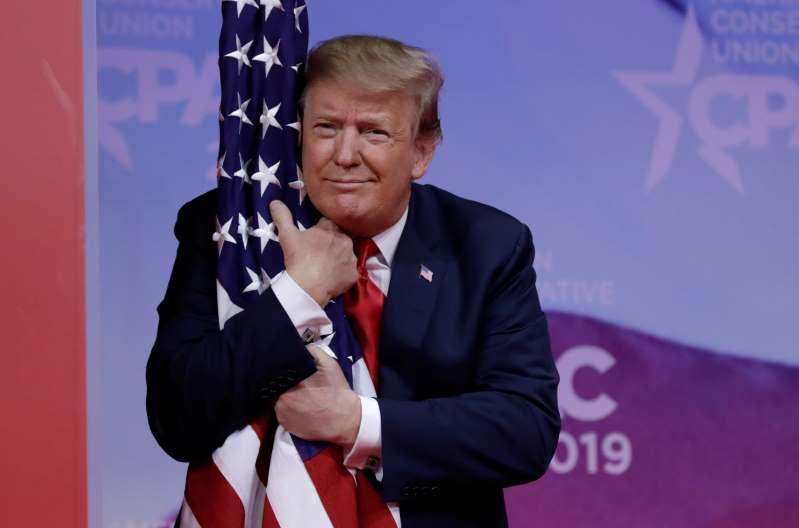
Trump performance at CPAC is utterly jaw-dropping

If you have the time — and arguably a stomach strong enough to withstand it — you need to take a couple of hours to watch the video attached to this blog post.

It is Donald John “Stable Genius” Trump’s full speech delivered this past weekend at the Conservative Political Action Conference.

This record-setting tirade is a case study in presidential idiocy. It sets the stage for the kind of campaign we can expect from the 45th president of the United States if he decides to run for re-election in 2020.

I say “if” because I am not yet totally convinced he’s in. Trump probably is going to run. But . . . one never can presume anything as it relates to the president.

But this CPAC soliloquy is utterly jaw-dropping in the nonsense that poured out of POTUS’s mouth. The Washington Post counted more than 100 outright lies that came from Trump in his two-hour tirade.

The histrionics, the hyperbole, the hysteria is utterly, astonishingly, and unbelievably bizarre in the extreme.

I am forced to ask yet again: What in the name of all that is dignified did we get when this individual managed to win enough electoral votes to become the president of the United States of America?

I actually get it. This individual speaks for those who “think” as he does. He echoes their cynicism and calls it “populism.”

Unbelievable!

Don’t mess with Electoral College

I am a blue voter who lives in a red state. I tilt toward Democratic candidates for president while residing in heavily Republican Texas.

Now that I’ve got that out of the way, I want to redeclare my view that efforts to circumvent the Electoral College are counterproductive. They shouldn’t go forward.

However, it appears that Democrats in states that lean blue are intent on monkeying around with the Electoral College with legislation that bypasses the system codified in the U.S. Constitution by the nation’s founders.

They want their states to cast their electoral votes for whichever candidate wins the popular vote. It’s part of what is called the National Popular Vote Interstate Compact.

Is the nation’s electoral system in peril of breaking down? I don’t believe that is the case.

We have had 59 presidenti

al elections in this country since its founding. Only five times has the candidate with fewer votes been elected president.

However, what has alarmed those who want to overhaul the electoral system insist that such a trend is in danger of escalating. They point out that it’s happened twice just since 2000! George W. Bush was elected that year despite getting about a half-million fewer votes than Al Gore. Then in 2016 Donald Trump was elected with nearly 3 million fewer votes than Hillary Rodham Clinton.

It fascinates me to know that the move to tinker with the Electoral College is coming from aggrieved Democrats, given that the 2000 and 2016 elections went to the Republican nominee for president.

We are witnessing what I believe is a knee-jerk reaction to an overblown issue. It kind of reminds of me how Republicans in Congress pushed for enactment of the 22nd Amendment limiting presidents to two elected terms; they did so after Democrat Franklin D. Roosevelt won election to four consecutive terms as president.

Let me reiterate an essential point. If we’re going to change the electoral system, then eliminate the Electoral College. It is an absurd notion to tweak and tug at the edges of the system.

I happen to still believe in the Electoral College system of choosing our president. I endorse the idea that it helps spread the power among more states, giving less-populated states a stronger voice in choosing our head of state.

If we’re going to mess with the Electoral College, then go all the way.

Or else leave it the hell alone!

Don’t monkey around with Electoral College

Democrats in New Mexico and Colorado are trying to tinker with the Electoral College in a way that makes me nervous.

They want to pledge their states’ 14 electoral votes to whoever wins the most votes in presidential election. They are upset that in the past five presidential election cycles, the Democratic nominee has won more votes than the Republican nominee, but lost the election because the GOP candidate got more Electoral College votes than the Democrat.

See George W. Bush-Al Gore in 2000 and Donald Trump-Hillary Clinton in 2016.

Look, I remain a supporter of the Electoral College. It was designed by the nation’s founders to spread the political power around to more states and to ensure that smaller states had sufficient voice in electing presidents as the larger states.

Indeed, this push is coming almost entirely from Democratic politicians who feel aggrieved over the outcome of those two aforementioned elections.

If we’re going to change the way we elect our presidents, I prefer a wholesale change. Ditch the Electoral College and go to a system that elects presidents solely on the basis of who gets more votes on Election Day.

I get that Hillary Clinton got nearly 3 million more votes than Donald Trump in 2016. But the GOP candidate, Trump, managed to squeak out a win by visiting key Rust Belt states that Clinton seemingly took for granted; she thought she had them in the bag, but it turned out they were placed in Trump’s bag.

This monkeying around with an electoral system that has worked by and large quite well over the span of the Republic is just — as the saying goes — a bit too cute by half.


Tax returns might answer our questions about Trump, Russia

I cannot shake the feeling that the most interesting and sought-after findings in Robert Mueller’s investigation into Donald J. Trump’s presidential campaign will exist in the tax returns the president has refused to release for public scrutiny.

The special counsel reportedly is winding his exhaustive probe down. He’s been at since mid-2017 when the Justice Department hired him to examine those allegations of “collusion” between the Trump campaign and the Russian goons who interfered with our electoral process.

The tax returns keep refusing to go away.

Trump promised to release them after the Internal Revenue Service completed an audit. The IRS said an audit doesn’t preclude release of returns. Trump has gone silent on the tax returns, which presidential candidates dating back to 1976 have opened up for public review. The idea is to give the public a full accounting of the financial activities of the men and women seeking to become our head of state.

Trump hasn’t gone there. He won’t do it. He is breaking a campaign pledge, kind of how he pledged to make Mexico pay for The Wall he wants to build along our southern border.

Mueller’s investigation has been thorough, or so we have been led to believe. I happen to accept the notion that the former FBI director, a highly efficient prosecutor, has discovered a mountain of information about the president.

My strong sense echoes what many of us have heard already, that he has obtained those tax returns or at minimum has developed enough knowledge of what is in them. The returns well might reveal a trove of information about the nature of Trump’s business dealings around the world. After all, he has boasted repeatedly about the vastness of his empire — even though he has told us he has “no deals” in Russia. And we believe him, right?

The tax returns have been of considerable interest to many of us, especially those of us who have suspected that Donald Trump isn’t quite the fellow he presented himself to be, the kind of guy who won enough Electoral College votes to be elected to the only public office he ever has sought.

It might be that Mueller’s findings won’t reveal a thing about Donald Trump’s business dealings. However, I still insist, along with others, that the president should show us what is in those returns to allow us to make that determination for ourselves.

If he won’t, then I have this hunch that special counsel Robert Mueller will do it for him.

‘Overwhelming victory’? Actually, no … not even close

I have given Sarah Huckabee Sanders the benefit of the doubt during her time as White House press secretary.

She’s got a tough job, speaking for a president who lies out of both sides of his mouth. I didn’t actually believe Sanders was a fellow liar, incapable of telling the truth. Until just recently.

She declared at a press briefing that Donald Trump won an “overwhelming victory” in the 2016 presidential election.

Oh, my. Sigh. I want to revisit a matter that I’ve looked at already. It just needs a revisiting.

Donald Trump collected nearly 3 million fewer popular votes than Hillary Rodham Clinton. The totals are: Trump, 62,985,134, or 45.93 percent; Clinton, 65,853,652, or 48.02 percent. Clinton won the popular vote by a significant margin, although she didn’t win an outright majority of popular ballots.

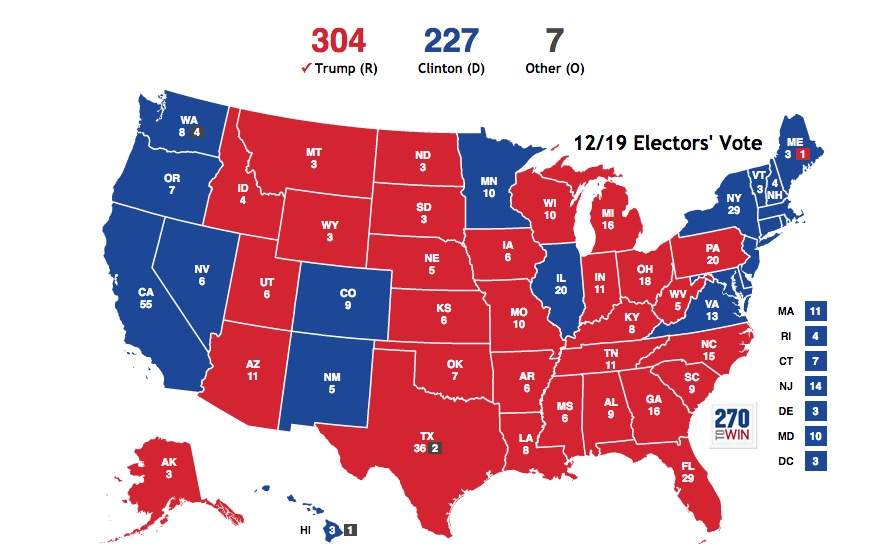
Trump won the Electoral College vote — which is where it matters — by a 304-227 margin. He needed 270 electoral votes to be elected.

Overwhelming margin? Let’s see. If three swing states that Trump won — Wisconsin, Michigan and Pennsylvania — had flipped fewer than 80,000 votes, Clinton would have won the Electoral College by three votes and, thus, would have been elected president.

OK, please let me stipulate — once again — that Trump was elected legitimately. I believe in the Electoral College and I don’t want it repealed. Trump managed to pull off one of the nation’s most historic upsets by campaigning in precisely the right states at precisely the right time in a hard-fought, bitter and nasty campaign.

The president keeps casting his victory in historic terms. He keeps saying he won handily. He didn’t. Sarah Sanders knows he didn’t. I know he didn’t and if he’s honest with himself — even if he cannot be honest with the rest of us — Donald Trump knows it, too.

In a way, Trump’s victory was historic in at least one sense. Damn few so-called “experts” thought he’d win. He did. Despite having no public service experience, let alone any interest in it prior to running for president, Trump was elected to the only public office he’s ever sought.

Overwhelming victory? Not even close. So, Mme. Press Secretary, stop repeating that lie.

Don’t run, Joe; leave the 2020 race to the young’ns

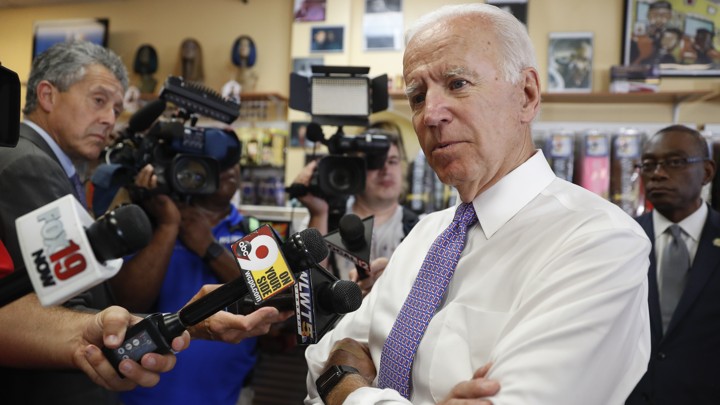
Readers of this blog know it already, but I’ll restate it: I am a big fan of former Vice President Joe Biden.

There. I’ve got that out of the way. Now I want to declare that I do not want the former VPOTUS to run for president in 2020. It’s not that he can’t do the job. It’s not that he is incapable.

It is that I want new blood, new ideas, new faces, new voices to be seen and heard.

This will sound as though I’m an ageist. Believe me, I know what ageism looks like. I believe I’ve been victimized by it in recent years, so I say this next piece with a good bit of caution.

Biden’s age is going to work against him. He will be 77 years of age in 2020. He would be the oldest man ever elected to the nation’s highest office were that to occur. That would mean he would be 81 in 2024. Would he seek a second term, which would put him into his mid-80s were he to win?

Or … would a President Biden declare himself to be a one-termer, thus making him a lame duck the moment he takes his hand off the Bible at his inauguration in January 2021?

Biden is ruminating yet again about whether to run for president.

His pondering is the subject of an article in Atlantic. Read it here.

My hope for the country is that Donald Trump is defeated in 2020. I didn’t want him elected in 2016 and was shocked along with most political observers when he squeaked out that Electoral College victory over Hillary Clinton.

He remains more unfit for the high office than any man who has ever held it. I want him gone. Defeated either in the GOP primary or in the general election.

Joe Biden isn’t the man to do it. I want him to remain active in the political discourse. He can lend plenty to the discussion of the issues of the day.

However, he needs to let the next generation of Democratic politicians have their time. Let them seek to take hold of the levers of power.

The former veep has had his day. It was a great run through 36 years as a U.S. senator and then as the second-in-command of the greatest nation on Earth.

Let it go, Mr. Vice President.

Just remember: Trump actually won in 2016

It is useful to put a few things in perspective as we watch the 2018 midterm election campaign reach its merciful conclusion.

The “Blue Wave” that everyone is saying will happen well might develop. A lot of Republican-held seats in the House of Representatives are going to flip to Democratic control. I am willing to buy into that notion. What I am not yet certain about is whether there will be enough of a flip to hand control of the lower chamber to the Democrats.

Yeah, I know. All the pundits, experts, prognosticators and talking heads say the wave will sweep the GOP out of control of the House. Democrats will take the gavel for the first time since 2011, they say.

Sure. I hope so. I do not like the direction that Donald Trump and his fellow Republicans are taking the country. I want at least one congressional chamber to belong to the other party.

The Senate remains even more iffy for Democrats.

I had some hope that Beto O’Rourke was going to win a Senate seat in Texas from Ted Cruz. My throbbing trick knee tells me it ain’t gonna happen. It’ll be close, or so they say. I’m not predicting anything, mind you. My predicting days are over. They should have ended long before the 2016 presidential election.

Which brings me to the final point.

Donald Trump’s victory in 2016 upset all the predictors’ expectations. How in the name of Electoral College victory he did it remains a bit of a mystery to me. I do recognize that he tapped into some wellspring of resentment that had been gathering in voters’ hearts. He talked their language. He spoke directly to them.

Not to me. I am just a single voter sitting out here in Flyover Country/Trump Land.

But I am going to recognize that for a first-time politician — remember that Trump never campaigned for a single public office before seeking the presidency — Trump is beginning to master the art of revving up his base. Moreover, he has hijacked the heart and soul of a once-great political party and turned it into something no one recognizes as the actual Republican Party.

It’s a sickening development. However, it’s real. And it gives me pause as the midterm campaign staggers to its finish.

I am hoping for the best. I won’t fear for the worst. I just believe the country might have to settle for something in between. What should be a Democratic tsunami could become something less formidable.

Why? Because the Republicans are led by a demagogue who has persuaded them that it’s somehow OK to have a president who doesn’t know what the hell he is doing.

POTUS wasn’t elected ‘easily’ … honest!

As long as Donald John Trump continues to re-litigate the 2016 presidential election, allow me a brief moment to set the record straight.

The president said in that frightening, mind-blowing press conference this week with Vladimir Putin that he was elected “easily” over Hillary Rodham Clinton.

Let’s see. How easy was it?.

Trump finished with 304 electoral votes; Clinton ended up with 227. To be elected, a candidate needs 270 electoral votes.

Trump went over the top on the strength of about 80,000 votes in three critical states: Michigan, Wisconsin and Pennsylvania. A 40,000-vote switch in those states and Clinton wins the election.

Clinton finished with nearly 3 million more popular votes than Trump.

Let me state once again for the record: Donald John Trump was elected fairly and squarely, but not “easily.”

Stop telling that ridiculous lie, Mr. President.

Trump’s delusion turns to confusion

I saw this headline and couldn’t believe my eyes.

It said that Donald J. Trump wants to get rid of the Electoral College, that he wants the popular vote to decide who gets elected president. Why? Because a popular vote majority, according to the president, is easier to attain.

Eh? Huh? What the … ?

Trump did a phone interview this morning with “Fox & Friends” in which he spun virtually out of control on a number of subjects.

According to Politico: “Remember, we won the election. And we won it easily. You know, a lot of people say ‘Oh, it was close.’ And by the way, they also like to always talk about Electoral College. Well, it’s an election based on the Electoral College. I would rather have a popular election, but it’s a totally different campaign,” Trump said. “It’s as though you’re running — if you’re a runner, you’re practicing for the 100-yard dash as opposed to the 1-mile.”

“The Electoral College is different. I would rather have the popular vote because it’s, to me, it’s much easier to win the popular vote,” he continued.

If you’re scratching your head over that passage, join the club. So am I. The president — as is usually the case — makes zero sense.

Hillary Clinton won the popular vote by nearly 3 million ballots. Trump was elected legitimately by capturing more than 270 electoral votes he needed to win. He finished with 306 electoral votes, thanks to winning three critical “swing states” — Michigan, Wisconsin and Pennsylvania — by a total of 77,000 votes among them.

He didn’t win the election “easily,” as he keeps saying. The way I see it, Trump won by a whisker. However, he won according to the rules set forth by the U.S. Constitution.

What baffles me is why he would prefer to toss aside the Electoral College. He parlayed an Electoral College strategy perfectly in 2016, enabling him to win the presidency.

So now he says winning the popular vote would be an easier goal to attain? Who is this clown kidding?

This man’s delusion is downright confusing.

Why get rid of Electoral College?

The 2016 presidential election produced a doozy of an outcome.

The candidate who won the Electoral College finished nearly 3 million votes short of the candidate who lost the election.

Thus, the result has produced an ongoing debate over whether we should eliminate the Electoral College and elect presidents based solely on the popular vote.

Here’s what I wrote just a few days after the 2016 surprise:

https://highplainsblogger.com/2016/11/now-about-the-electoral-college/

I have wrestled with this notion for some time. I have decided that I am unwilling to get rid of the Electoral College.

It’s a difficult system to explain to those abroad who don’t understand how someone who gets fewer votes than the other candidate can “win” a national election. I had the pleasure of trying to explain the 2000 presidential election outcome in Greece while the courts were trying to determine whether George W. Bush or Al Gore would become the next president.

I guess I come down finally on the notion that the Electoral College was created to give rural states with smaller populations a greater voice in determining the election outcome.

As the system is currently constructed, presidential elections usually are fought in those “battleground states” that could tip either way. That has been the case over the past several presidential election cycles. As it has turned out, states such as Iowa, New Hampshire, Nevada and occasionally Montana have gotten a greater amount of attention than other larger states.

Absent an Electoral College, my hunch is that candidates wouldn’t venture past the huge population centers: New York, Los Angeles and the Bay Area of California, Chicago, the Metroplex.

Indeed, I’ve seen the county-by-county breakdown of several recent elections and I’ve noticed how, for instance, Barack Obama won despite losing the vast bulk of U.S. real estate to John McCain (2008) and Mitt Romney (2012). How did he win? By targeting those “battleground states” and campaigning effectively for those voters’ support. He ended up winning decisive Electoral College and popular vote victories.

I get that progressives are chapped at losing the 2016 election. They want to change the system that generally has worked well.

Is it time to scrap the Electoral College? Sure, but only if smaller states want to surrender their time in the national political spotlight. As that logic applies as well to Texas, which isn’t a battleground now, but it could once again become the political prize that lured presidential candidates from both major parties in search of votes.