Tag Archives: Golden Triangle

Time of My Life, Part 32: In the company of media greatness

The name of a one-time Texas media giant came up today during a discussion I had with a dear friend of mine and it prompts me to look back on an extraordinary meeting I had with this individual back when I wrote editorials and edited the opinion page of the Beaumont Enterprise in Southeast Texas.

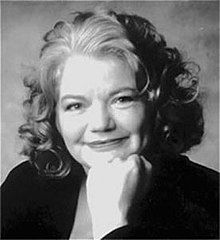
You remember the great Molly Ivins, I’m sure. She died of cancer in 2007. She was just 62 years of age.

Ivins was an unreconstructed liberal. And she was damn proud of it! She is the originator of at least two quintessential quips regarding politicians she railed against regularly: She was fond of referring to Texas Gov. George W. Bush as “Shrub”; then she hung the label of “Gov. Goodhair” on Bush’s successor as governor, Rick Perry.

Those legendary nicknames came after I had left Beaumont for the Texas Panhandle. But one afternoon in the Beaumont Enterprise newsroom brought me up close and personal with Molly Ivins.

She had come to Beaumont from Austin to cover the state of politics in the Gulf Coast community. She wanted to watch the Beaumont City Council in action. Ivins was not impressed, as I recall, with the quality of Beaumont’s municipal leadership, let alone its governing body.

I recall one column she wrote at the time in which she ridiculed the late Councilman Andrew P. Cokinos, the youngest of four brothers, all of whom had been players on the Beaumont political stage. She wondered about the middle initial “P.” that all the brothers used. She knew the “P” stood for “Pete,” and poked fun at them in general, and at Andrew in particular.

She wandered into our newsroom one afternoon. My memory is shaky at times, so I cannot recall the precise date of that meeting. I believe it was in the late 1980s or early 1990s.

She held court in the newsroom for well more than an hour. She regaled the journalists gathered around her with story after story of the characters she encountered during her years as a Texas journalist.

She got away somehow with crafting copy that no one else could. She wrote with biting humor, but lurking just below her trademark sarcasm one could find a serious theme to her commentary, as she was a serious journalist, although political conservatives (chiefly Republicans) usually found a way to belittle her.

However, in those days when newspapers actually mattered greatly, when they were relevant to telling communities’ stories, Molly Ivins was a giant among Texas journalists.

To be candid, I always envied her writing skill and more than once I lamented under my breath, “Damn, I wish I could write like that.” I was glad I was able to tell Molly Ivins that very thing to her face that day in Beaumont, Texas.

Happy Trails, Part 157: oh, the joy of anonymity

It takes me a while at times to recognize blessings when they present themselves, but I surely have found one related to our move from the Texas Panhandle to a small — but rapidly growing — community northeast of Dallas.

Forgive me if I sound a bit high-falutin’. It is not my intention, but please bear with me.

The blessing is in the anonymity I am enjoying in Princeton.

I spent many years in two Texas cities — Beaumont and then Amarillo — working in jobs that elevated my visibility. I wrote for newspapers that were essential to the communities they served. My face was in each publication fairly regularly; my name appeared on the pages’ editorial page mastheads daily. Those who read the papers — and they numbered in the tens of thousands in each region — got to know my name; many of them recognized my mug.

Even after I left daily journalism in August 2012 in Amarillo, I would hear from those who would ask, “Hey, aren’t you the guy from the newspaper?” Yes, I would say, although I might say that “the guy in the paper is my evil twin.”

Indeed, when my wife and I were preparing to sell our house in Amarillo, we moved into our fifth wheel, found an RV park on the east side of town. We checked in and the lady who worked the counter that day recognized my name and chortled, “Oh my! You’re famous!” It turned out she is related to a former neighbor of ours . . . but, I digress.

I no longer have those encounters in Princeton. I blend in. My wife and I are just two new folks strolling around our neighborhood with Toby the Puppy.

We go to the grocery store, we make our purchase, we leave. We’re just two folks doing whatever it is we want to do.

And so . . . I welcome this newfound status of being just another face in the crowd. Don’t misunderstand, I occasionally would get a rush over being recognized, especially when someone had a good word to say about the work I did at those earlier stops on our life’s journey. To be sure, not everyone I met in that fashion was complimentary, but that goes with the territory, too.

That was then. Those days are long gone. My life these days is so much better.

Time of My Life, Part 30: Remembering all those colleagues

When I read stories these days about newspapers’ shrinking newsrooms, I remember how it used to be in print journalism.

I was fortunate enough to be part of two newspapers that sold enough copies each day and raked in enough advertising money to invest deeply in personnel who were assigned to cover specific issues, work specific “beats.”

The most recent present-day tale I read came from Politico and it tells the story of the Des Moines (Iowa) Register, the one-time media titan in a state where presidential politics kicks off every four years with those vaunted Iowa caucuses. The Register, as are all newspapers these days, is retrenching. It is doing as much with fewer individuals to do it.

Read the Politico story here.

In the 1980s and into the 1990s, newspapers were flush with cash. I went from a small, five-day-a-week afternoon suburban daily in Oregon City, Ore., in 1984 to a mid-sized newspaper in Beaumont, Texas. I couldn’t believe my good fortune. The Beaumont Enterprise had a huge staff of reporters. They were assigned many specific beats.

The paper had an education reporter, police reporter, entertainment reporter, environmental reporter, courts reporter, someone to cover City Hall, someone to cover county government, reporters assigned to cover surrounding communities, we had a business editor who had a reporter working under his supervision. Then we had a sports department with about 10 reporters, including someone who covered “outdoor sports,” meaning chiefly huntin’ and fishin’. We had a photo staff of around six photographers.

Then, of course, we had copy editors, line editors who assigned stories to the reporters.

Then we had an editorial page staff, of which I was a member. I went to work in Beaumont as an editorial writer. The page had an editor and a cartoonist.

The Beaumont Enterprise, as the saying goes, was a “cash cow” for Jefferson Pilot, the owners who ran the paper when I got there and then for the Hearst Corporation, which bought the paper late in 1984.

I stayed for nearly 11 years before gravitating from the Gulf Coast to the Texas Panhandle. My professional journey then took me to a post where I served as editorial page editor for two papers in Amarillo, the morning Daily News and the evening Globe-Times.

The Globe-News, as everyone called it, was as rich as the Enterprise. The staff there was as diversified and exclusive as the paper I had departed. Its reach was enormous, covering the Panhandle, eastern New Mexico, the Oklahoma Panhandle and a small slice of southwestern Kansas.

Then the bottom started to fall out. It happened in the early 2000s. The Globe-Times was shuttered. The paper began to retrench. I heard that the Beaumont Enterprise did the same thing.

But the good old days were grand, indeed. They brought lots of fun, fellowship with colleagues and a joint pride in being able to assemble a publication each day of the week.

I don’t sense as much pride these days in the publications that employed me. Neither paper has nearly the staff they had back when they were flush with money.

I just recall all those friends and colleagues who have gone on to “pursue other interests.” I think of them often and hope they’re all as happy I am now that it’s over.

Happy Trails, Part 154: Why didn’t we come here before?

SEA RIM STATE PARK, Texas — I am kicking myself in the backside.

My wife and I lived in the Golden Triangle for nearly 11 years before we relocated way up yonder to the Texas Panhandle. That 24 years ago.

Today we arrived at a Texas state park jewel about 40 miles from where we used to live. Sea Rim State Park is a marvelous place to sit, relax, listen to the sounds of the surf and to just veg out.

That’s what we’re doing this evening as we settle in for a couple of nights on the Texas Gulf Coast.

I am not much of a beach guy. But we did visit the coast a few times during the Gulf Coast segment of our long journey through life together. We would drive to Galveston, entering the island community from the ferry that left the other side of Boliver Pass. Or . . . we would head the other direction from Sabine Pass, toward Holly Beach, La., which I used to consider was one of the coast’s hidden treasures.

Sea Rim is a wonderful state park, and part of the Texas Parks & Wildlife network of parks. We have spent a number of nights at many of those parks as we’ve continued on our retirement journey.

Sea Rim is a small-ish park, as far as Texas state parks go. I understand it has sustained considerable hurricane damage in recent years. Monstrous storms named Rita, Ike and Harvey all inflicted serious damage to Sea Rim, in that order.

But the park is clean. It’s tidy. This weekend it’s busy. I heard that the state’s Beach Clean-Up Day will occur Saturday. I’ll have more on that later.

I regret not coming here before now. Better late than never.

Silicon Gulch not exactly fully connected

DRIPPING SPRINGS, Texas — Yours truly’s string of consecutive blogging days came dangerously close to ending this week.

How could that happen? Here’s how: We hauled our fifth wheel recreational vehicle to Pedernales Falls State Park, set up our campsite and then discovered that our site had zero Internet accessibility and damn near no cell phone service.

Is that a bad thing? Not at all. Except that I want to keep the streak alive. It has survived. Here, though, is the quandary.

Pedernales Falls is near Austin, which I’ve always been led to believe is one of the most “connected” communities on Earth. Hey, it’s the hub of what they call the Silicon Gulch, that stretch of real estate between Austin and San Antonio. High-tech firms continue to sprout all over the region.

I didn’t anticipate being disconnected from rest of the planet, being that we are vacationing in this highly connected, 21st-century community.

There might come a day when I no longer want to keep this blogging streak alive. I have occasionally enjoyed being disconnected from the Cell Phone Universe.

The good news, though — if you want to call it that — is that we are to travel to my brother-in-law’s house in this suburban Austin community. It is from here that I am able to post these musings.

And so, the streak goes on.

Our travels will take us very soon to Sea Rim State Park in the Golden Triangle region of Southeast Texas. Let us hope — or let me hope — that we have Internet available there to keep this blogging streak on course.

Happy Trails, Part 153: Weekends galore!

Those who have been retired far longer than my wife and I have been will understand what I am about to say next.

I am having a bit of difficulty understanding that the term “weekend” no longer is relevant to either of us.

We have embarked on a two-week sojourn that will begin in Amarillo. We’ll pull our fifth wheel south to San Angelo, then to the Hill Country, down to the Golden Triangle, then to New Orleans, to Shreveport and then home.

What’s different about this particular journey is that we’ll be parking our RV in a new storage place just around the corner and down the street from our new home in Princeton, Texas.

Which brings me to the “weekend” point.

My wife has reminded me that we’ll be able to grab our fifth wheel and take it on short trips to any of the numerous state parks surrounding us in Collin County.

“Sure thing,” I have said. “We can plan a weekend trip.” She laughs out loud at me. “No-o-o-o! Don’t you get it? We don’t have to wait for the weekend,” she responds. “We can go in the middle of the week. No crowds. Others will be working.”

Well, duhhh.

I just will need to keep all of that in mind once we get a wild hair and want to haul our fifth wheel out of storage and head out for some quiet time in the woods, or next to a lake.

I’m getting the hang of this retirement thing. Every now and then, though, I need a knock on the noggin to be reminded that weekends are for working folks.

Time of My Life, Part 29: Welcome to the politics of race

Thirty-five years ago this week I began an amazing lesson in life and in the pursuit of my chosen craft. It marked my introduction to the politics of race and how some folks frame their public policy views on that basis.

I moved from a white-bread suburban community to a community that was — and still is — divided sharply along racial lines. Gladstone, Ore., is a nice town of about 15,000 residents. Beaumont, Texas, also is a wonderful community of about 120,000 residents. Gladstone is the white-bread town; Beaumont is divided roughly into equal parts white and black residents.

The week I arrived in Beaumont in early April 1984 to become an editorial writer for the Beaumont Enterprise was the week of a pivotal school board election. The federal courts had ordered the public school system to desegregate. Two school districts merged into one; one of the districts was mostly white, the other was mostly black. Voters had to elect a new school board that would govern the combined district.

That election also featured a referendum on whether to rename a major thoroughfare after the late Dr. Martin Luther King Jr. While many communities had honored Dr. King in such a manner, Beaumont had not yet taken that leap.

How did the election turn out? Voters elected a new school board that comprised an African-American majority among trustees; voters also narrowly rejected the street-naming referendum.

Talk about sending mixed message! Talk about the widest range of political emotion possible!

White residents were — by and large — filled with anxiety over the school board election results, while generally applauding the result of the street-naming measure. Black residents were thrilled to have elected a school board of mostly black trustees, while generally cursing the result of the MLK Jr. referendum.

I felt it daily. I heard it daily. I had little professional experience dealing with the politics of race. Yes, I had served in the Army with African-American soldiers, so I had grown to understand this basic act: We’re all human beings whose blood is precisely the same color. My introduction to the politics of race, though, told me how differently people of differing racial makeup view the world.

I grew quickly to understand those differences, although quite obviously I could not change my own racial makeup or tell my African-American neighbors that “I know how you feel.” Quite clearly, I did not know.

It all enlightened and educated me greatly. I believe I grew up significantly as I became more comfortable while learning about racial politics in my new community.

Here’s a punchline. Years later, the Beaumont City Council — virtually without warning — decided to rename a spur that runs north-south through the city after Dr. King. It acted while the city’s local black leadership was out of town attending an NAACP conference. The local NAACP president hit the ceiling. He was enraged. The mostly white City Council stuck to its decision.

The newly named Martin Luther King Jr. Parkway, I want to add, has been transformed into a beautiful thoroughfare. Beaumont’s black residents wanted to rename an established thoroughfare after Dr. King. They didn’t get their wish. They got something better.

We had departed Beaumont for the Texas Panhandle, so we didn’t get to witness the completion of the MLK Jr. Parkway. We have returned on occasion over the years. It’s a wonderful tribute to a great American.

Toughen up, Mr. President

Donald J. “Faux Tough Guy in Chief” Trump needs to toughen up, suck it up and go with the flow.

He won’t, of course. I just thought I’d admonish him anyway.

The president seems to want to take action against comedy shows (for crying out loud!) that make fun of him. “Saturday Night Live,” a show he says he doesn’t watch, is a favorite target of his threats of political revenge.

Trump talks tough. He bellows about how we oughtta take protesters out back and “beat the sh** out of ’em.” He sidles up to worldwide strongmen, while denigrating our own intelligence experts. Oh, and while he continues to pile on to the memory of a legitimate American military hero, the late John McCain.

He bullies his foes via Twitter, hurling insults and innuendo at them willy-nilly.

But the dude just cannot stomach the idea that others poke fun at him. Donald Trump is a wuss in wolf’s clothing.

I am reminded at this moment of a politician I used to cover when I worked in Beaumont as editorial page editor of the Beaumont Enterprise. The late U.S. Rep. Charles “Good Time Charlie” Wilson was an East Texas Democrat known for (a) his love of the military and (b) his desire to surround himself with attractive women.

Wilson also was an effective congressman who understood the role of the media that covered him. We covered his comings and goings at the Enterprise and on occasion we would chide him for things he would say or do.

We had a cartoonist on our staff, Jerry Byrd, who would illustrate our newspaper’s criticism with his editorial-page artwork.

What was Charlie’s response? How did he react? He would call us and ask us for the original cartoon so he could display it on his office walls in Washington, D.C., or in his district office in Lufkin, Texas!

Yep, Wilson was a grownup who knew that criticism from the media came with the job for which he took a solemn oath.

Donald Trump has yet to understand that truth about public service. I doubt seriously he’ll ever get it.

Time of My Life, Part 26: They kept me humble

I operated under a number of principles during more than 30 years in daily print journalism. I always sought to be fair; accuracy was critical.

I also never took myself more seriously than I took my craft.

The readers of the newspapers where I worked all served as great equalizers. I started my newspaper reporting career full time in 1977 at the Oregon City (Ore.) Enterprise-Courier; I gravitated in 1984 to the Beaumont Enterprise in Texas; and then in 1995 I moved on to the Amarillo Globe-News.

All along the way I contended with readers who shared a common quality. They generally lived in the communities we covered. Thus, they had skin in the game; they had vested interests in their cities and towns.

So if I wrote something with which they disagreed and they took the time to call me to discuss their disagreements I tended to take them seriously.

I tried to learn something about the communities where I worked. Readers often were great teachers. They would scold me. They would chide me. They mostly were respectful when they disagreed with whatever I wrote, how I reported a story or offered an opinion on an issue the newspaper had covered on its news pages.

I always sought to return the respect when they called.

To be sure, not everyone fit that description. More than few of them over all those years were visibly, viscerally angry when they called to complain. I tried to maintain a civil tongue when responding to them. I’ll be candid, though, in admitting that at times my temper flared.

I usually didn’t mind someone challenging the facts I would present in a news story, or in an editorial, or in a column. I did mind individuals who would challenge my motives, or ascribe nefarious intent where none existed.

And every once in a great while I would a reader challenge my patriotism and even my religious faith. That’s where I drew the line.

However, over the span of time I pursued the craft I loved from the moment I began studying it in college I sought to maintain a level of perspective. I took my job seriously. I always sought to remember that all human beings are flawed.

It kept me humble.

Time of My Life, Part 24: Some fights are worth having

My career in print journalism, while providing me with unforgettable experiences and much joy, also provided some angst, heartburn and at times a touch of dread.

Now and again I would encounter situations that compelled me to look more deeply into the affairs of public officials I respected. Such was the case about 30 years ago while I worked as editorial page editor for the Beaumont Enterprise in the Golden Triangle region of Texas.

I went to work one morning and while reading that day’s edition I came across a story about a Jefferson County Commissioners Court meeting. Near the end of the story, we reported that “In other business,” commissioners approved a contract involving the opening of a cafĂ© in the courthouse that would be run by a state district judge, Larry Gist.

It caught my eye. I took it up with my boss, the executive editor, and inquired about looking further into that matter. It didn’t seem appropriate for a state official to be operating a private business inside a county courthouse.

I’ll give you the Cliff’s Notes version of what I learned.

Judge Gist had prepared a bid to operate the courthouse cafĂ© with a friend and business partner of his. He communicated with the county auditor, a young man named Jerry Ware, about his interest in running the cafĂ©. He used what he told me later was “facsimile” county stationery, meaning he paid for the letterhead that would go atop the documents he was submitting for the auditor to consider.

But he signed the documents, “Larry Gist, judge.”

Here is where it got real sticky. Ware was appointed to his office as auditor by the district judges. So he considered a bid by one of his employers, one of the individuals to whom he answered. State law, interestingly, does not require a county to accept the lowest bid on projects such as this; it gives the county discretion to determine the “best bid” offered.

So, Ware — who works for Larry Gist (among other judges) — selected Gist’s bid to operate the cafĂ© on the ground floor of the Jefferson County Courthouse.

That seemed strange. I thought it smacked of conflict of interest. I talked with Judge Gist, asked him about the stationery and quizzed him about whether he put any undue pressure on the county auditor to look favorably on his bid. I talked to Jerry Ware, and asked him whether he might have been influenced by the facsimile letterhead and the signature that contained the word “judge” alongside the name of the individual who was bidding on the courthouse business.

We published an editorial that questioned whether the county was adhering to all the proper ethical standards by allowing the judge to bid on a project to be housed inside a courthouse where he worked and whether the auditor was applying objective standards to all the bidders who had sought the contract.

Quite obviously, Judge Gist and Jerry Ware were unhappy with the newspaper and with me. Ware hated my guts for the rest of his life. He died of cancer not too many years later.

As for Gist, I learned through other channels that he sought to sue me and the paper for libel. The only sticking point for Gist in his pursuit of a legal challenge was that nothing we published was untrue. As you might know, truth is the first and last line of defense in any libel lawsuit.

Judge Gist and I endured a frosty relationship for the rest of my time on the Gulf Coast. I am happy to say, though, that it thawed over time. I had occasion to talk to Judge Gist on another matter once I made the move from Beaumont to the Texas Panhandle.

I don’t know the status of the courthouse cafĂ©. That was then. The here and now allows me to look back on that episode with just a touch of relief that it never got past the threat of a lawsuit.