Tag Archives: US Constitution

Mitch McConnell: chief obstructionist

Supreme-Court-blue-sky

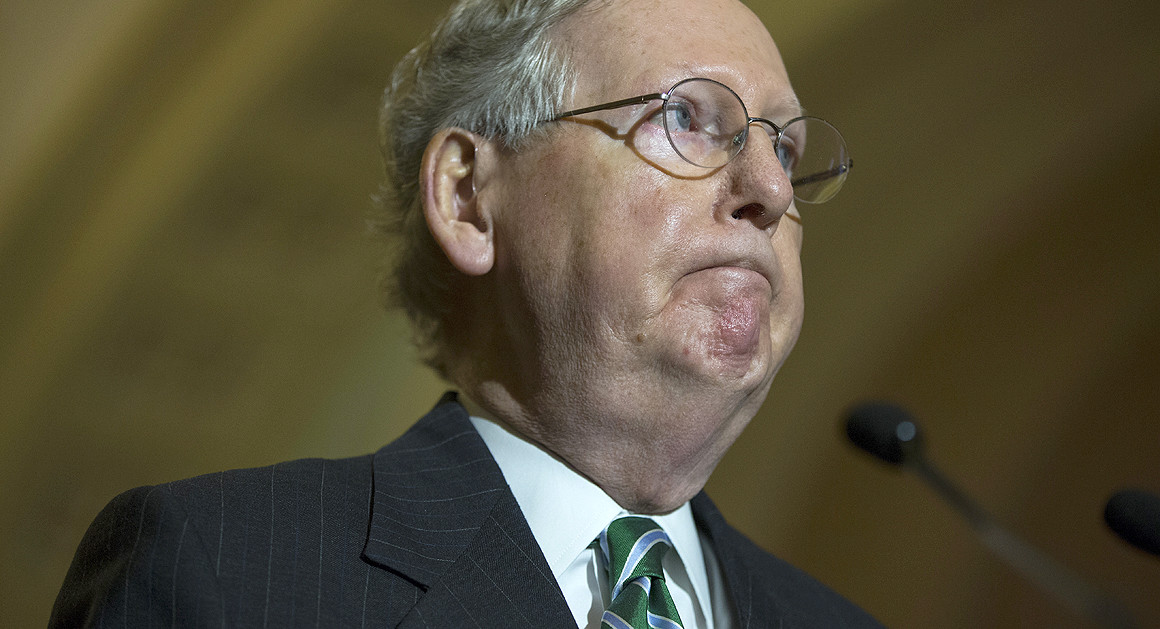
Mitch McConnell declared out loud and in public shortly after Barack Obama became president that his top priority would be to make Obama a “one-term president.”

His wish went unfulfilled when the president won re-election in November 2012.

Now that McConnell is the Senate majority leader, he’s made another pledge. He is going to oppose the president’s next appointment to the U.S. Supreme Court.

Does he know who the president will nominate? No. Does he have any inside information on Obama’s short list? Again, no.

But without the faintest idea who the president will select, the Senate’s leading Republican is going to obstruct the president. He vows to prevent the president from doing what the Constitution empowers him to do. For that matter, he and other Republicans are going to prevent the Senate from doing what the Constitution requires of that body.

Obama is going to nominate someone to replace the late Antonin Scalia on the U.S. Supreme Court. He’s entitled to put someone forward. The Senate also has the power to consent to the nomination.

There’s much that boggles the mind about the eruption that has occurred since Scalia’s untimely death. I cannot quite rank them in order, but McConnell’s declaration that he intends to block any nomination to be considered must rank near the top.

Yes, the stakes are huge. The president is a liberal/progressive politician who likely will select someone who is a good bit to the left of the man who led the Supreme Court’s conservative movement. Thus, Senate conservatives are vowing to protect their court majority — as best they can — by seeking to hold up this confirmation until after the November election. Their hope is that a Republican will win the presidency.

We have a president with one year left in his term. As they say, elections have consequences. A majority of Americans re-elected President Obama understanding full well how he would fill a vacancy on the highest court in the land if he was given the chance to do so.

He now has that chance.

Meanwhile, the nine-member high court has been reduced to eight members. The even split among the justices could produce some tie votes on key cases yet to be argued before the court.

This is not good governance.


Sen. McConnell then . . . and now

Supreme-Court-blue-sky

A colleague and acquaintance of mine has shared an item on social media that I’d like to share here.

It comes from Senate Majority Leader Mitch McConnell who in 2005 made a fascinating point about defending the right of presidents to make appointments to the federal judiciary.

It states:

“The Constitution of the United States is at stake. Article II, Section 2 clearly provides that the President, and the President alone, nominates judges. The Senate is empowered to give advice and consent. But my Democratic colleagues want to change the rules. They want to reinterpret the Constitution to require a supermajority for confirmation. In effect, they would take away the power to nominate from the President and grant it to a minority of 41 Senators.”
“[T]he Republican conference intends to restore the principle that, regardless of party, any President’s judicial nominees, after full debate, deserve a simple up-or-down vote. I know that some of our colleagues wish that restoration of this principle were not required. But it is a measured step that my friends on the other side of the aisle have unfortunately made necessary. For the first time in 214 years, they have changed the Senate’s ‘advise and consent’ responsibilities to ‘advise and obstruct.'”

Interesting, yes?

Well, 11 years later, the majority leader himself is proposing to “advise and obstruct” by seeking to delay a presidential appointment to the U.S. Supreme Court until after the November general election that, McConnell hopes, will produce a Republican president.

Well, Mr. Majority Leader, has Article II Section 2 of the Constitution changed?


Unanimous picks loom as favorites for high court

untitled

Politics rules on Capitol Hill. It swings both ways, influencing both political parties.

Consider what might be about to happen.

President Barack Obama, a Democrat in the final full year of his second term and final term, is likely to name someone to fill a vacancy created by the death of Supreme Court Justice Antonin Scalia.

The U.S. Constitution grants him the authority to do so. It also grants the Senate the authority to approve anyone nominated to the court.

The Senate is controlled by Republicans.

Democrats and Republicans don’t like each other much these days. Republicans really dislike the Democrat in the White House and the feeling appears to be quite mutual.

What’s the president going to do about this high court vacancy?

One theory getting kicked around in the hours and days after Scalia’s death is that the president could name an appellate judge who’s already been approved by the Senate. One name has emerged as a possible favorite, Judge Sri Srinivasen, an Indian-American who was approved unanimously the Senate before he took his federal appeals court seat.

He’s apparently thought of as a moderate. He doesn’t lean far left. He surely doesn’t lean far right. He shoots straight down the middle, according to a number of legal experts.

So, will this fellow breeze through the confirmation process as he did when the Senate considered him for a lower court?

OK. You can stop laughing.

Republicans are vowing to deny the president any action on a pending nomination. They want to wait until after the November presidential election in which they hope a Republican wins the White House.

Democrats will have none of that. They want the president to make a nomination and they want the Senate to vote on it. Quickly.

Why not select someone who’s already been vetted by the Senate? Would a judge like Sri Srinivasen be just as qualified to sit on the Supreme Court as he is on a lower court?

Well, in my version of a perfect world, it would seem like a natural for the president to find a moderate judge who’s already been approved. Except that he would be succeeding a towering figure of the judicial conservative movement.

Scalia led what has been called a “conservative renaissance” on the Supreme Court. Anyone — regardless of credentials, standing among peers or legal brilliance — is going to be run through a political sausage grinder.

Politics. Sometimes it’s downright ugly.

And sometimes it doesn’t serve the nation well.


Get ready for the biggest fight of all

Supreme-Court-blue-sky

The fight over immigration?

Or the Affordable Care Act?

Or budget priorities?

How about gay marriage?

All of those battles between President Barack Obama and the U.S. Congress are going to pale in comparison to what’s coming up: the battle to find a suitable nominee to the U.S. Supreme Court.

Justice Antonin Scalia’s sudden and tragic death Saturday has caused political apoplexy in both sides of the divide in Washington.

Democrats want the president to nominate someone sooner rather than later. Republicans want the nomination to wait until after the election, with the hope that one of their own will occupy the White House beginning Jan. 20, 2017.

President Obama indicated last night he’s inclined to move forward, to nominate someone and to insist on a “timely vote.”

He is correct to insist that he be allowed to fulfill his constitutional responsibility and that the Senate fulfill its own duties.

One of the Republican candidates, Sen. Marco Rubio, said last night that no one has been appointed during an election year. He’s half-right. President Reagan appointed Anthony Kennedy to the high court in 1987; a Democratically controlled Senate confirmed him in 1988, which certainly was an election year.

Consider this, though: Justice Kennedy succeeded another GOP nominee, the late Justice Lewis Powell (picked by President Nixon). Kennedy’s appointment and confirmation did not fundamentally change the balance of the court.

This vacancy is different. By a lot.

Justice Scalia was a towering figure among the conservative majority that serves on the court. Whoever Obama selects surely will tilt to the left.

Therein lies the fight.

Senate Majority Leader Mitch McConnell, a Republican, said the vacancy should be filled after the election, adding that the “American people deserve a voice” in determining who sits on the court.

He could not be more off base. Yes, the voters deserve a voice. However, they spoke decisively about that in November 2012 when they re-elected Barack Obama as president.

Indeed, elections have consequences. There can arguably no greater consequence than determining who gets to select candidates to sit on the nation’s highest court.

The president — whoever he or she is — has a constitutional responsibility to act on a timely manner when these vacancies occur. Moreover, the Senate has an equal responsibility to vote up or down on anyone nominated by the president.

I’ve long believed in presidential prerogative — and my belief in that has never wavered regardless of the president’s party affiliation.

So, let’s mourn the death of a distinguished and, in the president’s words “consequential” justice. Then let us allow the president to do the job allowed by the Constitution and then let us demand that the Senate do its job by voting on whoever the president selects to fill this critical court vacancy.


What, precisely, does ‘original intent’ mean?

founders

U.S. Sen. Marco Rubio tonight paid glowing tribute to the late U.S. Supreme Court Justice Antonin Scalia.

The praise came while Rubio was taking part in the Republican presidential debate.

He said something that struck me as, well, fascinating. Rubio said Scalia’s legal brilliance was rooted in his belief that the U.S. Constitution is not a “living document,” but that the Constitution should be interpreted precisely as the founders intended.

I don’t believe for one second that Justice Scalia wanted to roll back the advances that came about in the many years since the founders wrote the Constitution — in the late 18th century.

However, if Rubio’s praise of Scalia is to be taken literally, it seems fair to wonder: Does he believe the founders were right to deny women the right to vote, or that African-Americans should be enslaved?

Of course he doesn’t.

However, we can see the discrepancy — in my view — in the debate over whether the Constitution is a living document. The argument of those who favor the so-called “original intent” of the founders breaks down.

Why? Because of the many reforms approved in the 200-plus years since the Constitution was ratified, the document does indeed evolve as our nation has evolved.

It’s alive, man.


Let’s ask High Court to settle Cruz eligibility

cruz

The U.S. Supreme Court is in session.

Sure, the justices have plenty on their individual and collective plates. How about giving them one more issue to decide?

Let’s petition the court to decide whether U.S. Sen. Ted Cruz is constitutionally eligible to run for president of the United States.

An essay in Salon suggests that upon closer examination, Cruz’s “natural born” credentials are showing signs of weakness. I’m not sure I buy that notion. I believe he’s eligible to run, despite being born in Canada; his father is Cuban, but his mother is American. U.S. law granted young Teddy citizenship the moment he came into this world.

But the question is swirling nonetheless over whether Cruz qualifies as a “natural born” U.S. citizen.

What harm can be done by asking the court to take up the issue? It comprises a conservative majority. Oh, wait. The court is non-political, yes?

What might happen if the highest court in America decides against hearing the case? That could be construed as a tacit endorsement of the notion that the Texas Republican senator is, indeed, eligible to seek the presidency.

I don’t believe the issue is a terribly complicated one to settle once and for all.

The federal law that grants citizenship to anyone born to an American citizen — regardless of where the birth occurs — either is constitutional or it isn’t.

I believe Ted Cruz is qualified to seek the presidency.

Furthermore, I also believe it’s time for the nine men and women who sit on the U.S. Supreme Court to decide this issue — for keeps!

Just one more point . . .

Cruz criticized the court this past year for its narrow ruling allowing gay marriage, saying that “five unelected judges” shouldn’t be deciding what’s legal and what isn’t.

Would the senator say the same thing if, say, five unelected judges rule in his favor on the “natural born” citizenship question?

Don’t be overly ‘audacious,’ Mr. President

obama_exec_order_020_16x9

President Obama hardly seems like an “audacious” fellow.

Remember the “No Drama Obama” mantra during his first term in the White House? That was meant to describe a president who disliked being overly aggressive in the pursuit of foreign or domestic policy.

I guess that’s about to change now that the president is entering his final year in office.

He wants to ponder “audacious” executive actions, things he can do unilaterally without the approval of Congress.

Presidential prerogative is an important element of governing. I’ve long believed in it, given that the president is elected nationally.

Barack Obama has used the power of his office — granted by the U.S. Constitution — relatively sparingly during his seven years in the White House. However, some of the orders he’s issued — such as those on immigration and on gun control — have caused considerable consternation.

Are they illegal? Is he “lawless,” as some Republican presidential candidates keep alleging as they toss out the red meat to their supporters from the stump? No on both counts, in my view.

But the president’s “audacious” use of executive authority clearly must have its limits.

I will continue to have a large measure of faith that the legal eagles in the Justice Department and in the White House’s West Wing know the limits set forth in the Constitution. What’s more, the president keeps reminding us that he taught constitutional law once.

So, if Congress isn’t going to help govern the country along with the White House, proceed, Mr. President.

But please, young man, be careful.


Tough talk rises from GOP debate

chrischristie_0

New Jersey Gov. Chris Christie said the following at the latest Republican Party presidential debate Thursday night.

Frankly, it’s a hoot.

“Mr. President, we’re not against you. We’re against your policies,” Christie said. “The American people have rejected your agenda and now you’re trying to go around it. That’s not right. It’s not constitutional. And we are going to kick your rear end out of the White House come this fall.”

This is the guy who told a constituent to “sit down and shut up!” when the constituent — for whom Christie works in New Jersey — had the temerity to issue a critical statement at a public event. I’m trying to imagine myself telling any of the bosses for whom I worked to “sit down and shut up!”

It’s the kind of rhetoric that seems to endear him to many within the GOP.

But the idea that the Republican presidential nominee, whoever he or she is, will kick the president’s “rear end out of the White House come this fall” misses a fundamental point.

Barack Obama isn’t on the ballot. The U.S. Constitution places term limits on him. The 22nd Amendment says a president can be elected twice to the office. That’s it. Two and out, man.

Barack Obama was elected in 2008, winning 365 electoral votes while capturing more than 10 million more popular votes than Republican nominee Sen. John McCain; he was re-elected in 2012 with 332 electoral votes, while defeating GOP nominee Mitt Romney by nearly 5 million popular votes. He needed 270 electoral votes to win both times. His Electoral College majorities in both elections were substantial.

So, have “the American people rejected” the president’s agenda?

Seems to me — and I’m just tossing this out from the Flyover Country peanut gallery — that the president’s agenda played pretty well in the past two presidential elections.

The president is going to leave the White House a year from now on his own terms. He isn’t going to get his rear end “kicked out” of the place.

However, the tough talk that Christie — not to mention the other GOP hopefuls who debated the other night — sounds good to those who want to hear it.

If only it were true.


Birther debate getting muddier

rs-trump-cruz

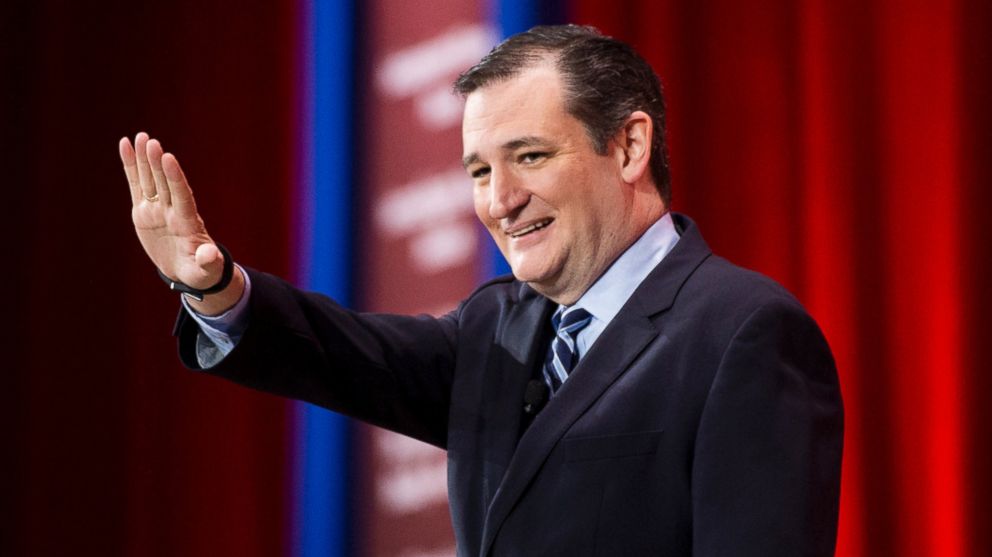
Ted Cruz didn’t need to go where he went . . . but he did.

The Texas Republican U.S. senator raised a curious and completely irrelevant issue in seeking to refute presidential rival Donald J. Trump’s questions about Cruz’s eligibility to run for president of the United States.

During the GOP debate in North Charleston, S.C., Cruz said that under “some theories” Trump might not be eligible to serve because his mother was born in Scotland.

Oh, boy.

Sen. Cruz? That’s even more of a non-starter than the questions that Trump and others are raising about your own eligibility.

Trump keeps questioning whether Cruz can run for president because he was born in Canada. Cruz’s mother is an American, which by the reckoning of many constitutional scholars, makes him eligible; he became a U.S. citizen simply because of his mother’s citizenship.

End of discussion? Not even close.

Cruz muddied it up even more by suggesting that Trump’s mother’s birthplace might jeopardize the frontrunner’s eligibility.

This discussion is venturing into a realm that is reaching far beyond ridiculous.

Trump’s mother’s place of birth is not an issue. Neither is Cruz’s place of birth. Both men are qualified to run for the presidency.

How about staying focused on the real issues of this campaign?

Such as how they intend to govern.


Open carry on campus? Please . . . no!

campus carry

State Sen. Kel Seliger, R-Amarillo, today made it clear that he opposes the notion of allowing anyone to carry weapons on college campuses in Texas.

More to the point, as I heard his talk today to the Rotary Club of Amarillo, he said that allowing guns into college classrooms is a particularly bad idea.

He noted a key foe of the idea of allowing such activity. That would be the chancellor of the University of Texas System. You’ve heard of him, perhaps. Former Navy Admiral William McRaven once led the nation’s special forces command. He is a Navy SEAL who, according to Seliger, “knows more about guns than just about anyone.”

McRaven thinks allowing guns on campus is a bad idea.

Seliger then presented a fascinating scenario to buttress the point about how bad an idea it is to let someone carry a gun openly into a university classroom.

Suppose a professor gives a student a bad grade, he said. Suppose, then, that the grade enrages the student so much that he wants to harm the professor.

I think you get the point.

I’m not going to oppose openly the idea of allowing Texans to carry guns in plain sight. The concealed carry law, enacted in 1995, hasn’t produced gunfights at traffic intersections, as some of us — yours truly included — had feared would happen.

But there ought to be some places where we ought to restrict the open display of these weapons.

Houses of worship are among those places.

So are college classrooms.

And none of that endangers the Second Amendment to the U.S. Constitution.