Tag Archives: US Constitution

Let’s get real: mend, not end, 2nd Amendment

I’m hearing a lot of chatter throughout my social media network about how the United States should end the carnage of gun violence.

Las Vegas’s tragedy has awakened us yet again to this horrifying aspect of modern American society. Fifty-eight victims, all attending a music festival, were shot to death in an act of insanity by a monster perched on the 32nd floor of the Mandalay Bay Hotel and Casino. Five hundred-plus more were injured; some of them are in critical condition.

The debate has been joined throughout many social and other media.

I am hearing significant chatter about how Australia managed to clamped down on firearm ownership in the wake of a 1996 mass shooting. The Aussies have been massacre-free ever since. Other countries prohibit the purchase of firearms. Let’s model our firearm policy after those countries, the argument goes.

I happen to believe in the Second Amendment, awkward phrasing and all. I believe it says that Americans have the constitutional right to “keep and bear arms.” I get that.

However, I also believe there must be a solution to improving the Second Amendment. How can we preserve its principle while legislating within its framework stricter laws that make it illegal for civilians to own fully automatic assault weapons like the one used in Las Vegas by that madman? Isn’t there a solution to be found somewhere, somehow, by someone smart enough to draft a law that maintains the Second Amendment principle of keeping and bearing arms?

As my friend Jon Mark Beilue has noted in a wonderful column published today in the Amarillo Globe-News, other amendments in the Bill of Rights have limitations. He cites the First, Fifth and Sixth amendments. The Second Amendment, though, remains untouchable mostly because of entrenched political interests groups — I’m talking about you, National Rifle Association, among others — who bully and pressure members of Congress to keep their hands off that amendment.

Check out Beliue’s essay here.

Can we get past the overheated rhetoric that flares up when these tragedies strike? If we can, then perhaps we can find a solution to mend the Second Amendment. Don’t tell me that such a reach is beyond our collective grasp.
Parsing the founders’ language in the 2nd Amendment

Of all the amendments to the U.S. Constitution — all 27 of them — the one that gives me the most serious case of heartburn is the Second Amendment.

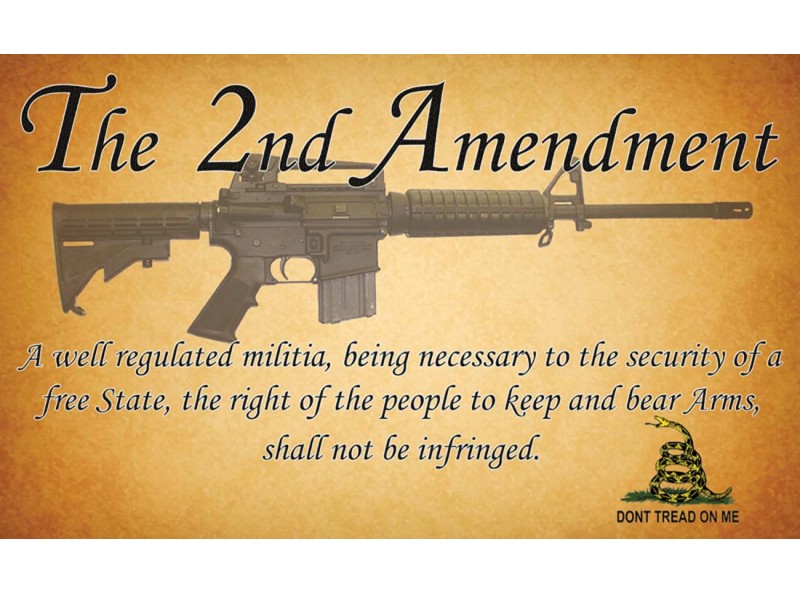
Here is what this amendment says. It’s brief, but it’s so damn confusing in my humble view: A well-regulated Militia, being necessary to the security of a free State, the right of the people to keep and bear Arms shall not be infringed.

Americans are talking yet again about this amendment. Events in Las Vegas over the weekend have thrust this issue to the top of our minds once more. We’re talking about gun violence, gun control. We’re even debating whether we should be debating this issue at this time. I believe we should.

But I want to look at the Second Amendment’s sentence construction. I’ve read it thousands of times over my many years on this good Earth. I don’t understand what it’s saying.

The founders were smart men. They did a good job of developing a fairly cogent and concise bill of rights that are contained in the first 10 amendments to the Constitution. The Second Amendment, though, seems to make two points that are not connected to each other.

Indeed, the first 12 words preceding the comma seem to be lacking an ending. It refers only to a “well-regulated” militia and the necessity to have one to maintain “the security of a free State.” That’s it!

The following clause could stand as a complete sentence in that it contains a subject, some verbs and a predicate.

Those who favor stricter controls on firearms point to the first clause as their rationale. Those who oppose such controls look to the clause after the comma as their rationale.

My sense is that here is where the debate over this amendment seems to break down. Those on opposing sides of this mammoth chasm place their emphases on separate clauses. One means something different from the other one.

I know that courts have ruled countless times that the amendment means that Americans can own firearms, that it’s protected in the Constitution.

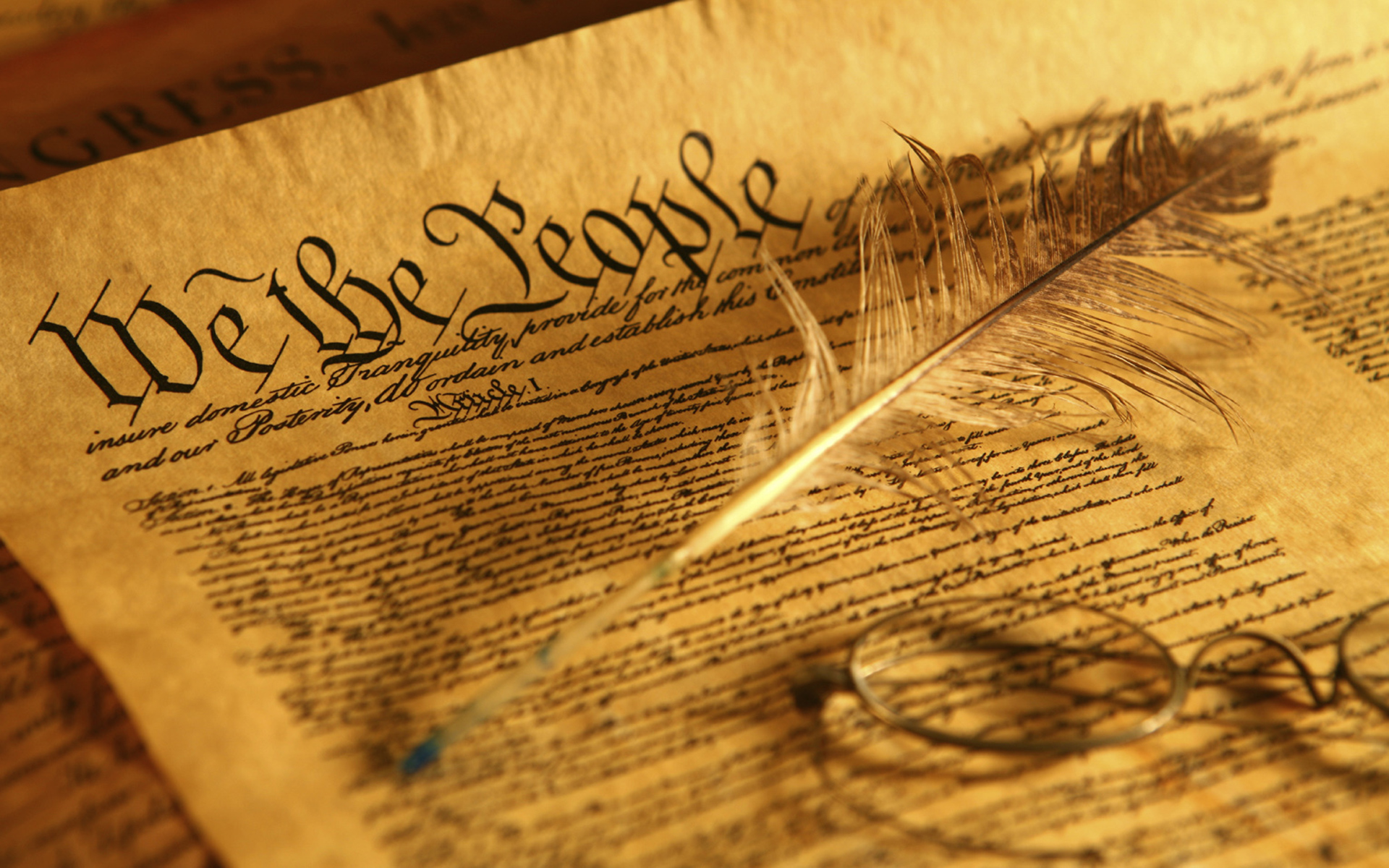
The Bill of Rights was ratified Dec. 15, 1791 and thus, the Constitution was established to form a framework for our representative democracy.

The founders got it mostly right when they crafted that framework. They wrote the Bill of Rights almost without exception with sentences that make sense; nine of the 10 amendments comprising the Bill of Rights were constructed in ways that make sense to laypeople such as yours truly.

The Second Amendment, though, gives me heartburn.

By all means, let’s talk about guns

Part of the debate in the wake of the Las Vegas massacre has spun into a discussion about the timing of a debate over gun violence and whether we need more laws to control the ownership of firearms.

Donald Trump believes it’s premature to talk about such matters.

The White House echoes the president’s view on the timing of that discussion.

Others, meanwhile, have kicked that debate into first gear and are shifting into higher gears quickly.

To be honest, I am with those who want to start the discussion now.

I am not dishonoring the victims of the gunman’s horrific act. I pray daily for the 59 people killed and for the 500-plus victims who were injured. I pray for our country and hope we can return to some semblance of sanity.

Moreover, I do believe we can enact some additional controls on the flow of firearms without dismembering the Second Amendment guarantees of firearm ownership. I won’t engage in that debate here.

I do want to deal briefly with the notion that we can have that discussion while mourning the loss of life in Las Vegas. It’s not too early. I am mystified at the idea that it is inappropriate to seek measures to protect us against this kind of heinous act.

TV talking heads are grilling politicians about gun control. Some of them are hedging. Others are willing to engage — right now — in that discussion.

The carnage that spilled on the floor in Las Vegas has prompted yet another national debate over how — or if — we can ever protect humanity from gun madness.

Do I have confidence that this moment will produce any action? Consider this: If the deaths of those 20 innocent children and six of their teachers, who were slaughtered in Newtown, Conn., couldn’t get politicians to budge, does anyone believe they’ll move as a result of the Las Vegas massacre?

Their likely refusal does not make a national discussion any less important.

‘Even the loons’ deserve to have guns?

Bill O’Reilly isn’t on TV much these days but he still has quite a following around the nation.

I feel the need, therefore, to challenge an assertion that the former TV host made in a blog post he wrote about the Second Amendment, the U.S. Constitution’s guarantee of Americans to “keep and bear arms.” He said the Las Vegas massacre this weekend is the “price of freedom” and said the “Second Amendment is clear that Americans have a right to arm themselves for protection. Even the loons.”

Even the loons?

No, Bill. The loons might have that right currently, but they do not deserve the same rights to own firearms for protection.

This cuts pretty close to the heart of a debate that’s going to rage across the nation in the wake of the Las Vegas massacre that killed 59 people and injured more than 500 others. The gunman opened fire from the 32nd floor of a hotel onto a floor filled with concert goers who were listening to a concert performance by country music star Jason Aldean.

The debate over the Second Amendment has commenced, despite what White House press secretary Sarah Sanders said today about it being “too early” to have this national discussion.

Price of freedom?

I have no specific answers to the changing the status quo. I do believe in the Second Amendment. I believe Americans’ right to own firearms should remain. However, I continue to believe that there must be some additional controls placed on those who purchase firearms to do something to keep them out of the hands of people like the Las Vegas gunman.

There are limits on certain elements of the First Amendment; you can’t yell “fire!” in a crowded theater, nor can you slander or libel someone. Yet, there are those who contend that the Second Amendment must remain untouched from what the founders wrote in the 18th century. 

I won’t accept that notion. Surely there can be a way to craft reasonable restrictions on the purchase of firearms that seek to keep them from nut jobs like the guy who opened fire in Las Vegas.

And, no, I am acutely aware that no additional law is going to deter every single monster from obtaining a weapon, just as laws against murder haven’t eliminated that crime from occurring.

As we move forward with this discussion, my hope is that we can find a way to keep this debate as calm as possible and look as dispassionately as we can at alternatives to the status quo.

Another tragedy likely to ignite another debate on guns

Americans awoke this morning to horrifying news.

At least 58 people are dead, hundreds more injured and a nation is shaken to its core because of gun violence. This time is occurred from the 32nd floor of the Mandalay Bay Hotel and Casino in Las Vegas, Nev.

A gunman opened fire with a fully automatic rifle from high over the ground floor where revelers were enjoying a country music festival.

What in the name of all that is supposed to make sense do we think about this?

The shooter is dead; he reportedly took his own life as police were closing in on the room where he was holed up. The FBI is assisting local police in investigating what drove this monster to do what he did. The president of the United States, Donald Trump, called this an act of “pure evil,” which it most certainly is.

Somehow, in a macabre sort of way, any discussion of what to call this dastardly act seems pointless so early as we have become consumed by our national grief. I’ll call it what I believe it is: an act of domestic terrorism. I will let others debate how this should be labeled; I won’t join that debate.

Make no mistake, too, that this act is going to spawn yet another “national conversation” about gun violence and how — or if — we can ever enact reasonable, tighter gun control laws that do not infringe on people’s constitutional guarantees to the ownership of firearms.

I’ve long believed the Second Amendment is not wholly sacrosanct. I believe there can be restrictions placed on weapons of the type used in the Mandalay Bay massacre. That debate will be joined in due course.

Meanwhile, I am going to collect my breath and say my prayers for a nation that has been thrust into mourning once again by the insane act of a gun-toting madman.

Speaking of ‘disrespecting the flag … ‘

Now that the nation has become full of “experts” on how to respect Old Glory, I want to make a plea to my fellow Americans.

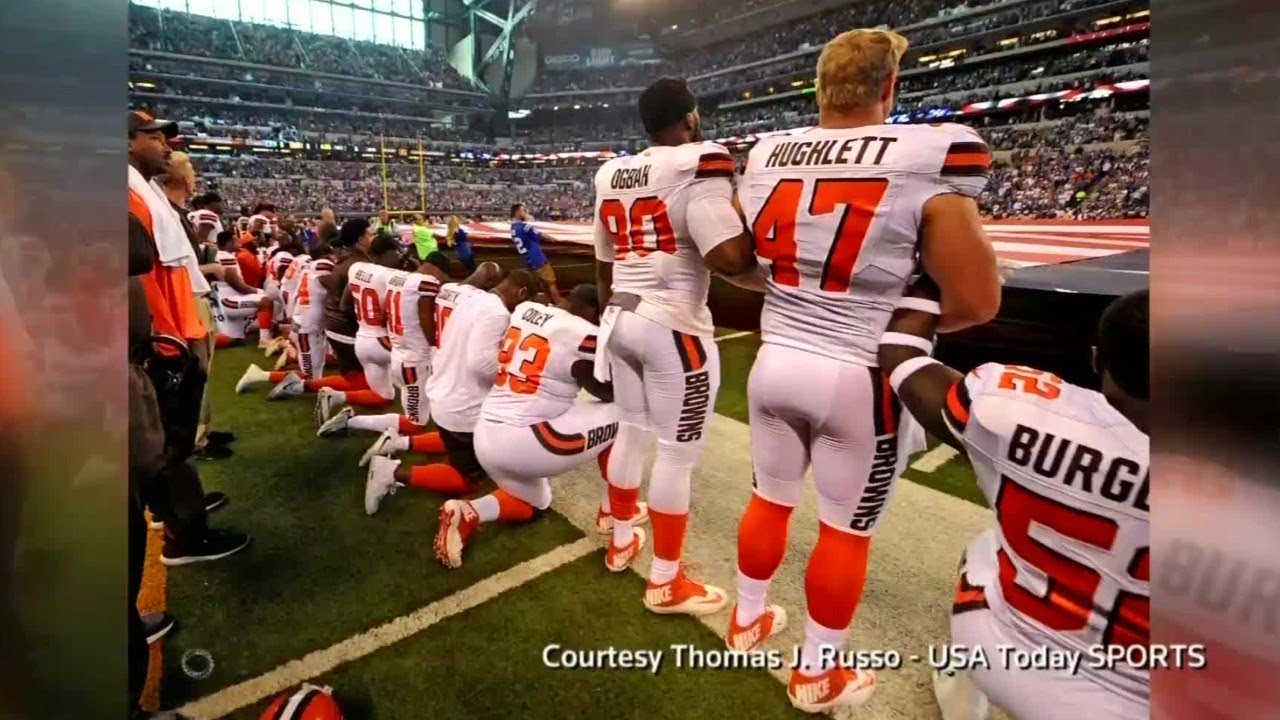
Yes, many of us have become engulfed in this controversy over on-the-field protests by professional football players. The president of the United States has yanked the discussion away from its origin: the treatment of some police officers of African-Americans. It’s now become a matter of huge concern over whether those protests disrespect the U.S. Constitution and the Stars and Stripes.

The players kneel quietly, peacefully while bowing their heads during the playing of “The Star-Spangled Banner.” Why, that’s just damn disrespectful, according to Donald Trump and many millions of other Americans. I’ll say once again that this form of protest isn’t much to my liking, either, but I seek to respect the players’ right to do what they’re doing.

Here’s my plea.

The next time you’re at a public event where they play the National Anthem, be sure to remind the fellow who wears his hat while the song is being played to take it off. Don’t forget to tell the individual who’s playing with his or her cell phone to put the device away. Instruct anyone you see or hear talking, laughing or cutting up while the anthem is being played to be quiet and to pay attention.

Be sure y’all stand at attention, quietly. Look directly at the flag. You are welcome to place your hand over your heart. You also are more than welcome to sing the words of the National Anthem as it’s being played.

If you don’t want to correct your fellow Americans, then just take note of the number of them you see disrespecting the flag.

Then remember what you see when you criticize an athlete who’s trying to make a political statement that has nothing to do with the flag, or the anthem, or the Constitution.

Remember the time Kim Davis … you know?

Someone out there has brought back an earlier episode involving politics in the workplace, so I’ll just jump on that horse and ride it briefly here.

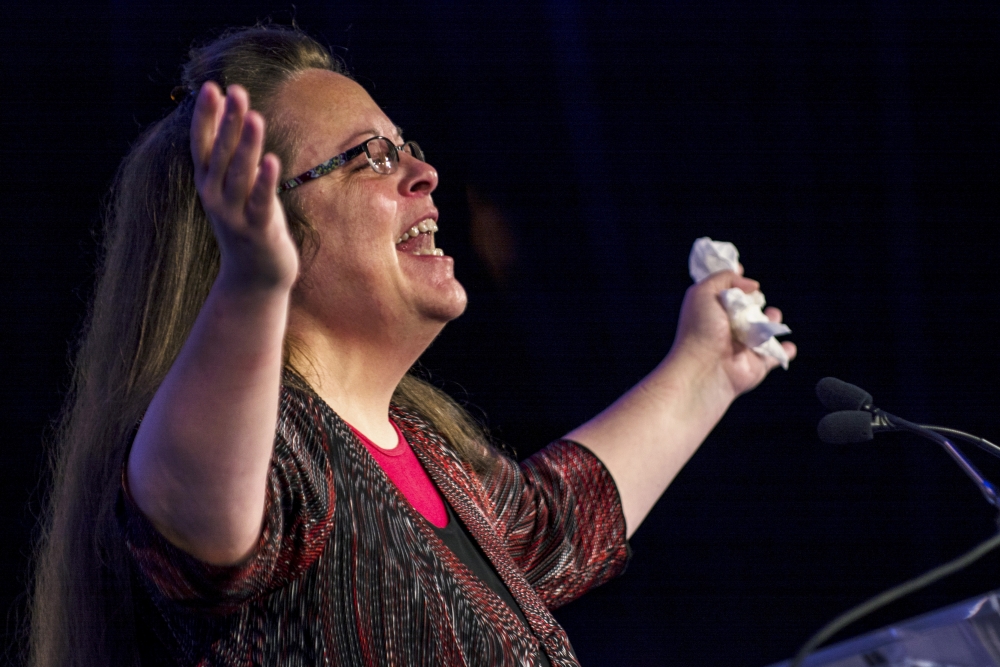
Kim Davis is the Rowan County (Ky.) clerk who once defied a U.S. Supreme Court ruling that declared that gay marriage is a protected right under the 14th Amendment to the U.S. Constitution.

She said her religious beliefs wouldn’t permit her to issue marriage license to gay couples. She violated the oath of her office; she had vowed to obey the Constitution and, you know, follow the law of the land.

She brought her personal political beliefs into the workplace. Bad, Kim … bad!

So now there’s some argument being kicked around in social media about those pro football players who are doing that very thing. They’re bringing their politics into their workplace, which happens to be on a field surrounded by tens of thousands of paying fans and millions more of them watching them do their jobs on television.

Some of those players are “taking a knee” when “The Star-Spangled Banner” is sung before games. Others are locking arms with teammates. Critics of this practice say that the athletes are acting inappropriately by politicizing their profession, not to mention that they’re “disrespecting the Constitution,” which I believe is a ludicrous assertion.

I’ll stipulate once more that I am not pleased by the nature of the protests by pro football players. I wish they had found another way to protest against police brutality against African-Americans, which is the initial reason for the protests.

That all said, if it’s OK — in the minds of many Americans — for Kim Davis, who serves the public in a public office, to bring her political beliefs into her workplace, why is it not OK for pro football players to do the same thing?

Ditka: ‘Don’t demonstrate against the Constitution’

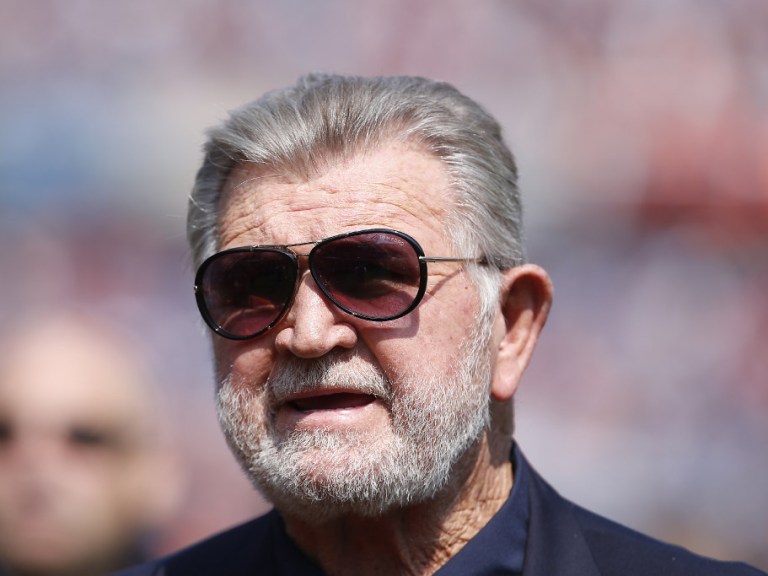
Mike Ditka was a damn good professional football player and coach.

He is a strong supporter of Donald J. Trump. He has strong opinions on the recent controversy regarding NFL players “taking a knee” while they listen to the National Anthem at the start of football games.

But he needs to take a breath and maybe rethink what he told the Chicago Sun-Times. He said:

“But I don’t believe you demonstrate against the American flag. I believe in the American flag. Or demonstrate against the Constitution. I believe in the Constitution. I’m old fashioned. There are other ways to get your point across. But I don’t believe one should demonstrate against our country. Just play football.

“And that’s the way I feel. And now I’d like to go back to my card game.”

Here’s more of what he said.

Old-fashioned Mike should examine the Constitution and what it means. It guarantees the right of citizens to do precisely what he’s arguing against. These football players and their coaches are doing it peacefully. Their initial protest — which started this past season with quarterback Colin Kaepernick — has been aimed at police treatment of African-Americans.

Do I agree with the tactic they’ve employed? No. I wish they would protest differently. But I take no offense at what they’re doing. I do not believe these young men are disrespecting “the flag” or “the Constitution.”

I believe in the flag as much as Coach Ditka. I also believe that the cherished flag symbolizes a nation founded on the very principle of dissent and protest.

Roy Moore would bring a scary element to U.S. Senate

I don’t have a vote in Alabama. Whatever I say about that state’s U.S. Senate race is worth, well, damn near nothing to the voters there.

But if Roy Moore gets elected to that state’s Senate seat, then he’s going to be involved in legislation that affects citizens far beyond the Alabama state line.

Moore is the Republican nominee. He beat a sitting senator, Luther Strange, in the Republican primary this week. Strange was appointed to the seat after Jeff Sessions left the Senate to become U.S. attorney general. Moore now is going to run against Democratic nominee Doug Jones, a former federal prosecutor.

Why does Moore give me the heebie-jeebies? He’s a religious zealot, that’s why.

He says homosexuality is an abomination and goes against God’s will. He once said that “homosexual activity” should be made illegal. He operates under the premise that “God’s law” takes precedence over the law of the land. He has said that Muslims should not be allowed to serve in the U.S. Congress; he made that assertion specifically about Rep. Keith Ellison, D-Minn., one of two Muslims now serving in the U.S. House.

He was removed twice as chief justice of the Alabama Supreme Court. The first time was because he removed a Ten Commandments monument from the court’s grounds; the second time was when he refused to obey a U.S. Supreme Court ruling that made gay marriage legal in the United States.

His reasons for both actions? Fealty to the Old Testament.

Moore went to law school, so he knows what the U.S. Constitution says about religion. It declares, among other things, that there shall be “no religious test” required of anyone seeking public office.

If he’s elected to the Senate this fall, he will be required to take an oath that commits him to obeying and defending the Constitution. I feel the need, therefore, to remind Judge Moore that the Constitution is a secular document. 

***

Here’s what I wrote about Moore earlier this year:

https://highplainsblogger.com/2017/04/ayatollah-of-alabama-seeks-u-s-senate-seat/


Declaration of war? Not even close, Mr. Foreign Minister

A statement by North Korea’s foreign minister might have gotten muddled in the translation, but I feel the need to set the record straight for this fellow.

Ri Yong Ho has accused Donald J. Trump of “declaring war” on North Korea with his threats of using military force if the North Koreans continue to threaten the United States and our allies.

According to Reuters: “The whole world should clearly remember it was the U.S. who first declared war on our country,” Foreign Minister Ri Yong Ho told reporters in New York.

Let’s step back here.

I believe Ri needs a quickie lesson on U.S. government civics.

The president of the United States cannot “declare war” on anyone. A declaration of war in this country is a multi-step process, Mr. Foreign Minister — which is something that is alien to you and your dictator/despot Kim Jong Un.

The president prepares a declaration document, which he then presents to our Congress. He then requests the legislative branch of government to issue a declaration. The last time we did that was on Dec. 8, 1941, the day after Japan attacked our naval and Army air forces at Pearl Harbor, Hawaii.

Congress voted virtually unanimously to declare war; by the way, U.S. Rep. Jeannette Rankin of Montana voted “no,” just as she had done when Congress declared war against Germany during World War I. Foreign Minister Ri also should know that Rep. Rankin wasn’t jailed — either time — for her principled votes.

Do I agree with Donald Trump’s bluster and bellicosity with regard to North Korea? No. He’s risking — with his taunts and childish name-calling — the potential for provoking Kim into doing something stupid in the extreme.

But he didn’t “declare war.” That’s not how we do it in this country. Our founders established a system that limited the president’s power to issue such a declaration. He’s got to ask for it from the legislative branch of government.

There. Lesson over.