Tag Archives: Texas Legislature

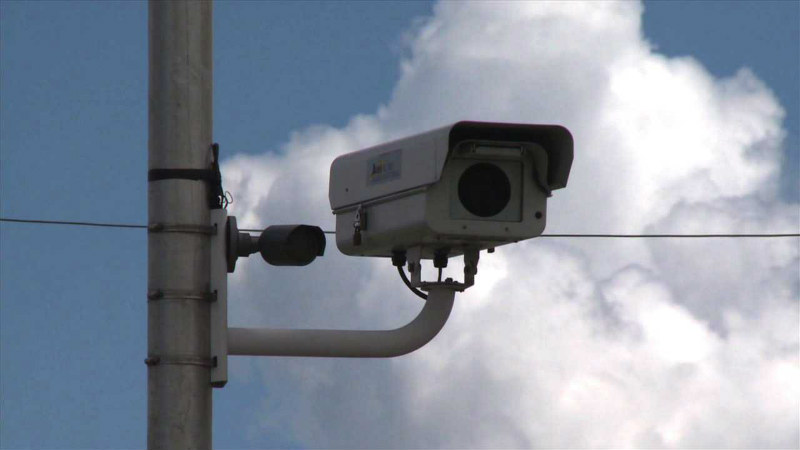
Red-light camera ban set for more debate

redlightcamera

Here we go … again!

The Texas Legislature is going to consider a bill — maybe more than one of them — to ban cities from deploying red-light cameras at dangerous intersections.

Stop me before my head explodes!

Amarillo is one of those cities that has put the cameras to good use at various intersections. City traffic and police officials reported recently that the cameras are doing their job. They are preventing motorists from running through red lights and putting other motorists in jeopardy.

But that ain’t stopping lawmakers from seeking to ban the cameras. The irony of this effort in this legislative body is too rich to ignore.

I’ll start with this fact: Republicans dominate both legislative chambers. The Republican Party traditionally has been the party that seeks to invest more control of government affairs to local authorities. Not so as it regards the cameras. In this instance, the paternalistic state is better equipped than the locals to determine whether there is a need for police to have some electronic help in preventing motorists from ignoring red lights.

http://www.dallasnews.com/news/politics/2016/11/25/lawmakers-will-try-ban-red-light-traffic-cameras

Yes, some cities have taken the cameras down after using them for a time. Residents don’t like them? Fine, cities react to their constituents’ concerns.

Lubbock had them. Then they took ’em down.

Amarillo has deployed the cameras since 2008. Sure, there’s been some griping. Has any group put together a petition drive to get them taken down? No. The City Council remains firm in its commitment to using the cameras. I applaud the council for its persistence.

In the interest of full disclosure, I’ve been caught once running a red light. I didn’t do it on purpose. I just forgot about the camera posted at 10th and South Taylor in downtown Amarillo; I drove through the intersection and got caught. The camera took a picture of my car’s license plate and I got a ticket in the mail; I paid the ticket.

So, why does the Legislature want to meddle in cities’ decisions? According to the Dallas Morning News: “Whenever these cameras are put on the ballot box [in cities] … the cameras never win,” said Dallas Republican Sen. Don Huffines, who recently wrote a bill to get rid of the cameras. “They’re not popular, and people are tired of being found guilty by a camera.”

So what if a camera does what a traffic cop can’t do at that moment? I keep thinking back to something that former Amarillo Councilwoman Ellen Green once said in defense of the cameras. She said, essentially, that if you don’t want to pay the fine “don’t run the red lights.”

I have no clue whether the Legislature will make good on its effort to interfere with local prerogative. I do hope, though, that it backs off yet again. Let local traffic and law enforcement authorities determine the best way to keep lawbreaking motorists in line.

Shadow classroom issue comes to the fore

bd7_6562phillips-crop_jpg_800x1000_q100

I honestly didn’t see this one coming.

Texas Education Agency officials are asking state lawmakers for lots of additional money to help the TEA get to the bottom of a most troubling issue: improper student-teacher relationships.

The issue has rocked school districts across the state. Amarillo is not immune from the news of teachers allegedly having improper sexual relationships with students.

https://www.texastribune.org/2016/10/01/tea-requests-more-money-student-teacher-relationsh/

I have no idea if this issue has reached epidemic proportions. I do know that we are hearing more reports of these kinds of events: teachers getting suspended, arrested and then fired over allegations of sexual misconduct.

TEA is going to ask legislators for $400,000 to hire more investigators to examine these alleged occurrences.

This is a hugely troubling issue, no matter how extensive it has become … if it has become extensive.

Parents send their children to school trusting educators to protect them as well as educate them. There can be zero tolerance for this kind of misbehavior.

I happen to be on TEA’s side on this one. If the agency believes there exists a problem in our public classrooms, then it ought to be incumbent on lawmakers — who parcel out public money to pay for our school system — to ensure that the agency has the tools it needs to investigate and solve these problems.

Panhandle Day: Does it produce tangible benefit?

texas-state-capitol-austin-usa-17

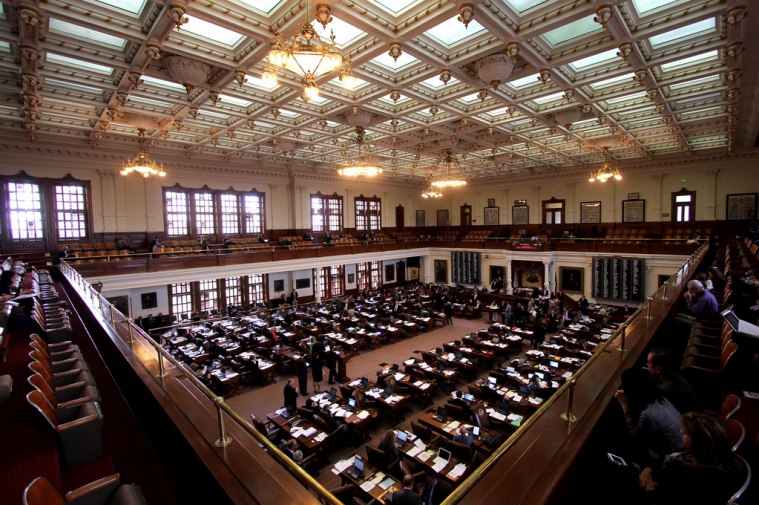
I’ve long wondered about a Texas Legislature tradition.

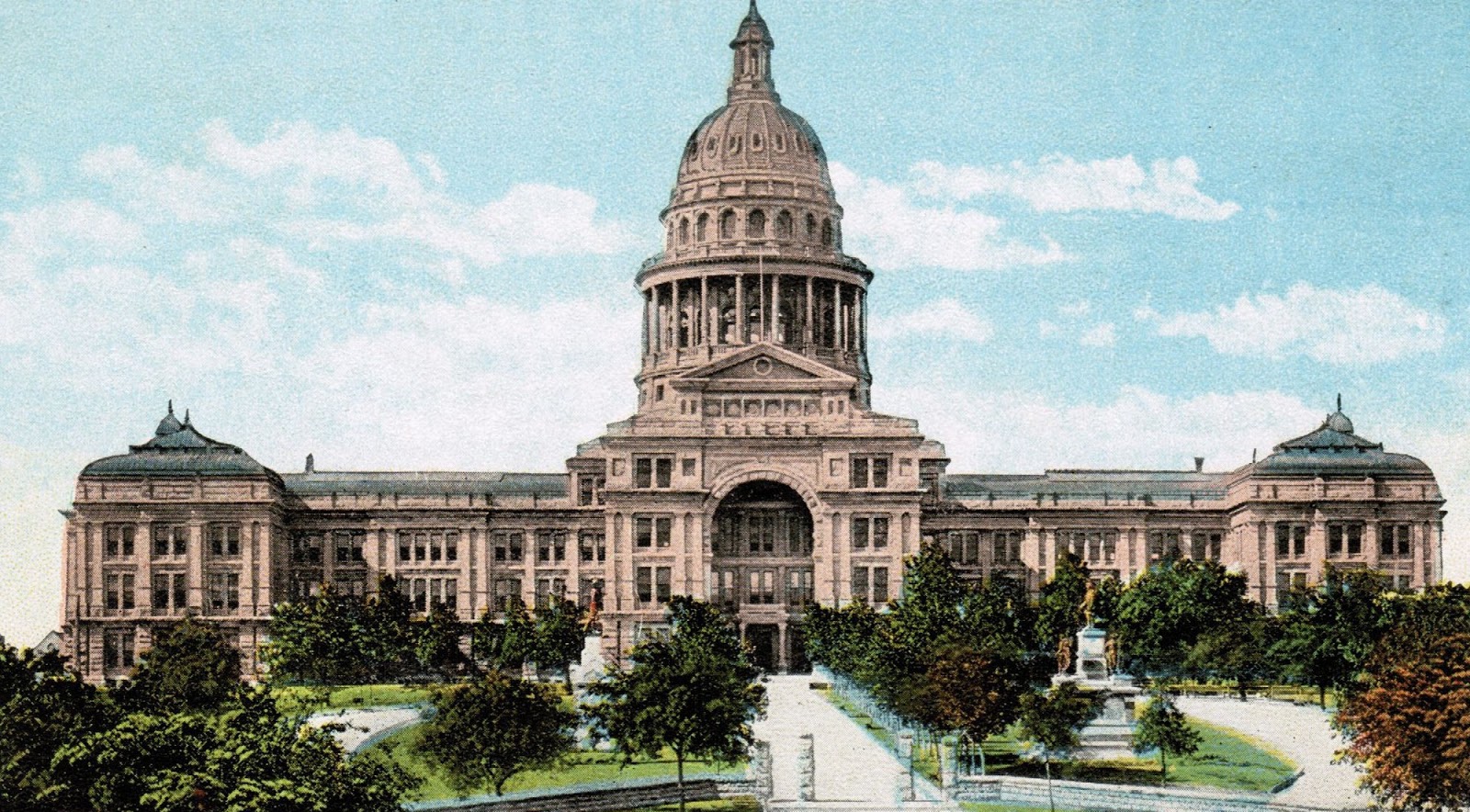
It involves various regions of our state sending “delegations” to Austin during the Legislature’s regular session. They pack themselves into various modes of transportation and go to the state capital. They schmooze with their legislators. They slap themselves on the back. They enjoy meals and an adult beverage or three with each other.

They lobby their legislators about their regions’ needs.

The Texas Panhandle does it every other year. The Amarillo Chamber of Commerce is a key partner in this venture. Chamber bosses proclaim it a “success.” They have their voices heard.

I’ve been watching this spectacle from a distance for the past two-plus decades here in the Panhandle; I watched it — also from a distance — during the nearly 11 years I lived in the Golden Triangle.

Panhandle Day occurs every legislative session, along with Golden Triangle Day. Austin sends a delegation; so does San Antonio; same for the Metroplex; Houston-Galveston sends one.

My wonder involves how we measure the success of these schmooze-fests.

In my nearly 33 years living in Texas, I have yet to see an accounting of how these events actually benefit the region that sends these delegations.

Sometime next year, the Panhandle is going to gather up several dozen business, civic and local political leaders. They’ll go to Austin and talk about regional issues with state Reps. John Smithee and Four Price, both of Amarillo, and with state Sen. Kel Seliger, also of Amarillo.

Is it me or does anyone else wonder if we’re getting the bang for the buck we’re spending with the public money that’s spent sending these folks to Austin?

Is there tangible legislation being enacted? Are these groups able to persuade legislators to send money our way? Do certain regions of the state have more pull than others?

Are these “days” that the Legislature sets aside for various regions worth the effort?

Hey, man. I’m just wondering. I also am hoping to get a conversation started well in advance of the next Panhandle Day back-slap session.

Bush, Perry are right about in-state tuition issue

dream

Two former Texas governors, both Republicans, have become targets of the righter-than-right wing of their own party.

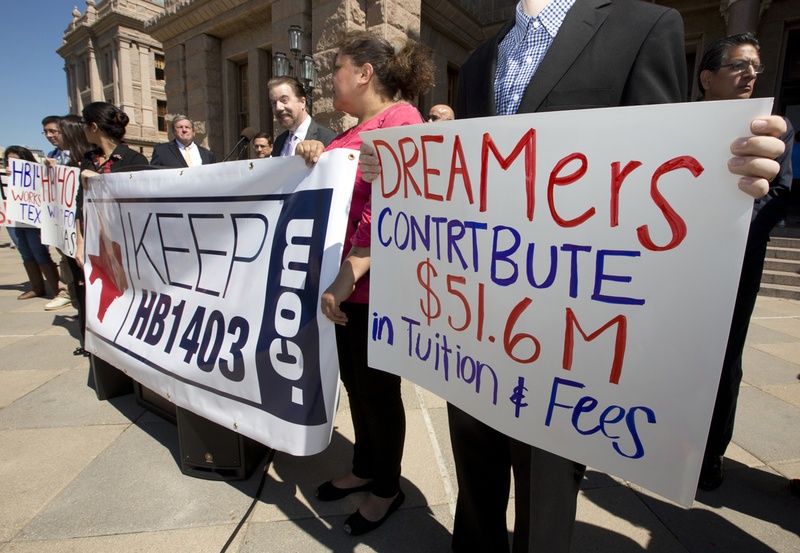
First it was George W. Bush, then it was Rick Perry who said that children who were raised in Texas by undocumented immigrants deserves to be allowed to public colleges and universities by paying in-state tuition.

No can do, says the state’s lieutenant governor, Dan Patrick, who now plans to seek to remove that perk when the Texas Legislature convenes in January.

Bush and Perry were right. Patrick is wrong.

https://www.texastribune.org/2016/09/09/dan-patrick-will-try-again-end-state-tuition-undoc/

These students are Texans. They have been raised as Texans — and Americans. They came here as children when their parents fled their home countries south of us. They grew up to become fine citizens, good students and are able to achieve great things for their adopted home country.

Why deprive them of the chance to further their education by removing the in-state tuition opportunity?

Perry was pilloried by the TEA Party wing of the GOP when he ran for president in 2012 and again this year simply because he supports the long-standing tradition of granting in-state tuition privileges to these young Texans.

As the Texas Tribune reports: “Passed with near-unanimous consent in 2001, the policy allows non-citizens, including some undocumented immigrants, to pay in-state tuition rates at public colleges if they can prove they’ve been Texas residents for at least three years and graduated from a high school or received a GED. They must also sign an affidavit promising to pursue a path to permanent legal status if one becomes available.”

Regular readers of this blog know I’m no fan of Gov. Perry or of Gov. Bush.

On this matter, though, they showed a humane side to their conservatism that has gone missing in action.

Voter ID law: an overreach … perhaps?

Ballot-Texas_jpg_800x1000_q100

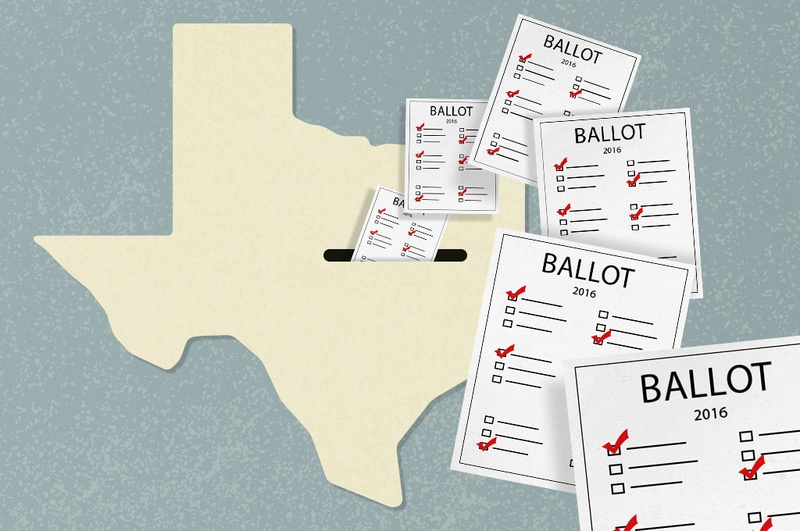
Texas legislators were so convinced that voter fraud had reached epidemic proportions in the state that they enacted a law requiring everyone to show photo identification when they registered to vote … and then voted.

Is it the problem, the crisis, the scourge that lawmakers feared?

Apparently not.

https://www.texastribune.org/2016/08/22/texas-prosecuted-15-illegal-voting-cases-none-invo/?mc_cid=97b9db7408&mc_eid=c01508274f

According to the Texas Tribune, the state prosecuted a total of 15 cases of voter fraud from 2012 until the 2016 state primary.

Fifteen! That’s it.

Most of the cases actually prosecuted involved something called “illegal assistance” of voters, which would be banned by the voter ID approved by the 2011 Texas Legislature.

It’s been said of some legislative remedies that they are “solutions in search of a problem.” This one seems to fit that description.

The Tribune reports: “Texas’ contested law, passed in 2011, requires voters to present one of seven approved forms of government-issued ID at the polls. In July, the U.S. 5th Circuit Court of Appeals in New Orleans ruled the law violates parts of the Voting Rights Act. For the November election, people without ID will be allowed to vote if they sign a sworn statement. A spokesman for the Texas attorney general said ‘this case is not over’ and the agency is considering an appeal to the U.S. Supreme Court.”

I am not vehemently opposed to requiring individuals to prove they are who they say they are. We ask people to produce ID when they cash a check, check in for flights at airports or make withdrawals from bank accounts.

Yes, voting is important. It’s crucial that we protect the integrity of this fundamental right.

But the study reported by the Tribune suggests to me that the rush to approve voter ID requirements was an overheated response to an equally overblown problem in Texas.

A rigged election? Yes, but not the way Trump calls it

Texas house of reps

Donald J. Trump likes issuing dire warnings about a “rigged election” on the horizon.

He means, of course, that the presidential election will be rigged and that the Republican nominee will lose only because of “crooked” politicians seeking to grease it for Democratic nominee Hillary Rodham Clinton’s election to the presidency.

Trump is mistaken, but only partially so.

Yes, the election at another level will be “rigged.” The rigging occurs in the election of members of Congress.

The culprit is the tried-and-tested method of gerrymandering, which the Republicans in charge of Congress and in many state legislatures around the country have fine-tuned to an art form.

David Daley writes in a blog for BillMoyers.com that the rigging will allow the GOP to maintain control of the House of Representatives, even as the Senate could flip to Democratic control — and as Clinton is swept into the White House in a landslide.

http://billmoyers.com/story/real-way-2016-election-rigged/

Yep. The GOP has done well with this totally legal process of apportioning House congressional districts. It’s done every 10 years after the census is taken and ratified.

They have gerrymandered the dickens out of the House districts, drawing lines in cockamamie fashion to include Republican-leaning neighborhoods and to shut out Democrats.

Now, to be totally fair and above-board, this isn’t a uniquely Republican idea. Democrats sought to do it, for example, in Texas when they ran the Legislature. As recently as 1991, the Democratic-controlled Texas Legislature monkeyed around with congressional districts, seeking to protect Democratic incumbents in the U.S. House.

Amarillo became something of a testing ground for that experiment. The Legislature divided the city into halves, with the Potter County portion of the city included in the 13th Congressional District, while the Randall County portion was peeled off into the 19th District. Potter County contained more Democratic voters and the idea was to protect then-U.S. Rep. Bill Sarpalius of Amarillo, a true-blue Democrat, from any GOP challenge.

Randall County, meanwhile, is arguably ground zero of the West Texas Republican movement and its residents ain’t voting for a Democrat to any public office.

The tactic worked through the 1992 election, when Sarpalius was re-elected. Then came the 1994 Republican wipeout, led by that firebrand Rep. Newt Gingrich of Georgia. Sarpalius got swept out by the GOP tsunami that elected a young Clarendon rancher and self-proclaimed “recovering lawyer” named Mac Thornberry.

The Republicans would wrest control of the Legislature from the Democrats after that and they have perfected the art of gerrymandering. Sure, the Democrats tried to gerrymander themselves into permanent power.

Republicans, however, have proved to be better at it.

You want a “rigged” election? There it is.

The GOP presidential nominee, quite naturally, isn’t about to call attention to the real rigging of the U.S. electoral system. Instead, he’s going to fabricate suspicion in a scenario that will not occur.

Texas capital punishment law needs reform

law of parties

Jeffrey Wood has become a poster boy … of a sort.

No, he won’t be showing up on a beefcake calendar. His name, though, could become part of an effort to provide significant improvements to Texas’s laws governing capital punishment.

This week, the Texas Court of Criminal Appeals halted Wood’s scheduled execution for a crime he didn’t commit. It sent the case back to a lower court to determine whether he was tried properly.

Beyond that, Wood’s case has brought to light a dubious provision in a state law that allows juries to convict someone of a capital crime — even if they don’t commit the actual act.

In 1996, Wood was sitting in a truck in Kerrville while his friend, Philip Reneau, was inside a convenience store committing a robbery. Reneau demanded the store clerk turn over the safe; when the clerk refused, Reneau shot him to death.

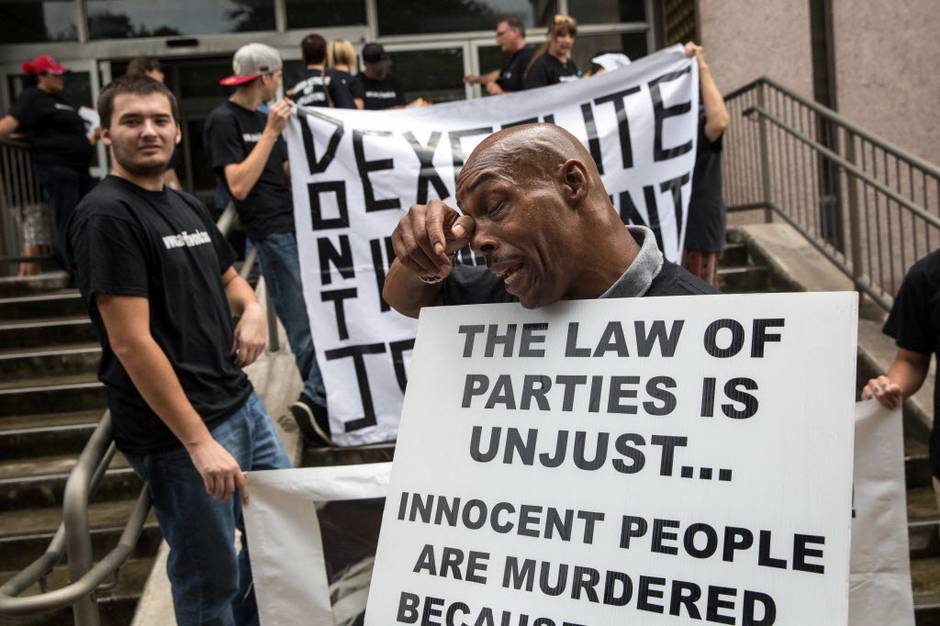
Meanwhile, Wood’s presence in the truck made him — under state law — culpable for the capital crime. They call it the “law of parties,” and it creates a form of criminal equality among those who commit these dastardly crimes.

The state executed Reneau in 2002. Wood’s turn was coming up. State Rep. Jeff Leach, R-Plano — a staunch supporter of capital punishment — has asked Gov. Greg Abbott and the Texas Pardons and Parole Board to commute Wood’s sentence. He doesn’t think the death penalty in this case is right and just.

There ought to be a more permanent and comprehensive solution to this matter. The Texas Legislature ought to rewrite the law to separate the person who commits the crime from an individual who accompanies the individual.

The state argued at trial that Wood knew Reneau would kill the individual if he didn’t obtain the money. That knowledge made him equally responsible for the capital crime, prosecutors said.

http://www.dallasnews.com/opinion/latest-columns/20160819-let-s-exact-justice-and-commute-jeff-wood-s-death-penalty-sentence.ece

In my quest for a perfect world, I would prefer that Texas not even have a death penalty statute. I know, though, that a majority of Texans support capital punishment. Indeed, the state has become the all-time champeen among all the states in executing those convicted of capital crimes.

If we’re going to continue killing criminals, though, the very least we can do is focus more sharply on those who actually commit the crimes.

Jeffrey Wood did not kill that store clerk. Philip Reneau did. Reneau paid the price as authorized under Texas law. Wood does not deserve to pay the same price.

Gov. Abbott should commute Wood’s sentence and spare his life.

Meanwhile, the governor — who’s also a former trial judge — ought to invite the Legislature to improve what looks to me to be a serious flaw in the state’s criminal penal code.

Get rid of the law of parties.

Court shows rare compassion, halts execution

Jeff-Wood-Death-Row_jpg_800x1000_q100

Jeff Wood isn’t going to die in the Texas execution chamber — at least not yet — thanks to a ruling from the state’s highest criminal appellate court.

The Texas Court of Criminal Appeals — which I guess you can call the Killin’ Court — has sent the case of Jeff Wood back to a lower court.

Wood was scheduled to die because he was in a pickup truck while his friend actually killed someone while committing a robbery. But under Texas law and a provision called the “law of parties,” Wood was deemed as guilty as the shooter for the capital crime.

https://www.texastribune.org/2016/08/19/execution-halted-jeff-wood-who-never-killed-anyone/

It amazes me that the CCA would halt the execution. This is the same body of jurists that at times has shown a remarkable lack of compassion for capital criminals. Sure, the criminals are bad guys and there are those who contend they don’t deserve anything from the state.

A trial jury sentenced Wood to death for the murder that was actually committed by Daniel Reneau, who was executed in 2002, just six years after committing the crime.

Wood’s role in the crime and the sentence he received has drawn national attention. Wood also drew support from an unlikely source, a conservative Republican lawmaker — state Rep. Jeff Leach of Plano — who intervened on Wood’s behalf while asking his sentence is commuted to life in prison.

The law of parties is an unreasonable provision in Texas law that needs to be removed.

That’s a fight for another day in another venue — which would be the Texas Legislature.

As for Wood, he’s been given a chance to defend himself once again. It fascinates me in the extreme that it would be the Texas Court of Criminal Appeals that has exhibited a healthy dose of fairness.

https://highplainsblogger.com/2016/08/law-of-parties-may-kill-the-wrong-man/


Guns create better road manners?

New_Hampshire_Open_Carry_2009

I cannot even begin to prove this, but the thought keeps occurring to me: Has Texas become a more polite motor-vehicle-driving society since the advent of concealed-carry laws?

More than 20 years ago, I opposed the idea of allowing Texans to carry handguns concealed under their jackets, or up their pants legs. My fear was that the guns would produced shoot-outs at four-way stops at intersections.

Happily, that hasn’t occurred.

The 1995 Texas Legislature enacted concealed-carry legislation and Texans have been toting firearms under their clothes.

Which brings me back to the question about road courtesy.

Is it possible the potential for the guns being in people’s cars prevented motorists from flipping each other off when they get cut off on the highway? Has it prevented those from rolling down their windows and yelling out four-letter words?

I know I am far less prone to give someone the finger these days than I was prior to the enactment of the concealed-carry law.

Open-carry laws are another matter.

Texas allows folks to pack weapons on their hips, in holsters, in plain sight.

The Dallas police shooting produced a serious dilemma for emergency responders reacting to the gun violence that erupted at the end of that march through downtown Dallas. Were the spectators who were packing heat in the open suspects in the hideous massacre? How do cops respond when they see someone with a rifle or a semi-automatic pistol?

I do not feel safer when I see someone carrying a weapon in the open.

As for the licensed Texans who are carrying guns concealed, well, I don’t necessarily endorse the idea. I’ve grown to accept it.

I also have learned to mind my manners at the wheel of my car.

Governor, comptroller right to end ‘severance pay’

abbott

Why did it take a controversy to get the Texas governor and the state comptroller of public accounts to do the right thing?

Gov. Greg Abbott and Comptroller Glenn Hegar have ordered state agencies to end the practice of granting what’s been called “emergency leave” pay for public employees who left their public-sector jobs.

Let’s call it what it was: severance pay.

Someone leaves public employment voluntarily and then collects pay even though he or she is no longer on the job?

Ridiculous!

https://www.texastribune.org/2016/06/01/governor-comptroller-orders-agencies-stop-pay-depa/

The issue blew up when Attorney General Ken Paxton — the guy who’s got his own share of legal difficulties with which he must contend — paid two former top assistants after they had left the AG’s office. It turns out that the General Land Office did the same thing.

Abbott and Hegar’s directive stipulates that it will remain in effect until the Legislature decides how to handle it.

Here’s an idea for legislators to heed: Ban it forthwith. Make it illegal to pay these kinds of severance packages to public employees who resign their jobs voluntarily.

I trust we’re clear on that.