Tag Archives: US Constitution

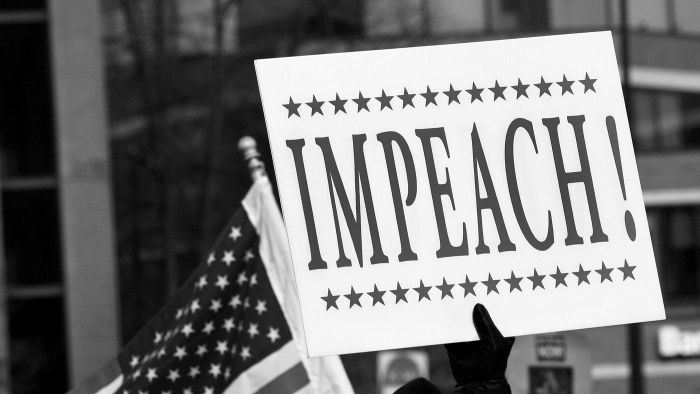
Impeachment remains huge obstacle

I am believing now that Donald J. Trump isn’t likely to be kicked out of office before his term expires.

The nation’s founders set a high bar for removal of a president.

The U.S. House of Representatives can bring articles of impeachment. It can essentially indict a president on a complaint that he has committed “high crimes and misdemeanors.” It takes a simple majority of House members to impeach a president.

It’s happened twice. President Andrew Johnson got impeached in 1868. Then in 1998, the House impeached President Bill Clinton. The House impeached Johnson on 11 counts, the principal count being a violation of the Tenure of Office Act after he had fired Secretary of War Edwin Stanton. The House impeached Clinton on a charge that he perjured himself in testimony before a federal grand jury.

Both men were spared being kicked out. Johnson made it by a single vote in the U.S. Senate. Clinton survived much more easily in his Senate trial.

The Constitution lays out a two-thirds rule for conviction and removal from office of the president.

What makes a Trump removal so difficult lies in the numbers. Republicans control the Senate by a single seat. If they lose the Senate majority after the midterm election, it is projected that several GOP senators would need to join Democrats who likely would vote to convict the president on whatever charge is brought before the body.

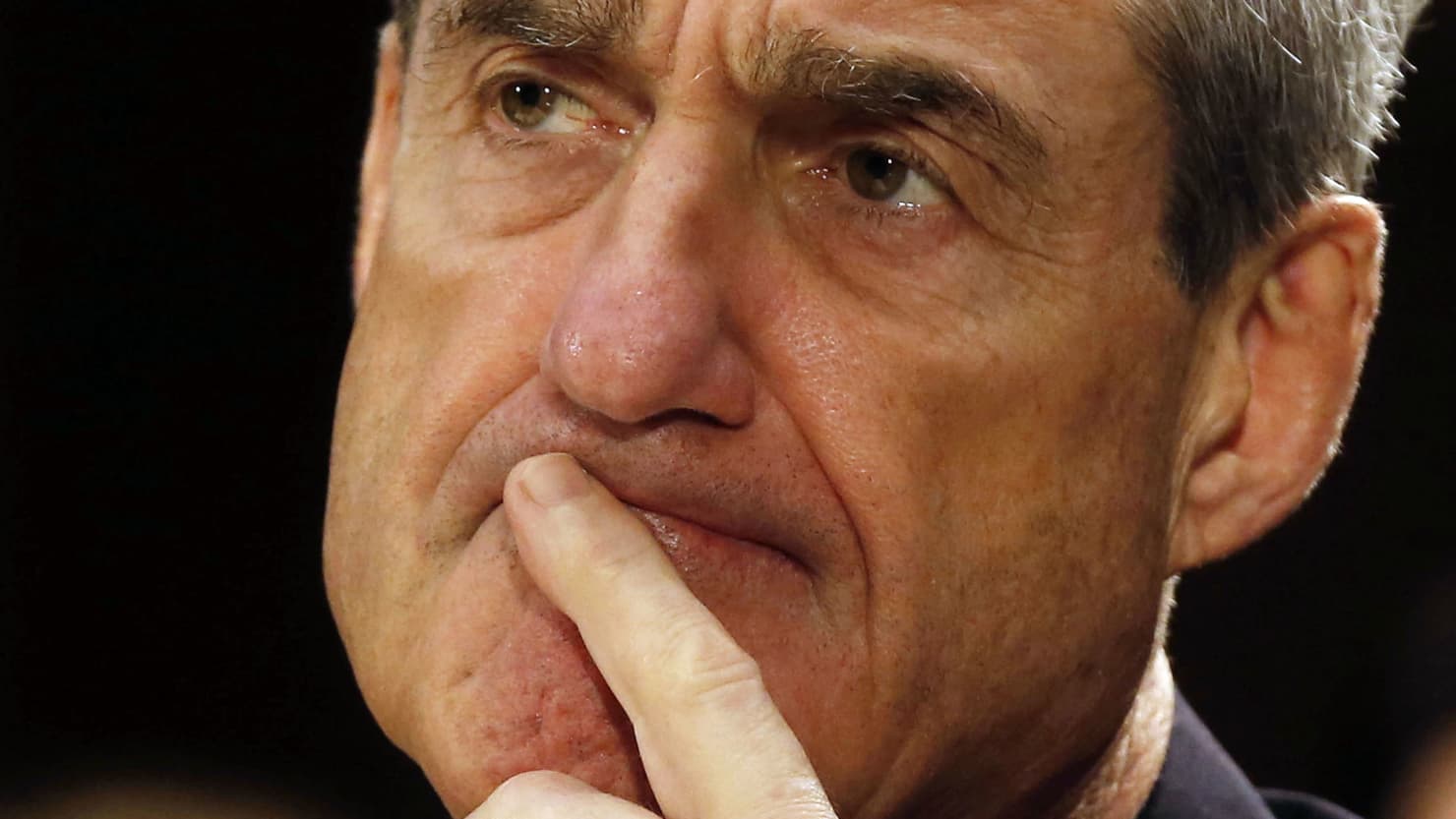
I’m not certain that an impeachable offense will emerge from the investigation being conducted by special counsel Robert Mueller. If one does emerge, though, it remains a tremendously tenuous view that there would be enough political support in the Senate to actually convict the president — no matter how egregious the charge that might come forth.

Impeachment is a political process, even though members of the House and Senate state piously that they are conducting a quasi-judicial process. It really relies on the partisan leaning of both legislative bodies.

I want to offer this look at what might lie ahead for the president and for Congress.

First things first. We have an election to complete that will determine the partisan makeup of the legislative chambers that will decide what to do about this president.

Hey, you know he could just quit once he realizes his agenda — whatever it is — is going nowhere.

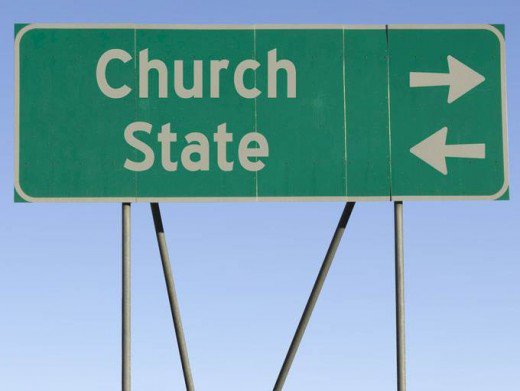
‘Separation of church, state’ need not be written

I cannot let this one pass without offering a brief rejoinder.

Dave Henry, the director of commentary for the Amarillo Globe-News, offered this tidbit in a column Sunday about what is written in the U.S. Constitution.

His column dealt with myths and other untruths that show up on social media. He writes: The fake “City of Amarillo” Facebook page reminded AGN that, “The free press is a cornerstone of democracy.”

Is the free press a “cornerstone” of a republic? I hope so, because the word “democracy” is nowhere to be found in the U.S. Constitution or the Declaration of Independence. Unfortunately, what is actually written in the U.S. Constitution – and what is not – does not matter anymore. For example, “separation of church and state.”

He quibbles correctly about whether the founders created a “democracy” or a “republic.” It was the latter, for certain.

But then …

Henry repeats a canard that needs some further explanation. He says the Constitution does not contain the words “separation of church and state.” True. But only as far as it goes.

What that remark — cited often by conservatives who keep arguing that it’s OK to teach religion in public schools — ignores is that the Constitution implies such a separation in its First Amendment. The founders didn’t need to write “separation of church and state” when they declared that Congress shall make no law that establishes a state religion. The prohibition against writing such a law translates quite nicely, in my humble view, to a church-and-state separation.

What’s more, the federal courts have upheld that standard repeatedly through countless court challenges over the course of, oh, 200 years.

I just have grown weary of the tired refrain that the Constitution needs to say something specifically in order to make an issue relevant. Church/state separation is covered by the nation’s governing document — even if it doesn’t say it in so many words.

Did the City Council overreact to applause?

Amarillo’s City Council has decided to make an issue out of something that shouldn’t really matter.

It is going to prohibit applause during City Council meetings.

Holy cow! Stop the presses!

A constituent decided to break out in applause. Mayor Ginger Nelson ordered him out of the council chambers. I understand he was arrested. The “altercation” has produced something of a mini-tempest at City Hall.

Some folks argue that the mayor has inhibited someone’s First Amendment right of free political speech. I wouldn’t go so far.

Then again, I wonder why the mayor decided to make this an issue in the first place. Does the applause distract anyone? Does it delay the conduct of city business? Are there epithets being hurled?

I get that the council has the authority to set rules of decorum and behavior. It can allow public comment, for instance, or it can disallow it. The council allows constituents to speak on issues of the day.

I remember a time when Randall County Commissioners Court — presided over by County Judge Ted Wood — would allow constituents to speak for as long as they wanted. If they want on for hours, hey, that was OK with Wood. The county belongs to them, not the commissioners, he said. Woods’s generosity with public time drew some criticism, too, just as Mayor Nelson’s relative stinginess has brought some barbs.

I don’t see this issue as any big shakes one way or the other.

If I were King of the World, I would allow constituents to applaud. Within reason, of course.

Maybe he could ‘shoot someone on 5th Avenue … ‘

It occurs to me that Donald Trump’s most hideous bit of campaign braggadocio just might have had more than a nugget of truth to it.

He once stood at a 2016 presidential campaign podium and declared he could “shoot someone on Fifth Avenue and I wouldn’t lose any votes.”

We laughed out loud. Many of us gasped in horror. Others of us simply shook our heads in disgust that a candidate for the presidency of the United States would actually say something so ghastly.

And, yes, others of us cheered him.

It is turning out that — maybe, possibly — that Trump’s boast might be more truthful than many of us thought in real time.

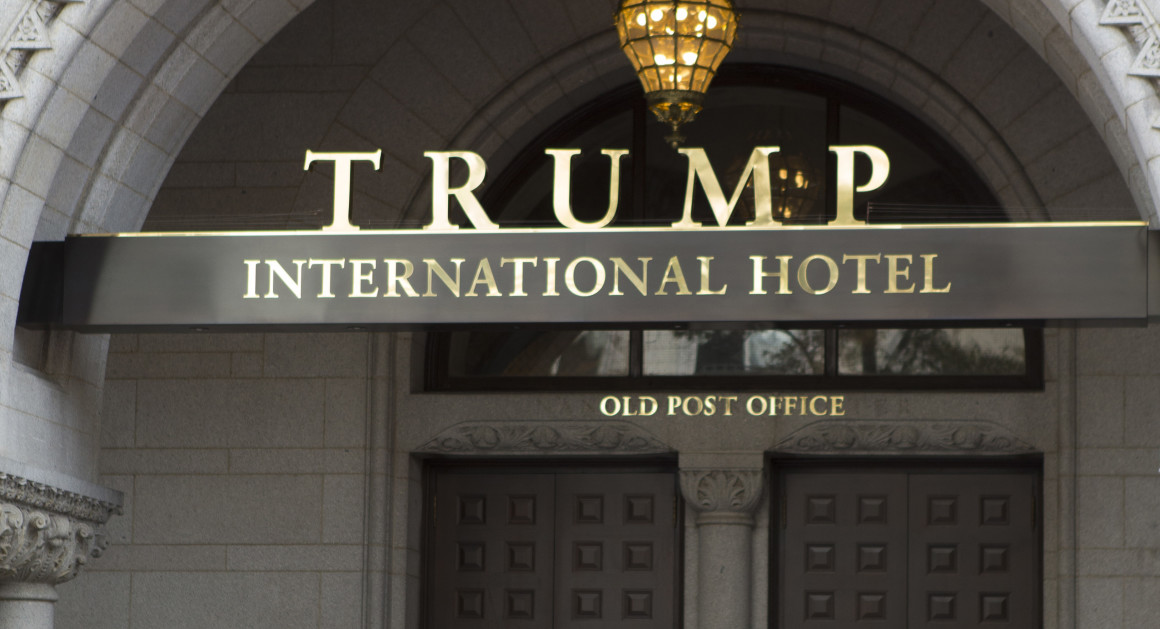
He’s got that “Russia thing” hanging over him. There are questions about whether his business dealings might violate the Emoluments Clause of the U.S. Constitution. Several women have accused him of sexual assault/harassment. Two women have alleged having sex with him while he was newly married to his third wife, the current first lady of the United States.

And still …

His core support remains solidly behind him. Granted the Trump “base” still comprises only about 35 to 40 percent of the total electorate. The rest of us remain highly skeptical, critical — and actually outraged — at the president’s conduct in office.

It’s looking for all the world to me, though, that he well might have spoken a bit of truth when he made the boast about “shooting someone on Fifth Avenue.”

Weird, man. Weird.

‘We are not anti-gun!’

Of all the public pronouncements I heard today at the start of the March For Our Lives, one of them stands out foursquare in front of the rest of them.

“We are not anti-gun!” came the proclamation from an elevated stage calling the crowd to order as the march was about to commence.

It came from one of the student organizers who had rallied hundreds of Texas Panhandle residents, summoned them to Ellwood Park, where they would take their march through downtown Amarillo, Texas, to the Potter County Courthouse grounds.

The March For Our Lives took places in communities throughout the United States. It was spawned by the Parkland, Fla., high school slaughter of 14 students and three staff members at Marjory Stoneman Douglas High School.

The “We are not anti-gun!” proclamation reveals a certain sophistication among the students who organized this march. The Texas Panhandle students clearly know the audience to whom they are preaching. They want an end to gun violence. They do not intend to argue for the confiscation of firearms. They know better than that.

They know they live in a community that supports the Second Amendment to the U.S. Constitution. It’s always fascinated me that the nation’s founders sought to codify certain civil liberties; they started with guaranteeing the right to worship, protest the government and a free press in the First Amendment; then came the Second Amendment, which establishes the right to “keep and bear arms.”

Texas Panhandle residents take their Second Amendment rights seriously. Well, at least a lot of them do.

Thus, the March For Our Lives organizers sought to tell the marchers — and some onlookers who had come to Ellwood Park — about their intentions in staging this march.

They want “common sense” legislative remedies that assure that the Second Amendment remains viable. They say they have no intention of lobbying for repeal of the amendment. They want to assure the right to own firearms remains written in our nation’s government framework.

I haven’t yet heard of any proposed solutions that deny Americans the right to possess firearms. I also applaud the organizers of our local event for making clear that they intend to retain that right.

They simply have seen too many young people — just like themselves — gunned down while they are studying in school, a place where one can presume they would be safe.

They aren’t. The students who marched today want our politicians to do what they to ensure safety and to end the national scourge of gun violence.

Unconstitutional? Umm. Nope!

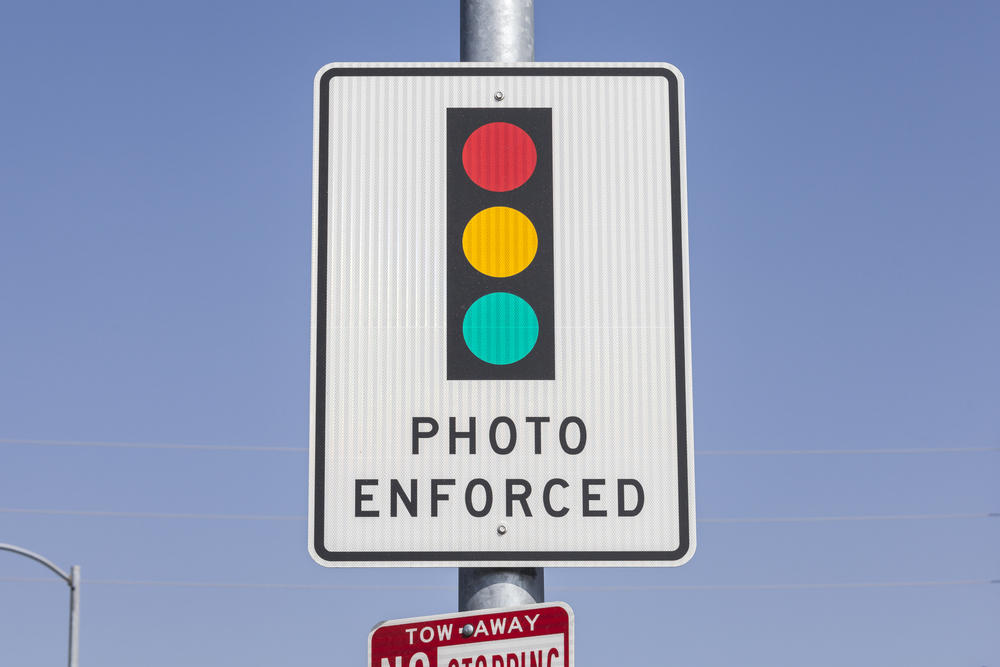
An Amarillo resident has joined an amen chorus being sung by those who suggest that red-light cameras, which the city has deployed to deter those who run through stop lights, is “unconstitutional.”

Why is that? Because it violates the Sixth Amendment that guarantees that those who are accused of wrongdoing have the right to confront their accuser.

John Faulkner wrote this, in part, to the Amarillo Globe-News in a letter to the editor: A red-light camera photograph is hearsay, and is therefore inadmissible under the Sixth Amendment. It is hearsay because you cannot cross examine the photograph or the camera. The Sixth Amendment gives defendants the right to confront their accuser. 

Sigh. Actually, it is not “hearsay.” This equipment provides physical evidence that someone has run through a red light when he or she is supposed to obey its “instruction” to stop and not proceed until the light turns green.

Furthermore, the city grants accused red-light runners the opportunity to appeal the fine levied against the alleged lawbreaker. Thus, a defendant is granted the right to face his or her accuser.

The constitutionality argument is funny, except that I ain’t laughing.

The Texas Legislature granted cities the authority to install these cameras. It attached some provisions on it, such as requiring cities to devote revenue collected strictly to traffic improvements. The attorney general’s office is full of bright legal minds who can determine the constitutionality of laws the Legislature enacts. City Hall also employs a legal team that ensures its ordinances pass constitutional muster.

So, let’s toss aside this silly argument.

The red-light cameras are doing what they are intended to do. They are deterring some motorists from misbehaving while they travel along our busy streets. Not all of them, for sure.

I remain a strong supporter of this technology. It works.

‘March’ could signal a turning point for Panhandle

A lot of Texas Panhandle students, teachers, parents and just plain folks — and that includes yours truly — are hoping for a big weekend.

They’re going to gather around noon Saturday at Ellwood Park in downtown Amarillo. They’ll troop a few blocks east and a bit north to the Potter County Courthouse, where some of them are going to speak to what I hope is a large crowd of marchers and supporters.

It will be part of a national movement called “March For Our Lives.” Students all over America are organizing this event in their respective communities. Amarillo has joined them. Caprock High School students are taking the lead in organizing the local event.

Why is this potentially a big day? It could signal a serious turn in community attitudes about gun violence.

The “March” has been spurred by the Valentine’s Day slaughter in Parkland, Fla., of 17 Marjory Stoneman Douglas High School students and staff members. The gunman is a former student who got expelled for bad behavior. Police arrested him and the local district attorney has charged him with 17 counts of murder. Prosecutors are seeking the death penalty — even if the shooter pleads guilty in an effort to avoid a death sentence.

The Texas Panhandle isn’t known as a hotbed of progressive political thought. The majority of residents here make different political decisions; they support candidates who adhere to a more conservative view.

The “March” on Saturday well might produce a counter-demonstration or two. The marchers are going to lift their voices to seek legislative remedies in the Texas Legislature and in Congress that they hope could restrict the purchase of firearms.

I think it’s important to note that, as one of the Caprock HS student organizers said, this march isn’t intended to be an “anti-gun” protest. I am not hearing any organizers calling for repealing or a serious watering down of the U.S. Constitution’s Second Amendment. I am sure that pro-gun rights activists certainly see any change in gun laws as an erosion of Second Amendment rights.

The “March” is sure to embolden young people here and across this vast nation with a sense that their voices are being heard on an issue in which they have a direct stake. Indeed, they see themselves and their school-age brethren as being thrust in harm’s way.

They need to be heard. Let’s hope the rest of us hear them when they march through downtown Amarillo and plead for an end to the national scourge of gun violence.

Trump politicizing probe … except that he’s mistaken

Donald J. Trump’s latest rampage on Twitter is making yet another ridiculous assertion.

The president accuses special counsel Robert Mueller of stacking his legal team with Democrats who were loyal to whom he has referred to as “Crooked Hillary” Clinton.

It’s part of Trump’s effort to discredit, disparage and disrespect the team Mueller has assembled to examine some serious issues relating to the president’s campaign team’s alleged relationship with Russians who sought to meddle in our 2016 presidential election.

It is true that most of the lawyers working for Mueller are registered Democrats, as if that by itself is going to taint the investigation — which cannot be stated with any degree of certainty on its face.

Oh, but wait! What about Mueller? And what about the guy who appointed him special counsel, Deputy U.S. Attorney General Rod Rosenstein?

This is where I can say that Mueller, a former FBI director, is a registered Republican. Rosenstein, who was appointed to his deputy AG post by Donald Trump himself, also is a registered Republican.

The two top dogs in the Russia investigation are Republicans, man! Does that matter? Does that tilt the investigation toward the Top Republican, Trump?

No. I am going to put my faith that Mueller will do his job in accordance with what the law and the U.S. Constitution allow. The special counsel knows a lot more about both than the man — Donald Trump — who keeps hectoring him.

Revisiting myth of our ‘national Christianity’

Some issues just never go away. They lurk on the edges of our national consciousness, occasionally returning to a spot under the lights.

I have written a number of blogs on this venue about whether we live in a “Christian nation.” I concluded long ago that the founders deliberately left the word “Christian” out of our Constitution.

Here’s a post from 2015:

https://highplainsblogger.com/2015/07/a-christian-nation-never-have-been-one/

I suspect we’re going to be talking, maybe soon, about this issue once again. After all, the president who’s alleged to have had an affair with a porn queen has been courting the evangelical community since he began running for the office. I fully expect the evangelicals to talk about religion and their “faith” in the president.

Indeed, I saw a tweet this morning that reminds us that Barack Obama and George W. Bush were faithful to their wives, but it took a serial philanderer who’s allegedly involved with a porn star to get evangelical Christians so energized.

And somewhere along the line, someone is going to blurt out some nutty notion that the United States is a “Christian nation,” that it is rediscovering its Christian roots.

I’ll say it again, just as I will say it now.

Baloney!

We aren’t a Christian nation. We are a nation founded by and large by men who adhered to Christian principles; many of them were men of faith who didn’t necessarily follow Jesus Christ’s teachings. Yes, there is a Judeo-Christian ethic written into the Constitution.

However, the founders explicitly excluded any reference to Christianity in the nation’s founding document. Why? Because those men fled religious persecution from tyrants who demanded that they must believe a certain way. They came across the ocean intent on preserving people’s right to worship as they please — or not worship if that is their choice.

I am acutely aware that the founders didn’t craft a perfect document. It didn’t grant full citizenship rights to every living human being in this newly created country. But on the issue of the nation’s religiosity, they got it right.

God bless those brave and wise men.

Prior restraint? No can do, Mr. President

Now we have this: Reports have surfaced that Donald Trump’s legal team is researching ways to prevent “60 Minutes” from broadcasting an interview with the porn queen with whom the president allegedly had an affair in 2006.

Let’s see. What do we make of that?

I believe it tells me that there’s something to all this baloney about a six-figure sum of money being paid to keep the porn queen quiet.

The president denies that he had an affair with this woman, who’s making quite a bit of hay of late over the publicity that has swarmed all over her — and the president. The affair allegedly occurred about a year after Trump married his third wife, Melania, and right after his wife gave birth to the couple’s son.

The porn queen/adult film producer and director has filed a lawsuit claiming that the non-disclosure agreement is null and void because Trump never signed it. He didn’t even sign it using an alias he was using at the time … sheesh!

Thus, she contends, she is able to talk all she wants about whether she had an affair with the man who would become president of the United States, despite being paid $130,000 in hush money by Trump’s personal lawyer, Michael Cohen.

One more thing.

The First Amendment protects a “free press.” In the 21st century, that also includes broadcast media. The U.S. Constitution prevents government from interfering in the media’s effort to do its job.

I shall add that Trump is always the president. He is the head of government. He cannot compartmentalize these issues.

Prior restraint of the media, Mr. President, is not an option.