Tag Archives: Barack Obama

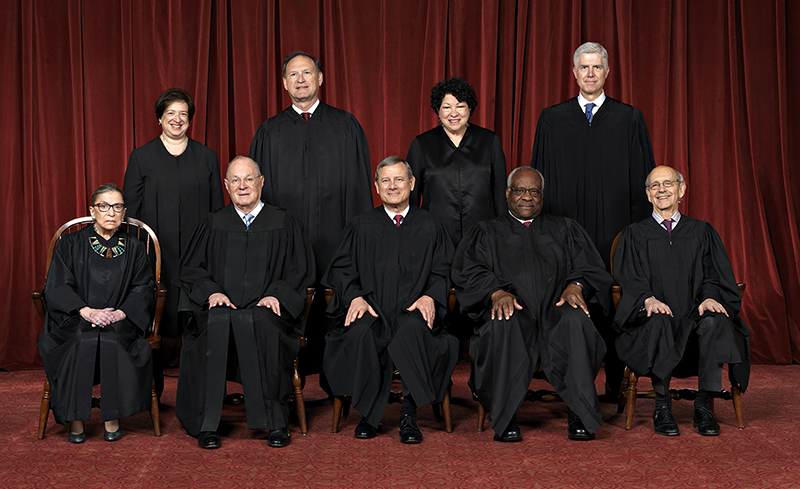
Wait for Mueller before making SCOTUS pick?

An interesting idea is being floated by those with some stake in the president’s next selection for the U.S. Supreme Court.

It goes like this: Donald Trump should wait for special counsel Robert Mueller to finish his probe into the “Russia thing” before making his choice known. Think for a moment about this. What if Mueller determines there is some criminality involved in the Trump presidential campaign’s dealing with Russian goons who meddled in our 2016 election? What happens if that case ends up eventually before the nation’s highest court?

Does the president deserve to select someone who might have a material interest in determining the legal fate of a case involving the president, his campaign and, indeed, the presidency itself?

There’s plenty of chatter already that Senate Majority Leader Mitch McConnell should allow the midterm election to determine the Senate composition before sending this nomination up for a Senate vote; the Senate must confirm this appointment. McConnell did manage to block President Obama’s nomination of Merrick Garland in early 2016 shortly after the death of Justice Antonin Scalia. Obama had nearly a year left in his presidency, but McConnell said the Senate needed to wait until the presidential election before considering anyone for the court.

Mueller well might be getting near the end of his exhaustive probe. Should we wait for the special counsel to finish his task and deliver his report to America? Sure. Why not?
Wishing a Sen. Romney stays true

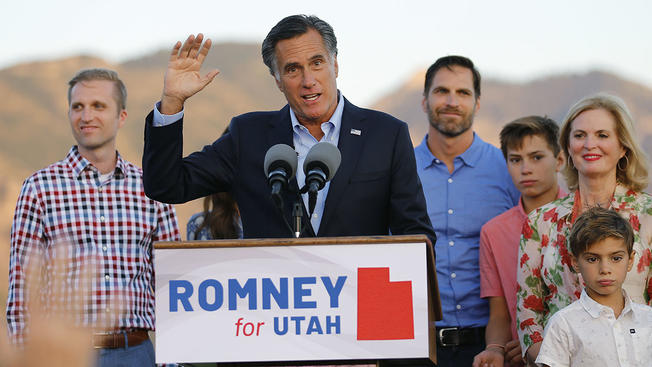
Mitt Romney doesn’t likely give a rip what a blogger in Texas thinks about his pending new role as a U.S. senator.

He should. He is going to be elected to the Senate from Utah, one of the nation’s most Republican of states. He wiped out his GOP primary foe Tuesday night and will campaign this fall for a seat in the Senate, where he will vote on laws that affect all Americans, including this blogger from Texas.

I have only a single wish for Sen.-to-be Romney. It is that he stays true to his belief that Donald John Trump is a “phony” and a “fraud.” And that he holds the president accountable for the lies he keeps blurting. And … that he makes sure that he won’t roll over for the president because of some fear of political retribution.

Mitt didn’t get my vote for president in 2012 when he ran against Barack H. Obama. That doesn’t mean I dishonor him. He had an uphill climb against an incumbent president and he lost the popular vote by roughly 5 million ballots and the Electoral College vote 332-206.

However, Romney was spot on in his critique of Trump during the 2016 election. He told the truth about the GOP nominee.

I know he’s a good party man. I also know that as a newly minted resident of Utah, he has to be sure to protect his new constituents’ interests. Nothing he says about the president should endanger any federal program that benefits Utahns.

But I do not want him to play dead in front of a president who — in my mind — is exactly how Mitt Romney has described him … as a “phony” and a “fraud.”

National debt? Hey, it’s still growing!

Donald Trump made a lot of promises when he ran for president of the United States.

Many of them were bold and audacious. One of them involved the national debt. He reaffirmed to the Washington Post in April 2017 that he would wipe it out over eight years, presuming he would be re-elected in 2020.

Let’s see. How’s he doing? Not too well. The national debt has, um, exploded in the first year and a half of his presidency. It has surged past the $21 trillion mark and is proceeding at a breakneck pace well beyond that total.

The Congressional Budget Office is reporting that the national debt, fueled by tax cuts and immense increases in government spending, is on a fast track into deep outer space.

According to CBS News: “At 78 percent of gross domestic product, federal debt held by the public is now at its highest level since shortly after World War II,” the CBO found. “If current laws generally remained unchanged, the Congressional Budget Office projects, growing budget deficits would boost that debt sharply over the next 30 years; it would approach 100 percent of GDP by the end of the next decade and 152 percent by 2048. That amount would be the highest in the nation’s history by far.” 

Republicans were so very quick to excoriate Democratic President Barack H. Obama over the national debt. The GOP’s 2012 presidential nominee Mitt Romney sought to make the debt one of the centerpieces of his effort to defeat Obama. Then came Trump, the dealmaker in chief, the business tycoon and, oh yes, the self-proclaimed “King of Debt,” to tell us he would eliminate the national debt by the end of his presidency.

Well, at this rate, Mr. President, you have to get busy.

I mean, real busy.

Rethinking the notion of ‘presidential prerogative’

I long have believed in the concept of presidential prerogative, meaning that presidents have the right to appoint people to high office assuming those people are qualified to do the job to which they have been appointed.

U.S. Senate Majority Leader Mitch McConnell, however, has disabused me just a little bit from that long held belief.

McConnell ignored presidential prerogative in 2016 when he blocked President Obama’s nomination of Merrick Garland to the U.S. Supreme Court. There was a year left in Obama’s tenure as president; Antonin Scalia had died and Obama selected a true-blue moderate to the highest court in America.

McConnell blocked it. He said the Senate shouldn’t consider a Supreme Court nomination during an election year.

His obstructionism infuriated many Americans. Me included. I believed the president had the right to select whoever he wanted, given that he had been re-elected in 2012. I also have said the very same thing about presidents regardless of party over many years. You can look it up. Honest. I have.

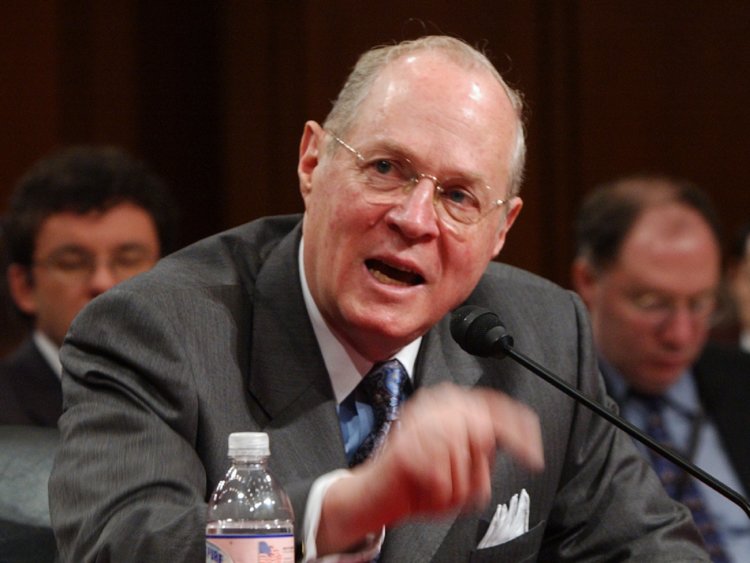
Now, though, we have another president getting ready to select someone to succeed Justice Anthony Kennedy, who is retiring at the end of July. I normally would give Donald Trump the green light on this one. Except that McConnell laid down a rule that he forced the Senate to obey in 2016.

Two years later, doesn’t that rule still apply? Hey, what’s good enough then should be good enough now.

Do the people deserve to be heard this time?

U.S. Senate Majority Leader Mitch McConnell had this to say in February 2016 as it regarded President Barack Obama’s desire to nominate someone to replace the U.S. Supreme Court Justice  Antonin Scalia: The American people should have a voice in the selection of their next Supreme Court Justice.

Hmm. What do you think of that?

Here we are, in June 2018. The Supreme Court has just been opened up yet again. Justice Anthony Kennedy has announced his retirement. Sen. McConnell said he intends to push for a Senate vote by this fall.

Hey! Wait a minute!

We have an election coming up. One-third of the Senate, which must confirm the next appointee, is on the ballot. It could swing from narrow Republican control to Democratic control after the November midterm election.

Don’t the “American people” have the right to be heard in the selection of the next Supreme Court justice? Don’t they, Mr. Leader?

That was his bogus rationale in blocking Merrick Garland’s nomination from President Obama in 2016. The president had a year left in his tenure. We had a presidential election coming up later that year. McConnell said “no way” on the nomination. He blocked it. He obstructed the president. He then — in a shameful display of a lack of self-awareness — accused Democrats of “playing politics” when they insisted that the Senate hold confirmation hearings and then vote on Garland’s nomination.

If anyone “played politics” with that nomination, it was Mitch McConnell!

Now, the leader wants to fast-track the latest Supreme Court nomination on the eve of an equally important election that could determine the ideological and partisan balance in the body that must confirm this nomination.

Does this election count as much as the 2016 presidential election? Aren’t U.S. senators members of a “co-equal branch of government”? Or is the majority leader going to play politics yet again by ramrodding this nomination through — before the people have the chance to have their voices heard?

Obstructionism pays off for Sen. McConnell

Who says obstructionism doesn’t pay dividends … bigly?

U.S. Supreme Court Justice Antonin Scalia died in Texas in 2016. Within hours of his death, Senate Majority Leader Mitch McConnell announced that President Obama would not be allowed to fill the seat left vacant by the conservative icon’s death.

Obama nominated U.S. District Judge Merrick Garland to the court. McConnell didn’t even allow Garland a Senate Judiciary Committee hearing. The nomination didn’t go anywhere.

Donald John Trump defeated Hillary Rodham Clinton in the 2016 election. Trump then selected Neil Gorsuch for the high court. The Senate confirmed him.

Today, the court upheld Trump’s travel ban. The vote was 5 to 4. Gorsuch voted with the majority.

Obstructionism doesn’t pay? Oh, you bet it does.

Yep, elections do have serious consequences

Oh, brother. Is there any more proof needed about the impact of presidential elections than the decision today handed down by the U.S. Supreme Court?

The high court ruled 5-4 today to uphold Donald J. Trump’s travel ban involving countries from a handful of mostly Muslim countries.

The conservative majority voted with the president; the liberal minority voted against him.

There you have it. Trump’s travel ban will stand. He will crow about it. He’ll proclaim that the court is a body comprising men of wisdom; bear in mind that the three women who sit on the court today voted against the travel ban. Had the decision gone the other way, he would declare the court to be “too political,” he would chastise the justices’ knowledge of the U.S. Constitution (if you can believe it).

The court decision today has reaffirmed the president’s decision to discriminate against people based on their religious faith. Nice.

The partisan vote on the court today also has brought a smile to another leading politician: U.S. Senate Majority Leader Mitch McConnell, whose obstructionism in the final year of the Barack Obama presidency denied Trump’s predecessor the right to fill a seat created by the sudden death of Justice Antonin Scalia. The Constitution gives the president the right to nominate judges; it also grants the Senate the right to “advise and consent” on those nominations. The Senate majority leader decided to obstruct the president’s ability to do his job.

President Obama nominated a solid moderate, Merrick Garland, to succeed Scalia. McConnell put the kibosh on it, declaring almost immediately after Scalia’s death that the president would not be able to fill the seat. McConnell would block it. And he did.

A new president was elected and it turned out to be Donald Trump, who then nominated Neil Gorsuch, who was approved narrowly by the Senate. Gorsuch proved to be the deciding vote in today’s ruling that upholds the Trump travel ban.

Do elections have consequences? You bet they do.

Frightening, yes? In my humble view — given the stakes involved at the Supreme Court — most assuredly.

Alternative energy deserves props, too, Gov. Abbott

Texas Gov. Greg Abbott is proud of the role his state plays in achieving national energy independence.

He wrote via Twitter: Because of Texas, America is now energy independent. Because of TEXAS, we will NEVER AGAIN depend on Foreign Oil Cartels for energy.

Boy, howdy, governor.

Except that his tweet and the accompanying hashtags suggest to me that he is ignoring another key element of this nation’s quest to free itself from foreign energy sources.

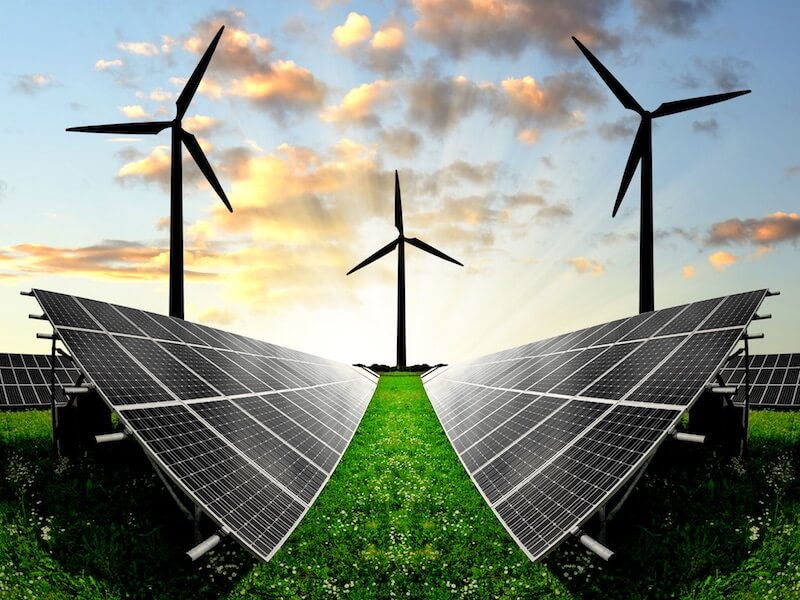
Alternative energy.

Wind power. Hydro power. Solar power. Nuclear power. C’mon, Gov. Abbott. Offer a word as well to those energy sources that received some federal government assistance during the previous administration … yes, the one led by Barack H. Obama.

President Obama gave way to Donald J. Trump in January 2017 and the new president began dismantling some of the rules and regulations that gave energy producers incentive to search for alternative sources of energy.

Trump said he wanted to restore the fossil fuel industry. Oil, natural gas and coal have been pushed to the front, while he has all but ignored any public discussion about those alternative sources.

Clean air? Clean water? The president and his Environmental Protection Agency director, Scott Pruitt, have stripped away those regulations, too. Trump and Pruitt call them “job killers.”

The nation achieved its energy independence in the years immediately preceding Trump’s election as president.

Sure, we still need oil. West Texas oil fields are pulling a lot of it out of the ground. Let us remember, though: Those fuel sources won’t last forever.

The wind will be around for long after we pump the final barrel of oil. So will the sun. Both of those sources are, shall we say, a whole lot cleaner and a whole lot more sustainable.

Yes, on renaming Virginia highway!

Good job, Alexandria (Va.) City Council.

The council has yanked the name of an American traitor off a highway that runs from Arlington to Richmond.

It thoroughfare was formerly known as the Jefferson Davis Highway. Its new name will be the Richmond Highway.

Jefferson Davis, of course, was the president of the Confederate States of America. The CSA decided in 1861 to declare war against the United States of America. Confederate artillery gunners then opened fire on the Union garrison at Fort Sumpter, S.C.

Thus, the Civil War began. It would end four years later with roughly 600,000 men dying on battlefields throughout the North and South.

Jefferson Davis’s complicity in launching that war is beyond dispute. He was a traitor to the nation. Do we honor such individuals? Should we honor them? Of course not! Indeed, a school in Richmond will be renamed in honor of Barack H. Obama, after carrying the name of Confederate Army Gen. (and another traitor) J.E.B. Stuart.

As The Hill reported: There has been a massive push to rename markers and landmarks named after members of the Confederacy following the Charleston shooting and the Charlottesville, Va., white supremacy rally last year.

Accordingly, the Alexandria City Council has just struck down one more tribute to an infamous historical figure.

Saluting is back in the news

Whether to salute is back in the news.

Donald Trump was recorded saluting a North Korean general in what appears to be an awkward, unscripted moment. The president extended his hand, the general saluted him, the president then returned the salute.

It looked clumsy.

This mini-kerfuffle does bring to mind a discussion that emerges from time to time: Does a president return salutes from military personnel? Should he do so?

Recent presidents have done so. It’s appropriate, given their role as commander in chief. Presidents Obama, Bush (43) and Clinton all did it; so did President Reagan. Bill Clinton, as I recall, needed some schooling on how to salute, given that his initial efforts looked a bit, well, clumsy as well. Active-duty military personnel and veterans picked up on it right away.

Donald Trump’s return of these salutes look just fine to me. He snaps it properly. Perhaps he learned how to salute during his years in military school prior to heading off to college.

I like watching presidents return these salutes, as long as they know what they’re doing when they snap them back at military personnel who initiate them.

As for the current president’s clumsy moment in Singapore, it’s no big deal.