Tag Archives: US Senate

Make ‘homosexual activity illegal’? How?

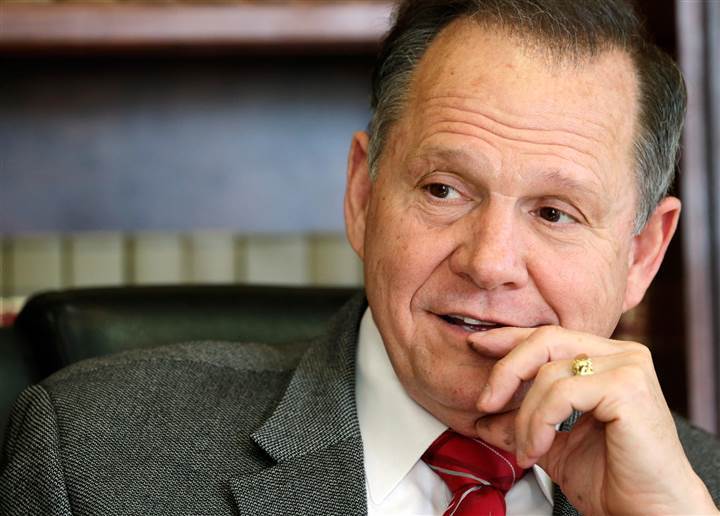
The man whom Alabama Republican primary voters have nominated for the U.S. Senate is truly a frightening individual.

He is Roy Moore, the former chief justice of the Alabama Supreme Court. Just the other day he talked at a campaign rally about his support of the Second Amendment — and then pulled a pistol out of his pocket to prove his point.

That’s not the particular point of this blog post, however.

This one-time jurist believes that “homosexual activity” should be made illegal. I’ll take a leap here and presume he believes that gay couples must not be permitted to engage in any form of intimacy.

I’m now wondering: How does one enforce such a law?

It reminds of me a terrible “anti-sodomy law” that once was on the books in Texas. That law gave license, as I read it, for law enforcement officials to raid people’s bedrooms to enforce the prohibition against intimacy involving gay men. It’s no longer on the books.

So, what is Roy Moore suggesting? That law enforcement authorities barge into people’s homes to make sure they’re not engaging in “homosexual activity”?

This is the fellow who was stripped of his judgeship for (a) refusing to remove a Ten Commandments display from public property and (b) encouraged county clerks in Alabama to ignore a U.S. Supreme Court ruling that required the issuance of marriage licenses to same-sex couples.

Now Alabama’s Republican voters have just nominated someone who believes that gay people cannot engage in certain “activities.”

Alabama is a deeply Republican state. This fellow stands a good chance of being elected to the U.S. Senate seat now held by Luther Strange, who was appointed to the Senate after Jeff Sessions left to become U.S. attorney general.

If it comes to pass, I believe Capitol Hill is going to become a significantly loonier place.

Scary, man. Scary.

Who needs that CBO ‘score’ on health care bill, right, GOP?

The Republican rush to repeal the Affordable Care Act might proceed without a key element that GOP congressmen and women would need to make this critical judgment.

The Congressional Budget Office won’t be able to provide its full analysis of the impact the replacement legislation will have on the future of Americans’ health care insurance.

You see, Congress is facing a Sept. 30 deadline to get this deal done with a simple majority of 50 Senate votes. After that date, the rule rolls back to a 60-vote supermajority requirement. So, there you have it: Senate Republicans don’t want to wait for a “score” that they usually rely on to help them decide matters of this importance.

As Politico reports: The Congressional Budget Office will only have a bare-bones assessment of the latest GOP bill ready before Sept. 30, the deadline for Senate Republicans to pass health care legislation on a party-line vote.

Is it any wonder, then, that some Senate Republican leaders — such as John McCain of Arizona — are critical of the process that is rushing this vote forward?

Read the Politico story here.

The ACA is Barack Obama’s signature domestic legislative achievement. Republicans want to wipe it out, toss it aside. They aren’t interested in repairing it, improving it, making it work better for Americans.

In normal times, the complete CBO analysis was thought to be the standard for lawmakers to follow. The CBO is known to be a completely non-partisan, unbiased source to determine the financial impact of legislation. Its previous analyses of efforts to repeal and replace the ACA have told us that 20 million Americans would lose health insurance under terms of the replacement legislation. Are ACA repeal/replace proponents afraid of what the CBO is going to tell us about what they’ve got in mind this time around?

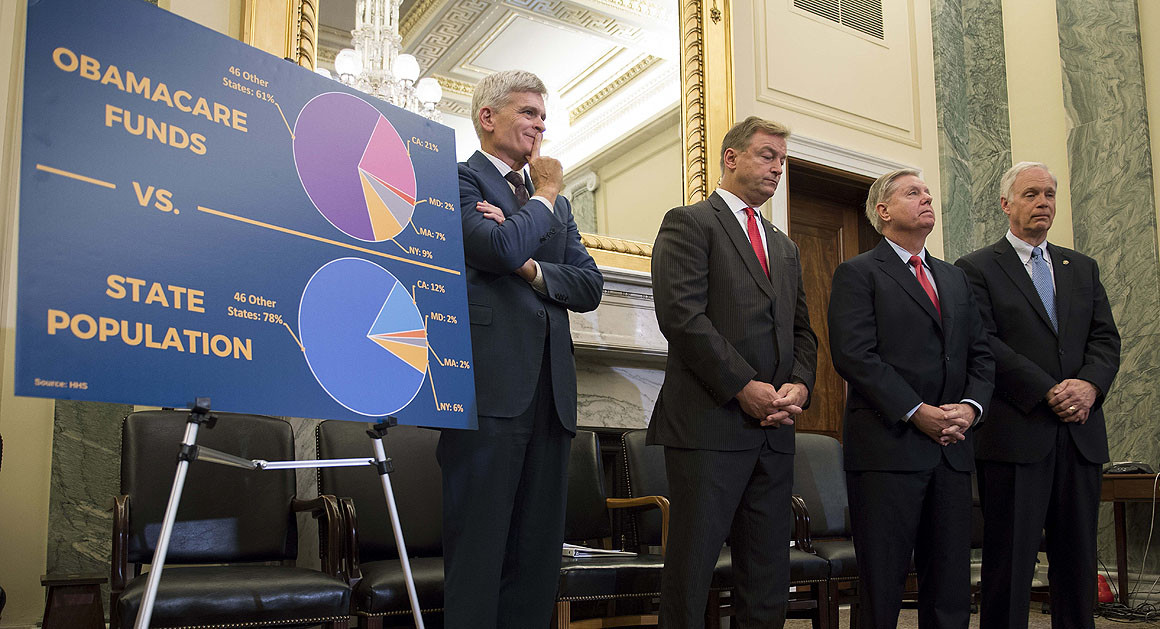
This latest health care insurance bill comes from Sens. Lindsey Graham of South Carolina and Bill Cassidy of Louisiana. Sen. Rand Paul of Kentucky already opposes it. Sen. Susan Collins of Maine is teetering against it. Sen. Lisa Murkowski of Alaska is said to be leaning toward a “no” vote. McCain already is on record opposing this fast-track process.

Is this what we’re getting? Half-baked decision-making based on matters that have little to do with the facts?

Hoping that Hillary calls it a career

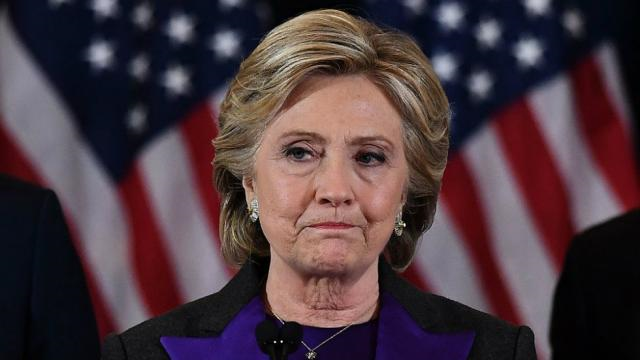
Hillary Rodham Clinton is beginning to resurface.

Her book is out, the one that “explains” why she lost a presidential election she should have won. I’ll stipulate that I haven’t read “What Happened.” I have every intention of doing so. I’m curious as to what this candidate who should have been elected in 2016 says about her stunning election loss.

I’ll simply fall back to a position I took not long after Donald J. Trump got elected president of the United States.

My hope for the Democratic Party is that they find a fresh face, a novice to the national political stage, a rookie to run against whomever the Republicans nominate for president in 2020.

It shouldn’t be Hillary Clinton. And if the Republican Party honchos were to ask for my opinion, I’d say they shouldn’t renominate the incumbent president. Hey, I just told ’em that very thing. Imagine that!

Hillary will lay a lot of blame on FBI Director James Comey and his strange reopening of the e-mail probe late in the campaign. She’ll blame the Russians for hacking into our electoral system. She will blame the media for the way they covered her campaign. Sure, she also is going to take a lot of the blame herself.

From where I sit out here in Flyover Country, it’s that last element that deserves the bulk of the cause for her stunning loss.

Clinton was a lousy candidate. She spent too much time down the stretch in states she had no prayer of winning and too little time in those battleground states that flipped from supporting Barack Obama in 2008 and 2012 to backing Trump.

Yes, I also believe in that malady called Clinton Fatigue. We had two terms of her husband, President Bill Clinton; and along the way, we got a big dose of first lady Hillary Clinton, too. Do you recall when candidate Bill told us in 1992 if we elect him, we’d get her as well in a sort of two-for-one deal?

She ran for the U.S. Senate in 2000 as she and her husband were to leave the White House and she served her new home state of New York with competence and some level of distinction.

She challenged Sen. Barack Obama for the 2008 Democratic presidential nomination and took him to the wire. The new president’s payback was to appoint her secretary of state, a post she held for Obama’s first term.

Clinton won the 2016 Democratic presidential nomination believing the election was hers for the taking. She wasn’t alone. I was among the millions of pseudo-experts who thought she’d win in a record-setting landslide. I’ve been eating crow ever since.

Her time has come and gone. She’s yesterday’s heroine.

I do not want her to run again. She had my support once already. I’m not sure I can back her a second time.

Her book is likely to produce some interesting reading. That is it. However, the future of her political party, I believe, belongs to someone who’s going to emerge from nowhere.

A moment of civility and honor

I feel the need to share this video before it recedes too far into the nation’s political background.

U.S. Sen. John McCain pays tribute in this brief video to his longtime friend and colleague, Vice President Joe Biden.

Why show this clip here? Today?

These are seriously contentious times. The vice president was about to leave office after nearly four decades serving in the Senate and as the nation’s No. 2 elected official. Sen. McCain acknowledges that he and Biden didn’t always agree on public policy. They argued, sometimes vigorously.

But it serves us all well to know that men who were political opponents could remain friends, a sentiment that McCain expresses with stunning eloquence in his Senate floor speech.

He was among many senators who rose to pay tribute to Biden as the VP prepared to leave public life.

It remains my hope — to which I’ll cling stubbornly — that we can find a way back to a more genteel era on Capitol Hill. Some of the current cast of characters in the spotlight today make it difficult to imagine such a return occurring any time soon — if ever!

I will admit to getting pretty damn worked up myself over the conduct of many of those characters. I’ve said some harsh things in this blog. I won’t retract them, but I’ll seek to do a better job moving ahead at maintaining a more civil tone, even though I sit way out here in the proverbial peanut gallery, far from where the action is.

Recalling the Rev. Jesse Jackson’s one-time campaign battle cry, I’ll continue to “keep hope alive” that decorum will return to the political debate.

Sen. McCain — the Vietnam War hero and a ferocious advocate for his own public policy views — offers us an example of what we need in the halls of power.

Impeachment? Not so fast, folks

Social media are chattering and clattering like a newspaper newsroom full of typewriters on deadline. Those of you who are old enough to remember actual typewriters will understand the analogy.

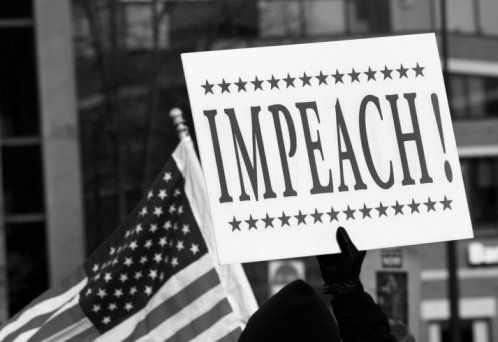
But the social media are abuzz with viral statements, requests and demands that Donald John Trump Sr. gets impeached.

Let’s hold that thought. At least for a while, OK?

The president of the United States is demonstrating plenty of disturbing behavior. He holds those rallies in which he ad-libs his way into nonsensical rants. Then he reads reasonably crafted speeches, looking for all the world as if he’s been asked to eat every bite of the squishy spinach on his plate. The next day he tears into the media, members of Congress and virtually every political foe who’s lined up against him.

Serious-minded folks like former head spook James Clapper say they doubt Trump’s “fitness” for his job. He’s acting like a maniac. Sounding like a blithering, blathering fruitcake.

Does any of this behavior rise to the level of an impeachable offense? No. Not as I understand what’s written into the U.S. Constitution.

Article II, Section 4 spells out the specifics of a presidential impeachment. It calls for such an action in the event of “Treason, Bribery, or other High Crimes and Misdemeanors.” The House of Representatives must bring formal charges against the president. Then the Senate conducts a trial; to convict a president and toss him out of office requires a two-thirds vote by senators.

Has the 45th president committed any sort of “high crime and misdemeanor”? No. Indeed, there is an open debate on just when we’ll know of any potential charges being brought. Many of us have our opinion on whether there should be charges brought. To date, we have none. We don’t even have any compelling evidence to suggest that there will be charges brought.

What about the president’s behavior? My reading of the Constitution suggests that loopy conduct does not, by itself, constitute an impeachable offense. But let’s not kid ourselves here. Donald Trump’s behavior on speech podiums is weird in the extreme.

I’ve never heard a more inarticulate president than the one we’ve got now. Never have I seen someone trash tradition in the manner that he does. Given an opportunity to heal a nation divided by myriad issues of many stripes, Donald Trump does precisely the opposite. He lashes out. He hurls insults at his foes. He cannot even bring himself to offer a word of good wishes to one of his critics — Sen. John McCain — who is in the midst of a life-and-death struggle against cancer.

Trump disgraces his office almost daily. I’d say he disgraces himself, but he seems to lack the capacity to look inward.

Is any of this impeachable? No.

None of it will stop the social media chatter. I just think it’s important to put some of this hysteria into some perspective.

Meantime, let’s wait for the special counsel looking at “The Russia Thing” to do his job.

Will POTUS continue his search for peace and harmony?

The president of the United States sought to lay out a new strategy for fighting the Afghan War.

He began his speech Monday night, though, with what I perceived in the moment to be a curious diversion from the topic at hand. He spoke about peace, harmony, understanding and love. He said he wants our brave warriors fighting overseas to return to a country in which all citizens feel equally loved by their fellow Americans.

I thought it was an interesting — and welcome — appeal in the aftermath of the Charlottesville, Va., riot that was ignited by hate groups marching and counter protesters clashing with them.

So here’s where I’m heading with this: Is the president going to continue that theme tonight when he steps in front of cheering throngs in Phoenix, Ariz.? It’s billed as a campaign rally. You know how those involving Donald Trump usually turnout, yes? They get raucous. The president flies “off script.” He starts hurling insults around. The crowd cheers. The president basks in the adulation he hears in the throaty yells.

Trump is going to a state represented in the U.S. Senate by two Republicans — John McCain and Jeff Flake — who’ve been openly critical of him. Trump has responded with insults he has hurled back at them. Sen. Flake is facing a GOP primary challenge and the president has taken the highly unusual step of appearing to back his opponent.

The nation is in the middle of an intense discussion about race relations in light of what happened in Charlottesville. Will the president respond in a positive way to that discussion, or will he pour fuel onto that wildfire with more of his intemperate rhetoric?

My hope is that he’ll listen to the calmer angels that might be trying to be heard above the din. My fear is that he’ll ignore them and go with the shouters.

GOP silence is getting louder

You can understand that Democrats are angry with Donald J. Trump.

The president won an election he was supposed to lose to the Democratic Party nominee. Congressional Democrats haven’t gotten over it … yet!

Republicans, though, are demonstrating their angst and anger at Trump differently than their colleagues on the other side of the chasm.

They are staying quiet. More or less. A few congressional Republicans are speaking against the president, namely over his stated reaction to the Charlottesville mayhem. However, except for a few on the far right wing of the party, one is hearing damn little comment that even remotely resembles support for the president’s equating of Nazis and Klansmen to those who protested their march in Charlottesville.

If I were Donald Trump — and I am so glad to be far away from this guy — I would be worried to the max about the GOP silence. Trump has demonstrated already he doesn’t give a damn about Democrats; nor do Democrats, to be fair, give a damn about him. Now, though, he is providing evidence that he doesn’t care about Republicans, either; the GOP silence suggests to me the feeling is increasingly mutual.

Trump has gone after the Senate majority leader; he’s attacked GOP Sens. John McCain and Jeff Flake of Arizona; he lashes out at Sen. Lindsey Graham, R-S.C.; he even attacked Attorney General Jeff Sessions, a former senator from Alabama, and a good friend of many in the Senate — on both sides of the aisle.

GOP Sen. Susan Collins of Maine now says she isn’t even sure Trump will be the party’s presidential nominee in 2020.

The Republican Party’s relative silence may deliver more damage to the president than the howling we’re getting from the other side.

Will POTUS serve out his term?

The question came to me today at lunch from a fellow I’ve known for more than two decades and who I consider to be one of the smartest men in Amarillo, Texas.

“Do you think Donald Trump is going to serve his entire term as president?” asked my friend, who’s been involved in local government for four decades.

My quick answer was “I think it’s 70-30 that he does but those odds are shrinking.” By that I mean the gap between survival and non-survival is going to become narrow as the special counsel assigned to investigate matters involving the president continues his probe.

I have not a single thing on which to base that percentage estimate, other than my gut and my proverbial trick knee.

I am watching along with millions of Americans the flailing of the president as he tries to achieve his objectives — whatever the hell they might be. The dysfunction is unlike anything I’ve ever witnessed in a presidential administration.

Special counsel Robert Mueller, meanwhile, is examining the Russia matter and his probe well might delve into other issues not related directly to whether the Russians meddled in our 2016 presidential election or whether the Trump campaign colluded with them.

Donald Trump is at the center of all this. He’s not used to this kind of scrutiny. Nor is he accustomed to being challenged at every turn by political foes or by the media.

I told my friend that every human being has his or her limits. We don’t yet know where those limits exist with Donald Trump. Does the president have a limitless capacity to suffer the indignities that governing in a complicated political system inflict on him? After all, this self-proclaimed business genius is new to this game of politics, government and public service.

My buddy is as aghast as I am, moreover, that this man even got elected in the first place. “What have we done?” he asked, obviously rhetorically.

We exchanged a few more thoughts on this totally unpleasant subject before heading back to our lives.

Bear in mind this, though, about the “prediction” I made. One is that I no longer predict seriously political outcomes. I never thought, for instance, that Hillary Clinton would run for the U.S. Senate in 2000 at the end of her husband’s two terms as president; she did.

Nor did I ever think Donald John Trump Sr. would be nominated by the Republican Party and then be elected president in 2016. He was.

Many Americans were wrong about the outcome of this past year’s election, which makes me quiver at the thought of predicting with any kind of certainty whether this clown will survive the ongoing onslaught that awaits.

Welcome back, Beto!

I’m getting a little ahead of myself, but Beto O’Rourke is making himself quite at home in what might be considered “enemy territory.”

O’Rourke is the Democratic member of Congress who wants to succeed Republican U.S. Sen. Ted Cruz at the end of next year.

He keeps coming back to the Texas Panhandle. He’ll be here Tuesday, conducting a town hall meeting beginning at 6:30 p.m. at Austin Middle School in Amarillo.

What’s the deal? O’Rourke represents an El Paso district in Congress. He’s got a Democratic Party primary yet to win. He has returned back home to Texas during the August recess to resume his full-time campaign for the Senate seat occupied by Cruz.

O’Rourke has developed quite a fan following among local Democrats — yes, there are actually living, breathing Democrats in the Panhandle. They can’t get enough of this young man.

I’m curious about a couple of things regarding Rep. O’Rourke.

First, how much time is he going to spend mining a limited number of Democratic primary votes when there exist so many more in larger urban regions in, say, Dallas and Tarrant counties, in Bexar County, in Travis County, Harris County and, oh yes, El Paso County? Hey, it’s a big state and he’s got to get from place to place in a big hurry.

Second, if the young congressman gets nominated by Democrats next spring, will he come back to the Panhandle when the general election campaign kicks into high gear?

You and I know the rule of thumb regarding partisan Texas politics: Democrats generally have given up on the Panhandle, while Republicans take this region for granted. Just as national politicians campaigning for president focus on “battleground states” and ignore the trusty Red and Blue states, the same can be said for the intrastate campaign in Texas.

Do candidates for statewide office spend as much time in regions where the outcome is preordained? If I would run a Texas-wide campaign, I would focus my attention on those “swing regions” and seek to gin up turnout among my own partisans, be they Democrats in Austin and the Hill Country or Republicans in Amarillo and throughout West Texas.

I hope I’m wrong about Beto O’Rourke. Just maybe the young man will possess the energy and pizzazz to spend more general-election time far from his base of support.

You know, too, that I am no fan of the Cruz Missile.

Enough said.

Is bipartisanship making a comeback in the Senate?

Oh, I do hope my ears and eyes aren’t deceiving me.

I’ve heard during the past day or so that the failure of the Republican-authored bill to replace the Affordable Care Act has produced a remarkable event.

It is that Republican U.S. Sen. Lamar Alexander of Tennessee and Democratic U.S. Sen. Patty Murray of Washington are going to actually talk to each other about how they might find a path toward improving the ACA.

Alexander chairs the Senate Health Committee and is committed to working with Murray to commence bipartisan hearings next month that would fix some elements of the existing health care law.

I do believe this is how effective government is designed to work.

The Senate Republican caucus sought to craft an ACA replacement without any Democratic help. The House of Representatives did approve its version of an ACA replacement, also without Democratic input or votes. It fell to the Senate to complete the job. The Senate failed when they lost three GOP senators, killing the totally partisan measure.

Now the Senate is blundering its way toward a compromise solution. Sens. Alexander and Murray are leading the way.

They’re both Capitol Hill veterans. They’ve been around long enough to know how the place can actually work. Alexander and Murray aren’t alone in that knowledge, to be sure.

It well might be time for Republican congressional leaders — in both legislative chambers — to accept that the ACA is the law of the land and that it’s likely to remain the law of the land.

Many of us out here in the heartland have noted that the ACA is far from perfect. Its chief proponent, former President Obama, has implored Republicans to find a bipartisan solution to repair the law. GOP lawmakers, though, have been hung up on repealing the ACA.

A one-party solution hasn’t worked out for the Republicans.

There now appears some momentum building for a return to the proven strategy of working together — with both parties sitting at the same table — to find some common ground.

That’s how you legislate.