Tag Archives: US Constitution

Speaker pushes back, finally, against POTUS

U.S. House Speaker Paul Ryan’s time in public office is running out, which I guess means he’s able — and willing — now to push back on the president of the United States, a member of his political party.

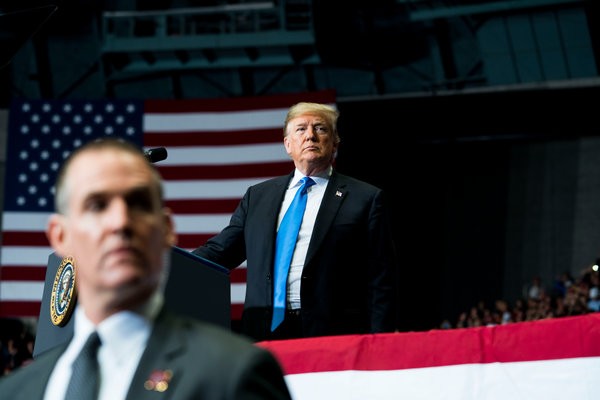
Donald Trump has said he wants to issue an executive order to rescind “birthright citizenship,” a provision granted by the 14th Amendment to the U.S. Constitution.

Ryan, who is not running for re-election to his Wisconsin House seat, says his fellow Republican can’t do that.

Ryan said, “We didn’t like it when (former President Barack) Obama tried changing immigration laws via executive action, and obviously as conservatives we believe in the Constitution. … I’m a believer in following the plain text of the Constitution and I think in this case the 14th Amendment is pretty clear, and that would involve a very, very lengthy constitutional process.”

There you have it. A key congressional Republican leader has spoken out clearly against a Republican who’s hijacked the party under which he ran for public office.

The 14th Amendment says that anyone born in the United States or naturalized in this country is a citizen. No doubt about it. Thus, an effort to rescind that provision would require, as Ryan noted, “a very, very lengthy constitutional process.”

The president has plenty of executive authority. Trump was generous in his criticism of President Obama over his use of the authority. Changing the Constitution, though, doesn’t fit into the purview of a president affixing his signature to an executive order.

Mr. President, stop this nonsense.

“It was always told to me that you needed a constitutional amendment. Guess what? You don’t,” Trump said in an interview with Axios.

Yes, you most certainly do!

Birthright citizenship far from ‘absurd’

U.S. Sen. Lindsey Graham is trying to cover Donald Trump’s backside with a plan to introduce legislation in the Senate to reverse a constitutional amendment that provides U.S. citizenship to anyone born inside the United States of America.

Nice try, senator.

Trump declared his desire to issue an executive order that would end the right of instant citizenship to anyone born here. The big problem facing the nutty idea is that the rule comes to us in the form of the 14th Amendment to the U.S. Constitution, which was proposed in 1866 and ratified in 1868.

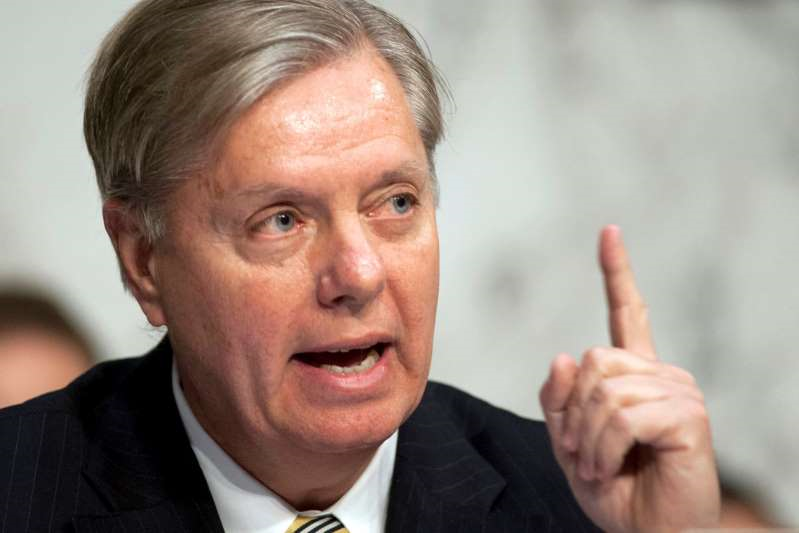
Now it’s an “absurd” notion, according to Sen. Graham, who wrote in a Twitter message: “Finally, a president willing to take on this absurd policy of birthright citizenship. I’ve always supported comprehensive immigration reform — at the same time — the elimination of birthright citizenship.”

Graham jumps in

In order to amend the Constitution, this legislation needs a two-thirds vote in both chambers of Congress and must be ratified by three-quarters of the 50 states. It is a steep hill to be sure.

It’s also a ridiculous and gratuitous attack on a U.S. tradition that has been part of the law of the land for 150 years.

Donald Trump has sought to demonize all illegal immigrants, even those who were brought here as children by their parents — and now those who were born here to parents who came this country illegally. He suggests that all illegal immigrants come here to do harm, to commit crimes, to perform terrible acts of violence.

This is the answer? This is the solution?

No. It isn’t.

Good grief, if we’re going to get tougher on illegal immigration, then let’s use existing laws and modernize security policies. We don’t need to build a wall along our southern border.

Nor do we need to repeal the clause contained in an existing amendment to the U.S. Constitution.

Trump seeks to amend Constitution with an executive order?

Hold on, Mr. President!

You used to excoriate your immediate predecessor, falsely, for over-using his executive order authority. Now you are considering a notion to issue an order to stop birthright citizenship to everyone who is born within the United States of America?

I do not believe you can do that, Mr. President. Your White House legal team is giving you bad advice. I feel confident saying such a thing even though I am no lawyer, nor do I purport to know “the best words” or surround myself with “the best people.”

I understand that you just don’t want all them “illegal aliens” giving birth in this country to babies who become immediate U.S. citizens. You want citizenship only for those who “merit” it.

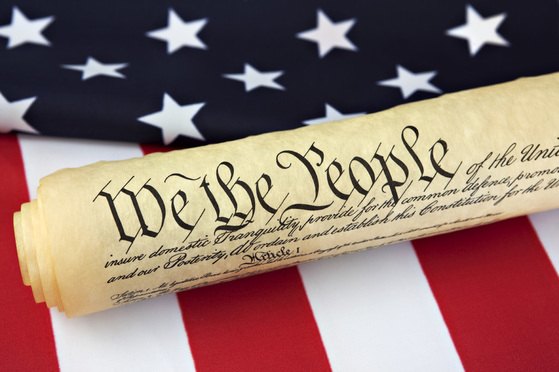
Let’s take a quick look — shall we? — at the 14th Amendment to the U.S. Constitution. Section 1 says it clearly: “All persons born or naturalized in the United States, and subject to the jurisdiction thereof, are citizens of the United States and the State wherein they reside.”

The amendment was proposed in Congress on June 13, 1866, a little more than a year after the Civil War.

Constitutional scholars say the amendment was a result of efforts granting full citizenship to African-Americans who only three years earlier were “emancipated” from their enslavement by President Lincoln.

Still, it’s written in the Constitution, that everyone born in this country is granted immediate citizenship upon birth.

Thus, I just don’t believe, Mr. President, that you can circumvent the Constitution with the kind of executive order you said was abused by former presidents.

If you do, sir, my sincere hope is that someone challenges it immediately and that it finds its way to the U.S. Supreme Court. If the conservative majority on the court — which has been buttressed by the recent confirmation of Justice Brett Kavanaugh — stands by the document y’all have pledged to protect and defend, they’ll join their liberal colleagues in shutting down this unconstitutional effort.

This executive authority notion, Mr. President, is un-American.

Kavanaugh joins high court with zero political capital

Now that we’ve established — at least in my humble view — that the U.S. Supreme Court has become the third political branch of government, it’s worth examining briefly the cache that the court’s newest member brings to his post.

Justice Brett Kavanaugh has none. Zero, man!

Is that important, given that he is now charged with interpreting the constitutionality of federal law? Yep. It is. Why? Because the new justice takes office by the thinnest of political margins.

The U.S. Senate voted today 50-48 to confirm him. The previous narrowest confirmation belonged to Justice Clarence Thomas, who was approved 52-48 in 1991. Move over, Justice Thomas. There’s a new Bottom Dog in town.

I will acknowledge that at least the confirmation vote for Justice Kavanaugh wasn’t an entirely partisan affair; Democratic Sen. Joe Manchin voted with the majority to confirm Kavanaugh, and no doubt all but sealed his re-election to the Senate from West Virginia, a state that Donald Trump carried by more than 41 percentage points in 2016 over Hillary Rodham Clinton.

Kavanaugh has pledged to rule with impartiality and independence. He did so in an op-ed piece written for the Washington Post. It was a remarkable pledge, given his fiery — and highly partisan — rebuttal to the criticism that exploded in the wake of the sexual assault allegation leveled against him by Christine Blasey Ford.

This justice takes his lifetime appointment seat amid continuing question and a good bit of recrimination over the manner in which the Senate shoved his confirmation across the finish line.

I now am going to rely on my limitless optimism that Justice Kavanaugh will deliver on his promise to be independent and impartial as he takes on the huge challenges of constitutional interpretation.

Don’t mess up, Mr. Justice.

A tip of the hat to the ‘enemy of the people’

I want to tip my proverbial hat to the media, the institutions labeled by the president as the “enemy of the American people.”

They continue to do their jobs. The men and women who practice their noble craft do it with honor and distinction.

The New York Times has just published an astonishing — and lengthy in the extreme — article that peels the bark off the disguise under which Donald Trump hid while campaigning for the presidency.

He told Americans he is a “self-made business success.” The Times story tells an entire different tale, that Donald Trump relied heavily on the generosity of his late father, Fred, and that he manipulated the tax system to obtain cushy deals all along the way.

Now, to be sure none of this likely will change the political balance. Anti-Trump Americans — such as me — will use the material to criticize the president; pro-Trump Americans will use it to bash the media. Trump himself will bash the media and the Times specifically. That’s his modus operandi. It stinks.

However, the media continue to step up. They continue to do what their professional journalists are trained to do. They are holding government accountable.

Every one of Donald Trump’s predecessors as president has understood the media’s role in building our representative democracy and their contributions to strengthening it.

Exhaustive and meticulous reporting by media outlets such as The New York Times demonstrate for all the world the power of a free press, the only privately held business expressly protected against government interference/bullying/coercion in the U.S. Constitution.

None of this, of course, will dissuade Donald Trump from demonizing the media. He’ll continue to speak of what he calls “fake news,” even though he is the No. 1 purveyor of outright lies and prevarication.

Many of the rest of us know better. The media are standing tall. I am proud to have been a member of the mainstream media.

Don’t fire deputy AG, Mr. President

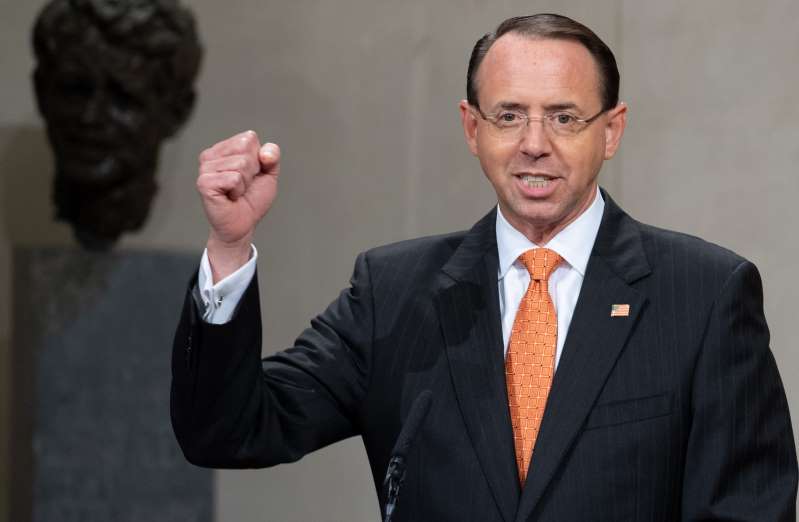
Rod Rosenstein’s backside might be in a sling as I write this brief blog post.

The deputy U.S. attorney general who hired Robert Mueller as special counsel to look into Donald Trump’s possible Russia dealings is heading to the White House on Thursday to meet with the president.

Rosenstein reportedly said something about wearing a listening device while in the White House and also reportedly asked around about invoking the 25tha Amendment to the Constitution, the one that allows Cabinet officials and Congress to remove the president from office.

Rosenstein denied the reports … sort of. He called them “inaccurate,” which isn’t exactly a denial that he made those statements. Other reports indicate Rosenstein said those things “in jest,” which is how the White House has tried to explain some of the president’s own bizarre statements.

Rosenstein might face the music

If the president fires Rosenstein, then Mueller’s future is in serious question. Does the next deputy AG then fire Mueller, ending the painstaking probe that Mueller has conducted in the search for the truth behind allegations of “collusion” between the Trump presidential campaign and Russian goons who attacked our electoral system in 2016?

Rosenstein’s selection of Mueller was hailed in the moment as a brilliant move, a stroke of genius. The former FBI director, Mueller, was hailed as a man of impeccable integrity and character. Then he started indicting people close to Trump. Now — suddenly, like magic! — he is called everything but the son of Satan by many within the Trump inner circle. The president has labeled the Mueller investigation “illegal” and a “rigged witch hunt.”

I do not want Trump to fire Rosenstein. He perhaps can chew him out royally, which is within his purview. Then again, so is firing him.

Robert Mueller’s investigation needs to proceed and conclude under its own power. Rod Rosenstein needs to stay on the job until Mueller’s task is complete.

And the president of the United States needs to shut his trap and let this investigation reach its end. If there’s nothing there, as Trump insists, Robert Mueller will tell us. Correct?

Will the president heed the advice, or act … impulsively?

Deputy U.S. Attorney General Rod Rosenstein might have just wiggled his way into the proverbial doghouse occupied by his boss, Attorney General Jeff Sessions.

Many of us out here are wondering whether the president of the United States, Donald Trump, is going to fire Rosenstein because he allegedly threatened to wear a “wire” to record conversations with Trump — and then recommend that the Cabinet invoke the 25th Amendment to the Constitution to remove Trump from his office.

Rosenstein has sort of denied The New York Times report that the deputy AG had said all that. However, his denial seems to fall short of a categorical, unequivocal denial.

Still, reports now are surfacing that Trump’s inner circle is telling him: Don’t fire Rosenstein!

Trump facing new dilemma

Indeed, such an impulsive act could turn out to be the Republicans’ worst nightmare, just as would a presidential dismissal of AG Jeff Sessions, who has gotten himself into trouble with Trump because of his decision to recuse himself from the investigation into the Russian attack on our electoral system.

I keep circling back to a question that I cannot yet answer: Has there ever been such an out-front discussion about whether a president was “fit” to serve in the office to which he was elected?

Weird, man. Simply weird.

Federal judiciary: more political than ever?

I have long supported the principle of an “independent” federal judiciary, whose members are given jobs for life if they choose to stay at their post for as long as they draw breath.

The nation’s founders established it all at the beginning, giving the president the power to select these individuals and the U.S. Senate to confirm them.

My thoughts — naive though they were — believed that such independence would insulate judges from political pressure.

Oh, man! I was as wrong as I could be.

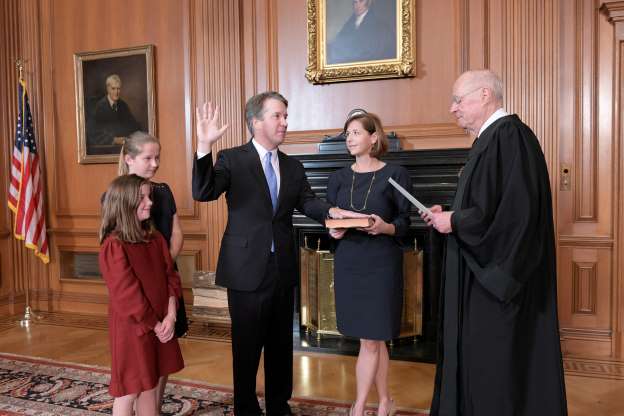
Brett Kavanaugh has provided us just yet another example of how mistaken I have been. Donald J. Trump selected him to succeed Anthony Kennedy on the U.S. Supreme Court. The president has made his judicial preferences clear: He intends to nominate judges who will toss out Roe v. Wade, the landmark ruling that legalized abortion.

Thus, the political wind has swirled all over Judge Kavanaugh. He has said something about Roe being “settled law,” which gave pro-choice advocates some hope that he would leave the ruling alone were he to have to decide a case down the road.

Others aren’t so sure.

Presidential elections surely have consequences. Trump won the 2016 election and already has won the confirmation of Neil Gorsuch to the nation’s highest court. Kavanaugh is set to join the court.

Is he free of political pressure? No. He isn’t. Not by a long shot. Indeed, all federal judges — from trial bench judges, to all level of appellate court judges — face political pressure. It doesn’t let up after they take their seats on the bench. Yes, it gathers incredible steam as they seek confirmation.

I won’t back down from my strong belief in presidential appointment of federal judges. Their lifetime jobs give them some semblance of independence from run-of-the-mill political pressure.

Sadly, it doesn’t eliminate it.

When have we ever discussed presidential fitness?

I’ve been walking along this Earth for a lot of years. I’ve been watching politics for most of my life. For the life of me I cannot remember a national discussion that comes close to mirroring what we’re hearing at this time about the fitness of the man who serves as president of the United States.

We didn’t hear it at this level when President Nixon was mired in the Watergate scandal. We didn’t hear it in 1984 when President Reagan stumbled in his first debate with Walter Mondale, only to say at the second debate that he wouldn’t “exploit for political purposes my opponent’s youth and inexperience.”

These days, the discussion has turned to Donald J. Trump’s actual fitness for the job. There’s open discussion about invoking a constitutional amendment that would strip the president of his powers. There is talk among White House aides about the president’s “impulses” and whether this man has the capacity to understand the myriad complexities of his high office.

Am I missing something? I just don’t recall ever having this discussion at any time, at any level with our previous presidents.

And yet, here we are.

The White House is pushing back. Trump allies say the president is fully capable. They say he’s engaged in the nuance of policy. They’re condemning the “gutless coward” who wrote that anonymous op-ed published in The New York Times, the essay that talks about the theft of memos from Trump’s desk and the effort to protect the nation against the president’s more dangerous instincts.

Yes, Trump promised he would be an “unconventional president.”

Boy, howdy! The man has delivered on that promise.

Bigly!

‘Treason’ gets misused yet again

Donald J. Trump has this fetish involving the word “treason.”

He tosses it out there, accusing others of committing such acts without understanding how the U.S. Constitution actually defines the term. It’s quite specific and has not a damn thing to do with newspapers publishing anonymous op-ed essays submitted by someone at the inner circle of the Trump administration.

Article III Section 3 says this about treason: Treason against the United States, shall consist only in levying war against them, or in adhering to their enemies, giving them aid and comfort. No person shall be convicted of treason unless on the testimony of two witnesses to the same overt act, or on confession in open court.

“Levying war … or adhering to their enemies, giving them aid and comfort.”

How is the president misusing the term? He tweeted a message “TREASON” immediately after word came that The New York Times had published the anonymous op-ed essay. Trump is wrong. I would say “deliberately” wrong, except that he likely hasn’t ever read the constitutional definition of “treason.” The essay speaks to a “resistance” movement within the White House that seeks to protect the nation from the president’s more troublesome instincts.

As for the “aid and comfort” clause in Article III, perhaps the president ought to be a whole lot more circumspect if he is going to toss the t-word out at his foes. The closest thing I’ve seen to providing aid and comfort to hostile powers has been Trump’s shameful refusal to condemn specifically the Russian attack on our 2016 presidential election.

A president who knows better is likely to avoid playing fast and loose with a term that defines the worst crime one can commit against the United States.

What’s more, the punishment for such a crime is, um, death. Is that what Donald Trump is suggesting should happen to whoever is responsible for an anonymously written essay?

I mean, seriously?