Tag Archives: Capitol Hill

Government shutdown looming … maybe

government shutdown

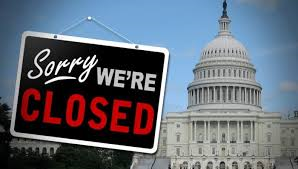
Oh, how I wish I could be as serene as some of the pundits out there about the prospects of a government shutdown in the wake of John Boehner’s stunning resignation.

The speaker of the House is leaving office at the end of next month. Between now and then Congress is going to vote on some funding issues that involve possibly the very issue of a government shutdown.

The TEA Party wing of Boehner’s Republican Party won big with the speaker’s resignation. He’s been battling the yahoos on the far right for years. He’s had enough, so he bailed.

That empowers the TEA Party types. It strengthens their hand with the new speaker, believed to be House Majority Leader Kevin McCarthy. Does he want to wage war with the TEA Party faction? Hardly.

He might find it more difficult to resist them than his predecessor did.

Planned Parenthood is in the TEA Party sights. They think shutting down the federal government — which, by the way, does a lot of things for other people as well — is a good way to get back at the agency for what TEA Party lawmakers say is its callous disregard for human life; it’s the abortion thing, you know.

Government to shut down?

This kind of political hostage-taking is not in keeping with congressional responsibility. Given that so many of the TEA Party faithful in Congress are too young to have been around when the GOP tried this tactic before.

It blew up in their face. It will do so every time.

If only they’d realize the folly.


Boehner may become lobbyist … who knew?

lobbying1

Twenty-five years on Capitol Hill bought John Boehner a lot of friendships.

OK, perhaps “bought” isn’t entirely appropriate, but he did acquire a lot of contacts.

So, the question of the day is this: Will the soon-to-be former House speaker join the corps of high-dollar lobbyists?

Gee. Do you think?

Boehner may move to K Street

Boehner announced this week he’s resigning from Congress. He’s giving up his power House speakership because, word has it, he was tired of fighting with the TEA Party wing of his Republican Party.

The House of Representatives requires a one-year cooling off period before former members can actually lobby. But let’s face it: Boehner’s connections will enable him to line up any opportunity he chooses to pursue once the year is up.

Observers note that Boehner is a savvy politician who has made many friends in and out of government.

USA Today reports: “He’ll get seven figures on the street,” said Tom Davis, a fellow Republican and former Virginia congressman who now lobbies for the financial-consulting giant Deloitte. “He’s got a lot of friends and allies in Congress. But it’s not necessarily his Rolodex that’s valuable. It’s just that he knows Congress inside and out.”

I guess it’s safe to say that Boehner will console his loss of political power with an abundance of cash he’ll earn once he signs on to represent well-heeled interests looking for any advantage they can get on Capitol Hill.

John Boehner is a cinch to find it for them.


What would LBJ think of today’s political climate?

LBJ

JOHNSON CITY, Texas — What would Lyndon think of what happened today?

We’ve spent the past three nights in President Johnson’s beloved Texas Hill Country and it was in this tranquil environment that we heard the news out of Washington — that House Speaker John Boehner is resigning his speakership and his congressional seat at the end of October.

The reaction from across the political spectrum? Well, President Obama — with whom Boehner has had many enormous differences — called him a “patriot” and a “good man.”

The reaction from the right wing of the speaker’s Republican Party? They cheered the news. Good riddance, Mr. Speaker.

Right wingers are smiling at the news. They want the speaker out of there.

Which brings me back to Lyndon Johnson.

LBJ was a proud Democrat. He also was a supreme legislator, thought by many to be the greatest Senate majority leader in the history of the “world’s greatest deliberative body.”

He took his legislative skill with him to the vice presidency and then — in that spasm of violence on Nov. 22, 1963 — to the presidency.

How do you suppose he earned the legislative kudos? He earned them by knowing how to compromise and how to get his friends in the other party to join him in enacting critical legislation. The Civil Rights Act, the Voting Rights Act, enactment of Medicare? All three of those landmarks were achieved with bipartisan support engineered in large part by the president of the United States.

Today, the mood and the atmosphere is different. Arch-conservatives — and, for that matter, ultraliberals — would rather fall on their proverbial grenades than compromise with politicians they see as enemies, and not just adversaries.

Lyndon Johnson would be an unhappy man were he to rise from his grave in Stonewall and see what has happened to the two great political parties that at one time knew how to work together to get things done for the common good.

In that respect, the president likely would throw his arm around Speaker Boehner, wish him well and hope for the return of better days atop Capitol Hill.


Don’t mess with Planned Parenthood, GOP

PlannedParenthoodsign

What part of “Don’t Shut Down the Government” is the Republican caucus in Congress failing to understand?

Yet here we are yet again. Congress is threatening to shut down the federal government because some of its members dislike Planned Parenthood. The GOP caucus in Congress doesn’t believe that the federal government should fund Planned Parenthood because, they say, it provides abortion services to women who want to end their pregnancy.

Well, that’s just a small part of Planned Parenthood’s mission. As for abortion funding, Congress years ago approved a law — the Hyde Amendment — that banned federal money for abortion services, so the argument that the government funding of abortion falls flat.

The rest of Planned Parenthood’s mission? Oh, things such as exams designed to guard against cancer, contraceptive services … those kinds of silly things that help keep women alive and allow them to avoid unwanted pregnancies.

What’s more, we’re possibly treading into that minefield in which the government decides to deny government services and programs across the board that have nothing at all to do with Planned Parenthood.

Do these individuals in Congress forget what happens when the legislative branch acts in this petulant and ultra-punitive fashion? Do they not know how badly the public reacts when Congress does such a thing?

The public gets quite angry. At Congress. And, yes, at the those who belong to the party that run both legislative chambers. That would be the Republican Party.

A government shutdown is a fool’s errand.

If only the fools who comprise a significant segment of the majority party in Congress would just get the message.


Pope Francis set to make some uncomfortable

Pope Francis at St Peter's

Pope Francis speaks like a humble man.

His message, though, is lofty beyond imagination.

He’s landed in Cuba, where he’ll tell the communist rulers of the island nation to give the Catholic Church there freedom to preach the word of Jesus Christ.

Then he’ll come to Washington, where he’ll speak to a joint session of Congress and will tell lawmakers that the world mustn’t worship capitalism and, yes, it must deal with global crises, such as climate change.

Pope coming to the U.S.

The Holy Father’s critics call him a Marxist. There’s been some talk that a few Republican lawmakers will boycott the speech on Capitol Hill. That would be a mistake, just as it was a mistake for Democrats to stay away when Israeli Prime Minister Benjamin Netanyahu spoke to a joint congressional session to argue against the Iran nuclear deal brokered by the Obama administration.

The earthly leader of a great Christian denomination needs to be herd by legislators who help govern the world’s greatest nation, even if he says thing that make them uncomfortable.

The good news, at least as far as I’m concerned, is that the congressional chamber will be full.

Indeed, it’s not every day that the pope comes to Washington.

Welcome to the United States of America, Your Holiness.


Pals still reach across the aisle on Capitol Hill

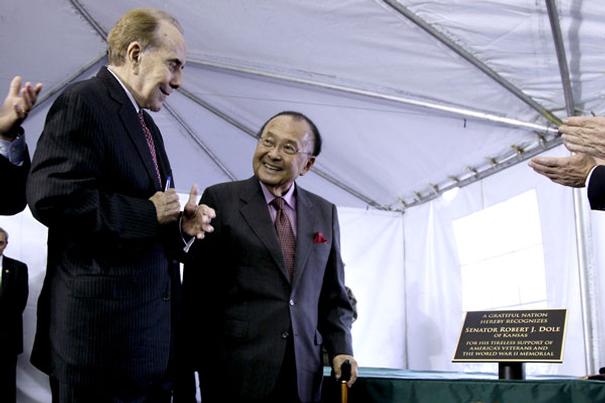
dole and inouye

Collegiality isn’t dead in Washington, D.C., after all.

I’m not reporting anything new here; I’m merely passing on an interesting Texas Tribune piece about how some Texas members of Congress — who are generally conservative to ultra-conservative — have become friends with some New York liberal members of Congress.

It does my heart good to read of this kind of thing.

Bipartisanship lives in the halls of Congress, reports Abby Livingston in an article published by the Tribune.

She notes how East Texas U.S. Rep. Louie Gohmert, one of the House of Representatives’ conservative firebrand, routinely saves a seat next to him for the State of the Union speech for Rep. Carolyn Maloney, a New York Democrat. Gohmert is adamantly opposed to further gun regulation; Maloney, however, is just as adamantly in favor of it.

According to the Tribune: “It’s not hard to be friends with people who are honest, and she sees many important issues, to me, very differently,” Gohmert said. “But I know she wants what’s best for the country, but we just have different beliefs as to what that is.”

You want another example? U.S. Sen. Ted Cruz of Texas has become good friends with Sen. Kirsten Gillibrand of New York. Cruz is a Republican (of course!) and Gillibrand is a Democrat; Cruz is ultraconservative; Gillibrand is ultraliberal.

As the Tribune reported: “I have always been impressed with people who stand up for principle when it matters and when there’s a price to be paid,” Cruz said of Gillibrand in a June interview.

Partisanship often has morphed into personal attacks for a number of years in the halls of Congress. Perhaps it showed itself most dramatically when then-GOP Vice President Dick Cheney told Democratic U.S. Sen. Patrick Leahy to “go f*** yourself” during a heated exchange on the floor of the Senate.

That’s the bipartisan spirit, Mr. Vice President.

It wasn’t always this way, of course. Members of both parties shared common bonds that quite often transcended partisan differences. Not many years ago, that commonality was forged by World War II, with combat veterans joining together to pursue public service careers while sitting across the aisle from each other.

Two examples come to mind.

U.S. Sens. Bob Dole, a Kansas Republican, and Daniel Inouye, a Hawaii Democrat, both suffered grievous injuries fighting the Nazis in World War II. They were both injured in separate battles in Italy near the end of the war in Europe. They were evacuated and spent time in the same rehab hospital in the United States.

They became fast friends and bridge partners. They took that friendship with them to the Senate. Tom Brokaw’s acclaimed book “The Greatest Generation” tells of this friendship that went far beyond the many political differences the two men had.

Sens. George McGovern, a South Dakota Democrat, and Barry Goldwater, an Arizona Republican, both were World War II aviators. McGovern was as liberal as they come; Goldwater was equally conservative. They, too, became close friends while serving in the Senate. Both men survived the harrowing crucible of aerial combat while fighting to save the world from tyranny.

Their political differences were vast, but so was their friendship.

Many of us have lamented the bad blood that flows between Democrats and Republicans in Congress. I’ve been one of those who’s complained about it.

As the Texas Tribune reports, though, collegiality still can be found … if you know where to look.

 

Senate saves Obama’s Iran deal

iran-nuclear-deal-2

With “approval” — if you want to call it that — of the Iran nuclear deal all but sewn up, it’s good to examine briefly how President Obama will be able to declare victory.

This is not what you’d call a smashing mandate. He will have won this fight on a split decision, a legislative technicality.

Sen. Barbara Mikulski, D-Md., today delivered the 34th Democratic vote in favor of the deal. What does that mean? It means that if the Republican-led Senate approves a resolution opposing the deal, Democrats now have enough votes to sustain a presidential veto when it comes; the Senate needs a two-thirds vote to override a veto but Mikulski’s endorsement of the deal prevents that from occurring.

But there’s more to this drama.

Senate Democrats now are seeking seven more votes to give them 41 votes in favor of the deal, which would enable them to filibuster the GOP resolution opposing it to death. It takes three-fifths of the body to stop a filibuster. If Democrats get to the magic number, then the resolution won’t get to President Obama’s Oval Office desk.

Game over.

This is a big deal for the president. It would have been far better for him to win outright approval of the deal, which — according to negotiators — “blocks all pathways” for Iran to obtain a nuclear weapon. That has been goal No. 1 all along. No one with a semblance of sanity want that rogue state to develop an atom bomb. The deal is designed to prevent it from happening.

Of course, Republicans oppose it. Maybe it’s just because they detest the Democratic president so much that they’ll seek to deny him any kind of diplomatic victory.

The alternative to this deal? That remains a mystery. As Sen. Michael Bennett, D-Colo., said, there’s no better deal out there. Bennett is officially in the “undecided” category of senators.

If a Plan B includes going to war with Iran to prevent it from obtaining a nuke, I’ll settle gladly for this diplomatic solution.

Don’t look for any payoff in the near future. The impact of this deal will become known long after Barack Obama leaves office.

Senate saves Iran deal

Nuke deal becomes partisan numbers game

iran nuke deal

There once was a time — it seems like an eon or two ago — when foreign policy decisions weren’t divided along party lines.

Those days are gone. Maybe they’ll be back. Eternal optimist that I am, I remain hopeful for a return of sanity in our federal government.

The Iran nuclear deal is the most glaring example I’ve seen of how partisanship now supersedes national unity in the face of threats from adversaries.

U.S. Sen. Jeff Merkley of Oregon, became the 31st Democrat to endorse the deal brokered by Secretary of State John Kerry and officials from five other great powers. Its aim is to prevent Iran from developing a nuclear weapon. Iran has insisted it intends only to provide energy for its people; of course, no one believes that.

Congressional Republicans appear united in their opposition to the deal. Democrats are mostly united in favor of it, although some have declared their intention to vote “no” when the issue comes up for a vote.

Merkley said something quite wise in announcing his support of the deal: “The future, whether we approve or reject the deal, is unknowable and carries risks. But the agreement offers us better prospects for preventing Iran from acquiring nuclear weapons and more tools and leverage to ensure that outcome.”

We cannot predict the future with absolute certainty, he said.

Democrat backs Iran deal

Is the deal perfect? No, but then again, when have we ever struck the perfect foreign policy agreement with anyone?

The agreement aims to derail whatever intentions the Iranians have of developing a nuclear bomb. It allows inspections of sites. It dismantles centrifuges. It allows the rest of the world to bring back strict economic sanctions if the Iranians are caught cheating on the deal.

None of that is enough to persuade Republicans to back it.

So, the world’s greatest military power is now showing to the world that its foreign policy team is being undercut by partisan political divides when it should be demonstrating an unflinching resolve to stand united against a rogue nation.

It’s turning instead into a numbers game, with Democrats seeking to pile up enough votes to filibuster Republican opposition to the deal while also gaining enough votes to sustain a certain presidential veto of any GOP rejection of the deal.

This is no way to conduct foreign policy.


Netanyahu says it’s ‘not my job’ to dictate Iran vote

FILE - In this March 3, 2015, file photo, Israeli Prime Minister Benjamin Netanyahu gestures as  he speaks before a joint meeting of Congress on Capitol Hill in Washington. House Speaker John Boehner of Ohio, left, and Sen. Orrin Hatch, R-Utah, listen. Relations between President Barack Obama and congressional Republicans have hit a new low. There has been little direct communication between Obama and the GOP leadership on Capitol Hill since Republicans took full control of Congress in January. Obama has threatened to veto more than a dozen Republican-backed bills. And Boehner infuriated the White House by inviting Netanyahu to address Congress without consulting the administration first.  (AP Photo/Andrew Harnik, File)

Israeli Prime Minister Benjamin Netanyahu — I dare say — is talking out of both sides of his mouth.

He told a delegation of congressional Democrats visiting him in Israel this week that it’s “not my job” to tell them how to vote on the Iran nuclear deal hammered out by Secretary of State John Kerry and representatives of five other world powers.

However, that doesn’t quite square with what he did earlier this year when, at the invitation of Republican U.S. House Speaker John Boehner, Netanyahu stood before a joint congressional session and — yep — told them in effect how they should vote on a deal designed to stop Iran from obtaining a nuclear weapon.

Lawmakers visiting Netanyahu said the prime minister was respectful and frank.

He doesn’t like the deal. In many ways, I understand Netanyahu’s reluctance to deal with the Iranians. Their regime has declared its intention to wipe Israel off the face of the planet. The Islamic Republic of Iran isn’t to be trusted at any level, according to Netanyahu.

But President Obama, Kerry and all the participants say the same thing about the deal: It blocks “every pathway” Iran has to obtain a nuclear weapon.

Congress is going to take up the issue next month. A resolution calling for defeat of the deal is likely to pass. It’s also likely to lack the votes to overturn an expected veto from the president.

Never mind, though, that the Israeli prime minister isn’t telling members of Congress how to vote.

Wink, wink.

Actually, yes he is.


Cruz launches missile toward majority leader

Let’s see, Ted Cruz has been a U.S. senator for a little more than two years.

He’s a rookie, still serving his first term; he’s not even halfway through his first term, in fact.

So what does the Texas Republican do? Rather than adhere to the Senate’s rather strict rules of decorum regarding besmirching fellow senators’ reputation — let alone that of the majority leader — he calls the Man of the Senate a liar. In public. In a floor speech.

http://www.msn.com/en-us/news/politics/ted-cruz-calls-mitch-mcconnell-a-liar-on-senate-floor/ar-AAdslYE

Oh, boy. Now he’s done it.

Cruz is running for the Republican presidential nomination. But he took some time this week to accuse Majority Leader Mitch McConnell of going back on his word regarding legislating involving the Export-Import Bank, which Cruz wants to see abolished.

“We know now that when the majority leader looks us in the eyes and makes an explicit commitment, that he is willing to say things that he knows are false,” Cruz, said. “That has consequences for how this body operates.”

What’s the issue? McConnell inserted some amendments into a transportation funding bill that included reauthorization of the Ex-Im Bank. It angered Cruz, who said McConnell had vowed that wouldn’t happen. But it did. Cruz then accused the majority leader of running the place the same way that Democrat Harry Reid did when he was majority leader.

The Senate rules can be a bit tedious. But they’re pretty clear about a few things. One of them is how senators should talk about fellow senators in public.

Rule XIX says this: “No Senator in debate shall, directly or indirectly, by any form of words impute to another Senator or to other Senators any conduct or motive unworthy or unbecoming a Senator.”

Is that clear enough? It is to me. Does the Cruz Missile know about that rule? Well, he surely does now.

This is the kind of thing that a lot of veteran senators have implied that they dislike about many of the new folks who take office in the “world’s greatest deliberative body.” They don’t respect the rules of the institution.

And yet, Cruz continues to flout them — to a rousing ovation of those who like the young man’s brashness.

He mentioned his understanding of “how this body operates.” Memo to Ted: It’s a pretty hidebound place. My guess is that there’ll be some hell to pay for the manner in which he called down the Senate’s main man.