Tag Archives: Amarillo City Council

Heavy early interest in MPEV vote bodes well

early voting

I’m going to set aside my bias in favor of downtown Amarillo’s proposed multipurpose event venue for a moment … or maybe two.

Instead, I want to offer high praise for the apparently strong interest in the upcoming election.

The MPEV is on the citywide ballot Nov. 3. It’s a non-binding referendum that will ask voters if they want to proceed with an MPEV that includes a ballpark component.

You know my feelings on it. I’m all in on the proposed $32 million project. I have favored it from the beginning.

But the point here is that the early portion of the early vote seems to suggest a greater-than-normal interest in this issue.

On one hand, that’s not saying much, given the pitiful, abysmal and disgraceful turnout percentages that usually greet municipal elections in Amarillo.

We elected a City Council this past May with a turnout that barely cracked double-digits. And yet the winners all declared some kind of mandate for change. I don’t buy the mandate part.

Yes, I honor and respect the results, as they reflected a majority of those who turned out. The reality, though, is that it was a majority of a tiny minority of those who not only were registered to vote, but who were eligible to vote. When you factor in the voter eligibility number, the percentage of turnout plummets even further.

The early turnout for the MPEV vote appears to be bucking the norm in Amarillo, where folks traditionally have let others decide these issues.

This morning I happened to ask Paul Matney, the retired Amarillo College president who’s now co-chairing the Vote FOR Amarillo effort to win an MPEV endorsement at the polls about the early surge in turnout.

He offered a couple of ideas. One is that it might be a backlash against some of the negativity that’s been occurring at City Hall. He wonders whether voters might be saying they’ve had enough of the back-biting that has accompanied the three newest council members’ involvement in public policy discussions. Voter might not be necessarily in favor of the MPEV, but they want to send a message to City Hall that they’re sick and tired of the negative commentary, Matney wondered.

He also wonders whether there’s an actual positive turnout in favor of the MPEV … or if there’s the reverse taking place, that voters are expressing genuine anger.

He shrugged today and said, “I just don’t know” what’s driving the turnout.

Whatever the case, both sides of the divide have said the same thing: Be sure to vote. Make your voice heard. Speak out with your ballot.

That’s wise advice, no matter how you feel about the MPEV.


What if voters say ‘yes’ to MPEV, council members?

ama city council

Let’s play a little game of “What If?”

It goes like this:

Amarillo voters will vote Nov. 3 on whether to approve a multipurpose event venue that includes a ballpark. It’s a non-binding referendum, meaning that the City Council is not bound legally to follow the voters’ wishes.

It’s an open question today about whether the $32 million project will receive the voters’ endorsement.

However, what if the voters say “yes” to the MPEV? The council currently comprises three members — a majority — who dislike the proposal as it’s been presented. The three men — Elisha Demerson, Randy Burkett and Mark Nair — were elected this past May; Demerson and Burkett defeated incumbents Ellen Green and Lilia Escajeda, respectively, in winning their council seats.

Green and Escajeda are staunch supporters of the MPEV.

Back to the “What If?” game.

What if the majority decides to buck the voters? Are they so wedded to their vision of what the MPEV should look like that they’ll say “no!” to the results of the referendum?

The three men campaigned on a promise to be more transparent, more accountable to the voters, more willing to listen to what voters want.

Well, this vote well could give them their best chance of all to prove they are men of their word.

It also could give them the opportunity to stand behind their combined belief that the MPEV as it’s been developed and presented is a loser.

This “What If?” game, of course, swings the other direction. If voters say “no” to the MPEV, the council members who favor it — Councilmen Brian Eades and Mayor Paul Harpole — face the same conundrum. Do they vote against the residents’ will knowing they don’t have the votes to stop it?

Ah, the change we got on our City Council. Ain’t it grand?

If the vote goes the way I want it to go — with an MPEV endorsement — I’ll send plenty of vibes toward City Hall encouraging the entire council to ratify the voters’ wishes.

And, yes, I’ll do the same if the vote goes badly.


‘Transparency’ becomes the new city mantra

Transparency

Elisha Demerson got elected to the Amarillo City Council in May while calling for a more “transparent” city government.

That’s fine. I’m all for it. The more proverbial “sunlight,” the better.

Then this past week he trotted out a significant set of proposals he said will “reform” the Amarillo Police Department. On paper and at first blush, the proposals look pretty good — starting with a re-emphasis on “community policing,” in which officers work more closely with neighborhoods and their residents.

Back to the transparency thing …

I’m wondering how transparent Demerson was in formulating this set of ideas. Did he conduct public hearings? Did he consult with what’s left of the city’s legal counsel office? Did he talk privately with, say, the now-lame-duck city manager? Did he meet with his colleagues on the City Council?

Here’s my idea for a more transparent method for formulating such a proposal:

Meet in public with the entire City Council. Toss the ideas out there. Debate them with your colleagues. Seek advice — in public — from city legal authorities. Talk among yourselves. Argue these ideas point by point. Seek a consensus. Once you get there, ask all your colleagues to coalesce around a single idea.

Then you make your pitch to the public — which, by then, will have been up to speed already on the process that got us to this point.

Mayor Paul Harpole is critical of what Demerson has proposed. I don’t know yet if Harpole dislikes the ideas themselves, or the way in which his council colleague came up with them.

Either way, the transparency mantra hasn’t been served as well as it could have been before Councilman Demerson dropped this police reform idea on our collective laps.


Let’s not pussyfoot around: Atkinson was forced out

atkinson

Every single time I add 2 + 2, I get the same answer.

Thus, every time I try to figure out what’s been happening at Amarillo City Hall — and the destructive relationship between the city manager and most of the members of the City Council — I keep drawing the same conclusion.

City Manager Jarrett Atkinson could no longer work with the controlling bloc of council members. So, he has tendered his resignation.

Atkinson’s upcoming departure doesn’t bode well for what has been happening in Amarillo over the past, oh, half-dozen years or so.

The city has marched forward on some ambitious plans to remake its downtown district. Atkinson has been a key player in that effort.

But then along came the three new council members, two of whom ousted incumbents, and the dynamic has changed.

They called for the manager’s resignation right out of the chute. He didn’t quit. He stayed on — for as long as he could.

And yet we hear from one of the new council members, Elisha Demerson, seeking to put a positive spin on Atkinson’s departure. Demerson told the Amarillo Globe-News: “I disagree with the naysayers who would like to turn this into a political decision. This was a decision by Mr. Atkinson for the betterment of himself and his family and I respect that.”

Please excuse my candor, Councilman Demerson: That is pure crap!

Sure, he sought to better “himself and his family.” Why? Because he likely was sick and tired of being hassled at every turn.

I’m not privy to what went into Atkinson’s decision to quit at this time. But none of it adds up to anything other than maddening frustration and an inability to work constructively with most of those who comprise the City Council. How else does one explain why a city manager would throw in the towel in the midst of all the hard work that still needs doing to improve the city’s future?

The council faces the most important task it ever will undertake. It must hire a new city manager. My hunch is that the council will not find a successor within the ranks of current administrative staff. They’ve been party to what has transpired since the May election and the takeover of the council by its new majority.

The alternative? Conduct a nationwide search. Oh, and be sure you tell every candidate who applies precisely — and in detail — what he or she will face if the council selects them.

That would be a ringside seat from which the new manager will get to witness more turmoil and bickering.

City Council now gets to do some heavy lifting

atkinson

The Amarillo City Council decides on a single personnel choice. The council gets to choose the one person who runs the city’s massive machinery.

That person, the city manager, then makes all the other key hires: police chief, fire chief, city attorney, assistant city manager … all of ’em.

Well, now the City Council gets to make the one selection the city charter empowers it to make.

Jarrett Atkinson has resigned as city manager. For the life of me, I don’t know why he’s drawn the criticism he has received from at least two of the new members of the City Council. But he has and the council is in position to make that criticism.

The council now gets to scour the landscape for a worthy successor and I believe quite strongly that we are likely to witness a serious demonstration of the divisions that exist on the five-member governing council. The municipal chasm is likely to dissuade senior administrator from within City Hall to seek the top job. Thus, the city might look high and low, hither and yon for the next city manager.

The three newest members of the council appear wedded to some skepticism about plans for advancing the future of the city’s downtown district. They managed to engineer a citywide non-binding referendum that will decide the future of the multipurpose event venue; the vote will occur on Nov. 3.

They dislike the MPEV as presented.

The other two council members favor the project.

Back to the issue at hand: What kind of city manager is the council going to hire? Will the new city chief executive officer need to pass a litmus test that requires him or her to adhere step by step with what the bosses on the council want?

The city has been blessed with relatively few city managers over the course of the past 52 years. John Stiff served in that post for two decades before retiring in 1983. John Ward succeeded him and he served another 20 years before moving to the private sector in 2003. Alan Taylor was a relative short-timer in the post before he retired. Now it’s Atkinson who’s leaving, again after a short period of time.

In the aggregate, though, steady administrative leadership has blessed Amarillo for more than a half-century.

That stability now appears to have been torn apart by the fractiousness we’re hearing among City Council members — and by a reckless call for Atkinson’s resignation by a new council member, Mark Nair, immediately after he took office.

Pay attention, gentlemen: You need to think carefully about who you hire to run the city.

We’ve made a lot of progress in Amarillo over the course of many years. We are moving forward today. The next municipal CEO needs to be mindful of where we’ve been, where we are and where we’re going.

The referendum will decide the future of the MPEV before the city finds a new manager. Still, my own preference would be a city manager willing to think big about how to revive the city’s downtown district.

Wish granted: Atkinson quits manager post

ama city council

Amarillo’s three newest City Council members took office this spring with guns blazing.

One of them, Mark Nair, took his hand off the Bible on which he swore to serve the city and called immediately for City Manager Jarrett Atkinson’s resignation.

Cooler heads prevailed. For a brief period.

Atkinson didn’t quit. He stayed on and declared he was happy the city was moving ahead. I guess he wasn’t as happy as he said.

Atkinson tendered his resignation late Monday. The council may decide today when he’ll serve his last day.

This is an unhappy development for our city.

I happen to be an Amarillo taxpayer who believes Atkinson received mistreatment at the hands of the new council majority.

Let’s look briefly at a few things.

  • Amarillo maintains a famously low municipal property tax rate.
  • The city continues to enjoy excellent credit ratings by associations that that make those determinations.
  • Construction is booming all over the city. Homes are being built. Commercial property is being developed. The city, working with state highway planners, is improving our traffic infrastructure.
  • And, yes, downtown’s rebirth is proceeding.

The city’s chief executive officer doesn’t deserve all the credit for these developments. Nor does he deserve the blame for the political unrest that produced a new City Council majority whose aim now appears to be to stall — if not stop — the city’s planned effort to revive its downtown district.

The new fellows — Nair, Randy Burkett and Elisha Demerson — all pledged to “change” the way things got done at City Hall.

Well, gentlemen, you’re about to get your wish.

City Attorney Marcus Norris resigned. Assistant City Manager Vicki Covey retired.

Now the city has lost its chief executive officer as the council argues among its members over whether to keep funding Downtown Amarillo Inc., which to date has been a vital component in the city’s effort to reshape its downtown district.

Let’s see how this plays out as the city now begins its search for a manager to take control of the municipal wheel.

Council members make precisely one hire. It’s the city manager.

Good luck, guys, in your search for someone willing to step into this maelstrom.


Case builds for approval of MPEV

amarillo MPEV

Roger Cox is a man of strong feelings … and he possesses the ability to express them with great effectiveness.

The Amarillo lawyer has done so with an essay published in the Amarillo Globe-News. His topic: the multipurpose event venue and the ballot measure set for voters’ decision on Nov. 3.

Making the case for MPEV

Cox’s essay is on point at many levels, but the one point that resonates most clearly with me is the funding mechanism that will operate the MPEV once it’s built.

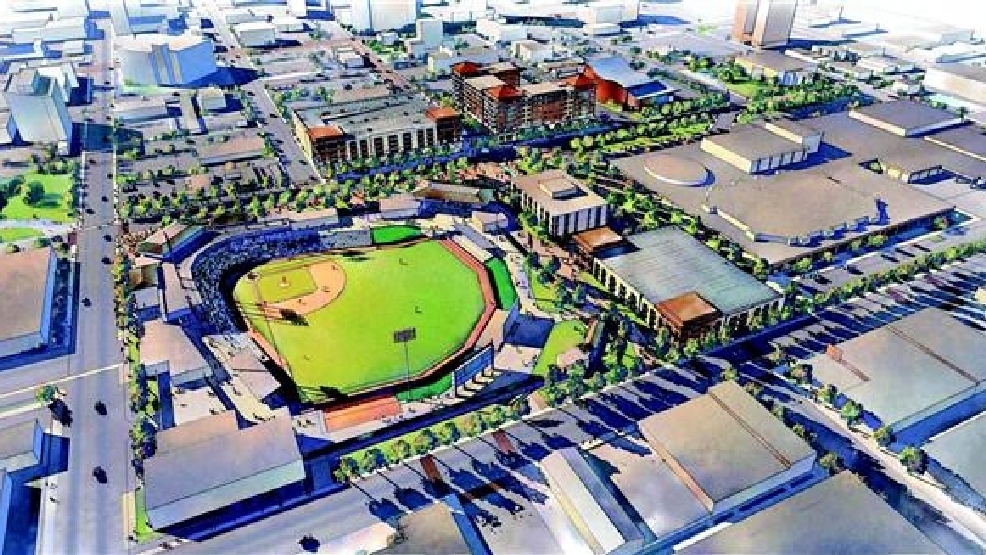
The structure would cost $32 million to build. It’s intended to include a ballpark and would be used for a variety of activities designed to attract people to the downtown district.

Cox writes: “As a landlocked city, we are what we build. People come to Amarillo not for the mountains, lakes or coastline but because of the public facilities, entertainment and other features that we and our predecessors have built.”

He notes as well that city government relies heavily on sales tax revenue to fund the services it provides residents — and visitors. The MPEV, he reckons, will generate more sales tax revenue through the goods and services purchased by visitors who come to Amarillo.

He writes: “So anything that generates sales tax, especially paid by visitors from other communities, is OK by me. Most local retailers will tell you that anywhere from 30 percent to 50 percent of their business comes from out of town — ditto for sales tax. It doesn’t matter whether that money comes from Dallas or Dumas, it spends the same.”

Allow me, then, to add that those who come here from distances too far to travel in just a single day would generate additional revenue from the hotel occupancy tax that would then would be used to maintain the MPEV.

Planners have pledged until they’ve run out of breath that the MPEV, the downtown convention hotel (where officials are about to break ground) and the proposed parking garage will not result in an increase in property taxes.

There’s been a bit of trickery involved with the ballot language. The vote will decide whether to build an MPEV that includes a ballpark. If voters say “yes,” then the city moves forward; if they say “no,” then the project stops.

As Cox notes: “There is no Plan B. A negative vote sends our city back to the drawing board.”

More from Cox: “Will a baseball stadium in downtown Amarillo be a panacea? Of course not. But it is a major piece of a larger puzzle.”

I join my friend Roger Cox in endorsing this proposal.


MPEV ballot language becomes an issue

ballpark

Amarillo voters are going to decide a non-binding ballot measure that says the following:

“Should the multipurpose event venue (MPEV) to be constructed in downtown Amarillo include a baseball stadium at the approximate cost of $32 million? A ‘for’ vote would be in favor of including a baseball stadium in the project; a ‘no’ vote would be against having a baseball stadium as part of the MPEV.”

The ballot measure language, as I read it, appears to be quite restrictive.

But if you’ll allow me this tiny bit of nitpicking, the ballot measure’s language also is a bit imprecise. The opposite of a “for” vote would be an “against” vote, not a “no” vote.

But I digress …

The ballpark element has become the focal point of the discussion on the MPEV. Indeed, the MPEV proposal exists because of the ballpark.

MPEV ballot measure

So, if we are to believe that a vote against the MPEV doesn’t doom the project, we are being told that the MPEV has a secret component that someone is going to unveil if the measure goes down in the Nov. 3 election.

I happen to support the MPEV and I will vote “for” the project when Election Day rolls around. I believe in the ballpark aspect of the MPEV and I also believe that the venue can be used for a wide variety of events — not just baseball games.

The language used in the ballot measure quite clearly appears to the work of those on the City Council — comprising a majority of the governing body — who oppose the MPEV. They dislike the ballpark; they oppose the manner in which the project was developed; they want the city to go in another direction than the one it has taken in its effort to rebuild, revive and renew its downtown district.

That’s their call.

The ballot measure as it is written, though, must be seen for what it is: an effort to torpedo a project cobbled together over a period of several years by elected and appointed city officials and residents of this community.

If there is a Plan B, then let’s see it … now.


Downtown hotel gets green light

amarillo hotel

They’re busting up some pavement in downtown Amarillo.

Construction has begun on Xcel Energy’s new office complex. They’ve vacated the Coca-Cola distribution center across the street from City Hall.

And tonight, the Amarillo City Council gave its approval — with a little tinkering with some of the terms — to the construction of a downtown convention hotel.

Is it possible that downtown’s redevelopment inertia is too strong to resist?

I do hope so.

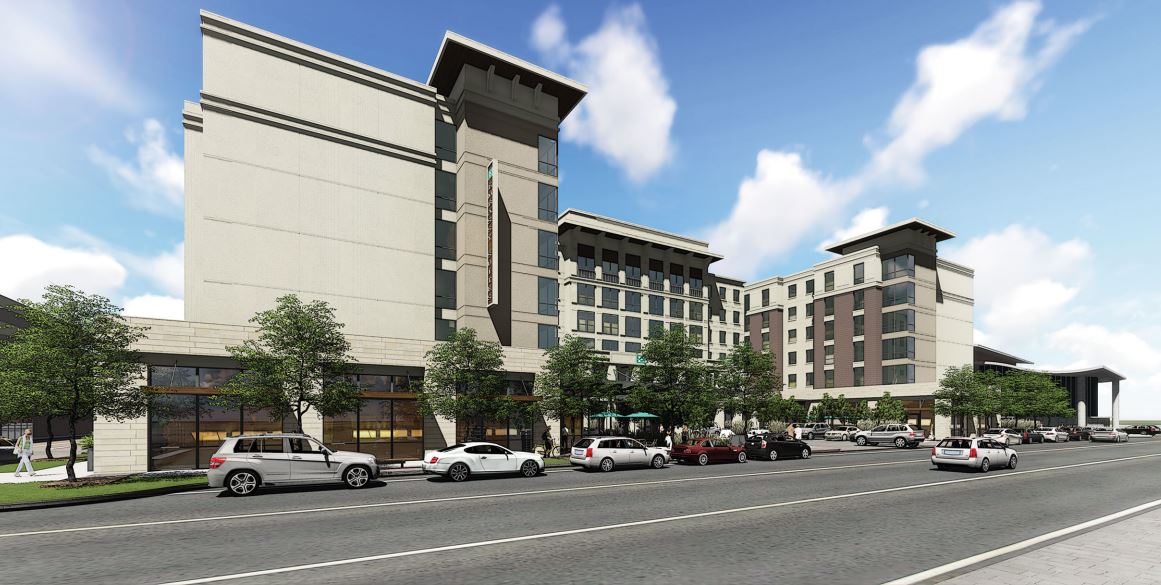
Embassy Suites hopes to open for business in 2017. Building planners are going to break ground in a couple of weeks downtown on a $45 million hotel complex. A local bank is providing financing for about $28 million of it. Hotel developer Chuck Patel has discussed getting other investors to cover the rest of it.

Oh, and that parking garage is going to be built as well.

Are the flowers blooming all over the downtown revival project? Not just yet. We still have this election coming up Nov. 3 that will decide the fate of the multipurpose event venue.

Some folks dislike the idea of a ballpark being included in this package. Others have argued that the ballpark will be more than just a place where a team will play baseball. Opponents say there isn’t enough of a market to make suitable use of a $32 million outdoor venue. Proponents argue that creative marketing and promotion can attract more than enough activity to the site.

I happen to be on board with what has been proposed. I plan to vote for the MPEV on Election Day.

However, I am heartened to see the progress that is continuing to push this downtown effort forward.

The Amarillo City Council tonight made the correct decision.

Spread the love around the city

demerson

Amarillo City Councilman Elisha Demerson may be about to initiate an important conversation about the future of the city he helps govern.

Demerson says he favors efforts to revive downtown Amarillo, but thinks the city should look beyond the central business district to revive blighted neighborhoods.

He toured one of them this week: San Jacinto.

Demerson speaks out

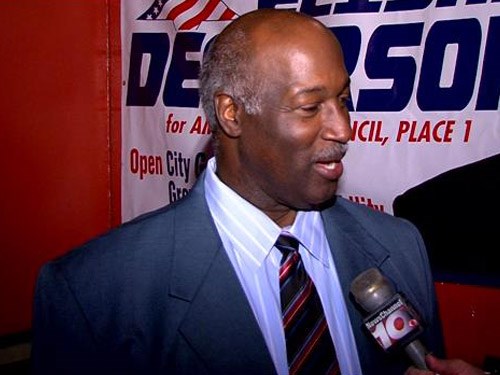
He told NewsChannel 10: “I’m concerned about these older established communities that are being lost to blight and to disarray. San Jacinto use to be a vibrant community at one time and now when we look around it’s no longer a vibrant community.”

OK, so what does the city do about it? Does it invest public money? Does it redirect money from other neighborhoods? Is there enough money to go around to take care of all the city’s needs?

The city’s public investment in downtown involves public infrastructure. The downtown hotel is being funded by the developer; the proposed multipurpose event venue will receive hotel-motel tax revenue.

A downtown revival, if and when it arrives, is a lead-pipe cinch to provide more money for the city to invest in neighborhoods, such as San Jacinto, which well could be a noble long-term goal for the city to pursue.

One more point is worth noting: Councilman Demerson is using his office — to which he was elected on citywide vote — as a bully pulpit to call attention to neighborhoods that need it.