Tag Archives: SCOTUS

Next SCOTUS vacancy could cause a major eruption

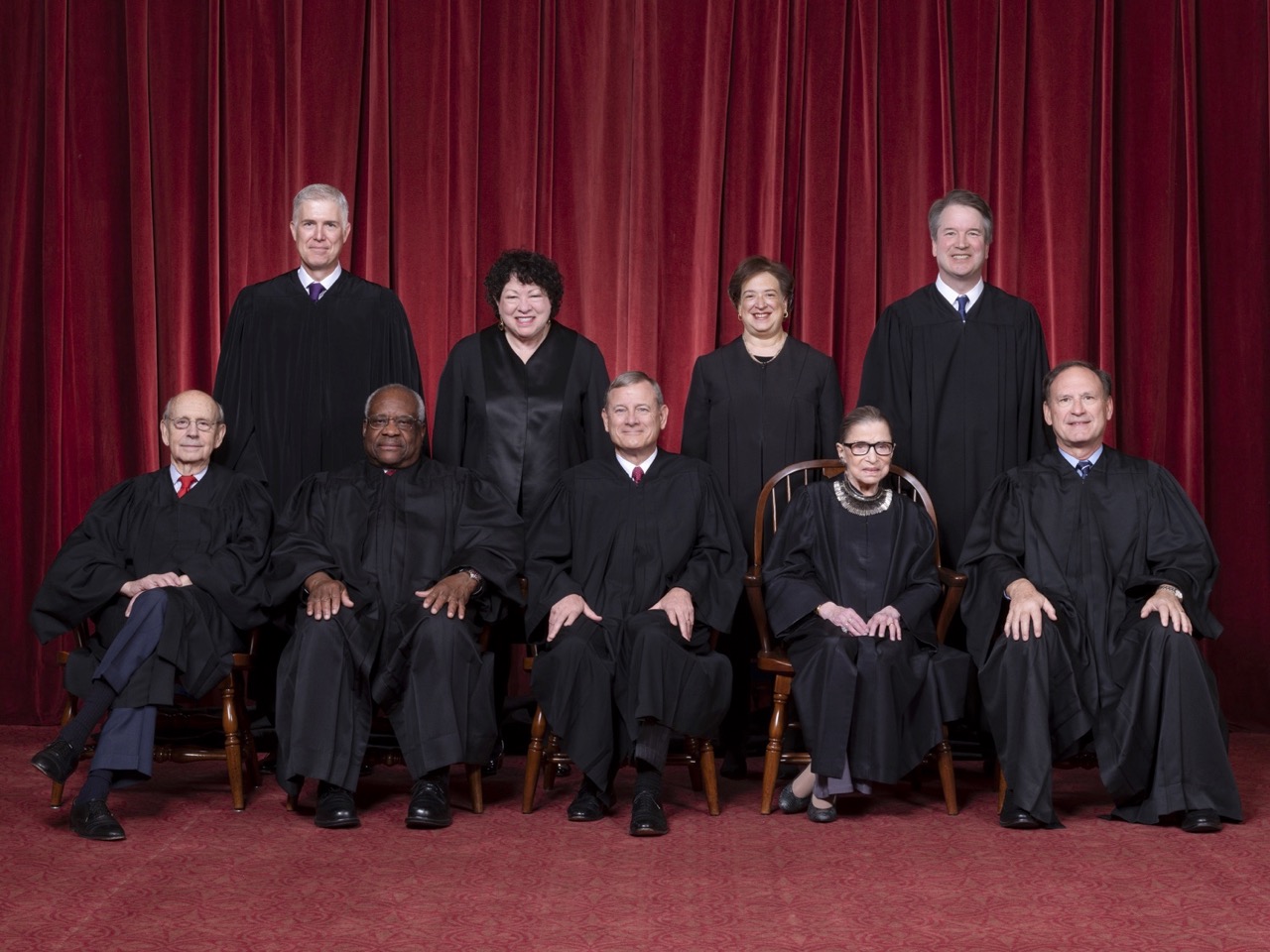
Photograph by Fred Schilling, Supreme Court Curator’s Office.

I will not pussyfoot around this issue.

If Donald J. Trump is handed another opportunity to nominate someone to the U.S. Supreme Court, particularly if the nominee would succeed one of the court’s liberal justices, all the battles we saw during his two prior confirmation efforts will pale in comparison.

Justice Neil Gorsuch was Trump’s first appointment. He succeeded a conservative icon on the court, the late Antonin Scalia. Justice Brett Kavanaugh was Trump pick No. 2. Kavanaugh succeeded Anthony Kennedy, who retired. Scalia leaned hard right; Kennedy was also a conservative, but voted on occasion with the liberal wing of the court.

The current court comprises a 5-4 conservative majority, which appears to more solidly conservative with Justice Kavanaugh sitting in place of Justice Kennedy.

The latest justice to come into public view has been Ruth Bader Ginsburg, who has been battling health issues lately. She has suffered from cancer; she has fallen at home; she recently was hospitalized for chills and fever. Justice Ginsburg is back home and will be back at work at the court soon.

Ginsburg vows to stay on the job. I pray that she is able to outlast the presidency of Donald Trump.

If not, though, then we had best settle in for the proverbially bloodiest political battle we will have witnessed since, oh, 1991 when President Bush nominated archconservative Clarence Thomas to replace ultraliberal Thurgood Marshall on the highest court in America.

You can rest assured that Donald Trump will do nothing to enrage the hard-right base that clings to its support of the president. He will select someone who adheres to that far-right philosophy, thus cementing the court’s conservative majority possibly for generations.

The framers established a lifetime appointment process for the federal judiciary ostensibly to remove politics from the judicial branch of government. Sadly, that notion has not held up over the centuries since the founding of our republic.

If the current president is handed another opportunity to select a justice to the Supreme Court, you will see what I mean.

I guarantee it.
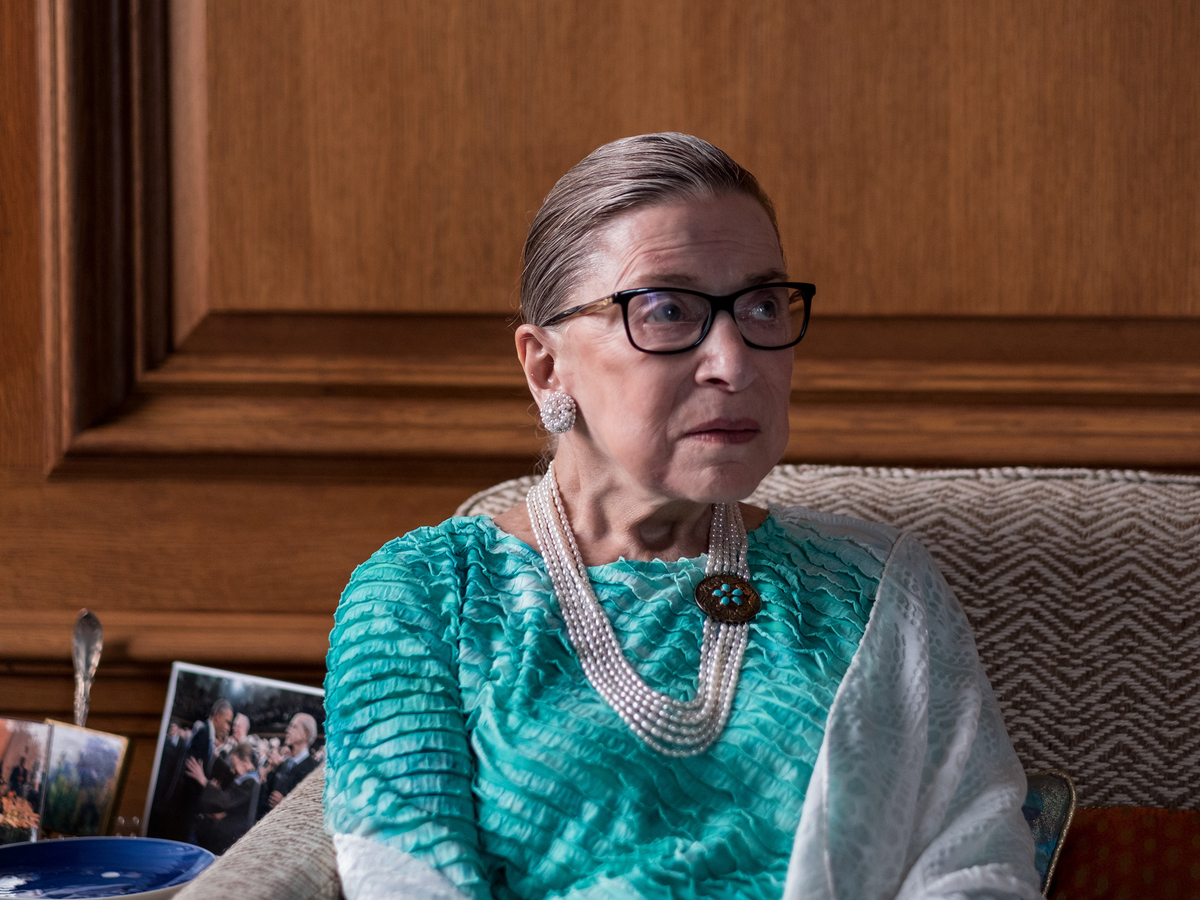
Principled stands occasionally rub us the wrong way

If one is going to argue a point on principle, then fairness dictates that the principle must stand no matter whose policy is the subject of the discussion of the moment.

With that, I have to declare that my vigorous opposition to Senate Majority Leader Mitch McConnell’s decision to play politics with President Obama’s authority to appoint a Supreme Court justice compels me to make a declaration that is going to anger some readers of this blog.

It is that Donald Trump deserves to be treated fairly if the time comes for him to make a SCOTUS nomination during the heat of a presidential campaign.

I heard the news about Justice Ruth Bader Ginsburg’s hospitalization over a fever and thought what many of you thought as well: What if she can no longer serve on the nation’s highest court? I hate harboring macabre thoughts, but realism requires us to recognize that the justice is 86 years of age and has been battling cancer.

OK, that said, she also is a noted progressive jurist appointed to the high court in 1993 by President Clinton. She is the second-most senior tenured justice on the court, behind archconservative Justice Clarence Thomas, appointed in 1991 by President George H.W. Bush.

The politics gets stickier than pine bar on a baseball bat.

Conservative icon Antonin Scalia died suddenly in early 2016. President Obama wanted to nominate Merrick Garland to succeed him. Garland is known as a judicial moderate who tilts a bit to the left. McConnell intervened. He said under no circumstances should Obama, a lame duck, should be allowed to fill that vacancy. He blocked Obama’s choice in the Senate, which has confirmation power.

Many of us went ballistic. I was one of millions of Americans who were enraged at McConnell’s power play. How dare he interfere with the president’s constitutionally granted authority? He wanted to wait for the 2016 election to play out before handing the matter over to the next president. It was a raw partisan act and it was wrong.

I argued the point on the principle of presidential authority taking precedence.

So, here we are today.

Another president is in office. Donald Trump has selected two high court justices already. If he gets a chance to select a third one in the event that Justice Ginsburg retires or … well, you know … then he gets to nominate a justice to succeed this progressive icon.

We all know what the reaction will be. It will mirror the reaction that erupted in progressive circles when Scalia died and Garland got the nomination. Only this time conservatives will argue that the president deserves to have his nominee seated; progressives will seek to block it, perhaps in the manner that McConnell did.

It would be as wrong to block Trump as it was to block Obama.

The more reasonable — and principled — option would be for Democrats to regain control of the Senate after the 2020 election. Then the Senate could exercise its appointment power when a conservative justice’s spot on the court is vacated. Voters also can kick Trump out of office, presuming he survives the pending impeachment and Senate trial, and elect someone who will forgo the ultra-right-wing agenda favored by the incumbent.

Given my own often-stated bias, I take no pleasure in making this declaration. I feel I must … in the name of principle.

In the meantime, I intend to pray real hard for Justice Ginsburg’s good health.

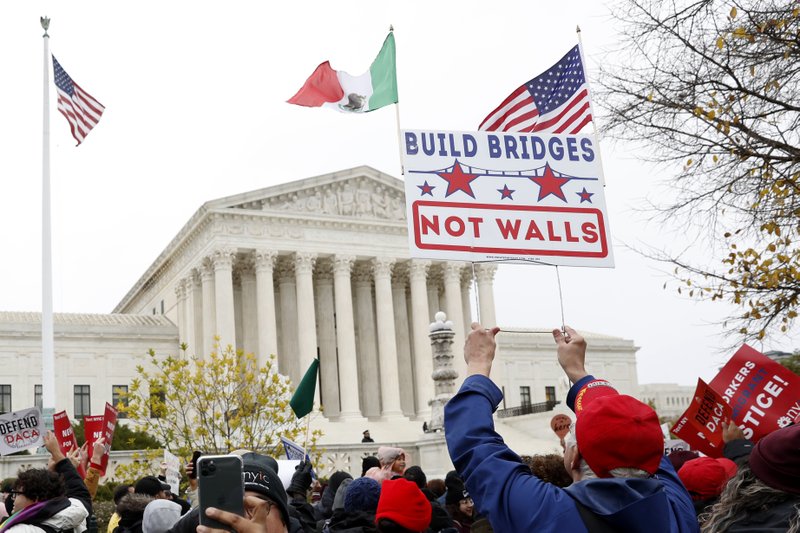
DACA appears to be on the ropes at SCOTUS

The word out of Washington, D.C. is out: The U.S. Supreme Court’s conservative majority appears to be readying a decision that will enable the deportation of U.S. residents who were brought here illegally as children by their parents.

Donald Trump sought to have them sent back to their country of origin, even though these individuals know only life in the United States. They are the Deferred Action on Childhood Arrivals recipients.

DACA might be on the ropes.

The court will issue its decision in mid-2020, at the height of the presidential election. One should be wary of trying to predict what the court will rule.

The president has seated two new members on the court, giving him a narrow but solid conservative majority. I realize that elections have consequences and we well might learn next year just how dramatic those consequences can get.

President Obama issued an executive order that granted temporary amnesty from deportation for DACA recipients. Trump took office and then rescinded that order. Critics, such as yours truly, have called the rescission a heartless act. DACA recipients by and large have grown up as de facto Americans. They aren’t citizens, but they are full-fledged residents of this country. Many of them have become successful in many endeavors.

What would happen to them if they are sent to countries they do not know?

Well, the highest court in America will deliver its decision in due course. The hearing today, according to those who heard it, suggests the court is leaning heavily toward backing Trump on DACA.

This well could be a sad moment for many hundreds of thousands of U.S. residents.

Federal bench: to date the silent issue of 2020 campaign

Let’s see, we’ve had two rounds of Democratic Party presidential primary debates, with 20 candidates beating the hell out of each other over a number of issues and, yes, drawing some blood from the Republican president of the United States, Donald John Trump.

I’m waiting, though, for discussion about what the Democrats plan to do about one of the serious consequences of the 2020 election: appointing judges to federal benches all over the nation.

This is where we learn about how “elections have consequences.”

Barely halfway through the president’s term in office, he has been able to seat two new justices to the nation’s highest court. Trump has solidified — so far — the court’s conservative majority. He replaced one conservative icon, the late Justice Antonin Scalia, with another reliable conservative jurist, Neil Gorsuch; he put another conservative on the court, Brett Kavanaugh, to succeed moderate/swing justice Anthony Kennedy, who retired.

He’s already sprinkled his brand of judicial conservatism — however he defines it — on federal courts across the nation.

Count me as a voter who does not want to see the federal bench populated by right-wing zealots shrouded in black robes. Trump has promised to carry through with that threat/promise, in so many words.

I am waiting for Democrats to speak openly about the judicial appointment issue as they talk to and about each other during the primary campaign. I want some assurance that they will look for men and women of impeccable integrity, who have no personal “history” to which they must answer and who understand fully how to interpret the U.S. Constitution without putting a rigid right-wing spin on what they think the framers intended when they wrote the document more than two centuries ago.

States that have long-term governors understand the importance of these appointments. Rick Perry served as Texas governor longer than anyone else in state history and he appointed more judges to state courts than anyone else as well. Gov. Perry’s legacy will stand with those appointments, for better or worse, even as they stand for election and re-election in the years to come.

For the federal bench, though, the stakes are even more profound. These judges are appointed to serve for as long as they live, if they choose to do so. Federal judges are the living, breathing embodiment of how consequential presidential elections can become.

Let’s be sure to air these issues out with clarity and conviction.

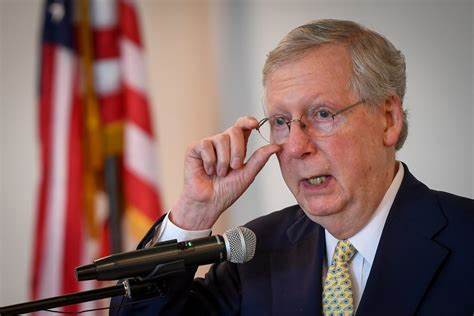
Mitch McConnell: Partisan hack demonstrates his hypocrisy

There well might be no more demonstrably partisan political hack in the U.S. Senate than the man who runs the place … and who has the gall to accuse politicians on the other side of playing politics.

Senate Majority Leader Mitch McConnell has blocked a bill that would seek to make our electoral system more secure and to prevent foreign hostile powers from hacking into our system.

Why did he do that? Because he says Senate Democrats have made it too “partisan.” They are “playing politics” with the legislation.

Wow, man!

Hmm. Let’s see how this works. Requiring paper ballots to back up the electronic ballots is “partisan”? Mandating that political candidates report to the FBI any suspected foreign-power interference is “partisan”?

Meanwhile, Donald Trump has stood with the Russians who did attack our election in 2016 and are likely to do so again in 2020. Trump’s partner in the Senate now is standing with him, declaring that Democrats are the partisan hacks.

Let’s flash back for a moment to 2016.

U.S. Supreme Court Justice Antonin Scalia died while vacationing in Texas. The conservative icon’s body barely had gotten cold before McConnell declared that President Obama — serving his final full year in office — would not be allowed to seat a justice to replace the conservative icon, Scalia.

Obama ended up nominating Merrick Garland, an eminently qualified jurist. Garland didn’t get a hearing. McConnell was at his obstructionist worst in blocking Garland’s nomination and in denying President Obama the opportunity to fulfill his constitutional responsibility.

So now the majority leader calls Democrats the partisans? He says Democrats are playing politics with an electoral security bill?

The man’s hypocrisy takes my breath away.

Waiting for the ‘perfect headline’ to present itself

I won’t belabor this topic, but it deserves a quick-hit mention anyway.

I am waiting for the chance to use several acronyms in the same headline. I am don’t yet know the circumstance will present itself, but I’m going to look for it.

They are: POTUS, VPOTUS, SCOTUS and FLOTUS, referencing the president, vice president, U.S. Supreme Court and first lady.

I use them individually whenever I write about them on High Plains Blogger. I’ve even written a headline a few times that contains two of them. Three is a stretch. Four seems impossible.

But bear with me. I’m on the hunt. Patience is the key.

SCOTUS says POTUS can use defense funds to build The Wall

This judicial ruling might raise a hackle or two among some congressional Republicans. I now will explain.

The U.S. Supreme Court has ruled 5 to 4 that it’s all right to spend Defense Department funds to build The Wall along our southern border, giving Donald Trump a victory in his ongoing fight with those who oppose The Wall.

Why the GOP objection? Get a load of this: When he was chairman of the House Armed Services Committee, Republican Mac Thornberry — my former congressman — criticized openly any effort to redirect appropriated Defense money to build The Wall. Thornberry said wall construction is not part of the military’s mission. He opposed any effort to turn our troops into construction workers.

A lower court had said any such move would violate federal law.

I happen to agree with the lower court.

Congress appropriates Defense Department funds to pay for military missions. Trump has said the immigration “crisis” on our southern border is a national security matter. Thus, he is willing to divert those funds to build The Wall he believes is necessary to curb illegal immigration.

I am wondering how Thornberry, who represents the 13th Congressional District of Texas, is going to respond to the high court’s ruling that pokes the former committee chairman in the eye.

Chief Justice Roberts merely shows his independence

Political conservatives are angry with one of their own.

U.S. Supreme Court Chief Justice John Roberts has turned on them, they say, because he is siding with liberals on the court … on occasion.

Interesting.

The chief justice, to my way of thinking, merely is showing what happens when these men and women get lifetime appointments to the federal bench. They toss aside their partisan labels and start deciding cases on matters relating to the law.

That’s not good enough for many conservatives who believe Roberts should remain the conservative they knew he was when President Bush appointed him to the high court in 2005.

Roberts this week joined the court liberals by turning aside the Trump administration’s insistence on including a “citizenship question” when taking the 2020 census.

The previous day, according to Politico: “Roberts was the sole GOP appointee to side with the liberal wing in a case many legal conservatives were hoping would deal a major blow to the much loathed administrative state by overturning decades of precedent allowing federal agencies wide leeway to interpret their own regulations.”

Roberts earlier was the swing vote on the court that helped save the Affordable Care Act, which the right wing in Congress — and the president — detest merely because it was proposed by a Democratic president and enacted by congressional Democrats.. He also sided with the court progressives in declaring gay marriage to be legal in all 50 states.

Conservatives are angry. Some activists want him impeached. Why? Because he isn’t true to their cause.

This is utter nonsense! The founders established an ostensibly independent judiciary understanding that judges who take the federal bench well could upset the proverbial “conventional wisdom.”

Roberts has not flown off the rails in the 14 years since he joined the Supreme Court. So, he sides with liberals from time to time. The chief justice is entitled under the provisions set forth in the U.S. Constitution to interpret the law and to rule according to his understanding of what the law tells him.

Will there be rulings from Roberts that disappoint me? Sure. Am I going to yammer for Chief Justice Roberts’ impeachment?

No. Never.

Get a grip, righties.

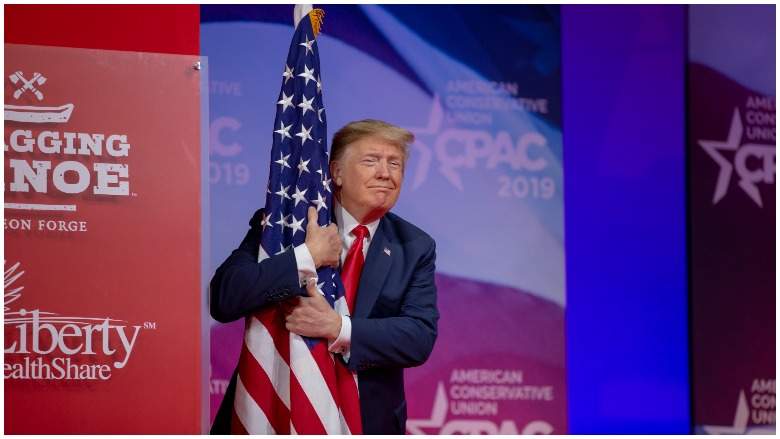
Flag-burning ban … it’s back!

I am both not surprised but still amazed that this issue keeps coming back. Donald J. “Panderer in Chief” Trump says he is “all in” on a proposal to amend the U.S. Constitution to prohibit flag-burning as a form of political protest.

Oh, boy. Here we go. Again!

Trump put a Twitter message out this weekend that said he supports a “strong BAN on burning our American flag. A no brainer.”

He is backing a proposed amendment pushed by Republican U.S. Sens. Steve Daines of Montana and Kevin Cramer of North Dakota.

Where can I possibly begin on this matter? Let me try this gambit.

The U.S. Supreme Court has ruled repeatedly already that flag-burning to make a political statement is protected by the First Amendment guarantee of free political speech. Even high court judicial conservatives, such as the late Justice Antonin Scalia, have upheld the principle of keeping the First Amendment unfettered. According to the Washington Post, Scalia once said he’d prefer to jail “every sandal-wearing, scruffy-bearded weirdo who burns the American flag. But I am not king.” He has joined SCOTUS majorities in upholding the action as a form of political speech.

I am one who cherishes what the flag symbolizes, which is the right to make an a** of oneself, which is what flag-burning does to anyone who burns a flag as a form of criticism of government policy. I have maintained for as long as I can remember that such an act does not win converts to a point of view. It only enrages Americans who — such as myself — who have gone to war under that flag and who love their country … even with its warts.

Banning the act of flag-burning doesn’t do a damn thing but please those who somehow equate a piece of cloth with the doctrine it represents. The flag is merely a symbol of something greater, which is individual liberty — which includes the rights of citizens to act stupidly.

But the president of the United States doesn’t see it that way. He chooses to hug the flag to make some kind of goofy showbiz point.

‘Litmus test’ must not be a four-letter word

I have long wondered why the term “litmus test” has become a sort of plague to politicians running for offices that hold the power of appointment.

The U.S. Supreme Court, for instance, is going to become a key issue in the 2020 presidential campaign. Namely, the issue will revolve a potential appointment of the next justice on the nine-member court.

The expected Republican presidential nominee, Donald Trump, will insist he would appoint justices with a record of favoring pro-life litigants who would come before his or her court. Indeed, he’s already got two judicial appointments on the SCOTUS and they certainly seem to fit the bill prescribed by what Trump has said.

The large field of Democratic Party candidates will argue to a person that they want judicial candidates who take a more expansive view of a woman’s right to terminate a pregnancy.

But no one says they will apply a “litmus test” to determine who they intend to nominate the highest court in the nation.

They dance all over and around the issue. Litmus tests exist on all sorts of issues. They involve capital punishment, sentencing guidelines, drug policy, firearm ownership and, yes, abortion.

We know the types of individuals that presidents would nominate. They telegraph that punch before they deliver it. However, we refuse to hold them accountable on whether they are applying litmus tests on the individuals they are considering for these appointments.

U.S. senators who have the right to confirm or deny these appointments often make their decisions on single issues. Yet they won’t ever acknowledge they have applied a litmus test to the nominee, indicating whether they pass or fail the exam.

This is a circuitous way of saying, I suppose, that we apply litmus tests at every turn.

Why not, then, just call them what we know them to be?