Tag Archives: Vietnam War

GOP set to self-inflict a mortal wound?

The buzz around political circles is that Republican Party “insurgents” are set to declare civil war against the party “establishment” in their effort to elect Roy Moore of Alabama to the U.S. Senate.

Good luck with that one, folks.

Moore defeated Sen. Luther Strange this week in a GOP primary runoff. Moore now will face Doug Jones in a general election later this year to fill the seat vacated when Jeff Sessions left to become attorney general.

Civil war? Is it really going to happen?

Moore is no friend of the GOP higher-ups. He savaged Senate Majority Leader Mitch McConnell while defeating Strange, who by the way did the same thing. Both men sidled up to Donald Trump, who endorsed Strange.

Let the fight begin

Moore is a renegade, to be sure. He thinks gay people should be made criminals. He was twice removed as Alabama Supreme Court chief justice because (a) he installed and refused to remove a Ten Commandments monument on public property and (b) refused to honor a U.S. Supreme Court ruling that declared that gay marriage is legal in this country.

Now he’s gotten the support of former Trump senior strategist Steve Bannon, who’s back in charge of Breitbart News. Bannon is sounding the bugle to launch the civil war against that GOP establishment.

Bannon is old enough to remember the last time a major political party — the Democrats — engaged in such an internal conflict. It erupted in 1968 and continued through the 1972 presidential election. The Vietnam War divided Democrats. It was Hawks vs. Doves. The fight tore at the nation’s soul, as did the war itself.

Democrats lost the White House in 1968 and then got obliterated in 1972. The major recuperative factor that enabled the Democrats to regain the White House occurred when the Watergate break-in and subsequent presidential cover-up doomed President Nixon. They won the 1976 election, then got clobbered in 1980 and 1984. Oh, and let’s not forget about the primary battle that erupted in 1980 when Sen. Ted Kennedy challenged President Carter.

Civil war … again?

Bring it!

‘Vietnam War’ finally brings a lump to the throat

Ken Burns and Lynn Novick did it. Finally.

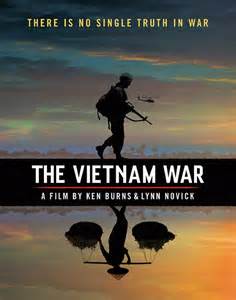
On the second to last night of their epic PBS documentary film, “The Vietnam War,” they brought a lump to my throat. They made me swallow hard. As in swallow real hard.

The moment struck me as I listened to a former Vietnam War prisoner tell of his release from captivity by the Viet Cong and the North Vietnamese.

His name is Hal Kushner. He was an Army physician who was taken captive by the Viet Cong in South Vietnam. He then was taken to Hanoi.

Kushner would be released in March 1973, two months after President Nixon announced the signing of the ceasefire that ended our combat involvement in the Vietnam War.

Kushner told of being greeted at Clark Air Force Base, The Philippines by an Air Force officer who said, “Welcome home, doctor.”

Kushner’s voice choked up as he remembered looking at the jet transport that would fly him and his fellow former POWs across the Pacific Ocean. He saw the letters “USAF” painted on the plane. “I saw this big C-141, this beautiful white bird, with the American flag emblazoned on the tail,” he said. They were going home.

The sight of those men hugging each other, toasting each other and kissing the flight nurses aboard the aircraft made my eyes well up as I watched this landmark series march toward its conclusion.

“The Vietnam War” has filled me with many emotions. Some nostalgia over my own meager involvement in that war; some anger at the way our returning warriors were treated when they came “home”; more anger at the sight of Jane Fonda yukking it up with North Vietnamese soldiers while sitting in an anti-aircraft weapon they used to shoot down our aviators; revulsion at the sight of all the carnage that occurred throughout the war.

The sight of those POWs coming home? That evoked another feeling altogether. I’m prone to sappy reactions at times, even when I watch actors portraying human emotion. I tend to forget that they’re pretending.

Not this time. What we saw was real. Man, it was good.

More bombs did not produce ‘victory’ in Vietnam

“The Vietnam War” is coming to a close this week. I refer, of course, to the landmark public television series, not the actual war.

What are the takeaways from this epic production directed by Ken Burns and Lynn Novick and broadcast on PBS? I have so many of them, but I think I’ll focus briefly here on just one of them.

It is that the Vietnam War required us to redefine victory.

We fought the communists in Vietnam for more than a decade. We killed many more of the enemy than we lost so very tragically. We emerged victorious from many more battlefield encounters than the Viet Cong or the North Vietnamese. As we have learned in the Burns-Novick epic, U.S. commanding Gen. William Westmoreland was obsessed with “body count”; he insisted that the media report that the enemy suffered far worse than our side did.

Merrill McPeak, a fighter pilot during the Vietnam War who later became Air Force chief of staff, noted correctly in the documentary that the United States dropped more ordnance on the enemy than we did in all the combat theaters of World War II. Think of that for a moment. American air power dropped more explosive tonnage on the Vietnam communists than we did against the Nazis, the Italians and the Japanese.

What we didn’t do and the reason we “lost” the war was because we lost our political will. The Vietnamese were fighting on their turf, defending their homeland, battling an enemy they considered to be “invaders.” They had more to lose — and to gain — than we ever did. Thus, it was their fight to win.

Are there lessons to carry forward as we continue to fight an even more elusive enemy, those terrorist organizations that have declared “death to America!”? Yes, certainly.

One profound lesson should be for U.S. politicians — or one in particular — to cease implying that defeating an enemy is “easy.”

We cannot just keep dropping bombs and sending young Americans into cities, killing enemy fighters and then expect the enemy simply to give up. We tried that in Vietnam. It didn’t work out well for us.

Ken Burns and Lynn Novick have provided a masterful piece of documentary television. Just as Vietnam was the first war to be fought “in our living rooms,” my hope is that the educational benefit that’s being delivered to us via PBS will assuage some of the pain we felt as the fighting raged.

***

Politico has provided a fascinating look at a conversation involving President Lyndon Johnson and U.S. Sen. Richard Russell. The Burns-Novick documentary doesn’t report on it.

Take a look at the story here.

Trump disrespects McCain … one more time

This doesn’t surprise me. Nothing that comes out of Donald Trump’s mouth should surprise anyone, for that matter.

I’m still baffled that the president of the United States can utter the kind of cheap criticism at an American hero who’s in the midst of a life-and-death battle with brain cancer.

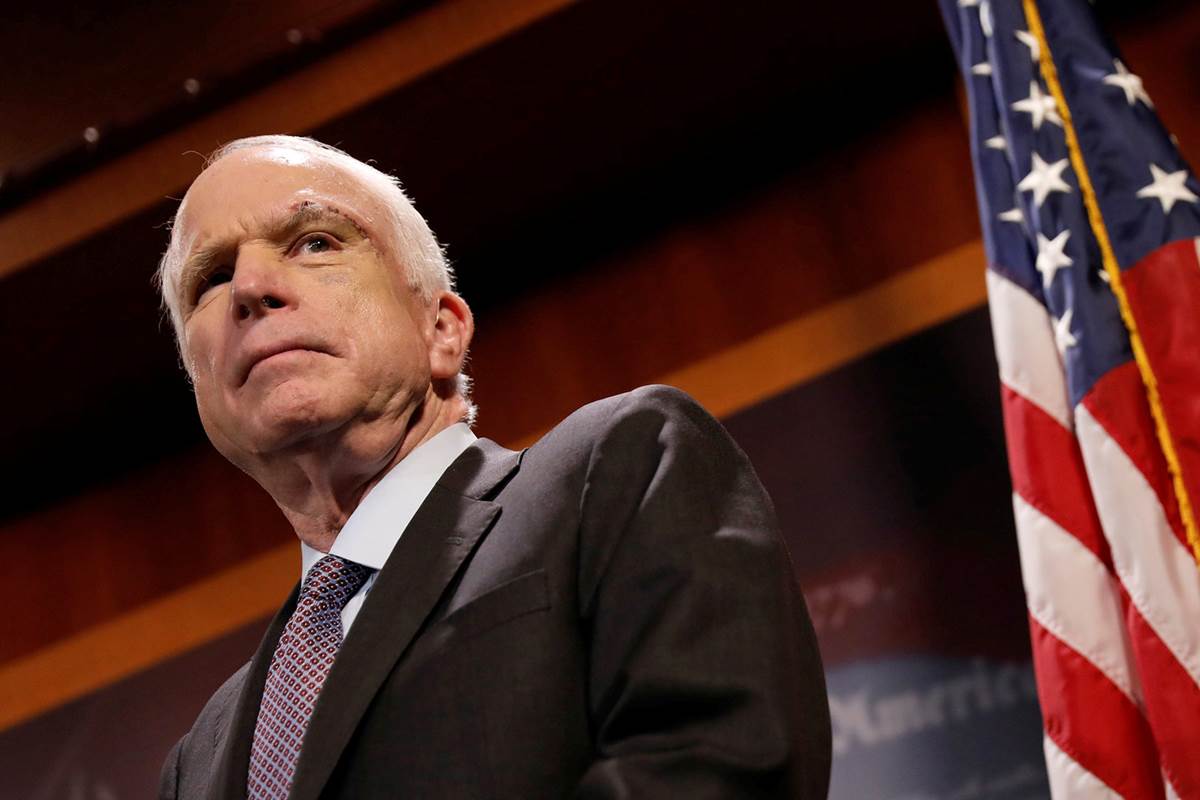
U.S. Sen. John McCain announced this week he would oppose a Senate Republican plan to replace the Affordable Care Act. Trump favored the GOP plan. It’s the second time in just three months that Sen. McCain has scuttled a GOP effort to repeal and replace the ACA.

So … what does the president declare via Twitter? He calls the Republican McCain a flip-flopper, suggesting that he went back on his pledge to repeal and replace “Obamacare.”

Did the president make any public mention of McCain’s battle with brain cancer? Did he salute McCain for the service he has given the country — as a U.S. Navy aviator who was held as a prisoner of war in Vietnam, suffering unspeakable pain and torture at the hands of his captors and then as a member of Congress for three decades?

Ohhh, no! The president chose to stay on the low road. He chose to lampoon Sen. McCain’s vote just a day after the senator revealed to the nation that he has received a “very poor prognosis” from his doctors.

This kind of cheap, petulant politicking is what I suppose we should expect from the president of the United States. That doesn’t mean we should accept it. I damn sure don’t.

Shameful.

Hey, Mr. POTUS, McCain just doesn’t get scared

I have this hunch that John McCain isn’t one bit intimidated by the commander in chief, the head of state of the greatest nation on Earth.

The Arizona Republican senator has just announced his opposition to the latest Senate GOP effort to repeal the Affordable Care Act. He has enraged Donald Trump. The president has responded with his usual rant about McCain being disloyal to the Republican Party and to the president.

I’m going to give Sen. McCain all the respect in the world.

He said he cannot “in good conscience” support the ACA repeal effort. His stated opposition is steeped mostly in the bum’s rush process that has pushed this legislation forward. The GOP did it once again with no help from Democrats. McCain has called for a return to “regular order.” Senate Republicans ignored one of their own.

But you see, McCain is the midst of quite an important battle that has not a damn thing to do with politics. He is fighting for his life. McCain has been diagnosed with an aggressive form of brain cancer. He is undergoing some therapy to battle the disease. But he’s back at work. He is standing up for himself, for his constituents in Arizona and against the president.

You know, of course, about McCain’s other big struggle that has nothing to do with politics. He was a Navy pilot in 1967 when he got shot down over Hanoi, North Vietnam. He was taken prisoner. He was beaten incessantly and suffered many other forms of physical and emotional torture for more than five years.

Does anyone in this country really believe that this war hero is going to be intimidated by a politician? Moreover, does anyone further believe that this man — who’s currently engaged in the fight of his life — is going to be cowed by threats over a decision he has made regarding a mere public policy initiative?

I have not always been a fan of Sen. McCain. I did not vote for him in 2008 when he ran for president against Barack H. Obama. I haven’t always liked the tone he has taken in criticizing his former presidential campaign foe.

However, I’ve never lost respect for the life he has lived and the service he has given to this country. Nor have I ever stopped respecting the extreme hardship he has endured while serving the country he loves so much.

He has stood up to the head of his political party, the president of the United States. Sen. McCain is setting an example of leadership.

Count me now as one of this man’s biggest fans.

Now the ‘Vietnam’ series is getting serious

PBS is taking a couple of days off leading us down the trail of tragedy that was the Vietnam War.

Episode Four aired tonight and I was gripped by a brief segment contained within it. I’ll need a couple of days to catch my breath before the Ken Burns-Lynn Novick documentary special returns Sunday night.

“The Vietnam War” is walking us through the war year by year. Tonight it took us to the end of 1967. In January of the following year, the Tet Offensive erupted — and it changed everything.

Tonight, though, we saw a brief segment of a young Navy aviator being questioned by his captors in Hanoi. The aviator was lying on a bed, telling the world that he loved his wife. He was in great pain, having been injured when he parachuted from his stricken jet fighter into a Hanoi lake.

John McCain III would spend more than five years as a prisoner of war. He would be tortured, beaten to within an inch of his life. He would be put in solitary confinement. He would be offered an early release, but would refuse it because he didn’t want to give the enemy a propaganda tool, given that his father, Adm. John McCain Jr., was a senior Navy officer. Nor did he want to dishonor himself in the presence of his POW brethren. He would be tortured anew for his refusal to be released early.

And, yes … I thought of how the current president of the United States disparaged McCain’s heroic Vietnam War service while he was running for the presidency. Donald John Trump Sr. didn’t serve in the military during that terrible conflict, yet he blurted out that McCain was a “hero only because he was captured; I like people who aren’t captured, OK?”

I am reminded of a brief segment at the 2008 Al Smith Memorial Dinner featured Sens. McCain and Barack Obama, who were in the middle of a tough campaign for the presidency. The event is done in good fun and it raises money for the Roman Catholic Diocese in New York in memory of the late New York Gov. Al Smith.

Near the end of his hilarious comic riff, Sen. Obama took a moment to tell the audience that “few Americans have served their country with the distinction and honor” that John McCain has demonstrated.

The PBS documentary and the segment with Sen. McCain lying on that Hanoi bed was tough to watch. It simply reminded me, though, of what heroism looks like.

Recalling a chance meeting with an architect of tragedy

Watching the PBS documentary series “The Vietnam War” brings to mind a chance meeting I had in late 1995 with one of the villains of that national tragedy … Robert McNamara.

I like telling the story, so I’ll provide it here knowing, of course, that it involves only two people — and one of them is dead.

Morris Communications Corp. had convened a meeting of newspaper editors and publishers in Washington, D.C., to discuss how the group had planned to cover the upcoming 1996 presidential election. I was editorial page editor of the Amarillo Globe-News, so I got to attend the meeting.

One Sunday morning right after we arrived, we had a day off. I took the time to walk from the hotel to Arlington National Cemetery. The morning was quiet. Traffic was light. Streets had few pedestrians.

I waited at a corner for the light to turn green so I could cross. I noticed an elderly gentleman walking toward me from another corner. He was carrying a shopping bag full of groceries.

I looked and then looked more intently at the gentleman. It was Robert McNamara, secretary of defense during the Kennedy and Johnson administrations. He had just published a book, “In Retrospect: The Tragedy and Lessons of Vietnam.”

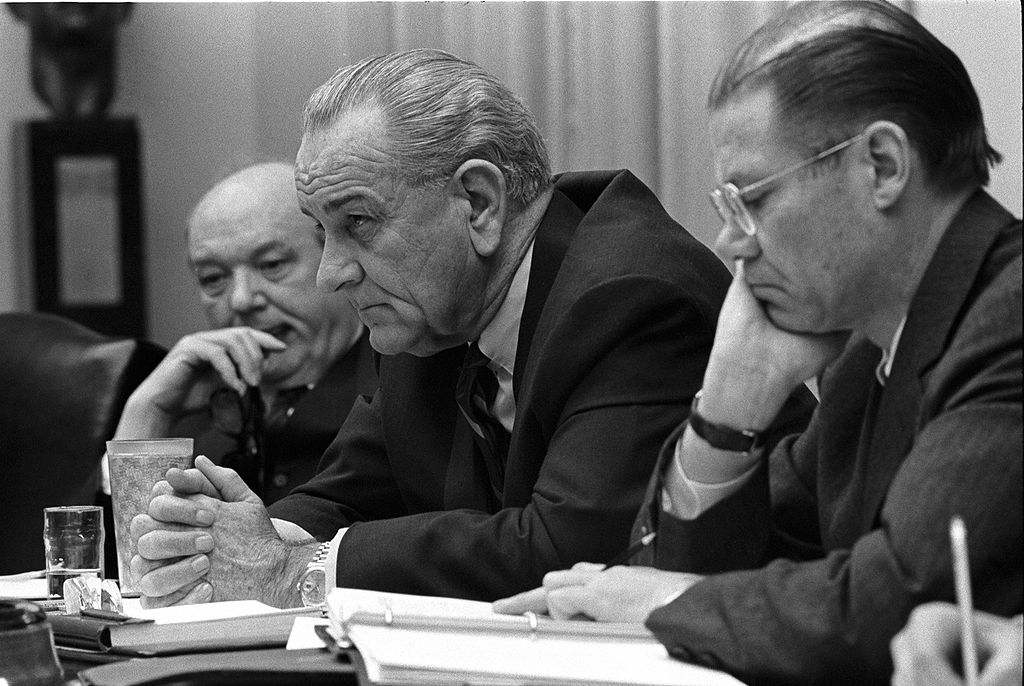
In the book, McNamara acknowledged that he knew as early as 1963 that the Vietnam War was a lost cause. He also admitted that he kept quiet about what he believed at the time. He continued to advise Presidents Kennedy and Johnson to keep sending young men to die in Vietnam.

I was one of the young men he allowed to go to Vietnam; I got my orders in the spring of 1969 and reported for duty at Marble Mountain, Da Nang, to work on Army surveillance aircraft.

I was filled at the time of the book’s publication with anger that McNamara would have kept those thoughts so damn private, that he wouldn’t have spoken out in real time about what he believed about the future of that tragic conflict.

He approached me on that quite D.C. street that Sunday morning. “Mr. Secretary,” I said, “I want to introduce myself. My name is John Kanelis. I live in Amarillo, Texas and I just want to tell you how pissed off I am at you after learning about what you wrote in that book you just published. I was one of those men you sent to Vietnam.”

McNamara smiled and said, simply, “You are a very observant young man.” I smiled back at him and offered a conciliatory follow-up. “I am glad that you finally came clean,” I said.

He thanked me. We shook hands and he walked away.

I continued on to Arlington National Cemetery and paid my respects to President Kennedy and his brother, Robert Kennedy.

And I felt better for getting those thoughts off my chest.

Memo to fellow Vietnam vets: go back to see it again

I caught up with the PBS series on the Vietnam War. I am riveted all over again by the tragedy that unfolded in that faraway land.

The Ken Burns-Lynn Novick directed documentary is going to be known as a landmark television event. The way I figure it, anything with Ken Burns’ name attached to it has that potential. This one will make the grade.

***

As I watched the first two segments, I was struck by something I’ve told Vietnam veterans over the course of the past 28 years: You need to go back; you need to see the country now; you need to see what that place you remember as a war-scarred nation has become since the shooting stopped.

I served there many years ago as an Army aircraft mechanic. But in 1989, I was granted an extraordinary opportunity. I returned to Vietnam two decades after I reported for duty at Marble Mountain, a secure Army aviation unit just south of Da Nang. I’ve shared with you already on this blog the emotion I experience upon returning to that spot.

When I came back home at the end of that three-week journey — along with other editorial writers and editors from around the country — I made an unofficial pact to encourage other Vietnam War veterans to do that very thing. They need to see that place.

I must make a point that Vietnam in 1989 wasn’t yet the country it has become in the years since then. The United States had no diplomatic relations with its former enemy when my colleagues and I went there. Those relations took root in the 1990s and the country has made huge economic development strides since then.

The reaction I’ve gotten from vets, though, has been muted. Few of them have embraced the notion. Most of them say, “No way, man. I’ve had enough of the place.”

I tend to back off when I get the “hell no!” response from vets. They have their reasons and I’m sure it has everything to do with the misery they experienced during their wartime tour of duty.

To those who waffle a bit, I tell them a couple of things.

First, the country still smells the same. I can’t describe the odor one whiffs — whether in cities or in rural settings. It’s not exactly pleasant. It’s just, um, unique.

Second, I like to tell my fellow vets that the Vietnamese are gracious, welcoming and quite anxious to greet Americans. I can recall setting foot for the first time in Saigon in 1989. I jumped off the van that had took us from the airport to our hotel. I was greeted by a Vietnamese gentleman who figured I was “of age” to have been there during the war.

“Did you serve here in the military?” he asked as he clasped my hand. Yes. I did. “Welcome back to my country,” he said.

I will concede this point, though, about why the Vietnamese are so welcoming: They won the war!

Returning to that place, though, is good for Americans’ soul. Trust me on that one. I went there believing I wasn’t packing an ounce of emotional baggage. I was wrong.

Others are likely to experience the same catharsis that gripped me.

https://highplainsblogger.com/2017/05/dear-vietnam-vets-return-to-that-beautiful-land/


On the hunt for PBS signal

DURANGO, Colo. — I’m so mad I could spit.

We hauled our fifth wheel recreational vehicle into the Rocky Mountains for a long weekend, getting away from the hustle, bustle and some of the tussles of the world.

But surely — clearly, without a doubt — we could land in a spot that picked up the Public Broadcasting Service.

Oh, no. Didn’t happen.

We’re in Durango, cooling our jets until the morning arrives. I am missing the premiere episode of a landmark television event, PBS’s epic series “The Vietnam War,” put together by the great documentary filmmaker Ken Burns and Lynn Novick. It’s going to run for 10 days.

I am sort of reminded of a comment the late pro football coach Bum Phillips once said of Orange, Texas, where he was born. “It’s not the end of the world,” Bum said in a Playboy magazine interview, “but if you get up on your tippy toes, you can see it from there.”

That’s kind of how I am feeling this evening as PBS is airing “The Vietnam War.”

I’ve published several posts on this blog commenting on the importance of the series to a generation of Americans, many of whom served in that war. I am one of those Americans.

I won’t let it depress me. We’re shoving off tomorrow for another location — in Albuquerque — where I am certain we’ll get PBS in our fifth wheel. I know this because we stayed there the other night en route to Durango. By golly, I watched some PBS programming while we were parked there.

I am going to pray that the weather doesn’t get in the way. You are welcome to wish me luck. Oh, and be sure to watch it yourself.

These heroes did not ‘die in vain’

Americans might be asking themselves once again a question that crops up as the nation examines its history of armed conflict.

The lingering question might present itself as PBS airs its landmark documentary series “The Vietnam War,” by Ken Burns and Lynn Novick, which premieres on Sept. 17.

The question focuses on whether the 58,000 Americans whose names are etched on that black stone wall in Washington, D.C., died in vain. Was their sacrifice wasted?

I will not tolerate such a question. I won’t stand for it!

The Vietnam War did not end well for the United States of America. We lost our will because the enemy we were fighting in Vietnam kept up the fight despite the grievous losses they suffered on the battlefield throughout the southern portion of Vietnam.

The war shredded the nation’s emotions. It tore at our collective heart. We didn’t know how to lose. Indeed, the Vietnam War arguably redefined “winning” and “losing” in the minds of many Americans.

To my point about dying in vain …

The Vietnam Veterans Memorial wall contains the names of men — and a handful of women — who left behind a story. Their loved ones grieved and perhaps are still grieving their unspeakable loss. Did those Americans die in vain? Did they make the supreme sacrifice, pay the ultimate price for no good reason?

These heroes all died in service to their country. We never should measure the loss of brave Americans on faraway battlefields against the rightness or wrongness of the policy that sent them into harm’s way. These warriors did their duty as they were ordered to do. Their patriotism was unquestioned. Nor was their love of country.

I’ve been able to see the war memorial three times. The most recent time was just this past June. I defy anyone to walk along that wall, examine those names etched in the black stone and believe they are memorialized because they died in vain.

I am not going to engage in a debate over whether our enemies in all the wars this country has fought deserve to be honored in this manner. This blog post is about our men and women. It’s about our young service personnel who followed lawful orders.

The PBS special well might ignite this discussion once again. Fine. Let’s bring it to a full boil. I’ll stand forever by the notion that no one young American ever — not ever! — dies in vain when they are serving the nation that orders them into battle.

***

The first five episodes will air nightly on Panhandle PBS from Sunday, Sept. 17, through Thursday, Sept. 21, and the final five episodes will air nightly from Sunday, Sept. 24, through Thursday, Sept. 28. Each episode will premiere at 7 p.m. with a repeat broadcast immediately following the premiere.