Tag Archives: SCOTUS

How to fill a SCOTUS post

By JOHN KANELIS / johnkanelis_92@hotmail.com

OK, how might the unfolding drama surrounding the selection of a Supreme Court justice play out?

I want to offer something of a best-case scenario for you to ponder. Ready? Here goes …

Congress stymies Donald Trump’s nominee, which he is going to announce in the next day or two or three. Democrats could pull off some political hocus-pocus to prevent the Senate from voting on a nominee prior to the Nov. 3 presidential election.

Then we elect Joe Biden president of the United States. The president-elect demands that the nominee withdraw. We go back to Square One.

Meanwhile, Democrats take control of the next Senate, possibly ousting the leading obstructionist in that body, Majority Leader Mitch McConnell. Mitch is out. Still following me? Good!

Then we swear in President Biden, who then gets to make a selection to succeed the legendary Justice Ruth Bader Ginsburg on the high court. Is he obligated to select a woman? No. He hasn’t committed to anything in that regard. I mean, he did select a woman as vice president.

So, why not roll the dice and ask a highly regarded federal judge who once got tapped by President Obama. Yep, I refer to Merrick Garland, whom the Senate GOP stiffed when they refused to grant Obama’s selection a hearing, let alone an up/down vote to join the court after Justice Antonin Scalia died in February 2016.

I might be willing to bet real American money that Judge Garland would be up for a hearing before a Senate controlled by Democrats.

Is any of this likely? I have no idea. First things first: Democrats need to find a way to prevent Trump and McConnell from shoving the pending nominee down our throats and pushing the court so far to the right that it is in danger of destroying health care legislation, women’s reproductive rights and a host of other protections that prior courts have ruled to be constitutional.

A new president deserves the opportunity to make this call. Not one who well might get defeated, and certainly not a Senate that well could see control shift from one party to the other.

I am hopeful.
Elect first, then choose SCOTUS justice

By JOHN KANELIS / johnkanelis_92@hotmail.com

A suggestion from embattled U.S. Sen. Susan Collins sounds eminently fair and reasonable.

β€œIn fairness to the American people, who will either be re-electing the President or selecting a new one, the decision on a lifetime appointment to the Supreme Court should be made by the President who is elected on November 3rd.”

Doesn’t that just make a ton of sense? It does to me.

Collins is in the fight of her political life and she might lose her Senate seat when they count the ballots on Nov. 3. However, she is correct in asserting that the choice for selecting a successor to the late Ruth Bader Ginsburg should come from the individual who wins the presidential election.

Time is short. We have 45 days until Election Day. Senate Majority Leader Mitch McConnell is hell bent on voting for a new justice before Election Day.

Hey, fair is fair, right? Except that McConnell doesn’t play fairly. He uses power to his maximum advantage. He is trying to do so now with this pending nomination.

This fight is going to get mighty bloody.

Due diligence anyone … anyone?

(AP Photo/J. Scott Applewhite)

By JOHN KANELIS / johnkanelis_92@hotmail.com

Who needs due diligence when you have a power-hungry hypocrite in charge of a U.S. Senate confirmation process?

That’s a rhetorical question, of course. Due diligence is as important as it always is when considering whom to seat on the U.S. Supreme Court. That ain’t stopping Senate Majority Leader Mitch McConnell from unleashing the confirmation hounds on a nominee Donald Trump intends to send to the Senate upon the death of the iconic Justice Ruth Bader Ginsburg.

Let’s see how this goes. The presidential election is 46 days away. Trump hasn’t yet pitched a name at the Senate. He will do so quickly, or so we are led to believe. McConnell said the Senate will receive the nominee’s name, the Judiciary Committee will conduct a hearing and then the Senate will vote on the nominee … before we decide the presidency and before we decide who sits in the Senate!

How in the name of legislative due diligence is that supposed to happen?

Two Republican senators, Lisa Murkowski of Alaska and Susan Collins of Maine, say the Senate should wait until after the election. Yeah … do ya think?

A number of Republicans might lose on Election Day. Martha McSally of Arizona, Cory Gardner of Colorado, Thom Tillis of North Carolina, Collins, and possibly even McConnell in Kentucky are prime targets for defeat. How does a lame-duck Senate session vote, therefore, on a Supreme Court nominee when several of the body’s members won’t be there to stand before their constituents?

Let us not forget how McConnell stonewalled President Obama’s pick to succeed the late Justice Antonin Scalia in early 2016, with McConnell saying that the president didn’t have the right to make an appointment during an election year. We’ve got that now, only magnified by an untold factor given the closeness of the next election!

Back to my point: How also does a Senate do the kind of due diligence required to thoroughly examine the quality of the person nominated by the president to serve as a member of nation’s highest court?

My view is that it cannot. The Senate must not steamroll a nominee to the Supreme Court in a fashion that screams political expediency.

Mitch McConnell’s hypocrisy is on full and inglorious display.

He sickens me.

Now the election becomes extra meaningful

By JOHN KANELIS / johnkanelis_92@hotmail.com

As if the 2020 presidential election wasn’t consequential enough …

Then we get the sad news of the death of Supreme Court Justice Ruth Bader Ginsburg, arguably the most iconic member of the highest court in the land.

Her death sets up a monumental battle of wills between progressives and conservatives, between the White House and Congress, between those who want to replace Donald Trump with Joe Biden and those who want to see Trump re-elected.

I am with the progressives, quite obviously.

Senate Majority Leader Mitch McConnell, who stonewalled President Obama’s nomination of Merrick Garland in 2016 after the death of Justice Antonin Scalia, now vows to push through whomever Trump nominates.

Not so fast, say Senate Democrats. The rank hypocrisy, of course, of McConnell’s current position and his former stance regarding presidential prerogative is shameful in the extreme.

Conservatives will be energized by the thought of Trump appointing another right-winger to the court, thus putting progressive-leaning laws in jeopardy; Roe v. Wade comes immediately to mind. Progressives will be equally energize by the thought of flipping the Senate and the White House into Democratic control; one of the seats most prized by progressives, I hasten to add, happens to be McConnell’s seat in Kentucky.

It’s simply wouldn’t do, I suppose, for this to be a strictly huge choice between an incumbent who has failed to protect Americans while denigrating the office he occupies and a challenger with profound respect for the institutions of government … Trump vs. Biden.

Oh, no! Now we have control of the Senate to throw into the mix, which is going to determine whether the nation’s highest court retains some semblance of balance or veers into the right-wing ditch.

Justice Ginsburg’s plea at the end of her life rings loudly and clearly. It was her “fervent” hope that her replacement comes from a selection made by a new president of the United States. I join her in that call.

Honor RBG’s ‘most fervent wish’

By JOHN KANELIS / johnkanelis_92@hotmail.com

β€œMy most fervent wish is that I will not be replaced until a new president is installed.”

So it was stated by the late U.S. Supreme Court Justice Ruth Bader Ginsburg in a note she dictated to her granddaughter just a few days before her death.

I am saddened beyond measure to hear of Justice Ginsburg’s death. It was not a surprise, given her lengthy bout with cancer. However, her passing now sets up a political battle the likes of which we have seen.

I am having trouble wrapping my noggin around all the ramifications. To wit:

  • Senate Majority Leader Mitch McConnell says Donald Trump will be able to get a Senate vote on the person he nominates to succeed Ginsburg. But wait! He said the opposite in 2016 when Justice Antonin Scalia died. President Obama wouldn’t get a Senate hearing on who selected in an election year. The vacancy was held for more than 400 days. We have 46 days until the next election this time.
  • Does the Senate leader have the chops to hold the GOP caucus together? One Republican senator, Lisa Murkowski of Alaska, has said already the process should wait. And what about the handful of GOP senators who are set to lose their re-election bids this fall? Do they vote on a nomination in a lame-duck congressional session? Is it right for them to vote, then leave office only to have the next SCOTUS justice getting a lifetime job?
  • How does McConnell justify the hypocrisy of denying one president the chance to select a justice while fast-tracking another president’s selection?

I have declared my belief in presidential prerogative. I have stated that presidents have the right to nominate their court choices. Were I to stand firmly on that principle, then Donald Trump deserves to nominate a SCOTUS justice just as much as Barack Obama did.

However, I cannot swallow the hypocrisy that Mitch McConnell exhibited in 2016 by denying Merrick Garland a hearing and a vote to succeed Antonin Scalia on the high court. McConnell squandered any moral authority on this issue.

So, I want to echo the wish expressed by Justice Ginsburg as her life slipped away from her.

Let us conduct a presidential election and then swear in the president before proceeding with a nomination battle for the Supreme Court. If the stars align properly, that president will be Joseph Robinette Biden Jr.

So much at stake … R.I.P., RBG

By JOHN KANELIS / johnkanelis_92@hotmail.com

This blog post was supposed to be a commentary on the stakes facing us in the upcoming presidential election and the impact it will have on the federal judiciary.

Then came the sad news: Supreme Court Justice Ruth Bader Ginsburg died today of cancer at the age of 87. Folks, the stakes just got exponentially greater by a factor I cannot at this moment calculate.

But I’ll go on with what I had written. There will be much more to say about the immediate future of the Supreme Court.

***

Americans aren’t just voting for president of the United States. We also are casting our ballots to determine the course of constitutional interpretation by the powerful federal judiciary.

Donald Trump wants another four years to drag the nation’s highest court so far to the right as to make it unrecognizable from where it stands at this moment. He has boasted about possibly making two more appointments, to go along with the two men he picked during his current term. Now comes the news of Ruth Bader Ginsburg’s death and quite suddenly, the balance of the court becomes a gigantic factor.

Trump even has gone so far as to offer a list of 20 candidates for the Supreme Court that he would consider were he re-elected.

So help me we cannot let that happen.

Joe Biden has declared his intention to select an African-American woman to the nation’s top appellate court. He did vow to select a woman with whom he would run for office and has made good on that pledge.

Given what we know — or think we know — about Joe Biden’s own judicial temperament, I am hoping he would go for center-left selections to the Supreme Court.

Of course, all of this depends on Biden getting elected president in November.

In addition, we have this other key set of elections occurring. They involve the U.S. Senate, which at the moment has 53 Republicans — a scant majority — in control of the upper legislative chamber. Democrats have to flip four Senate seats to claim a majority.

This is big stuff, man. We already have seen how the GOP majority conducts itself with Supreme Court appointments. The miserable raw political move in stymying President Obama’s choice in 2016 of Merrick Garland to succeed the late Justice Antonin Scalia told me plenty about how dirty the GOP can get.

That said, Senate control ranks a very close second to White House control in this upcoming election. The legislative, executive and judicial branches of government are separate and have equal power under the Constitution. They are linked inextricably, though, through the power of our individual votes.

I am one American patriot who does not want to see this delicate government balance upended if we fail to act on the need for change in the White House and the Senate.

POTUS makes strange SCOTUS ploy

By JOHN KANELIS / johnkanelis_92@hotmail.com

I have been intrigued by Donald Trump’s decision to roll out the names of possible U.S. Supreme Court appointments should he win a second term as president of the United States.

I guess I come down to this notion: Trump is playing with fire by throwing out names while he is in the midst of a campaign that might rile the dickens out groups of voters who detest the philosophies of the prospective nominees.

U.S. Sen. Ted Cruz of Texas has gotten the most buzz out of the list of 20 names tossed out there by Trump. You know this guy, whom I have labeled the Cruz Missile owing to his rather mercurial political trajectory.

He actually wants to be elected president one day, which to my way of thinking suggests he wouldn’t want to end up on the high court.

But back to the point. Trump’s tactic here puts his re-election effort in some jeopardy.

All of the names he has floated are, for example, likely to be avidly anti-reproductive rights advocates. They all would oppose a woman’s right to end a pregnancy. How do you suppose that’s going to play with suburban women, who already are tilting strongly away from Trump and toward the candidacy of Joseph Biden?

Yes, I know Trump has his support base that thinks the tactic is working out just fine. I just consider it a huge gamble at this juncture of a campaign that by all objective measure isn’t going well.

I suppose, therefore, I shouldn’t spend too much time worrying about any of this.

So … I won’t.

Hideous POTUS, but legitimate nonetheless

.

I want to clear the air a bit on Donald John Trump’s tenure as president of the United States.

No one wants to see him run out of office more than I do. I am using this blog to the best of my ability to declare his unfitness for the office he won in the biggest political fluke in American history.

However, I disagree with those who contend he is an “illegitimate” president. I have many social media friends who contend he was elected illegally. That the Russians’ electoral chicanery in 2016 resulted directly in his election, that the undermined Hillary Clinton’s candidacy sufficiently to guarantee Trump’s Electoral College victory.

I just cannot buy that notion.

I haven’t seen evidence that suggests that the Russians effort to undermine Clinton’s candidacy was decisive. It might have contributed to the defeat, but so did a number of huge tactical errors down the stretch by the Clinton team contribute to Trump’s shocking victory. Clinton ignored key battleground states in the Great Lakes region that Trump managed to peel away. There also was that horrendous announcement from FBI Director James Comey that he was taking a fresh look at the email matter that had dogged Clinton for months and months.

Sure, Trump received nearly 3 million fewer votes than Clinton. He won the Electoral College, though, which is where the Constitution prescribes the way we elect presidents. It was all done legally. The guy is legit.

I say all this while gritting my teeth so hard that they are hurting. The 2016 election produced precisely the wrong outcome. The wrong candidate got elected. However, the Constitution worked in this case, just as it did in 1974 when Richard Nixon resigned the presidency after facing certain impeachment and conviction on high crimes and misdemeanors and just as it did in 2000 when the Supreme Court awarded George W. Bush the presidency by disallowing the recount of ballots in Florida.

It worked in 2016 even as Donald Trump stumbled onto the nation’s highest office and is threatening to destroy the world’s greatest nation.

It will work one more time — I hope — when Americans vote this clown out of office.

Politics intersects with principle

I hate it when this happens, when principle runs headlong into partisan political interests … such as when presidents might be handed an opportunity to make a key appointment.

I refer to the U.S. Supreme Court and to Donald J. Trump.

Supreme Court Justice Antonin Scalia died suddenly in early 2016, creating a vacancy on the high court. President Obama, serving his final full year in office, then nominated Merrick Garland to succeed the brilliant conservative jurist. Senate Majority Leader Mitch McConnell slammed the brakes on that effort, saying that the Senate wouldn’t confirm an appointment from a lame-duck president in an election year.

Many of us — including me — raised holy hell. We argued that presidential prerogative allowed Obama to make that appointment. We argued on the principle that the Constitution granted him the authority to act. I also argued that McConnell was playing a shameful game of politics with this principle. The 2016 election occurred, Trump got elected, Garland’s nomination was tossed aside.

Here we are, four years later. Another Supreme Court justice, liberal icon Ruth Bader Ginsburg, revealed recently she is battling liver cancer. I now am asking myself: What happens if she can no longer serve on the court? Does Donald Trump deserve the same sort of presidential deference many of us in the peanut gallery said was due Barack Obama?

With gritted teeth and a tight jaw, I have to say: yes, he does.

Let me be crystal clear. I do not want Justice Ginsburg to leave the court until well after the November election. There’s a decent chance at this moment that Trump is going to lose to Democratic nominee Joe Biden. It is my fondest political hope that Justice Ginsburg can continue to serve on the court, can continue to write opinions and can be a full partner in the court’s deliberations. It also is my hope that should she decide to retire from the court that she can wait until after President Biden takes his oath of office in January and then is free to nominate someone of his choice.

However, if fate takes the court in another direction, I will be saddened beyond measure at what is likely to transpire as Trump wages war against those in the Senate who will fight to stall any confirmation process until after the voters have their say at the ballot box.

Yes, occasionally politics can be based on high principle. I fear that politics and principle might be pointed in opposite directions in this most volatile election year.

SCOTUS justices provide satisfaction

I took more than a little bit of satisfaction from this week’s stunning decision from the U.S. Supreme Court that no president is above the law.

My satisfaction came in the form of two justices’ decision to side with the 7 to 2 majority that declared that Donald Trump cannot invoke presidential immunity no matter what, that a Manhattan, N.Y., prosecutor is entitled to obtain Trump’s financial records in a probe that could result in some serious criminal indictments.

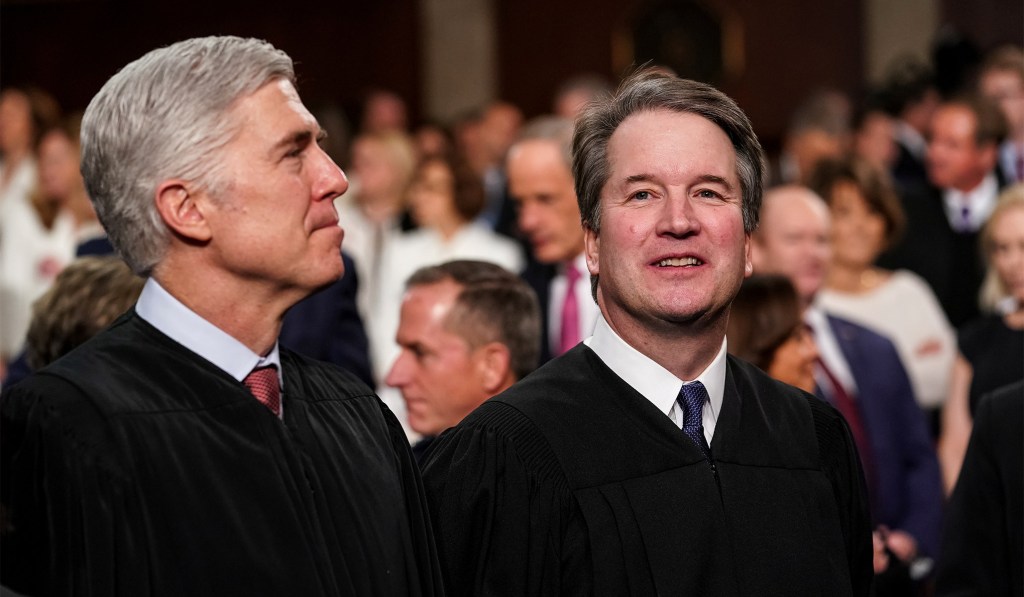
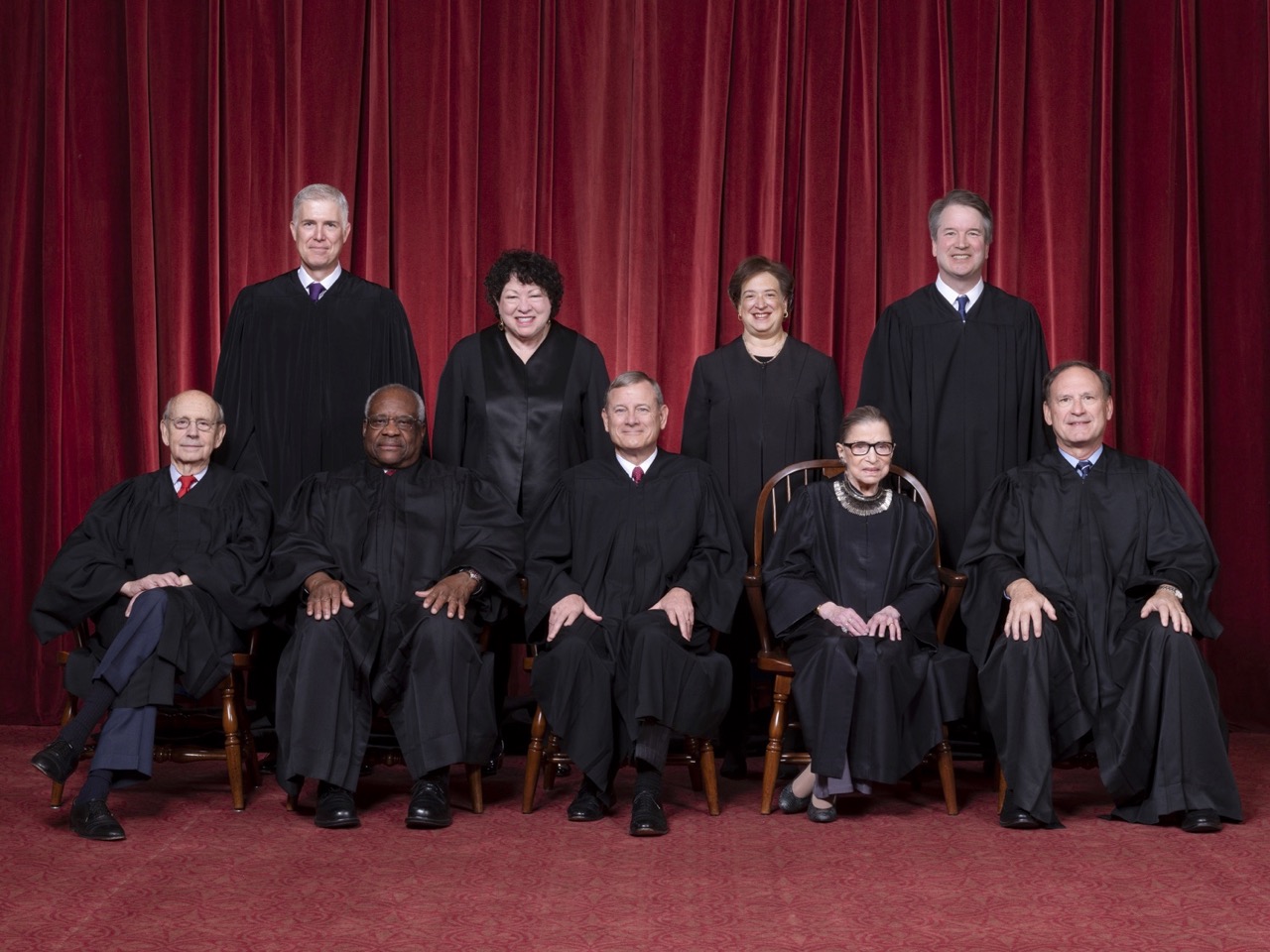
Those two justices happen to Donald Trump’s two nominees to the highest court in America: Neil Gorsuch and Brett Kavanaugh.

Let’s presume Trump’s ignorance of the law and the Constitution for a moment and conclude that the president had hoped Justices Gorsuch and Kavanaugh would stand with him. I mean, Trump does demand loyalty even from members of an independent and co-equal branch of the federal government. The justices didn’t do as Trump no doubt wanted.

This gives me hope on at least one important matter. Gorsuch and Kavanaugh likely will sit in their high offices long after Trump leaves his office. Trump said he wanted to appoint rock-ribbed, true-blue conservatives to the federal judiciary, which is another way of saying he wants judges who will vote in his favor at all costs.

Neil Gorsuch and Brett Kavanaugh saw the question arising from the Trump finances case differently. They interpreted the law with no regard to how it might affect Trump’s continuing refusal to release his financial records to prosecutors.

I cannot predict whether Justices Gorsuch and Kavanaugh will continue to demonstrate their judicial independence on future cases. The Supreme Court term has ended; justices will return to the bench in October, just ahead of the November presidential election.

I am hoping the election will deliver a new president who then will take over the appointment powers from a president who doesn’t grasp that the concept of an independent judiciary is inscribed in our nation’s governing document.

I am going to hope that the men who ended up on the court because Donald Trump nominated them will continue to exhibit the independence they showed in determining that no one — not even the president of the United States — is immune from criminal prosecution.