Tag Archives: Vietnam War

Today’s students channeling their grandparents

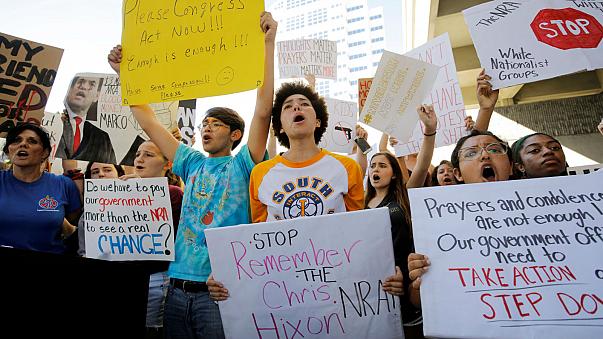
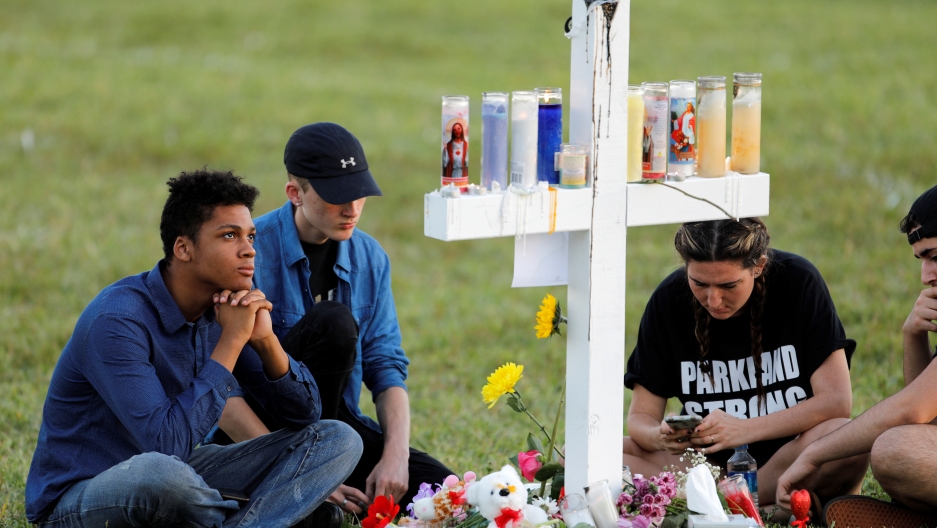
I am hearing some talk in recent days about the nature of the student-led protests that are developing across the nation in reaction to the spasm of gun violence in our public schools.

It has something to do with an earlier era of protest that got enough people’s attention to hasten the end of a costly and divisive war.

Many observers equate the post-Parkland, Fla., school massacre response to what transpired in the 1960s and early 1970s, when thousands of Americans protested the Vietnam War.

They hope this protest has the staying power of that earlier time, when Grandma and Grandpa were much younger and took on the power structure that continued sending young Americans to die on battlefields halfway around the world.

Young Americans are dying today, too. The difference is that they are dying in classrooms here at home.

I wasn’t among the young folks who marched in the street, carrying a sign, chanting slogans … that kind of thing. I wasn’t wired that way. Indeed, I took part for a time in that war, heading off to Vietnam in the spring of 1969 to serve in the Army.

Upon my return and later my separation from the Army in the summer of 1970, I was filled with plenty of doubt about that war and whether its mission was worth continuing. The Vietnam War did awaken my political awareness, although I put it to use in ways that didn’t require me to stand on street corners yelling my displeasure at U.S. foreign policy.

The Parkland slaughter does seem to have awakened a new generation as well. Students plan to “March For Our Lives” on March 24. In Amarillo — a community not really known as a political hotbed for protest — that event will begin at Ellwood Park, where students and their elders will gather to march to the Potter County Courthouse.

Should this protest shred the Second Amendment to the U.S. Constitution, which guarantees the right of Americans to “keep and bear arms”? No. Not in the least. Surely there must be some legislative remedy that preserves the amendment, but which makes it more difficult for nut cases to obtain firearms.

The young people who are on the “front lines” of this struggle are seeking to have their voices heard. Decades ago, another generation of young people were thrust onto the front lines to fight another war. Their voices were heard eventually. They brought change then. Their descendants can bring it once more.
Trump would have ‘run in there,’ unarmed?

I know this is a rhetorical question, but I am going to ask it anyway.

Why doesn’t Donald J. Trump keep his trap shut when he certainly must know the response he is going to evoke?

I know the answer. He cannot. A man with utterly zero sense of self-awareness doesn’t know how to be circumspect.

Example: He told the nation’s governors today that he would have “run into” Marjory Stoneman Douglas High School in Parkland, Fla., when the shooting started “even if I didn’t have a weapon.”

Really, Mr. President? You would have done that had you been there?

According to The Hill: “You don’t know until you test it, but I really believe I’d run in there even if I didn’t have a weapon,” Trump told a gathering of governors at the White House. “And I think most of the people in this room would have done that, too.”

Does the chicken hawk in chief really expect us to believe the would do something he didn’t have the inclination to do back when there was a full-scale war raging in Southeast Asia?

A much younger Donald Trump came up with student deferments and a medical deferment —  bone spurs, yes? — to avoid service in the Vietnam War. A couple of million others of us didn’t exercise those options. We went to war while individuals such as Donald Trump sat on the sidelines.

This is the kind of thing that the president should be mindful of when he launches into this bit of faux bravery.

Except that Trump has no awareness of how his tough-guy talk plays to those of us who followed a much different path than the one he took when he had the chance to run toward the gunfire.

CPAC crowd shames itself with boos of Sen. McCain

I cannot stomach what I heard today about the Conservative Political Action Conference reaction when the president of the United States mentioned a critical vote cast by a member of the U.S. Senate.

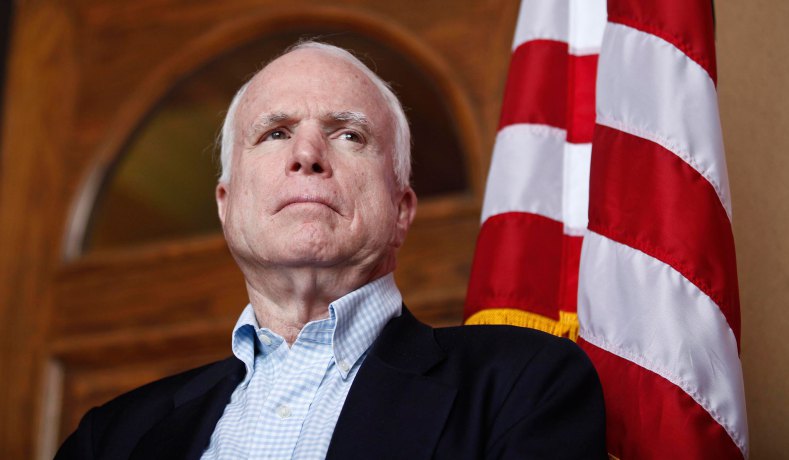
Donald Trump didn’t mention U.S. Sen. John McCain’s name. He didn’t have to. The CPAC crowd knew he was referring to McCain’s vote on the Senate floor that sunk the GOP plan to repeal the Affordable Care Act.

Then the CPAC audience started booing. They booed a Vietnam War hero, a man who has given more for his country than I suspect anyone else in that CPAC room. They booed a man the president himself once denigrated as being a war hero “only because he was captured” by the North Vietnamese; candidate Trump then said, “I like people who aren’t captured, OK?”

Good grief! Trump simply disgusts me.

CPAC disgraced itself with that hideous display of callousness. Indeed, the president has disgraced himself as well with his own boorish behavior over this and, oh, so many other instances.

I am compelled to mention, too, that Sen. McCain is fighting for his life at this moment against an aggressive form of brain cancer.

For the president to bring up McCain’s vote against repeal of the ACA in that CPAC venue was disgraceful enough. For the CPAC audience to boo a gallant warrior who persevered more torture than anyone ever should have to endure was disgraceful in the extreme.

Shame on them.

Who should we trust in this battle of wills?

Whenever the president of the United States challenges the credibility of the special counsel assigned to examine alleged collusion with Russian hackers, I believe I will think first of the article I have attached to this blog post.

The Washington Post article goes into great detail about the similarities and the differences between Donald John Trump and Robert Swan Mueller III.

When the president suggests that the former FBI director is unfit to conduct a probe into “The Russia Thing,” it would be good to understand from where both these men came and the choices they have made.

The Post piece tells of how they both were born into wealth. They both attended private schools. They attended Ivy League universities.

One of them chose after college to get into his father’s business. The other — pained by the Vietnam War combat death of a lifelong friend — chose to enlist in the Marine Corps and report for duty in the war that killed his friend.

Trump built a fabulous business and entertainment career with help from his father. Mueller decided to pursue a career in public service — starting with his duty on battlefields far from the comforts of home.

Trump has become a loudmouth and a braggart. Mueller became something quite different; he rarely talks about himself in public.

Trump got elected president of the United States amid considerable consternation over whether he is up to the job. Mueller got selected for the special counsel job of investigating the Trump campaign’s allegedly improper ties to Russian hackers amid universal praise and acclaim that he was the perfect man for his new job.

The investigation is ongoing. Mueller isn’t going to divulge when he intends to finish it. He will keep plowing straight ahead. He won’t be deterred by efforts to derail, divert, deflect, degrade and disparage his investigation.

I will place my faith in the career prosecutor rather than a novice politician whose entire professional life has been built on self-enrichment and self-aggrandizement.

Emotions are raging over deputy’s inaction

I am terribly conflicted at this moment.

For starters, I am horrified to learn — along with the rest of the country — about the Broward County, Fla., sheriff’s deputy who heard the gunfire erupt at Marjory Stoneman Douglas High School but failed to respond.

The 30-year law enforcement officer — who was on duty as a security officer at the school — was suspended on the spot. Then he took “early retirement.” Broward County Sheriff Scott Israel said the deputy’s failure to confront the gunman was unacceptable and is not in keeping with sheriff’s department policy. He should have “killed the killer,” said Israel.

Seventeen people’s lives might have been saved in Parkland, Fla., had the deputy done his duty, had he responded appropriately and “neutralized” the shooter immediately.

Deputy Scot Peterson messed up royally and 17 families are heartbroken because of his dereliction of duty.

Then there’s this.

The armchair Rambos out there are saying that had it been them in that spot, that they would have rushed in. They would have done the right thing. They would have stopped the shooter, killed him on the spot.

Oh, and then we heard from the commander in chief today. Donald Trump stood at the podium this morning at the Conservative Action Political Conference and said Peterson lacked “courage” because he didn’t rush toward the gunfire.

I believe it is appropriate to remind everyone that young Donald Trump didn’t rush toward the “gunfire” either when the Vietnam War was raging. He received multiple medical deferments relating to “bone spurs” while other young Americans were answering the call.

So … for this president to hurl epithets that question another man’s courage is reprehensible on its face.

That, dear reader, is why I am so terribly conflicted at this moment.

I do not excuse former Deputy Anderson’s dereliction of duty. Nor do I endorse the rhetoric being hurled by those who have the luxury of being far away from the horror or, when someone who had the chance to answer the call to duty, found a way to avoid it.

Thanks for the recognition, but no parade, please

Strike up the band, fire up the tanks, lock and load, forward … march!

The word is out that preliminary planning has commenced for what Donald J. Trump is seeking: a full-blown military parade down Pennsylvania Avenue.

The president wants to honor the service and sacrifice of active-duty military personnel and to thank the nation’s veterans.

Well, gosh. I do appreciate the expression of thanks from the president. Really. I do! I served a couple of years in the U.S. Army, serving some of that time in Vietnam in wartime.

That was a zillion years ago and to this day I still get “Thank you for your service” greetings from strangers. I appreciate the recognition that we didn’t receive when we were mustering out of the service and returning home.

To be honest, that’s all I want.

Do I want to see a military demonstration with tanks, artillery, thousands of troops from all branches of our 1.5 million-member military? No. I consider it a waste of money and an unnecessary showing off by the commander in chief.

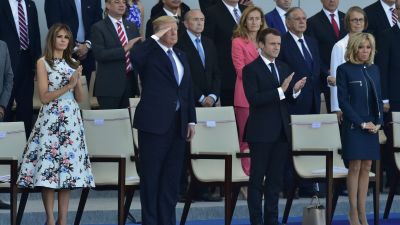
I’ve read that the president was so taken by a Bastille Day parade he saw in Paris that he wanted to do something like it here. Except for this little item that I believe the president is ignoring: The French parade included troops from other nations as well as the French military. Is the president planning to allow foreign fighting forces mach alongside our men and women in uniform? I don’t think so.

If the president wants to honor our military, all he has to do is have a White House ceremony. The leaders of the Joint Chiefs of Staff can speak publicly about the sacrifice each of the personnel under their command make to protect us.

Donald Trump could offer some legislative remedies to ensure that our veterans receive top-tier medical care.

A parade down Pennsylvania Avenue? A parade that will cost the country millions of dollars it cannot afford to spend? An event that will stretch our overworked and stressed-out military men and women even more?

No thank you, Mr. President. A simple — and sincere — expression of gratitude would work just as well. The world’s greatest military machine doesn’t need to show off its might in this ostentatious — and costly — event.

An ’embarrassment’? Yeah, do ya think?

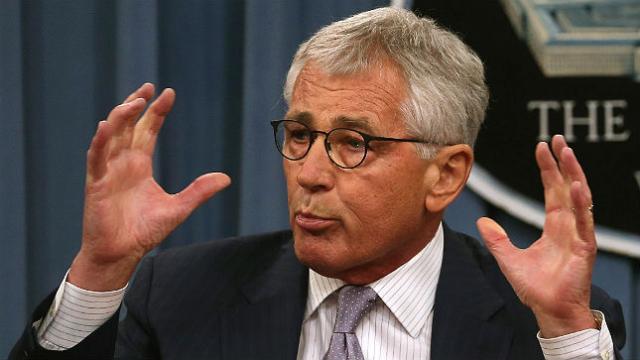
Chuck Hagel isn’t your run-of-the-mill Donald John Trump critic.

He once served as defense secretary for President Obama. Oh, but wait! The man isn’t a squishy liberal. He also is a former Republican senator from Nebraska, one of the many states known to be rock-ribbed, red-state Republican bastions. Hagel also is a Vietnam War veteran, serving there in the U.S. Army. He’s been in battle and knows its consequences.

So, when Chuck Hagel calls the president an “embarrassment” to the nation, well, I tend to listen to him.

Hagel sat down with the Lincoln (Neb.) Star-Journal in which he unloaded on the president. He tore into him for his reported “sh**hole countries” comment describing Haiti, El Salvador and nations in Africa that account for many immigrants coming into the United States.

“Donald Trump is doing great damage to our country internationally,” Hagel told the newspaper.

He said lawmakers take an oath to defend the Constitution and not stand blindly behind any individual or their political party. “I was philosophically a Republican with a conservative voting record,” Hagel said, “but that did not mean I would always go along with the party.”

So, he’s not going along. He is speaking from his heart and telling us what’s on his mind. Moreover, he is speaking for a lot of his fellow Americans — such as yours truly — when he tells us that the president is embarrassing us.

I happen to be embarrassed — and ashamed — by the conduct of the man who is our head of state.

Thus, I share Secretary/Sen. Hagel’s pain.

‘The Post’ reminds one of how it used to be

I saw “The Post.” This won’t be a review of the film, except that I simply want to say it was gripping to the maximum degree.

It reminds me of how it used to be in daily print journalism.

I had some trepidation about seeing it. Some of my fellow travelers in the journalism craft had expressed dismay at seeing the film and lamenting what has become of a proud profession. I had a glint of fear that I might share their gloom. I mean, look at what has happened to newspapers all across the nation. They’re shrinking and withering before our eyes as publishers grapple against forces that are overwhelming them: the Internet, the plethora of “news” sources, cable television.

That fear never hit me. Instead, I reveled in the story it told and rejoiced in the victory that The Washington Post scored in the effort to censor it, preventing the government from invoking a prior restraint on a free and unfettered press.

“The Post” tells the story of the paper’s effort to publish the Pentagon Papers, a report written during the Vietnam War. The Papers told of the deception perpetrated on the public by several presidential administrations: Truman, Eisenhower, Kennedy, Johnson and Nixon. Officials all told of supposed “progress” in the fight against the communists in Vietnam. They lied to the nation. The Pentagon Papers revealed the lie.

The New York Times obtained the papers from Daniel Ellsberg. It got the story out first, then the Nixon administration persuaded a judge to prohibit further publication of the Papers, citing national security concerns.

Post editor Ben Bradlee didn’t see it that way. He eventually guaranteed publisher Katherine Graham that no American fighting man would be harmed if the Post published the rest of the damning document.

The matter ended up in front of the U.S. Supreme Court, which then ruled 6-3 against the Nixon administration — and in favor of the First Amendment guarantee of a free press.

The film tells that story in gripping fashion.

In a larger sense, though, the film reminds us of the value of press freedom and the good that the freedom brings to a public that needs to know the truth about the government that works for us.

It also reminds us of journalism’s value to a nation that promotes liberty. Indeed, given the current climate and the fomenting of hatred against the press that’s coming from the current presidential administration, “The Post” comes across as profoundly topical and relevant.

I cheered during the film when Graham gave the go-ahead to publish the Pentagon Papers in The Washington Post. The sight of presses turning over brought a lump to my throat.

I worked proudly in that craft for nearly 37 years. I never had the opportunity to cover a story of the magnitude of the Pentagon Papers. I did, though, have my share of thrills about getting a story into print and feeling the impact of that story on the community our newspaper served. I would derive the same satisfaction as I gravitated to opinion journalism and wrote editorials or signed columns that challenged the sources of power in our community.

“The Post,” therefore, didn’t sadden me.

It made me proud to have taken the career path I chose.

Free press: enemy of dictators, not the ‘people’

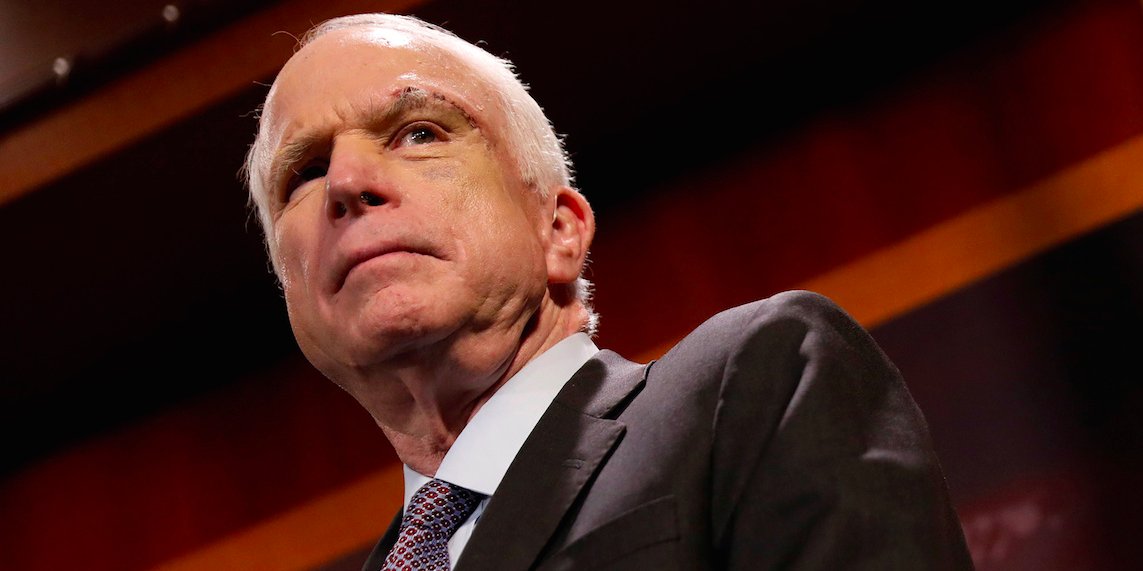
John McCain speaks with authority when he discusses freedom, the media, authoritarian regimes and liberty.

He lost more than five years of freedom at the hands of captors who held him in bondage during the Vietnam War.

He came home and stayed in service to his country, entering politics. He now serves in the U.S. Senate; he ran twice unsuccessfully for president of the United States. He now is held in high regard for his wartime heroism, his principled public service and his brave battle against cancer.

Comments he made earlier this year were rebroadcast today. He told “Meet the Press” moderator Chuck Todd that Donald Trump’s assaults on the media are destructive to our democratic system and they undermine one of the principles on which this country was founded.

Sen. McCain noted that the president’s bullying of the media and his habit of calling out individual journalists is counterproductive in the extreme.

He joked with Todd that he might “hate you,” but the country needs the media to be free of intimidation and it must be allowed to do its job without the kind of bullying that’s coming repeatedly from the president and his White House team.

Yet, the president insists on attacking the media. He continues to curry favor with the Fox News Channel while condemning the work being done by other media. Why? It’s obvious that Fox tilts toward the president and declines to ascribe much critical analysis of his policies. The network appears to many eyes — mine included — to be fulfilling Trump’s insatiable desire to be complimented, to be admired.

That’s not the role the media are supposed to play. The nation’s founders said a “free press” must not be controlled by the government in any fashion. They wrote it down, codifying it in the First Amendment to the U.S. Constitution.

This independence enables the media to do their job. It allows them to hold public officials at all levels accountable. If they speak untruths, the media are compelled to call them on it.

Finally, they cannot be coerced into shying away from their responsibility because politicians — even the president — like to label them as “fake news.”

John McCain is far from the only contemporary politician who understands this tenet. The problem is that the country’s most powerful politician — the president — is poisoning the political process by trying to intimidate the media, which must remain free of such pressure.

As Sen. McCain told Todd: Trump’s bullying of the media is the conduct of a dictator.

Wall serves to remind us of darker time

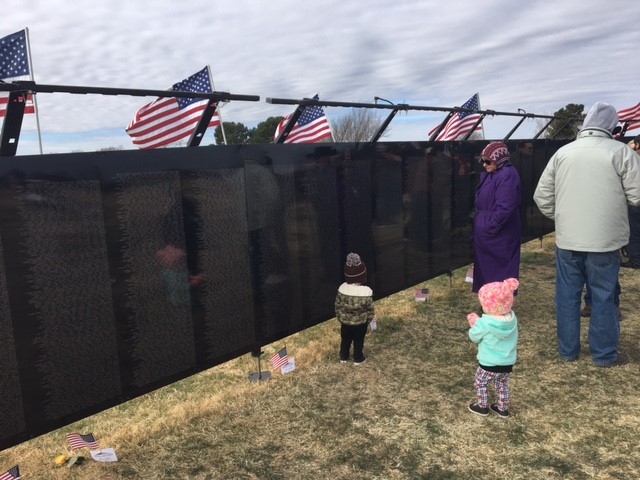
These toddlers don’t yet know what they’re seeing. They don’t yet know what those names engraved on that black wall symbolize.

My sincere hope is that Grandma and Grandpa will tell them one day. I hope, too, that when they show the children pictures of them standing next to that wall that they’ll explain the names and tell them what their presence on that wall means.

I ventured to John Stiff Memorial Park in southwest Amarillo this morning to pay my respects to the 58,000 men and women who died in the Vietnam War. “The Wall That Heals” is here through the weekend. The miniature version of the Vietnam Veterans Memorial in Washington, D.C., will be open 24 hours, enabling Vietnam veterans — if they so choose — to visit the wall and to reflect quietly on what it symbolizes.

I had hoped to talk to vets about their emotions, perhaps to share with them how I was able to heal my own heart in 1989 by visiting Vietnam 20 years after I reported for duty at an Army surveillance aviation battalion at Marble Mountain, just south of Da Nang.

It didn’t happen. I chose to keep my distance from those men. I don’t regret failing to engage them in conversation, as I am confident they have had The Talk with other peers, family members and strangers.

The wall, though, always is worth seeing. It provides a “welcome home” to those Vietnam veterans who didn’t get that simple greeting in real time as they were coming home from war.

Too many Americans did the unthinkable back in those days. They took their anger at a deeply flawed military and foreign policy on the men and women who merely were following orders. They did what their government ordered them to do. For that they were scorned.

It was a moment that will live in eternal shame.

I was among the more fortunate veterans, as I didn’t witness any of the spitting and name-calling, let alone experience it.

We all know it happened.

Time does have a way of making people — and nations — wiser. It did so with our national relationship with Vietnam War veterans.

The Wall That Heals is a demonstration of those evolving attitudes.

Let us hope as well that the children pictured with this post hear also from their elders about how the nation has grown up.