Tag Archives: downtown Amarillo

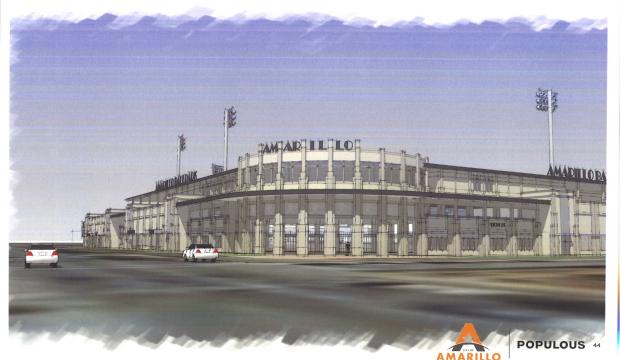
Now we have a design for The Ballpark

Yep. It looks like a ballpark.

Amarillo’s Local Government Corp. has approved a design concept for arguably the most significant downtown project of the past half-century.

It doesn’t have a name just yet. It’s going to be a multipurpose event venue, or MPEV. It’s also going to be a minor-league baseball venue, a ballpark. It’ll cost about $45.5 million to build.

It’s going to be home to a AA minor-league baseball franchise that is moving from San Antonio to Amarillo. Plans call for the ballpark to be finished by February 2019. They’ll toss the first pitch for the new baseball season in April 2019.

City Councilman Eddie Sauer — a member of the LGC — said he saw something “iconic” in the design that the LGC approved unanimously. “When I looked at it, I immediately saw something iconic,” Sauer told the Amarillo Globe-News. “I felt like I could see the Potter County Courthouse, the Santa Fe Building. It was special, I felt, with an eye for what we already had downtown.”

They’ve knocked down and scraped away the remnants of the old Coca-Cola distribution center that used to occupy the site along South Buchanan Street. I noticed some piles of dirt on the site the other day while driving downtown.

Plans call for work to begin shortly after the first of the year. Elmore hasn’t yet signed the lease agreement but that event reportedly is imminent.

I keep hearing the naysayers give raspberries to this project. They keep wondering aloud why the city is spending so much of its effort in reviving downtown.

I also keep wondering: How in the world is all this a negative development for Amarillo? Yes, there have been some hiccups and missteps along the way. The city got through them. The LGC negotiated a 30-year lease agreement with the owner of the baseball team that’s coming here. The team owner, Elmore Sports Group, is going to pay the city $400,000 annually to rent the ballpark. The city plans to pay for the ballpark with hotel occupancy tax revenue.

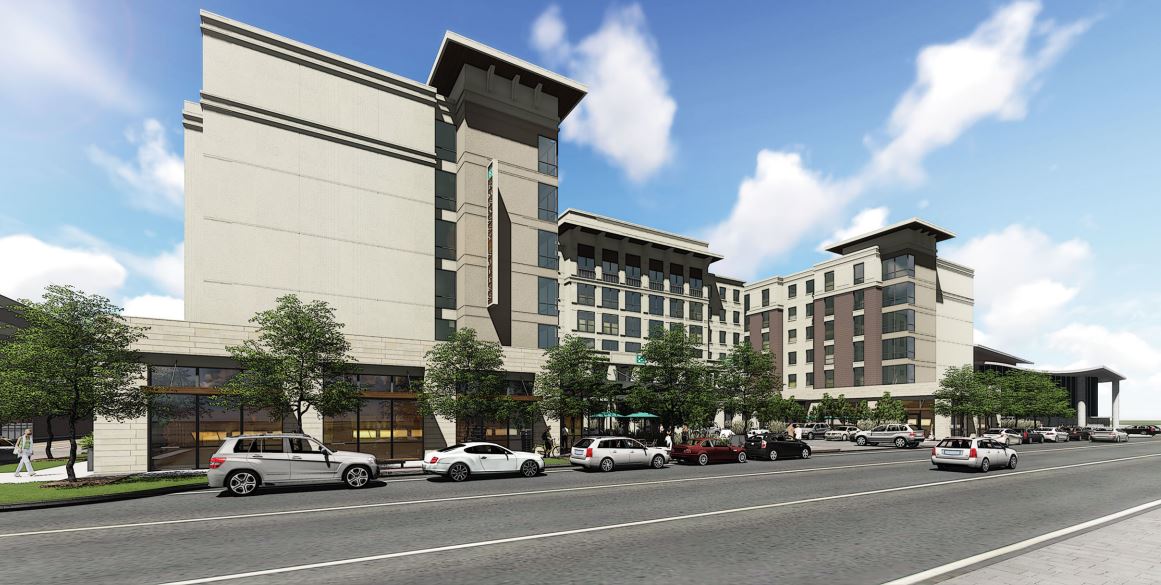
And in the bargain, the city’s downtown district will breathe deeply and is expected to throb with activity. We’re already seeing new urban residences being built; there will be new retail establishments; retail space along the ground floor of a shiny new parking garage is beginning to fill up; the just-opened Embassy Suites hotel figures to attract conventions to the Civic Center.

This is a bad thing for Amarillo? To my way of thinking, it’s pretty damn good.

Huge municipal resource calls it a career

They came on a rainy evening to honor a man who’s given four decades of his life to public service.

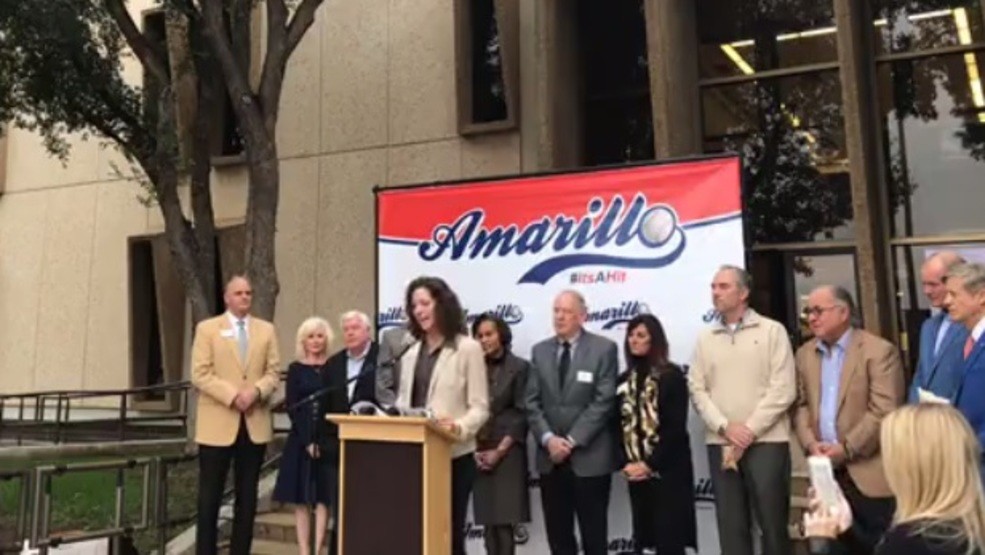
I was one of the hundreds of Amarillo residents who flocked tonight to a brand new hotel downtown to honor Gary Pitner. I didn’t get too much face time with my friend, as he was pretty busy schmoozing with a lot of others in the reception room.

But I do want to write a few good words about this fellow I’ve known almost from Day One upon my arrival around the corner from his office. In January 1995 I came to work as editorial page editor of the Amarillo Globe-News. Almost immediately I came to know the executive director of the Panhandle Regional Planning Commission. That would be Pitner.

The PRPC is a bit of a mystery to a lot of folks. Its duties include coordinating a whole array of issues involving communities throughout the 26 counties that comprise the Texas Panhandle. Pitner has worked as head of PRPC for 32 of his 40 years in local government.

So, why the big outpouring of affection, respect and admiration for this fellow who’s retiring from his lengthy career that sought to make our communities better? It’s because he was so good at it. Moreover, he became the go-to guy years ago when it came to Amarillo’s future growth issues.

There was some discussion this evening at the Embassy Suites hotel, where the retirement reception took place, that Pitner’s presence at PRPC positioned him to become a huge player in the downtown Amarillo planning. He became a voice of wisdom and knowledge; some have suggested he became the voice of all that.

Pitner never would presume to know all there is to know. I’ll say what he won’t say about himself: He knows a lot about this city’s history and how it arrived in the present day. He also is able to offer knowledgeable analysis about where he believes the city is heading and how it ought to get to the finish line.

I’m happy for my friend that he’s entering this next phase of his life. He’s still a young man and has much to offer anyone who’s looking for knowledge about local government.

He stood up to his armpits in downtown planning, in water conservation, in urban growth planning, in reasonable land use. He became a valuable resource for municipal, county and state officials who were looking for a strong base of knowledge about Amarillo and the Panhandle.

Pitner possesses all of that.

I am proud to have known him professionally and am proud to call him a friend. I did manage to speak a fundamental truth to Pitner this evening during my too-brief visit with him.

“There are damn few people I would drive all the way downtown in this hideous weather to pay respects to at an event like this,” I told him. Pitner laughed.

Go ahead and laugh, Gary. But here’s the deal: I wasn’t kidding.

Amarillo’s downtown no longer recognizable

I made what I consider to be a startling discovery in downtown Amarillo, Texas.

After parking my car on a lot behind the brand new Embassy Suites hotel, I walked along Fillmore Street and turned the corner onto Sixth Avenue. I glanced across the street at a row of mostly empty storefronts along a shiny new wall — which I realized after a second or two was the north face of a new parking garage.

I glanced eastward toward the Civic Center just to be sure I hadn’t become disoriented. There it was. The Civic Center restored my bearings.

The discovery? It is that downtown Amarillo bears next to zero resemblance to the district I’ve come to know during my 22 years living in this Texas Panhandle community.

The Embassy Suites is now open for business. The parking garage is finished; indeed, I saw vehicles parked inside the structure.

My reason for venturing downtown this evening — in the rain — was to attend a retirement reception for a longtime friend and source I relied on when I worked for the Amarillo Globe-News. Gary Pitner is retiring as head of the Panhandle Regional Planning Commission; I’ll have more to say about Gary in a later blog post.

My point with this post is to take note of the immense change that has occurred in downtown Amarillo — and the change that is still occurring.

Downtown Amarillo’s evolution is a highly positive event. I sort of think of it as a butterfly that emerges from some sort of cocoon. I don’t want to sound mawkish here, but that moment as I made the turn toward the Embassy Suites door also was a realization that the evolution is real.

There’s much more to come, of course. That ballpark is going to be built across the street from City Hall. They’ll take about a year to build a 4,500-seat multipurpose event venue. By April 2019, the MPEV will be done and they’ll toss out the first pitch for a AA minor-league baseball season.

I’m beginning to think when that time arrives that downtown Amarillo will be even less recognizable then that it is today.

That will be a very good thing.

MPEV contract signed? Done!

Someone will have to explain to me why the news out of Amarillo City Hall is somehow bad for the city.

It’s going to take a mighty stout argument to persuade me.

The City Council today announced that Elmore Sports Group, the outfit that owns the San Antonio Missions AA baseball team, has signed a 30-year lease agreement to play minor-league baseball at the new ballpark set to be built across the street from City Hall.

The city plans to pay for the $45.5 million multipurpose event venue with hotel occupancy tax revenue. Elmore will pay the city $400,000 annually to rent the ballpark.

They’re going to break ground on the MPEV in early 2018; they plan to finish the venue in time for the start of the 2019 baseball season.

Get your hot dogs and cold beer right here!

What a journey it has been — and what a journey that lies ahead.

And yet, there is a continual chorus from a cadre of soreheads that keeps casting the city’s downtown revival in negative terms.

It seems like a hundred years ago that Amarillo voters approved a citywide “non-binding referendum” on whether to support construction of the MPEV. The cost of the building in November 2015 — when the election occurred — had been pegged at $32 million. The cost inflated a bit after the ballots were counted, which brought out some howls around the city.

It hasn’t been a smooth ride, to be sure.

Voters elected a new council majority in the spring of 2015 and there was some discussion about the council slamming the brakes on the MPEV. To its credit, the new council majority heeded its better angels and allowed the vote to proceed.

Prior to all of that we got to witness the general managing contractor — an outfit named Wallace Bajjali — disintegrate in a spat between its principal owners. It was damn ugly! They left the city without an organization that was supposed to coordinate all the moving parts. Fortunately for Amarillo, the organization’s demise didn’t damage the city’s commitment to proceeding with the ballpark/MPEV.

But there was some turnover in some key municipal management positions. Melissa Dailey essentially was forced out of her job as head of Downtown Amarillo Inc., City Manager Jarret Atkinson quit over his inability to work with the new council majority and Amarillo Economic Development Corporation President Buzz David retired and moved out of town.

But the MPEV kept moving forward.

The Local Government Corporation was able to get a tentative agreement with the Missions, who wanted out of the Alamo City, which courted a AAA franchise.

And today, everyone signed on the dotted line.

Downtown Amarillo has made tremendous strides in the past half-dozen years. We now have a first-class convention hotel and parking garage across the street from the Civic Center. The city is able to lure conventions to the Civic Center. Business is booming along with construction of downtown residence construction.

Why in the world is all of this is a bad thing for Amarillo?

I want to restate what I believe is quite obvious: Every thriving city in America has virtually one thing in common. They all boast thriving downtown districts.

Amarillo has taken a big step toward a bright future.

How does downtown revival boost an entire city?

Amarillo Mayor Ginger Nelson will get a chance soon to explain — I hope in some detail — an important question facing the city’s civic, business and political leaders.

How does downtown improvement ripple its benefits across the entire city of roughly 200,000 residents?

Nelson is going to deliver what’s being billed as a State of the City speech on Oct. 3 at the Civic Center Grand Plaza Ballroom. It’s a breakfast event that lasts an hour beginning at 7:30 a.m.

There has been a lot naysaying going on around Amarillo for the past, oh, half-dozen years or so ever since the city began getting serious — finally! — about reviving its downtown business/entertainment district. I keep hearing the bitching about non-downtown neighborhoods being “neglected” for the sake of downtown improvements.

The mayor, newly elected this year along with the entire City Council, has a chance to offer a serious explanation of just how downtown revival can — and will — deliver benefits to neighborhoods in all directions.

Amarillo will break ground shortly on a new downtown ballpark, which is being touted as the crown jewel of the city’s downtown revival. In April 2019, they’ll throw out the first pitch for a minor-league AA baseball game to be played at the venue. That’s not the only type of activity planned for this venue. Many folks have designs of it being a place for community events featuring music and assorted forms of entertainment; it’ll be a gathering place for folks to sell their wares.

Already the downtown area has been improved and gussied up far beyond what it was two decades. What in the world is wrong with that?

I know this only anecdotally, but my experience has told me as I’ve traveled around the country over many decades is that thriving, lively cities generally have a single thing in common: a thriving, lively downtown district. Is Amarillo a shining city on a hill — to borrow President Reagan’s phrase — devoid of problems? Of course not. The mayor will need to deal with that, too, as she talks to us.

Explaining all of this is what Mayor Nelson faces as she delivers her first State of the City speech. My hope is that this is the first of many such conversations that our city’s presiding elected official has with her constituents.

My hope, too, is that it continues well beyond the time Ginger Nelson wields the gavel at City Hall.

Tell us about the ‘state of the city,’ Mme. Mayor

Amarillo Mayor Ginger Nelson seems to get it.

I hope …

The first-term mayor has announced a State of the City speech planned for Oct. 3 at the Civic Center Grand Plaza Ballroom. It’s a breakfast event set to begin at 7:30 a.m.

What this means for Amarillo remains to be seen, of course. Nelson ran this spring on a multi-plank platform that included a pledge to increase transparency and accountability.

Here is her chance.

I once called for a State of the City speech. That was years ago. Then-Mayor Debra McCartt took part in a Panhandle PBS program in which she discussed the state of affairs with Buzz David, then head of the Amarillo Economic Development Corporation and the city’s cheerleader in chief, Chamber of Commerce President Gary Molberg.

McCartt did it one time. That was it.

A State of the City speech gives the City Council’s presiding officer a chance to provide realistic, unvarnished and fulsome analysis of the state of affairs. These speeches should include areas that need improvement as well as where the city is shining brightly.

I don’t know how Mayor Nelson is going to present the State of the City.

Here might be some topics to cover: tax rate projections; the progress of downtown redevelopment; the myriad street improvement that are ongoing; the status of the red-light cameras and whether they’re doing the job they were advertised to do; the status of the curfew for juveniles; Amarillo emergency service response times.

So, she’s got a potentially full plate of issues to cover. Many of them will require a hard look.

Make no mistake, there will be a fair share of soreheads and perpetual skeptics/cynics who will dismiss any such speech by the major as so much trumped-up happy talk. I am not one of them.

I look forward to hearing what the mayor has to say.

Barfield Building gets another look … maybe

I would love to cheer this bit of news regarding a long-standing downtown Amarillo eyesore.

I’m afraid I have to hold back the hoo-rah. You see, we’ve been down this path before — many times before, in fact.

The owners of the Barfield Building — at the corner of Sixth Avenue and Polk Street — have hired a Dallas architectural firm and will be seeking tax credits to help finance a project to turn the building into a downtown hotel. They’re looking at using the Barfield’s historical significance as a lure for the credits; they cite the Fisk Building’s conversion into a downtown hotel using about $16 million in tax credits.

Does any of this sound familiar regarding the Barfield Building? It should.

The building was erected in the late 1920s. It’s been vacant since the early 1990s. Its prior owner, Todd Harmon, couldn’t get anything done. Another investor, Tom Pauken, took ownership. He then handed it off to a local investment consortium. Now the current owners have enlisted the help of a firm to develop plans.

As I read the news report about the Barfield, I see words like “plans” and “hopeful.” I translate that kind of language into “pipe dream.”

Barfield may get aid

Don’t misconstrue my sentiments. I would applaud the renovation of the Barfield Building were it to come to fruition. Any effort to restore an old structure and return it to something of actual value is going to benefit the city.

However …

Have you seen the Barfield Building — lately? A construction team years ago managed to tear out the ground floor. Then work stopped. They boarded up the place to keep transients from using it as shelter.

We’ve hit starts and stops. Building owners and investors have come and gone. I’ve witnessed much of this during the 22 years I’ve lived in Amarillo.

I hope you’ll forgive me if I’m not yet ready to climb aboard this bandwagon. At least not yet.

Do we call it ‘MPEV,’ or something else?

They’re going to start construction soon on Amarillo’s newest attraction soon.

It’ll be built downtown, across the street from City Hall. It’s going to be home to a AA baseball team that’s moving here from San Antonio. The team intends to open its 2019 season at the place that’s come to be known colloquially as the “MPEV.”

MPEV stands for multipurpose event venue. It’s a descriptive term, given that it also will play host to many other community events other than baseball.

Some residents refer to it as The Ballpark. Critics have attached unflattering names to the structure. “Boondoggle” comes to mind. I don’t consider the construction and opening of the MPEV as a negative occurrence.

It’s going to cost about $40 million. Amarillo’s voters approved a non-binding referendum in November 2015 on the MPEV back when the price was a “mere” $32 million.

Here’s a thought, however, on what kind of name ought to go on this new venue. Why not honor someone by putting his or her name on the building?

I’ll begin the discussion with this name: Tony Gwynn.

Who is this man? He once played baseball in Amarillo, back when the city was home to the Gold Sox. The Gold Sox were a farm team for the San Diego Padres, which interestingly enough, happens to be the Major League Baseball team affiliated with the new outfit that’s coming here. He only played 23 games in Amarillo in 1982.

Gwynn eventually got called up to the Big Leagues. He did quite well. He compiled a .338 lifetime batting average, got more than 3,000 base hits, played in a World Series with the Padres — and comported himself with class, grace, good humor and dedication during his storied MLB career. He was elected to the Baseball Hall of Fame on the first ballot.

Gwynn died in 2014 at the age of 54, which means there is no way he can sully his stellar reputation.

Tony Gwynn Park. It has a nice ring. Don’t you think?

A glimpse of Amarillo’s future?

I acknowledge readily that I don’t get out as much as I should.

Retirement has turned me into a bit of a homebody, except when my wife and I hitch up our RV to the back of our pickup and hit the road for points hither and yon.

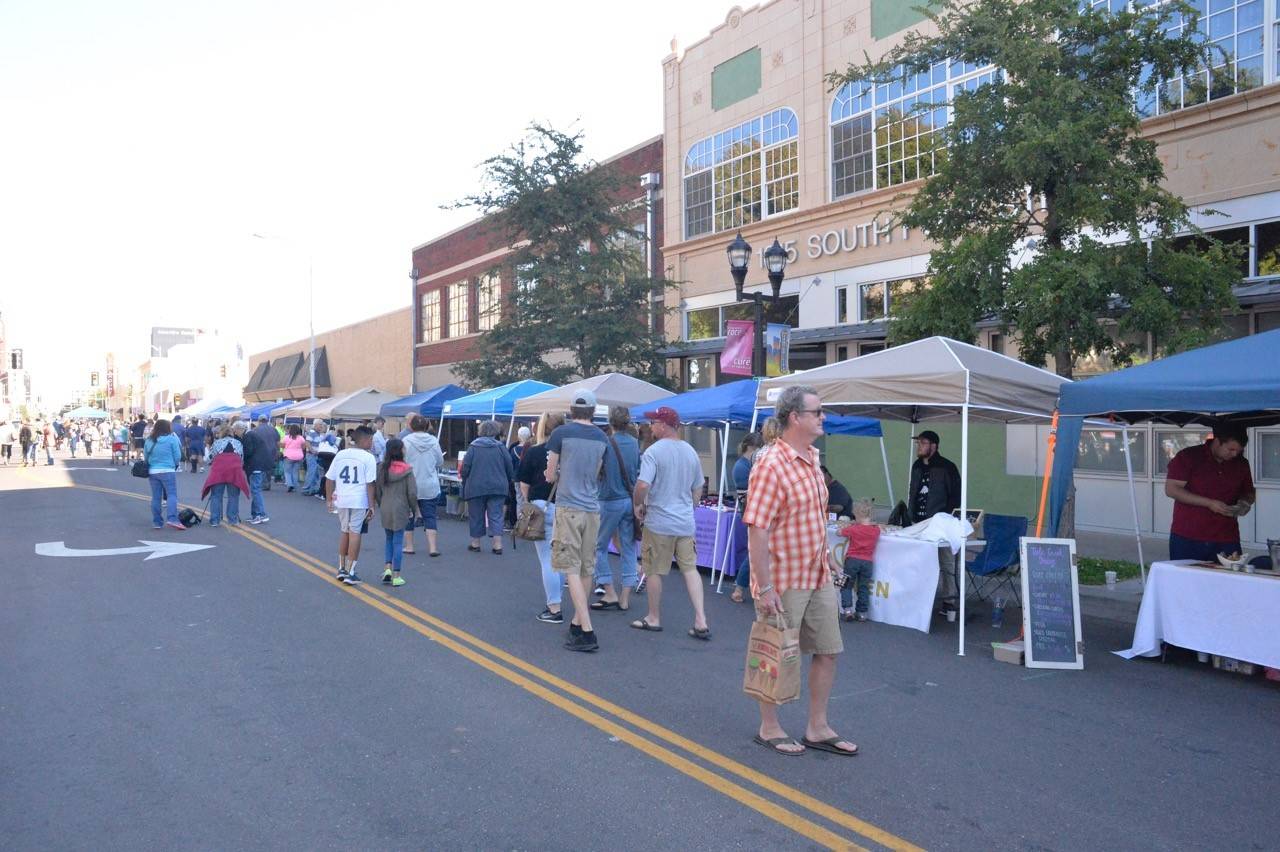
Today, we did venture out. We went downtown. We met our son at Amarillo’s Community Market that was up and running in front of the Chamber of Commerce building at 10th Avenue and Polk Street.

I have high hope that today we might have gotten a glimpse of Amarillo’s future. It’s one that bodes well for the city’s health.

They’re going to break ground pretty soon on that ballpark/multipurpose event venue across the street from City Hall. The MPEV will need to get done in a hurry, in time for the 2019 minor-league baseball season. They’ll toss out the first pitch in April 2019 when the city’s new AA baseball team takes the field.

What’s in store for the future of the city? The MPEV won’t just be a ballpark. The “multipurpose” element of the structure tells me they have plans to play host to events such as, oh, the Community Market and other events where folks from Amarillo and points beyond can enjoy themselves.

As we meandered around the downtown area today we noticed lots and lots and lots of construction under way. A bit north on Polk, they’ve gutted an old retail store to make room for new shops. Farther west on 10th we noticed the old Firestone structure has been gutted out, too, in anticipation of more loft dwellings.

Yes, we have that Embassy Suites hotel about to open. The parking garage is all but done.

The hundreds of folks with whom we mingled today ought to be sure to keep coming back downtown once all those projects are completed.

I’ve said before in this blog that downtown Amarillo bears little resemblance to the district my wife and I first saw when we arrived here in early 1995. Indeed, the central district on this day looks a bit more spry than it did just two or three years ago.

The not-so-good news for us is that we likely won’t be Amarillo residents when all this work is done. We plan to relocate downstate. It’s not all bad as far as we’re concerned. That RV we own travels pretty well in this direction and we intend to be frequent visitors to the city we’ve called “home” for the past two-plus decades.

We believe we got a glimpse of what lies ahead for the city’s downtown district — and we are going to look forward to seeing it come to pass.

Amarillo has a ‘walking problem’

A retired college administrator manages routinely to put pressing public matters into their proper perspective.

Take it away, former Amarillo College President Paul Matney.

Matney is an avid supporter of the downtown Amarillo ballpark/multipurpose event venue. He spoke eloquently and passionately about it leading up to the November 2015 non-binding referendum in which voters approved its construction.

He took note Wednesday morning of the $45 million ballpark’s construction, which is scheduled to commence early in 2018, while discussing some issues at a focus group session involving potential activities for older Amarillo residents.

Matney knows a thing or two about parking, given his many years affiliated with AC, where parking — particularly at its main campus on Washington Street — has been a chronic issue for students over many years.

He spoke of public concerns stated about downtown parking once the MPEV is built. He took particular note of the 750-space parking garage that’s being completed on Buchanan Street across from where the MPEV will be erected. He also noted that downtown Amarillo has more than 2,000 parking spaces within three blocks of the MPEV. He didn’t mention the on-site parking that will be available once the MPEV is built … so I’ll do it here.

Matney then quoted one of his AC presidential predecessors, who once said, according to Matney, that “Amarillo doesn’t have a parking problem; it has a walking problem.”

Bingo! Ba-da-boom!

You got it, Mr. President!

The MPEV will continue to have its critics. I understand their concern, even though I fear they aren’t looking at the bigger picture. They look at potholes in the street wonder why the city won’t fix them when it is devoting so much attention to the MPEV and other downtown projects. It’s kind of an apples-oranges deal.

I do believe, though, that the pro-MPEV contingent of business, civic and political leaders need to keep Paul Matney’s phone number on their speed-dial. When questions arise about the MPEV, just call him and ask him for his take on them.

He’ll set anyone straight.