Tag Archives: World War II

The world changed 75 years ago

pearl-harbor

It took a sneak attack on American warships moored in a Honolulu bay to change the world forever.

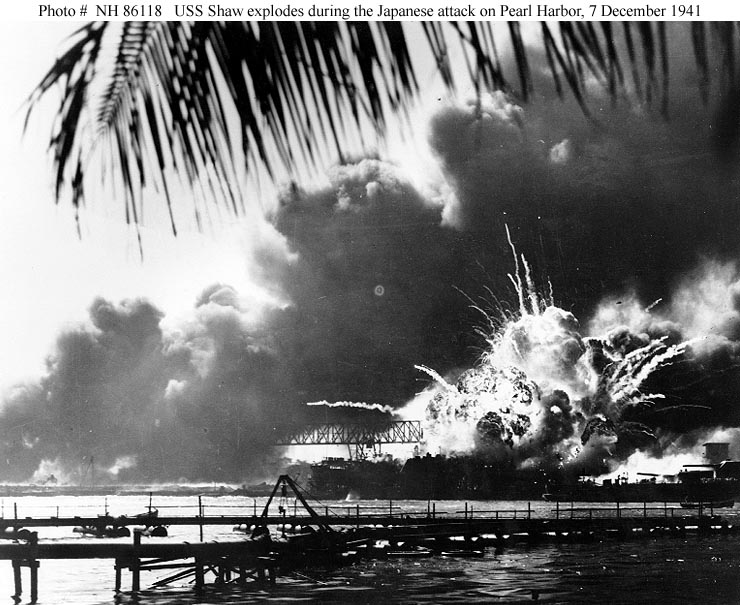
The attack occurred 75 years ago at Pearl Harbor, Hawaii. Japanese pilots taking off from Japanese aircraft carriers swooped in over the harbor on that Sunday morning. They strafed and bombed the ships, sinking several of them where they were docked. They did the same thing to our Army aircraft at Hickam Field.

Thousands of American sailors and soldiers died that day.

The nation was shocked beyond its ability to believe what had just happened. Think of it today as the “original 9/11.” Most Americans weren’t prepared to cope with the idea that a foreign power could strike us on our soil, killing our military personnel.

President Roosevelt stood the next day before a joint congressional assembly and asked for a declaration of war. It came quickly and overwhelmingly.

We stood united. We rallied ourselves. We mobilized. We turned our huge industrial capacity into a weapons-making machine.

All told, our nation sent 16 million Americans into the fight against the Japanese … and against the Nazi Germans and the Italians in Europe.

We seemingly don’t fight “righteous” wars these days. Our nation remains divided in the extreme as we continue to battle international terrorists in faraway places. Indeed, today’s division has its roots arguably as we fought the Korean War, then the Vietnam War.

World War II was different. We coalesced behind the president. We drafted young men into the military and sent them into harm’s way.

We created “The Greatest Generation,” which was given that title in a book of that name written by legendary broadcast journalist Tom Brokaw. It truly was the greatest generation.

Many of us today owe our very existence to the men who fought the tyrants and returned home safely to start their families. I am one of them. My late father was among the 16 million. I am proud of what he did in the Navy to save our nation from the tyranny that presented a clear danger to this great nation.

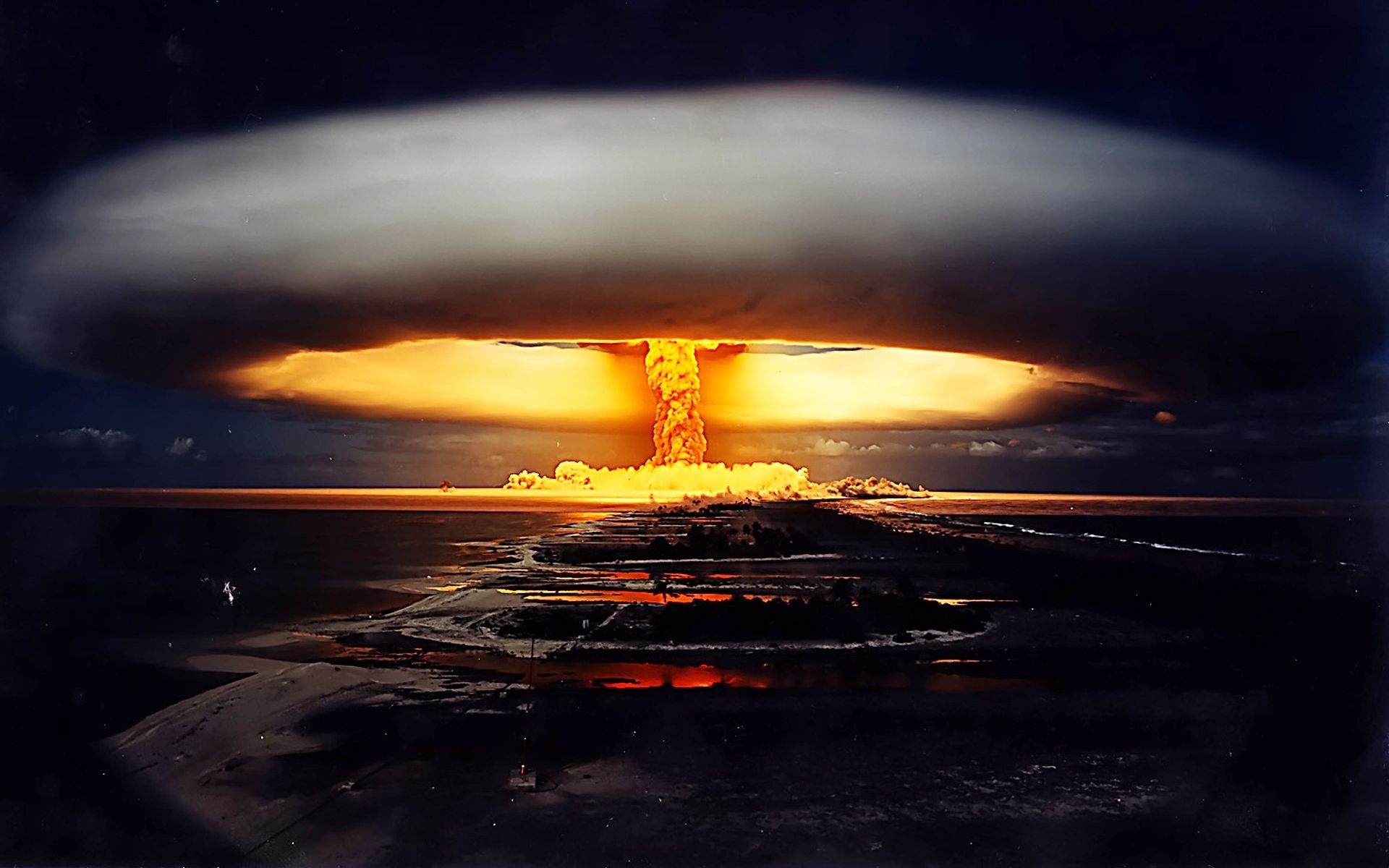
We ushered in the nuclear age and near the end of that world war, we used that terrible weapon against those provoked us into the fight. The Japanese started it; we ended it. Just like that.

Thus, the world changed forever.

Those men who answered the nation’s call to battle are dying now. Only a fraction of them remain with us. They are in their 90s.

I’ll be out and about for the next couple of days. I believe I am going to thank any of those men I see wearing a ball cap with the words “World War II veteran” embroidered on it.

We owe them everything.

Japan’s PM to visit site where ‘day of infamy’ occurred

abe

Shinzo Abe is coming to America.

It’s no ordinary visit for a Japanese prime minister. Oh, no. He’s going to a place burned in the memories of millions of Americans.

Pearl Harbor awaits the visit of the first Japanese head of government since a bright sunny day in December 1941.

On Dec. 7, the United States entered World War II after its naval and air forces were attacked by Japanese bombers and fighter planes. Roughly 3,000 Americans died in that sneak attack. President Roosevelt stood before Congress the next day and declared we had been attacked “yesterday, Dec. 7, 1941, a date which will live … in infamy.”

The president  sought a declaration of war; Congress gave it to him — and the world changed forever.

Prime Minister Abe is coming to Pearl Harbor to meet with President Obama.

http://www.msn.com/en-us/news/world/abe-to-make-first-pearl-harbor-visit-by-japan-leader/ar-AAl9vUm?li=BBmkt5R&ocid=spartandhp

This visit very well could mark a remarkable day of atonement for the Japanese government.

Abe said in a statement announcing the Dec. 26-27 visit: “I’d like to make it (meeting with Obama) an opportunity to send a message to the world that we will further strengthen and maintain our alliance towards the future,” he said. “And at the same time, I want to make it an opportunity to signal the value of Japan-US reconciliation.”

The prime minister’s wife, Akie, visited Pearl Harbor earlier this year, touring the USS Arizona Memorial, where she laid flowers and prayed.

There’s been a good bit of that sort of thing over the years as Japanese tourists journey to Pearl Harbor. Aging men — many of whom fought against Americans during the war — have come to Pearl Harbor to pray and to seek forgiveness for their country’s role in initiating the carnage that erupted all across the Pacific Theater after what FDR labeled a “dastardly” act.

President Obama visited Hiroshima earlier this year, speaking to the world about the dangers of nuclear weaponry. He didn’t apologize for President Truman’s decision on Aug. 6, 1945 to drop an atomic bomb on Hiroshima. Nor should he have done so.

The war ended a few days later. It’s been argued during the decades since that use of the atomic weapons on Hiroshima and Nagasaki likely saved many more lives than they took. Still, the debate continues.

Now the focus turns to Prime Minister Abe’s return visit to Pearl Harbor. Does he make amends? Does he issue a formal apology to the United States for the actions of his predecessors?

My own feeling is that an apology is due. Whatever he says, though, I am certain it will be heartfelt and will, as he said, speak to the “reconciliation” that has drawn the United States and Japan closer in the years that came after that horrible “day of infamy.”

It should be a historic and profoundly meaningful visit, depending, of course, on what the prime minister tells the world.

There he goes again … offending veterans

trump

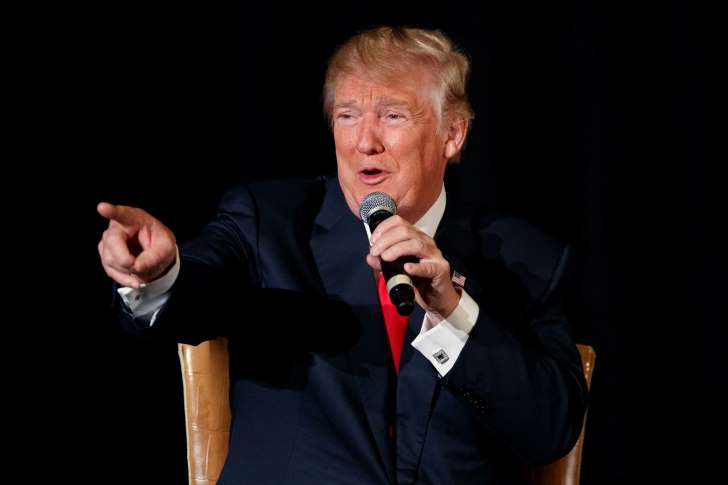
Donald J. Trump once said his time as a student in a military academy was just like serving in the military.

It damn sure isn’t.

Trump also said U.S. Sen. John McCain earned his war hero status only because he was captured by the North Vietnamese, who then held him as a POW for five years.

Now comes this. He seemed to suggest that combat veterans who suffer from post traumatic stress disorder aren’t as strong as those who don’t suffer from PTSD.

http://www.msn.com/en-us/news/politics/trump-angers-with-suggestion-that-vets-with-ptsd-are-weak/ar-BBwXHeL?li=BBmkt5R&ocid=spartandhp

This guy needs a reality check.

Veterans groups have listened to Trump’s remarks. They hoped Trump’s comments were “taken out of context.” They discovered that the reporting has been complete.

The vets say that PTSD victims need help and do not need to be told they are “weak or deficient,” according to The Associated Press.

My own father suffered a form of PTSD when he returned home from World War II. I wasn’t yet around, but my mother used to tell me how Dad would flinch at the sound of airplanes … which was a natural reaction for someone who had endured constant aerial bombardment while serving aboard ship in the Navy in the Mediterranean theater.

They called it “shell shock” back then. Dad got through it.

As the son of a combat veteran, well, I take great offense to the implication that the Republican presidential nominee has uttered in relation to this generation of combat vets.

Not everything was saved in The Netherlands

rotterdam

ROTTERDAM, The Netherlands — Our friends in The Netherlands took great pains to show us communities that were spared the ravages of world war.

Indeed, the nation is a gorgeous collection of Renaissance architecture. Its neighborhoods charm the socks of those who see them for the first time.

Amsterdam is mostly water and a canal cruise is an absolute must for any visitor. My wife and I took one on a warm sunny day in that beautiful city.

Rotterdam is a magnificent city, too. But for a different reason.

It was essentially rebuilt after World War II. Rotterdam was not spared the savage consequences of armed conflict.

The Nazi air force, the Luftwaffe, bombed central Rotterdam into oblivion as it fought to conquer The Netherlands. Adolf Hitler’s high command expected the conquest to take 24 hours; it took the Nazis five days to subdue the Dutch, who put up extraordinary resistance against the invaders.

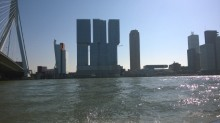
What emerged from the rubble is a city of gleaming skyscrapers ringing one of the world’s largest and busiest harbors.

The picture attached to this brief post is of one of those modern marvels. My wife and I, along with our friend Coen, took a high-speed tour of the harbor. We saw hundreds of ships in port, anchored in the harbor waiting to dock and we saw one ship that had been hoisted out of the water, sitting in a drydock.

ship

Yes, some neighborhoods survived the aerial onslaught that devastated Rotterdam. Our journey to Europe that enabled us to see Old World charm also exposed to us a country that was able to rebuild a great city.

The Dutch did that in Rotterdam.

Anne Frank’s wish came true

anne-frank-house-amsterdam

AMSTERDAM, The Netherlands — Anne Frank wanted her words to outlive her

They have done so, but perhaps not in the manner the little girl ever thought.

There’s a museum on a street corner in downtown Amsterdam. Inside the museum is the girl’s house, where she lived with her mother, father and older sister.

The house was their prison. They had to hide there, inside where Anne Frank’s father, Otto, ran his business. They couldn’t go outdoors. They couldn’t be heard by anyone beyond the walls. They had built a bookshelf to hide the doorway where the family was hidden.

The house imprisoned them, but there were no bars.

Their imprisonment was due simply to their religion. They were Jews and Adolf Hitler had begun his genocide against them.

Anne Frank kept a diary. It has become the stuff of literary legend. It has been published in countless languages.

This German girl whose family fled to The Netherlands to escape the persecutors of Nazi Germany wrote of her life in “prison.” She wrote with stunning eloquence.

One of the most stunning elements of this exhibit lies in the silence that envelops it. All the scurrying, the noise, the hustle and bustle outside the walls of that place is lost the moment you walk inside. It reminds me mildly of the Vietnam Veterans Memorial in Washington, D.C., where one can hear chatter right up to the moment you stand before The Wall; then it becomes something of a religious experience.

One gets the same sense of spirituality when walking through Anne Frank’s house.

She lived just 15 years on Earth. The Nazis from whom she and her family were hiding found her and her family eventually. They sent them to Auschwitz.

Only her father survived. Otto Frank lived until 1980, and only after retrieving his daughter’s diary and ensuring that it was published.

It is an astonishing exhibit to see up close. The courage of this girl has lived through the ages since her death.

My sense is that it will live forever.

I don’t know if Anne Frank knew she would die so soon after she wrote these words in her diary on April 5, 1944: ” When I write I can shake off all my cares. My sorrow disappears, my spirits are revived!” She died of typhus in February 1945.

It doesn’t matter, really, what she might have known.

This little girl should inspire all of us who have followed her.

Not everyone is as friendly as they need to be

bavaria

BAMBERG, Germany — Our friend Alena warned us about it.

We kind of laughed it off. Then it more or less came true: the realization that some folks might actually be inherently rude.

She spoke of the residents of the Franconia region of Bavaria in southern Germany. Alena described them as curt, not very friendly or open.

We came to Bamberg to do some shopping and sightseeing in a lovely city that was virtually untouched by the ravages of World War II.

Nuremberg was all but destroyed by Allied bombing, as were many major cities throughout Germany. Dresden? Berlin? Cologne?

Bamberg was saved from that destruction. Thus, the architecture throughout the city is “original,” according to Alena’s husband, Martin.

So, we walked into a department store. We shopped for some items. After we finished, we were walking out. A woman behind us apparently muttered something as she sought to get past us.

We moved to the side, allowing the woman to scurry out of the store into the sunshine. She said something that Alena overheard.

“I told you about the people of Franconia, right?” Alena said. “That lady was one of them,” she added, referring to the woman who had just scooted by us.

“Really?” I asked. “Did she say something?”

Yes, Alena said. I asked, what was it?

“She said ‘Thank you … finally,'” Alena responded.

Why, I never …

We laughed it off. Earlier in the day, our hosts had joked that my wife and I had brought an “aura” with us that made many of the customer service employees we had encountered extra friendly.

I’ll take all the credit we deserve for that bit of cheer.

As for the woman who mumbled something we likely weren’t supposed to hear as she hurried past us, I’ll just presume she was having a bad day.

Thank you, Greatest Generation

130902154011-01-end-of-world-war-ii-0902-story-top

I feel moved at this moment to offer a word of thanks to roughly 16 million Americans who answered the call in the fight against tyranny.

It was 71 years ago today that General of the U.S. Army Douglas MacArthur accepted the terms of surrender signed by the Empire of Japan. World War II came to an end.

Those 16 million Americans were those who wore the nation’s military uniforms after Japan attacked us at Pearl Harbor on Dec. 7, 1941.

My father was one of them. He went to the federal building in downtown Portland, Ore., in February 1942 to enlist in the Marine Corps. The door was locked, so he walked across the hall and enlisted in the Navy.

Dad shipped out shortly thereafter for San Diego, where he received three weeks — just three weeks! — of what passed for boot camp before shipping out for Europe. He learned his seamanship skills aboard the troop transport ship headed for England.

The great broadcast journalist Tom Brokaw chronicled what he called “The Greatest Generation” in a book that carried that title. I have re-read it at least three times.

Those men and women are dying rapidly now. They’re in the late 80s and well into their 90s these days. I love meeting them today and talking to them about their service and, of course, thanking them personally for it. Most of them just shrug and pass it off as ancient history.

Most of those I see with the “World War II vet” gimme caps are too humble to want to spend much time talking about what they did. Back then, they simply acted out of love of country and perhaps just a touch of fear for what might happen if they didn’t get into the fight.

The prophet Isaiah tells us in Scripture how he answered God by saying, “Here am I! Send me.” These great Americans answered that call in a time of international crisis.

That great struggle came to a formal end on the deck of the great warship USS Missouri. If only it would have signaled the end to all conflict … forever.

It didn’t.

However, the men and women who defeated the tyrants deserve our undying thanks and gratitude now and for all eternity.

Can the candidates keep a secret?

nsa-logo1

Hillary Rodham Clinton and Donald J. Trump — the Democratic and Republican candidates for president, respectively — are set to receive briefings from President Obama’s national security team.

The question keeps bugging me: Will they both receive identical briefings and will they get information that is at matching levels of security clearance?

Trump’s penchant for shooting off his mouth has become somewhat legendary as he campaigns for president. Clinton, too, has problems — allegedly — with protecting national security information.

Of the two, my sense is that Clinton — given her troubles over her use of personal e-mail servers while she was secretary of state — is going to be extra careful with any information she gets from Obama’s national security team.

Trump? I’m not so sure.

This has been a custom dating back to the 1952 when President Truman’s team decided to share this information with Dwight Eisenhower and Adlai Stevenson, the candidates who sought to succeed Give ‘Em Hell Harry.

The intent is to avoid the new president from getting too much of a surprise when he or she takes office. Harry Truman took office in April 1945 and wasn’t told until 12 days after being sworn in after President Roosevelt’s death that, um, we had been doing research on a secret weapon in New Mexico that might end World War II in a hurry.

It was the atomic bomb!

I’m going to assume — yes, I know that’s a dangerous thing to do — that the information given to Clinton and Trump will be given in the strictest confidence. That means the people giving it will be sworn to secrecy, as well as the people receiving it.

Are they bound by any rule that requires them to give Trump the same intelligence briefing they give to Clinton?

More to the point, can the intelligence briefers and the candidates keep it all of it a secret?

Nuclear knowledge becomes an issue

by Snoron.com

Seventy-one years ago the United States of America set a terrible — but necessary in my view — precedent in the conduct of warfare.

A B-29 bomber crew on Aug. 6, 1945 dropped a bomb on Hiroshima, Japan. The device killed tens of thousands of Japanese civilians in instant. Another crew took off three days later and did even greater damage to the Japanese city of Nagasaki.

World War II would come to an end just a few days later.

I raise the issue today because of some remarkable things that the Republican Party nominee for president — Donald J. Trump — has said about the use of nuclear weapons.

Trump has said several astonishing things along the way to his nomination.

* He said Japan and South Korea should be allowed to develop nuclear arsenals to defend themselves against North Korea.

* Trump has said he wouldn’t object if other countries, such as Saudi Arabia, developed nukes.

* He was unable to answer a question about the so-called “nuclear triad.”

* Trump told a TV interviewer that he wouldn’t take the use of nukes “off the table” in the Middle East or even in Europe.

The United States built its nuclear arsenal during the 1950s and 1960s to deter the other great nuclear power — the Soviet Union — from using the weapons against us or our allies. We didn’t build the weapons to use for offensive purposes. We built them to scare the daylights out of the Soviets.

Donald Trump is campaigning for the presidency with no apparent knowledge of our nuclear weapon policy or even any knowledge of why we have the weapons in the first place.

I’m old enough to remember the famous “Daisy” ad that President Lyndon Johnson’s campaign ran a single time on TV in 1964 against Barry Goldwater. It was meant to send the message that Sen. Goldwater could not be trusted with the nation’s vast nuclear arsenal.

I don’t expect another such ad to appear this time around.

However, Trump’s astonishing lack of understanding of nuclear weapons policy should give every American serious pause as they ponder who should become the next commander in chief of the world’s most powerful military machine.

Allow this dissent on ‘most qualified’ candidate for POTUS

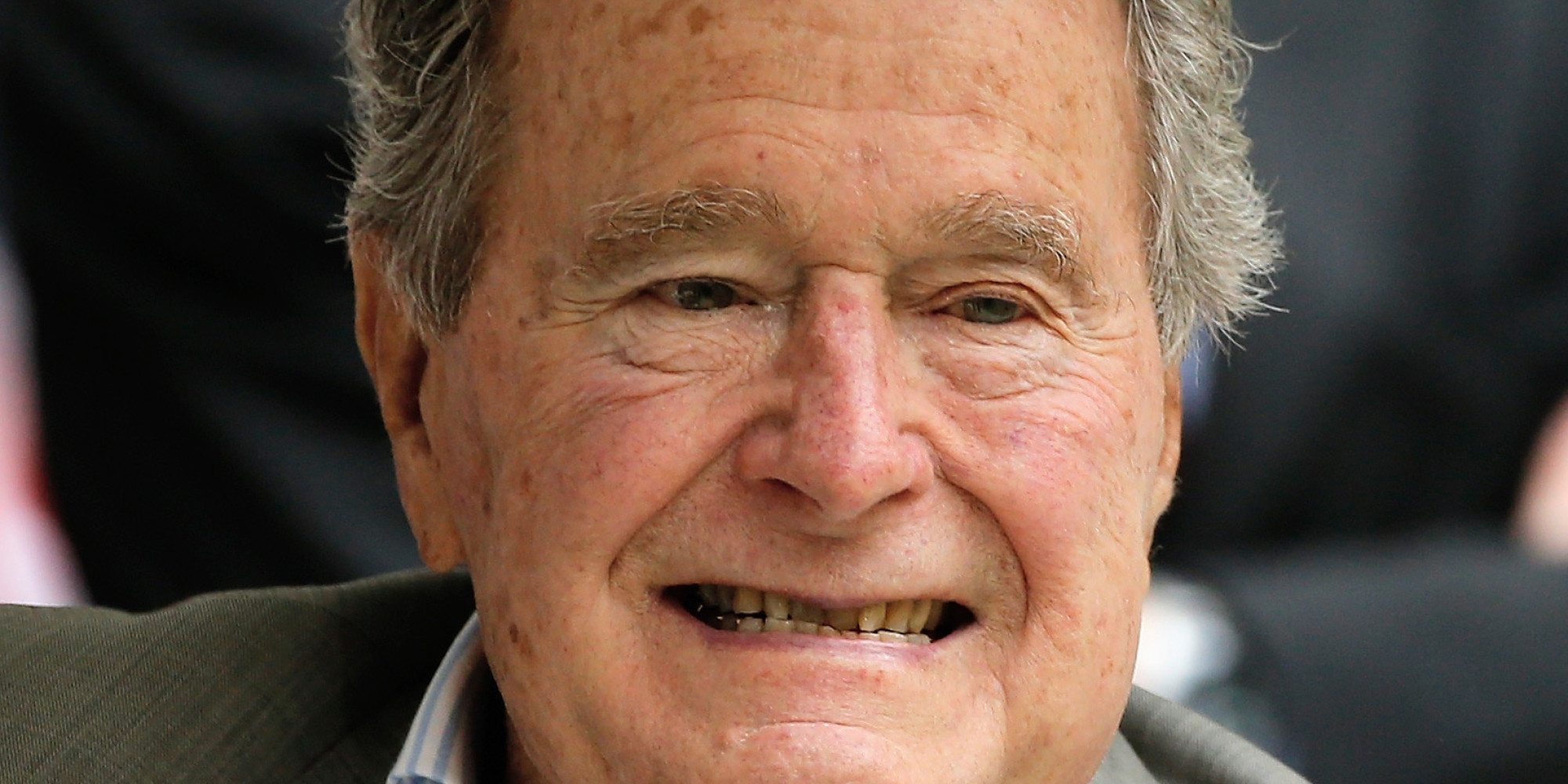
HOUSTON, TX - DECEMBER 01: President George H.W. Bush waits on the field prior to the start of the game between the New England Patriots and the Houston Texans at Reliant Stadium on December 1, 2013 in Houston, Texas. (Photo by Scott Halleran/Getty Images)

“I can say with confidence there has never been a man or woman — not me, not Bill, nobody — more qualified than Hillary Clinton to serve as president of the United States of America.”

So said the current president, Barack H. Obama, this past week at the Democratic National Convention that nominated Clinton to run for the presidency.

I am going to quibble with the president on this one.

Hillary Clinton probably is more “qualified” on paper than either Obama or her husband to become president. Obama served in the Illinois Senate and then briefly in the U.S. Senate before being elected president in 2008. Bill Clinton served as Arkansas attorney general and as governor of his home state before being elected president in 1992.

Clinton’s wife served in the U.S. Senate and as secretary of state after serving as first lady — while taking an active role in policy decisions made during her husband’s administration.

But is Hillary Clinton the most qualified person ever to seek the office?

For my money, the honor of most qualified candidate — in my lifetime, at least — goes to a Republican.

I give you George Herbert Walker Bush.

You are welcome to argue the point with me if you wish.

But G.H.W. Bush’s pre-presidency credentials are damn impressive.

He flew combat missions in World War II as the Navy’s youngest fighter pilot. Bush then came home, moved to Texas and started an oil company. Then he served in Congress, where he represented the Houston area for a couple of terms before losing a Senate bid to Democrat Lloyd Bentsen.

That wasn’t nearly the end of his public service.

He would later be appointed to serve as head of the CIA, as special envoy to the People’s Republic of China, as chairman of the Republican National Committee, as ambassador to the United Nations — and then he served as two vice president for two terms during Ronald Reagan’s administration.

I get that President Obama wants to cast his party’s nominee in the best possible light. Given that she’s running against someone — Donald J. Trump — who is likely the least qualified candidate for president in U.S. history, the president perhaps can be excused for a bit of embellishment.

But a great man is still with us.

Sure, President Bush lost his bid for re-election to Bill Clinton. That, though, must not diminish the myriad contributions he made in service to our beloved country.