Tag Archives: Ronald Reagan

America is still great

hillary

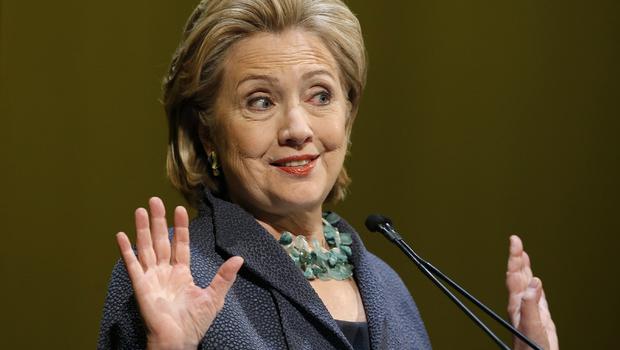
Hillary Clinton might have punched the perfect campaign theme button when she declared victory in this past weekend’s South Carolina Democratic presidential primary.

She took dead aim at Donald J. Trump’s pledge to “make America great again.” The Republican primary frontrunner keeps asserting that the United States no longer is the greatest nation Earth, that it has ceded its greatness to trade rivals such as China and, get this, Mexico. He asserts that foreign governments no longer “fear” this country.

Clinton has a different view. It is that the United States “always has been great,” and she declared it to her fans while basking in the victory glow in South Carolina.

Indeed, the Trump message — depending on how you interpret it — can be seen as a supreme insult to the men and women who serve t protect us. It also insults the career diplomats, foreign service officers, domestic agency staffers and all the rest of those who serve within the public sector at the will of the American taxpayer.

Did I say “insult”? I almost forgot. That’s how Trump has endeared himself to those who claim to be Trumpsters.

I choose not to march to that cadence.

Trump’s fear-mongering, negativity and the message that borders on bigotry might play well among those who have swallowed the notion that we are in steep decline.

Others, though, should keep reminding us — just as Ronald Reagan did so eloquently while proclaiming it was “Morning in America” — that our nation’s best days are still to come.

That’s a big part of Hillary Clinton’s victory message.

There’s no need to “make America great again,” she said.

We’re still the greatest nation on the planet.


Mischief possible on Election Day?

Texas-calendar

Texas’ open primary system is going to be on display.

As it should.

The state’s election system provides opportunity for polling-station mischief. There might be some of it played out Tuesday, but in this wacky, unpredictable, topsy-turvy election season it would seem to be the diciest of propositions.

Texans aren’t “registered” with political parties. We go to the polls with unmarked voter registration cards. We choose which primary to cast ballots: Democrat or Republican. We can zig or zag our way to the polling station of our choice.

How does the mischief come into play? There could be those who are loyal to one party but who might venture into the other party’s polling place to vote the candidate they believe will be the weakest against the candidate of their choice.

Parties are able to muster up concerted efforts in that regard, although it’s at times difficult to prove.

In 2008, heavily Republican precincts in Texas saw a huge spike in Democratic primary voter activity as Sens. Hillary Clinton and Barack Obama battled for their party’s nomination. Clinton won the primary and it was whispered that a lot of Republicans crossed over to vote for her hoping Democrats would nominate her to run against Sen. John McCain in the fall.

Indeed, I spoke to several Republican friends who actually admitted to doing precisely that: voting for Clinton and hoping she would be nominated.

It didn’t work out that way; Obama got the Democratic nod and went on to thump McCain in the general election.

Can such a thing happen on Tuesday? I keep reading about Republican Party “establishment” honchos sweating bullets over the prospect of Donald J. Trump winning their party’s nomination. Might that spur some Democrats to cross over to vote for Trump hoping to push the reality TV celebrity and real estate mogul toward the GOP nomination?

In another time and era, perhaps that could be the case. This  year? Well, it might be a case of being “careful what you wish for” if such a conspiracy materializes across Texas. Democrats wanted Republicans to nominate Ronald Reagan in 1980 — and look how that turned out.

I’ve never been one to “waste” a vote by playing that game. I tend to cherish my vote as something that gives me pride. I’m not seeking to sound righteous. I’m just saying that in my humble view, game-playing with one’s vote cheapens this rite of citizenship.

Of course, I cannot possibly pretend to speak for others.

Let’s just see how it plays out.


Act on the president’s court nominee

gettyimages-505901208-6ba58e5bee050257b43c9d62a921035a661e4702-s900-c85

I remain strongly in support of presidential prerogative.

It’s been one of my core beliefs ever since I started thinking seriously about policy, politics and government.

When I read stories over the past few days about how Senate Republicans plan to block President Obama’s pick for the U.S. Supreme Court — before even knowing who it is — it sends me into deep orbit.

The GOP is digging in. So is the White House.

In my view, the president’s constitutional authority should override the Senate’s role in this decision.

I’ll reiterate here something I hope hasn’t been lost on those who read this blog. My belief in presidential prerogative crosses party lines. This isn’t a partisan issue with me.

In 1991, Republican President George H.W. Bush nominated Clarence Thomas to the high court to replace Justice Thurgood Marshall. I stood behind the president on that pick while working for a newspaper in Beaumont. Did the president overstate Thomas’s qualifications for the court by calling the “most qualified man” he could find? Yes, he did.

But that was his call to make. George H.W. Bush was our president, who had been elected decisively in 1988. He earned the right to select someone with whom he felt comfortable. As for the allegations of sexual harassment that arose late in the confirmation process, well, I didn’t buy entirely into what was being alleged.

Four years earlier, President Ronald Reagan selected Robert Bork to the court. Was he the kind of jurist I would have picked? Heavens no! But that wasn’t my call to make. It belonged to the president. The Senate saw it differently and rejected Bork’s nomination to the court — despite Bork’s well-known brilliance and knowledge of constitutional law — on grounds that he would fundamentally reshape the direction of the Constitution.

The process worked as it was intended, even though I believed then as well in the principle of presidential prerogative.

Barack Obama is equally entitled — just as any of his predecessors have been — to put someone forward to sit on the nation’s highest judicial authority. The death of conservative icon Antonin Scalia has shocked us all. The court won’t stop functioning with only eight justices.

The larger problem, though, might lie in the Senate, where Democrats are vowing revenge if Republicans follow through with their threat to block the president’s court nominee from even getting a hearing.

The Senate could shut down. Government could stop. The upper congressional chamber could become a logjam of legislation approved by the House, which cannot become law over a dispute that Senate Republicans will have started.

For what purpose? To deny the president of the “other party” a chance to fulfill his constitutional duty, to which a majority of Americans entrusted to him twice with their votes.

Republicans want to wait for the next president to take office. They are gambling that the 45th president will be one of their own. It’s a risky gamble, though, that threatens to stymie everything else that their own constituents elected them to do — which is to govern.

It’s all about the court balance

90

President Obama picked up the phone today and made a couple of important calls.

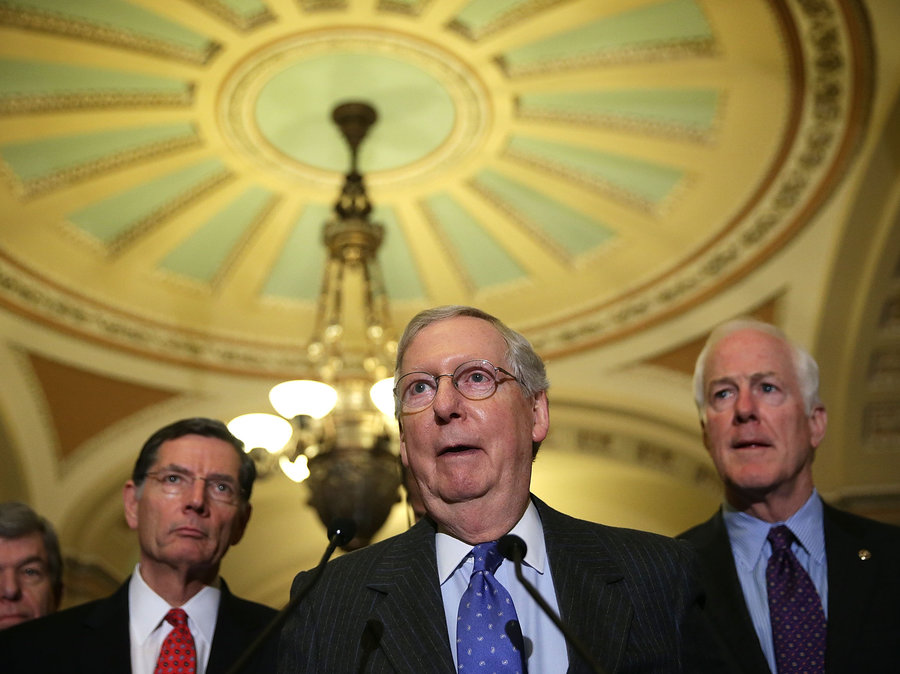
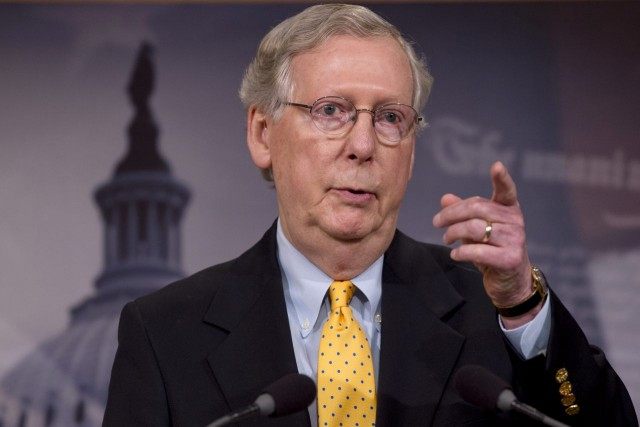
One of them went to Senate Majority Leader Mitch McConnell; the other went to Senate Judiciary Committee Chairman Charles Grassley. Both men are Republicans. The president is a Democrat.

The president informed the senators he intends to make a pick for the U.S. Supreme Court. And, according to White House press secretary Josh Earnest, Sens. McConnell and Grassley both voted in favor of President Reagan’s “lame duck” selection of Anthony Kennedy to join the court in 1988, which was just as much of an election year as 2016.

McConnell, though, says the current president should notpick the next justice. That task belongs to the next president, he said.

What has changed?

It’s the balance of the court. It means everything. Every single thing.

You see, the late Justice Antonin Scalia, the man Obama wants to replace, was a conservative stalwart on the court. The president is not a conservative; therefore, his appointee won’t echo the judicial philosophy of Justice Scalia.

The next justice — if he or she is approved by the current Senate before the end of this year — is likely to change the fundamental balance of the court, which has comprised a thin conservative majority.

Senate Republicans don’t want the court balance to change. They’ll do whatever they can to prevent the president from making the pick.

There’s just this one little issue that, by my way of thinking, should matter more than anything else. The Constitution grants the president the authority to make the appointment, which this president said he’s going to do. It also grants the Senate the authority to vote whether to approve or deny the appointment. It doesn’t require the Senate to act.

If the Republican-controlled Senate is going to stymie the president, then it faces a serious charge of obstruction. Senate Republicans keep denying the obstructionist label.

A failure, though, to act in a timely fashion on this appointment gives even the casual observer ample cause to suggest that, by golly, we have just witnessed a case of political obstruction.

If the president selects someone who is eminently qualified and who has a proven record of judicial moderation — which conservatives still will see a serious break with the conservative judicial record built by the late Justice Scalia — then shouldn’t the Senate give that nominee a fair hearing and a timely vote?

I would say “yes.” Without equivocation.


Election-year vacancies . . . all the rage

ap_mitch-mcconnell_ap-photo9-wi-640x427

As long as we’re talking about filling a Supreme Court vacancy during an election year . . .

Republican senators don’t want to consider a potential nominee who’ll be offered by President Obama. They want the next president to send someone for their consideration. Barack Obama is a “lame duck,” they say.

The last lame-duck president to send a nominee to the Senate was Ronald Reagan. The Senate confirmed Anthony Kennedy to the Supreme Court in 1988.

So, you might be asking: Is it a common occurrence for the president to send a Supreme Court nominee to the Senate during an election year, lame-duck status or not?

I looked it up. Here’s what I found.

Franklin Delano Roosevelt nominated Frank Murphy, who was confirmed in 1940.

Dwight Eisenhower recommended William Brennan; the Senate confirmed him in 1956.

Richard Nixon sent two nominees to the Senate during an election cycle: Lewis Powell and William Rehnquist; the Senate confirmed them in 1972.

Let’s go back a bit farther. William Howard Taft nominated Mahlon Pitney, who was confirmed in 1912. Woodrow Wilson nominated Louis Brandeis and John Clarke, both of whom were confirmed in 1916.

This election-year moratorium nonsense being promoted by the likes of Senate Mitch McConnell and other Republicans should be revealed for what it is: a cheap political ploy to deny a Democratic president the opportunity to fulfill his constitutional duty.

Granted, all the examples I cited here — except for President Reagan’s nomination of Justice Kennedy — do not involve “lame duck” presidents.

The phoniness of McConnell’s desire to block any attempt by Obama to fill a vacancy created by Justice Antonin Scalia’s tragic death is transparent and obvious, given what has transpired in the past 100 years.

How about allowing President Obama to do the job to which he was elected twice to perform?


Get ready for the biggest fight of all

Supreme-Court-blue-sky

The fight over immigration?

Or the Affordable Care Act?

Or budget priorities?

How about gay marriage?

All of those battles between President Barack Obama and the U.S. Congress are going to pale in comparison to what’s coming up: the battle to find a suitable nominee to the U.S. Supreme Court.

Justice Antonin Scalia’s sudden and tragic death Saturday has caused political apoplexy in both sides of the divide in Washington.

Democrats want the president to nominate someone sooner rather than later. Republicans want the nomination to wait until after the election, with the hope that one of their own will occupy the White House beginning Jan. 20, 2017.

President Obama indicated last night he’s inclined to move forward, to nominate someone and to insist on a “timely vote.”

He is correct to insist that he be allowed to fulfill his constitutional responsibility and that the Senate fulfill its own duties.

One of the Republican candidates, Sen. Marco Rubio, said last night that no one has been appointed during an election year. He’s half-right. President Reagan appointed Anthony Kennedy to the high court in 1987; a Democratically controlled Senate confirmed him in 1988, which certainly was an election year.

Consider this, though: Justice Kennedy succeeded another GOP nominee, the late Justice Lewis Powell (picked by President Nixon). Kennedy’s appointment and confirmation did not fundamentally change the balance of the court.

This vacancy is different. By a lot.

Justice Scalia was a towering figure among the conservative majority that serves on the court. Whoever Obama selects surely will tilt to the left.

Therein lies the fight.

Senate Majority Leader Mitch McConnell, a Republican, said the vacancy should be filled after the election, adding that the “American people deserve a voice” in determining who sits on the court.

He could not be more off base. Yes, the voters deserve a voice. However, they spoke decisively about that in November 2012 when they re-elected Barack Obama as president.

Indeed, elections have consequences. There can arguably no greater consequence than determining who gets to select candidates to sit on the nation’s highest court.

The president — whoever he or she is — has a constitutional responsibility to act on a timely manner when these vacancies occur. Moreover, the Senate has an equal responsibility to vote up or down on anyone nominated by the president.

I’ve long believed in presidential prerogative — and my belief in that has never wavered regardless of the president’s party affiliation.

So, let’s mourn the death of a distinguished and, in the president’s words “consequential” justice. Then let us allow the president to do the job allowed by the Constitution and then let us demand that the Senate do its job by voting on whoever the president selects to fill this critical court vacancy.


Sanders’ ‘revolution’ might be overstated

revolution

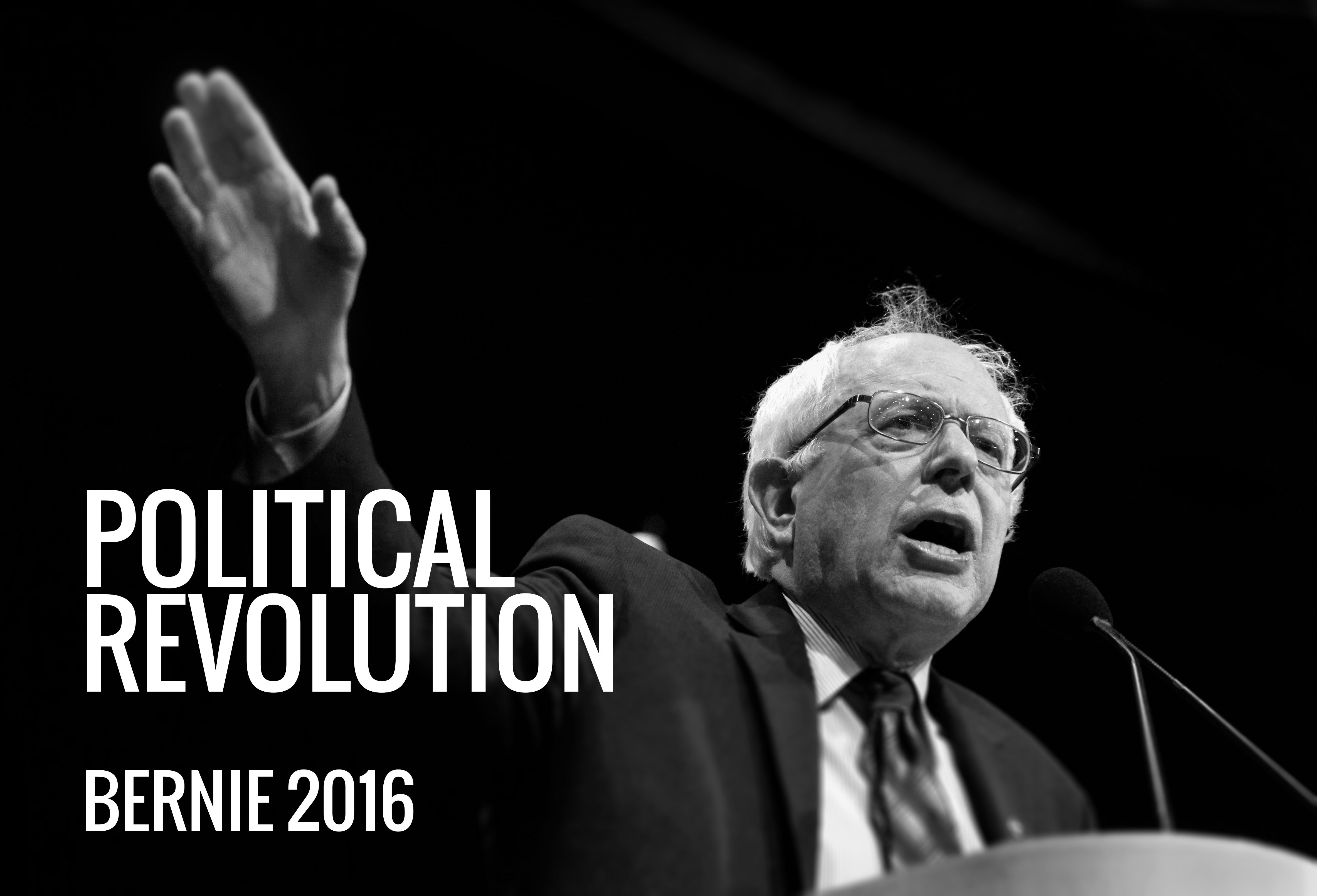
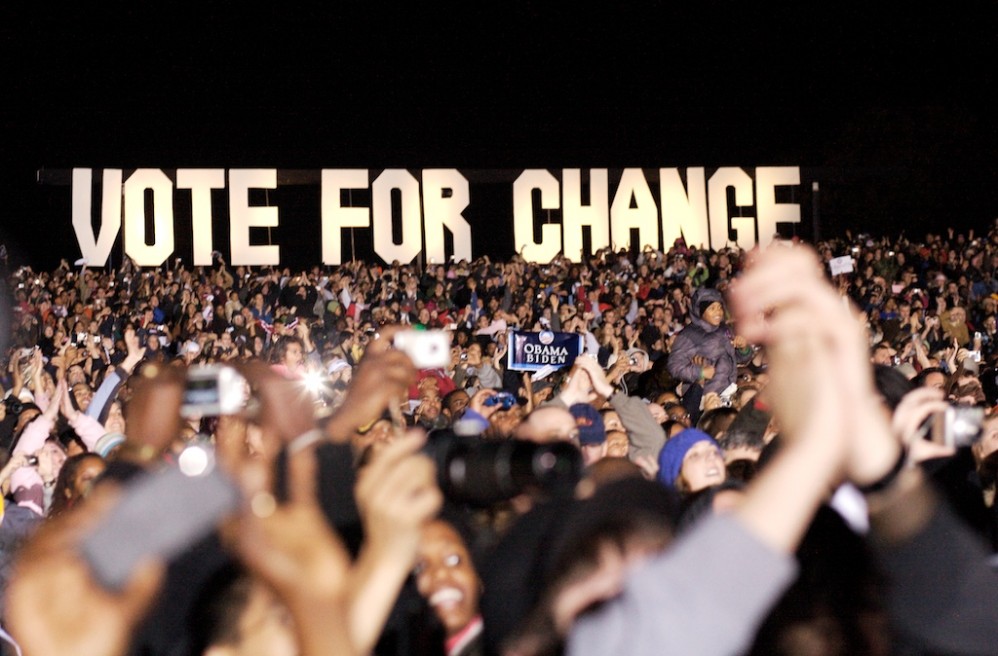
Sen. Bernie Sanders is now using the word “revolution” to describe the nature of his bid to become president of the United States.

He’s leading Hillary Clinton in every poll there is in New Hampshire, which I think is filling the Vermont senator’s head with visions of overinflated grandeur.

It’s not that his Democratic support is fake. It’s real. But let’s cool the “revolution” talk for a bit.

Three presidential campaigns of the late 20th century also were labeled “revolutions” in some quarters. How did they do?

1964: Sen. Barry Goldwater of Arizona took the Republican Party presidential nomination by storm, defeating “establishment” candidates, such as New York Gov. Nelson Rockefeller in a wild primary fight. He went on to lose the general election that year to President Lyndon Baines Johnson in a historic landslide. LBJ, of course, traded a good bit on the legacy of his slain predecessor, John Kennedy, and vowed to continue pursuing JFK’s unfinished agenda.

1968: Just four years later, the Vietnam War caused another revolution. LBJ’s popularity had gone south. Democrats looked for an alternative. They turned to one in Sen. Eugene McCarthy of Minnesota, who stunned LBJ with a stronger-than-expected showing in the New Hampshire primary. In came another anti-war candidate, Sen. Robert F. Kennedy of New York, brother of the murdered president and a political hero to many Americans — including yours truly. Vice President Hubert Humphrey, another “establishment” candidate, won the nomination, but then lost to Republican Richard Nixon by a narrow margin that fall.

1972: Let’s call this one the Anti-Vietnam War Revolution 2.0. The flag bearer this time would be U.S. Sen. George McGovern of South Dakota, who beat the party “establishment” led by Sen. Ed Muskie of Maine to win the nomination. McGovern drew big crowds to rallies, too, just like Sanders. Did they equate to votes that November? Ummm, no. President Nixon won 49 out of 50 states and buried McGovern’s “revolution” under the landslide.

Yes, some “revolutions” succeed. Ronald Reagan’s landslide victory in 1980 is one. Barack Obama’s election in 2008 could be considered another one. But they required extraordinary circumstances. The Iranian hostage crisis hurt President Carter grievously in voters’ minds in ’80 and the economic free-fall of 2008 helped lift Sen. Obama into the White House eight years ago.

Sanders might think he’s carrying the torch for another revolution. Then again, Republicans such as Donald Trump, Ted Cruz and perhaps even Marco Rubio might want to say the same thing . . . for entirely different reasons.

I just want to remind the revolutionaries out there that the political establishment doesn’t get to be so entrenched and powerful by being made up of pushovers or patsies.


‘Failed presidency’? Hardly

3003122896_6fc69cb06e_o-998x656

Ed Rogers’s bias is crystal clear.

The Republican operative, writing in the Washington Post, calls Barack Obama a “failed president.” The president’s alleged “failures,” Rogers asserted, has led to the rise of Donald J. Trump and the crippling of Hillary Rodham Clinton.

Read the essay here.

I am acutely aware that there are those who side with Rogers’s assessment of Barack Obama’s two terms in the White House. I also am aware that others disagree with him, who believe that the president’s tenure has been anything but a failure.

I happen to one of the latter.

I’m enjoying, however, listening to the field of Republican presidential candidates harp on the same thing. They decry American “weakness.” They blame the president for it. They say we’re weak militarily, economically, diplomatically, morally . . . have I left anything out?

I shake my head in wonderment at those assertions. Then I realize that they’re all politicians — yes, even Donald J. Trump, Carly Fiorina and Ben Carson — seeking to score points.

That’s what politicians do, even those who say they aren’t politicians.

Democrats do it as well as Republicans.

However, I am going to let history be the judge about whether this presidency has failed.

So far, I’d say “no.”

The economy is stronger than it was when Barack Obama took office; we’ve continued to wage war against terrorists; our military remains the most powerful in the world; we’ve scored diplomatic victories, such as securing a deal that prevents Iran from obtaining nuclear weapons — irrespective of what the critics allege; we’ve kept our adversaries in check; we’ve avoided a second major terrorist attack on U.S. soil.

Has this been a perfect seven years? No. Has any presidency skated to completion with a perfect score? Again, no. Not Ronald Reagan, FDR or Ike. All the great men who’ve held the office have endured missteps and tragedy.

However, this “failed presidency” talk comes in the heat of a most unconventional election year.

I will continue to keep that in mind as the rhetoric gets even hotter as the year progresses.


Bernie channels Fritz Mondale

102694294-472283274.530x298

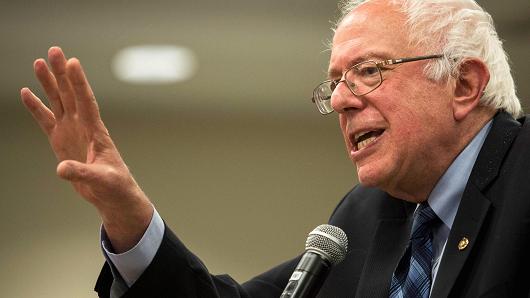
U.S. Sen. Bernie Sanders made a pledge last night at the CNN-sponsored Democratic Presidential Candidate Town Hall Forum.

The self-proclaimed “democratic socialist” said he will “raise taxes” to pay for his universal health insurance plan if he’s elected president of the United States.

Interesting, you know?

Here’s why.

The last national politician I can remember who made such a promise was the 1984 Democratic nominee for president, former Vice President Walter F. Mondale.

He stood before the party convention, accepted his party’s nomination and then said that President Ronald Reagan (against whom he ran that year) also will raise taxes. “He won’t tell you; I just did.”

I recall liking Mondale’s honesty at the time. It struck me that it was a bold statement to make.

But how well did it play with American voters that fall?

Not well . . . at all.

The president pulled in 59 percent of the popular vote; he beat Mondale by about 17 million ballots; President Reagan won 525 electoral votes; what’s more, he came within about 2,000 votes of winning all 50 states, losing only Mondale’s home state of Minnesota.

Promising to raise taxes never is a good idea, Sen. Sanders.


GOP contest is a two-man match race

rs-trump-cruz

Will Rahn, writing for the Daily Beast, has concluded that the Republican Party presidential primary campaign has settled into a two-man race.

It happens to comprise perhaps the two unlikeliest candidates of the field . . . but there’s a third highly unlikely guy out there who’s been left in the dust.

Donald J. Trump vs. Ted Cruz.

That’s who the GOP has left to decide in this primary battle, Rahn writes.

A part of me is saddened  by that possibility. Another part of me wonders if either Trump or Cruz really and truly can defeat whomever the Democrats nominate.

It’s looking a bit dicier at this moment for one-time prohibitive Democratic favorite Hillary Rodham Clinton. She once was thought to be invincible. No longer.

Still, I am trying to grasp the notion of either Trump or Cruz being able to defeat Clinton in a national election. I cannot get there.

Both men represent the so-called “outsider” wing of the party, even though Cruz has been a member of the U.S. Senate since January 2013; I guess that means he isn’t an entrenched member of Congress.

The once-enormous GOP field had a number of highly qualified individuals seeking the presidential nomination. My favorites, if you consider their skill and experience, were John Kasich, Jeb Bush, Marco Rubio, Chris Christie and Rand Paul. They remain my personal favorites.

Then we had Ben Carson, the retired pediatric neurosurgeon seeking election to the only public office he’s ever sought. He isn’t qualified and that’s all I intend to say about that.

The rest of the field? I’ll just shrug.

We’re going to be left with Trump and Cruz fighting it out to the end, says the Daily Beast writer.

It appears to me at least that the Republican Party is morphing into a political organization that some truly great Americans — Dwight Eisenhower, Ronald Reagan and Barry Goldwater — wouldn’t recognize.