Tag Archives: ISIS

Up next? A ‘pitiless’ response to terror

epa05024278 French president Francois Hollande speaks in Paris, France, 14 November 2015, following a series of coordinated attacks in and around Paris late 13 November 2015, which left more than 120 people dead. Hollande blamed the Islamic State group for the attacks in Paris that left at least 128 dead, calling them an 'act of war'.  EPA/STEPHANE DE SAKUTIN / POOL MAXPPP OUT

There can be nothing good to come from the Paris attacks this week that killed at least 120 French citizens.

However, the response from French President Francois Hollande gives one hope that the civilized world has gained another full-time participant in the world war against terrorism.

Hollande has vowed a “pitiless” response to the coordinated, well-planned attacks at several locations throughout the City of Lights. And from across the English Channel, British Prime Minister David Cameron told the French that “their fight is our fight.”

France brings considerable muscle to this global effort. The country has a significant military force capable of bringing great harm to whomever it engages. Its intelligence network ranks as one of the more sophisticated on the planet.

Meanwhile, the United States has been waging its own brand of warfare against the Islamic State — which has taken “credit,” if you want to call it that — for the horrifying act it committed in Paris.

Air strikes are continuing. President Obama has decided to send in a small cadre of special operations forces to help train the Kurds in their fight against ISIS in Syria. The British continue to provide air support for the air strikes against terror targets. And, yes, the Russians have joined the fight, too — although it remains an open question whether the MiG fighter jets are actually hitting ISIS targets or merely going after rebel forces fighting the brutal regime of Syrian dictator Bashar al-Assad, who remains a sworn enemy of the United States.

What will it take to defeat the Islamic State? Perhaps it will take more acts of brutality by the monstrous organization against more of our allies throughout the world.

We should continue to accept and welcome all the help we can get.
 

Patience is the key to eliminating these monsters

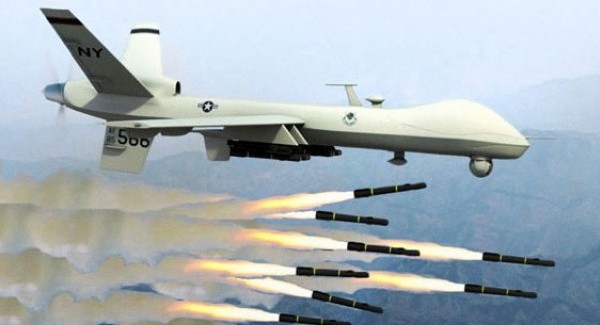
Drone-Strike

American and British intelligence officials are beginning to talk now as though they believe they have killed Mohammad Emwazi, aka Jihadi John.

The strike was quick but it was months in the planning.

It goes to show that patience is a critical ingredient in this war against terrorism and the people who commit these horrific acts.

Emwazi was a British citizen, born in Kuwait but reared in the U.K. He became a propaganda tool for the Islamic State and was video-recorded beheading captive foreigners, the first of whom was U.S. journalist James Foley.

Yes, a lot of folks demanded immediate justice. As it turned out, though, in the hunt for Osama bin Laden, these efforts require tremendous coordination, attention to the tiniest detail and absolute certainty that we’ve got the bad guy right where we want him if we intend to strike.

The hunt for bin Laden commenced right after the 9/11 attacks. The Bush administration hunted far and wide across Afghanistan and Pakistan. Bin Laden almost got it at Tora Bora, Afghanistan. He got away. President Bush left office in January 2009, handed the operation off to President Obama, who then took up where his predecessor left off.

Detailed analysis of intelligence led the Navy SEALs and CIA spooks to the Pakistan complex, where they found bin Laden — and then shot him to death.

Emwazi’s death — which is beginning to sound more certain — was delivered after tremendous effort by U.S. and British intelligence agencies and military planners from both countries.

What’s the lesson?

It’s that we cannot antsy when we don’t bring justice to these monsters right away.

Patience, folks. Patience.


Jihadi John might have been turned into a pile of ash

jihadi-john-jpg

The late, great heavyweight boxing champ Joe Louis once said of an opponent, “He can run, but he can’t hide.”

So it is with terrorists. So, indeed, it might be with a particular monster who — one can hope — has been incinerated in a drone strike in Syria.

Mohammad Emwazi has been dubbed “Jihadi John.” He’s the guy on the viral videos seen beheading captives. To say he is an evil monster is to commit a gross understatement.

A U.S. drone reportedly hit a target where it is believed Emwazi was holed up. Secretary of State John Kerry and British Prime Minister David Cameron cannot guarantee he was there.

Emwazi is — or let us hope was — a British citizen. He was born in Kuwait, moved to the U.K. as a youngster, was raised in a middle-class family, got a good education and then became a radicalized Muslim. He joined the Islamic State and became the voice of the terror organization; he hasn’t been the face, because he hides behind a mask whenever he is recorded committing those barbaric acts.

Let’s be clear on one thing. If Emwazi in fact was vaporized in that air strike, we shouldn’t high-five each other for very long. There will be others who’ll take his place. Just as others have stepped up to replace Osama bin Laden, the world is full of men with evil intent in what passes for their hearts and one of them would step into Jihadi John’s shoes.

Still, let them continue to run. They all must know they cannot hide forever.


‘Take the oil,’ Trump says; how, sir?

large_article_im2557_Middleeastoilproduction

Donald Trump said the following over the weekend …

“You know, if you stop transportation, I mean, you’re talking about the blood – the blood of the world and we’re going to have to be very, very strong … We’re going to have to take away the energy, the fuel, the money from ISIS.”

It’s a position he’s stated several times while running for the Republican presidential nomination. I do not yet know the answer to this question: How does a President Trump (perish the thought) plan to “take away the energy”?

The Islamic State is getting it from sources in the Middle East. It’s likely some form of black market transaction process. Or it could be done up front and in the open.

Either way, Trump’s assertion that we must take the oil, seize control of it connotes a serious military involvement that the candidate — so far — has said would be a mistake. In the same conversation he had Sunday morning with ABC’s George Stephanopoulos, Trump described the Middle East as a “quagmire.”

I don’t know about you, but I haven’t heard a politician ever suggest it is in the country’s best interests to thrust our cherished young American men and women into a quagmire.

So … how would Trump propose to take that oil?

Talk to us, Donald.


ISIS might have enlisted a new, powerful foe

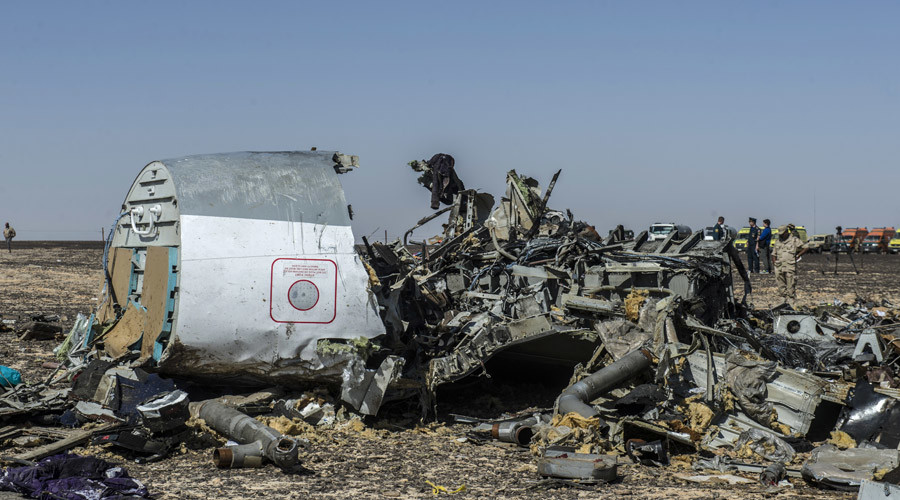
russianjetcrash

Is there any chance that the Islamic State has opened the door for a powerful new adversary to enter the active worldwide fight against the terrorist monsters?

British and U.S. intelligence officials are beginning to piece together a theory that a bomb was placed aboard a Russian Metrojet charter airplane that exploded over the Sinai Peninsula in Egypt.

All 224 people aboard the craft, mostly Russian, died in the tragic crash.

ISIS takes credit

Then we hear that ISIS has taken credit for the explosion, even though recovery teams at the crash site initially said they couldn’t find evidence of a bomb.

Well, if there is to be any possible silver lining in this tragedy — and the world is sending its sympathy to the families of those who perished — it is that Russia well might now become an active ally of the United States in this global anti-terror conflict.

If history is a judge of how the Russians might react to this carnage, then the Islamic State well might have picked the wrong foe to fight.

History tells us that when Nazi German troops invaded the then-Soviet Union in June 1941, they plundered the territory they captured en route to Moscow. They killed millions of Russians.

The Red Army then turned the tide against the Germans and began advancing westward, driving the Germans out of Russia. They returned the “favor,” so to speak, by killing German soldiers who were surrendering. They fought a vengeance-filled advance on an enemy that had brought so much misery to innocent victims.

Yes, history possibly can be a guide to the kind of vengeance that contemporary Russia might seek in this worldwide war against the Islamic State.

President Obama would do well to recruit his adversary Russian President Vladimir Putin to join us in this struggle.


Special forces to Syria? What’s next?

islamic-state-syria759

It’s been said many times that “the enemy of my enemy is my friend.”

Syria’s dictator, Bashar al-Assad, is our enemy. So is the Islamic State, which also is Assad’s enemy. Thus, Assad becomes our “friend” because the United States and Syria oppose the Islamic State?

My head is spinning.

President Obama has just performed a major pivot on Syria. We’re sending about 50 special operations forces to Syria to assist the government in fighting ISIS. Does that mean we’re getting engaged in a ground war in Syria? The president says “no.” I’m not so sure.

We’re putting “boots on the ground” in a place that’s been involved in a bloody civil war for many years now.

I don’t like this change of direction.

The issue of who’s our friend in the Middle East is complicated enough as it is. By my reckoning — and I’m sure many others — we have one true ally in that region: Israel. Many other nations’ leaders say they’re with us in the fight against ISIS. By and large, they have been — at best — not totally reliable.

So now we’re going to reverse ourselves and commit a handful of ground troops to this terrible conflict. Are they going to be frontline forces? The Pentagon says no and that they won’t necessarily be thrust directly into harm’s way.

What will the nation’s reaction be when we get word of the first person killed in action?

And … for what? To assist a brutal dictator who our own president has said should be removed from power?


ISIS leader killed, wife taken captive … what now?

U.S. Army Special Forces did their job with lethal precision overnight, killing an Islamic State leader and taking his wife captive in a daring raid in Syria.

But as with seemingly all things in this complicated war against international terror, complications may set in.

http://www.msn.com/en-us/news/world/us-special-forces-kill-isis-commander-and-capture-wife-in-syria-raid/ar-BBjRkz5

The Delta Force raid ordered by President Obama killed Abu Sayyaf, who was supposed to be captured alive. That part of the raid didn’t work out as planned. Too bad for that, but at least another key terror leader is dead. His wife, Umm Sayyaf, was captured and taken to an Iraqi detention center.

This is where it gets a bit complicated. The Iraqis need to be monitored in the way they treat Umm Sayyaf. The Obama administration has notified International Red Cross authorities about her capture and are working to ensure that she’s treated humanely. I’m OK with that.

However, it’s reasonable to presume that Mrs. Sayyaf may be a font of knowledge about the activities of her terrorist husband. Even terrorists, I’m quite sure, engage in a little “pillow talk,” you know? She’ll need to be questioned aggressively by U.S. intelligence officials seeking as much information as possible about the Islamic State’s continuing operations.

No waterboarding, though. All right?

Defense Secretary Ashton Carter issued a statement: “The operation represents another significant blow to ISIS, and it is a reminder that the United States will never waver in denying safe haven to terrorists who threaten our citizens, and those of our friends and allies.”

Another terrorist monster is wiped out. Another one will emerge to take his place.

So, the fight goes on.

Well done, Delta Force.


CNN anchor crosses another line

What in the world is up with Don Lemon?

The Columbia Journalism Review rated Lemon as one of this past year’s worst journalists. Now the CNN anchor has cemented that crummy rating with a seriously bone-headed question posed to an American Muslim.

http://mediamatters.org/video/2015/01/08/do-you-support-isis-watch-cnns-don-lemon-ask-a/202056

The link is attached. Take a look.

I watched the interview in which Lemon asked Arsalan Iftikhar, a human rights attorney, if he supported ISIS, aka the Islamic State or ISIL, the monstrous Islamic cult that has beheaded captives.

What’s remarkable about the question was Iftikhar’s response, which was that he seemed unsure whether Lemon actually posed that question. He then answered it calmly and rationally.

Lemon has made a bit of an infamous name for himself lately by suggesting that Malaysian Air 370 might have been swallowed by a black hole and then suggesting to a sexual abuse victim that there are graphic methods to avoid being forced to perform oral sex on a man.

The discussion about radical Islam needs to remain focused on what I believe is the core issue: Do the terrorists’ actions represent Islam or are they the acts of religious perverts?

To ask an an intelligent, reasonable, scholarly man who happens to be Muslim whether supports the actions of ISIL becomes an immediate distraction. It focuses attention on a dimwitted question.


An emphatic 'no!' on paying ransom

Why in the world are we even debating this issue of paying ransom for hostages held by terror groups?

Yet we are at some level.

http://video.kacvtv.org/video/2365314751/

The policy long has been that the U.S. government doesn’t pay ransom. It instead by seeking to egotiate with the terrorists to persuade them it is in their best interest to let their captives go. If that tactic fails, then the government responds with military force or it seeks to rescue the captives.

The issue has come to light with the tragic murder by ISIS terrorists of journalist James Foley and the release by another terror group of Peter Theo Curtis. We learned shortly after Foley’s gruesome death that U.S. forces failed in a rescue attempt.

I don’t have a particular problem with allowing the families and friends of these captives seeking to pony up money to secure their release, even though such action usually does interfere with official negotiations under way to accomplish the same thing.

The very idea, though, of the government paying ransom is repugnant on its face. It sets a monetary value on someone’s life that in effect cheapens it.

Terror organizations must not be legitimized by, in effect, rewarding them for the terrible acts they commit. They need to be hunted down and arrested — or killed.


Ready, set, bombs away!

Back and forth we go.

Congressional Republicans are so angry at President Obama that they want to sue him for taking on too much executive authority to get things done. Now comes a report that the White House is considering air strikes against targets in Syria.

The response from Congress, from Democrats and Republicans? Ask us for authorization, Mr. President, before you unleash our air power.

http://thehill.com/policy/defense/215962-corker-congress-must-authorize-airstrikes-in-syria

Sen. Bob Corker, R-Tenn., says the president should seek congressional approval. So has Sen. Tim Kaine, D-Va. Others on both sides of the aisle say the same thing.

They’re likely correct to request congressional approval. Recall that Obama earlier decided to seek congressional authorization after he threatened to hit the Syrian government over its use of chemical weapons on its people. Then the Russians intervened and brokered a deal to get the Syrians to surrender the WMD; they did and the weapons have been destroyed.

Congressional approval is likely the prudent course, given that the president has so few allies on Capitol Hill upon whom he can depend.

It’s fair to ask, though, whether senators like Corker and Kaine are going to stand with the commander in chief when the vote comes. If they’re going to demand congressional approval, then I hope they don’t double-cross Barack Obama with a “no” vote.

Obama reportedly wants to hit ISIS targets in Syria and Iraq. He’s already authorized the use of surveillance aircraft to look for targets. I continue to hold out concern about where all this might lead.

I’ll say this next part slowly: I do not want my country to go to war … again. I’ve had enough. I do not want ground troops sent back to Iraq, where we’ve bled too heavily already.

But if we can lend our considerable and deadly air power to the struggle to rid the world of ISIS, then let’s get the job done.