Tag Archives: GOP

Polls get in the GOP’s way regarding the ACA

Darn those pesky public opinion polls anyway.

The Pew Research Center, one of the more reliable polling organizations out there, has delivered another gut punch to congressional Republicans who are getting a snoot full already from constituents about the Affordable Care Act.

The ACA — which I now will no longer refer to as “Obamacare” — is more popular than ever with Americans.

Pew says 54 percent of Americans approve of the ACA, with 43 percent opposing it.

Republicans — and that includes the president of the United States — keep saying they’ll have a replacement plan ready to go once they repeal the ACA.

Really? Who’s seen it? I haven’t. Have you?

The GOP has eight years to craft their own version of affordable health care for Americans. Instead, they have come up empty, preferring to target the author of the ACA, former President Barack H. Obama. They detest him so much they cannot bring themselves even to refer to the ACA by its legal name, instead using the president’s last name to talk disparagingly about the plan.

Twenty million Americans have health care today who didn’t have it before the ACA was enacted in 2010. Is it perfect? Of course not. The federal government is incapable of crafting perfect legislation and then creating a perfect law.

It might need some tinkering around the edges.

Indeed, former U.S. House Speaker John Boehner — who sued the president over repeal of the ACA — this week has predicted that repeal of the act won’t happen. Congress will work to refine it, make it better, make it more “affordable” for Americans.

Oh wait! Didn’t Congress do something like this before, such as when it enacted Medicare and Social Security?

My advice to Congress is simple: Pay attention to what Americans are telling  you.

‘Bosses’ demand answers from ’employees’

Representative democracy is a messy business.

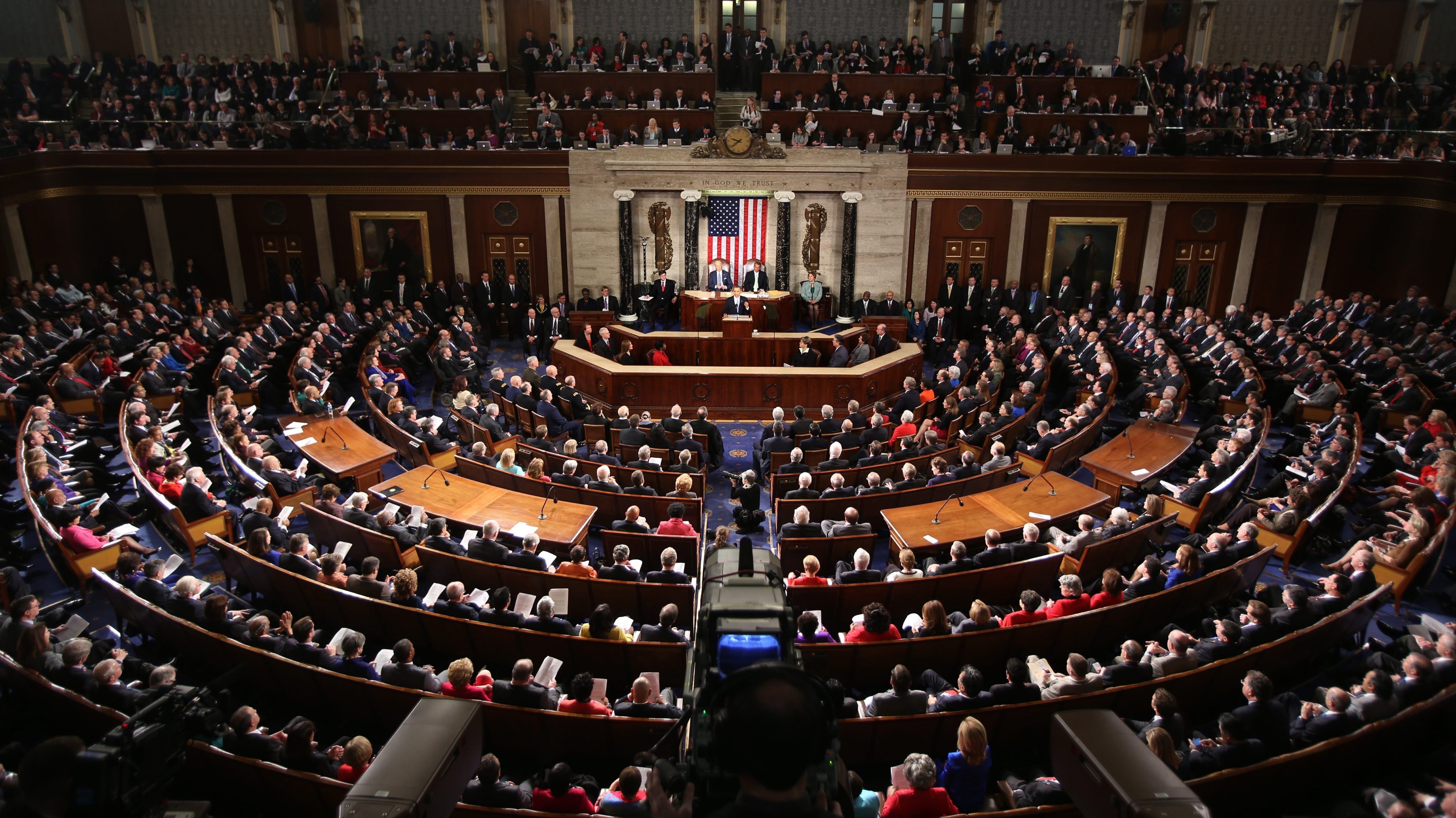
Members of Congress are finding out just how messy it can become. Many of them have gone “home” during the congressional break. Moreover, many of them have had town hall meetings in which they’ve been shouted down by voters angry over any plan to get rid of the Affordable Care Act.

Many others of them have decided against having town hall meetings. They need not hear from their bosses, they say.

I have to express some admiration for congressmen and women who are willing to stand up, take the heat, and then absorb the comments.

Many citizens have been chanting at their employees — these members of Congress — with a simple message: We’re the boss!

Indeed, they are.

And they deserve to be heard. They deserve all they time they desire to make themselves heard. The people whose salary they pay must take it. They must listen.

This recent development brings to mind a local government body that used to operate in a more “employer-friendly” manner.

Randall County, Texas, voters elected a county judge, Ted Wood, who took office in 1995 and restructured the way county Commissioners Court meetings would take place. Wood did so to give county constituents a greater voice; he intended to give them a broad forum to speak their peace.

Wood’s thought was a simple one: We work for the county’s residents and we owe it to them to give them all the time they need to tell us what’s on their mind.

He would open the floor at the end of county commissioners meetings to residents. He would let them speak for as long as they wanted. Wood’s policy drew the ire of some of his fellow county commissioners. His constituency, though, encompassed the entire county, while each commissioner represented only a section of the county, a single county precinct.

Therefore, Wood threw his weight around.

Was he wrong? Did he allow county residents to take control of these meetings? My recollection was that the meetings didn’t go on forever. They did have end points.

However, the county judge had his heart in the right place. He knew who were the bosses in this form of government we call “representative democracy.” Ted Wood understood that he worked for the taxpayers who pay the bills, not the other way around.

Members of Congress who aren’t listening to complaints from their bosses need to understand that truth, too.

‘Town hall meetings are great … ‘

I want to discuss a brief, concise and pithy message that popped into my Twitter feed this morning.

It comes from my state senator, Kel Seliger, an Amarillo Republican. It says: “Town Hall meetings are a great way to report to and interact with the public we serve. I’ve had 374. At least 37 planned for Q3 2017.”

Bear with me as I parse this statement for just a moment.

Town hall meetings have become something of a story in the past few days as members of Congress have taken their post-Presidents Day break, returned home — in many instances — to meet with their bosses.

They’ve discovered that the folks back home are none too happy with them. They don’t want their “employees,” those members of Congress, to mess with the Affordable Care Act.

Some members of Congress — such as Mac Thornberry, R-Clarendon — have decided to skip the town hall meetings altogether.

Thornberry is meeting instead with local business leaders, trying to assess the impact of federal regulations on their businesses. One of those leaders told me this week the discussion dealt with the difficulty of the rules handed down by the Obama administration and that Thornberry has given them assurances that he would work to loosen government’s regulatory reins.

Thornberry’s Amarillo meeting was a friendly event. I know … it’s shocking, shocking.

It’s fair to wonder if state Sen. Seliger would believe so strongly in the value of town hall meetings if he were forced to face down the beast that’s been awakened by the Republican-controlled Congress’s desire to repeal something that folks need.

Yes, Kel, these events “are a great to  way interact with the people we serve,” which brings me to another critical point.

These government officials do work for us, you and me. Whether we cast our votes for them or for someone else, they answer to us. We pay their salaries, provide them with their staff, pay for their public transportation, their stationery, their telecommunications devices; I almost wrote “typewriters,” then remembered that we don’t use typewriters any longer.

To that end, it is important to remind these individuals of that indisputable, irrefutable fact. The crowds at these town meetings across the land — in “red” and “blue” congressional districts alike — are doing that very thing. Good for them!

Obamacare repeal effort losing steam?

Some chatter is beginning to develop that suggests efforts to repeal the Affordable Care Act might be subsiding among congressional Republicans.

A New York Times story lays out what appears to be an interesting scenario. It is that with President Barack Obama now out of power, the repeal-and-replace effort is being replaced by suggestions of tinkering around the edges of the ACA.

What gives?

It appears to me that the issue among House and Senate Republicans might have had more to do with the man who crafted the legislation than the legislation itself.

It’s not an unreasonable view.

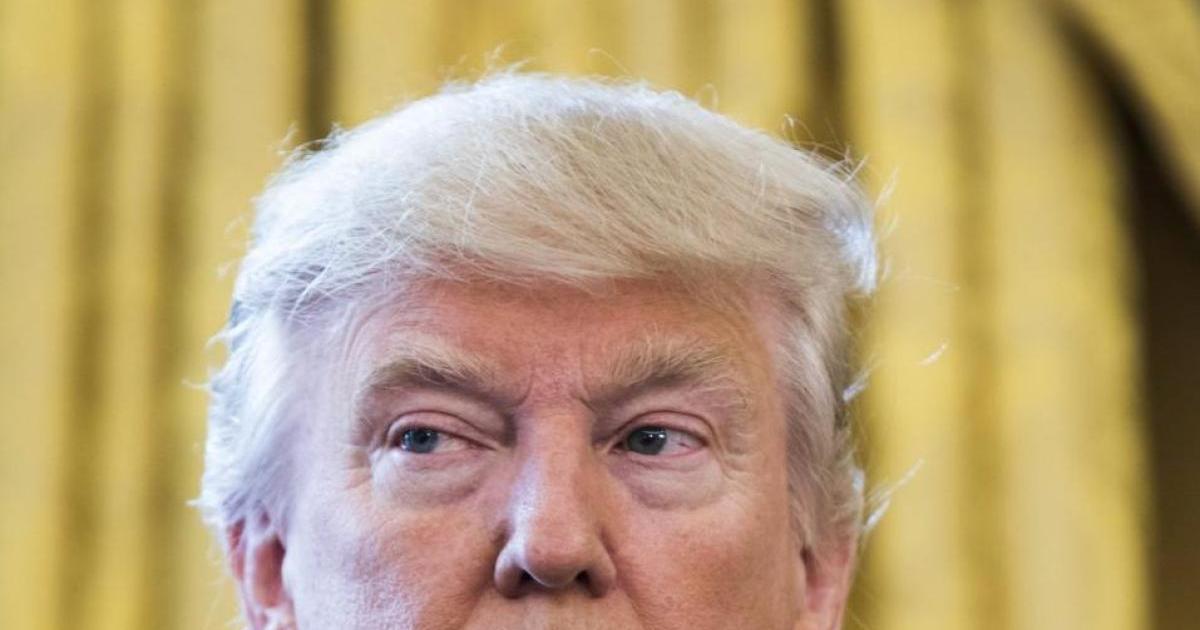
ACA also is known as Obamacare, which has been a whipping boy for Republicans and other critics of the former president’s signature domestic policy initiative. Donald J. Trump has called for repeal and replacement of the ACA, calling the insurance plan a “disaster” for the country.

But … is it?

Twenty million Americans now have health insurance who didn’t have it before. Why? They couldn’t afford it prior to enactment of the ACA.

Then we’ve had those town hall meetings across the country. Citizens have been flooding meeting halls and shouting down members of Congress with demands to keep their hands off the ACA out of fear they would lose health insurance coverage.

There might be signs of lawmakers getting spooked by the anger they’re hearing out here among their constituents. Lawmakers also are finding out that crafting a replacement law is far more complicated than simply scrapping the old one. Go figure.

As the Times notes, Obama’s absence from the public stage now has turned attention to potential solutions. According to the Times: “But with President Barack Obama out of office, the debate over ‘Obamacare’ is becoming less about “Obama” and more about ‘care’ — greatly complicating the issue for Republican lawmakers.”

Republicans have had nearly eight years to come up with a replacement plan. However, for virtually the entire length of the Obama presidency, they’ve been hung up on repealing legislation that has the name of the man they detest.

Now they’re learning about the difficulty of replacing it.

A true GOP leader passes from scene

Today’s congressional Republicans don’t invoke the name of Bob Michel these days.

Why is that? Well, Michel represented another Republican Party, one that knew how to legislate, to govern even when it was in the minority. The former Illinois congressman had friends and allies who happened to be Democrats. The GOP of today is more partisan, angrier, more committed to ideology than to actual governance.

Bob Michel has died at the age of 93. He won’t be feted with a huge state funeral. There might be the perfunctory words of praise for his service to the country.

Actually, though, this man represented a kinder, gentler — and more effective — time in government.

Michel served as GOP leader in the House of Representatives. Then he got pushed aside by firebrand Newt Gingrich, the GOP congressman from Georgia who led that Contract with American revolution that took command of Congress in January 1995.

As Politico reported, Michel often car-pooled to and from work at Capitol Hill with crusty Democratic Rep. Dan Rostenkowski, a fellow Illinoisan. He didn’t shy away from his across-the-aisle friendships.

He also was a fierce champion for President Reagan’s conservative Republican agenda. But he fought hard while maintaining his friendships with those on the “other side.”

If only more lawmakers — Democrats and Republicans — could mirror the temperament exhibited by Rep. Michel. There actually could be some effective legislation enacted that would become laws that most of us — if not all of us — could embrace.

Sen. Paul backs off on investigations … seriously?

U.S. Sen. Rand Paul said the following on Fox News Radio. Pay attention, please.

“I think that might be excessive. I think it looks like the President has handled the situation and unless there’s some kind of other evidence of malfeasance, this sounds like something that was internal White House politics and it looks like the President’s handled it. … I just don’t think it’s useful to be doing investigation after investigation, particularly of your own party. We’ll never even get started with doing the things we need to do like repealing Obamacare if we’re spending our whole time having Republicans investigate Republicans. I think it makes no sense.”

The Kentucky Republican is talking about whether Congress needs to investigate allegations that former national security adviser Michael Flynn met with Russian intelligence officials during the 2016 presidential campaign. These meetings lie at the heart of the swirling controversy that threatens to engulf the Trump administration.

Republicans who run Congress do not need to investigate the Republican president, Sen. Paul said.

Investigations take up too much time he said, distracting lawmakers from more important matters.

Wow! I guess he forgot about all the Benghazi hearings involving former Secretary of State Hillary Rodham Clinton that, um, turned up nothing. Zero!

Oh, wait! It’s OK for Congress to launch interminable investigations looking for dirt on someone from the other party.

Is that correct, Sen. Paul? Well … Senator?

Trump vs. McCain: Keep your punches up …

Donald J. Trump started the feud with John McCain.

The president vs. the senator is now getting serious. I’ll stipulate that I’m rooting for the senator who once was his party ‘s presidential nominee.

This intraparty feud could get in the way of some serious policy matters.

The president fired the first shot in the feud when he told an interview that he didn’t consider the Arizona Republican U.S. senator to be a war hero. Trump said McCain is a hero only because “he was captured. I like people who aren’t captured. OK?”

I was among those who thought that comment would doom Trump’s budding presidential candidacy. Silly me. I was so wrong!

McCain ever since has been none too bashful about criticizing Trump. McCain’s foreign policy credentials are well known. He believes Trump is too friendly with Russian strongman Vladimir Putin and has said so publicly.

The feud has taken a new turn. McCain has criticized a military mission that Trump ordered. Trump and his team have said McCain should apologize for impugning the memory of a Navy SEAL who died in the operation in Yemen.

From where I sit, I didn’t here McCain disparage the gallantry of the fallen commando. It would be unthinkable for the former Vietnam War prisoner to say such a thing.

But this war of words between the leading Republicans doesn’t bode well for the new president getting much through the GOP-led Congress. It’s not that McCain is terribly popular among his colleagues; the difficulty might lie in McCain’s well-chronicled service to the country, which is infinitely greater than any such service Trump ever performed before he was elected president.

The Hill reports: “Further fights between McCain and Trump seem almost certain. Neither likes to back down from a fight, and it is hard to believe that Trump’s criticisms of McCain haven’t got under his skin.”

I am quite certain as well that Trump’s famously thin skin is pretty chapped these days, too.

Yes, Sen. Cruz, but the Democrats have evolved

Oh, how I hate it when someone I detest is correct … even if he doesn’t tell the whole story.

U.S. Sen. Ted Cruz of Texas delivered a historical truth this week while talking to the Fox News Channel. The Republican said that the Democratic Party is the party of the Ku Klux Klan. He said Democrats — not Republicans — have a history of racism and scorn of minority Americans.

Sure, Ted. I get that. Southern Democrats resisted the enactment of the Civil Rights and Voting Rights acts of the 1960s; prior to that, some Democrats bolted their mainstream party to form something called the “Dixiecrat Party,” and then ran the late Sen. Strom Thurmond for president in 1948; Thurmond would later leave the Democratic Party to become a Republican. What’s more, Democratic history of racial intolerance goes many years before that.

Indeed, President Lyndon Johnson faced fierce opposition from within his Democratic Party to enact the civil rights legislation. He enlisted political help from his Senate Republican friends to push them through to his signature.

But times and policies can change. They did with the Democratic Party. Democrats “evolved” over time.

It’s one thing to talk about historical perspective. It’s quite another to relate politics and policy in real time.

Cruz’s comments came after Senate Republicans shut down a speech by Democratic Sen. Elizabeth Warren of Massachusetts, who was reading a letter by the late Coretta Scott King; Warren used the letter to state her opposition to Jeff Sessions becoming the next U.S. attorney general.

Sen. Cruz spoke correctly about Democrats’ sordid history. It’s understandable, too, that he would ignore how the Democratic Party has evolved into a more inclusive organization.

It’s also understandable that he would ignore how his own Grand Old Party has become, well, a bit less inclusive.

I think it’s fair to wonder what President Abraham Lincoln would think today of the political party that carries his name.

How about that? Trump unifies Congress!

Donald Trump has done something his immediate predecessor as president, Barack Obama, couldn’t do: He has brought Republicans and Democrats together for a bipartisan resolution.

Members of Congress have introduced a resolution reaffirming this nation’s support of Australia. The bipartisan resolution comes in the wake of that ridiculous phone call between Trump and Australian Prime Minister Malcolm Turnbull that reportedly ended when Trump hung up on the PM.

We have few stronger allies than the Australians.

Why the president chose to scold Turnbull is beyond most of us who pay any semblance of attention to such things. The Hill reported that Sen. Lamar Alexander, R-Tenn., stated, “but I do know this, the people of the United States do not have better friends than the people of Australia. We’re more than friends.”

Trump reportedly lashed out at Turnbull during a phone call between Washington and Canberra.

Indeed, Australian military personnel have fallen on battlefields alongside Americans in every war going back to World War I. As Sen. Alexander noted, “We’re more than friends.”

And so the president continues to give Russian butcher/strongman/president Vladimir Putin a pass on his conduct while enraging our nation’s strongest allies and, in the case of Mexico, an important neighboring nation.

Hey, the president said he would “unify” the nation. He seems to have achieved a unity of sorts on Capitol Hill.

Go figure.

Next up: Supreme Court nomination

U.S. Senate Minority Leader Chuck Schumer has thrown down the gauntlet: He is prepared to fight to keep the vacancy on the U.S. Supreme Court unfilled for the next year, maybe longer.

Don’t do it, Mr. Leader.

The president is going to nominate someone to fill the vacancy created nearly a year ago by the death of Justice Antonin Scalia. President Obama nominated Merrick Garland to replace Scalia, but Senate Republicans blocked the nomination in a brazen display of petty partisanship by refusing to give Judge Garland a hearing and a vote.

They were as wrong and petty as could be.

We now have a new president and Donald J. Trump is as entitled to make his selection as Barack Obama was entitled. Thus, the Senate should proceed with confirmation hearings and then a vote.

I’ve noted many times already on this blog about my belief in presidential prerogative. Yes, the Constitution also grants the Senate the right to “advise and consent” to whomever the president nominates.

Schumer, though, should at least wait to see who the president nominates before deciding whether to block an appointment.

I agree with Schumer and Senate Democrats on this point: Trump should select a mainstream candidate. The president need not pick a fight with Democrats just for the sake of picking a fight. If he presents a nominee who is considered to come from the right-wing fringe of the judicial/political spectrum, then perhaps the Senate has grounds to protest the nomination.

Blocking a Trump nominee just for the sake of blocking someone — or to exact revenge — is no more acceptable than the idiotic effort to block an Obama nominee.