Tag Archives: Texas Senate

Political ‘leaders’ too often become ‘tyrants’

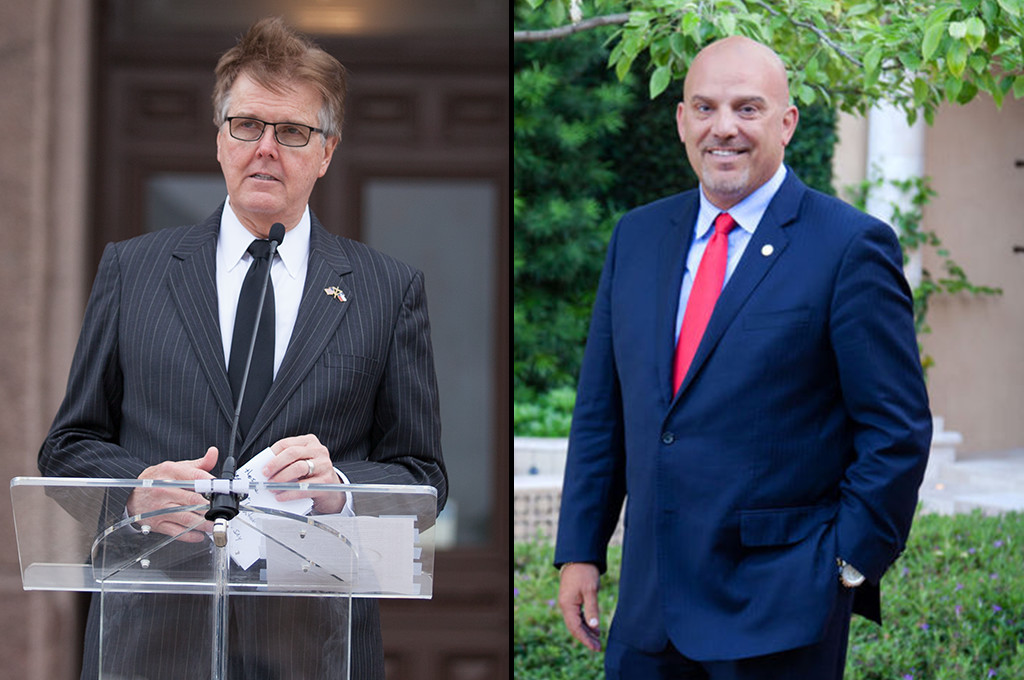
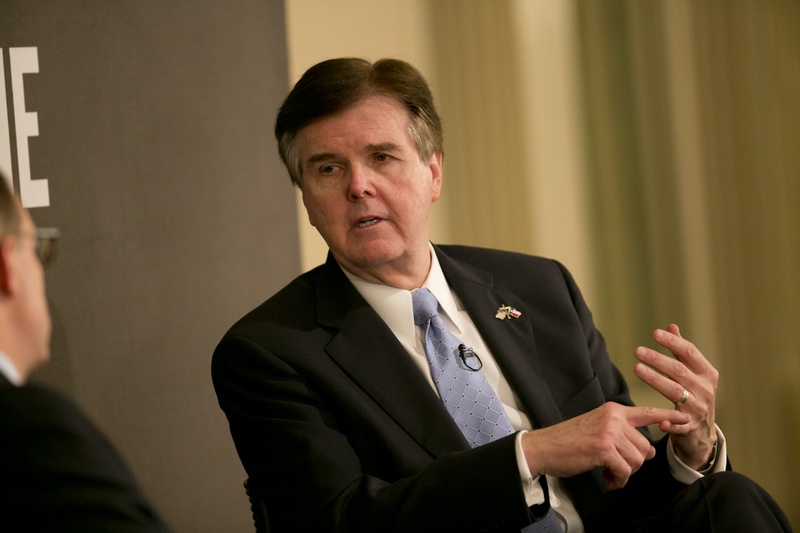
Jay Leeson, writing for Texas Monthly’s Burka Blog, wonders how Texas legislators can stiff their constituents in favor of an agenda being pushed by the state’s second-leading politician, Lt. Gov. Dan Patrick.

He wonders if state senators, for instance, are working for the people who they represent back home or for the lieutenant governor.

Implicit in his essay is the question about whether Lt. Gov. Patrick is running the Texas Senate — a body over which he presides — with too heavy a hand.

Read the essay here.

Indeed, we see this developing all too often. Politicians attain positions of power thanks to the votes of their fellow politicians and then decide that their voice is more important than anyone else’s. It’s a bipartisan affliction that crosses party lines.

A notable Texas politician, Democrat Lyndon Baines Johnson, was famous for corralling fellow senators, getting right into their faces and “persuading” them to vote for a bill of his choosing … or else pay the consequences.

Another brief story involves another Texas pol, former Republican U.S. Rep. Larry Combest of Lubbock, who once refused in the 1990s to support legislation dramatically overhauling the nation’s farm program. House Speaker Newt Gingrich wanted him to support it, and pressured him to do so. Combest refused because he said it would do harm to the West Texas farmers and ranchers who sent him to Congress in the first place.

This dance is occurring now in Washington, D.C. Republican leaders want to overhaul health care laws. They have developed an alternative to the Affordable Care Act that has been getting some seriously angry reviews among voters in congressional districts and states all over the country. Senators and House members are hearing about it, too.

Do they vote for their constituents’ interests or the interests of the party leadership?

Democrats exerted the same pressure on their congressional members when they pushed for passage of the ACA in 2010. The law was unpopular out here in the land, but Democratic congressional leaders insisted on approving it. The ACA’s fortunes have turned; Americans want to keep it and they favor it over the alternative that Republicans are trying to shove down our throats.

But GOP congressional leaders won’t be persuaded by silly notions about public opinion or the principle of representing the desires of the “bosses,” voters who elect them — or who can unelect them if they are given the chance.

Political leadership — whether in Austin or Washington — is vulnerable to those who turn it into tyranny.

What’s with this Texas Senate gay marriage recusal nonsense?

Why do Texas Senate Republicans insist on making ridiculous statements about gay marriage?

The state Senate has approved a measure — with all GOP members and one Democrat joining them — that allows county clerks to recuse themselves from signing off on marriage licenses for gay couples.

Senate Bill 522, authored by Sen. Brian Birdwell, R-Granbury, allows county commissioners courts to appoint someone other than the county clerk to sign such a marriage license if the county clerk objects on religious grounds.

As the Texas Tribune reports: “It ‘guarantees county clerks and every American the free exercise of religion even when they are working for the government,’ Birdwell told his colleagues on Tuesday.”

Huh? Senate Democrats are perplexed at this. Why? Because current state law already allows county clerks to deputize an employee to carry out that duty.

What about the oath of office?

County clerks are entitled to follow their religious faith. I get that. Here is what I do not understand: I do not understand how they can place their hand on a Bible or some other holy book and then pledge to follow the laws of the land and uphold the U.S. Constitution.

I now shall refer to the U.S. Supreme Court, which in 2015 ruled that the equal protection clause of the Constitution guarantees the right of gay couples to marry. That means, if I understand this correctly, that gay marriage is now legal in all 50 states, which would require county clerks to perform the duties of their public office.

SB 522 now allows county clerks and judges to discriminate against people on the basis of their sexual orientation. Sure, they can cite their own religious objection. Existing state law, though, already allows them to step aside and hand the marriage license issuance duty to someone else.

Which brings me back to my original question: Why is the Texas Senate enacting legislation for which there is no need?

Seliger takes brief turn as governor of Texas

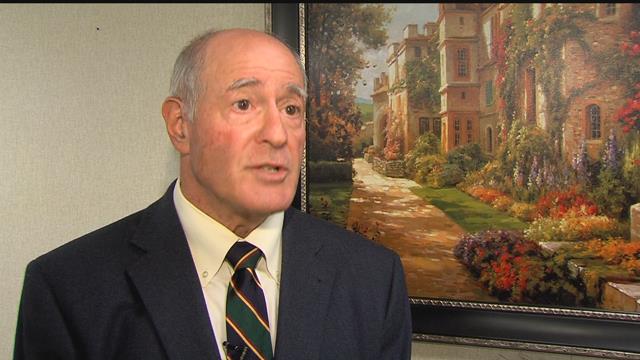
I have had the pleasure and the honor of knowing many honorable men and women in public life throughout my 37 years in journalism. This blog post is about one of the good guys I have had the honor of knowing professionally and personally.

I wrote it initially for another medium, but I have chosen to post it here. My interview with state Sen. Kel Seliger took place just before Donald Trump’s inauguration as president of the United States.

***

On a day just prior to the inauguration of President Donald J. Trump – when Gov. Greg Abbott and Lt. Gov. Dan Patrick were out of the state to attend the festivities in Washington, D.C. – Kelton Gray “Kel” Seliger had the task of serving as Texas’s acting governor.

It’s a responsibility – absent the perks of the job – granted to him by Patrick, who just days earlier had named him president pro tem of the Texas Senate. He was put in charge of the state in the absence of the two top statewide elected officials.

Seliger, a Republican who has served in the Senate since 2004, didn’t arrive this day with any Texas Rangers security detail in tow. There were no special arrangements made, no announcement of his arrival, no fanfare.

Seliger represents a district that stretches from the Texas-Oklahoma border about 100 miles of Amarillo to the Permian Basin, which is another 200 miles south. He maintains Senate offices in Amarillo and Midland and is now essentially a full-time legislator, having sold the steel business he owned with his brother, Lane, several years ago.

He is a native of Borger who graduated from Dartmouth College in Hanover, N.H., and who returned to the Panhandle to stake out his future. Seliger entered public service as an Amarillo city commissioner in 1989 and then served as mayor from 1993 until 2001 before joining the Senate after President George W. Bush appointed the late Sen. Teel Bivins to be U.S. ambassador to Sweden.

Seliger chairs the Senate Higher Education Committee and serves also on the Senate Education Committee.

We chatted for a time over lunch. Here is what I learned about Kel Seliger.

Should the state start over with its standardized testing requirement for public school students?

“There’s no need to start over,” Seliger said. “But we need to refine it. We need accountability. These tests are for adults, too,” he said, referring to educators. “Kids take tests all the time. Start over? No. Make it better.”

Are you getting special protection from the Texas Rangers while serving as acting governor?

“Not that I’m aware of,” he said. “They may be around, watching my back. I’m quite sure if they had the remotest sense my new temporary status created a situation, they’d be here in a heartbeat.”

Are you empowered to act fully as governor?

“If there is a situation that requires immediate action as governor, yes,” he explained, referring to a possible natural disaster or other catastrophic event. “But if there was something I would encounter that would require action of another sort, I would check with Gov. Abbott to see if he is OK with whatever I would do.”

But what if we have a natural disaster? Could you then act as governor?

“We have emergency people, first responders, on site. (Department of Public Safety) officials would tell me what’s happened. They then would put me in touch with the governor as quickly as possible” to coordinate the state’s response, Seliger replied.

Why are you serving?

“I love public policy,” Seliger said, “and this is the place to do public policy. If you have a good idea, you can work with people and get things done. In Washington,” he said, echoing the new president, “nothing gets done.”

What has been your greatest success in the Senate?

“I think I have made a meaningful contribution to things that matter. I have been able to focus on water policy and supporting water conservation districts,” he said.

What piece of legislation that has your name on it makes you most proud?

Seliger said he doesn’t have a “particular favorite,” but said he is proud of Senate Bill 149 which “allows kids who don’t pass the STAAR test, but who do all the rest of their course work and then stand before a committee of teachers and administrators to walk across the stage and get their diploma.” He also is proud of a bill he authored that the 2015 Legislature approved that set aside money for construction of buildings on 64 higher education campuses in Texas. “And that includes about $6 million for construction of West Texas A&M’s downtown campus in Amarillo.”

And your biggest disappointment?

“I had a bill that would have banned ‘dark money,’” Seliger said, explaining that “dark money” comprises funds that come from tax-exempt sources but which the public “has no idea who’s giving it” to politicians. “This bill was vetoed after the 2013 session by Gov. (Rick) Perry.” He said the then-governor’s reason for vetoing the bill “was not discernable.”

Do we pay state legislators enough to serve?

“We get paid enough so that people don’t have the impression we’re doing this for the money,” he said of the $600 monthly stipend, plus the per-diem expense paid to lawmakers while the Legislature is in session. “And contrary to what a lot of folks believe about the Legislature, we don’t get just rich people to serve,” he said. “Many legislators are working people who give up their regular jobs to serve in the Legislature.”

How does your Senate district benefit tangibly from your service in the Texas Senate?

“Others should be the ones to make that judgment. I like to think we’re working on issues relating to public education and higher education,” Seliger said. “Everyone who serves in elected office believes that they are making the world a better place. I’m just trying to work with people in our West Texas cities, towns and universities.”

Describe your relationship with Lt. Gov. Dan Patrick.

“We have an effective working relationship,” Seliger said of the man who presides over the Senate. “Look, he named me (Higher Education Committee) chairman. He didn’t have to do that.”

You almost lost your re-election bid in 2014. Are you going to run again in 2018?

“I don’t know,” Seliger said. As for his 2014 Republican Party primary challenge from former Midland Mayor Mike Canon, he responded, “I won with 52 percent of the vote. I don’t think that’s ‘almost losing’ the contest.” He continued: “I don’t intend to stay in the Senate until I’m a doddering old fool, drooling on my lapels.”

What did you see for yourself when you were 10 years old?

Seliger smiled broadly. “I saw myself as Roy Rogers,” he said. Why Roy Rogers? “Hey, I was 10 years old – living in Borger, Texas.”

 

Politicians muck up public education

texas-education-hat

I’ve lived in Texas for more than 32 years and have gotten quite accustomed the state’s penchant for electing people to so many public offices.

The Texas Constitution was set up as a document designed to decentralize power. I get it. Honest, I do.

But one elected body doesn’t need to be an elected body. I refer to the State Board of Education.

Fifteen individuals sit on that board, representing districts carved out of the state. They’re Texas residents who have varying degrees of expertise in public education, in curriculum, in all the issues affecting students and teachers.

But the upcoming Republican Party runoff election set to occur next week in East Texas reveals one of the hazards of this system of having politicians setting public education policy.

Mary Lou Bruner is running for a seat representing District 9. Her opponent is Keven Ellis, who by all rights should win. Bruner, though, is the favorite. She’s also an individual who has made some absolutely astounding public statements that make many of us question her fitness for the job.

She says the president of the Unites States once was a male prostitute; she says dinosaurs became extinct because the baby lizards couldn’t fend for themselves once Noah’s ark made land in Turkey. There’ve been other equally weird statements.

In reality, Bruner exemplifies just part of the problem with the SBOE. The other politicians on the board keep fighting among themselves over curriculum. Some folks want public schools to emphasize texts that rely on religious faith. Others disagree with that. The board once got into a serious battle over school fund investment policy.

What’s a credible alternative to electing these individuals?

Perhaps we could have the governor appoint them, selecting people from academia and/or from business. The state is full of qualified academic champions and business titans.

Have these folks stand for confirmation by the Texas Senate. Have them serve, say, six-year terms.

The state at one time used to appoint its state education board. The Legislature, though, returned the issue to the voters, asking them to decide on a constitutional amendment returning to an elected board. Texans voted “yes” and aren’t likely to give up that right.

But the state’s political structure seems to have flown off the rails, as we’re quite possibly going to see in East Texas if SBOE District 9 voters elect Mary Lou Bruner.

She shouldn’t be in a position to be taken seriously. However, the state’s extreme rightward lurch speaks — in my view — to the need to reform the Texas State Board of Education.


Seliger faces challenges from within the GOP

kel

I just read a generally friendly article about Texas state Sen. Kel Seliger.

The Odessa American piece profiles Seliger, who represents one of the most sprawling Senate districts in Texas.

The very size of the district helps illustrate one of the critical issues facing any West Texas lawmaker as he or she seeks to represent the varied interests of the region.

I have known Seliger for as long as I’ve lived in the Texas Panhandle. That totals 21 years. He was Amarillo’s mayor when my wife and I arrived here and I’ve watched him operate up close for that entire time, first at City Hall and for the past dozen years as a state legislator.

I consider him a friend as well.

That all said, I believe he has done a good job representing Senate District 31 since he was first elected in 2004.

He’s got a couple of potential issues with which he must contend, though, as he seeks to continue that service to the district and the state.

One of them is geography. The other is ideology.

First, the geographical issue.

Texas legislators keep redrawing legislative and congressional districts after every census. The 2011 Legislature produced a District 31 that runs from the top of the Panhandle all the way to the Permian Basin. It takes about six hours to drive from one end of the district to another — and that’s at 75 mph most of the way!

Seliger hails from the Panhandle, but he must be dialed in to the concerns of the other end of the district. As the Odessa American article suggests, Seliger does a good job tending to the needs of the southern end of District 31.

Former House Speaker Tom Craddick of Midland credits Seliger with keeping his radar fixed to the needs of the entire district.

http://www.com/news/government/state_government/article_4b20d618-19f4-11e6-8023-43690aa58ae1.html#.VziY-jWRXfc.facebook

Seliger has his share of friends and political allies throughout Senate District 31. Those who know Seliger understand the ease with which he is able to engage his constituents.

The Republican lawmaker, though, faces another potential problem. It’s the widening ideological gap within the Republican Party. Consider his 2014 re-election campaign.

His primary opponent that year was former Midland Mayor Mike Canon, who was recruited by arch-conservative political operatives to challenge Seliger because, they contended, the incumbent wasn’t “conservative enough.”

Canon is a nice fellow and actually quite smart. But I witnessed something about him during a Panhandle PBS-sponsored candidate forum in the spring of 2014. He answered direct questions with sound bites, clichés and talking points. Seliger’s answers to the same questions were full of nuance, detail and a keen understanding of the complicated process of legislating.

Seliger’s knowledge of the Texas Senate and how it works was barely enough to enable him to win the GOP primary that year. He squeaked by a patently inferior candidate. Why is that? Because the West Texas Republican TEA Party “base” got mobilized by the idea of knocking off someone who, in their view, didn’t comport with their notion of a “true conservative.”

He spoke to the Odessa newspaper about that campaign, saying that “Most Republicans are pretty darn conservative.” He calls himself a conservative.

Of the two potential pitfalls awaiting Seliger, I consider ideology to be the greater threat.

He’s managed to spend a lot of time traveling from one end of Senate District 31 to the other and back again, learning the myriad issues that concern its residents.

However, it remains to be seen whether that will be enough to satisfy the intense ideological fervor of those on the extreme right fringe of the Grand Old Party.


Lt. Gov. Patrick renews inappropriate intervention

Patrick-Scribner

Texas Lt. Gov. Dan Patrick hasn’t yet given up his interventionist strategy.

He’s continuing to insist that a local Texas school district superintendent step down because he’s doing something with which the lieutenant governor disagrees.

Patrick is off base.

https://www.texastribune.org/2016/05/10/superintendent-wont-resign-over-transgender-bathro/

The issue is Fort Worth school superintendent Kent Scribner’s decision to allow transgender boys to use girls’ restrooms.

I am going to continue to insist that Patrick’s intervention flouts the traditional Republican philosophy that calls for greater local control  and fewer mandates handed down by the state.

Scribner today refused to quit, as Patrick has demanded. There’s no word yet from the elected school board that selected Scribner to run the school system on what it intends to do.

I’ll take a leap here and presume that Scribner is acting with the blessing of those who hired him.

Does that constitute a reason for the man who presides over the Texas Senate to weigh in on how a local school district should handle an internal administrative matter?

Not by a long shot.

Patrick went to Fort Worth today to say that Scribner broke state law by enacting the transgender policy. OK, so what if he did?

The school board should act independently of whatever the second-ranking state official thinks.

This issue is none of Lt. Gov. Patrick’s business.


Local control? Who needs it in Fort Worth?

dan patrick

What am I missing here?

Don’t statewide elected officials in Texas — all of whom are Republicans — tell us they prefer to let locals control their affairs? Get a load of this tidbit.

Lt. Gov. Dan Patrick wants Fort Worth Independent School District Superintendent Kent Scribner to resign. He’s demanding it, by golly.

Why? Scribner has drafted guidelines regarding transgender students in the district.

https://www.texastribune.org/2016/05/09/patrick-wants-fort-worth-superintendent-resign/

According to Patrick, Scribner has gone off the rails with this transgender matter.

I believe I’ll set aside the correctness or wrongness of Scribner’s view on dealing with transgender students. My issue here is whether the state’s lieutenant governor should pressure a local school superintendent chosen by a duly elected local school board to quit his job.

Lt. Gov. Patrick should butt out. How a major Texas school district decides to run its affairs is solely the province of its elected trustees.

The Texas Tribune reports: “‘After less than a year as superintendent, Dr. Scribner has lost his focus and thereby his ability to lead the Fort Worth ISD,’ Patrick said in a statement. ‘He has placed his own personal political agenda ahead of the more than 86,000 students attending 146 schools in the district by unilaterally adopting ‘Transgender Student Guidelines.'”

Interesting, don’t you think?

Patrick said the superintendent has “placed his own personal political agenda ahead” of the needs of students. Isn’t that what Patrick is doing now, by demanding that a local school superintendent step down?

This issue should be decided by the constituents in Fort Worth who elect the school board, which in turn appoints the district’s chief executive officer.

Lt. Gov. Patrick’s primary job is to preside over the Texas Senate and to guide legislation through the Legislature’s upper chamber. It should not include telling local officials how to conduct their own business.


Legislature bears some burden for tuition hikes

HIGHER-EDUCATION

Texas Lt. Gov. Dan Patrick is angry with the state’s public higher education system.

He said the colleges and universities have increased tuition rates too rapidly in recent years. He said they have to stop doing so and pledges to “limit” tuition increases.

https://www.texastribune.org/2016/04/26/lt-gov-patrick-excoriates-universities-tuition-inc/

Well, hot-diggedy, Lt. Gov. Patrick. How might you do that?

Here’s an idea: How about ensuring the Texas Senate — over which you preside — provides substantial state support for Texas’ public higher education system? That might enable college presidents and university system chancellors and regents from having to implement tuition increases.

The Texas Panhandle’s state senator, Republican Kel Seliger of Amarillo, chairs the Senate Higher Education Committee. Here’s a chance for the lieutenant governor to team up with one of his lesser favorite lawmakers to do something for the students — and their parents.

There once was a time when public higher education was a tremendous bargain for Texas students and their parents. One of our sons attended a great public institution, Sam Houston State University, after he graduated from high school in 1991. He graduated with a bachelor’s degree in criminal justice and the quality of his education at “Sam” helped him pursue a successful career in his field of study.

I do not recall what we paid in tuition in the early 1990s. I do know it was a lot less than what students are paying today.

The political environment in Austin has shifted over the years since then. The state ran into financial difficulty. Lawmakers scaled back spending in all quarters. Public education took a huge hit.

Colleges and universities sought to keep carrying out their mission, which is to provide a first-class education for students. They can’t do it for free.

I don’t like seeing huge tuition increases any more than the next guy. However, these institutions don’t operate in a vacuum. They need help from their financial backers, which includes the lawmakers who govern the state’s public higher education systems.

Lt. Gov. Patrick is now part of the problem. Sure, there are many legislative solutions to be found, as Patrick has noted. One of them ought to be to pony up some more money.

Education remains a high priority in Texas, correct?


Cruz gets fascinating Texas endorsement

dewhurst

Say what you will about Chris Christie and Ben Carson endorsing Donald J. Trump after Trump trashed both of them during their joint Republican presidential primary run.

Ted Cruz of Texas has just scored a fascinating endorsement as well from a fellow former competitor. Only this guy didn’t run against him in this year’s GOP presidential primary. Oh, no! This fellow was the original foe to get “Cruzed,” as some of us in Texas have said about the treatment he got from the junior U.S. senator.

Former Texas Lt. Gov. David Dewhurst is backing the Cruz Missile.

This endorsement might not have the legs it does in Texas. Take it from me: This is a big deal.

Cruz decided in 2011 to run for the U.S. Senate seat vacated by Kay Bailey Hutchison. The prohibitive favorite to succeed her was Dewhurst. He had served well as lieutenant governor and as land commissioner before that. He had lots of money and lots of political connections, dating back to his pre-public service career as a mover and shaker in the Houston area.

Dewhurst backs former foe

Then he ran into the Ted Cruz buzz saw.

Cruz campaigned against Dewhurst more or less the way he has campaigned for the presidency: He cast Dewhurst as part of the Texas political establishment and promised to change the climate if Texans elected him to the Senate.

He called Dewhurst a dreaded “moderate” because he managed to work pretty well with Texas Senate Democrats while presiding as lieutenant governor over the upper legislative chamber. To the ears of Texas Republican primary voters, he might as well have called Dewhurst a child molester.

Dewhurst responded by trying to outflank Cruz on the right, which is pretty damn hard to do, given Cruz’s reputation as a far-right TEA Party golden boy.

It didn’t work for Dewhurst. Cruz beat him in the primary.

Dewhurst, though, has forgiven Cruz for the rough treatment he got.

Will any of that matter down the road? It’s interesting to me that Dewhurst decided to endorse Cruz now … nearly a month after the state held its primary elections.

Cruz already has won the Texas primary.

Don’t look for Dewhurst to campaign much for his new best friend Ted Cruz as the primary campaign continues its journey. For the rest of the country, the rangy former Texas lieutenant governor’s rhetoric endorsing Ted Cruz won’t mean much.

It does speak, though, to how political wounds manage to heal.

Dewhurst can boast, I suppose, of being the first of Ted Cruz’s political victims — which grants him a fascinating, if somewhat dubious honor.

Open carry on campus? Please . . . no!

campus carry

State Sen. Kel Seliger, R-Amarillo, today made it clear that he opposes the notion of allowing anyone to carry weapons on college campuses in Texas.

More to the point, as I heard his talk today to the Rotary Club of Amarillo, he said that allowing guns into college classrooms is a particularly bad idea.

He noted a key foe of the idea of allowing such activity. That would be the chancellor of the University of Texas System. You’ve heard of him, perhaps. Former Navy Admiral William McRaven once led the nation’s special forces command. He is a Navy SEAL who, according to Seliger, “knows more about guns than just about anyone.”

McRaven thinks allowing guns on campus is a bad idea.

Seliger then presented a fascinating scenario to buttress the point about how bad an idea it is to let someone carry a gun openly into a university classroom.

Suppose a professor gives a student a bad grade, he said. Suppose, then, that the grade enrages the student so much that he wants to harm the professor.

I think you get the point.

I’m not going to oppose openly the idea of allowing Texans to carry guns in plain sight. The concealed carry law, enacted in 1995, hasn’t produced gunfights at traffic intersections, as some of us — yours truly included — had feared would happen.

But there ought to be some places where we ought to restrict the open display of these weapons.

Houses of worship are among those places.

So are college classrooms.

And none of that endangers the Second Amendment to the U.S. Constitution.