Tag Archives: Merrick Garland

Obstructionism pays off for Sen. McConnell

Who says obstructionism doesn’t pay dividends … bigly?

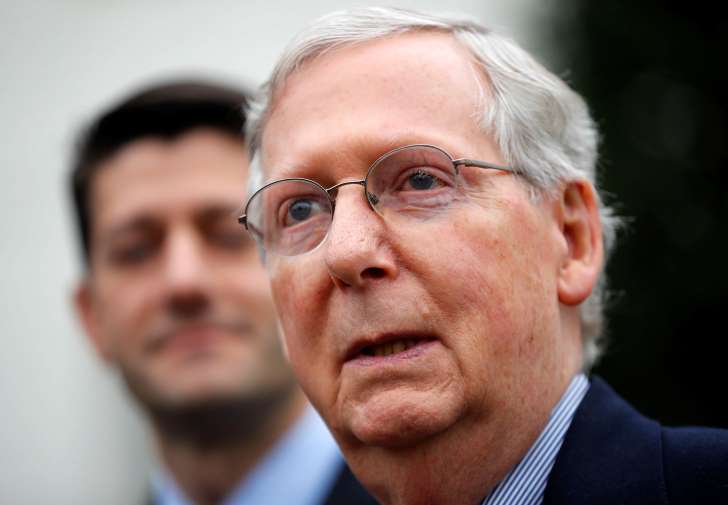
U.S. Supreme Court Justice Antonin Scalia died in Texas in 2016. Within hours of his death, Senate Majority Leader Mitch McConnell announced that President Obama would not be allowed to fill the seat left vacant by the conservative icon’s death.

Obama nominated U.S. District Judge Merrick Garland to the court. McConnell didn’t even allow Garland a Senate Judiciary Committee hearing. The nomination didn’t go anywhere.

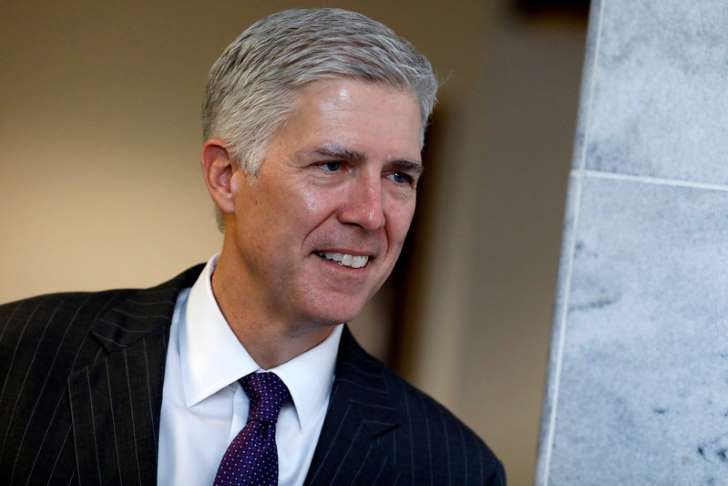
Donald John Trump defeated Hillary Rodham Clinton in the 2016 election. Trump then selected Neil Gorsuch for the high court. The Senate confirmed him.

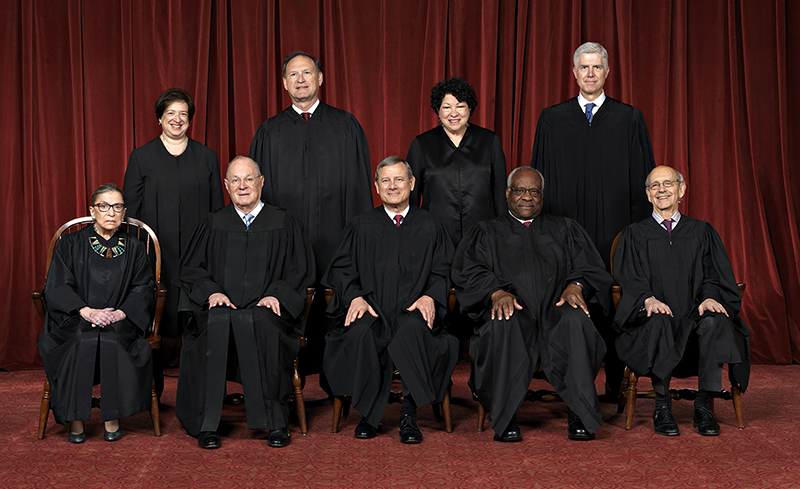
Today, the court upheld Trump’s travel ban. The vote was 5 to 4. Gorsuch voted with the majority.

Obstructionism doesn’t pay? Oh, you bet it does.

Yep, elections do have serious consequences

Oh, brother. Is there any more proof needed about the impact of presidential elections than the decision today handed down by the U.S. Supreme Court?

The high court ruled 5-4 today to uphold Donald J. Trump’s travel ban involving countries from a handful of mostly Muslim countries.

The conservative majority voted with the president; the liberal minority voted against him.

There you have it. Trump’s travel ban will stand. He will crow about it. He’ll proclaim that the court is a body comprising men of wisdom; bear in mind that the three women who sit on the court today voted against the travel ban. Had the decision gone the other way, he would declare the court to be “too political,” he would chastise the justices’ knowledge of the U.S. Constitution (if you can believe it).

The court decision today has reaffirmed the president’s decision to discriminate against people based on their religious faith. Nice.

The partisan vote on the court today also has brought a smile to another leading politician: U.S. Senate Majority Leader Mitch McConnell, whose obstructionism in the final year of the Barack Obama presidency denied Trump’s predecessor the right to fill a seat created by the sudden death of Justice Antonin Scalia. The Constitution gives the president the right to nominate judges; it also grants the Senate the right to “advise and consent” on those nominations. The Senate majority leader decided to obstruct the president’s ability to do his job.

President Obama nominated a solid moderate, Merrick Garland, to succeed Scalia. McConnell put the kibosh on it, declaring almost immediately after Scalia’s death that the president would not be able to fill the seat. McConnell would block it. And he did.

A new president was elected and it turned out to be Donald Trump, who then nominated Neil Gorsuch, who was approved narrowly by the Senate. Gorsuch proved to be the deciding vote in today’s ruling that upholds the Trump travel ban.

Do elections have consequences? You bet they do.

Frightening, yes? In my humble view — given the stakes involved at the Supreme Court — most assuredly.

Merrick Garland at FBI? Holy cow, man!

What in the name of political contrition might be happening in Washington, D.C.?

U.S. Senate Majority Leader Mitch “The Obstructionist” McConnell has just endorsed someone for FBI director that he fought tooth and nail to keep off the U.S. Supreme Court.

That would be U.S. District Judge Merrick Garland, whom then-President Barack Obama nominated for the high court in 2016, only to be rebuffed when McConnell refused to let Garland have so much as a hearing before the Senate Judiciary Committee.

The FBI has a vacancy at the top, thanks to Donald John Trump’s firing of Director James Comey. Now we hear that Garland might be considered for the job. And with McConnell’s blessing to boot!

Is McConnell trying to make nice with someone he stiffed?

According to The Hill: “I think if he picks someone with a deep background in law enforcement, who has no history of political involvement, a genuine expert — and the reason I mention Garland is he’s an example of that — it will serve him well, serve the country well and lead to a more bipartisan approach,” McConnell said.

Sounds like a good choice for the Supreme Court, too, don’t you think?

Whatever. The notion that Merrick Garland would be considered for the FBI director’s job is nearly as shocking as Comey’s firing by Trump. Still, as McConnell noted, Garland does have prosecutorial experience, given that he led the federal government’s case against the late Timothy McVeigh, the monster who blew up the Murrah Federal Courthouse in Oklahoma City in April 1995.

Do I think Garland would be a good pick to lead the FBI? I understand that he happens to be a straight arrow, a Boy Scout, a guy with an impeccable judicial reputation. It seems to me those traits would serve him well as head of the nation’s top federal law enforcement agency.

I am just wondering, though: Does he want the job?

If he does, and the president nominates him, then I believe hell will have frozen over and that the sun will rise the next day above the western horizon.

Senate sees the end of collegiality

There once was a time when the U.S. Senate could be a place where senators disagreed but remained friends.

I believe those days are over. They perhaps have been gone for a lot longer than I realize. The confirmation battle over Judge Neil Gorsuch closes the deal.

Say goodbye to Senate collegiality.

Battle changes the dynamic

Gorsuch’s confirmation came on a fairly narrow vote. All Republicans voted to seat him on the U.S. Supreme Court; all but three Democrats voted against his confirmation.

Some of us — including yours truly — used to believe the federal judiciary somehow was insulated from partisan politics. Not true. Maybe it’s never been true.

Senate Republicans tossed the filibuster rule into the crapper to get Gorsuch confirmed. The Senate used to require 60 votes to quell a filibuster. Democrats launched a filibuster to block Gorsuch’s confirmation; Republicans answered by invoking the so-called “nuclear option” and changing the rule to allow only a simple majority to end a filibuster.

Democrats are angry that Donald J. Trump got elected president in the first place. Their anger metastasized with Trump’s appointment of Gorsuch after Republicans blocked Barack Obama’s nomination of Merrick Garland to succeed the late Antonin Scalia.

I’m not at all confident that either side is going to find a way toward some common ground — on anything!

I recall a story that former Republican U.S. Rep. Larry Combest once told me about his former boss, the late U.S. Sen. John Tower; Combest served on Tower’s staff.

Tower, a Texas Republican, was a fierce partisan. One day, as Combest recalled it, he and another equally ferocious partisan debater, the late Democrat Hubert Humphrey, were arguing on the Senate floor about some legislation. They were gesturing and shouting and saying some angry things while arguing their points, Combest remembered.

After a lengthy floor debate, the presiding officer gaveled the session closed, Combest said, and Sens. Tower and Humphrey walked toward the middle of the floor, shook hands — and walked out the door with their arms around each other.

My gut tells me those moments are long gone.

‘Shining moment’ carries baggage for McConnell

The Hill posted a story online with the headline “McConnell’s shining moment.”

The Senate majority leader, Mitch McConnell, is shining because the body he runs has confirmed Neil Gorsuch to a spot on the U.S. Supreme Court.

Pardon my anger, but the leader isn’t shining. He stands as a scoundrel, a thief who stole the seat from another judge who should have been confirmed in 2016.

McConnell is boasting that the most “consequential” decision he has made was his decision to block Barack Obama’s nominee, Merrick Garland, from testifying before the Senate Judiciary Committee. The consequence would be to block a vote on the Senate floor.

Hours after Justice Antonin Scalia died in early 2016, McConnell made clear his intention to prevent President Obama from filling the spot on the court. Some have praised McConnell for blocking the president. I choose to condemn him.

Politics takes over

Gorsuch’s confirmation today was totally expected. The Senate voted 55-44 to approve his confirmation. He earned his court seat on the basis of a rule change that McConnell orchestrated in which the Senate abandoned its 60-vote rule to end a filibuster. I get that the majority leader was within his rights to change the rule.

What happened in 2016, though, is the much more egregious transgression. McConnell played raw politics with Obama’s nominee. The U.S. Constitution gives the president the power to fill federal judgeships. Barack Obama fulfilled his duty. The Senate also has the right to reject a nominee.

The Senate, though, should have heard from Garland. It should have weighed this man’s credentials. It should have considered his qualifications. It should have received a recommendation from the Judiciary Committee.

And it should have cast an up-down vote on whether to confirm the president’s nominee.

Thanks to the majority leader’s obstruction, none of that was allowed to occur.

And to think that Mitch McConnell has the stones to accuse Democrats of playing politics with Supreme Court picks.  This man, McConnell, has set the standard for politicizing the highest court in America.

Gorsuch’s confirmation isn’t a “shining moment.” It is permanently soiled by political poison.

Senate readies for ‘nuclear’ attack on rules

All this hubbub over whether to deploy the “nuclear option” to get a Supreme Court justice confirmed has my head spinning.

My emotions are terribly mixed.

Here is where we stand:

* The U.S. Senate Committee has recommended that Neil Gorsuch be confirmed to the Supreme Court; the panel voted along partisan lines. Republicans voted “yes,” Democrats voted “no.”

* Democrats are set to filibuster the Gorsuch nomination as payback to their Republican “friends” for blocking an earlier appointment, again on partisan grounds.

* Senate rules require Supreme Court nominees to garner at least 60 votes. Republicans at this moment don’t have enough votes to reach the 60-vote threshold — and break a Democratic filibuster.

* Republicans, thus, are pondering whether to “go nuclear” and change the rules to allow only a simple majority to approve a high court nominee.

Ohhhh, what to do?

We’ve already stipulated that Democratic senators don’t want Gorsuch seated if only because of the steamroll job GOP senators did on Merrick Garland, whom Barack Obama nominated to the court to succeed the late Antonin Scalia.

Why the emotional conflict?

I happen to believe in presidential prerogative. I believe the president’s selection deserves greater consideration than the Senate’s constitutional right to reject an appointment, particularly if the appointee is “well qualified,” as the American Bar Association has determined about Gorsuch.

But my belief in presidential prerogative is tempered a good bit by the outrage I share with Democratic senators over the way Republican senators stonewalled Garland’s nomination, how they played politics by saying the next appointment belonged to “the next president.”

They were as wrong as they could be in denying President Obama the right to select someone, who I feel compelled to add is every bit as qualified to serve on the high court as Neil Gorsuch.

Should the Republican majority throw its weight around once again by engaging in that so-called “nuclear option” and change the rules to suit their own agenda?

Let me think for a moment about that one.

No. They shouldn’t!

Judiciary becomes another political arm

I guess it was naĂŻve of many of us to believe the federal judiciary would be above the partisan politics that stymies the executive and legislative branches of government.

I always thought the founders created a judicial system that would be immune from politics. Those silly men.

Gorsuch gets key endorsements

Neil Gorsuch stands before the U.S. Senate awaiting confirmation to the U.S. Supreme Court. Two Democratic senators — Joe Manchin of West Virginia and Heidi Heitkamp said today they would vote to confirm the judge nominated by Donald J. Trump to the nation’s highest court.

Senate Republicans need eight Democrats to join them to get to the magic number of 60 votes to confirm Gorsuch.

I have admitted this already, but Gorsuch is not my choice to become a high court justice. He is, though, the pick of the president, who has the constitutional authority to make these selections.

My hope would be that Democrats wouldn’t filibuster this nomination. They should save their ammo for when it really counts, such as when a liberal justice leaves the court. Gorsuch is a conservative who would replace the late Antonin Scalia, the iconic justice who died more than a year ago.

I also believe that this is a “stolen” seat that in reality belongs to Merrick Garland, who was selected by former President Barack Obama to succeed Scalia. Senate Republicans played pure politics by refusing to give Garland a hearing and a vote. That is to their everlasting shame.

That, I’m afraid to acknowledge, is how the game is played these days.

Judges have become political animals, just like the men and women who get to appoint and decide whether to confirm them to judicial posts. That’s too bad for the system.

‘Ideological balance’ not a SCOTUS issue

Reuters News Agency has declared in a headline that Neil Gorsuch’s selection to the U.S. Supreme Court means the court’s “ideological balance” is at stake.

Excuse me for a moment while I clear my throat.

Cough, cough …

Um, no. It isn’t.

Judge Gorsuch has been tapped by Donald J. Trump to succeed the late Justice Antonin Scalia. As my dear old Dad would say, “It’s six to one, half-dozen to the other.”

Gorsuch is a conservative. So was Scalia. And yet, progressive thinkers are all a-flutter  because Gorsuch, they say, according to Reuters, “that he is a pro-business, social conservative insufficiently independent of the president.”

Do they think Scalia would have been any different had he not died before Trump took office? Do they think Gorsuch is going to somehow become so persuasive in his opinions and writings that he is going to bring some progressive court justices to his side of an argument?

Let’s get a grip here.

Scalia was an iconic figure among judicial conservatives. It’s not yet clear whether Gorsuch will attain that kind of status if he gets confirmed to the Supreme Court.

My advice to Senate Democrats and their progressive allies in the judicial community is this: Save your ammunition for the day one of the high court’s liberal justices takes a hike.

Although I agree fully that Trump never should have been given the chance to replace Scalia. That task should have been fulfilled by his presidential predecessor, Barack Obama, who nominated an equally qualified jurist, Merrick Garland, to take his place on the high court. Senate Republicans played bald-faced politics, declaring that Obama didn’t have the right to appoint someone to the court; that task, they argued, belonged to the next president.

That’s utter horse manure. The GOP’s tactic worked. Trump got elected and now he has appointed a judicial conservative to the court — just as he pledged he would do.

As one who stands foursquare behind presidential prerogative on issues such as this, I recognize that elections have consequences.

One “consequence” of the 2016 election is that Trump has chosen a “well-qualified” jurist — in the words of the American Bar Association — to become the next Supreme Court justice. There is no “ideological balance” to discuss with this selection.

What about the next one? And what if it involves the departure of a liberal justice?

Well, that’s a different matter altogether.

Big week awaits the president

Donald “Smart Person” Trump is going to have a big week.

Part of it might bode well for the president. The rest of it, well, possibly not so well.

* Neil Gorsuch takes the stand this coming week as the Senate Judiciary Committee grills him on why he should take a seat on the U.S. Supreme Court.

Gorsuch is Trump’s choice to fill the seat vacated by the sudden death of conservative icon Justice Antonin Scalia — more than a year ago! The seat should have been filled by President Obama, who picked Merrick Garland, but the Republicans who control the Senate stonewalled the president and blocked Garland’s confirmation.

Now we have Gorsuch. He’s a solid jurist. He’s a bit too conservative for my taste, but hey, Trump’s the president, not me. He gets to pick someone for the high court. The American Bar Association has declared Gorsuch to be “well qualified.”

* Then we get to hear from FBI Director James Comey, who’s going to have a thing or three to say about wiretapping and whether Trump has the goods on whether President Obama ordered the bugging of Trump’s offices in New York.

Comey has hinted broadly that Trump has fabricated the assertion that Obama committed a felony, which to my way of thinking is a defamatory accusation. Senators will get to grill Comey heavily on all of that.

It’s ironic in the extreme that Comey would turn on Trump, given the manner in which he torpedoed Hillary Clinton’s presidential campaign 11 days prior to Election Day with that letter to Congress announcing he was taking a fresh look at those “damn e-mails” that dogged Hillary’s campaign from its outset. Trump was ecstatic about the disclosure of the letter and just couldn’t say enough positive things about the FBI director.

I wonder what he’s going to say if and/or when Comey debunks this ridiculous notion that President Obama bugged Trump Tower.

Let’s all stay tuned. Get the popcorn ready.

Catfight over Gorsuch? Wait until the next justice leaves the court

“So, are you ready for the catfight that’s going to erupt over this guy Trump has picked for the Supreme Court?”

That was the question posed to me today by a colleague of mine.

The reference, of course, was to Donald Trump’s nomination of Judge Neil Gorsuch to the highest court in the land.

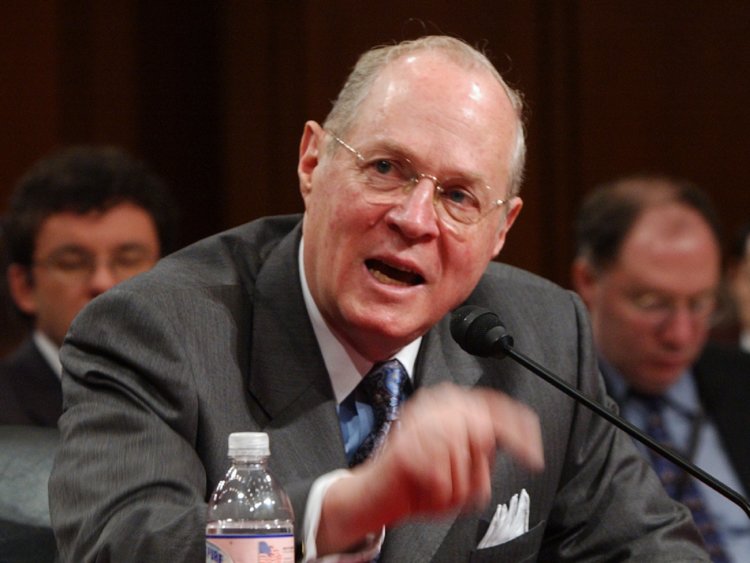
“Catfight? Over this? Naw. The earth is going to open up and quake when the next justice leaves the court,” I said, referring to the possibility that either Justices Ruth Bader Ginsburg, Stephen Breyer or Anthony Kennedy might leave the court.

That, I said, will produce the “mother of all catfights.”

Gorsuch’s nomination doesn’t change a thing on the court. The president is seeking to place a judicial conservative on the court to replace another conservative’s seat, that of the late Antonin Scalia, who died in February 2016.

Yes, Senate Democrats are enraged. Not at the selection of Gorsuch, necessarily, but over the treatment that President Obama got when he nominated Merrick Garland this past year to succeed Scalia.

My own thought is that Gorsuch is likely to be as good a choice as Democrats are going to get, given Trump’s insistence on picking a conservative judge.

No, the real donnybrook will occur when one of the liberals or swing justices decides to leave … or is unable to serve.

My own advice to Democrats would be to pick their fights carefully. Sure, they battle Gorsuch’s nomination. They’ll insist on keeping the 60-vote majority required to approve a Supreme Court nomination. Republicans might decide to invoke the “nuclear option” and allow a 51-vote majority.

I have no real clue as to which way this fight will go.

It might serve Democrats better to hold their fire for the next vacancy when — or if — it occurs during Trump’s time in office.

Given the tenuous ideological balance of the court, with its slim conservative majority, I sincerely doubt that Justices Ginsburg and Breyer — both picked by President Clinton in the 1990s — are going to resign amid the political climate that has fallen over Washington.

As for Justice Kennedy, one of President Reagan’s picks, well, that might be another matter.

Whatever happens, the serious political bloodletting is yet to occur.