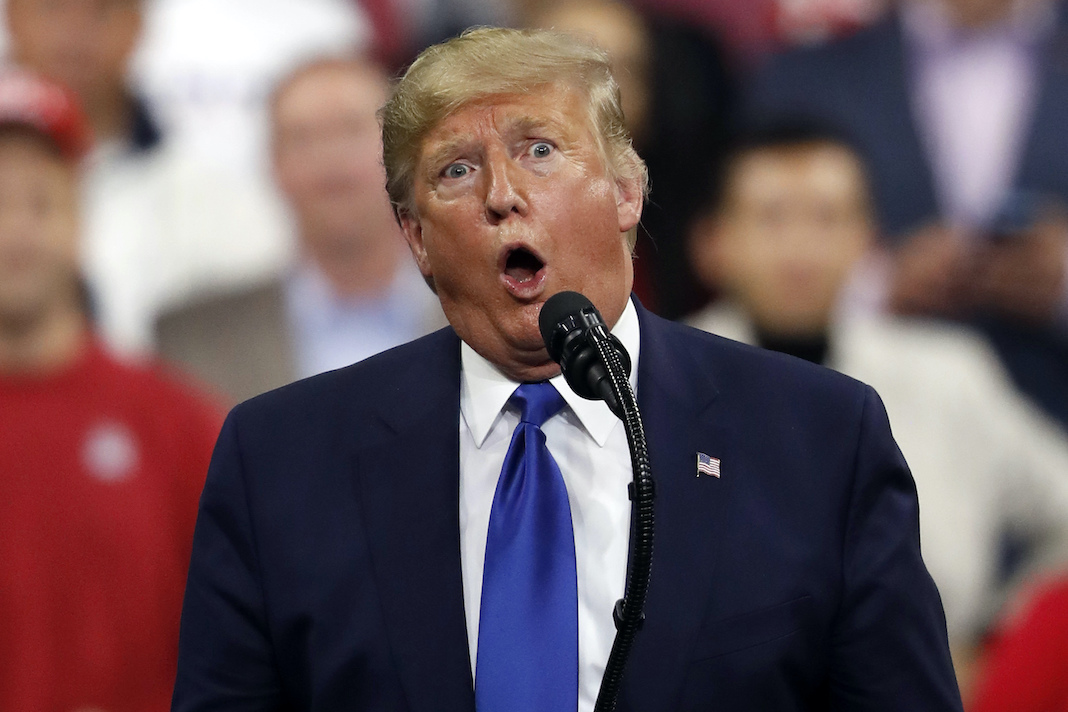
I don’t have too much to say with this brief blog post, other than to call your attention to this picture of the current president of the United States.
Donald John Trump was speaking earlier this week to a political rally crowd in Milwaukee. I don’t know what in the world he was talking about when the photographer snapped this picture of him. I’ll take a guess and suggest he might have been in the midst of one of those idiotic riffs into which he launches. He might have been seeking at this moment to put words into a critic’s mouth. You know how that goes, right?
I am longing for a return to a time when we could expect our president to comport himself — or herself — with dignity. Donald Trump purports to be in his element when he stands before a friendly crowd and behaves in the manner that he does.
That behavior so very often — too often, in fact — produces images such as this. They are flashed around the world. They draw laughter from those who, like me, expect much better from the leader of the world’s most indispensable nation.
U.S. Chief Justice John Roberts is a serious man who takes his responsibility as seriously as is humanly possible. Of that I have not a single, solitary doubt.
However, I heard something tonight that made my jaw drop. It was that Chief Justice Roberts, who today took an oath to preside over a U.S. Senate trial of the Donald John Trump, has never tried a case in court.
Yep, this will be the first trial over which he will preside.
President Bush appointed Roberts to the D.C. Court of Appeals in 2003. An appellate court doesn’t hear witness testimony; it doesn’t rule on court objections. It hears lawyers argue their cases. Then the court decides which side wins the argument.
After that, Roberts got the nod in 2005 to become chief justice of the nation’s highest court. He does more of the same thing he did at the lower-court level.
Prior to the D.C. court appointment, Roberts worked in private practice, then went to work for the attorney general’s office during the time William French Smith was AG during the Reagan administration.
Trial court experience? None, man. Now he’s been dragged into the role of presiding judge in the U.S. Senate, where he will be charged with keeping order. He’ll get to rule on whether witnesses will be called, although the Senate can overturn whatever ruling he issues.
Still, it is mind-boggling to think that the chief justice’s first actual trial involves a case involving whether the president of the United States keeps his job.
I am certain the chief justice is up to the challenge that awaits him.
I have told you on this blog about how Farmersville, a small city in Collin County, works to avoid the appearance of secret meetings among its City Council. It posts a “notice of potential quorum” when council members plan to gather in the same room … even for a social event!
The notice seeks to forestall any question among residents whether the council is acting in the public interest, or talking about public matters in, um, “secret.”
I happen to think it’s a capital idea that perhaps ought to be written into the Texas Open Meetings Act.
I haven’t told you, until now, how City Attorney Alan Lathrom came up with the idea.
It was in 1995. Lathrom served on the legal staff in Arlington, Texas, in Tarrant County. The Arlington City Council planned to attend the inaugural of newly elected Gov. George W. Bush. So, the council rented a bus, on which all the members would ride from Arlington to Austin to attend Gov. Bush’s inauguration.
Lathrom then had this notion: What if someone questions whether the council is conducting public business on the lengthy bus ride from here to there, and then back again? He told me recently there had been some rumbling and grumbling in Arlington about the council being in the same vehicle for such a lengthy period of time.
He came up with the idea of posting the bus ride as a notice of a “potential quorum” by the City Council. He decided to post it in accordance with the statute that requires a 72-hour notice prior to the “quorum” forming inside the bus.
The trip occurred. The council went to Austin to clap for the new governor. They shook many hands, slapped many backs, had a great time and returned home to Arlington. My guess is that it didn’t pass any ordinances either while traveling to Austin and back.
With that, an idea was born and it lives on today in little ol’ Farmersville, Texas.
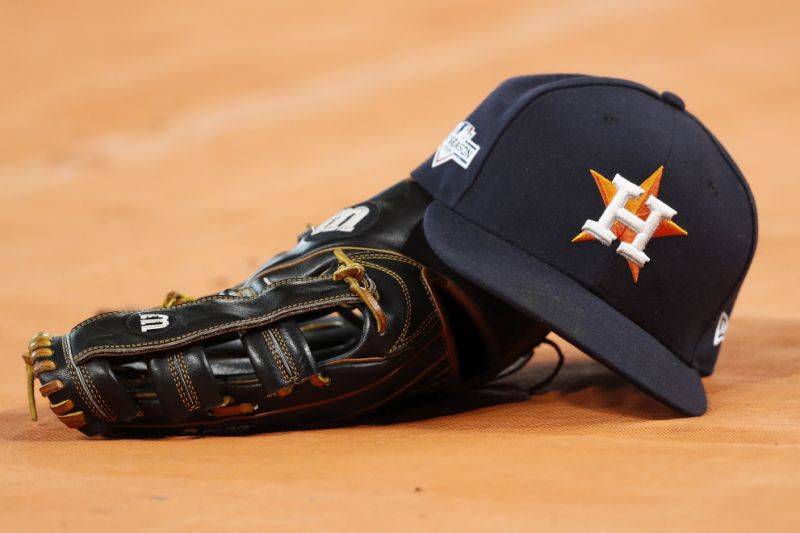
Wow! It looks as though the Houston Astros’ sign-stealing scandal is way bigger than I imagined.
A third field manager has been sent to the proverbial showers. Carlos Beltran, who was supposed to manage the New York Mets this coming season, is now the former Mets manager. Why? Because he, too, was among those mentioned by Commissioner Rob Manfred in the sign-stealing scandal involving the Astros and their now-controversial 2017 World Series championship.
Beltran was a veteran member of the Astros when they won the World Series and, I guess, he was deeply involved in the sign-stealing tactics employed during the Series.
The Astros beat the Los Angeles Dodgers three seasons ago in the Series. They cheated, though, by stealing signs and transmitting that theft using high-tech hardware from the outfield to the bullpen. It’s really weird, given that sign-stealing on the field has been part of the game since its inception. Runners on second base watch the signs the catcher flashes to the pitcher and somehow communicate what he sees to the batter.
The Astros went way beyond that.
Major League Baseball was going to suspend the Astros’ general manager Jeff Luhnow and field manager AJ Hinch for the season. The Astros, though, fired them both. Then came the boot delivered to Boston Red Sox manager Alex Cora, who was bench coach for the Astros during the 2017 season and was part of the sign-theft crisis.
Now. Beltran is gone.
The question is circulating about whether MLB should vacate the 2017 Series title won by the Astros. I hope the Astros get to keep the trophy. I also don’t want them to have to bear an asterisk next to their designation as World Series champs.
The Astros could do the sportsmanlike thing and perhaps offer the Dodgers a share of the trophy. Maybe the Astros organization can make a profound public apology to the Dodgers for doing what they did during the Series.
I am dubious about whether the Astros’ tactics proved decisive, that they would not have won without cheating. I am not sure how you prove such a thing.
My strong hunch, though, is that there might be more heads to roll before this matter gets settled once and for all.
Now I am feeling badly for dismissing the scandal initially. Yeah, this is a big deal.
Under normal circumstances that involve a “normal” president of the United States, one would think that the emergence of a key witness and a government report suggesting law-breaking would be a deal breaker, that they would ring the death knell on an embattled presidency.
This isn’t normal. None of it is normal.
Lev Parnas, a Ukrainian-born associate of Donald Trump’s lawyer Rudy Giuliani, has come forth with information that says Trump was in the whole matter involving the issues that resulted in Trump’s impeachment. Oh, and now we hear from the General Accounting Office that Trump broke the law while withholding military aid from Ukraine while shaking down that government for a personal political favor.
The Senate trial officially commenced today amid pomp and circumstance. Supreme Court Chief Justice John Roberts took his oath and sat in the Senate’s presiding officer chair and then administered the oath to the 100 senators who will conduct a trial of Donald Trump.
The GAO watchdog report says categorically that the Office of Management and Budget violated federal policy by withholding military aid that Congress had appropriated. OMB was acting on orders from Donald Trump. Therefore, Trump broke the law!
That, as has been said, is a “big fu****g deal.”
Oh, and Parnas? He has revealed that, yep, he and Trump know each other. He contradicts Trump’s assertion that he doesn’t know Parnas. And who is this guy? He is a friend of Giuliani and has been part of the inner circle involved in the effort to get Ukraine to announce plans to investigate Joe Biden’s involvement in his son Hunter’s work with an Ukrainian energy company.
Parnas also has contended that Trump’s concern about “corruption” only centered on Joe and Hunter Biden and that the president had no interest in corruption, per se, as an issue worth tackling.
My head is swirling. Will any of this matter to Republicans who comprise most of the senators who will decide whether Trump stays in office? Probably not.
Therein lies the extreme frustration that is likely to consume many of us watching this trial unfold from afar.
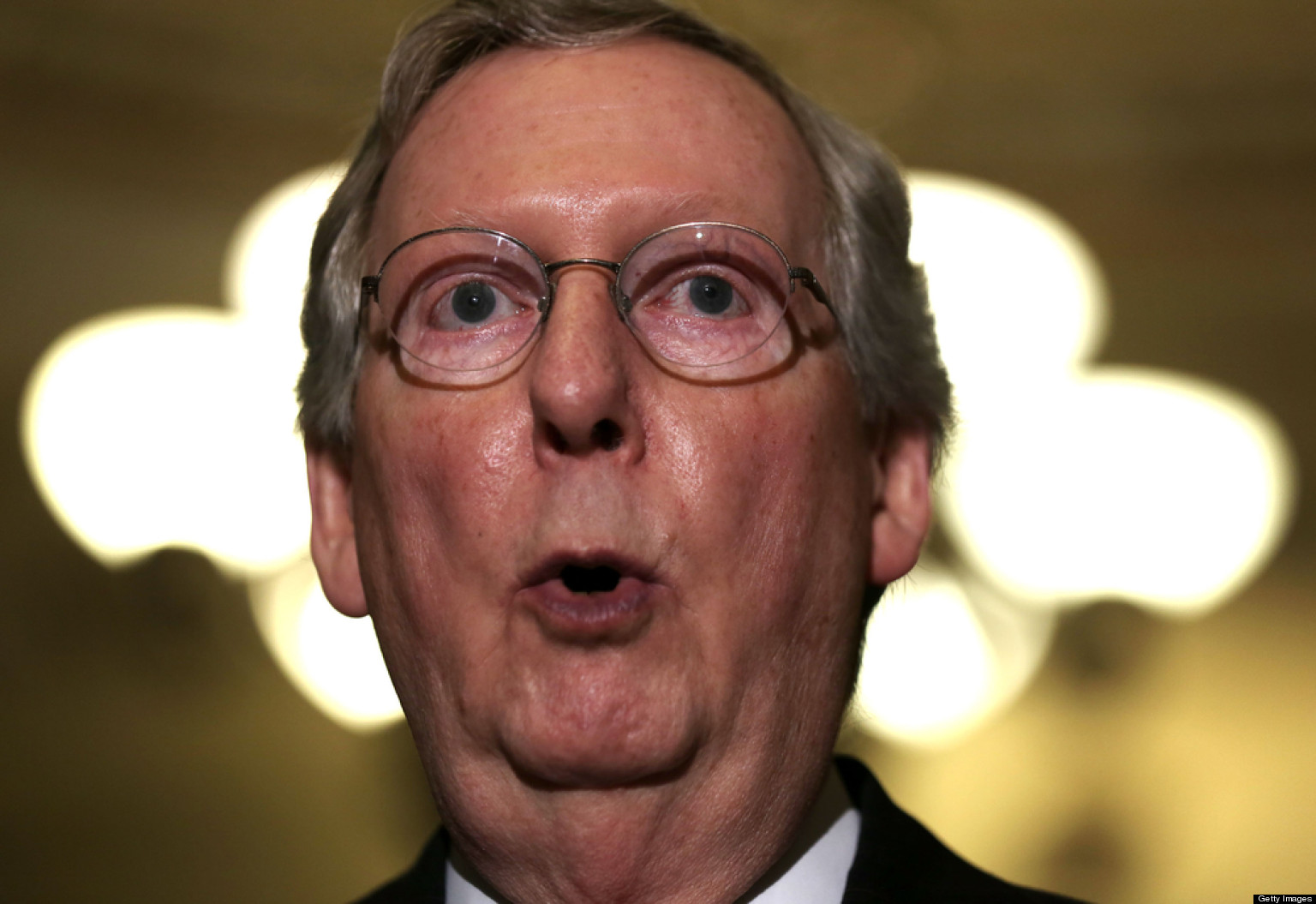
Of all the statements, assertions, pronouncements and declarations I keep hearing while we watch this impeachment drama unfold, I keep circling back to what keeps coming out of the mouth of Senate Majority Leader Mitch McConnell.
The Kentucky Republican keeps hurling “partisan political” accusations at his Democratic colleagues in the Senate and in the House of Representatives. When I hear him accuse House Speaker Nancy Pelosi of acting as a purely partisan politician, I find myself thinking: Dude, do you not remember your own political history?
Of course he does!
I harken back to the Mother of All Partisan Acts when in early 2016 he declared that President Obama would not be able to select someone to sit on the U.S. Supreme Court. Justice Antonin Scalia died suddenly that year; Obama sought to nominate Merrick Garland to succeed him; McConnell put the brakes on it, declaring that the president’s nominee would not get a Senate hearing in an election year.
Democrats were rightfully outraged. It was an act of supreme partisanship, just as he has continued to exhibit his partisan bona fides during the run-up to the Senate impeachment trial that has commenced.
Speaking of that … for the Senate majority leader to accuse anyone else of partisan game-playing is akin to getting a lecture on marital fidelity from, oh, you know who.
Readers of this blog are aware of this fundamental truth: I detest, hate, loathe the way we elect judges in Texas.
We elect them at every level on partisan ballots. The system stinks. It has resulted in good judges being tossed out of office only because they belong to the party that isn’t in power in the moment. Republican or Democrat. It doesn’t matter. The partisan election of judges sucks out loud, man!
There might be a change in the works. A legislative effort is underway to study how to bring a needed change. It is running into a major roadblock in the form of Texas Lt. Gov. Dan Patrick, who presides over the Texas Senate.
According to the Texas Tribune, Patrick is “skeptical” of potential changes in the way we choose our judges. He said something about Texans preferring to elect their judges. Well, duh! I get that. I am not totally on board with an appointment system. I want at the very least to see an election system that allows judges to run on non-partisan ballots.
A former state senator, Republican Bob Duncan, has been a longtime champion for reforming the election system. The Legislature has created a commission to study ways to repair the system. Duncan agrees with Patrick that there needs to be total buy-in if there’s going to be a change. If only the lieutenant governor would throw his support behind a judicial reform effort; Gov. Greg Abbott already has done so. We’ll have a new House speaker in the next session and my hope is that he or she will sign on, too.
I keep asking: What is the difference between Republican justice and Democratic justice? I cannot determine a partisan difference. There are differences in judicial philosophy that have nothing to do with partisan consideration. So why not forces judges to run on their judicial philosophy?
I used to argue for a reform that creates a judicial appointment system; it would require judges to run for “retention.” I don’t think that will happen in Texas. I am going to hold out some hope that Texas can find a way to change the judicial election system from a purely partisan effort to a non-partisan system.
It makes sense and in my view is going to deliver a better quality of judges who adjudicate justice on behalf of all of us.
A conversation I had this morning with a fellow member of the McKinney Sunrise Rotary Club brings to mind something I have believed for the past 30 years.
I believe it is vital for any Vietnam War veteran who is able to return to that country to see what I discovered when I was able to return there in 1989, two decades after I arrived there in service to my country.
I learned that the war had ended. It was over. The shooting had stopped. The country that had survived all that explosive bludgeoning has become a beautiful land full of generous people.
My Rotary friend had recalled a question I had asked a fellow who delivered a program at a recent meeting. I asked him if he had been back. He has not returned and the gentleman seemed a bit perplexed by the question.
I told my friend this morning about my emotional discovery when I returned there 30 years ago. I had gone to Southeast Asia with other editorial writers and editors on a factfinding mission. At the end of the official portion of the trip, I flew from Saigon to Da Nang with two fellow journalists — who also are Vietnam vets — to see the place where I served for a time so many years earlier.
Our guide, Mai, accompanied us to Da Nang. We took a cab from our downtown hotel to Marble Mountain, where I served for a time as an aircraft mechanic with the Army’s 245th Mohawk Aviation Company.
We were walking along the sandy soil. Mai told me how the Vietnamese had absorbed all that we had built there and repurposed it for their use. Pierced-steel planking had become fence material; they used lumber to build housing.
Then it hit me like a runaway freight train. The war was over! That’s when I broke down and sobbed like a child for about three or four minutes. My friends backed away, as did Mai. I cried all by myself.
Then it was over. I wiped my face dry. Took a deep breath. I extended my arms to my two friends and to Mai. I was cleansed. I had shed the emotional baggage I never realized I was lugging around.
I did not traipse through the bush. I did not fire my weapon in anger at the enemy. I performed rear-echelon duty. However, returning to that place in November 1989 reminded me that the war was raging when I arrive and it was raging when I left.
I saw that place in an entirely new context.
That is why I tell my fellow Vietnam War veterans that they, too, need to see the country is at it is today, not as it was when they left.
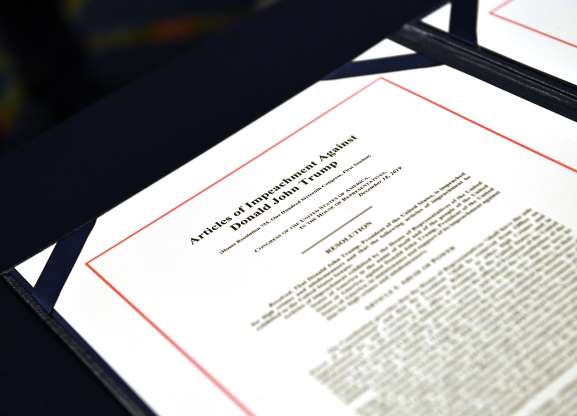
Here we go. The Donald Trump impeachment trial managers have been named. The House of Representatives has sent the articles of impeachment to the Senate. The managers at this moment are likely scurrying in an effort to come up with a prosecution strategy.
And the White House legal team no doubt is scurrying, too, to concoct a defense strategy to counter what I believe is a mountain of evidence to suggest that the president deserves to be removed from office.
But I am not among the 100 senators who’ll make that decision. Trump is likely to survive the trial, which is supposed to begin next Tuesday.
Man, it is going to be some kind of spectacle.
This is serious stuff, folks. It’s only the third time a president has been put on trial. Donald Trump now gets to join Andrew Johnson and Bill Clinton among the roster of presidents who are forever identified as “impeached.” Presidents Johnson and Clinton both survived their trials. So will Trump, or so it appears at this moment.
If I could have had a hand in selecting the managers, my preference would have been to include the lone now-former Republican member of the House to vote to impeach Trump. Rep. Justin Amash, the libertarian-leaning conservative who represents the same Michigan congressional district that once sent Gerald R. Ford to Congress, should have been included on that team of managers.
But, he’s not among the managers.
You may count me as one American who is anxious for this trial to conclude. The Senate’s Republican majority is dug in. They won’t convict Trump unless something so compelling comes forward in the next few weeks that they cannot stand by their man.
The way I see it, though, Trump already has done enough to merit his removal. He solicited a foreign government for political help and he has blocked Congress from doing its oversight duties. Abuse of power and obstruction of Congress. Got it?
The trial will be done in fairly short order. Then we can get on with the task of removing this guy from the White House the old-fashioned way: at the ballot box in November.
If I were a betting man, and I’m not, I might be willing to wager some dough that Dallas Police Chief U. Renee Hall could be in some trouble with one of her bosses, Mayor Eric Johnson.
Hall’s department is in some serious trouble. The city she is in charge of protecting and serving has been in the midst of a violent crime wave. The city suffered through more than 200 homicides in 2019. Chief Hall has pledged to reduce violent crime by 5 percent this year.
Mayor Johnson has said that isn’t good enough. The chief’s goals aren’t aggressive enough. He didn’t say so the other day, but he seemed to my ears to imply that his patience is pretty thin as it is and he wants the chief to re-do her strategy for reducing violent crime in the Texas’s third-largest city.
My wife and I — along with our son, daughter-in-law and our grandkids — live in the greater Dallas area. We all venture on occasion into the belly of the beast. While we aren’t in imminent danger all the time, it does give me pause whenever I travel into the city.
I understand fully the difficulty of the job that U. Renee Hall took on when she became Dallas’s top cop. I am not a police expert. I cannot offer any counsel on how the city’s police department can stem the crime wave that is plaguing the community. Gov. Greg Abbott recently stepped in by ordering the Department of Public Safety to dispatch state troopers into Dallas to assist the city police department, freeing up Dallas PD officers to concentrate more on the violent crime incidents.
If my ol’ bones are accurate, though, and Mayor Johnson is as alarmed at the crime crisis as he suggests he is, then the police chief will need to get real busy … real fast.