Elections always have consequences

I have long understood and appreciated the consequences that elections bring to those in public service.

It’s an accepted part of the electoral process. If the individual you want doesn’t get elected to any office, you then must face the prospect of the other individual doing something with which you likely will disagree.

It happened certainly in 2016 with the election as president of Donald J. Trump. He won the Electoral College as prescribed by the Constitution, but more of us cast ballots for his major foe than for the winner. Still, we are paying the consequences of the previous presidential election.

Well, here we are. Two years later and the president finds himself facing his own consequential electoral result in the wake of the congressional midterm election. The House of Representatives, half of the legislative branch of government, is about to flip from Republican to Democratic control; the gavel-passing occurs on Jan. 3 when Nancy Pelosi ascends to the speakership. Committee chairs will get their respective gavels, too.

Get ready, therefore, for hearings. Get ready for lots of questions that House Republicans so far have been  unwilling to ask of the president of their own political party.

The president appears to be in trouble. His GOP “allies,” and I use that term guardedly, have been reticent in seeking the truth behind the many questions that swirl around the president. They aren’t “friends” with Trump as much as they are frightened by him. He has bullied them into remaining silent.

The president won’t be able to play that hand with Democrats who are in charge of the lower chamber of Congress. Thus, it remains increasingly problematic for the president to do something foolhardy, such as fire the special counsel who is examining those questions concerning the alleged “collusion” between the president’s campaign and Russian government agents who interfered in our electoral process.

Yes, indeed. Elections have serious consequences. We are likely to witness them play out in real time . . . very soon.


Democracy at its messiest best

The great British statesman Winston Churchill had it right when he described representative democracy as an inefficient, clumsy and messy form government, but better than any other form that had devised.

We’re witnessing it in its messiest form right now.

Congress and the president are locking horns over spending for a wall along our southern border. Donald Trump wants money to pay for the wall, although he initially promised he would make Mexico pay for it. That won’t happen.

Failure to pay for the wall would result in a partial shutdown of the government at midnight Friday. Merry Christmas, to thousands of federal employees who will not be paid for the time they are being forced to take away from work.

I am just one of those Americans who doesn’t quite understand why we reach this precipice every few months. Why in the world must we subject ourselves to this kind of melodrama? Why do Congress and the White House fail continually to provide long-term budgets that allow them to avoid this kind of brinksmanship?

The president has his constituency. Each member of Congress — 435 House members and 100 senators — answers to his or her own constituencies. They fight. They wrangle. They haggle. They argue. They threaten each other. They toss insults. And all the while the government that is supposed to serve all Americans is being kicked around like some kind of cow chip.

We don’t need to build a wall to secure our southern border. The president doesn’t seem to get that. He wants the wall because he made some idiotic campaign promise. Congressional Democrats want to secure the border through other means.

At last report, the White House indicates that Trump is backing away from the wall. The impasse remains.

Churchill was right about representative democracy. So help me, though, it doesn’t need to be this messy.

No need to lock him up . . . at least not yet?

Michael Flynn went before the judge today and got a snootful from the jurist who holds the man’s future in his hands.

The former Donald Trump national security adviser, though, was spared a prison sentence from U.S. District Judge Emmitt Sullivan until after Flynn is finished cooperating with special counsel Robert Mueller’s probe into the alleged Russia collusion matter during the 2016 presidential election.

To be totally candid, I don’t really care whether Flynn serves time in prison for the felony crimes to which he has pleaded guilty. Mueller is asking the judge to spare Flynn prison time because of the extensive cooperation he has given the probe into allegations of collusion, conspiracy and perhaps other matters relating to the Trump campaign — if not the presidency itself.

Sullivan reminded Flynn this morning that he is under no obligation to follow Mueller’s recommendation and scolded the retired Army lieutenant general for being an “unregistered agent” for a foreign power while serving as national security adviser. Sullivan told Flynn that “arguably you sold your country out.” The hearing reportedly was contentious as Sullivan — who was appointed to the federal bench by President Clinton — gave Flynn the holy what-for in connection to his admitted involvement with the Russian government.

Mueller is going to get more information from Flynn as he seeks to conclude his investigation. I hope the end arrives sooner rather than later.

As for Flynn — who once led Republican National Convention cheers to “lock up!” Hillary Clinton for using her personal email server while she was secretary of state — all I want from him at this point is full cooperation with Mueller and his team of legal eagles.

Something tells me Flynn has more beans to spill regarding Trump’s campaign and whether the president himself committed illegal acts on his way to being elected to the nation’s highest office.

Old courthouse turns into a business magnet

Time for a mea culpa.

I was an adamant foe of an effort to spend public money to revive a long-abandoned county courthouse in Randall County. I voted against a referendum that called for such an expenditure.

It turned out that I was among the minority of voters. Most of them who voted in Randall County approved the expenditure of public funds to refurbish the exterior of the courthouse building that was erected in1909. The county abandoned it some years ago, relocating many functions on the other side of Canyon, Texas.

The county finished the outside of the building. The inside remains empty. It hasn’t been touched.

One of the initial foes of that public expenditure was Randall County Judge Ernie Houdashell. The judge is one of my better friends in public life. I admire the lifelong Republican politician greatly. I thought he was correct to oppose spending public funds on the courthouse building.

He has turned the corner. Why? Because the Canyon Square has sprung back to life. Various businesses have filled virtually all the empty storefronts on the square. Downtown Canyon is brimming with life. Houdashell credits the old courthouse structure as being the magnet that has drawn the businesses downtown.

The City of Canyon looked for a time at moving into the courthouse building, but then backed out when it determined it couldn’t rehabilitate the building in a cost-effective manner for municipal purposes.

I don’t have the vaguest notion where the county is going with the structure. It still owns the building. It won’t reinstall any county government functions in the 109-year-old building. Its Justice Center is functioning across the street from West Texas A&M University; the old finance building serves as the headquarters for the commissioners court across the street from the old courthouse.

However, the 1909 courthouse building looks spiffy and well-groomed in the middle of the square. The storefronts surrounding the building are busy.

Judge Houdashell, once a staunch critic of the old structure, now is one of its biggest fans. I, too, am a believer in what has happened.

Life is good in downtown Canyon. Who knew?

GOP facing a familiar set of impeachable standards

If it comes down to an impeachment of Donald J. Trump, many of the congressional Republicans who are defending him now will have to face down their former selves.

One of them is U.S. Sen. Lindsey Graham, R-S.C., who in 1998 led the House impeachment team that brought charges against President Bill Clinton.

It was a time when then-Rep. Graham said that the House didn’t need to have a high crime and misdemeanor to determine whether a president had debased his high office. He made the case that President Clinton had debased and disgraced the office through his affair with a young White House intern.

It turned out that the GOP found a crime on which to impeach the president: perjury. Clinton spoke falsely to a grand jury about that relationship. House GOP members said that you just can’t allow a president to break the law.

If we now fast-forward to the present day we have another president who might have broken the law. He might have authorized illegal payments to two women to keep them quiet about sexual encounters he had with them.

Graham and other Republicans have reset the bar. It’s much higher now than it was when they had a Democratic president in their crosshairs.

However, even the president’s own lawyer — Rudolph Giuliani — says that Trump likely broke the law with the payments. Is that an impeachable offense? Will Republicans who once impeached a Democratic president for arguably an equal crime be able to do the same with a president from their own political party?

This is where we might be able to see what wires certain members of the House of Representatives.

Let’s not get ahead of ourselves. We need to see the final report from special counsel Robert Mueller. Trump keeps insisting that Mueller doesn’t have anything. We’ll just have to see about that.

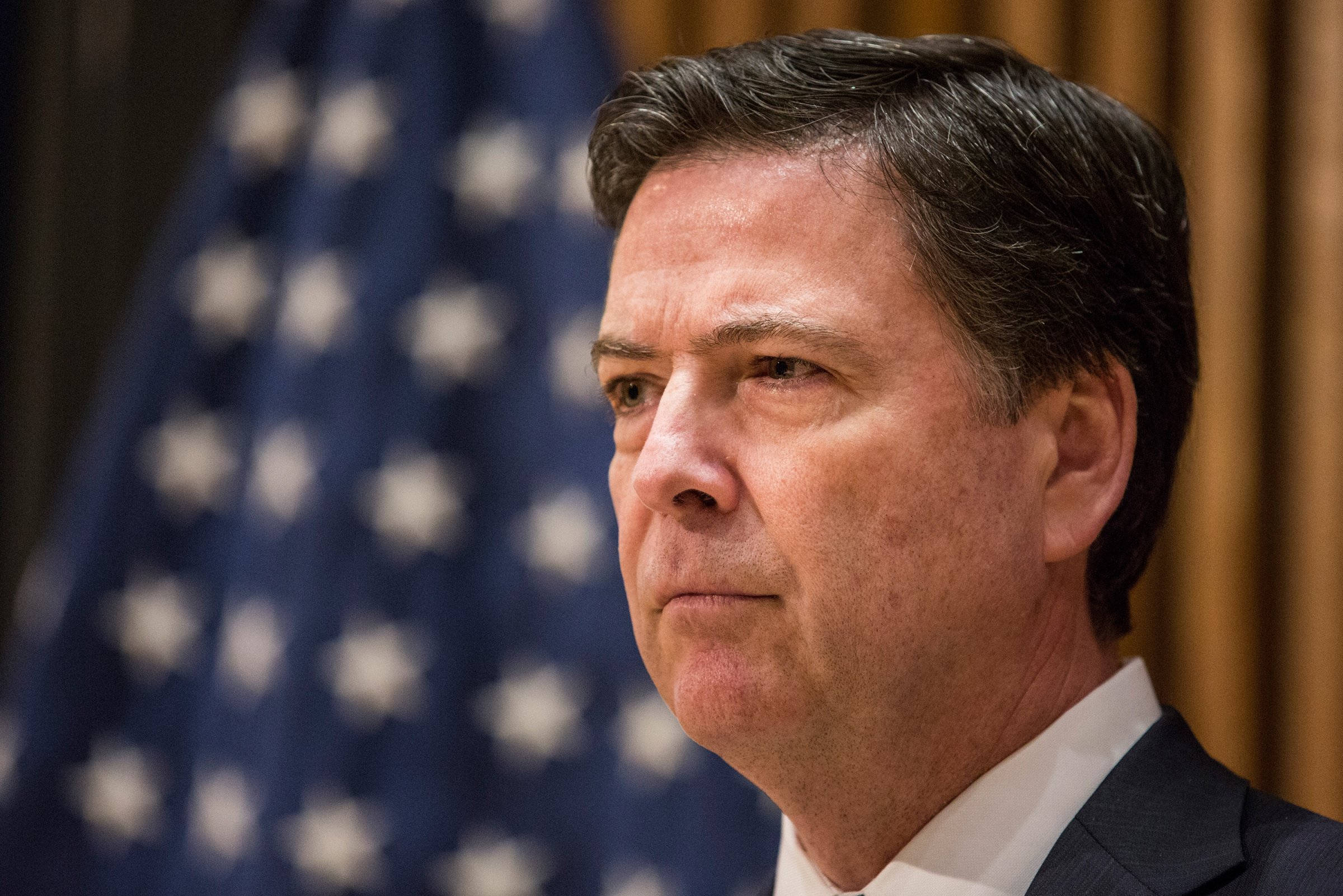
James Comey: They need to ‘speak the truth’

“People who know better, including Republican members of this body, have to have the courage to . . . speak the truth and not be cowed by mean tweets or fear of their base. There is a truth and they’re not telling it. Their silence is shameful.”

So said former FBI director James Comey when asked about the state of congressional Republicans.

He said later that members of Congress will have “tell their grandchildren” what they did while they served in Congress.

Comey has endured his share of barbs, bombs and beatings from Republicans in Congress ever since Donald Trump fired him from his post as FBI director. Indeed, the man who once was cheered by Republicans when he announced at the 11th hour of the 2016 campaign that he had more questions to ask Hillary Clinton about her use of a personal email server while she was secretary of state, is now a pariah among the GOP.

Comey is not standing by silently. He is seeking to challenge Republicans who remain silent while the president of their party threatens them, makes them “cow” in front of him.

I should point out, too, that Comey is a longtime Republican. He is no squishy progressive/liberal Democrat who’s been demonized by the president and many of his more ardent followers.

That is what — to my mind — gives Comey’s admonition to Republicans to tell their constituents “the truth” about what they are hearing from the president and his team of sycophants some much-needed gravitas.

Trump’s hysteria continues to mount

My astonishment at the presidential hysteria mounting over the Russia probe and related matters is continuing to build.

It presents itself in stark contrast to the stone-cold silence coming from the office of the special counsel that Donald Trump is attacking multiple times daily.

Robert Mueller continues to insist on a veil of silence. He has instructed his team to keep its collective trap shut. No leaks are coming from the special counsel who is examining that “Russia thing” that prompted Trump to fire FBI director James Comey in May 2017.

Yet the president continues his frontal assault on Mueller’s reputation, on the reputation of his former friend Michael Cohen, on Comey, on the Department of Justice, on the FBI. His assault is inflicting some collateral damage, too, such as on the rule of law and on the notion that the U.S. Constitution stands as a bulwark against any abuses of power that might arise from any of the three branches of government.

It is my fervent hope that Mueller concludes his investigation sooner rather than later. I am growing weary of the Twitter tirades coming from the White House. I am tiring of the insistence from the president that Mueller has “no evidence of collusion”; in fact, we don’t know what Mueller has or doesn’t have, which is why I want the probe to reach its finish line.

As for the president, every time he yaps about “no collusion” or “no laws being broken,” he sounds all the more to me as if he’s trying to hide something from public purview. I refer to those tax returns that he has refused to release; or the mountain of documented evidence that Mueller has compiled that is bound to answer a lot of questions.

Donald Trump’s hysteria plays well with the base that is hanging with him to the end. Fine. It isn’t playing well with the rest of the country, the 60-some percent of us who disapprove of the manner that Trump seeks to lead the country.

Please, Mr. Special Counsel, wrap this thing up as soon as possible to spare us the frothing madness that pours out of the White House.

Oh, wait! It just occurs to me that the end of the Russia probe — no matter how it concludes — is going to produce another endless barrage from the president of the United States.

Dang it, man! We can’t win!

Time of My Life, Part 5: Conventions bring serious tasks

Every now and then journalists get to see the most serious tasks imaginable in a totally new context, especially when you’re thrust into a front-row seat.

I had a couple of those experiences while working for the Beaumont (Texas) Enterprise. I want to share them with you briefly here.

In 1988 and again in 1992 I was privileged to attend two Republican National Committee presidential nominating conventions. Beaumont lies between two major cities — New Orleans to the east and Houston to the west. The GOP nominated Vice President George H.W. Bush as president in 1988 in New Orleans; then the party nominated him again for re-election in 1992 in Houston.

I got to witness all of the hubbub, the whoopin’ and hollerin’ up close both times.

The 1988 convention placed me behind the speaker’s podium inside the Superdome in New Orleans, where I witnessed President Reagan deliver a stirring speech to the faithful crowd. After the president finished his speech — and as the crowd cheered the Gipper — he and his wife, Nancy, turned and walked off the stage and so help me as God is my witness, he looked straight at me as we made eye contact. I have to say that was quite a thrill.

I worked in the same media room with some fine reporters and columnists. One of them is Chris Matthews, who at both conventions was a “mere” columnist for the San Francisco Examiner, which was owned by the same Hearst Corporation that owns the Beaumont Enterprise. I got to know Matthews, I like to say, “before he became ‘Chris Matthews,'” the current star of prime-time cable TV coverage on MSBNC. He and I enjoyed a cup of coffee at the Houston convention, chatted for a few minutes. He wouldn’t remember it, but it happened.

The 1992 gathering in the Houston Astrodome was notable as well for a couple of speeches. Conservative firebrand Pat Buchanan sought to wrest the GOP nomination from President Bush and delivered the frightening speech in which he implored the delegates to “take our country back” from some nefarious evil forces Buchanan thought had hijacked the nation. I also got to hear former President Reagan bring down the house when he mentioned the Democrats’ nominee, Bill Clinton, who Reagan said fancied himself to be another Thomas Jefferson. He responded, “Let me tell you, governor. I knew Thomas Jefferson. Thomas Jefferson was a friend of mine, and governor, you’re no Thomas Jefferson.”

The former president’s timing was picture perfect, owing to his well-known skill as a film and TV actor.

The biggest takeaway from both conventions was the sight of serious men and women doing the most serious work imaginable — nominating candidates for president and vice president of the United States — while wearing goofy elephant hats, with vests festooned with buttons and labels and generally carrying on like children at a birthday party.

I simply had to suspend my disbelief as I watched these individuals performing this most serious of tasks.

Yes, it was representative democracy in its raw form. It was a joy to watch and to cover it for the newspaper that employed me.

Corker might vote for a Democrat? Big . . . deal!

Lame-duck U.S. Sen. Bob Corker, R-Tenn., says he “might vote” for a Democrat for president in 2020.

To which I say: Big . . . bleeping . . . deal!

Does it really matter one bit what a U.S. senator might do when he gets a chance in a couple of years to vote — in private! — for the candidate of his choice?

No it doesn’t.

I grow weary of hearing from these politicians who believe that expressing their voting preferences in public somehow gives their ballot-casting some added significance, some gravitas.

Corker is a fine man. He announced about a year ago that he wouldn’t run for re-election to the Senate from Tennessee. That’s when he grew a pair of ’em and started speaking out against the president of his own party. If only he had been as stern prior to his becoming a lame duck. But . . . whatever.

Now he says he might vote for a Democrat.

The founders made sure we could vote in private for a reason. It was to protect citizens against recrimination, coercion and pressure. Sure, I occasionally reveal my own voting preferences on this blog. I also know that it doesn’t mean anything to damn near anyone because readers of this blog have their minds made up already; I just choose to use this forum to vent.

So, to Sen. Corker I only want to add, feel free to vote for whomever you choose, sir. You are entitled to write in The Man in the Moon if that’s your choice. You’re under no obligation to tell us about it.

Indeed, I care about that as much as I care about knowing you might cast your ballot for a Democrat next time around.

It ain’t the ‘Democrat Party,’ young man

I now want to pick a few nits with one of the right-wing wackos who works for Donald John Trump.

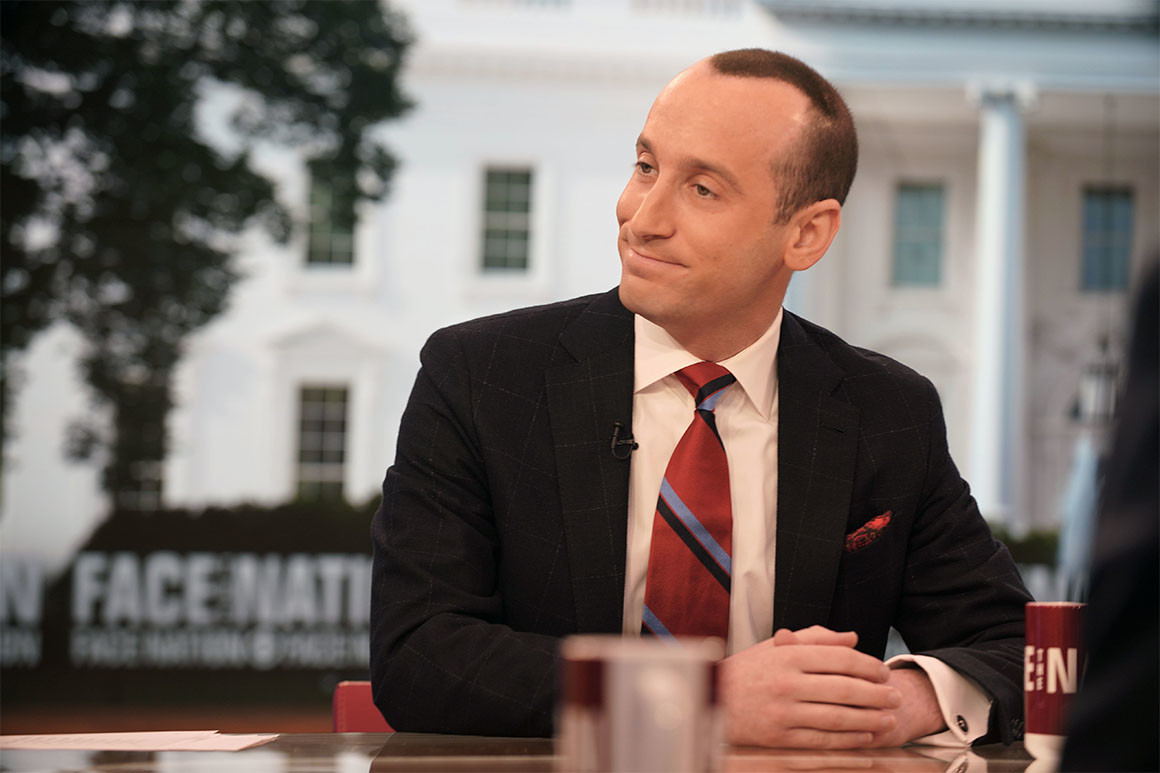
Stephen Miller, a senior policy guru for the president, says the administration will do “whatever is necessary” to build a wall along our southern border.

Oh, but then he relies on that goofy perversion of the identity of the opposing political party.

“The Democrat Party has a simple choice,” Miller said on CBS’s “Face the Nation.” “They either can choose to fight for America’s working class or to promote illegal immigration.”

Democrat Party? That’s what he calls the Democratic Party.

Hey, I get that it’s a minor point, but then again it really is more of a major point than the Rs would care to acknowledge. The hard-liners’ insistence on using the perverted ID of the Democratic Party is intended to demonize a great political organization. One does not hear such a thing coming from Democrats who might be inclined to refer to members of the “Republic Party.” That, too, would disparage — if not denigrate — the other great major political organization.

As for Miller’s assertion that Democrats might want to “promote illegal immigration,” that is another branch broken off from the demagogue’s tree. No patriotic American wants to “promote” illegal immigration. We all want border security. Many of us just don’t want to build a wall to seal us off from our neighbors.

Those Republican demagogues, though, are intent on demonizing the opposing party (a) by perverting the party’s name and (b) by suggesting they want to “promote” the commission of crimes.

Get serious, young man.