Five U.S. Senate race debates? Very good!

Well, shut my mouth and call me flabbergasted.

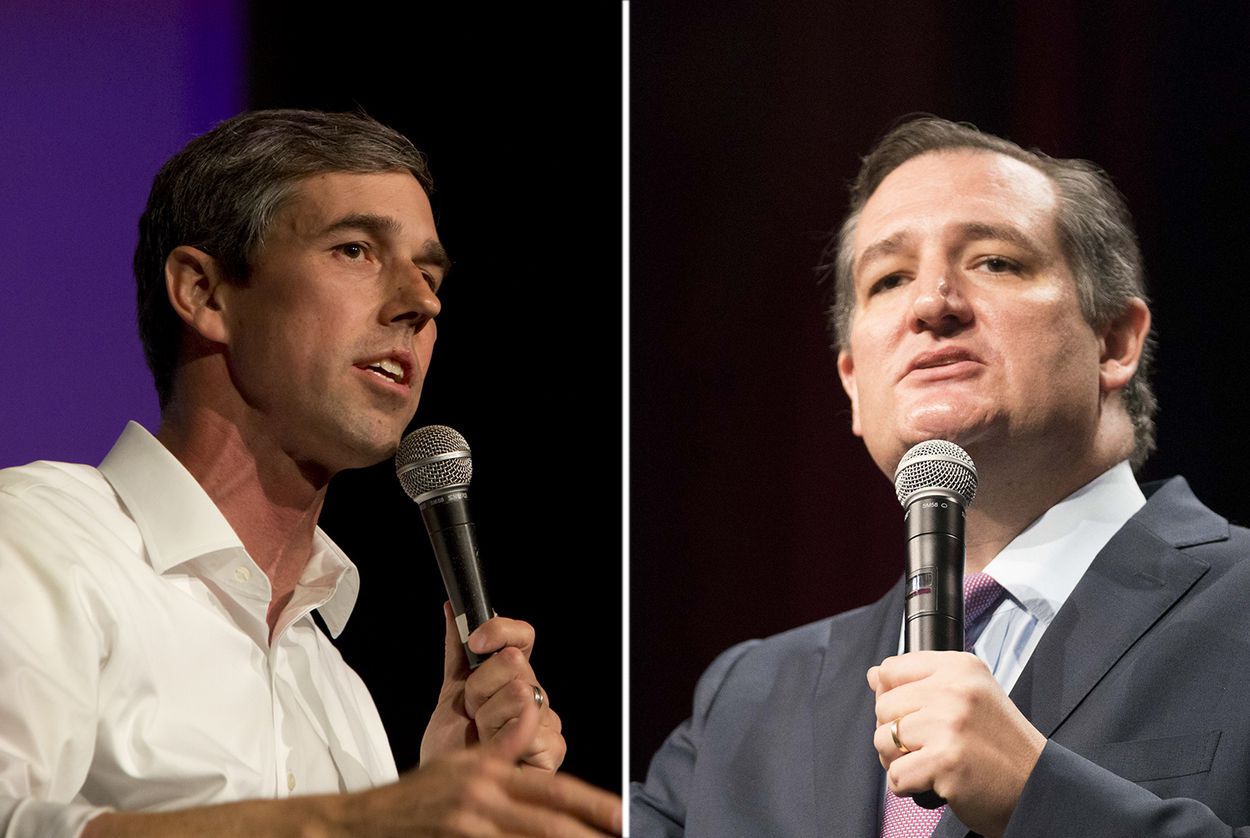
Republican U.S. Sen. Ted Cruz has pitched a patently capital idea to his Democratic Party challenger, Beto O’Rourke: Five debates on consecutive Fridays between the two candidates for Cruz’s Senate seat.

Very, very good, Sen. Cruz.

You know how I want this contest to turn out. I want O’Rourke to defeat Cruz. There. That’s out there.

However, the incumbent has put forward a thorough airing of the issues that divide the candidates. For that he deserves high praise.

Cruz’s campaign has proposed the following schedule:

  • Aug. 31 in Dallas on “Jobs/Taxes/Federal Regulations/National Economy”
  • Sept. 14 in McAllen on “Immigration/Border Security/Criminal Justice/Supreme Court”
  • Sept. 21 in San Antonio on “Foreign Policy/National Security”
  • Oct. 5 in Houston on “Energy/Trade/Texas Economy”
  • Oct. 12 in Lubbock on “Healthcare/Obamacare”

That about covers it, don’t you think?

The Texas Tribune reported on the Cruz proposal. Read the story here.

That this proposed schedule comes from the incumbent suggests that the race well might be as close as public opinion surveys have indicated over the past several weeks. I lamented just recently that Lt. Gov. Dan Patrick has said he has no interest in debating Democratic challenger Mike Collier, which I consider to be a shame.

I want to offer Sen. Cruz — clearly one of my least favorite Senate incumbents — a good word for proposing a series of head-to-head joint appearances with the young man I hope defeats him.


Trump-Putin II postponed, to what end?

Donald Trump and Vladimir Putin are going to meet a second time — but not until after the first of the year.

The announcement came from national security adviser John Bolton, who — borrowing the president’s favorite epithet describing the examination of the “Russia thing” — said the meeting would occur after the “witch hunt” has concluded.

C’mon, Mr. National Security Adviser. There ain’t a “witch hunt” taking place.

Robert Mueller is proceeding with his probe into whether the Trump campaign colluded in 2016 with the Russians operatives who attacked our electoral system. The special counsel is not the partisan hack he has been accused of being by, um, actual partisan hacks.

The next summit between the U.S. and Russian presidents should proceed. I support the idea of the two leaders talking to each other. They should face each other and they should talk openly and candidly about the issues they have in common and those that separate them. They also should do so publicly to the extent they can.

The problem, though, still rests with that first summit in Helsinki. They went into a closed-door meeting and the world doesn’t yet know what they discussed, where they agreed and what they decided. Then the two leaders had that press conference in which Trump rolled over in front of Putin in that ghastly show of weakness by the so-called “leader of the free world.”

As for the juxtaposition with special counsel Mueller’s investigation, let’s just wait to see what conclusions are drawn once the probe is finished.

We have an extremely fluid situation in front of us. The Mueller probe can end in any number of ways, some of which might bode poorly for the president.

And, oh yes, we have that midterm election coming up.

If at least one congressional chamber flips from Republican to Democratic control, well … let’s just wait to see how that plays out.

City boosts traffic improvements … with camera money?

The Amarillo City Council has voted 5-0 to spend more than $200,000 with money earmarked for traffic safety improvements.

The Amarillo Globe-News story doesn’t mention it specifically, but this is the kind of expense that state law requires of cities that deploy red-light cameras at troublesome intersections.

As the Globe-News reports: Officials said the purchase, which extends to four separate vendors, will fund new equipment and replace outdated equipment and other signal materials.

Read the story here.

This is why I continue to support the principle of cities using this technology to help deter lawbreakers from running through red lights. Amarillo has used these devices for several yeas, raising considerable amounts of money from fines collected by violators.

The bitching has been tiresome … and wrongheaded. Red-light camera foes keep insisting that the city is using this technology as a money-maker to fund this or that project. Wrong! State law says cities must dedicate that revenue to traffic safety improvements. Nothing else! It’s dedicated revenue.

To its credit, the City Council hasn’t backed down in the face of a vocal minority of residents who continue to yammer about the cameras. They cite such idiocy as the cameras intruding on motorists’ privacy. Interesting, yes?

Consider that motorists who drive their vehicles on public streets therefore surrender their “privacy” when they break the law and put other motorists and pedestrians in jeopardy.

The city is spending some money on needed improvements to its traffic signalization and other elements of its traffic management plan. If it comes from the revenue collected by red-light camera enforcement, so much for the better.

Journalism craft in serious trouble

This is not a scoop. Many of us have known this already: Journalism as we’ve known the craft is in serious trouble.

I noticed an article in The Nation that takes note of the recent sale of the New York Daily News, a newspaper that has won the Pulitzer Prize. It has just laid off roughly half of its newsroom staff.

The Daily News, though, is merely the latest in a long and growing line of once-great media organizations feeling the pinch, feeling the burn and feeling the pressure to find a business model to operate in a changing media climate.

It makes me grateful for my own departure from the craft I enjoyed and loved for so many years, even under the painful circumstances that brought it about. I resigned in August 2012 after being “reorganized” out of the job I did there for nearly 18 years. Yes, I’ve commented already on that. The truth is that in a perverse sort of way I am glad it happened, given the misery that has been inflicted on many of my former colleagues who have remained at their post.

John Nichols’s story in The Nation can be read here.

It’s a fascinating description of what has happened to a craft that brought many of us into it back in the day. Many of us answered some kind of call to make a difference. We wanted to help shape the world, to chronicle the news in our communities.

One of the dirty little secrets about newspapers is that they used to be a highly profitable business. Yes, they were labor-intensive. Newsrooms were full of reporters who covered various beats. They had editors who sought to improve the quality of the stories they would tell. There were photographers who provided visual images to to accompany the printed word.

With all that manpower on board, newspapers often operated at incredible profit margins, often exceeding 30, maybe 40 percent.

Those margins shrank in the late 1990s and the early 2000s. Newspapers then had to reduce the overhead to maintain their amazing profitability. Believe me, I had a front-row seat as this happened, not just in Amarillo, Texas, where my career ended, but in Beaumont, Texas, where I also worked for nearly 11 years.

I went to work at the Amarillo Globe-News (which also won a Pulitzer Prize in 1960 for Meritorious Public Service) in January 1995. When I got there, the paper published two editions daily — morning and evening. It had a combined daily circulation of more than 60,000 copies; its Sunday circulation hovered close to 80,000.

Those numbers have plummeted. So has the newspaper’s revenue and so has its labor force. It now publishes a morning newspaper with a staff that is a tiny fraction of the staff it used to employ. It has no staff photographers; its copy-editing functions have been centralized; it no longer prints the paper in Amarillo.

This circumstance is not unique to Amarillo, Texas. It has happened in communities across the land.

Am I sad? Of course I am. Am I glad to be gone from that madness? Boy, howdy!

Fox News: state media outfit?

What’s up with this?

Donald J. Trump reportedly became angry with staffers aboard Air Force One because they were watching CNN on the presidential jet. Why, he insists on them watching Fox News, the president’s news/commentary network of choice.

He continues to lambaste media outlets that report goings on in the manner that they should, with facts and critical analysis. His favorite network, Fox, continues to slobber all over the president’s shoes (figuratively, of course) while offering nothing but “positive” coverage of his every statement and deed.

Anything negative is deemed “fake news.” Amazing, given that the president is the godfather of “fake news,” as he promoted the lie that Barack Obama was not constitutionally qualified to run for president of the United States. It was that “birther” thing, remember?

So, are we to presume that the president is creating a form of de facto state media?

I believe the First Amendment to the U.S. Constitution says the government must not interfere in any fashion with a “free press” doing its job.

U.S. attorney general: disgusting partisan hack

I’ll just get this off my chest up front: U.S. Attorney General Jeff Sessions is a sorry excuse for a high-level federal law enforcement official.

The AG stood this week before a crowd of conservative high school students who began chanting “Lock her up!”, referencing the idiotic e-mail controversy that centers on former Secretary of State Hillary Rodham Clinton.

Rather than do the right thing, which would have been to silence the crowd and remind them of the “rule of law” and “due process,” the AG chuckled nervously and repeated the chant from the podium. He then said something about “hearing that chant” during the 2016 presidential campaign.

I once was willing to give Sessions the benefit of the doubt, given his decision to recuse himself from the “Russia thing” probe at the Justice Department. No longer.

Sessions had the chance to show some statesmanship, to demonstrate that he lives by the rule of law. Instead, when the students began chanting “Lock her up!” he gravitated back to his partisan roots. He once was a Republican U.S. senator from Alabama who, before he was elected to that body, was rejected by the Senate for a federal judgeship because of racially tinged statements he had made.

Now the nation’s chief law enforcement officer has seen fit to continue the idiocy associated with a failed — and quite lengthy — investigation into a controversy that’s been decided.

The AG has joined the president of the United States in disgracing his high office.

Shameful.

Are there more deals to be struck?

Almost without fail, when I look at the Santa Fe Building in downtown Amarillo, I think of an innovative elected public official whose persistence brought the old structure back to life.

Then I wonder: Are there more deals like that to be had in rehabilitating other old structures in the city?

I moved to Amarillo in 1995 to take a job as editorial page editor of the Amarillo Globe-News, which at the time published two newspapers daily. Almost immediately I became acquainted with Potter County Judge Arthur Ware, who at the time had been in office less than four years. The U.S. Marine Corps Reserve gunnery sergeant had been activated for service in the Persian Gulf War in 1990-91 — just after he was elected to for the first time — so he did his duty and came back to resume his day job as an elected public official.

Ware wanted to show me the Santa Fe Building. It was a vacant hulk in early 1995. It had been vacated by the Santa Fe Railroad many years earlier. The building, which was erected in 1930, was dark inside. Here’s the thing, though: It was built like the Bastille, which I told Ware when we walked through the building.

Ware wanted to purchase the structure and relocate several county offices in it.

Here’s the deal Ware struck: He managed to purchase the building and the property where it sits for $400,000. Yep, four hundred grand for a 12-story structure in downtown Amarillo! Then he applied for a historic preservation grant that would finance fully the exterior renovation of the structure. The Texas Historical Commission grant came through and so the county then went to work on the Santa Fe Building.

Over time, the building was finished. Yes, it ran into some hiccups along the way; the building had some cost overruns. The interior was restored, too. Indeed, many of the floors — under terms of the state grant — were restored to their original appearance. Other offices were completed with contemporary designs.

The building is a fabulous testament to Arthur Ware’s persistence and his love of the downtown district where he worked as county judge until 2015. A massive stroke slowed Ware down significantly in his final years as county judge.

If there is a legacy that Ware might want to stand the test of time, it has to be the Santa Fe Building. My hope is that there might be other opportunities on which city or county officials could seize as they look toward guiding the city and the county toward the future.

Looking forward to watching downtown transform itself

The structure in this picture is of the Santa Fe Building in downtown Amarillo, Texas. It is one of the two most architecturally interesting buildings in the downtown district; the other is the Courtyard Hotel that is housed in the historic Fisk Building just down the street.

What’s the purpose of this post? Well, my wife and I have moved away from Amarillo, but we haven’t severed our ties with the city. We intend to return regularly. One of our sons lives there and works in the Santa Fe Building.

This blog intends to point out how much I look forward to watching downtown Amarillo evolve. Given that we won’t see it do so daily, we’ll be able to watch the evolution occur over periods of time. I look at it as watching the city change in a sort of time-lapse fashion.

The Santa Fe and Fisk buildings over time might lose their standing as the downtown district’s most prominent structures. Yes, the city also has that 31-story tower that eventually will be called the First Bank Southwest Tower once the bank moves into its ground-floor digs.

With all the activity that’s occurring downtown, my hope is to watch all this unfold in larger chunks. They’re building the ballpark on Buchanan Street. They’ve already opened the Embassy Suites Hotel across the street from the Civic Center.

Other buildings along Polk Street are being rehabbed, rebuilt, re-purposed.

We’ll be on the road to this or that destination, but we will return to Amarillo to pick up and then deliver our recreational vehicle.

Yes, I look forward to watching the city remake itself.

We lived for more than two decades in Amarillo. We enjoyed our life there. However, for most of that time, downtown didn’t appear to take many steps forward. There was a sense of stagnation and at time apathy toward the center of the city.

No longer. The city is moving forward at an accelerating pace.

I will be thrilled to watch the progress taking tangible shape each time we return.

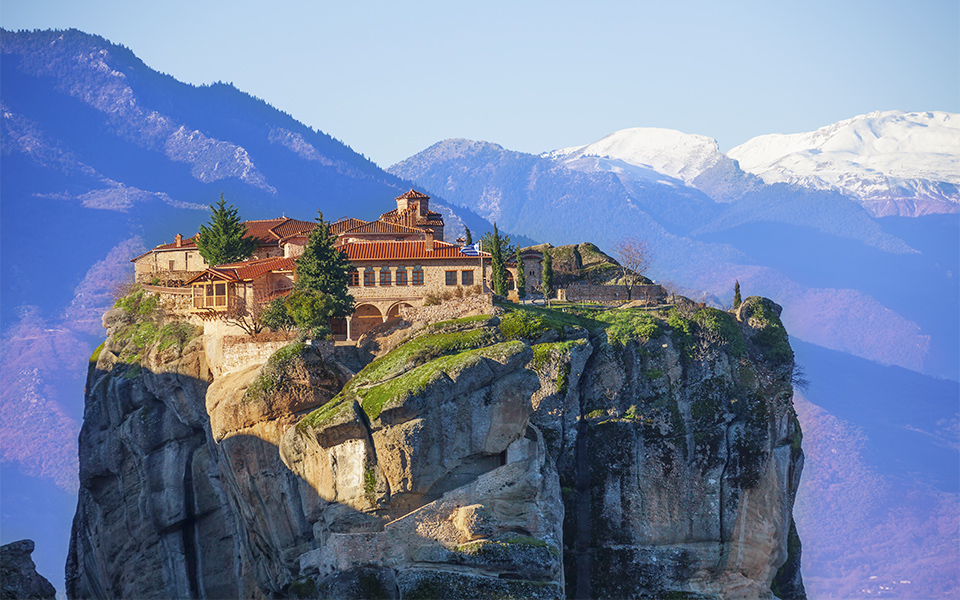
Mamma Mia! Take me back … to Greece!

It’s not often that I get moved by a film to visit a place where the film was shot. Such a feeling overwhelmed me today as my wife and I sat through a delightful musical, “Mamma Mia! Here We Go Again.”

The music is fabulous. The cast is stellar, containing many of my favorite actors. But the setting! Oh, my goodness.

It was set in Greece, although the principal filming was done in nearby Croatia. My wife and I have been to Greece twice. My wife and I have been blessed over the years with the opportunity to travel around the world. She once told me after our first visit in 2000 that Greece is “the one country I’ve seen where I could go back again and again.”

Me, too, sweetie.

Greece is recovering from the financial calamity that befell the country. It’s trying to repay its enormous debt owed to the European Union; make no mistake, a payment in full is highly unlikely. The country, though, is in nowhere near the dire straits it found itself not long after playing host to the 2004 Summer Olympics.

Well, that’s another story.

I just watched a beautifully filmed movie that was set in a country in which I have a keen and lifelong interest. It’s my ancestral homeland.

I long have wanted to return. A musical film today added a lot of fuel to that burning desire.

I know. It’s weird. It’s my story and I’m sticking with it.

POTUS turns VFW speech into partisan, anti-media tirade

Leave it to Donald John Trump Sr. to turn a speech before the Veterans of Foreign Wars into a cheap, partisan, insult-laden stump speech.

Yes, the president turned a potentially noble event into a sideshow.

The president ventured to Kansas City, Mo., stood on the podium at the VFW meeting and laid into the media, the so-called “fake news” outlets.

Why, I must ask, couldn’t he limit his remarks exclusively to paying tribute to the men and women who served this country in time of conflict? They went to war to defend American ideals.

Oh, wait! I almost forgot that the young Donald Trump avoided such service during the Vietnam War. Bone spurs, wasn’t that it?

Whatever, the president couldn’t resist going after the media, Democrats and anyone who opposes his loony policies.

He also chose to take aim at who he refers to as his “low-IQ” opponents in Congress. Classy, yes? Um, no!

To its credit, the VFW issued a statement via Twitter that reads:

Today, we were disappointed to hear some of our members boo the press during President Trump’s remarks. We rely on the media to spread the VFW message, and @CNN, @NBCNews, @ABC, @FoxNews, @CBSNews, & others on site today, were our invited guests. We were happy to have them there.

You see? The VFW showed the kind of class that its featured speaker, the president of the United States, is incapable of showing.

Disgraceful … yet again!