MTV no longer is ‘MTV’

This item just recently came across my grid. I won’t comment at all on the subject of it, but it does bring to mind a question I’ve been pondering for years.

Someone named “Nev” Schulman has been accused of making sexual remarks to women on his show “Catfish,” an MTV series.

OK. I’m done with that.

Here’s the question: Why did MTV do away with its original mission, which was to televise “music videos”? Doesn’t MTV stand for “Music Video Television”? Yes, I believe it does.

I haven’t watched anything that MTV shows since it abandoned its signature premise. I used to watch it all the time. I don’t know “Catfish” from “Blowfish.”

I understand MTV went to a “reality television” format, which is laughable on its face, given that no “reality” situation on TV bears any resemblance to actual reality.

MTV won’t return to showing music videos. I guess the network has hit a home run with the audience it has sought. I’m too old to get into the young’ns’ “reality TV” fetish.

It’s just that MTV had a good thing when it debuted in August 1981. Then it tossed it aside.

They had me … then they lost me.

No, Mr. President, they aren’t ‘animals’

Donald John Trump really and truly doesn’t like those who come into this country illegally.

The president laid some pretty harsh language on them during a White House meeting this week. His description? He calls them “animals.”

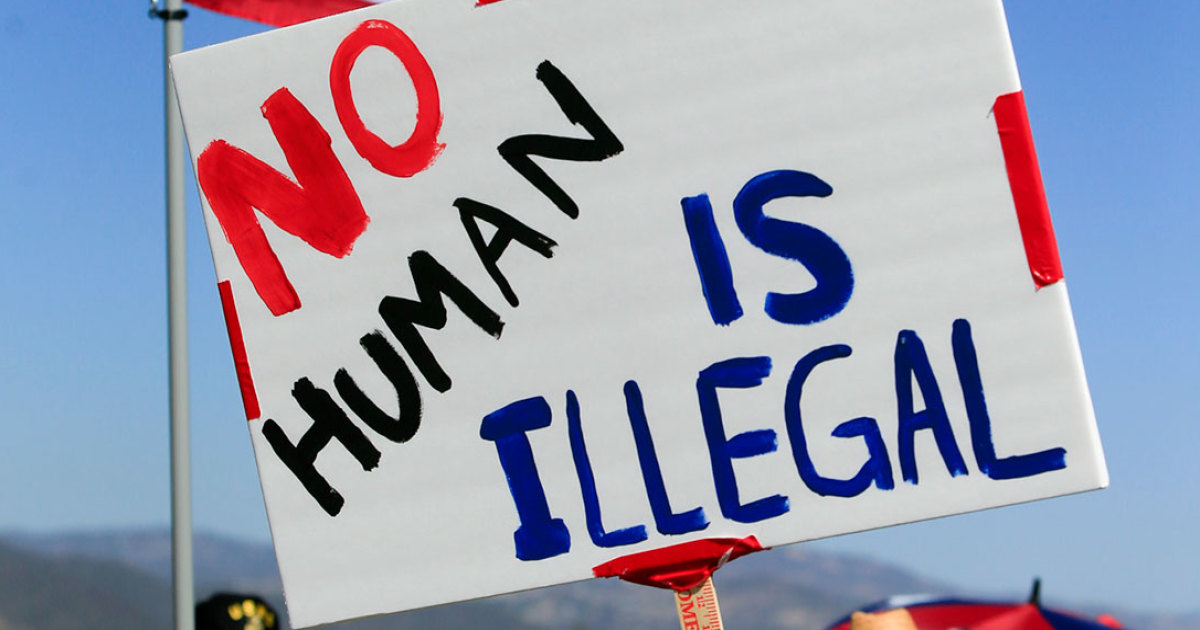
There you go, Mr. President. Many of the undocumented immigrants who have come to the United States have managed to, um, graduate from college (some with academic honors), rear their families, pursue fruitful professional careers, serve in the U.S. military (and dying for the country in the process).

These are who the president of the United States calls “animals”?

According to National Public Radio: During a White House roundtable discussion with law enforcement officials and political leaders, Fresno County Sheriff Margaret Mims expressed frustration that California law signed last year by Gov. Jerry Brown forbids informing U.S. Customs and Immigration Enforcement of undocumented immigrants in the state’s jails, even if police believe they are part of a gang.

Trump’s response: “We have people coming into the country — or trying to come in, we’re stopping a lot of them — but we’re taking people out of the country, you wouldn’t believe how bad these people are. These aren’t people. These are animals,” the president said.

The White House meeting dealt with sanctuary cities, where municipal officials have declared their communities to be safe havens for those who enter the country without proper documentation. Trump wanted to make some idiotic generalization about every person who sneaks into the country.

As usual, the president’s overheated hyperbole is inaccurate, unfair and without any basis in fact.

I understand fully that some undocumented U.S. residents them come here and commit violent crimes. They harm others. Has it been proven, though, that undocumented immigrants do so at a more frequent rate than U.S. citizens?

The president continues to speak only for those who comprise his political base. He doesn’t speak for me.

Disgraceful.

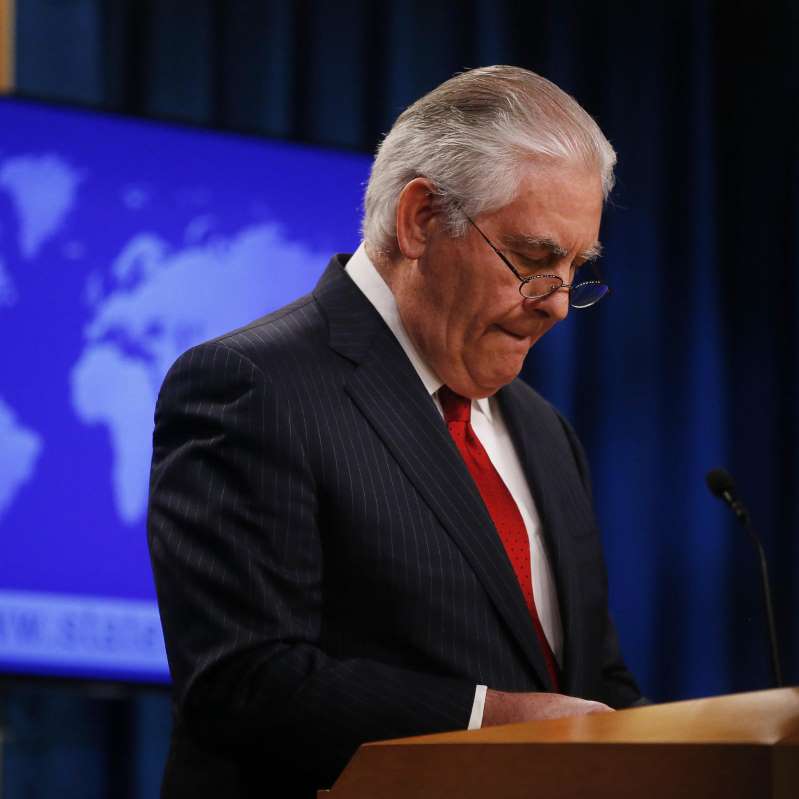
Rex T breaks his silence in a big way

Former Secretary of State Rex Tillerson is now a private citizen. He isn’t a silent citizen, though.

Here is what he told graduating cadets at Virginia Military Institute: When we as people, a free people, go wobbly on the truth even on what may seem the most trivial of matters, we go wobbly on America.”

Who in the world do you think Tillerson is referring to when he said we “go wobbly on the truth”?

He didn’t mention Donald J. Trump by name, but Tillerson appears to be unsheathing his rhetorical weaponry at the president.

He talked about accepting “alternate realities.” Which reminds me of White House adviser Kellyanne Conway’s priceless coining of the term “alternative facts.”

Tillerson’s tenure at State didn’t go well from the beginning. It ended when Trump fired him and then replaced him with CIA director Mike Pompeo. Tillerson left the agency quietly, but to his credit he is not remaining quiet.

“If we do not as Americans confront the crisis of ethics and integrity in our society and among our leaders in both private and public sector, and regrettably at times even the nonprofit sector, then American democracy as we know it is entering its twilight years,” Tillerson said to the VMI cadets.

Yes, we are witnessing an epidemic of “crisis of ethics and integrity in our society.” I believe its source of late has been in the halls of power at the highest levels of our government. I also believe that Rex Tillerson knows that to be true as well.

I am glad his voice is being heard once again. The former chief diplomat has an important message to deliver.

Go for it, Justify!

I think I need to have my head examined.

Horse racing is among my least favorite sports to follow. I’ve stated already on this blog that I don’t get excited about a horse race until one thoroughbred has won the first two legs of the Triple Crown: the Kentucky Derby and the Preakness Stakes.

Well, for some reason that remains a mystery to me, I am getting somewhat, sort of psyched about the Preakness, which takes place Saturday in Maryland.

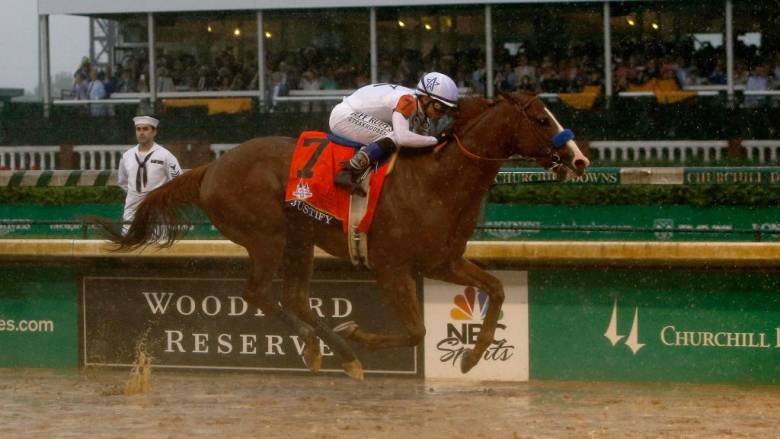
The favorite? Justify, the horse that won the Derby two weekends ago.

For the life of me, I don’t know what I’m going to do if Justify actually wins the Preakness. That puts him in line to be the second horse in four years to win the Triple Crown.

American Pharaoh won the three big races in 2015. It thrilled me to no end, given that it had been 37 years since Affirmed did it.

My sudden interest in Justify might have something to do with the way he won the Derby. He did it in downpour. He took the lead on the back stretch and won it pulling away. It was impressive, man!

The Preakness is a shorter race than the Derby. I hope the weather is good. I thought I heard someone say that Justify didn’t normally do well on a sloppy track. Ha! He fooled ’em at Churchill Downs.

So, they’ll call the ponies to the post on Saturday. I’m going to pull for Justify. If he wins this one, I’ll be holding my breath until the Belmont.

Kilauea produces thrills and fright

Most of those of us who live in the 48 contiguous United States of America don’t have to worry about the forces of nature that are putting the folks of Hawaii in such peril at the moment.

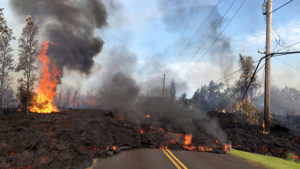
Kilauea is erupting on the island of Hawaii. It’s showing no sign of letting up. It’s covering streets and highways with lava. I haven’t heard of any loss of life. The volcano has become — for years, apparently — part of people’s daily existence. It is getting worse.

My heart goes out to those in harm’s way.

I have been reading some material in the New York Times and other publications about comparisons between what is happening in Hawaii and what could happen along other volcanic mountain chains in the United States.

I was particularly struck by the speculation surrounding the Cascade Range, which traverses north and south from British Columbia, through Washington, Oregon and into California.

Of all the things one never expects to see in their lifetime, a volcanic eruption was one of them. That all changed for me in the spring of 1980, when Mount St. Helens, a peak that once stood about 9,700 above sea level in southwest Washington, exploded in spectacular fashion. The volcanic explosion occurred on May 18, 1980, killing about 70 individuals. It was the story of the decade for those of us living in the Pacific Northwest.

I was living in the city of my birth, Portland, Ore., about 50 miles south of the peak, which now stands at about 8,400 feet, given that so much of its peak was blown apart by the titanic blast.

Mount St. Helens’s eruption produced a vast crop of armchair vulcanologists who became “experts” based on what they heard, read and possibly felt in their bones about what might happen to any of the other volcanic peaks along the Cascade Range.

Mount Hood stands like a sentinel to the east of Portland. It’s a glorious peak that stands 11,250 feet along the horizon. Will it blow apart? That’s been the subject of some discussion since Mount St. Helens blew apart. If it does, I’ll tell you it will create serious damage along its southern face, which was shaped by its latest eruption, which occurred, oh, a long time ago. The mountain is considered “dormant,” as it seeps gas out of the caldera near its summit.

So, it is with some interest that many of us are watching the drama unfold in Hawaii. We’ve lived through it, too.
Pain continues in newspaper industry

My heart sank again this week when I learned of the huge layoffs at the Salt Lake Tribune, once known as one of the nation’s better newspapers.

The paper released roughly a third of its newsroom staff. Many of those who were let go are among the best journalists in Utah.

Is any of this new? Sadly, no. It is happening across the country. Major metro papers are feeling the pain, along with mid-size papers and the mom/pop shops.

The culprit? The Internet!

The solution? It’s harder to identify.

Media outlets, namely newspapers, are continuing to struggle to find a business model that fits in this new Information Age … or maybe I should call it the “Disinformation Age.”

The Salt Lake Tribune is suffering from plummeting revenue as readers no longer subscribe the printed paper and advertisers look for other outlets to hawk their wares.

This sickens me.

I came of age professionally at a time when newspapers attracted young Americans who wanted to do good things. They wanted to make a difference in their communities. I admit to being smitten in the early 1970s by the reporting performed in Washington, D.C., although I had begun my college studies before Watergate and the fallout it produced.

There’s no intent to disparage the quality of the reporting being done now, today, as it regards what is happening in D.C. Newspapers are continuing to report and they’re continuing to fulfill their mission.

Since newspapers and other media are for-profit organizations, they need to make money to survive. If readers stop reading, and advertisers stop advertising, then it follows naturally that newspapers are going to struggle.

That story is unfolding in Salt Lake City and in communities across the land. It’s happening in Portland, where I grew up reading a newspaper that achieved the greatness to which its publisher and editors aspired. It’s damn sure happening in Beaumont and Amarillo, Texas, where I toiled for three decades; both cities’ newspapers are decimated shells of their former selves.

Newspaper owners, I am saddened to say, have yet to adapt to the changing business climate that has stripped them of their livelihood.

There will be more sad stories to tell.

Building a bigger football stadium

I got my first look today at the next big Texas high school sports venue. It’s in McKinney. I haven’t seen pictures of the finished product, but it’s going to be a big and shiny place.

They’re building a football stadium on the McKinney High School campus. It’s going to be just a little bigger and a perhaps a good bit more expensive than a football complex that opened down the road in Allen, home of the Allen High School Eagles — who happen to be the defending Class 6A football champs in football-mad Texas.

So, what’s the point here? A couple of things really.

They take their football seriously in this part of Texas. I won’t say that high school football is any bigger in North Texas than it is in, say, the Panhandle or in the Golden Triangle — two communities where my wife and I lived for more than three decades.

The gold standard for big-time high school football — as I have measured it — still is in Beaumont. In 1984, a young high school football coach died. His name was Alex Durley. Two years earlier, he led the newly constituted Westbrook High Bruins to the Class 5A football championship. Westbrook was the creation of a merger between two high schools: Forest Park and Hebert.

Durley was named head coach of the new school’s football team. He was an African-American gentleman. Forest Park was the mostly white school; Hebert was the mostly black school.

The new school won and Durley became a community icon. Indeed, on the day of his funeral in 1984, all three Beaumont-Port Arthur broadcast channels carried it on live television.

So … yes, football is big in Texas. It’s so big that communities spend serious money to build these sports venues. The Allen High stadium cost a touch more than $60 million. The McKinney High palace will cost about $70 million. They fill the Allen Eagles stadium for every home game with about 20,000 fans; McKinney’s new venue will be filled, too.

Before we get all worked up over all this money, let’s remember one thing: The voters of these two school districts approved the expenditure at the ballot box. It’s their call. Who are any of the rest of us to judge, yes?

C’mon, Ms. Sadler, just say you’re sorry

Kelly Sadler works in a White House where the Big Man — the president — never apologizes for anything.

She need not follow Donald John Trump’s lead. All she has to do to make an idiotic story dissipate is to apologize publicly to the man she disparaged so cruelly.

The man is Republican U.S. Sen. John McCain. He is fighting a grievous illness, brain cancer. Sadler, a mid-level White House communications office staffer, was attending a private meeting when she blurted out an insult directed toward Sen. McCain.

McCain had spoken against CIA director nominee Gina Haspel. He doesn’t like her stance on torturing enemy combatants. He has urged his Senate colleagues to reject her nomination to lead the CIA.

Sadler said McCain’s objection “doesn’t matter because he’s dying anyway.”

The story won’t go away. It should go away. All the staffer has to do is to stand before the nation and say she is sorry for her disparaging remarks aimed at a genuine war hero. You see, Sen. McCain’s opposition to torture comes the hard way: He experienced more than five years of it while being held captive during the Vietnam War.

Sadler’s demeaning remark has no place coming out of the mouth of a White House official who, I hasten to add, works for the public. That’s you and me, dear reader.

The president is entitled to withhold any apology if he chooses. My hope is that he hasn’t instructed Kelly Sadler to follow him down the path of arrogance.

My fear, though, is that he has done precisely that very thing.

Shameful.

What happened to those sweet nothings?

All that sweet talk Donald J. Trump has been heaping on Kim Jong Un of late seems to have gone into one ear and out the other.

The North Korean dictator seems to be putting the planned Trump-Kim summit in some jeopardy because he’s angry over the planned joint military exercises that will take place with South Korean and American troops.

Kim thinks the military maneuvers are meant to prepare for an invasion of North Korea, or so he says. Thus, the summit might not happen if Kim decides to pull the plug on it.

What is happening here?

U.S. and South Korean troops have been practicing for years since the ceasefire ended shooting during the Korean War. We haven’t invaded the North yet. The exercises are meant to prepare the South for a possible invasion from the North; I mean, the North did invade the South in 1950, which caused the Korean War. Kim Jong Un’s grandfather started the fight.

The president of the United States was yammering about “little Rocket Man,” and bragging about the size of his “nuclear button.” He was taunting Kim to try anything at all to provoke a response that would deliver “fire and fury the likes of which the world has never seen.”

Donald Trump changed secretaries of state. The new guy at State, Mike Pompeo, went to North Korea in secret and then the nations announced the summit between Trump and Kim.

Suddenly, Kim has become a paragon of virtue in Trump’s mind. He released those three Americans he held captive. Trump hailed Kim Jong Un as a fine man, a wonderful fellow.

Now we have Kim threatening to upset everything all over again.

Don’t tell me the North Korean despot responses positively only to epithets. That cannot possibly be true, can it?

My hope is that Trump holds his fire. If he’s able.

Feds have no say in marriage? Um, yes, they do!

The issue of marriage came up as a side issue in an editorial published by a Texas newspaper. I feel the need to set the record straight about what rights the federal government has in determining marriage.

The Amarillo Globe-News said this, among other things, in discussing states’ rights on sports betting and a recent Supreme Court ruling on that subject: The federal government has no right to define marriage in any way, shape or form. Yet the U.S. Supreme Court sees fit to define marriage for the entire nation. Again – no state’s rights here.

The AGN is seeking to ascertain where states’ rights are relevant and where federal authority supersedes them.

Read the editorial here.

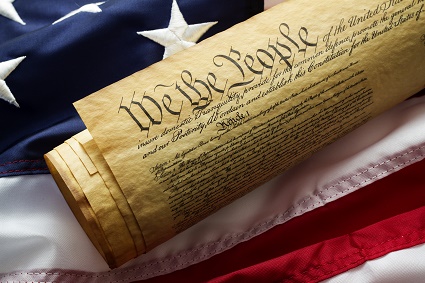
Back to the point: The Supreme Court ruled in 2015 that the U.S. Constitution — the document that governs the entire nation — has a clause that requires all citizens to have “equal protection under the law.” That was the basis of its ruling that legalized same-sex marriage in all 50 our states.

This isn’t a deeply held secret ruling concocted in some star chamber by a majority of the Supreme Court justices. The law is clear. Marriage becomes a federal issue if someone chooses to seek a legal remedy that they believe violates one of the key provisions of the Constitution.

Equal protection is such a key provision. Thus, when a segment of our population is denied the right to marry whoever they love, then the federal judiciary has an obligation to set the record straight.

States have no right, therefore, under the federal Constitution, to deny any American their guarantee of equal protection under the law.

Are we clear now? Good!