Welcome home, American hostages

Three Americans held hostage are on their way home, where they’ll likely get quite a red-carpet welcome led by the president of the United States.

They were held by North Koreans who held them on phony “espionage” charges.

This is a most positive development, although we should take care to avoid overstating it — or understating it, for that matter.

Donald J. Trump’s tough talk directed at North Korean dictator Kim Jong Un well might be part of a remarkable change in tone coming from the reclusive Marxist regime in Pyongyang. If that is the case — and it’s a bit early to make that final determination — then we might be witnessing a new form of “diplomacy” practiced by the leader of the free world.

Trump and Kim and headed for a landmark summit. Trump is demanding an end to the Kim’s nuclear-weapon development aspirations. Kim wants assurances that the United States won’t invade North Korea. Yes, there remains a huge gulf between the sides.

However, that gulf got a bit narrower today with the release of these three Americans — all of Korean descent. Let’s now hope their health is as good as it has been advertised, and that the two leaders can proceed toward a summit that leads to a lasting peace on the Korean Peninsula.

Texas Tech vet school? Call it a ‘done deal’

You now may say that Texas Tech University’s plans to build a school of veterinary medicine in Amarillo is a done deal.

The Amarillo City Council’s decision Tuesday to sign off on a $69 million pledge to Tech puts the city’s seal of approval on a plan that the university says will generate tens of millions of dollars annually to the Panhandle economy.

It also will educate hundreds of veterinarians who will care for animals vital to the region’s lifeblood.

Amarillo Economic Development Corporation, along with a charitable trust, stepped up to donate land and to guarantee as much as $69 million for the $90 million project.

This, I submit, is a big day for Amarillo’s future growth and prosperity.

Do you remember the push back that Tech got from a competitor, Texas A&M University, which at this moment operates the only veterinary medical school in Texas? It appears that A&M, led by Chancellor John Sharp, has relented. Sharp had expressed opposition to Tech’s desire to build a vet school.

To my reckoning, Sharp and the A&M hierarchy never made the case that Texas couldn’t possibly play host to two schools of veterinary medicine. This is a big state, full of aspiring students who want to work for their communities. Texas Tech has now given a segment of them a chance to do exactly that.

Tech had plenty of help, from AEDC and from the family of Amarillo philanthropist Mary Emeny, which donated the land where Tech will build the school.

As the Amarillo Globe-News has reported: “This investment by the EDC ensures the vet school will happen and also challenges industry and community partners to join in the success of making this vet school happen,” Amarillo Mayor Ginger Nelson said. “The timing of Amarillo’s investment before the legislative appropriations request will increase the momentum of private fundraising and hopefully assist the legislative funding request. Funding for the project will come from annual tax revenues, which is sales tax, recognized by the EDC. The estimated annual economic impact for the veterinary school of medicine will be $76 million annually to Amarillo.”

I am willing to bet real American money that “industry and community partners” will welcome Tech’s expanded presence in the Texas Panhandle.

W. Va. Republicans come to their senses

Good news, if you’re a Republican who was worried about the West Virginia GOP primary.

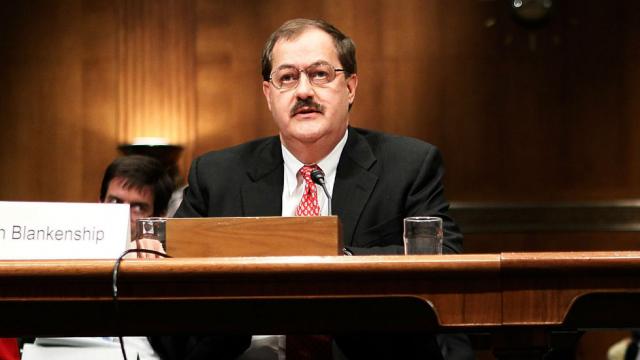
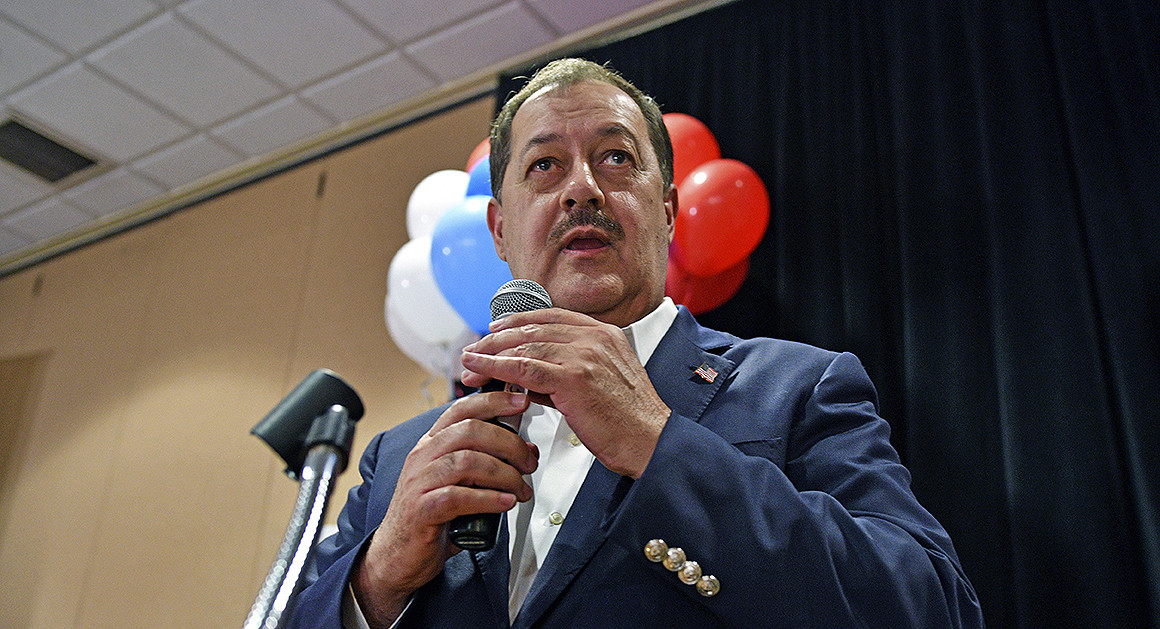
Don Blankenship will not be your party’s nominee for the U.S. Senate.

This is the former owner of the coal mine that blew up, killing 29 miners. He served prison time as a result.

So he thought he would take his plunge into politics by running for the Senate. Blankenship was, shall we say, a terrible candidate. He called Senate Minority Leader Mitch McConnell “cocaine Mitch,” and used a stupidly ignorant term to refer McConnell’s Asian heritage, calling Transportation Secretary Elaine Chao a “Chinaperson.”

The GOP nominee who’ll face U.S. Sen. Joe Manchin is West Virginia Attorney General Pat Morrisey, who is a far more serious individual than Blankenship.

My hat is now tipped to the West Virginia GOP voters. You have demonstrated a level of wisdom that got lost in 2016 on a national electorate that placed Donald Trump in the White House.

POTUS contradicts top military brass on Iran

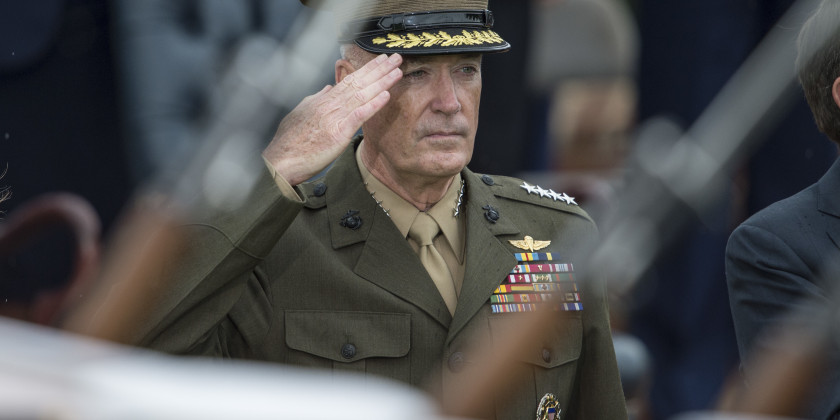
Defense Secretary James Mattis and Joint Chiefs of Staff Chairman Gen. Joseph Dunford are two serious men with equally serious outlooks on the state of the world.

So, when these two men tell U.S. Senate inquisitors that Iran is not cheating on the deal that was worked out in 2015 to prevent development of an Iranian nuclear weapon, you’d like to believe the president would take that into account. Yes? Umm, no. It didn’t happen.

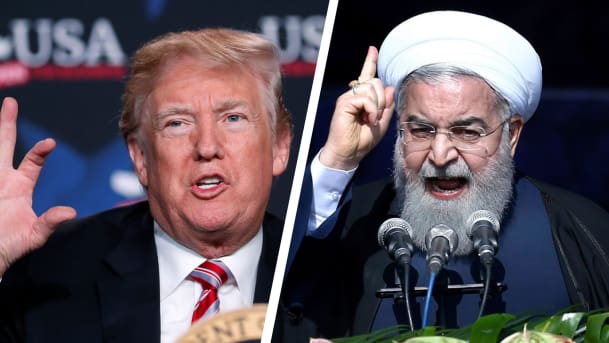
You see, today the president of the United States, accused the Iranians of rampant cheating on the deal. Thus, he present an opinion that goes directly against the view expressed by his two top military advisers. Then he announced that the United States is pulling out of the 2015 agreement negotiated by the Obama administration and several our nation’s key strategic allies.

I’ll add here that Secretary Mattis is a retired four-star Marine Corps general, the same rank as Gen. Dunford.

However, I guess I should remind us all that Trump boasted during the 2016 presidential campaign that “I know about ISIS than the generals, believe me.”

I guess he knows more than the generals about Iran’s adherence to a nuclear deal, too.

As a constituent of the president, I am going to believe the analysis provided by “Mad Dog” Mattis and Gen. Dunford before I accept anything that comes from the Liar in Chief.

Duplicity snags another big-time pol

Eric Schneiderman is paying the price that so often is levied on politicians who say one thing, but then demonstrate their through their actions to be someone quite different.

The former Democratic New York attorney general quit suddenly this week after allegations surfaced that accused him of sexual assault. Yes, the “Me Too” and “Time’s Up” movements caught another one!

But here’s the thing. Schneiderman has been out front and quite vocal in criticizing others who’ve been caught doing the same things that the former New York AG has been accused of doing.

That only heightens the hypocrisy of it.

This reminds me at one level of the recent case involving Missouri Republican Gov. Eric Greitens, who has been accused of sexual misconduct. You see, what makes Greitens’s alleged transgression so ghastly is that he campaigned for election by proclaiming himself to be a “proud husband and father.” He was a “family values” candidate and he played on that theme while winning election to the Missouri statehouse. While he was bellowing his love for his his wife and children, he was messing around with a woman who isn’t his wife.

That makes what Greitens did all that much worse and it elevates it from a “private” matter to a “public” scandal.

Do you remember when former U.S. Sen. John Edwards was campaigning for vice president as part of the Democratic ticket led by U.S. Sen. John Kerry in 2004? Edwards was so proud to proclaim his love for his wife, Elizabeth, while keeping secret an affair he was having with someone else.

Eric Schneiderman managed to pop off quite vocally about how other men should be ashamed of behaving badly with women. It turns out he also was misbehaving — allegedly — in violent ways with women with whom he was having sex.

Shameful.

AEDC steps up … big time

If Amarillo manages to reel in a project being pitched by Texas Tech University, it can possibly look at its economic development arm as a big reason for the success that will follow.

Texas Tech wants to build a school of veterinary medicine in Amarillo; it would be the second such school in all of Texas, the other one being run by Texas A&M University.

The Amarillo Economic Development Corporation has ponied up $69 million to incentivize Tech even further to build the vet school in Amarillo. Moreover, a significant land donation made possible by the family of Mary Emeny has sweetened the pot even more for Texas Tech.

This is precisely the kind of project that AEDC has helped bring to Amarillo since its creation in 1989. Voters then approved creation of AEDC, which collects a half-cent of sales tax revenue generated in Amarillo and uses it for job-creation projects.

Without question, AEDC’s biggest success to date is the Bell/Textron aircraft assembly project next to Rick Husband Amarillo International Airport. In the late 1990s, AEDC came up with a $45 million inducement that lured Bell/Textron from Fort Worth to Amarillo and … the rest is history.

The Texas Tech vet school is aimed at educating Panhandle residents to learn a profession of untold value to communities throughout the region. Veterinarians could remain in the Panhandle to care for the livestock that populate our region’s ranches and which fuel the agricultural economy.

AEDC has stepped up in a major way once again for the city and the region. Its contribution will be augmented by private donations that local business, civic and political leaders are gathering.

And just as the Texas Tech School of Pharmacy has borne plenty of economic efruit for the region, so would the school of veterinary medicine, which has gone from “possibly,” to “probably” and is on its way to “likely” coming to Amarillo.

Is this guy the new Donald Trump?

I have no idea what West Virginia Republicans are going to do today when they have their primary election to nominate someone to run for the U.S. Senate.

The word out of that state is that Don Blankenship, the former coal mine owner who served jail time in connection with a mine tragedy that killed 29 of his employees, might win the primary. Whoever wins would face Democratic U.S. Sen. Joe Manchin this fall.

By all rights, Blankenship shouldn’t even be in the hunt. He should be a fourth- or fifth-tier candidate. He’s going after the Taiwan-born wife of Senate Majority Leader Mitch McConnell, accusing McConnell of relying on money from Transportation Secretary Elaine Chao’s “China family.”

The guy is a rube, pure and simple.

Oh, but let’s not count this clown out. Why not? I have two words for you to ponder: Donald Trump.

Trump got elected president of the United States in 2016 after defeating a large and eminently qualified field of GOP candidates. Trump’s qualifications for the presidency? He told it “like it is.” He entered the presidential race with absolutely zero public service experience, or any demonstrated commitment to it.

He blanketed his foes with insults and innuendo. He mocked some of them for their looks.

Republicans then nominated this guy to run for the presidency … against a former secretary of state, a former U.S. senator and a former first lady, Hillary Rodham Clinton.

Trump continued his insults. He led campaign chants of “Lock her up!” over a matter where there were no criminal charges brought.

Then he won the presidency.

This just goes to show that “anybody can be elected president.”

If that’s true for Donald Trump, who would dare say that Don Blankenship cannot follow the lead of the carnival barker who is serving as our head of state?

Not all Republicans are applauding Trump’s Iran decision

Republicans across the nation generally are applauding Donald Trump’s decision to pull out of the Iran nuclear arms deal.

Democrats universally oppose the president’s decision.

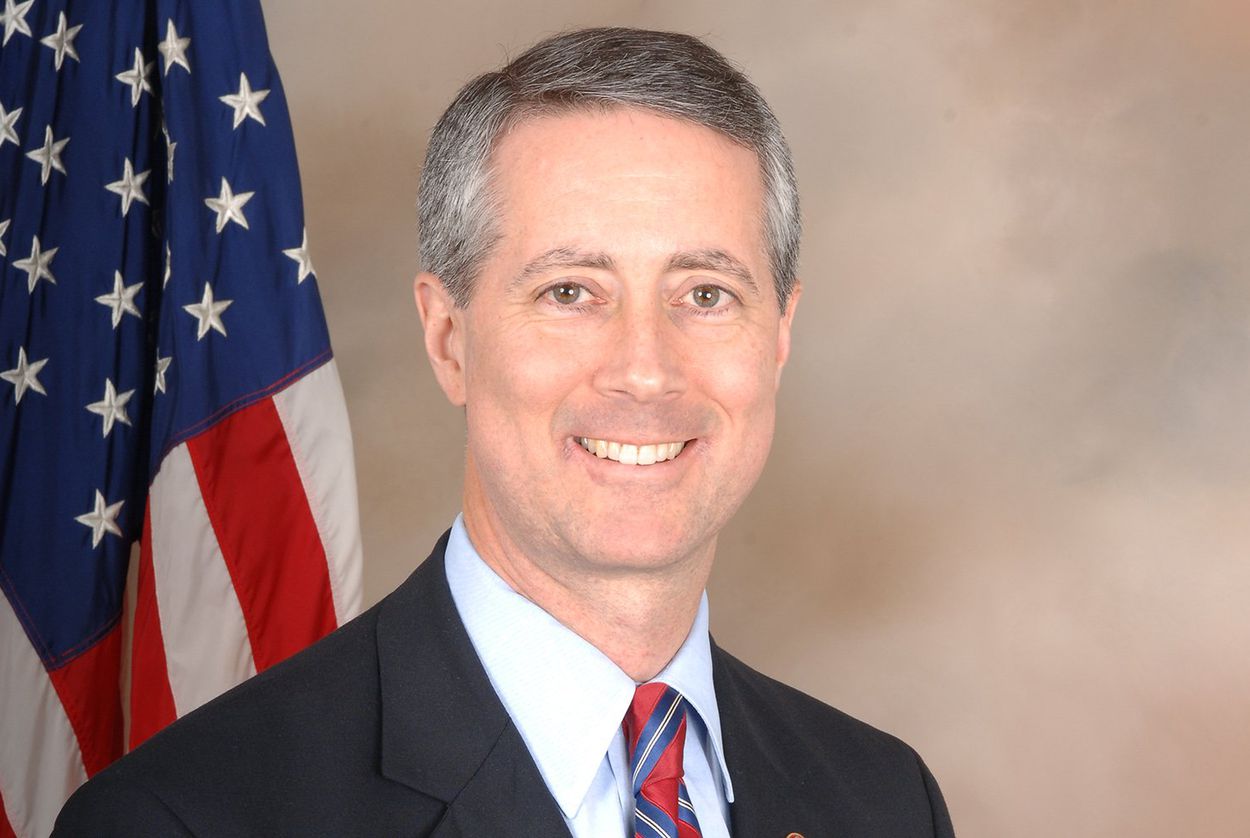
But wait! There’s this from a key congressional Republican, who I happen to know fairly well. U.S. House Armed Services Committee Chairman Mac Thornberry, R-Clarendon, said today he wishes Trump would have delayed a pact pullout so that he could find a way to improve the agreement worked out in 2015.

“I have no doubt that the [Iran deal] was flawed and that for years Iran has been deceptive about its nuclear and other programs,” Thornberry said.

“My preference would have been to give our European allies a few more months to strengthen the deal, but now that the president has decided that the United States will withdraw, we must have two critical priorities.”

“One is to further enhance our own military capabilities,” the Clarendon Republican added. “The other is to strengthen our alliances. A strong, international effort is required to curtail Iran’s aggressive behavior in a number of areas.”

Indeed, the president has decided to stiff our European allies, all of whom strongly lobbied Trump to remain a party to it. Trump didn’t go there, preferring to keep a pledge to toss the Iran nuclear deal aside.

I ought to add that Defense Secretary James Mattis and Joint Chiefs Chairman Joseph Dunford both testified before Congress that Iran was abiding by the agreement requirements. Moreover, the agreement placed strict inspection protocols in place to ensure that Iran complies with the demand to rid itself of nuclear weapons technology.

The president today has tossed all of that away. In the process he has sent a clear message to our allies that the United States of America no longer is to be trusted to keep its word.

Which brings me back to Chairman Thornberry’s statement. How are we going to “strengthen our alliances” to ensure “a strong international effort” when the president has ignored the pleas of our allies to keep this deal intact?

And here is the response from POTUS No. 44

I don’t do this normally; I prefer to populate my blog with my own thoughts on issues of the day.

I’ll make an exception here. Former President Barack Obama has issued a lengthy response today a decision by his successor, Donald Trump, to abandon a deal that seeks to prohibit Iran from developing a nuclear weapon.

As always, you are welcome to share this with whomever you wish.

Take it away, Mr. President …

***

There are few issues more important to the security of the United States than the potential spread of nuclear weapons, or the potential for even more destructive war in the Middle East. That’s why the United States negotiated the Joint Comprehensive Plan of Action (JCPOA) in the first place.

The reality is clear. The JCPOA is working – that is a view shared by our European allies, independent experts, and the current U.S. Secretary of Defense. The JCPOA is in America’s interest – it has significantly rolled back Iran’s nuclear program. And the JCPOA is a model for what diplomacy can accomplish – its inspections and verification regime is precisely what the United States should be working to put in place with North Korea. Indeed, at a time when we are all rooting for diplomacy with North Korea to succeed, walking away from the JCPOA risks losing a deal that accomplishes – with Iran – the very outcome that we are pursuing with the North Koreans.

That is why today’s announcement is so misguided. Walking away from the JCPOA turns our back on America’s closest allies, and an agreement that our country’s leading diplomats, scientists, and intelligence professionals negotiated. In a democracy, there will always be changes in policies and priorities from one Administration to the next. But the consistent flouting of agreements that our country is a party to risks eroding America’s credibility, and puts us at odds with the world’s major powers.

Debates in our country should be informed by facts, especially debates that have proven to be divisive. So it’s important to review several facts about the JCPOA.

First, the JCPOA was not just an agreement between my Administration and the Iranian government. After years of building an international coalition that could impose crippling sanctions on Iran, we reached the JCPOA together with the United Kingdom, France, Germany, the European Union, Russia, China, and Iran. It is a multilateral arms control deal, unanimously endorsed by a United Nations Security Council Resolution.

Second, the JCPOA has worked in rolling back Iran’s nuclear program. For decades, Iran had steadily advanced its nuclear program, approaching the point where they could rapidly produce enough fissile material to build a bomb. The JCPOA put a lid on that breakout capacity. Since the JCPOA was implemented, Iran has destroyed the core of a reactor that could have produced weapons-grade plutonium; removed two-thirds of its centrifuges (over 13,000) and placed them under international monitoring; and eliminated 97 percent of its stockpile of enriched uranium – the raw materials necessary for a bomb. So by any measure, the JCPOA has imposed strict limitations on Iran’s nuclear program and achieved real results.

Third, the JCPOA does not rely on trust – it is rooted in the most far-reaching inspections and verification regime ever negotiated in an arms control deal. Iran’s nuclear facilities are strictly monitored. International monitors also have access to Iran’s entire nuclear supply chain, so that we can catch them if they cheat. Without the JCPOA, this monitoring and inspections regime would go away.

Fourth, Iran is complying with the JCPOA. That was not simply the view of my Administration. The United States intelligence community has continued to find that Iran is meeting its responsibilities under the deal, and has reported as much to Congress. So have our closest allies, and the international agency responsible for verifying Iranian compliance – the International Atomic Energy Agency (IAEA).

Fifth, the JCPOA does not expire. The prohibition on Iran ever obtaining a nuclear weapon is permanent. Some of the most important and intrusive inspections codified by the JCPOA are permanent. Even as some of the provisions in the JCPOA do become less strict with time, this won’t happen until ten, fifteen, twenty, or twenty-five years into the deal, so there is little reason to put those restrictions at risk today.

Finally, the JCPOA was never intended to solve all of our problems with Iran. We were clear-eyed that Iran engages in destabilizing behavior – including support for terrorism, and threats toward Israel and its neighbors. But that’s precisely why it was so important that we prevent Iran from obtaining a nuclear weapon. Every aspect of Iranian behavior that is troubling is far more dangerous if their nuclear program is unconstrained. Our ability to confront Iran’s destabilizing behavior – and to sustain a unity of purpose with our allies – is strengthened with the JCPOA, and weakened without it.

Because of these facts, I believe that the decision to put the JCPOA at risk without any Iranian violation of the deal is a serious mistake. Without the JCPOA, the United States could eventually be left with a losing choice between a nuclear-armed Iran or another war in the Middle East. We all know the dangers of Iran obtaining a nuclear weapon. It could embolden an already dangerous regime; threaten our friends with destruction; pose unacceptable dangers to America’s own security; and trigger an arms race in the world’s most dangerous region. If the constraints on Iran’s nuclear program under the JCPOA are lost, we could be hastening the day when we are faced with the choice between living with that threat, or going to war to prevent it.

In a dangerous world, America must be able to rely in part on strong, principled diplomacy to secure our country. We have been safer in the years since we achieved the JCPOA, thanks in part to the work of our diplomats, many members of Congress, and our allies. Going forward, I hope that Americans continue to speak out in support of the kind of strong, principled, fact-based, and unifying leadership that can best secure our country and uphold our responsibilities around the globe.

 

Thanks, Mr. POTUS, for putting screws to our allies

Did anyone out there realize the irony of today’s decision by the president of the United States to withdraw from a deal that aims to deny Iran the ability to acquire nuclear weapons?

Here’s how I see it: Seventy-three years ago today, the shooting stopped in Europe, ending one phase of World War II; the result of that was to build alliances with nations across the continent, those with which we fought side by side and, yes, those we opposed.

Those nations had lined up in favor of the 2015 Iran nuclear deal. They lobbied Donald J. Trump to stay the course, to improve it, to renegotiate a better deal if he saw fit. What’s more, didn’t Trump campaign for president in 2016 on a pledge to negotiate the “best deals” ever?

The president today — on VE Day — stuck it to our “allies,” the nations we helped liberate from tyranny in World War II.

The president has managed to isolate this nation from much of the rest of the world in its effort to prevent Iran from obtaining a nuclear weapon, which no self-respecting civilized nation anywhere on Earth wants to see happen.

I should point, too, that the deal struck by the Obama administration in concert with several other nations provides for the world’s most vigorous inspection process, which has resulted in Iran ridding itself of many centrifuges used to enrich uranium, the key component in the making of nuclear bombs.

Donald Trump, though, wants to speak directly to the hardliners among his inner circle of advisers — and to those voters who continue to abide by the fiction that isolating the United States from this country strengthens American interests.

It does nothing of the kind! It weakens the United States in a world that is shrinking at an accelerating pace.

I fear the president once again has failed to “make America great again.” He instead has made us untrustworthy among those with whom we once fought side by side.