Who’d ever thought we’d reach this point?

WASHINGTON — I’ve witnessed plenty in my lifetime: an erupting volcano, a Ku Klux Klan rally, returning to where I served in a time of war.

I was able to knock another experience off my list of things I thought I’d never see: I got to watch a gay pride extravaganza in the nation’s capital.

My first — and most profound — takeaway was this: An event such as what we saw could not have been possible a generation ago. It speaks to the changes in attitude, culture, social mores that have swept across the country.

I was told the gay pride activities were “tame” compared to how they used to be. Every one of the thousands of people I saw along the many streets we walked was fully clothed. I saw plenty of rainbow colors. People’s hair was dyed in the colors of “Gay Pride.” They were festooned in rainbow-colored clothing. They were lugging signs, selling trinkets of assorted value.

I saw lots of smiles on a gorgeous day under a bright late spring sun.

Who in the world could have foreseen events such this a generation ago, perhaps even a decade ago?

I guess we can thank the U.S. Supreme Court for delivering millions of Americans from a form of purgatory when it ruled that under the 14th Amendment’s “equal protection clause” that gay marriage is therefore legal in all 50 states of this great nation.

But here’s another aspect of what I heard about the gay pride activities taking place in this most political place in America: Corporate and, yes, church endorsement helped make it mainstream. Think about that for just a moment. Gay pride events no longer are the sole province of radicals and extremists intending to shake up “the establishment.” The establishment has signed on.

So the parade took place. The capital was alive with celebration along block after block around the corridors of political power. I was there to witness it.

It was cool.
Tapes, Mr. President? If you have ’em, produce ’em

Donald John Trump has turned the political tease into something of an art form.

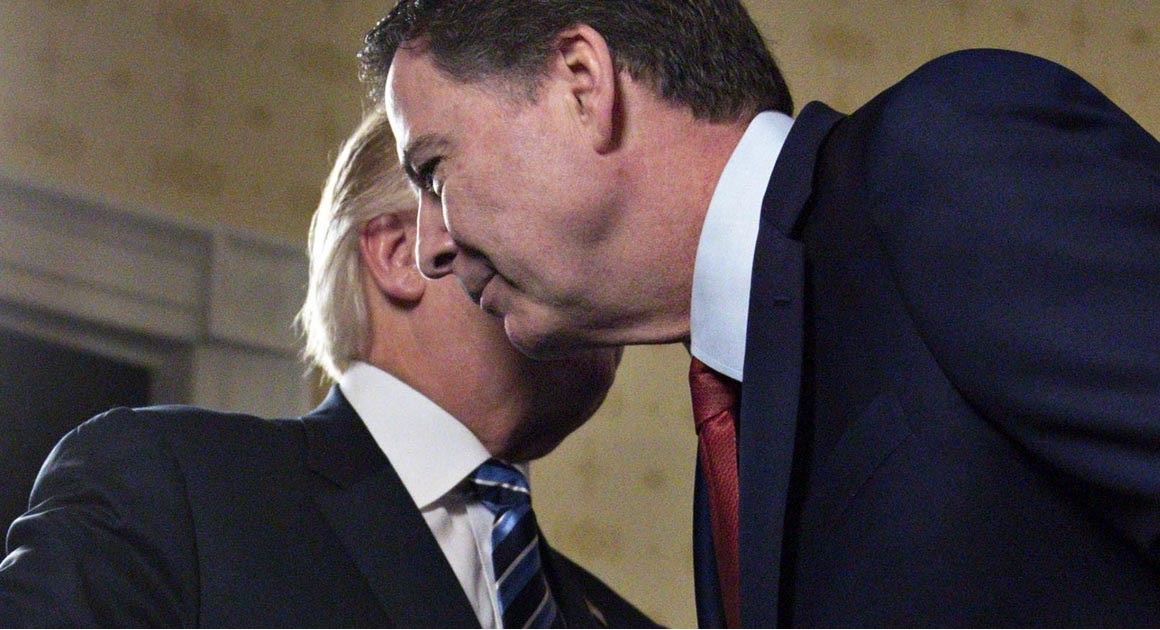
He fired FBI Director James Comey and then blasted out a tweet that said Comey had better hope there aren’t any tape recordings of his conversations with the president.

The tweet, quite naturally, produced a crap storm of its own with pols and pundits wondering out loud if Trump was bluffing. Such “tapes,” of course, would have recorded conversations the president had with Comey regarding the FBI’s investigation into the “Russia thing” that Trump acknowledges was his reason for dismissing Comey.

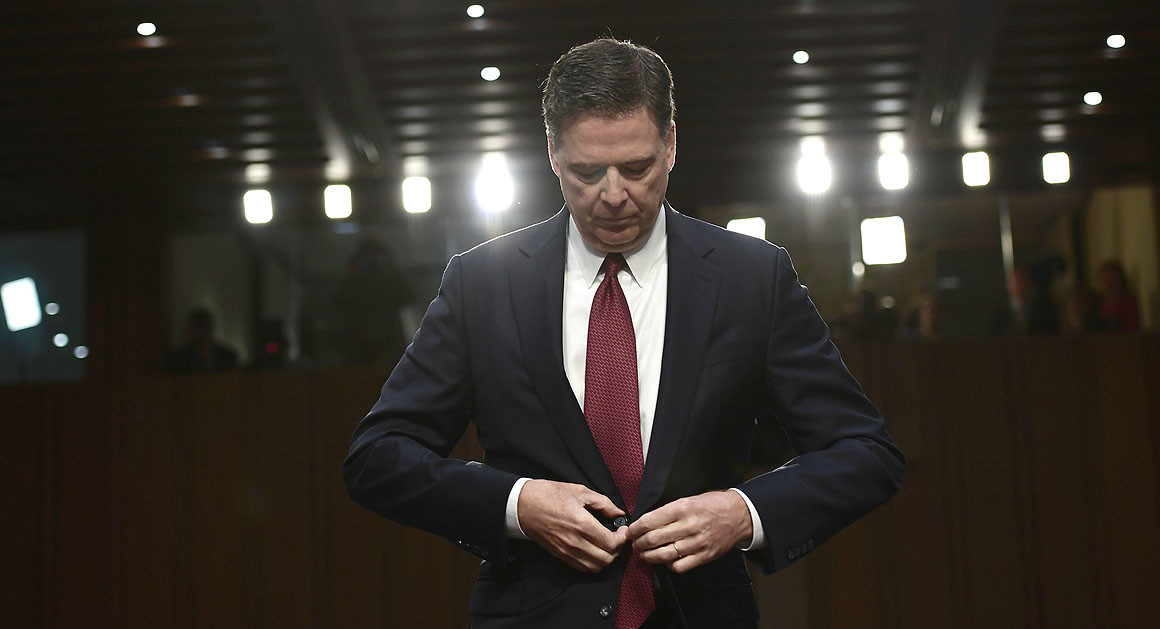
The former FBI boss returned to Capitol Hill this week to testify about Russia, Trump, the 2016 election and the state of affairs at the FBI when Trump dropped the hammer on Comey, who painted quite an unflattering portrait of the president.

So, here’s the question of the day: Do you, Mr. President, have recordings of your conversations with Comey. If you do, produce them. If you don’t, then admit it was all a bluff, a hoax, a sham, a game. Tell us the truth … for once!

Happy Trails, Part 23

Please excuse this latest retirement blog so soon after the previous one, but I want to offer tribute to one of the greatest Americans … ever!

Dwight David Eisenhower served his country in two profound capacities: as a senior military officer and strategist who commanded all Allied forces in Europe during World War II; and as 34th president of the United States.

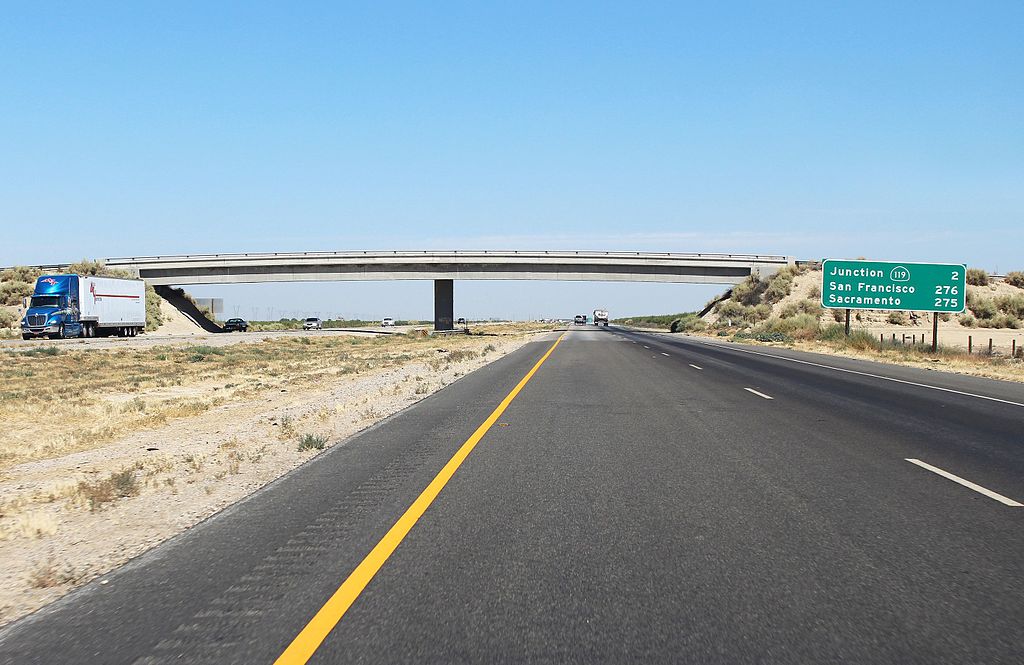
My wife and I are embarking on one of what we expect to be several lengthy trips along the interstate highway system, which happened to be Ike’s crowning achievement — in my view — as president.

We intend over time to haul our fifth wheel RV along back-country roads as well. There’s plenty to see in this great country of ours — as well as the rest of North America — that doesn’t straddle the interstate highway system.

We’ve relied almost exclusively on interstate highways to get us from point to point in our post-retirement adventures.

Ike’s vision for speeding up ground travel across the United States makes it easier for folks such as my wife and me to enjoy this newfound pursuit of ours: RV travel.

The president relied on an experience he had as a young Army officer. In 1919, he took part in a convoy that crossed the country along what was known as the Lincoln Highway. It took him weeks to make the trip.

Thirty-four years later, he took the oath as president and embarked on another journey of a political kind to persuade Congress enact the Interstate Highway Act. Construction began in 1956, with states competing for attention over which of them had the first “interstate highway.”

Whatever the case, what we have now is a remarkable network of highways. Some of the are turnpikes that require motorists to pay tolls to pass along them; we plunked down $5 at two toll booths in West Virginia, but didn’t begrudge the state one bit, as the highway is magnificent.

President Eisenhower was a visionary man, although he might not have been called one at the time he led the nation.

His legacy is laid out in every single state of this great nation.

Yep, make no mistake: I like Ike.

Happy Trails, Part 22

INTERSTATE 64, W. Va. — This might be one of the most beautiful stretches of interstate highway in the United States of America.

It reminds me of driving through Bavaria in southern Germany, which my wife and I were able to do this past September. Lush mountains tower over the roadway, which crosses many substantial rivers.

But I noticed something while blazing along the highway through West Virginia and neighboring Virginia that I want to mention here.

Many miles of interstate highway in both states — as well as in Tennessee and Kentucky — are named in memory of individuals. All of the signs we noticed identified the honorees as males. Many of the signs contained ranks next to the names: sergeant, deputy, sergeant major, trooper, officer, lieutenant, captain, Medal of Honor recipient, etc. You get the idea, right?

I was struck also by the belief that each of those names has a story. The “memorial bridge” or “memorial highway” is named in honor of someone who likely died in the line of duty or in service to the country.

The question I posed to my wife was this: Why not erect plaques near the sign identifying the right-of-way that tells us the story behind the name?

I’m not necessarily interested in knowing the details of how the individual died. But they have a story of their public service that might be interested in telling.

Who would stop and read such signage? I might.

Indeed, I once wrote a story for NewsChannel 10.com about the vast array of historical markers scattered throughout Texas and I interviewed a fellow named Michael Grauer, who is an official with the Panhandle/Plains Historical Museum in Canyon. Grauer identified himself as an avid “historical marker reader.” He said whenever it’s remotely possible he’ll stop while traveling and read about a marker that commemorates a historical event that happened near where it’s posted along a Texas highway.

I doubt anyone in authority in these states that honor the individuals will take this suggestion seriously. There might not be money in states’ budgets to pay for plaques telling the honorees’ stories. Location might be an issue.

As we continue to wind our way across the country, though, ideas like this seem worth the effort to pass along.

Let’s get to the heart of this hacking matter

As a frequent critic of Donald J. Trump, I want to set the record straight on a key issue that’s threatening the man’s presidency.

I do not give a rat’s rear end about whether alleged attempts by Russian agents to influence the 2016 presidential election actually created a Trump victory. I accept the notion that Trump would have won the election anyway.

What is troubling me is the question of what role — if any — the Trump campaign had in assisting the Russians.

Former FBI Director James Comey told U.S. Senate committee members today that he is certain of Russian meddling in our election. I accept the FBI director’s opinion on that, too.

I keep circling back to the question of whether Trump’s team actively aided the Russian hackers. If they didn’t aid them, did they know about any attempts to influence the election? If they knew and did nothing, that to me is tantamount to collusion — even if it doesn’t fit the legal definition of the word.

We keep hearing reports of key Trump campaign advisers meeting with Russians during the campaign and then during the transition. It all gets back to the Watergate-era question posed by then-Sen. Howard Baker: What did the president know — and when did he know it?

As for the whether the hacking/meddling actually proved decisive, that they changed enough votes to swing the results in favor of Trump and away from Hillary Rodham Clinton, it doesn’t matter to me. What does matter is that they have done what all those intelligence agencies have said they did. The former director of the FBI has confirmed it to my satisfaction.

If the Trump campaign colluded, dear reader, we are looking at a charge of treason.

Let’s end the debate over whether Russians hacked us

Here’s a thought to ponder going ahead: Let’s all just stop arguing over whether the Russians — government agents or “patriots” — hacked into the U.S. electoral system while seeking to influence the 2016 election outcome.

Let us now settle on the fundamental question: Did the Donald John Trump presidential campaign commit treason by colluding with the Russians?

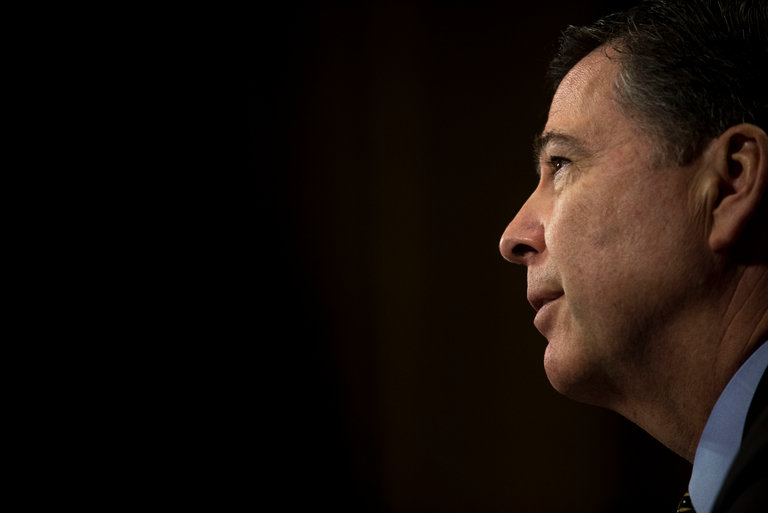
Former FBI Director James Comey had much of the nation enthralled for two hours today as he testified before the U.S. Senate Intelligence Committee. He confirmed what 17 intelligence agencies have determined already: The Russians sought to influence the election. Russian President Vladimir Putin — one of the more untrustworthy individuals on the planet — said that Russian “patriots” might have been responsible for the deed.

Now we get to the Main Event. The Seventh Game. The Bottom of the Ninth Inning.

Special counsel Robert Mueller has been handed a huge mound of information to digest from his former colleague, Comey.

The president had said Wednesday when word of Comey’s testimony leaked out that he felt “vindicated” by what he heard. After today, I’m betting real American money the president feels a whole lot less vindicated.

No one can know with any degree of certainty whether Mueller is going to produce evidence of criminality on the part of the campaign or the president himself.

Comey’s dismissal as FBI director, as he was investigating the Trump campaign-Russia allegations, was shocking all by itself. Then came the crap storm of motives, reversals, changes in story and contradictions — from the president himself.

And in the midst of all this, Donald J. Trump — of all people — called Comey a “grandstander” and a “showboat.”

http://www.politico.com/story/2017/06/08/james-comey-robert-mueller-trump-case-file-239319

Kettle, met pot.

I do not believe a grandstanding showboat appeared today before he Senate panel. I believe the nation saw a meticulous lawyer and administrator who defended the agency he led from unfounded attacks by the president of the United States.

James Comey, moreover, has handed Robert Mueller a full arsenal of ammunition to use as he continues his arduous task of determining whether there was collusion with an foreign adversary to undermine our nation’s electoral process.

Comey delivers … almost

If you thought former FBI Director James Comey was going to assert that Donald Trump committed a criminal act, well, take a breather.

He didn’t do it. He didn’t tell Senate Intelligence Committee members that the president “obstructed justice.” He did say the president “lied” and that he “defamed” the FBI and himself.

However, any assertion of criminality is going to come from the special counsel, Robert Mueller — Comey’s longtime friend and former professional colleague.

Still, Comey’s testimony today appears to have affirmed what many Americans have thought — if not known — about the president. It’s that he doesn’t understand the intricacies of governance and of the need to keep his hands off important investigations.

http://thehill.com/policy/national-security/337031-comey-delivers-dramatic-rebuke-of-trump

Comey has painted a disturbing portrait of the man who now calls the shots at the top of the government’s executive chain of command.

He has laid down a predicate — perhaps — for the special counsel to pursue the answers to questions on the minds of millions of Americans:

Did the president’s campaign collude with Russian government agents to influence the outcome of the 2016 election? If so, did the campaign act on the president’s direct orders? Did he have knowledge of it? If there is no collusion — and if the president’s team knew about the Russian hacking, why didn’t Trump’s team move to stop it?

More to come …

Comey sets the table

James Comey’s testimony before a U.S. Senate committee is going to send even more shockwaves through the nation’s capital.

The former FBI director is going to tell the Intelligence Committee that Donald J. Trump pressured him repeatedly to back off an investigation into whether Trump’s former national security adviser, Michael Flynn, had done something wrong while conferring with Russian government officials.

Oh, but wait. Now comes the president’s lawyer who says Trump feels “vindicated” because Comey supposedly told the president he wasn’t under “investigation” personally.

Is that vindication? We’ll have to await the Q&A from senators.

http://thehill.com/policy/national-security/336848-comeys-dramatic-account-rocks-washington

Americans are going to hear Comey say he was “concerned” about the president’s repeated pressure. Will we hear the ex-FBI boss declare that he believes there was an attempt to obstruct justice? Don’t hold your breath. My hunch is that such a determination will have to come from special counsel Robert Mueller — Comey’s old friend and former colleague. Mueller has taken the lead on investigation this Russia matter and whether there was “collusion” between the Trump presidential campaign and Russian hackers who were seeking to influence the 2016 presidential election outcome.

I do not believe that Comey’s testimony will “vindicate” the president. Nor will it convict him. It is likely to keep the post at full boil while the special counsel and his team do their work to uncover the truth.

This old soldier just ‘faded away’

NASHVILLE, Tenn. — General of the Army Douglas MacArthur once declared famously in a speech to Congress that “Old soldiers never die. They just … fade away.”

Another five-star Army general, Dwight Eisenhower, had his military rank restored after he left the presidency in 1961 and he preferred to be called “Gen. Eisenhower” in the years since he left the White House.

Andrew Jackson, the nation’s seventh president, is buried next to his wife, Rachel, in her beloved garden at The Hermitage, the former president’s home.

I was struck when I heard a docent at the site say that the Old Hickory much preferred his military rank over the commander in chief rank he held for eight years, from 1829 until 1837. Jackson was apparently prouder of his general’s rank than he was of president of the United States of America.

He was, after all, the “hero” of the Battle of New Orleans. His rag-tag forces were greatly outnumbered and outgunned by the British, but managed to score a victory over the Brits.

Jackson was thrust into the news in recent weeks, when one of his successors as president — Donald J. Trump — sought to suggest that Trump could have prevented the Civil War. Interesting, in that Jackson died 16 years before the nation’s bloodiest conflict even started.

Indeed, though, Jackson’s history as president is a good bit more checkered than his military history. He promoted the Manifest Destiny policy that called for the settlement — or the conquering — of the Old West. The “Trail of Tears” occurred on his watch as president. He was known as a “unionist,” and believed that federal policy should oversee states’ policy allowing slave ownership  — which is a curious contradiction, in that he owned slaves.

Whatever …

He is buried at The Hermitage under a tombstone that calls him “General Andrew Jackson.”

Old Hickory certainly did share the military ethos of two quite prominent successors. They were immensely proud of their service to their nation at war.


Happy Trails, Part 21

GOODLETTSVILLE, Tenn. — Our retirement journey has taken us to the Country Music Capital of the Known Universe.

That would be Nashville, home of the Grand Ol’ Opry, the Ryman Auditorium, The Hermitage and hordes of people having a good time.

Our campsite was in a ‘burb about 10 miles or so north of the big city. It’s crowded, but the folks on all sides of us are wonderfully nice, accommodating and, in some cases, willing to accept our help when they pull in. We’ve had to move our big ol’ pickup a couple of times to make room.

One of the RV campsite owners ventured by to ask if there’s anything she could do. I said no. We were fine. But I asked: “Do the folks over there, right next to the railroad tracks, get a break because of the train noise?” Her answer: “What train?” which was her way of saying, “Nope, they don’t get a break on the price.”

That’s really all right. We were camped about 200 feet from the tracks and to be candid, by the second night we managed to tune out the roar of the locomotives barreling through on the high-speed tracks.

I’m glad to be shoving off on our way to Washington, D.C., where more adventures await as we visit a couple of family members. Why? This weekend figures to be utter bedlam in Music City, where Nashville is playing host to two huge events: the Country Music Awards festival downtown and Game 6 of the Stanley Cup playoff between the Nashville Predators and the Pittsburgh Penguins.

We ventured down there with friends we met here on a weekday afternoon, with people still at work. I’m trying to fathom the chaos that will ensue on Friday night — and then the next night when they play that hockey game at the arena downtown.

I’m going to pray for them all.

Meanwhile, our adventure continues — elsewhere.