Don’t try to solve this life’s mystery

This is the latest in an occasional series of blog posts commenting on upcoming retirement.

I have been having a series of conversations lately with some young colleagues of mine at the auto dealership where — for now — I work part time.

They go something like this:

Me: I need to tell you that I’ve given notice and I am leaving.

Colleague: Really? Congratulations! What will you do?

Me: I’m retiring.

Colleague: Where will you go?

Me: I don’t know.

Colleague: That’s so cool. I am so happy for you. I cannot wait for the day when I can do that. It so far off.

Here is where I give these youngsters a tiny, good-natured but sincere lecture.

This is difficult to explain, but consider this to be one of those unsolvable mysteries of life.

You likely will not realize it in real time. You might not know it a week, month or even years from now. But before you know it — and you’ll know when it arrives — it will occur to you that it’s time to hang it up.

And when you make that decision, you’re going to look back over one or both of your shoulders and say, “What the hell happened? Where did the time go?”

That is my way of imparting to them a piece of wisdom my dear late mother gave to me: Do not wish your life away. Live your life one day at a time. Before you know it, you’ll be much farther down the road and you’ll realize that the time — your time — has arrived. You will have worked hard and you will know it is time to reap the reward.

It’s not worth the effort to seek a solution to this mystery.

I know one thing only: The time for my wife and me to get on down the road has just about arrived. No, we don’t know precisely where that road will take us. Members of our family have a pretty good general idea where we’ll end up. We will settle on a destination in due course.

Suffice to say, however, that our destination will involve our precious granddaughter.
Bathroom Bill heads for possible derailment in House

Texas Lt. Gov. Dan Patrick has established his legislative priority for the  Legislature. He wants lawmakers to enact a law that forces people to rely on the gender listed on their birth certificate if they need to use a public restroom.

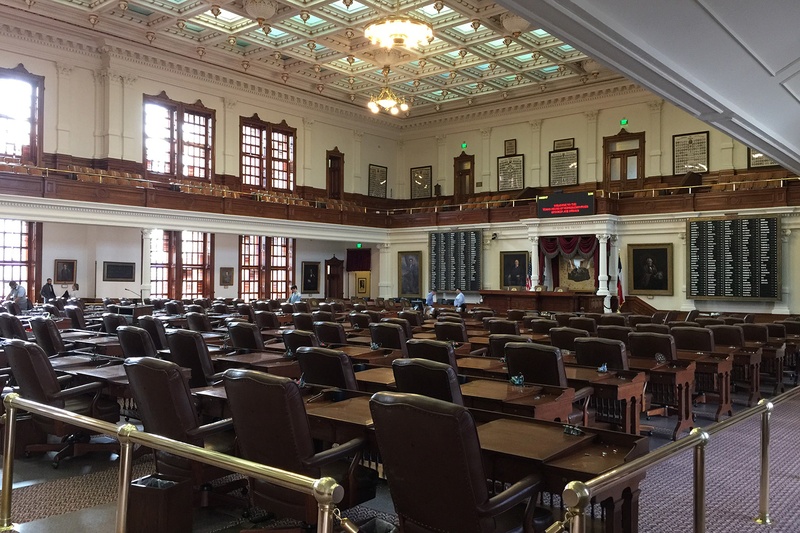
Senate Bill 6 is known as the Bathroom Bill. It sailed through the state Senate. It’s now headed for a possible uncertain future in the state House, where Speaker Joe Straus is decidedly less enthusiastic about the Bathroom Bill than Dan Patrick.

I have struggled with this one. I’ve been quiet on it so far. I believe that SB 6 is a needless piece of legislation. It’s also narrow-minded, bigoted and it ignores the reality — as difficult as it is for some of us to understand — that some individuals actually do identify with a gender that is not listed on their birth certificate.

Patrick is angry at Straus because he doesn’t share his commitment to this piece of legislation.

SB 6 might not get an up-or-down vote on the floor of the House. Does that kill the legislation? Not necessarily. Gov. Greg Abbott can call a special legislative session to ensure that the bill gets a vote. I would hope the governor would leave SB 6 in the dust bin if it never gets that vote.

The Bathroom Bill strikes me as a sort of solution in search of a problem. Is this issue the kind of thing that should occupy so much of our legislators’ time, energy and commitment? No.

Is there a serious threat to individuals being sexually assaulted in public restrooms by a transgender individual? No. Yet the lieutenant governor keeps harping on the need to protect Texans against sexual predators pretending to be women just so they can use women’s restrooms.

Let’s get real, ladies and gentlemen of the Texas Legislature.

Individuals can — and do — identify with opposite genders. How many of them are there? I have no clue. It’s likely a tiny fraction of the 27 million residents of this great state.

Let’s concentrate on bigger issues. The Bathroom Bill isn’t one of them.

Waiting for an apology that’ll never arrive

I am going to give tons of credit to an Oklahoma congressman.

Rep. Tom Cole, a Republican, wants Donald J. Trump to say he’s sorry for defaming President Barack H. Obama. He says the current president should apologize to his immediate predecessor for leveling a charge that he hasn’t proved — and will never be able to prove.

Wait for it, Rep. Cole. Wait a long, long time. It won’t arrive.

The president doesn’t apologize for anything.

Not even when he’s dead wrong. Or when he defames someone, as he has done with President Obama. Or when — in the minds of some constitutional scholars — he could face a potentially impeachable offense.

Not this guy. Not Trump.

The president has yet to say anything resembling contrition for suggesting the former president ordered a wiretap of the Trump campaign’s offices in Trump Tower. Never mind the laughable and ludicrous assertion from White House spokesmen that the president didn’t mean actual wiretapping, even though he said it in a series of tweets. Trump put the words  in quote marks, the argument goes, suggesting that he didn’t mean it, um, literally.

Of course he did!

What the president hasn’t done is tap into the vast intelligence network at his disposal to back up what he has alleged.

Why is that? Because he made it up. All of it. Every single word of it.

As Politico reports: “Obama and his former director of national intelligence, James Clapper, both publicly denied the claim quickly after Trump raised it, while FBI Director James Comey, also saying it was not true, privately urged Trump’s Justice Department to refute it.

“This week, the leaders of both the House and Senate intelligence committees have also come out and said they have found no evidence to suggest that the allegation is true.”

Should the president apologize, as Rep. Cole has suggested? Yes. Will he do so? I am not going to keep the light on waiting for it.

What’s wrong with a handshake, Mr. President?

There are awkward moments, and then there are events such as what we witnessed today at the White House.

German Chancellor Angela Merkel paid a visit to Donald J. Trump. The two of them posed for cameras. Someone yelled out about a handshake. The president didn’t offer his hand. The chancellor looked puzzled after she had asked for one from her colleague and host.

Hmmm.

Strange moment, indeed.

Hockey players shake hands after beating each other up during their matches; Little Leaguers shake hands after games, sometimes cheering “Two, four, six, eight, who do we appreciate … ?”

Gentlemen extend a hand to ladies. It can be interpreted, perhaps, as a game. Trump, though, doesn’t play games … apparently.

I heard about this moment and my thoughts flashed back immediately to something similar that occurred in 1990 right here in Texas.

Republican gubernatorial nominee Clayton Williams was running against Democratic nominee Ann Richards. The two of them were fighting each other viciously.

Then they appeared together at an event. I cannot remember its precise nature. Afterward, with candidates sharing a head table, Richards extended her hand to Williams — who promptly refused to take it; he called her a “liar.” He walked away.

Commentators said at the time Williams committed a cardinal sin among gentlemanly Texans by refusing to take a lady’s hand and it likely helped contribute to Richards defeating Williams in that year’s election for Texas governor.

The president of the United States need not worry about German voters should he decide to seek re-election in 2020.

But, geez, Mr. President. Show some manners.

Now the Brits have tapped Trump? C’mon, Mr. President!

The hits just keep coming.

Donald J. Trump has accused Barack Obama of wiretapping his office. He has no evidence of it. Congressional intelligence committee chairs can’t find it, either. Trump stands by his lie.

Now he’s gone after the United Kingdom. He said the British wiretapped him, too. The president’s source for that whopper? Fox News commentator Andrew Napolitano, a former judge who’s become a right-wing shill for the “fair and balanced” network.

Trump didn’t back off the accusation about the British. He hasn’t backed off his assertion that President Obama tapped his phones.

The British are rightfully quite angry.

Trump’s justification for the British wiretapping allegation is a beaut. He said he wasn’t offering any “opinion” on the matters, just repeating the statement that Napolitano made.

OK, Mr. President. That makes it all better. How silly of me or anyone else to assume you were fomenting a lie by repeating it.

The president is unfit to hold the office he occupies. Unfit, I am telling you!

How long can Spicer keep defending the indefensible?

I believe it’s a reasonable question: How much longer can Sean Spicer keep defending a president who is unable to tell the truth?

Donald J. Trump keeps trotting out whopper after whopper, putting his press secretary in a patently untenable position of having to defend what he must know is a lie.

Brent Budowsky, a contributor to The Hill, posits the notion that Spicer should quit and that he well might become one of the president’s most high-profile casualties in his ongoing war with the truth.

Here is Budowsky’s essay for The Hill.

I believe Spicer has principles. Sadly — in my view, at least — he seems to have taken some sort of secret oath to bury them while he briefs the media about the president’s torrent of untruths.

The Barack Obama wiretapping fiction is the latest example. Spicer surely knows the president doesn’t have a shred of evidence to back up his allegation that Obama wiretapped his offices at Trump Tower. Then he is forced to dance this rhetorical jig with the media about so-called “air quotes” around the word “wiretap,” meaning that Trump didn’t mean what he said.

How long can this guy Spicer, who was Republican National Committee press secretary before joining the White House staff, continue this charade?

Everyone has his or her limits. Everyone. Even White House press spokesmen.

Holiday recalls acts of kindness

I think of people from my past occasionally for the oddest of reasons. Today might qualify as one of them.

St. Patrick’s Day has me in a reminiscing mood. I am recalling a young man my wife and I knew in a prior life — in Beaumont, Texas.

His name was Kevin Carmody. He was an Irish-American and a damn fine journalist. He and I worked together at the Beaumont Enterprise. I worked on the paper’s editorial page; Kevin covered environmental issues for the paper, back when daily newspapers had enough personnel to assign reporters to specific beats.

Kevin was a kind young man. He was compassionate. He had a heart as big as, well, Texas. Maybe bigger.

He demonstrated his kindness in many ways, but I want to share a particular act he extended to me.

I arrived in Beaumont in the spring of 1984 ahead of my wife and sons. They stayed behind in Oregon while my wife prepared to put our house on the market. I went ahead to start a new job.

I met Kevin right away. He knew of my separation anxiety and he invited me to join him and his many other friends for after-hours fellowship at local watering holes. I agreed.

I had arrived in Beaumont after St. Patrick’s Day 1984; my family got there that summer, just in time for our boys to start school.

I told my wife about this young man. When I introduced her to Kevin, she understood completely why he was such an endearing fellow. She took an immediate liking to him, as he did to her.

The next year we attended a St. Patrick’s Day party at the house where Kevin lived in Beaumont’s Old Town district. It was a raucous affair, with lots of laughs and plenty of good “cheer” in the form of green beer that Kevin was proud to serve his many guests.

There would be more get-togethers with Kevin. He always made sure to invite the old guy, me, and my wife to these affairs. We always enjoyed his company and I will continue to believe he enjoyed ours as well.

We didn’t know it in those early years, but Kevin was ravaged by demons. He suffered terrible depression. I would learn later he took medication to fight it. We all sought to tell Kevin how much we loved him and how much we appreciated the good work he did for the newspaper and the kindness he always extended to others.

He moved away later, to Austin. My wife and I would move from Beaumont to Amarillo in early 1995.

We would see Kevin — who had since gotten married — one more time. It was at a reunion in 1997 of Beaumont Enterprise reporters and editors in Galveston. We partied at a posh hotel on the waterfront. We had a marvelous time.

That evening I took Kevin aside and told him how much I appreciated — with all of my heart — the kindness he extended to me a dozen or so years earlier. I told him in his wife’s presence how much I appreciated his intuitiveness by inviting me to those gatherings; he understood I was a bit lonesome without my family nearby — and I reminded him of that fact as well.

We said goodbye at the end of the reunion.

I wouldn’t see Kevin again.

The phone rang one day at my office in Amarillo and a mutual friend of ours called to tell me that the demons that had ravaged and savaged Kevin caught up with him. He had taken his own life.

I won’t dwell on that, however. Today — on St. Patrick’s Day — I choose to remember a kind young man who exhibited a level of wisdom and kindness one doesn’t always find in anyone, let alone someone so young.

You were the best, my friend.

Trump relies on talking heads for his wiretap allegation?

Donald J. Trump is in command of the world’s most impressive intelligence-gathering network.

He is commander in chief of the world’s greatest military machine.

Does he rely on those immense tools to inform him of the “fact,” as he put it, that Barack Obama wiretapped his campaign offices at Trump Tower?

Oh, no. He relied on talking heads, such as Fox News’s Bret Baier and Sean Hannity; he also has relied on news stories in the “failing” New York Times that “talked about wiretaps.”

With that, the president of the United States launched his Twitter tirade alleging that the former president broke the law.

In the meantime, Senate and House intelligence committee leaders — both Democrat and Republican — say they have “no evidence” of any wiretapping occurring at Trump Tower. Ditto, said House Speaker Paul Ryan.

It ain’t there. The president now wants us to believe yet another lie?

Cumulative voting is here to stay

I had thought initially about using this particular blog post to argue for a drastic change in the Amarillo City Council voting plan … but I won’t argue for it today, although I intend to mention it.

Instead, I’ll discuss briefly a voting plan that will elect members of the Amarillo College Board of Regents and the Amarillo Independent School District Board of Trustees.

It’s called “cumulative voting,” and it has worked well for both governing bodies.

Cumulative voting was enacted some years ago by AISD to settle a lawsuit brought by the League of United Latin American Citizens, which argued that the AISD at-large voting plan made it too difficult for Latinos to get elected to the board. AISD settled with LULAC and came up with this cumulative plan.

It’s an interesting concept.

If a governing board has, say, three seats up for election, voters can opt to bunch up their votes in any combination they choose. They can cast all  three votes for one candidate; they can parcel them out, casting two ballots for one candidate and one for another; or they can cast one vote apiece for each candidate. The number of votes they cast match the number of seats up for election.

Cumulative voting has worked well for AISD and for AC. It has produced a level of diversity among the respective governing boards. It enables voters in a particular neighborhood to rally around one of their own by allowing for one candidate to collect a greater portion of votes.

Amarillo City Council continues to have its at-large voting plan. The council elects candidates to fill individual places. Voters cast ballots for the candidate of their choice for each place. All council members represent the same citywide constituency, the same as the mayor. The city’s at-large plan has the effect of diminishing the power of the mayor, who is the presiding officer of the City Council in name only.

Should the city change its voting plan? I’ve argued already on this blog that my longtime opposition to any change has softened. I wouldn’t object to a change, such as expanding the council from five to seven seats and then electing two council members — along with the mayor — at-large, while electing four others from wards/precincts.

The city’s plan will likely remain intact for the foreseeable future — if not even longer than that.

Amarillo College and Amarillo ISD, though, are continuing on their own paths to electoral reform that I find quite appealing.

They would do well, though, to explain it clearly and completely to their constituents how it works.

Secretary of state: vanishing before our eyes?

Here’s something you might not know about the secretary of state: The individual who occupies the office is No. 4 in the line of succession to the presidency.

That means to me that the office oozes importance. If, for some reason, the vice president, the speaker of the House of Representatives or the president pro tem of the Senate cannot succeed the president, the task falls to the secretary of state.

That person, therefore, is quite high on the executive branch of government’s pecking order.

Or one would think.

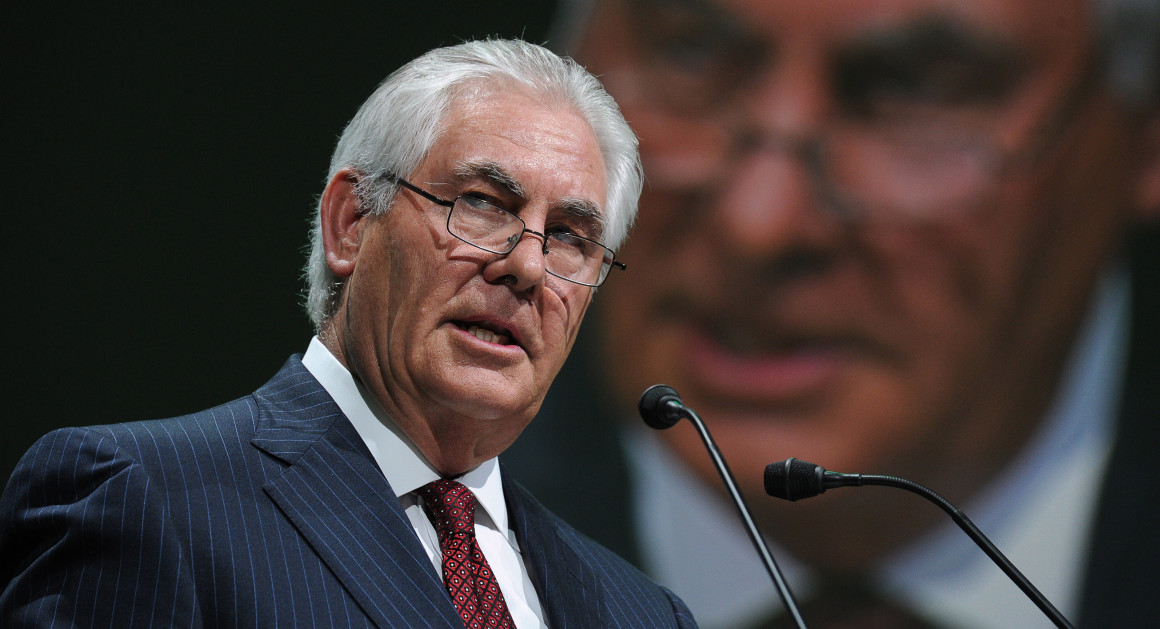
Then again, the State Department is facing a proposed 29-percent reduction in its budget, which doesn’t seem to bother Secretary of State Rex Tillerson.

Oh yes! There’s actually someone in the job. He’s been a sort of shadow figure in the Trump administration Cabinet.

He has held zero press conferences since taking office. He took off on an overseas trip and didn’t bring any media representatives along with him. Mexico’s foreign minister recently visited Washington and didn’t even call on the State Department, let alone on Secretary Tillerson.

Why has this individual become so, um, invisible? Donald Trump introduced him as secretary of state after parading a slew of high-profile pols to meet with him. Then came Tillerson, the former ExxonMobil CEO who emerged out of seeming nowhere to get the president’s nod.

One more thing: Tillerson has no deputy secretary of state on hand. There’s no one to assist him with whatever heavy lifting he needs to perform while working to solve the nation’s myriad foreign-policy issues.

Recent secretaries of state seemingly have been everywhere at once, defying the laws of physics. James Baker, Lawrence Eagleburger, Warren Christopher, Madeleine Albright, Colin Powell, Condoleezza Rice, Hillary Clinton and John Kerry all became the face and the voice of U.S. foreign policy. Their respective impacts were immediate and profound.

Rex Tillerson? Where are you? What are you doing?