'Potty water' on tap next?

Eternal gratitude is what I am feeling at the moment that Amarillo isn’t in Wichita Falls’s straits regarding the availability of potable water.

However, as I read the story attached to this blog post, I am wondering if the day will arrive when Amarillo must do what Wichita Falls is about to attempt: treat sewage into drinkable water.

http://www.star-telegram.com/2014/03/14/5650516/dry-wichita-falls-to-try-drinking.html?rh=1

The thought is repugnant at so many levels. Wichita Falls, though, finds itself with few options but to recycle effluent into potable water.

The city of 104,000 residents has conserved water to keep from entering this next phase. Those conservation efforts, while they have helped tremendously, still aren’t enough. The city plans now to recapture 5 million gallons of wastewater it now is discharging each day into the Red River. It will treat it and reuse it.

The city will treat the wastewater and blend it with reservoir water. Big Spring is doing something similar, producing a blend of water that contains a 20-percent wastewater content. Wichita Falls will do a 50-50 blend of wastewater and reservoir water.

How has Wichita Falls’s population reacted to this idea? Not so great at first, according to the Fort Worth Star-Telegram, which reported: “Residents of the city … about 100 miles northwest of Fort Worth, were initially hesitant about drinking ‘potty water or toilet water,’ but they’ve realized it is one of the few alternatives left until the drought breaks, said city spokesman Barry Levy.

Until the drought breaks.

Therein lies some hope for all of us caught in this miserable weather cycle. There remains the promise that eventually — hopefully while we’re still alive to see it — the weather patterns will return to something approaching historically normal patterns. That means heavy downpours in the spring and early summer that should refill surface water reservoirs, replenish our aquifer and remove the incentive to use groundwater to irrigate our property.

I normally would be all for full disclosure of what my government is doing on our behalf. I’m not so sure that I would want to know if I’m drinking water that’s been flushed down my toilet.

As many wise men and women have said over many centuries: You gotta do what you gotta do.
March winds are blowing

On this 15th day of March, I’m happy to report that my wife and I made it home from a nearly harrowing 45-minute drive from Hereford, Texas to our humble home in Amarillo.

Doesn’t this day signify the Ides of March, or some such thing? And didn’t Brutus stick a shiv into Julius Caesar on this day in 44 B.C.?

Whatever, the harrowing drive was interesting only in that we drove into the teeth of yet another vicious wind storm. Our cell phones were buzzing and beeping storm warning alerts to us; sustained winds of 35 mph, with gusts to 60 mph. So were the phones of our dear friends, with whom we had just spent a lovely evening of dinner and laughs in Hereford. One of our friends called us en route to make sure we were all right. “Yes, we’re OK,” I told her as I gripped the steering wheel tightly to avoid being blown off the highway. “Call me when you get home,” she instructed. “OK, I will.” And I did.

We’ve lived through many of these March-wind experiences during our 19-plus years of living on the High Plains of Texas.

I don’t recall precisely the last time, however, we’ve had two monstrous wind events so close together. We had another one just about six days ago. Now this one. Climate change … perhaps?

Beats me.

It’s all part of living in this region of the world, not unlike getting used to the incessant drizzle in my native Oregon or the stifling humidity and bugs in Beaumont, where we lived for nearly 11 years before moving to Amarillo.

Remind me, though, not to drive in this wind again. Ever.

Where's the fairness?

Good journalism — be it print or broadcast — relies on relatively few basic tenets.

Accuracy is one. Thoroughness is another. So is fairness.

And fairness requires that you seek out both sides of a dispute, such as one that recently erupted in the House Oversight and Government Reform Committee. Chairman Darrell Issa, a Republican, shut down a hearing as the ranking Democrat, Elijah Cummings, sought to pose a question of Lois Lerner, an Internal Revenue Service official at the center of a controversy that some folks want to turn into a full-blown scandal.

The IRS has been criticized for its vetting of conservative political action groups seeking tax-exempt status. What the right-wingers don’t acknowledge, of course, is that the IRS does the same thing to liberal groups.

Back to journalism’s fairness tenet.

The Rev. Al Sharpton — a liberal MSBNC talk show host — interviewed Cummings the other day to get his side of the story. One liberal would “interview” another liberal.

Meanwhile, Issa was making the rounds on the Fox News Channel to give his version of events. Conservatives were “interviewing” a conservative.

https://www.facebook.com/photo.php?fbid=848447285170595&set=a.290068127675183.91261.280920811923248&type=1&theater

My strong preference would be for Cummings to talk to the Fox guys and Issa to talk to the MSNBC guys. Let the liberal news/commentary network get the other side’s version of a controversy and have the conservative network get the liberal’s version of events.

That’s one way to define — if I can borrow a phrase — a “fair and balanced” approach to journalism.

Big Brother must have blinked on this one

“1984” has been praised and demonized since its publication in 1949.

The novel by George Orwell has been seen as a predictor of relentless government surveillance, where Big Brother would have his eyes on you at all times, tracking your every movement, utterance and relationship you’ve ever experienced.

We’ve all heard the reference to “Big Brother is watching,” correct?

The National Security Agency stuff in recent times has helped bring “1984” back into the public discussion.

What in the world was Big Brother doing about eight days ago when a Malaysian Air jetliner with 239 passengers and crew took off from Kuala Lumpur en route to Beijing? He must have taken a snooze. The plane reportedly took a hard left turn somewhere over the Gulf of Thailand and then — poof! — disappeared, apparently without a trace.

The United States has several spy satellites orbiting Earth. So do China, Russia and the European Space Agency (with the Brits, French and Germans leading the way). They’ve supposedly got eyes on virtually every square mile of the planet at the same time.

Just how does an airplane the size of a Boeing 777 long-haul jetliner vanish without anyone having a clue where it could be at this moment? Is it at the bottom of some large body of water? Did it crash in a remote jungle? Did someone — as a few “experts” have speculated in the past 24 hours — hijack the bird and fly it to some airstrip in, say, Pakistan, Tibet or Outer Mongolia?

The question on my mind at this moment is this: Has the Big Brother scare planted in our heads 64 years ago by George Orwell’s frightening novel been overplayed and overhyped by some media frenzy?

The great heavyweight champion Joe Louis once commented after nearly losing his title in 1941 to light-heavyweight champion Billy Conn — who out-boxed the champ for 12 rounds before getting knocked out in Round 13 when he decided to slug it out: “You can run but you can’t hide.”

Well, maybe you can hide.

Kinky for ag commissioner?

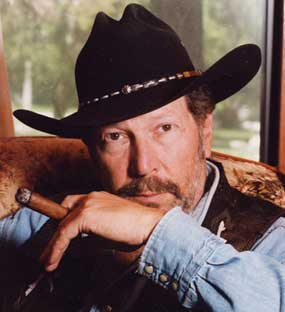
37494-kinky_friedman-763418Mention the name “Kinky” in polite company anywhere in Texas and your audience likely will know precisely of whom you speak.

It would be Kinky Friedman, the humorist, singer, author, part-time farmer, gadfly — and a Democratic Party candidate for Texas agriculture commissioner.

In an earlier post on this blog, I dismissed Friedman as a serious agriculture commissioner candidate, citing what I believe to be his lack of actual farm-and-ranch experience. But as Ross Ramsey of the Texas Tribune points out in the link attached here, Kinky might have a shot a breaking the Republicans’ choke-hold on every statewide office in Texas.

http://www.texastribune.org/2014/03/13/analysis-kink-democrats-chain/

How does he do that? He can parlay his overwhelming name identification, for starters.

Kinky is in a runoff to occur May 27 with Jim Hogan to be his party’s nominee. Republicans have a runoff too, featuring Sid Miller and Tommy Merritt. Of the two GOP candidates, the only one who’s solicited my vote this year has been Merritt, who’s been touting his belief in the Second Amendment and in the “sanctity of life.” Someone will have to explain to me how that matters with regard to the office he is seeking.

I digress. Back to Kinky.

He ran for governor eight years ago. He came to the newspaper where I worked as editorial page editor and had a sit-down interview with the editorial board. To be honest, he had us in stitches.

I enjoyed the meeting tremendously, particularly when I asked him what he considered to be a dumb question (I wish I could remember it) and he body-slammed me with a put-down. Hey, I’ve been slammed by the best — and Kinky Friedman might qualify as being among the best put-down artists in the business.

How should we rate Kinky’s chances this year? The odds are long, Ramsey writes. “The odds are against Friedman, but they were also against Rick Perry in 1990, when he won the same job against Jim Hightower,” according to Ramsey.

With most — if not all — of the attention focusing on gubernatorial nominee Wendy Davis, Democrats might have a sleeper candidate in a guy who wants to be taken seriously while campaigning like someone who doesn’t take himself too seriously.

I’m hoping he wins the Democratic runoff. This campaign season is going to need some levity. If Texans can retain their sense of humor, that might be Kinky Friedman’s ticket to public office.

Speaker Boehner's future starting to get cloudy

This isn’t exactly a scoop, but I’m hearing some rumblings from folks in the know on Capitol Hill that the speaker of the U.S. House of Representatives has had it up to here with the tea party wing of his Republican Party caucus.

Indeed, John Boehner, R-Ohio, has called them out already over their insistence that the government default on its debt obligations if they don’t get spending cuts to offset increases in the national debt.

I’ve long thought of Boehner as a good-government Republican who’s been whipsawed by the tea party cabal within his GOP caucus. He’s been hamstrung by threats of open rebellion among some of those clowns. Back home in his Ohio congressional district, he hears murmurs of candidates challenging him from the right as he runs for re-election.

How much fun can this be? Not much if you’ve worked hard to be second in line — behind the vice president — in the presidential succession queue.

Boehner has been in the House a long time. He’s been a loyal Republican linked more to the “establishment wing” than to the tea party insurgent wing.

What might the future hold for Boehner?

A source close to the speaker has intimated that Boehner is fed up. He well might pack it in after the next Congress convenes in January 2015. It’s looking as though the GOP will strengthen its majority in the House and might even take over the Senate from the Democrats. The question well might be: What will the new House majority look like? Some of the tea leaves are suggesting that Republican ranks will swell with more tea party types, giving Boehner even more grief than he’s experienced already.

Thus, this source indicates, he well might just resign and let the House choose the next pigeon, er, speaker to run the place. Boehner then might go back home, or he might stay in D.C. and become, oh, a lobbyist.

I’ve also learned that this scenario has been discussed openly within the halls of Congress.

Yes, the atmosphere in Washington is toxic. Speaker Boehner’s immediate future plans just might tell us all something quite telling about how poisonous it’s become in the nation’s capital.

Time to roll out the fifth wheel

This is another in a series of occasional blog posts commenting on impending retirement.

It’s been some time since we’ve slept in our recreational vehicle.

Our fifth wheel is getting more broken in and my wife and I have gotten pretty good at setting it up, hitching it up, hauling it down the road, setting up camp and then de-camping when it’s time to go home.

We’ve made a decision on our next destination. It’s in-state: We’ll be taking it to the Davis Mountains region of far southwest Texas. I’ve long had this fascination with Lake Balmorhea State Park. So, that’s where we’ll be heading with our fifth wheel.

Each trip we’ve taken has been longer than the previous one. Our most recent trip was to Allen to see our son, daughter-in-law and our new granddaughter — who just turned 1 on March 6. Prior to that we went to Albuquerque; our maiden trip was just across town to an RV park here in Amarillo, where we got acquainted with our new vehicle.

The Davis Mountains trip will be the most challenging for us. We’ll likely be on the road for most of the day we’ll drive there. The state park, though, is fully equipped: sewer, water, electricity, cable TV, Internet … all the creature comforts of home.

We’ll be traveling to a part of the state we’ve only seen briefly on an earlier drive through the region. It’s an exciting thing for us to be able to explore a new place, though, and we plan to do so once we arrive.

A good friend described the Davis Mountains region as looking like “the dark side of the moon,” not that my pal ever has seen the moon’s dark side. I’ll take him at his word, though, that the landscape there is as spectacular as he describes it.

These short trips are in preparation for our master travel plan once I retire fully from the part-time jobs I’m working now that I’m in semi-retirement mode. Plan A will involve us taking our fifth wheel out for weeks — maybe months — on end, exploring North America from coast to coast, from top to bottom.

It’s an exciting time for us. Our fifth wheel has been shut in long enough. Spring is arriving soon. The time has come for us to hit the road.

I’ll have more later.

What the … ? Red-light cams in hospital zone?

Allow me this prediction: The day the Amarillo City Council authorizes installation of red-light cameras on Coulter Street, smack in the middle of the city’s medical complex, is the day a recall petition will be launched to kick every one of them out of office.

I might even gather signatures myself to put it on the ballot.

Some leaders in Tamarac, Fla., though, apparently think it’s all right to bust red-light runners in emergency zones.

http://watchdog.org/132348/red-light-camera-hospital-emergency/

The idea at the Tamarac hospital zone is to catch those who run red-lights. The cameras take pictures of license plates, police track down the registered owner of the vehicle and the cops issue a citation. That’s how it’s done in Amarillo and in virtually all cities that have deployed these devices.

In Tamarac, however, the cameras are nabbing motorists rushing to the hospital to seek medical attention.

How fair is that? Not at all, if you ask me.

One guy ran a red light as he was rushing to the hospital. He got caught, went to court to appeal the fine and was told his medical emergency was not sufficient to warrant his running the light. The judge also slapped an additional penalty.

When I saw this story, I couldn’t believe it. I thought the source, Watchdog.org, was one of those farcical websites that pokes fun at public policy with fake news reports. Turns out the site is legit, and the story appears legit as well.

Amazing stuff.

Don’t even think about doing something like this, Amarillo City Hall.

Flight 370, where are you?

The ongoing search for a missing Boeing 777 has become just about the strangest story I’ve ever heard.

http://www.cnn.com/2014/03/14/world/asia/malaysia-airlines-plane/index.html?hpt=hp_t1

A jetliner takes off from Kuala Lumpur for Beijing. It flies less than an hour then radio and radar contact is lost. The assumption is that the plane crashed into the Gulf of Thailand. The search begins for wreckage. None is found. Not only that, no one can account for why the plane lost contact. There was no may-day signal sent out.

Now it seems that everyone on the planet has theories about what happened to Malaysia Air Flight 370 and the 239 people on board.

My goodness, this story is giving me a serious headache.

The loved ones of those aboard need closure but authorities are now more confused than ever about the fate of the plane.

* If it plunged into the ocean at 500 mph, it would have broken up and something would have floated to the surface. Those “flotation devices” the passengers sit on would be seen.

* If it crashed on land satellites could have seen the wreckage from space. Lord knows Earth orbit has enough surveillance craft circling the globe.

* If someone deliberately turned off the transponder tracking signal, then for whom is that individual working?

* If someone hijacked the airplane and landed it in, say, Pakistan or Afghanistan, how does someone keep secret the presence of a massive transcontinental jetliner?

* Doesn’t someone almost always take “credit” for hijacking an airplane?

The hijacking theory is starting to get some traction from “experts” who claim to know such things. Of all the theories out there, the hijacking seems the least plausible. “They could have landed it in the middle of nowhere,” a colleague told me this morning. My response was that there really is no such thing these days as the “middle of nowhere.” Technology enables the entire planet to be seen by someone.

The U.S. Navy has joined the search, along with ships from India, Australia, Malaysia, Indonesia, Vietnam and Thailand. Air crews from the United States and China are looking over many tens of thousands of square miles of territory — over land and water alike.

This mystery is deepening and is getting downright scary.

Judges aren't elected for a good reason

Politics has no place on judicial bench.

That is why folks on the far right are so wrong to lambaste “unelected judges” for ruling as they do, particularly when their rulings go against the right wing’s tightly held agenda.

http://www.texasmonthly.com/burka-blog/unelected-judges

Paul Burka makes an important point in his blog about Sen. Ted Cruz’s criticism of a federal judge’s ruling that threw out Texas’s ban on gay marriage as being unconstitutional. Cruz used the right wing canard about unelected judges being accountable to no one.

That’s the way the U.S. Constitution was written by the founders. It’s strange to hear so-called “strict constructionists” argue against that very provision. Voters elect presidents, who then have the power to appoint judges to the federal bench. If you dislike the philosophies of the judges, then voters’ only option is to elect presidents who will appoint judges more to your liking.

As a counterpoint to the federal system, look at how many states select their judges. Texas’s system, I should add, is no great shakes. We elect our judges on partisan ballots; they run under political parties’ banners. Do you think their decisions are influenced by partisan pressure? In Texas, judges are every bit the politician that define county commissioners, legislators and the governor.

I rather prefer the federal model in which presidents appoint judges, who then are tasked with interpreting the U.S. Constitution. They get it right and they get it wrong. If they make the correct decisions, then so much the better. If they go the wrong way, well, we have Congress and the president to work together to fix the law.

My strong preference — to the extent that it is possible — to keep politics off the federal bench.