Category Archives: legal news

Imagine this breakfast chit-chat

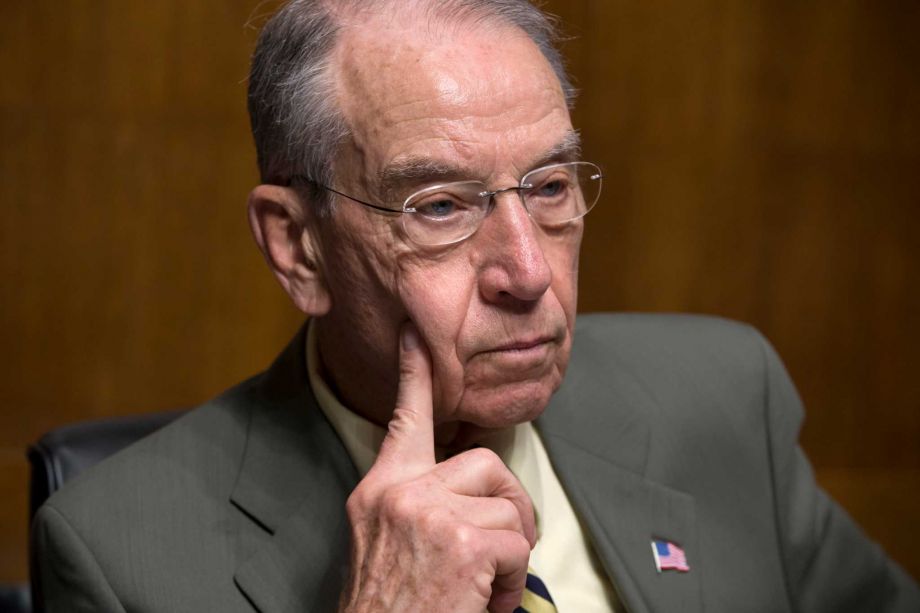
grassley

U.S. Senate Judiciary Committee Chairman Chuck Grassley is going to have breakfast next Tuesday with Merrick Garland.

Yep, he’s going to break bread with the Supreme Court nominee whose nomination he intends to block.

I’m trying to imagine how this conversation will proceed. Here’s what I have come up with:

Grassley: Welcome, Judge. I’m glad you could find time to meet me for breakfast.

Garland: Thank you, Mr. Chair …

Grassley: Oh, call me Chuck.

Garland: Sure thing … Chuck. (laughter)

Grassley: Let’s get down to brass tacks. I don’t think the committee I chair should consider your nomination. In fact, I’m on board as saying that the next president should make the nomination. The current president is a lame duck, you know. This election could change everything.

Garland: I get that. But why are we meeting? I’ve read the papers. I know what you’ve said.

Grassley: I just wanted to get together so I could explain in detail …

Garland: Detail? What detail? You don’t support President Obama. You’ve never supported him. Look, he sought to pick someone who wouldn’t rock the court. He looked for a moderate judge. He found one. Me. My time on the D.C. Circuit Court has been the model of moderation.

Grassley: But the Supreme Court balance is, well, in the balance. Antonin Scalia was a stalwart conservative justice. We need to maintain that balance on the court.

Garland: Why the need? Didn’t a majority of voters re-elect Obama three years ago? Didn’t they do so knowing full well what kind of judge he’d appoint if given the chance. I mourn Scalia’s death, too. He was a brilliant jurist. He had a seriously rigid point of view. But I’m no slouch, either. I just don’t lean nearly as far to the left as Scalia did to the right. He could have picked a flaming lefty activist. I’m neither a lefty or an activist.

Grassley: I get that, Judge. You do understand that we on the committee are politicians, correct? We’ve got political interests. I happen to like my job as a senator from Iowa. I’ve been doing it for some time. I’d like to keep doing it. We’ve got this faction within our party that won’t tolerate compromise. It won’t tolerate me or any other of my Republican ilk from compromising with those Democrats.

Garland: So, you’re not going to allow the president, who has another nine months in office, to fulfill his duty because you’re getting pressure from constituent groups and political action organizations?

Grassley: I wouldn’t put it quite that way.

Garland: But that’s what it sounds like to me. You know what? I just lost my appetite. Thanks for the invitation, Chuck.

Grassley: Uh, judge? On second thought, you now may call me “Mr. Chairman.”


Sen. Moran reneges on call for Garland hearing

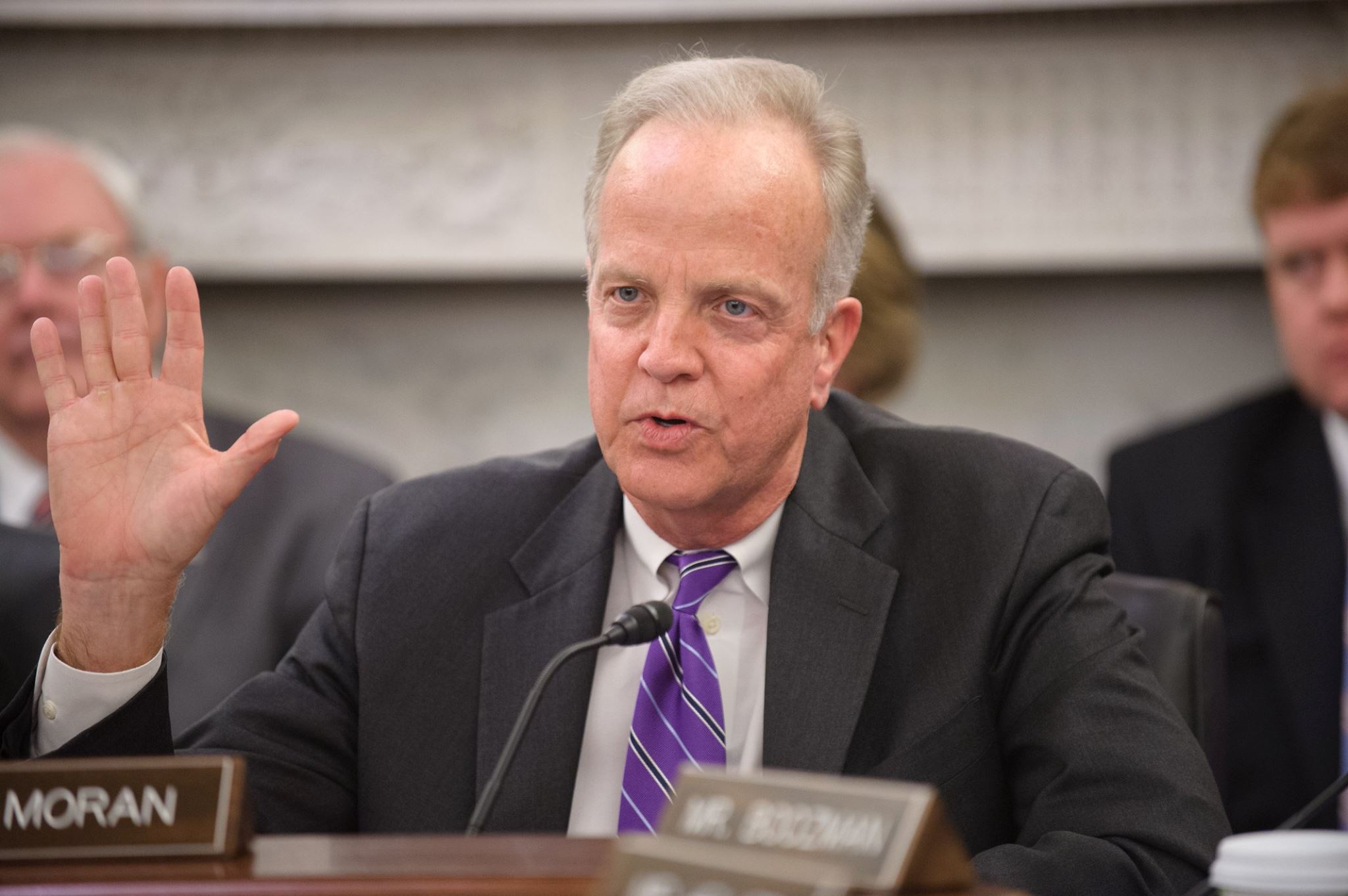
jerrymoran

I hereby take back all the nice things I said about U.S. Sen. Jerry Moran, R-Kan.

Moran had earned my praise after he said that Supreme Court justice nominee Merrick Garland deserves a hearing and a confirmation vote by the U.S. Senate.

Then what does the senator do? He reneges on his earlier call, which I thought when he said it illustrated great courage from the conservative Republican lawmaker.

I hate that I have to retract those things I wrote. I always enjoy watching politicians go against the tide, buck the trend, go with their gut.

Now it turns out that Moran — who’s in zero danger of losing his Senate seat this fall — has joined with other Senate Republicans in resisting Garland’s nomination. Moran said Garland is too weak on Second Amendment issues.

My question is this: Didn’t he know that when he expressed his desire for the Senate to proceed with confirmation hearings and then an up-down vote?

Here is what I wrote the first time about Sen. Moran:

https://highplainsblogger.com/2016/03/sen-moran-stands-up-for-integrity/

I’m taking it all back.


The founders got it right with the judiciary

images-4

Just how brilliant were the nation’s founders in establishing an “independent judiciary”?

I’ll offer you an example: Take a look at what’s happening in Kansas, where the legislature and the governor are seeking the power to impeach judges who rule incorrectly … in their view.

I want to follow up on an earlier blog post to make this observation about the relationship between the courts and the other arms of government.

The Kansas Supreme Court has become the target of efforts to impeach and remove judges. It seems the jurists have ruled against the wishes of legislators and Gov. Sam Brownback. The high court justices are appointed and then they stand for retention; if voters like the job they’re doing, they retain them; if they don’t, they remove them.

That’s not as bad a system as we have in Texas, where judges are elected on partisan ballots. Judges become politicians. They have to raise money and actually campaign for office. These days in Texas, if you’re a Democrat, you have virtually no chance of winning a statewide judgeship. It used to be the reverse, when Democrats were the kings and queens of the heap.

Back to the founders.

They set up a system that provided essentially for lifetime appointments to the federal judiciary. The Supreme Court is the prize job for any jurist in the land. You become independent and free of political pressure … at least that’s how the founders envisioned it.

Justices then are able to interpret the constitutionality of federal law according to how they view it. The good ones are able to dissect laws impartially and make judgments based on their knowledge of what the Constitution allows.

Too often, though, Supreme Court justices apply rigid standards. Conservatives such as the late Antonin Scalia and Clarence Thomas view themselves as “strict constructionists” who rely on what they believe were the founders’ original intent. Liberals such as the late Thurgood Marshall took another view. Justice Marshall prejudged every capital punishment appeal before ever hearing the case and he would always vote to grant the appeal. Why? He didn’t believe in capital punishment.

There have been many instances over the course of our history when justices become something other than what the presidents who appointed them thought they would be. President Eisenhower appointed Chief Justice Earl Warren and Associate Justice William Brennan, both of whom went on to become liberal giants of the court. President Nixon selected Justice Harry Blackmun, who later wrote the landmark Roe v. Wade ruling that legalized abortion. President Kennedy appointed Justice Byron White, who then became a swing vote on the court who often sided with conservatives. President Ford’s pick, Justice John Paul Stevens, often sided with the court’s liberals.

I’ve just offered a few of many examples. You get the idea.

The independence of the federal judiciary, though, is a standard that states ought to follow. Otherwise, we are left with creating a highly political court system that becomes victimized — as the Kansas courts are becoming — to the whims of politicians who have agendas that have little to do with following the law.

The founding fathers didn’t create the “perfect Union” when they crafted the Constitution. They left out a lot of rights for many Americans, chief among them being women and African-Americans.

When it came to creating a federal judicial system that is intended to be unencumbered by politics, well, they got that one right.

U.S. senators who have to ratify these appointments often don’t understand that intent. In a broad sense, though, the federal judicial system works pretty much as it was designed.

Take heed, state politicians.

 

Judiciary is non-political, right? Uh, no

judges

It can be declared categorically — perhaps it should have been long ago — that the judicial branch of government is as political as the executive and the legislative branches.

The U.S. Senate is playing politics with President Obama’s selection of Merrick Garland to the Supreme Court.

Now there’s this, in Kansas.

The state legislature is considering a bill that would call for the impeachment of state supreme court justices if they seek to “usurp” the power of the legislature or the governor.

In other words, if the state’s highest court rules differently from what the legislature or the governor believes, the justices are subject to being kicked off the bench.

What an extraordinary — and ham-handed — approach to governing.

Kansas judges are appointed and then are subject to retention elections during their tenure on the bench. Conservative activists and politicians want voters to reshape the court by kicking four justices out who they believe have ruled the wrong way on key issues. Therefore, voters have the power already to decide which justices should stay and which ones should go.

The Republican-controlled Kansas legislature is hoping voters this fall will tilt the court more toward the majority of lawmakers’ liking. So, why seek to enact this measure that liberalizes impeachment proceedings against the state’s judicial branch?

As the New York Times reported: “Gov. Sam Brownback and other conservative Republicans have expressed outrage over State Supreme Court decisions that overturned death penalty verdicts, blocked anti-abortion laws and hampered Mr. Brownback’s efforts to slash taxes and spending, and they are seeking to reshape a body they call unaccountable to the right-tilting public.”

It’s no longer left to the state’s highest judicial authority to interpret the state’s constitution as it sees fit. It now has an extra layer of oversight coming from the legislative and executive branches to ensure that the court rules “correctly.”

This is political conservatism? It sounds and looks much more like activism in the extreme.


GOP wall beginning to crack

Caplan-Merrick-Garland2-1200

Republican resistance to President Obama’s nomination of Merrick Garland is beginning to show signs of weakening.

Two GOP U.S. senators, Susan Collins of Maine and John Boozman of Arkansas, say they’re going to meet with Judge Garland. Jerry Moran of Kansas, a reliably conservative lawmaker, has said the same thing. Kelly Ayotte of New Hampshire, too. Same with Mark Kirk of Illinois.

Is a mere meeting with two Senate Republicans enough to bring this nomination to the confirmation process? Hardly. The meetings, though, do seem to suggest that Majority Leader Mitch McConnell’s effort to block the nomination is being seen for what it is: a political game of obstruction.

Is it beginning to sink in to some GOP senators that Garland is the best nominee they’re going to get? He’s supremely qualified. He’s a judicial moderate, a studious and thoughtful jurist.

Consider what’s happening out there on the political campaign trail.

GOP frontrunner Donald J. Trump is beginning to implode. He said women should be “punished” for obtaining an abortion, then took it back; he said he wouldn’t “rule out” the use of nuclear weapons against the Islamic State, even saying the same thing about deploying nukes in Europe; his campaign manager is accused of battery against a female reporter.

However, Trump remains the frontrunner for the Republican Party presidential nomination.

Do members of the Senate GOP caucus understand that Trump’s chances of being elected president are vaporizing?

McConnell said Obama shouldn’t get to fill the vacancy created by the death of conservative judicial icon Antonin Scalia. That task should belong to the next president, McConnell said.

And who is that likely to be? I believe it’s going to be Hillary Rodham Clinton.

The GOP-led Senate is now facing the prospect of simultaneous earthquakes. The Democratic presidential nominee could win the White House in a landslide and the Senate could flip back to Democratic control once the votes are counted in November.

Against that backdrop, we’re beginning to hear from an increasing number of Republican senators that, yep, Merrick Garland is as good as we’re going to get.

Clinton, Sanders differ on SCOTUS approach

hillary

Democratic presidential candidates Hillary Rodham Clinton and Bernie Sanders differ on quite a bit these days.

One of the more intriguing differences is seen in how they want the vacancy on the U.S. Supreme Court to be filled.

Sanders would pull the nomination of Merrick Garland — who President Obama has appointed to replace the late Justice Antonin Scalia — off the table if he is elected president in November. He then would pick someone of his choosing.

Clinton doesn’t even think that’s a topic for discussion. She said this week that Obama is president until January and he deserves to have his pick for the court considered by the U.S. Senate.

She also takes sharp aim at the reason Senate Majority Leader Mitch McConnell gives for obstructing this nomination, for wanting the next president to make the choice. McConnell said “the American people deserve a voice” in determining who that person should be.

Fine, said Clinton. “I was one of the 65 million people who voted” for President Obama’s re-election in 2012, she said, adding that McConnell is now trying to silence her voice, along with tens of millions of other voters who choose Obama over Republican nominee Mitt Romney.

You got that right, Mme. Secretary.

I, too, am among the nearly 66 million Americans who cast their ballots for the president. I don’t like being silenced any more than Clinton does. Nor should the rest of those who cast their ballots for the president.

Don’t we operate in a system that grants power to the candidate who gets more votes than the other person?

Yes, we have one president at a time. The man in the hot seat right now still has all the power entrusted to him by the U.S. Constitution.

Let this nomination go forward, Mr. Majority Leader. Americans’ voices have been heard.

Can POTUS interpret Senate silence as ‘consent’?

checks balance

Who is Frederick W. Ford?

Never heard of him? Neither had I until I saw an article posted on LinkedIn. He’s a lawyer and mediator. I guess he’s pretty knowledgeable about constitutional law and related matters.

He has posited a fascinating idea for President Obama to consider.

Let silence be your guide. That’s his notion that the president ought to follow with regard to placing Merrick Garland on the Supreme Court.

The article is attached to this blog post. I encourage you to read it all of it. The crux of his argument is that the Senate has the constitutional duty to “advise and consent” to the nomination of federal judges. But what if the Senate remains silent on the issue? What if senators don’t hold hearings and don’t debate the nomination fully?

Ford said the president can take their silence as a form of tacit “consent.” He lays it out there in a lot legal mumbo-jumbo that, frankly, I don’t get; a lot of it is in Latin and I don’t speak the language.

I get the sense that Ford thinks Obama ought to do it. Just call a swearing-in ceremony and have the man take his oath — and then take his seat on the bench when it reconvenes this October.

Senate Republicans want to wait for the next president to make the appointment.

The current president doesn’t want to wait.

Wouldn’t that simply send the Senate into apoplectic shock if Barack Obama follows the advice offered by someone named Frederick W. Ford?


If only the VP hadn’t said what he said …

Supreme-Court-blue-sky

Vice President Joe Biden delivered a stern message today to some university students and faculty members

about the obstruction occurring in the U.S. Senate.

It’s threatening the core of our republic, he said. Senate Republicans must not obstruct President Obama’s effort to fill a Supreme Court vacancy; they must allow nominee Merrick Garland to have a hearing, then they must debate the merits of his nomination and they must then vote on it.

True enough, Mr. Vice President.

But what about those remarks you made in 1992 about whether President George H.W. Bush should be able to nominate someone to the high court in an election year? Today’s Republicans are seeking to block Obama’s pick because this, too, is an election year and they want the next president to make the selection.

The GOP has beaten the vice president over his remarks then.

What they don’t say is that Biden also declared that he would support a “consensus candidate” in an election if one were to be presented to the Senate Judiciary Committee, which Biden chaired at the time.

Biden told the Georgetown law students and faculty members: “Dysfunction and partisanship are bad enough on Capitol Hill. But we can’t let the Senate spread that dysfunction to another branch of government, to the Supreme Court of the United States.”

It’s fascinating to me that then-Sen. Biden’s remarks now have become known as the “Biden Rule,” which has never existed.

I won’t defend Biden for making his remarks in 1992. He was wrong to suggest that a sitting president shouldn’t be allowed to perform his job if he had been given the chance to do so. President Bush did select a Supreme Court justice in 1991, when he nominated Clarence Thomas to take the seat vacated by the death of Thurgood Marshall.

However, I won’t condemn Biden for holding that view. He did, after all, add the caveat that he would support a consensus candidate for the Supreme Court.

The here and now stands on its own.

The vice president is correct to insist that today’s Senate should stop its obstruction and allow the president to fulfill his constitutional duty — and do its own duty to give an eminently qualified nominee the fair hearing he deserves.


Listen to the VP, senators, about doing your job

biden

Vice President Joe Biden is going to lecture the U.S. Senate on something about which knows a thing or two.

He wants his former colleagues to do the job they took an oath to do, which is vote on whether to approve a nominee to the U.S. Supreme Court.

Biden will deliver his message in remarks at Georgetown University.

At issue is the nomination of Merrick Garland to fill the seat vacated by the death of Antonin Scalia. Senate Republicans — many of them, anyway — are digging in on the nomination. They don’t want to consider a Barack Obama appointment, contending that it’s too late in the president’s second term. He’s a “lame duck,” therefore, the task of appointing a justice should fall on the next president.

That, of course, is pure malarkey.

Barack Obama is president until Jan. 20, 2017. He wants to fulfill his constitutional duty and he’s urging the Senate to do so as well.

Oh sure. The balance of the court is hanging here. Scalia was a devout conservative ideologue — and a brilliant legal scholar. Garland is a judicial moderate; he’s also a scholar; a man viewed widely as supremely qualified.

How does Biden — who served in the Senate for 36 years before being elected vice president — figure in this?

As vice president, he’s the presiding officer of the Senate. Of course, he votes only to break ties. He doesn’t actually run the place. That task falls on the majority leader, who happens to be a Republican, Mitch McConnell of Kentucky.

It’s been McConnell’s call to obstruct this nomination.

Biden, though, does have a number of friends in both parties who serve in the Senate. Is there any hope that he can get through to them? Probably not, but when you’re vice president of the United States, you have the bully pulpit from which to preach an important message to those who need to hear it.


Well stated, Mr. Chief Justice

chief-justice-roberts

How about that John Roberts?

The chief justice of the U.S. Supreme Court has rebuked the U.S. Senate — here it comes — for playing politics with the appointment of the next justice on the nation’s highest court.

Chief Justice Roberts did not know he was doing so when he made the remarks, as they came just a few days before the shocking and tragic death of Justice Antonin Scalia.

He noted the partisan nature of the votes for recent appointees to the court. According to the New York Times: “Look at my more recent colleagues, all extremely well qualified for the court,” Chief Justice Roberts said, “and the votes were, I think, strictly on party lines for the last three of them, or close to it, and that doesn’t make any sense. That suggests to me that the process is being used for something other than ensuring the qualifications of the nominees.”

The court, of course, has a vacancy to fill. President Obama has selected D.C. Circuit Court Chief Judge Merrick Garland to fill the seat. Senate Republicans say they want the next president to make the call, denying the current president the opportunity to fulfill his constitutional responsibility.

Chief Justice Roberts, served with Garland, surely must believe his judicial colleague is as “extremely well qualified” as justices Alito, Kagan and Sotomayor — whose confirmations were approved on largely partisan votes.

Roberts is on point with his call to consider these nominations on the merits of the individual’s qualifications.

No one has heard hardly a whimper from anyone questioning whether Merrick Garland is qualified to determine the constitutionality of federal law.

The opposition is being mounted for purely political reasons.

John Roberts says such posturing should stop.

I happen to agree with him.

As the chief said in his remarks preceding Scalia’s death: “We don’t work as Democrats or Republicans and I think it’s a very unfortunate impression the public might get from the confirmation process.”