Category Archives: legal news

Founders got it right, as Trump is demonstrating

Benjamin Franklin, Thomas Jefferson, John Adams, James Madison … wherever they are, must be enjoying what they are witnessing in the country they helped create.

They are possibly witnessing a supreme test of checks and balances as they intended for them to be used.

Donald J. Trump, the nation’s 45th president, is setting up a yuuuge fight with the federal judiciary. That would pit two of the three co-equal branches of government against each other.

Trump issued an executive order that bans refugees from seven Muslim-majority countries. He cited national security as his reason. He seemingly wants to ban Muslims from entering the country and is using “extreme vetting” procedures to find the bad guys among the refugees who are fleeing their native lands for the Land of Opportunity and Freedom.

A federal judge has ruled that the executive order is discriminatory on its face. A federal appeals court is considering whether to uphold the ban or side with the judge.

Trump, meanwhile, is embarking on a social media campaign to blast the judge who issued the order staying the president’s order, thus possibly enraging other federal judges — namely the eight individuals who sit on the U.S. Supreme Court who might be asked to issue the final ruling on the president’s order.

Thus, a showdown may be born.

The founders established an “independent judiciary” for the best reason possible: to protect federal judges from political coercion. They serve as judges for life. They are supposed to interpret the U.S. Constitution without pressure or coercion from politicians.

But wait! Trump is seeking to apply that very pressure by badgering the judges. He called the federal jurist who struck down the ban a “so-called judge”; he said the nation should “blame” him and the federal court system if a bad guy sneaks into the nation.

Trump is using Twitter to make his specious case against the federal judiciary.

All the while, the founders are looking down while patting each other on the back. “Yep,” they might say to each other, “this is precisely what we had in mind.”

Trump vs. The Judges: Pulling for the folks in the robes

Donald J. Trump’s fight with the federal judiciary could be shaping up to be a donnybrook.

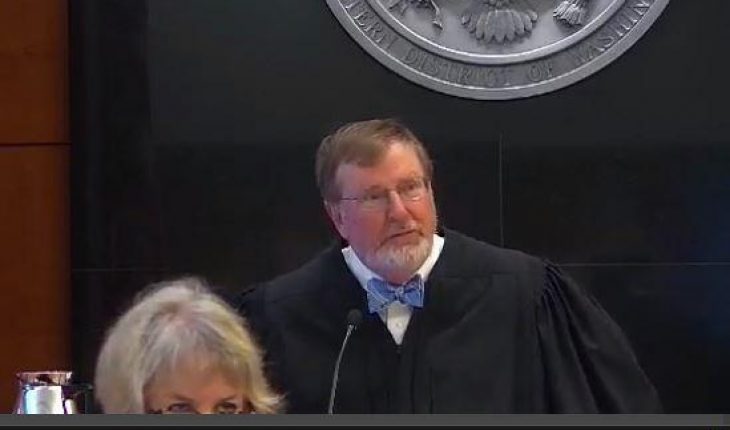
The president instituted a temporary restriction on travelers seeking to enter the United States from seven Muslim-majority countries; then U.S. District Judge James Robart in Washington state struck it down, prompting Trump to call Robart a “so-called judge” and said the nation should blame him if a terrorist sneaks into the country and does harm.

There’s more. The 9th Circuit Court of Appeals is hearing the Trump administration’s appeal and the three-judge panel that heard the case is sounding skeptical of the president’s order.

The plot thickens. If the 9th Court rejects the appeal, then it goes to the U.S. Supreme Court, which at the moment stands at eight members. Suppose, then, that the high court deadlocks — with the four conservative justices voting in favor of the ban and the five liberals oppose it. The lower-court ruling stands.

There’s some chatter now about whether the Supreme Court will be affected in some manner by the untoward things the president has said about the federal judiciary.

Has Trump crossed a serious line? Some scholars believe the president’s Twitter tirades against Robart in particular and the federal bench in general crosses the separation of powers line between the judicial and executive branches of government.

Get a load of this from The Hill:

“The criticism extends beyond judicial scholars.

“Rep. Mark Sanford (R-S.C.) warned that Trump’s attacks, if they continue, threaten not only to undermine the separation of powers but also the president’s own policy agenda.

“’We’re a nation of laws and not men, and this idea of ‘follow me because I say so’ is completely at odds with the Founding Fathers’ intent,’ said Sanford, a Trump supporter who has also criticized the president on certain issues.

“’I learned a long time ago in politics [that] attacking the person or the group that will decide your fate on a given issue generally doesn’t work out that well,’ he added.”

This is yet another matter of governance that the brand new president just doesn’t seem to understand.

Trump draws bead on another federal judge

Let me see a show of hands: Has anyone out there ever seen or heard a president of the United States attack individual members of the federal judiciary?

I didn’t think so. Me neither.

Donald “Smart Person” Trump is setting a new — lower — standard for behavior.

A judge in western Washington state, James Robart, has stopped the president’s ban on refugees from certain countries. The Department of Justice is seeking an injunction against Robart’s ruling. That’s all normal reaction.

What is quite abnormal has been the president’s Twitter tantrum, calling Robart a “so-called judge” and saying if “anything happens” because a criminal sneaked into the country, we should blame the judiciary for it.

You’ll recall how as a candidate for president, Trump took on U.S. District Judge Gonzalo Curiel because of his Mexican heritage. Curiel is presiding over a case involving Trump University. Trump said the judge couldn’t adjudicate the matter fairly because “he’s a Mexican, OK?” Actually, the Indiana-born jurist is as American as Trump.

Trump needs lesson on presidential behavior.

Trump as a candidate behaved disgracefully. Now that he’s president, he is expected to conduct himself with dignity and decorum. He isn’t. Trump continues to launch into these Twitter-borne tirades against a duly appointed federal judge.

Indeed, it is reasonable to question whether the president is trying to coerce another member of a co-equal branch of government into doing his bidding.

I believe such activity — if it’s ever alleged — would be illegal. As in against the very laws the president took a solemn oath to defend and protect.

Who’s POTUS calling a ‘so-called judge’?

Donald J. Trump, meet your newest nemesis, U.S. District Judge James L. Robart.

The president has called Robart a “so-called judge” because he had the nerve to halt the president’s ban on refugees entering the United States from Muslim-majority countries.

If I might be so brazen, my inclination is to wonder aloud — given Trump’s love of Twitter as his primary attack medium — whether he could be labeled a “so-called president.”

Nah … I won’t go there.

There’s not a damn thing “so-called” about Robart, who was appointed to the federal bench in western Washington state by President George W. Bush.

According to NBC News: “He (Robart) suggested in court that Trump’s 90-day entry ban on people from the countries of Iraq, Syria, Iran, Libya, Somalia, Sudan and Yemen was not ‘rationally based,’ since no one from any those countries had been arrested in the U.S. on terrorism-related charges since 9/11.”

There’s more: “‘I’m sorry, there’s no other way to put it,’ Robarts said from the bench. ‘It’s Keystone Cops. It really is. And that’s not just me speaking, that’s Republican members of Congress.'”

The president doesn’t like being criticized by anyone. Not by the media, or political foes or by judges who disagree with his decisions. His mode of response? Twitter! He tweeted: “The opinion of this so-called judge, which essentially takes law-enforcement away from our country, is ridiculous and will be overturned!”

http://www.msn.com/en-us/news/politics/who-is-the-so-called-judge-trump-rips-over-ruling/ar-AAmCbUO?li=BBmkt5R&ocid=spartandhp

Judge Robart is doing what he believes his oath requires him to do, which is to interpret federal law to see if it squares against the U.S. Constitution.

Robart is a Seattle native, he received his undergraduate degree in Walla Walla, Wash., got his law degree at Georgetown and practice law in Seattle from 1973 until 2004, when President Bush tapped for him for the federal bench; the Senate approved his nomination.

There’s nothing “so-called” about this fellow, Mr. President.

Pipe down and let the system play out.

Catfight over Gorsuch? Wait until the next justice leaves the court

“So, are you ready for the catfight that’s going to erupt over this guy Trump has picked for the Supreme Court?”

That was the question posed to me today by a colleague of mine.

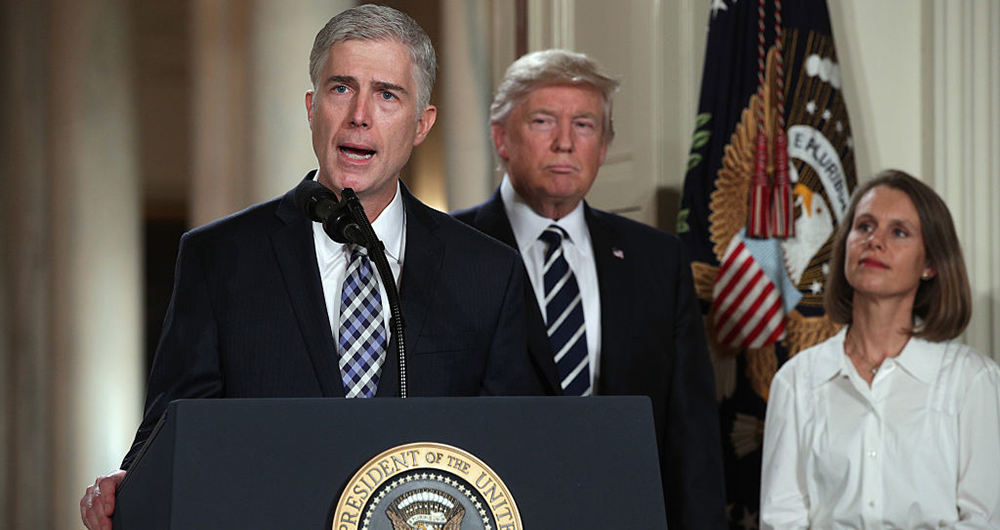
The reference, of course, was to Donald Trump’s nomination of Judge Neil Gorsuch to the highest court in the land.

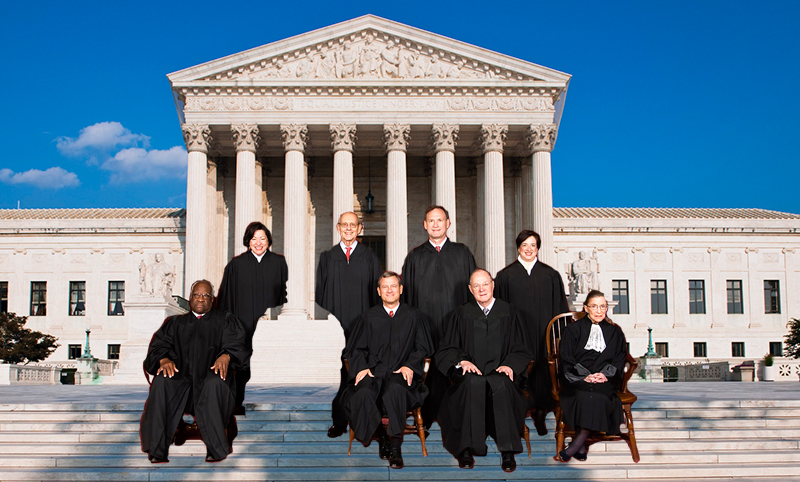
“Catfight? Over this? Naw. The earth is going to open up and quake when the next justice leaves the court,” I said, referring to the possibility that either Justices Ruth Bader Ginsburg, Stephen Breyer or Anthony Kennedy might leave the court.

That, I said, will produce the “mother of all catfights.”

Gorsuch’s nomination doesn’t change a thing on the court. The president is seeking to place a judicial conservative on the court to replace another conservative’s seat, that of the late Antonin Scalia, who died in February 2016.

Yes, Senate Democrats are enraged. Not at the selection of Gorsuch, necessarily, but over the treatment that President Obama got when he nominated Merrick Garland this past year to succeed Scalia.

My own thought is that Gorsuch is likely to be as good a choice as Democrats are going to get, given Trump’s insistence on picking a conservative judge.

No, the real donnybrook will occur when one of the liberals or swing justices decides to leave … or is unable to serve.

My own advice to Democrats would be to pick their fights carefully. Sure, they battle Gorsuch’s nomination. They’ll insist on keeping the 60-vote majority required to approve a Supreme Court nomination. Republicans might decide to invoke the “nuclear option” and allow a 51-vote majority.

I have no real clue as to which way this fight will go.

It might serve Democrats better to hold their fire for the next vacancy when — or if — it occurs during Trump’s time in office.

Given the tenuous ideological balance of the court, with its slim conservative majority, I sincerely doubt that Justices Ginsburg and Breyer — both picked by President Clinton in the 1990s — are going to resign amid the political climate that has fallen over Washington.

As for Justice Kennedy, one of President Reagan’s picks, well, that might be another matter.

Whatever happens, the serious political bloodletting is yet to occur.

Say ‘no’ to term limits for justices

Donald J. Trump’s nomination of Judge Neil Gorsuch to the U.S. Supreme Court has spurred a discussion that needs to end.

It involves whether there should be term limits for Supreme Court justices.

The nation’s founders didn’t create a perfect government after the American Revolution. They got a few things wrong: Women didn’t have the right to vote; they allowed human beings to own other human beings.

They got a lot of things quite right. One of them was to establish an independent federal judiciary where judges are given lifetime jobs upon being confirmed by the U.S. Senate.

Article III, Section 1 of the U.S. Constitution provides that “Judges, both of the supreme and inferior Courts, shall hold their Offices during good Behaviour …”

There you go. If judges behave themselves and do the job to which they take an oath, they can stay for as long as they want. That holds true for Supreme Court justices especially.

Some progressives are alarmed that Trump has appointed a conservative judge to replace an iconic conservative justice, Antonin Scalia, who’s been dead for nearly a year. Let’s limit the terms of justices, they contend.

Hey, I’m on their side most of the time. Not here. The founders had this idea that judges should be free of political pressure. Thus, the lifetime appointment gives them a measure of independence to interpret the U.S. Constitution according to what they believe it tells them.

http://blog.independent.org/2017/02/01/term-limits-for-supreme-court-justices/

History has provided ample demonstration of that independence from judges who didn’t rule quite the way their presidential benefactors wanted. They find their own voice and serve as a check on the legislative and executive branches of government.

I see virtually nothing wrong with judges serving for the rest of their lives on the federal bench — even those with whom I disagree; and believe me, I am sure I will dislike most, if not all, of Neil Gorsuch’s rulings from the high court bench when or if he is confirmed by the Senate.

Then again, given the freedom to interpret the Constitution as broadly or narrowly as he chooses, Gorsuch could surprise us all and join the ranks of men such as Earl Warren, William Brennan, Byron White, John Paul Stevens and Harry Blackmun — all of whom broke with how legal experts expected them to rule.

Principle pushes against politics

I just hate it when principle runs smack head-on into real-time politics.

The nomination of Neil Gorsuch to the U.S. Supreme Court has created just such a conundrum — at least for me.

The principle involves whether to fill the ninth seat on the nation’s highest court, an argument I made when President Barack Obama nominated Judge Merrick Garland to fill the vacancy created by the death of Justice Antonin Scalia.

It wasn’t to be for the Garland and the president; Senate Republicans threw up their roadblock and obstructed the nomination by refusing even to consider it.

They were wrong!

Now a new president has nominated Gorsuch to Scalia’s vacant seat. Senate Democrats are threatening to do all they can to obstruct it, to block Donald Trump’s nominee from taking his seat on the bench.

I’m swallowing real hard as I write this, but it is just as wrong for Democrats to obstruct this nominee as it was for Republicans to obstruct Merrick Garland.

The principle of presidential prerogative stands firm in my view.

So does the need for the Supreme Court to be whole. It needs nine seats occupied to avoid tie votes that in effect send important cases back to lower-court rulings.

At one level, I sympathize with Democrats’ rage at the way their GOP “friends” played raw politics with Garland’s nomination. The GOP leadership took a huge gamble on the hope that a Republican would be elected president. The odds of that gamble paying off seemed to lengthen considerably when Donald Trump won the GOP presidential nomination this past summer.

Trump fooled a lot of us by defeating Hillary Rodham Clinton.

Now it’s Donald Trump’s turn to nominate people to become justices on the highest court in America.

By all accounts, Gorsuch is qualified. He’s not my ideal justice candidate. To be candid, given Trump’s seeming lack of ideological conviction, I’m not at all certain he even fits whatever core values inform the president’s thinking.

The fundamental point, though, is whether it is right for Democrats to threaten to keep the seat vacant for another year — or perhaps for the entire length of time a Republican president is recommending potential justices.

It is not right!

Judge Gorsuch deserves a Senate committee hearing and a full vote in the Senate — just as Judge Garland did.

Principle ought to matter more than politics — even when one’s political sensibilities are being trampled.

GOP’s amnesia surely must be cured

I cannot believe a Republican U.S. senator from Pennsylvania actually said this. But he did.

“We did not inflict this kind of obstructionism on President Obama.”

That came from Patrick Toomey.

It takes my breath away. I might need some smelling salts before I get done with this blog post.

Oh … yes you did, senator!

I get that Donald Trump’s selection of Neil Gorsuch as the next Supreme Court justice has angered Democrats. I also get that the president is entitled to nominate someone of his choosing.

What I do not get is the crass, brassy and classless argument from Senate Republicans — namely Sen. Toomey — that they didn’t obstruct President Barack Obama’s efforts to govern.

Good grief, dude! You made it your top priority!

The hands-down example of obstruction occurred after Antonin Scalia died suddenly while vacationing nearly a year ago in Texas. The Supreme Court justice’s corpse was still warm when Senate Majority Leader Mitch McConnell declared that the Senate GOP would block anyone selected by the then-president to succeed Scalia.

President Obama unveiled Merrick Garland as his nominee to the Supreme Court. McConnell held firm on his pledge. He blocked the nomination. He obstructed the president from fulfilling his constitutional duty to nominate a candidate for a federal judgeship.

Then, as if he had forgotten what he had done, McConnell accused the president and Senate Democrats of “playing politics.”

Are you bleeping kidding me, Mr. Majority Leader?

So here we are. Another president has picked another judge to the highest court. Democrats are furious at the treatment an earlier nominee got from their Republican colleagues.

And Republicans now are saying out loud — and apparently without a hint of shame — that, by golly, they didn’t obstruct a president from the opposing party.

They need treatment for their selective amnesia.

Hold on! Court balance won’t change

All this hyperventilating over Donald Trump’s choice for the U.S. Supreme Court is making me dizzy.

The president tonight brought out Neil Gorsuch, a judge on the 10th Circuit of Appeals, as his nominee for the nation’s highest court.

He’s a conservative, just as Trump promised. He is a “strict constitutional constructionist,” again as Trump vowed. He’s also a disciple of the late Justice Antonin Scalia, as Trump pledged.

Now we’re hearing talk about the “nuclear option” that Senate Democrats might employ to stop Gorsuch’s confirmation. They’ll oppose this fellow, seemingly as payback for the shabby treatment Senate Republicans leveled against President Obama’s choice to succeed Obama. Remember that? Senate GOPers said within hours of Scalia’s death that they would block anyone the president nominated. Obama selected Merrick Garland and the Senate didn’t even give him a hearing and a vote.

Let’s take a deep breath here.

I want to make a couple of points.

One, I detest the notion of Donald Trump nominating anyone to the court. But he won the presidency without my vote. He won enough electoral votes to take the oath of office. Thus, he earned the right to choose anyone he wants.

Gorsuch isn’t my kind of justice. But someone else is the president.

Two, the ideological balance of the U.S. Supreme Court is not going to change when — or if — Gorsuch is confirmed. Scalia was a conservative icon. He was a heroic figure among political conservatives. Placing another judicial conservative on the high court restores the court’s narrow 5-4 conservative bent.

I feel compelled to note that the court — with that narrow conservative majority — made two decisions that riled conservatives, um, bigly. It upheld the Affordable Care Act and it declared same-sex marriage to be legal under the 14th Amendment’s equal protection clause.

Would a Justice Gorsuch change that equation? I don’t see it. A nominee to succeed, say, one of the liberals on the court would most assuredly prompt a titanic political battle … as it should.

None of this will matter, of course, to Senate Democrats who are enraged at the president over many — seemingly countless — issues. His behavior in the first 10 days of his presidency, culminating with his firing of an acting attorney general over her refusal to defend Trump’s paranoid refugee ban, has angered Democrats to their core.

Thus, the fight is on.

It pains me to acknowledge it, but I must. Donald Trump vowed to nominate someone from a list of 20 or so jurists he revealed during his campaign. He has delivered on his pledge.

Judge Gorsuch isn’t to my liking. Moreover, my candidate lost. The other guy won. As they say, elections do have consequences.

POTUS fired his own acting AG?

There’s been some interesting reporting overnight about the political earthquake that the president of the United States created.

Donald Trump fired acting U.S. attorney general Sally Yates because of her refusal to defend the president’s order banning refugees entering the United States temporarily from certain countries … where Muslims comprise the majority of the population.

Yates is held over from the Obama administration.

Here’s the weird part: Trump and his team reportedly asked Yates to stay on the job until the president could have his own AG confirmed by the U.S. Senate. The president selected her to be the acting attorney general.

Yates is known to be a dedicated career federal prosecutor who has worked in the Justice Department under both Republican and Democratic presidents.

She said she believed the president’s order was unlawful — under her understanding of federal statutes and the U.S. Constitution. I believe it is the duty of the AG — acting or otherwise — to follow the law and not necessarily to do what he or she is told to do by the president.

Trump chose Yates, who then followed the law.

Then the president accused her of “betraying” the Justice Department. Hit the road, he told her.

And now we have our first potential constitutional crisis.

Just think: It’s Day 11 of the Trump administration.