Category Archives: education news

‘Plague’ in inappropriate student-teacher relationships?

Texas legislators are seeking to do something that, to be honest, I am surprised hasn’t been done already.

They want to make it illegal for school administrators to fail to report incidents of improper student-teacher relationships. Really? It’s not illegal already? I guess not.

State Sen. Paul Bettencourt has collected the support of all 30 of his Senate colleagues in proposing legislation that would make failure to report such hideous behavior a Class A misdemeanor. To be honest, the level of criminality seems light.

As the Texas Tribune reports: “Bettencourt said that many of the teachers involved in such conduct are able to be rehired in other districts, a phenomenon known as ‘pass the trash,’ because districts fail to report them to the Texas Education Agency. The bill seeks to end that practice by slapping a Class A misdemeanor on administrators who fail to report such relationships, and if it is an intentional cover-up, administrators could be charged with a state jail felony.”

Has this circumstance reached “plague” status? I am not qualified to answer that question. Yes, we’ve read about such ghastly behavior in some of our Texas Panhandle school systems. Teachers have been fired; they have faced criminal charges. What isn’t generally reported here is whether administrators have kept their eyes closed to it, or if they have deliberately covered it up.

An administrator who purposely protects a teacher who has been romancing a student ought to lose his or her job and should be prosecuted and, if convicted, thrown in prison for contributing to the sexual abuse of children.

No more “passing the trash,” legislators.

PAC weighs in on possible vet school for Amarillo

Meanwhile, back home on the High Plains …

While much of the rest of the nation is swirling over news about Russia and other things related to the new president, a political action committee formed to push the interests of the Texas Panhandle has kicked into gear.

Amarillo Matters has decided to pressure the Texas Legislature to approve money for a proposed school of veterinary medicine that would be set up in Amarillo.

The Texas Tech University Board of Regents recently voted to cease the search for money to pay for the vet school in Amarillo, citing tight state money and other priorities that the Texas Tech University should fund first.

I happen to believe the Tech regents made a mistake. I also happen to believe that a veterinary school of medicine in Amarillo is the right ticket not only for Tech, but for the farming and ranching community that is so important to this region’s economic health and well-being.

As the Lubbock Avalanche-Journal reported: “‘We as a region and as a city need to be standing up for ourselves in Austin and make sure we get a fair share of the pie,’ PAC member and President of Pantera Energy Co. Jason Herrick said.”

I am gratified to see a group formed to apply pressure where it believes it is needed among legislators who control the purse strings for projects such as this one.

I need not remind Amarillo Matters that one of our region’s own — state Sen. Kel Seliger — chairs the Senate Higher Education Committee. Oops! I just did!

Amarillo Matters’ formation piqued my curiosity a few weeks ago. I asked in this blog what it was and wondered for what it stood. Now I think I get it.

Here is what I wrote.

Texas Tech got some push back from Texas A&M University, which has a top-drawer veterinary medicine program, when it first pitched the idea of building a vet school in Amarillo. I presume the Aggies thought Tech would be perhaps too competitive. My own view is that, hey, A&M doesn’t have a veterinary medicine school anywhere near Amarillo … so what’s the problem?

The A-J reports further: “The PAC believes a new school is vital to the state — which experts and lawmakers say is suffering from a lack of veterinarians in rural areas — and is crucial to Texas Panhandle industry, Herrick said. ‘I don’t know that urban and downstate folks understand what a strong cattle and dairy industry we have here in the Panhandle,’ Herrick said.”

This is precisely what PACs do. They “educate” others to the concerns of the regions they serve. I wish Amarillo Matters well in this endeavor.

Tech pulls plug on vet school in Amarillo

I was disappointed to hear the other day that the Texas Tech University Board of Regents has decided against seeking money to create a school of veterinary medicine in Amarillo.

The money would have come from the Texas Legislature, which I am quite certain has gotten its share of pressure from Texas A&M University to spend the money on, um, other priorities.

Tech had floated the notion of creating a veterinary school in Amarillo as a way to create a pool of medical professionals who would serve the cattle and horse industries that are so prevalent in this part of the world.

Tech, though, got some immediate push back from A&M, which has a first-rate veterinary medicine program already — but none in Amarillo or elsewhere in the Texas Panhandle.

The systems happen to be run by two men with extensive legislative experience, I hasten to add. Tech’s chancellor is former state Sen. Bob Duncan, the Lubbock Republican who gave up his Senate seat to take the chancellorship at his alma mater; the A&M chancellor happens to be John Sharp, a former Democratic state senator from Victoria who’s also held elected posts as a Texas railroad commissioner and comptroller of public accounts.

I don’t know what kind of relationship these men have, but they no doubt now are rivals for a depleted source of revenue that would pay for the establishment of a veterinary medicine school.

Let’s also acknowledge the presence of a third state senator with something to say about this notion. That would be Kel Seliger, R-Amarillo, who happens to chair the Senate’s Higher Education Committee. Didn’t the chairman see a need to fight for Tech’s veterinary school — which would serve his sprawling West Texas Senate district?

I believe a Texas Tech veterinary school would be good for the state, good for Amarillo and the region and good for the university system. A&M officials seemed intent on torpedoing the idea from the get-go, suggesting that there is insufficient demand for a veterinary medicine school to justify an Amarillo campus run by a competing university system.

So, Texas Tech’s regents say they won’t seek money this legislative session to finance development of a veterinary school in Amarillo. They have other pressing needs … they said.

Fine. I just don’t want this idea to get buried under a pile of manure.

Educator has it right: Come visit us, Mme. Education Secretary

I want to give a full-throated cheer to a former colleague of mine who has gone on to do some great work in public education classrooms.

Shanna Peeples, who was named 2015 National Teacher of the Year, these days works in the administration of the Amarillo Independent School District. Until this school year, she taught English at Palo Duro High School. She was named National Teacher of the Year and was feted in a White House ceremony hosted by President Barack Obama. We worked for a time together many years ago for the same newspaper, the Amarillo Globe-News.

What has Peeples done to earn praise from yours truly? She has invited the current education secretary, Betsy DeVos, to visit Amarillo. Come see what’s going on here, Shanna has told DeVos.

Lord knows the education secretary could use some on-site experience visiting public schools, talking to educators who work for public school districts and to public school students.

Peeples made her invitation known on social media. She has said she’ll bring the “coffee and donuts” to a meeting with Secretary DeVos.

I want to join the one-time National Teacher of the Year in inviting DeVos to Amarillo.

Look at it this way, Mme. Secretary: Amarillo sits in the middle of the Texas Panhandle, which voted overwhelmingly for the guy who nominated you, Donald J. Trump. This is ostensibly friendly territory. Amarillo ain’t Berkeley, if you get my drift.

DeVos, though, has zero experience with public education. Not as a student, or the mother of students. She ought to come here and take a look at the work being done by those who work for the very public to which the secretary also answers.

Nice going, Shanna. I hope the secretary accepts your invitation.

DeVos gets a job for which she is unqualified

Betsy DeVos is going to assume her new job in the federal government with one of two outlooks.

The first one suggests that with a 50-50 vote in the U.S. Senate to confirm her — and with the vice president of the United States casting the tie-breaking vote — DeVos is assuming the education secretary job with virtually no mandate to do anything.

Half the Senate opposes her. The president who nominated her got nearly 3 million fewer votes than his 2016 election opponent — while winning enough electoral votes to become president. The vice president cast the first in history tie-breaking vote to confirm a Cabinet nominee.

Mandate, shmandate!

Or, she’ll thumb her nose at those of us who opposed her confirmation and say, “Hey, winning by an inch is as good as winning by a country mile.  So … get over it!”

I suspect she’ll adopt the latter point of view.

Senate Democrats gave it their best shot, trying to talk for 24 hours straight on the Senate floor seeking to persuade one more Republican to follow the lead of GOP Sens. Lisa Murkowski and Susan Collins, who voted against DeVos’s nomination.

Betsy DeVos has zero qualifications to lead the nation’s public education system.

She gave a lot of money to Republican politicians, which I guess is qualification enough.

Sad, man. Sad.

Betsy DeVos for ed secretary? No way!

I know it’s still a long shot, but I am going to implore the U.S. Senate to “just say ‘no'” to “Billionaire Betsy” DeVos as the next secretary of education.

Just as I believe Donald J. Trump is still unfit for the presidency, he has chosen an equally unfit individual to lead the nation’s public education program.

I emphasize the word “public” for what I believe is a valid reason.

DeVos has zero direct exposure to public education.

She was educated in private schools. Her children have attended private schools. DeVos has talked openly about creating a voucher program for parents, allowing public tax money to subsidize the private education of their children.

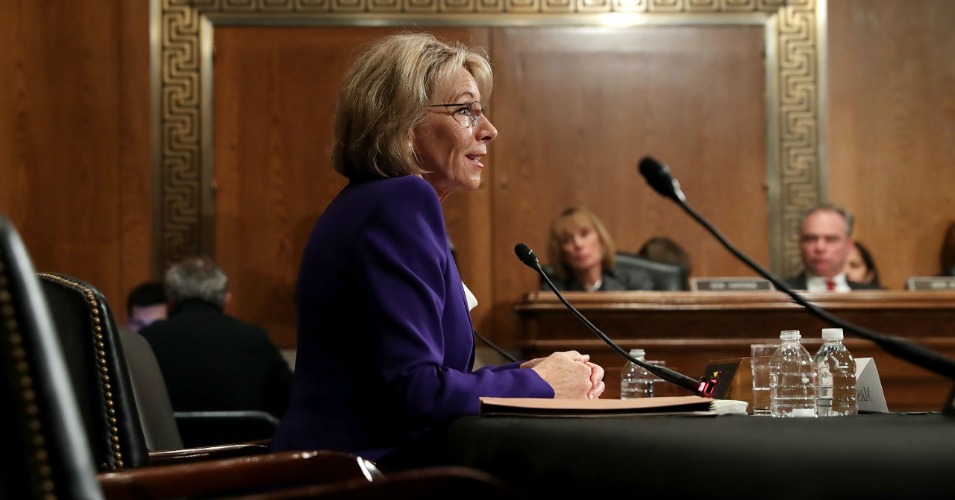
Her Senate committee confirmation hearing revealed DeVos’s utter ignorance of public education policy. She believes we should arm teachers with firearms to supposedly deter gun violence in schools.

The president can do far better than to nominate someone other than DeVos, whose only “qualification” has been the large amounts of money she has raised for Republican politicians — including the president himself.

Two Senate Republicans — Lisa Murkowski of Alaska and Susan Collins of Maine — have said they won’t vote for DeVos. That puts the count at 50-50, assuming all Democrats and the two independents who caucus with them, vote against DeVos.

Will there be another Republican senator with a conscience who’ll realize that the president has made a mistake in nominating this know-nothing to run the Education Department.

I am hoping one can emerge.

Then the president can look for someone who knows something about the agency he or she would lead.

Seliger takes brief turn as governor of Texas

I have had the pleasure and the honor of knowing many honorable men and women in public life throughout my 37 years in journalism. This blog post is about one of the good guys I have had the honor of knowing professionally and personally.

I wrote it initially for another medium, but I have chosen to post it here. My interview with state Sen. Kel Seliger took place just before Donald Trump’s inauguration as president of the United States.

***

On a day just prior to the inauguration of President Donald J. Trump – when Gov. Greg Abbott and Lt. Gov. Dan Patrick were out of the state to attend the festivities in Washington, D.C. – Kelton Gray “Kel” Seliger had the task of serving as Texas’s acting governor.

It’s a responsibility – absent the perks of the job – granted to him by Patrick, who just days earlier had named him president pro tem of the Texas Senate. He was put in charge of the state in the absence of the two top statewide elected officials.

Seliger, a Republican who has served in the Senate since 2004, didn’t arrive this day with any Texas Rangers security detail in tow. There were no special arrangements made, no announcement of his arrival, no fanfare.

Seliger represents a district that stretches from the Texas-Oklahoma border about 100 miles of Amarillo to the Permian Basin, which is another 200 miles south. He maintains Senate offices in Amarillo and Midland and is now essentially a full-time legislator, having sold the steel business he owned with his brother, Lane, several years ago.

He is a native of Borger who graduated from Dartmouth College in Hanover, N.H., and who returned to the Panhandle to stake out his future. Seliger entered public service as an Amarillo city commissioner in 1989 and then served as mayor from 1993 until 2001 before joining the Senate after President George W. Bush appointed the late Sen. Teel Bivins to be U.S. ambassador to Sweden.

Seliger chairs the Senate Higher Education Committee and serves also on the Senate Education Committee.

We chatted for a time over lunch. Here is what I learned about Kel Seliger.

Should the state start over with its standardized testing requirement for public school students?

“There’s no need to start over,” Seliger said. “But we need to refine it. We need accountability. These tests are for adults, too,” he said, referring to educators. “Kids take tests all the time. Start over? No. Make it better.”

Are you getting special protection from the Texas Rangers while serving as acting governor?

“Not that I’m aware of,” he said. “They may be around, watching my back. I’m quite sure if they had the remotest sense my new temporary status created a situation, they’d be here in a heartbeat.”

Are you empowered to act fully as governor?

“If there is a situation that requires immediate action as governor, yes,” he explained, referring to a possible natural disaster or other catastrophic event. “But if there was something I would encounter that would require action of another sort, I would check with Gov. Abbott to see if he is OK with whatever I would do.”

But what if we have a natural disaster? Could you then act as governor?

“We have emergency people, first responders, on site. (Department of Public Safety) officials would tell me what’s happened. They then would put me in touch with the governor as quickly as possible” to coordinate the state’s response, Seliger replied.

Why are you serving?

“I love public policy,” Seliger said, “and this is the place to do public policy. If you have a good idea, you can work with people and get things done. In Washington,” he said, echoing the new president, “nothing gets done.”

What has been your greatest success in the Senate?

“I think I have made a meaningful contribution to things that matter. I have been able to focus on water policy and supporting water conservation districts,” he said.

What piece of legislation that has your name on it makes you most proud?

Seliger said he doesn’t have a “particular favorite,” but said he is proud of Senate Bill 149 which “allows kids who don’t pass the STAAR test, but who do all the rest of their course work and then stand before a committee of teachers and administrators to walk across the stage and get their diploma.” He also is proud of a bill he authored that the 2015 Legislature approved that set aside money for construction of buildings on 64 higher education campuses in Texas. “And that includes about $6 million for construction of West Texas A&M’s downtown campus in Amarillo.”

And your biggest disappointment?

“I had a bill that would have banned ‘dark money,’” Seliger said, explaining that “dark money” comprises funds that come from tax-exempt sources but which the public “has no idea who’s giving it” to politicians. “This bill was vetoed after the 2013 session by Gov. (Rick) Perry.” He said the then-governor’s reason for vetoing the bill “was not discernable.”

Do we pay state legislators enough to serve?

“We get paid enough so that people don’t have the impression we’re doing this for the money,” he said of the $600 monthly stipend, plus the per-diem expense paid to lawmakers while the Legislature is in session. “And contrary to what a lot of folks believe about the Legislature, we don’t get just rich people to serve,” he said. “Many legislators are working people who give up their regular jobs to serve in the Legislature.”

How does your Senate district benefit tangibly from your service in the Texas Senate?

“Others should be the ones to make that judgment. I like to think we’re working on issues relating to public education and higher education,” Seliger said. “Everyone who serves in elected office believes that they are making the world a better place. I’m just trying to work with people in our West Texas cities, towns and universities.”

Describe your relationship with Lt. Gov. Dan Patrick.

“We have an effective working relationship,” Seliger said of the man who presides over the Senate. “Look, he named me (Higher Education Committee) chairman. He didn’t have to do that.”

You almost lost your re-election bid in 2014. Are you going to run again in 2018?

“I don’t know,” Seliger said. As for his 2014 Republican Party primary challenge from former Midland Mayor Mike Canon, he responded, “I won with 52 percent of the vote. I don’t think that’s ‘almost losing’ the contest.” He continued: “I don’t intend to stay in the Senate until I’m a doddering old fool, drooling on my lapels.”

What did you see for yourself when you were 10 years old?

Seliger smiled broadly. “I saw myself as Roy Rogers,” he said. Why Roy Rogers? “Hey, I was 10 years old – living in Borger, Texas.”


 

PPHM director’s roots go deep into our region

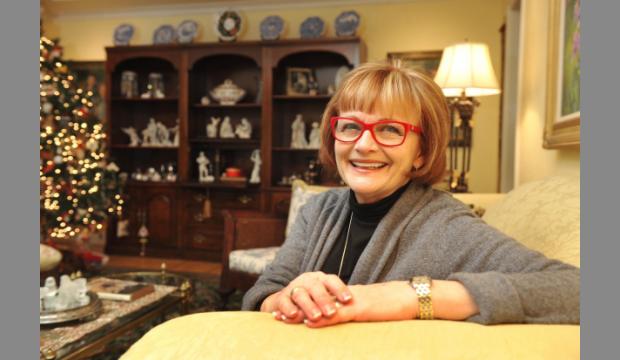
Carol Lovelady is no longer the “interim director” of the Panhandle-Plains Historical Museum.

She’s got the job permanently, which goes to demonstrate the wisdom of her bosses.

http://amarillo.com/2017-01-05/carol-lovelady-named-panhandle-plains-historical-museum-director

Perhaps the most compelling aspect of Lovelady’s appointment as PPHM’s director is this fact: Her roots in this community run deep. She’s live here her entire life and, well, she knows much of the history that built the region, as it’s been passed down to her from two earlier generations.

Lovelady said in a statement: “I am committed to this area. My grandmother came to Amarillo in 1901, and my family has been here since. That’s 116 years. This is where I belong. I am proud to be associated with the museum and the University. I am excited, and I am energized.”

The PPHM is an arm of West Texas A&M University. WT President Walter Wendler made the announcement this week. “Carol Lovelady rose to the top of the list as a person with tremendous interest in the Panhandle-Plains Historical Museum and its continued development as a strong partner with West Texas A&M University,”

She brings great fundraising experience, not to mention her tremendous standing within the greater WT community, which interestingly, Wendler seeks to enhance as he embarks on his Panhandle tour of regional high schools telling educators, students and parents about WT’s commitment to the region.

So, this Panhandle treasure — the acclaimed historical museum — has added another jewel to its display.

Congratulations, Mme. Director.

Teachers are a cut above many of the rest of us

This is the latest in an occasional series of blog posts commenting on upcoming retirement.

I made a confession today to someone I didn’t know before we met at Street Toyota, where I work part-time as a service department concierge.

This woman is a retired public school teacher and counselor. She served as a counselor in Spearman and Borger, Texas. We exchanged pleasantries and then I told her: “I am not wired to be a teacher.” I then saluted her for her years of service in public education and told her that I remain convinced now more than ever that teachers have a special wiring that enables them to do what they do.

I doffed my imaginary cap to her and we continued chatting about this and that while she waited for her car to be serviced.

Since I stopped working full-time for a living — in daily print journalism — more than four years ago, I have tried my hand at a number of gigs. Some of those gigs involved journalism: blogging for Panhandle PBS and for KFDA NewsChannel 10 and helping produce a weekly newspaper, the Quay County Sun in Tucumcari, N.M.

One gig involved working for about six months as a juvenile supervision officer for the Randall County Youth Center of the High Plains.

Still another was as a substitute teacher in the Amarillo Independent School District. I learned right away about one of my many shortcomings as I entered a classroom full of students who began sizing me up right away.

That shortcoming is this: My DNA does not allow me cope well with students who know how to play substitute teachers like fiddles; it becomes something of an art form with these individuals

The Amarillo school system would send me to one of its four public high schools fairly regularly; I will not disclose which one. I did not do well dealing with the youngsters with attitudes, man. It was particularly stark right after lunch. The students would come back from their lunch hour after having consumed — more than likely — copious amounts of sugar and caffeinated drinks (such as, oh, Red Bull). They had difficulty settling down.

Some of the little darlin’s thought they’d test me. They wouldn’t do as I asked. They would mouth off. They would disrespect the ol’ man — yours truly.

I was empowered, of course, to summon help from The Office if I needed it. I chose not to exercise that power. I just didn’t want to admit to the administration at this high school that I couldn’t handle the little pukes, I mean students.

So, I let ’em trample all over me.

After a while, I came to this realization: The Amarillo ISD didn’t pay me enough to put up with the snark infestation.

I quit accepting assignments at that high school, which apparently was where the need was greatest. The rest of the school district didn’t need my services regularly.

I walked away from that gig.

Which brings me back to my point. I salute teachers the way I salute first responders — such as firefighters, police officers, EMTs and paramedics.

They all do things I am incapable of doing.

I’ll stick with what I know, which at the moment continues to be writing about politics, public policy and life experience on this blog and greeting customers at the auto dealership.

I will cede the hard work gladly to public school educators.

WT president to hit the road

I haven’t met the new president of West Texas A&M University.

However, I rather like the man’s style.

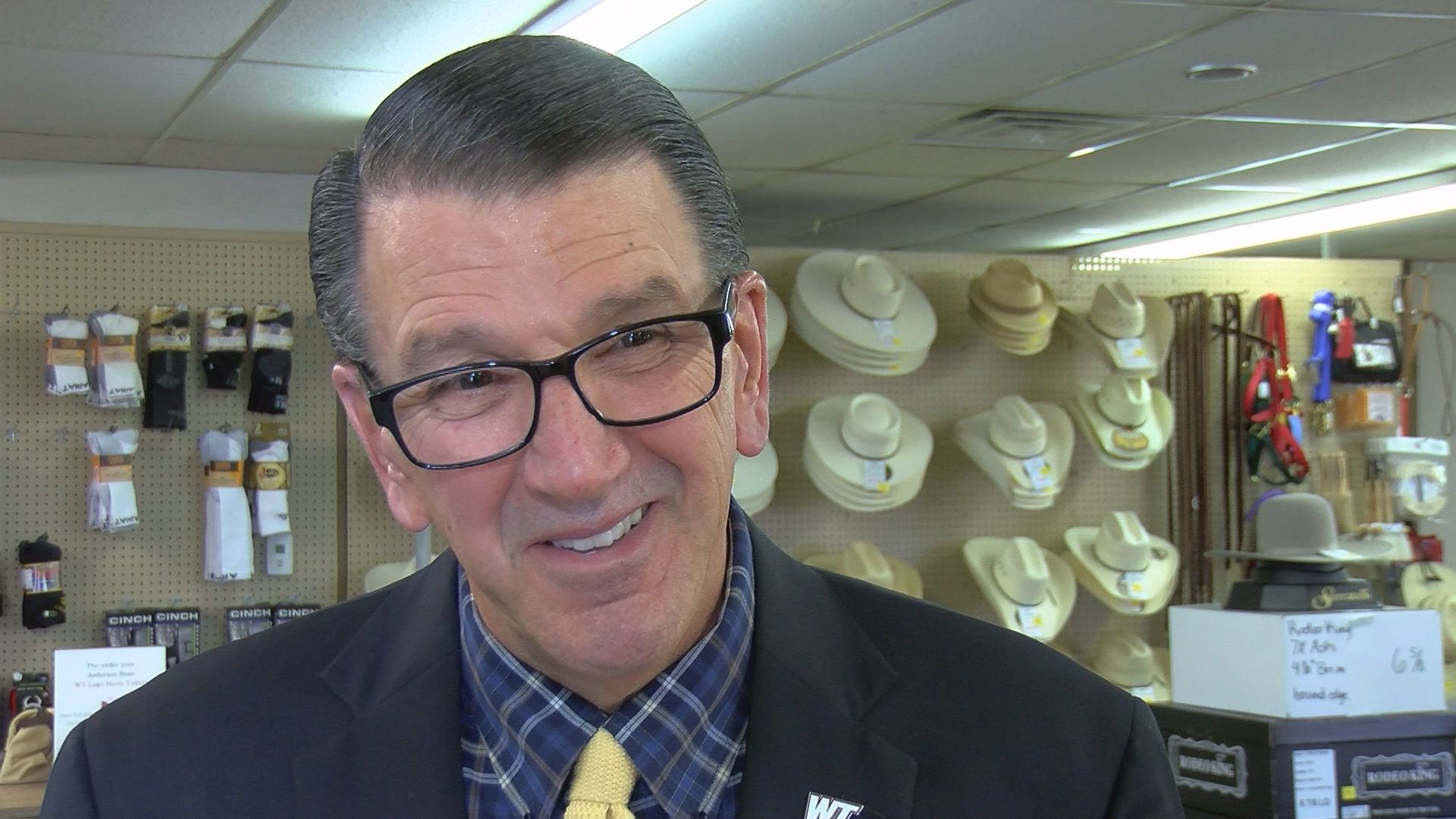
Walter Wendler is hitting the road. He plans to travel through all 26 Texas Panhandle counties, visiting 50 high schools across the region in a sort of student-recruitment tour.

He is looking for potential WT students.

Wendler received pair of cowboy boots from the school’s Agriculture Development Association. I am guessing he’ll wear the boots as he treks across the Panhandle, spreading WT’s message to prospective students.

http://www.newschannel10.com/story/34167585/wtamu-president-prepares-for-panhandle-tour

Previous presidents have conducted various outreach efforts. This one seems demonstrably proactive.

Wendler told KFDA NewsChannel 10: “Many of our students who come from rural settings come with tremendous values about hard work and being committed. We want to reinforce that and continue to shape WTAMU to be based on those same values that come out of the small communities in West Texas because we think those values are rock solid.”

WT faces challenges as it seeks to build on its regional presence. Students are naturally going to be drawn away from home just for the sake of experiencing a new environment. It’s natural, of course, for young people to seek new adventures, to leave the proverbial “nest.”

Wendler’s Panhandle tour could be seen as an effort to keep our young people closer to home, to give them an education they can use to help the communities from which they come.

I like the idea of the WT’s biggest man on campus is hitting the road to make the pitch for the school he leads into the future.

Safe travels, Mr. President.