Category Archives: business news

‘Democratic socialist’ sounding more, um, socialist

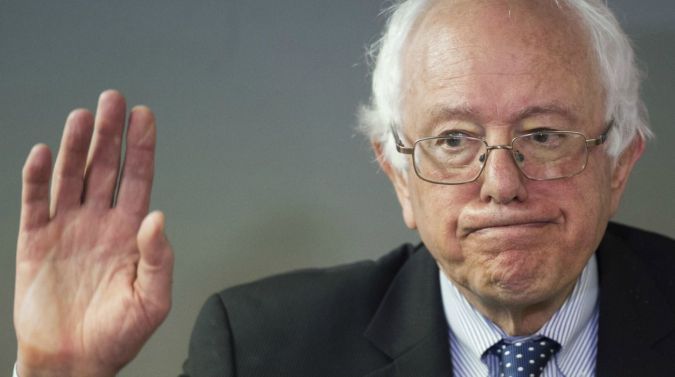
berniesanders-61515-1434466786

The  more I hear from U.S. Sen. Bernie Sanders, the more convinced I become that it’s time to end the qualifier when describing his economic philosophy.

The presidential candidate calls himself a “democratic socialist.”

I believe I understand the message he’s trying to convey, which is that his brand of socialism isn’t dependent entirely on the government taking care of every American’s needs.

Sanders has been using the democratic socialist label — again, in my view — to take some of the sting out of the s-word that conservatives are fond of using to describe policies such as, oh, the Affordable Care Act.

Then on Thursday night, near the end of the Democratic presidential candidate debate with Hillary Rodham Clinton, Sanders launched into a lengthy riff about the two political leaders he most admired.

He ended with Winston Churchill, but only after he described Franklin Delano Roosevelt’s tenure as president.

He told us how FDR took office in 1933 while 25 percent of Americans were out of work. We were in the throes of the Great Depression.

How did FDR get us moving again? By energizing government to create jobs. The WPA and CCC were government-financed employment programs. The money to pay for them didn’t just materialize. Americans paid for them with taxes.

Social Security became law in 1935.

Gradually, the nation began to work its way out of the Great Depression.

Then came Pearl Harbor in December 1941. Everything changed after that.

But as I listened Thursday night to Sen. Sanders go on and on about FDR’s leadership, I was struck by the belief that he was talking about socialism. Not just a form of it, but the unvarnished version of it.

I happen to share Sanders’ view that 80-plus years ago, President Roosevelt faced a terrible, miserable set of circumstances when he took his seat behind the big desk in the Oval Office. He felt he had to do something dramatic to get the country going.

Sanders also said something else at the end of the debate that I found a bit curious. He seems to believe the nation is ready for another “revolution,” that the income inequality gap of today sets up a need to create some kind of massive government infusion of money to bolster working families who are suffering while the “top 1 percent of Americans” are doing fabulously.

He wants free college education. Sanders vows to bring universal health care to every American. He intends to push for a dramatic increase in the federal minimum wage.

How does he intend to pay for it? He wants to raise taxes on all Americans.

How, then, is he going to do that with Republicans retaining control of the House of Representatives, where all tax legislation must originate?

He sounds like a socialist.

Not a democratic socialist.

He sounds like the real thing.

I believe I heard someone who is overreaching as he pulls the lever on the economic alarm bell.

FDR faced a grave economic crisis the likes of which will not confront the next president.


Amarillo need not replicate other cities’ success

dfwfc_phototour15

When I get a chance to travel to other cities that can boast of robust downtown districts, I often think of the community I’ve called home for more than 21 years.

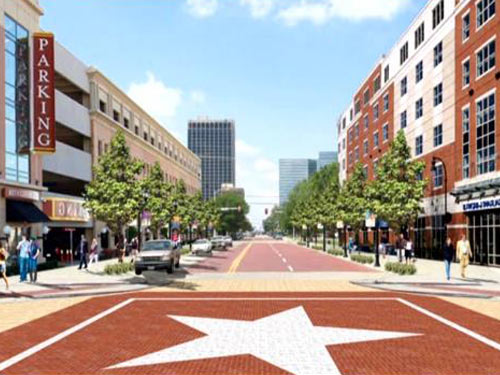
Amarillo is in the midst of a serious downtown revival. They’ve broken up some pavement, leveled some land, poured some slabs and begun erecting structures downtown.

More of it is on the way.

I just returned from a few days visiting my hometown, Portland, Ore. It’s gone through a decades-long downtown revival that’s still on-going. Heck, it might never end.

That city turned a moribund downtown district into a rousing, sometimes raucous place where people enjoy a robust night life and spend a little time and money shopping in retail establishments.

I’ve written about what I saw on my latest visit to Portland. However, I do not want anyone to presume that I believe what the Rose City has done can be replicated here on the Texas Tundra.

Portland’s municipal population is approaching 625,000 residents, with about 2.2 million folks living in a sprawling metropolitan area that covers several counties — and even reaches across the Columbia River into Washington state.

Amarillo’s population is just a shade less than 200,000, with a metro population nearly double that amount.

Do we have the resources here to replicate what other larger cities have done? No.

My intent in calling attention to what Portland has done, or what Oklahoma City or Fort Worth have done with their downtown districts, is remind us here in little ol’ Amarillo that we must think creatively.

All three of the cities I’ve mentioned — Portland, Fort Worth and OKC — have done so. Oklahoma City used a public investment tax to rebuild warehouse district into Bricktown; Fort Worth used some public/private investment in creating Sundance Square; Portland scrapped a planned highway project and redirected money into creating a robust downtown district.

Amarillo has developed a Strategic Action Plan that took form after years of public hearings and discussion. It, too, involves public and private money. Indeed, the vast majority of downtown Amarillo’s progress has occurred with private money. The city created a downtown Tax Increment Reinvestment Zone that uses money derived from increases in property value within that zone to help finance needed projects.

We’re thinking creatively here. That, I submit, is the first step in a long march toward revival.

Do the city, civic and business brain trusts think we can emulate dollar for dollar what bigger cities have done? I hope not.

They shouldn’t shy away from doing what they can, however,  with what they have.

Wishing this kind of ‘problem’ for Amarillo

Amarillo downtown

Amarillo’s quest for a new downtown district remains at the top of my awareness whenever I am fortunate enough to travel to other communities that have succeeded in their own journey.

I have just returned from Portland, Ore., a city that is in the midst of constant transition. Its downtown district’s own evolution has been something of a marvel. For my money — and excuse my bias, given that I was born and reared there — every city in America ought to look at downtown Portland’s revival as a blueprint for their effort.

Amarillo has chosen to follow a couple of other closer-to-home examples: Fort Worth and Oklahoma City. Yes, those communities have transformed their own central districts into marvelous attractions.

But I was struck by an interesting dynamic that is driving the latest Portland push. A single developer has announced plans to build several new high-rise offices in the city’s busy, crowded and thriving downtown district.

But there’s a price to pay for it.

Portland has been home to a fairly unique marketing endeavor. It is populated by a number of food carts. Folks set these carts up on street corners and peddle items such as hot dogs, soft pretzels, gourmet coffee and soft drinks.

The downtown construction is going to remove roughly half of the locations for those food carts — and some folks are unhappy with that prospective result.

The food carts have become part of the downtown Portland scene since the 1970s, which is about the time that city’s downtown revival began to draw breath.

Amarillo, of course, is a long, long way from that kind of activity in its downtown district. The recent announcement in Portland brings to mind the interesting possibilities that could become part of Amarillo’s future if its own downtown redevelopment proceeds as many of us hope it does.


A pub closing early on Super Bowl Sunday? Yep, believe it

American football on field with goal post in background.

PORTLAND, Ore. — The city of my birth is known these days for a lot of things.

Yes, there’s the rain.

It also is known for coffee houses on (seemingly) most street corners, lots of people on bicycles, lush parks, a downtown district that is full of life and vitality . . . and microbreweries, where they serve craft beer that’s brewed in the back room.

I haven’t, until right now, mentioned the volcanic peaks along the Cascade Range that one can see on sunny days.

I’ve laid out the good stuff. Here’s something quite unusual some friends and I discovered this past Sunday.

We found it at one of those breweries — which I was told is a popular pub in northeast Portland. My friends had recommended this place as a pub “where they happen to serve pretty good food.” So we went there expecting to get in ahead of the Super Bowl Sunday crowd that would be piling in to watch The Big Game, swill a few brews and perhaps get a little louder than they otherwise might get.

We arrived at the place at 2:30 p.m., about an hour before kickoff.

Then we saw a sign on the door.

“Closing at 3 p.m. on Sunday, Feb. 7.”

Huh? What? Who does that? What kind of business would close on what arguably might be the busiest, most lucrative, most financially advantageous day of the year?

This place would. And did. Apparently.

My friends and I were stunned at this revelation.

So . . . we turned around, walked out, and went looking for another venue for a late lunch and some adult beverages. We found one not terribly far away.

Upon reflection, though, I have determined that the owner of the pub that closed on Super Bowl Sunday must be wealthy enough to be able to afford to shut the doors on a day when he or she could have made a lot of money.

Or perhaps he or she just doesn’t give a flying  rip about a stinkin’ football game.


A shout out to an ethical businessman

business-ethics

This is no surprise at all, but I’ll share it with you anyway.

I’ve found one of the more ethical businessmen anywhere. I won’t give you his name, because I don’t know it.

This fellow could have charged me an arm and both legs — or maybe both arms and a leg — for a piece of plumbing equipment I sought. He didn’t. Instead, he chose to refer to me to someone who would give it to me — for free!

Here’s how it went.

I was looking for a replacement faucet nozzle for my kitchen sink. I walked into a plumbing parts store on 15th Avenue here in Amarillo. I greeted the sales rep at the counter.

“How can I help you?” he asked. I told him what I needed. “I’ll see if I have one in stock,” he said. He looked. He didn’t have one. He looked up the part in a catalog.

“It says here it’ll cost $86 . . . but you don’t need or want to pay that much,” he said. “Tell you what I’ll do. I’ll get you the name and number of the manufacturer. You can call ’em and see if they’ll replace it for you under warranty,” he said.

He gave me the number. I called it. I spoke to a nice lady on the other end who took down my information and then informed me that, by golly, I could replace it or free.

We finished our business over the phone. I hung up and thanked the gentleman for his service, his patience and for saving me 80-plus bucks.

It struck me that he could have told me anything. He could have just asked me to order the part, pay him the money and then wait for it to arrive.

He didn’t.

What he did was guarantee that when I need another plumbing fixture, I’m going to return to this fellow’s store.

I’m fond of saying when things go my way that “I must be living right.”

Yesterday, that was certainly the case.


Seeing downtown Amarillo progress up close

downtown

I ventured into downtown Amarillo this morning and saw a fairly dramatic sight.

Construction is well underway on three major parcels of property.

I had noted in an earlier blog about the view of those parcels from atop the Chase Tower.

Here it is.

However, as I made my way to keep an appointment with Potter County Sheriff Brian Thomas for a story I’m writing for KFDA NewsChannel 10, I was stunned to see how much progress has occurred on those sites.

Traveling along Buchanan Street from south to north, I took note of these sites.

The Southwestern Public Service office complex that is now several stories high. The floors aren’t done. The crews have just framed them, but they’re now looming above the ground — with a huge construction crane towering over the project.

The parking garage lot has been leveled and is now full of building material.

The Embassy Suites convention hotel site perhaps was the most stunning of all. Crews have poured the concrete slab. The site is full of building materials. But rising from the ground is what looks like an elevator shaft, which means that the beginning of the building’s superstructure is beginning to take shape.

The multipurpose event venue site across the street hasn’t yet been disturbed, but its day is coming.

There’s a good news/bad news/better news sequence taking place.

The good news? The construction reveals a lot of vibrant activity downtown where there had been little for many years.

The bad news? Crews have had to close off east-west streets to keep traffic away from the construction work.

The better news? When it’s all done, downtown is going to look dramatically, spectacularly different — and better — than it does today.

I could not help but ponder as well this final thought.

Why in the world did the city feel the need to peel away economic development responsibilities from Downtown Amarillo Inc. — which has played a huge role in what’s transpiring downtown at this moment?


Ethanol subsidy argument runs into principle

corn%20ethanol%20us%20policy

Oh, this might sting a little, but I’m going to speak well of the Cruz Missile, U.S. Sen. Ted Cruz.

The freshman Republican senator from Texas stunned the political world Monday by defeating 10 other candidates in the GOP caucus in Iowa.

What is most fascinating — to me, at least — was that he did so while standing behind a principle that runs counter to the corn growers of Iowa.

There happens to be a lot of them in the Hawkeye State.

Cruz opposes federal subsidies to produce ethanol, a bio-fuel made with corn. He argued the case fervently as he traipsed through Iowa’s 99 counties. Cruz’s opposition to ethanol subsidies drew the wrath — and it’s not too strong a word — of Gov. Terry Branstad, the Republican who urged Iowans to vote for anyone but Cruz.

I have to give huge props to Cruz for standing firm.

The primaries occur in individual states that have specific issues, needs and interests. The common tactic for presidential candidates is to waltz into a state and talk positively about those issues. Cruz didn’t do that as it regards ethanol. He opposes them and told Iowans that very thing, to their face.

I have no clue about how many votes his opposition to the subsidies might have cost him. It might be that had he waffled on his stance against the subsidies that he would have finished farther ahead of the field than he did.

But he didn’t.

Has this guy changed my mind about him? Would I vote for him if hell freezes over and the Republican Party nominates him for president? What do you think.

Still, when someone stands on a principle when it threatened to torpedo his political ambition, well, that’s cause for a salute.

I am glad Sen. Cruz stood firm.


Timing creates strange juxtaposition

downtownamarilloinc1

The great baseball slugger Ted Williams used to say that “timing is everything” in hitting a baseball.

Thus, the timing of Amarillo’s announcement that it is filling some key administrative positions seems a bit curious.

Why? Well, the city just decided to absorb some key economic development duties, wresting them from Downtown Amarillo Inc., the non-profit agency that has developed a stellar track record in the revival of the city’s downtown district.

So, with the city still lacking individuals filling key administrative posts, it decided to bite off a huge chunk of responsibility from an agency that had been led by someone who’s an expert in the duties that City Hall now wants to take on.

DAI executive director Melissa Dailey is out of the picture. She quit her job this past week on the day before the City Council voted to place those economic duties in the hands of City Hall staffers.

A friend of mine noted on social media today that DAI “is a lot better at that sort of thing. Too bad our City Council is too shortsighted to realize that.”

Yes, it does strike me as curious that the city — which lost its city manager, its assistant city manager, city attorney and utilities director all in the span of a few weeks — would seek to take on an enormous task that had been done so well by another agency.

It’s the timing, man.


City seeks ‘change,’ but to what end?

downtownamarilloinc1

I understand full well what Amarillo voters intended when they voted to revamp the majority on their governing City Council.

They sought “change.” They got it. Some of it has been constructive, some of it has been, well, non-constructive. I won’t say “destructive,” because nothing has been destroyed.

Now comes perhaps the most significant change yet: the de-coupling of the city from Downtown Amarillo Inc., the non-profit agency set up to spearhead downtown’s redevelopment.

I look from my perch in the peanut gallery and keep asking: Why mess with a formula that has brought us significant positive movement?

DAI will continue to exist. It won’t get city money. It will operate as an independent agency. At this moment, it doesn’t have an executive director; Melissa Dailey, who led DAI in that position, quit early this week on the eve of the City Council’s decision to cut the city’s ties with the agency.

She saw what was coming and wanted out.

But the question in my mind remains: Have we enacted change just for the sake of fulfilling some general campaign promise?

I look back on my 21 years living in Amarillo and I see significant improvement in the city’s downtown district.

Polk Street, once the hub of social life in Amarillo, has begun showing signs of life again. New office complexes have sprouted up. The historic Fisk Building was emptied out and then re-cast into a first-class hotel run by Marriott. Southwestern Public Service has begun construction on a new office complex. The Chase Tower, which once was a decaying skyscraper, has been remodeled and modernized. We’ve seen the completion of loft apartments.

Did all this happen by itself? Well, no.

DAI had a hand in some — if not most — of the improvements we’ve seen.

I haven’t yet met the new interim city manager. Terry Childers seems like a mature, forward-thinking individual with a proven record of success. He’ll be running the City Hall administrative show until the council finds a permanent manager.

My hope is that he knows what he’s doing by recommending all these changes.

My fear is that he and the rest of governing machinery have tossed aside a winning formula without knowing what will take its place.

I am pulling for hope to override fear.


DAI and city part company . . . why?

amadt_main01_r

A whole lot of things go way beyond my ability to understand.

I don’t get Donald Trump’s continuing presence at the top of polls gauging the Republican presidential primary; I don’t understand how scientists are able to calculate when Earth is closest to Mars.

Nor do I understand why Amarillo City Hall and Downtown Amarillo Inc. have said “goodbye” to each other.

DAI executive director Melissa Dailey quit her job on Monday. On Tuesday, the Amarillo City Council ended its financial relationship with the non-profit organization. There will continue to be some kind of relationship, although it’s still to be determined.

I have to ask: How come? Why end a partnership that so far has produced significant movement in the revival of the city’s downtown business district, with more projects yet to come?

Council members spoke well of Dailey and all that occurred on her watch at DAI.

So, then the council decides to end its financial ties to the agency. Interim City Manager Terry Childers spoke of a “new phase” of downtown redevelopment.

I look around the central business district and I see plenty of work that’s already been done. New business has sprouted up. The Fisk Building has been turned into a first-class business hotel.

We’ve got those three huge projects — Embassy Suites, a parking garage, and the SPS office complex — under construction.

I drove to Fritch this morning and sped past the new Coca-Cola distribution center at the business park where relocated from downtown. The old site? It’s going to make way for a downtown ballpark.

All this happened on DAI’s watch . . . on Melissa Dailey’s watch.

She’s gone. DAI’s future now is limbo. City Councilman Randy Burkett referred to it possibly going away in the near future.

Why is the City Hall brass monkeying around with a successful formula for creating a resurgent downtown?