Category Archives: business news

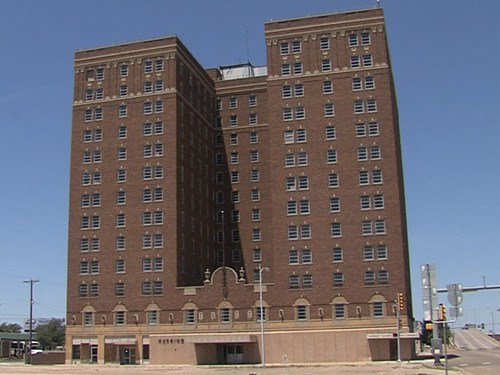
Is the Herring Hotel really coming back to life?

herring

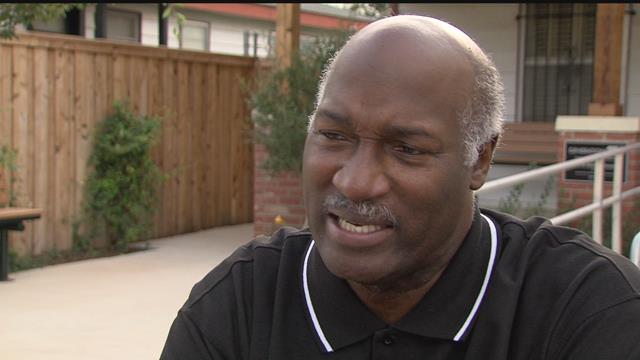
Robert Goodrich purchased the Herring Hotel in downtown Amarillo in 1988 as an investment opportunity.

Now he says he’s got investors lined up to turn the once-opulent night spot into some semblance of its former glory.

He’ll announce — possibly soon — who those investors are along with plans to turn the long-abandoned Herring Hotel into a gleaming downtown jewel.

http://www.newschannel10.com/story/31776627/investors-look-to-revive-herring-hotel

Lame-duck City Councilman Brian Eades, who’s leaving office this summer, said he has seen the plans. He added that local investors are lined up to foot the bill for the project.

Do we know the cost? Do we know the precise details of what it will take to restore the Herring? No.

I’m one of those who hopes the Herring can be restored. It’s good,, though, to temper one’s hope with a dose of reality.

http://www.newschannel10.com/story/29547737/herring-hotel-revival-remains-on-wish-list

The hotel has been vacant for a long time. I’ve seen the first floor. It’s a mess. There will be a lot of modernization required to bring the building up to snuff.

But yes, it’s a beautiful structure.

Bob Goodrich has told me on many occasions that the building can be restored, renovated and reincarnated.

Eades apparently believes in Goodrich’s dream. Others involved with city government aren’t so sure. The Tax Increment Reinvestment Zone board kept Goodrich dangling for years before denying his request for financial help this past year.

However, Goodrich — a retired academician — hasn’t given up.

He has said once again that he’s persuaded investors to pony up the cash to get the job done on the Herring.

Let’s hope for the best.


McDonald’s goes through total makeover

mcdonalds-protesters

Message to my sons: Your dad’s McDonald’s is gone.

I just saw this link posted to my Facebook feed this morning. McDonald’s — which once sold burgers for 15 cents apiece and hired only boys — has gone higher-tech than it already had been.

http://toprightnews.com/15-minimum-wage-pushers-devastated-after-mcdonalds-makes-this-bold-move/

This comes from a conservative website that I opposes cities and states lifting the minimum wage to $15 per hour.

Oh, the agony of reading this link.

A St. Louis, Mo., McDonald’s is introducing bottom-less French fries, cushy lounge chairs for its customers and kiosks that will take customers’ orders. Fast-food vending machines might be next.

I’m an old man now and I’m starting to sound like my own father who used to recall the old days with some fondness.

McDonald’s is a big part of my life story.

I got hired at a McDonald’s on the corner of Northeast 122nd Avenue and Glisan Street in Portland, Ore., the day before my 16th birthday. It was such a major event in my life that I actually remember the date with as much clarity as I remember my birthday, my wife’s birthday, my wedding day, the births of my sons and my granddaughter and the day I got my draft notice.

It wasn’t a high-tech operation.

I got paid a dollar an hour; we peeled our own potatoes every morning in machine that spun the spuds around a rough-sided drum. Burgers sold for 15 cents, cheeseburgers cost four cents more, milk shakes and soft drinks sold for a quarter. A big day occurred when we grossed $1,000 in sales … for the entire day; today, they take in that kind of fiscal volume in an hour.

What about sex-discrimination laws? Don’t make me laugh.

The owner of the place hired only boys in keeping with corporate policy. We might as well have taken the sign down from the tree fort and hung it on the front door: “No girls allowed!”

I don’t object to the minimum wage increasing to a more livable sum. I am saddened, though, to see the impact these municipal and state laws are having on a venerable American tradition, which would be the fast-food joints that used to employ youngsters such as myself.

I made friends for life working with guys just like myself. I met two of my best friends ever working at the McDonald’s where I started out. One of them became my best man. The other one became my “brother” because we resembled each other as kids and our customers used to think we actually were kin; the hilarious part of that story is that we look like brothers today.

That was the environment we shared as kids working for virtually nothing, hauling 100-pound sacks of spuds up the stairs and sweating over a grill frying burgers by the dozens.

Onward we go to a future that guarantees a “livable minimum wage.” It’s a shame that we have plowed asunder a tradition that allowed many millions of Americans to come of age.


Here’s a thought: Let’s join OPEC

hf_128935_article

The Organization of Petroleum Exporting Countries has becomes something of a four-letter word in the United States.

OPEC is evil. It intends to do us harm. We don’t want to be “dependent” on oil produced in countries that hate us.

You’ve heard the mantra. I’ve heard it, too. It all started about the time of the first Arab oil embargo in 1973.

Here, though, is a notion that ought to get some serious consideration.

Now that the United States also is a “petroleum exporting country,” why don’t we join OPEC at the conference table?

OPEC comprises a lot of nations that do hate the United States. Venezuela is one of them. Iran, too.

However, now that we’re the big dog in the fossil fuel-producing pack, it would seem to make sense that we could exert our own influence over OPEC’s decision-making as it grapples with whether to reduce or increase production in an effort to control worldwide fuel prices.

Through a series of on-going efforts, Americans have eliminated this country’s dependence on imported oil. We’re now on the verge of becoming No. 1 in the world. We’ve overtaken Russia and Saudi Arabia. We’ve developed more renewable energy sources, helping increase the glut of petroleum on the world market.

OPEC, though, keeps meeting and deciding how much — or how little — oil to produce.

Isn’t it time the United States of America join OPEC? For that matter, we ought to bring our oil-rich allies in Canada and Mexico into the organization with us — providing, of course, that they’d be willing. We no longer need to curse the organization.


Beam signing signals huge step forward

embassy suites

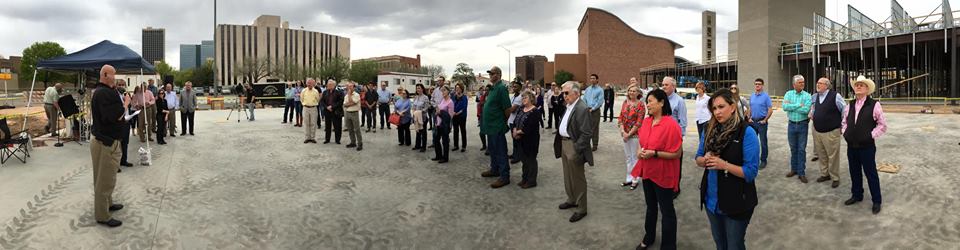
They had a beam signing this weekend in downtown Amarillo.

The beam is set to become part of the superstructure that’s going to hold up a new hotel currently under construction.

The Embassy Suites Hotel eventually will open its doors to business clientele coming to Amarillo for conventions touting this and/or that product, or provide professional development for the attendees.

It’s part of what has been called a “catalyst project” aimed at reconfiguring downtown Amarillo. There’s more to come.

I happen to be one of those Amarillo residents who’s quite excited about the prospects for the city’s downtown district.

It’s been a sometimes-rocky ride. The downtown district hasn’t yet reached a smooth road or calm waters. There well could be more tumult to come.

The beam signing, though, suggests — to me, at least — that the city is moving forward.

The Embassy Suites is being financed by a private developer, Chuck Patel, who seems to see a big future in this city. He rounded up some investors to buy in, made his pitch and has broken ground. The hotel is rising up as I write this brief post.

It’s worthwhile to remember the last time anyone saw three construction cranes moving heavy pieces on sites downtown. The Southwestern Public Service building construction is well under way; a parking garage is going up, too.

The Big Enchilada, of course, is The Ballpark, or MPEV, or whatever you choose to call it. It, too, is planned for downtown’s district. There could be a major tenant taking up residence there once it’s built: a AA minor-league baseball franchise.

Today, though, we have a beam signing to symbolize some major strides forward for the city’s future.

Not bad at all.


Amarillo’s political divide has been exposed

mayor and nair

Just when some of us had hoped the Amarillo City Council’s five-man lineup might learn to cooperate among themselves, we see an exhibition of non-cooperation.

Let’s see how this goes.

The council was going to consider two appointments to the Amarillo Economic Development Corporation, the city’s publicly funded development arm. The debate got a bit rowdy, as I understand it.

Two council members, Mayor Paul Harpole and Councilman Brian Eades, objected to the appointments being considered. The other three supported them.

Then came a motion from one of the other three, Councilman Randy Burkett, to shut down the public meeting and vote without any further public discussion.

Then the council voted 3-2 to seat the two new members — Craig Gualtiere and Brian Heinrich.

That was it.

I’m not going to comment — at least not today — on the individuals who’ve been seated. I know one of them pretty well. I consider him a friend.

What does trouble me are two aspects of this selection process: the effort to shut down the public discussion and the division that splits the three newest members of the council from the two more experienced hands.

Burkett, Mark Nair and Elisha Demerson all were elected to bring change, openness and transparency to the council. Their actions this week in shutting down the discussion speaks to other instincts that look a lot like what they accused the former council of doing.

Public comment be damned!

As for the division that laid itself wide open this week, that will need to be dealt with as the council moves forward on a number of citywide projects and policy decisions. I don’t mind tension among governing officials if it leads to constructive conclusions.

My hope here is that the division that erupted over the AEDC selection doesn’t stymie the work of the economic development agency, which in my view has done well for the city since voters approved its creation in 1989.

As for shutting out the public’s views on who should serve, let us also remember: The AEDC parcels out public money collected from a portion of the sales tax revenue contributed by, um, the public.

That is our business being conducted. The public has every right to have a say in determining who is making these decisions.

Stay the course with AEDC

Screen-Shot-2015-06-24-at-12.21.16-PM-1024x260

Buzz David’s tenure as head of Amarillo’s leading economic development arm is about to end.

I read the newspaper account of his supposed “retirement” twice this afternoon and I’m left with a nagging takeaway: There seems to be more than meets the eye in his announced departure from the Amarillo Economic Development Corporation.

I don’t know the particulars. AEDC called his announcement a “retirement,” while David insists he’s going to stay in the economic development game after his tenure at AEDC ends late this month.

Whatever the case turns out to be, I want to declare that AEDC has succeeded so far in fulfilling its mission to bring jobs to Amarillo and the Panhandle and that David has been a major factor in that success.

The city should seek to find a suitable replacement, someone with the kind of economic development chops that David exhibited during his decade-plus as president and CEO of AEDC.

As for AEDC itself, my unsolicited advice to the Amarillo City Council is clear cut and unequivocal: Don’t mess with it.

I say this because of some careless talk around the city immediately after this past year’s municipal election that the AEDC board should resign en masse. That talk subsided immediately, for which I am grateful.

I had the chance to watch David up close for many years while I was working as editorial page editor of the Amarillo newspaper. I’ve had many discussions with him during that time and since my departure from the paper more than three years ago.

I consider David to be an impressive individual with loads of business savvy. If you ask him about criticism of certain projects AEDC brought to Amarillo, he’s straightforward and direct in answering them.

I once inquired about the Hilmar Cheese plant that AEDC awarded several million dollars to build in Dalhart. David’s response? The money was well-spent, given that the economic impact of that operation ripples far beyond Dallam and Hartley counties.

The Bell aircraft assembly operation came into being before David arrived at AEDC. It, too, has produced huge economic impact for the region. On David’s watch at AEDC, the operation has continued to expand.

AEDC’s strategy is to use the money it accrues from the half-cent municipal sales tax it collects and then doles it out to businesses interested in locating in Amarillo.

That strategy drew considerable scorn from the Dallas-Fort Worth media after Amarillo managed to lure the Bell aircraft operation from Tarrant County to its current location next door to Rick Husband Amarillo International Airport.

It worked! Period.

Yes, there have been some hiccups along the way. Businesses that set up shop here after receiving AEDC assistance have failed.

The bottom line, though, looks good.

I wish Buzz David well as he moves on to his next station in life.

Moreover, my hope is that the city doesn’t mess with the successes built by its economic development corporation.

 

MPEV remains worth the city’s investment

MPEV

This is a bit of a non-surprise to many Amarillo residents.

The price of the proposed downtown multipurpose event venue/ballpark has come in a bit greater than originally thought.

Is it cause to toss the idea into the crapper? Not even close.

I’ll admit that I didn’t quite buy into the notion that the MPEV would cost more than the $32 million price tag attached to the non-binding referendum that voters approved in November 2015. I had some faith that the cost would hold up. It hasn’t, according to consultants who have delivered a $48.4 million price tag to the City Council to consider.

What’s the city going to do to cover the cost?

That is the $48.4 million question that the council has asked the Local Government Corp. to figure out. The LGC has received the directive and plans to deliver a report in April to the council.

The increased cost presumes that the city will hook up with a Double-A minor-league baseball team affiliated with a major league franchise.

Suppose the city does land an affiliated minor-league team for the city. Suppose as well that the city builds the MPEV for $48.4 million. Then let’s suppose what might occur if the baseball team fills up the MPEV with thousands of baseball fans every day or night.

Mayor Paul Harpole believes — and I think he’s correct — that the boost in sales tax revenue likely could more than offset any potential property tax increase that residents would have to bear.

“That regional money that comes into our city through sales tax has helped us keep property tax down,” said Harpole. “It’s important that we keep that growth as long as we can, but it has to make economic sense. It has to be something where it doesn’t put the city in too much debt. So we’ll look at that and see what it is and get an answer back and see what we’re going to do.”

Let’s not look askance at the job growth and economic impact created by the MPEV. The consultant that made the report to the City Council, Brailsford and Dunleavy, projects an estimated 341 permanent jobs associated with the MPEV and about $25 million pumped annually into the Amarillo economy.

Does the city issue certificates of obligation? Does it submit a bond issue to the voters, asking residents to approve it? Are there economic development grant funds available for the city to seek?

LGC officials and City Council members have committed to proceeding with exploring this issue thoroughly.

Count me as one Amarillo resident who maintains an abiding faith that the MPEV — even with its inflated cost — can bring a much greater economic return to the community than what it is likely to spend.


Councilman puts on his booster hat … and it fits!

9025332_G

Elisha Demerson spoke today about how “great it is to be in Amarillo” these days.

He mentioned a couple of things that deserve attention.

One thing the freshman Amarillo City Council member told the Rotary Club of Amarillo is that downtown Amarillo is progressing nicely. He took particular note of the convention hotel and parking garage that are under construction.

Downtown is being reshaped, reconfigured and revitalized.

The other thing Demerson said is quite instructive. He said the city has the “second-lowest tax rate” of any city in Texas. It’s less than 40 cents per $100 in property valuation.

What does that mean?

It means to me that the city’s intense push toward public-private partnerships is paying off.

I’ve noted before how so much of downtown’s progress in recent years has come with the help of private investment. Banks have spent their own capital to expand operations downtown; the historic Fisk Building was converted into a hotel, again with private money. Storefronts that once were dark now are full of life.

Is there more work to do? Certainly. That’s why the progress we’ve seen shouldn’t be derailed.

It makes me wonder yet again: What was all that anger during the 2015 municipal election campaign all about?

The city retains a ridiculously low municipal tax rate while its downtown business district is showing palpable, tangible, observable signs of progress.

A suggestion for Eades replacement

Councilmen_2015

No … I don’t have anyone particular in mind.

Indeed, the Amarillo City Council has some time to ponder who should succeed Brian Eades, who’s leaving the council in July as he moves to western Colorado.

Eades is a grownup member of the council. He serves as one of two stalwart votes in favor of the momentum that the city is building toward its downtown revival process. The other sure-fire voice on the council is Mayor Paul Harpole.

Yes, the council has done well so far with its new three guys joining the team to move the city forward on its downtown rejuvenation. Crews have broken ground on the planned parking garage and on the Embassy Suites hotel across Buchanan Street from the Civic Center.

Work still needs to commence on the multipurpose event venue.

I don’t have serious concern about whether the MPEV will be built. I hope it is built and I hope the city welcomes an affiliated baseball team to play its home games at the shiny new ballpark.

My hope for the new council member runs along two tracks.

One is that he or she has a keen interest in moving the downtown effort forward. The projects have been discussed, debated and examined every which way from here to Kingdom Come. Amarillo voters made their decision known in a November referendum that they support a ballpark venue.

Second, I hope the next council member commits to running for election in the spring of 2017 when the city conducts its election for the council.

The most recent appointee, Ron Boyd, served as a place holder when he took the seat vacated by the death of Councilman Jim Simms. The next one, I hope, will take the seat with the understanding that he or she will seek a full two-year term.

The next council member will have plenty of time between taking office and the next election to earn either the voters’ approval or rejection next spring.

So, council members, proceed with all deliberate care.

The city is moving forward. It needs a governing council committed to maintaining that momentum.


What happened to the calamity?

jobs

Just a shade less than a quarter-million jobs were added to the U.S. non-farm, non-government payrolls in February, according to the Labor Department’s latest monthly report.

The unemployment rate remained at 4.9 percent.

The federal budget deficit continues to decline.

But by golly, we keep hearing along the presidential primary campaign trail that Barack Obama is presiding over an economic calamity. We’re heading for the crapper. Bernie Sanders keeps harping on the “1 percent” who are making all that money at the expense of the rest of us.

It’s time to give Barack Obama some credit.

Tim Egan writes in the New York Times:

“By any objective measurement, (Obama’s) presidency has been perhaps the most consequential since Franklin Roosevelt’s time. Ronald Reagan certainly competes with Obama for that claim. But on the night of Reagan’s final State of the Union speech in 1988, when he boasted that ‘one of the best recoveries in decades’ should ‘send away the hand-wringers and doubting Thomases,’ the economic numbers were not as good as those on Obama’s watch.

“At no time in Reagan’s eight years was the unemployment rate lower than it is today, at 5 percent — and this after Obama was handed the worst economic calamity since the Great Depression. Reagan lauded a federal deficit at 3.4 percent of gross national product. By last fall, Obama had done better than that, posting a deficit of 2.5 percent of G.D.P.”

I’m not going to give the president all the credit for the economic recovery. However, I’m damn sure not going to condemn with the ferocity that we’ve been hearing — primarily from the Republican candidates for president — about all the gloom and doom.

On other side of the great divide, we hear Democratic challenger Bernie Sanders yammering about the richest Americans not paying enough taxes. He wants to enact fundamental economic change.

I can’t help but wonder: Why?

Yes, we’re in the midst of a contentious political campaign. Candidates are bound to say anything to get attention.

Which is precisely, as I see it, what they’re doing when they keep harping on the economic disaster that hasn’t arrived.