Category Archives: State news

Cell phone law: How goes the enforcement?

I posted a blog item five years ago this month wondering about the enforcement of a citywide ban on cell phone use while driving a motor vehicle.

The Amarillo City Commission imposed a ban. Then I noticed at the time that the use of cell phones by drivers seemed to diminish so very little since the enactment of the ordinance.

https://highplainsblogger.com/2013/01/anti-cellphone-law-tough-to-enforce/

I hoped in 2013 that the Texas Legislature would enact a statewide ban. It took four years, but the 2017 Legislature did what many of us had hoped: It passed a bill that bans cell phone use while driving throughout the state.

Gov. Greg Abbott signed the bill into law. I applauded the Legislature and the governor for doing what I consider to be the correct thing.

But the question is as pertinent today as it was five years ago: How are the police enforcing this law?

Even since enactment of the statewide ban my wife and I continue to spot motorists driving while holding a cell phone to their ear. I haven’t been privy to any stats on the matter, but I would be most interested in knowing how the cops are handling this issue.

I suggested in January 2013 that the city might want to consider launching an intense public relations campaign to alert motorists of the anti-cell phone ordinance. The city didn’t take my advice. Imagine my (non)surprise.

So, how about a statewide campaign?

Signage at every highway entry point into the state might alert motorists coming into Texas. As for those of us who live here, public service announcements telling Texans of the penalty associated with cell phone use would be appropriate.

I continue to support wholeheartedly the state’s decision to ban this idiotic behind-the-wheel behavior. I have admitted to waffling a bit on this issue until I decided that a mandated ban was the right course to take.

I also continue to believe that government — state and local alike — can be more proactive in alerting motorists that they are breaking the law when they insist on talking on a handheld device while driving a 5,000-pound missile.

Tech chancellor pushes another ‘big idea’

Bob Duncan is on a mission. It’s simple and complicated at the same time.

The Texas Tech University System chancellor believes Texas is too big a state to have just a single college of veterinary medicine. He wants to establish a second vet school and he wants it to be in Amarillo.

So, here’s the simplicity and complexity of the notion he is proposing.

The Texas Panhandle is at the epicenter of large animal care, given the region’s plethora of livestock in the form of cattle and horses. “The feedlots and dairies are clustered in West Texas, not on the Brazos (River),” he said, alluding to Texas A&M University’s dominance of veterinary medicine education. A&M has the sole such college in Texas, and Duncan wants to rid the Aggies of their vet school monopoly.

In a presentation today to the Rotary Club of Amarillo, Duncan made several key points. He pointed out that Texas Tech was created in 1923 as the result of a “big idea.” He believes the school of veterinary medicine is the university’s next major step forward.

Duncan said Texas has a shortage of veterinarians, 40 percent of whom are educated out of state.

The chancellor said Texas Tech has been consulting with veterinary medicine programs at Kansas State, Oklahoma State, Colorado State and University of California-Davis. He also noted that Amarillo is closer to the vet school campuses in Kansas, Oklahoma and Colorado than it is to College Station, home of Texas A&M University’s flagship campus.

But it gets complicated.

Duncan and his Tech team have been getting serious resistance from A&M, which is led by Chancellor John Sharp, who Duncan describes as a “fine chancellor” who’s also a friend. “We just disagree on this issue,” Duncan said of Sharp.

Sharp has been resisting Tech’s push for a school of veterinary medicine because he apparently believes there’s no need for a second such school in Texas, a state comprising 268,000 square miles and 28 million inhabitants. Indeed, Texas is the second-largest state geographically and second-most populous state in the nation. And we have just a single school of veterinary medicine?

I believe Chancellor Sharp has been bitten by the protectionist bug.

Duncan said he has no desire or intention to denigrate Texas A&M or its school of veterinary medicine. “A&M is considered one of the top 10 vet schools in the nation,” Duncan said, “but A&M cannot accept all the qualified applicants who want to be veterinarians.” He noted that most of the qualified Texas vet school applicants have to go out of state to obtain their doctorate in veterinary medicine.

Texas Tech has received $4.1 million from the Texas Legislature to develop a plan for a vet school in Amarillo, Duncan said, adding that Tech plans to present that plan to the 2019 Legislature, which convenes next January.

Tech plans to locate the campus next to it existing Texas Tech Health Sciences Center and School of Pharmacy campuses in west Amarillo.

But there’s a lot more money to raise, Duncan said, citing a $90 million goal from private, public and foundation sources. He said the Amarillo Economic Development Corporation has set aside $15 million in grant funds to assist in that fundraising effort.

“It’s a natural fit,” Duncan said of the vet school plan for the Texas Panhandle.

How confident is the chancellor of success? He didn’t specify.

I’ll just add that Duncan moved into the chancellor’s chair after a highly successful career in the Texas Senate. Many of his former Senate colleagues are still serving there, along with a smattering of those with whom he served in the Texas House. Moreover, Duncan also believes the Panhandle delegation — Sen. Kel Seliger, and Reps. John Smithee, Four Price and Ken King — all are lending their considerable influence to push the vet school over the finish line.

Duncan developed a high degree of respect as a legislator. I believe that respect transfers to the Texas Tech chancellor as he seeks legislative support for what he calls Tech’s next “big idea.”


Insurgents vs. Establishment … in Senate District 31?

West Texas might turn out to be something of a battleground during this spring’s Republican Party primary season.

The party is engaging in a battle among its members: Establishment Wing vs. the Insurgent Wing.

The Insurgents are being led in a fashion by the president of the United States, Donald J. Trump. The Establishment is being called into battle by members of the congressional leadership.

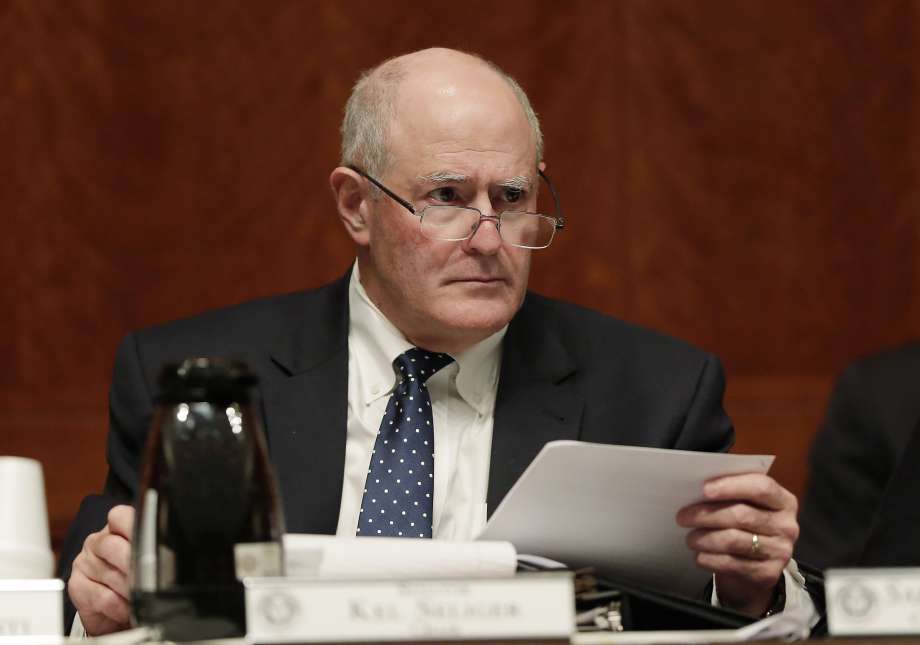
The implications for West Texas’s sprawling Texas Senate District 31 contest? They might lie in the challenge awaiting incumbent state Sen. Kel Seliger, the Amarillo Republican and a stalwart of the Texas Establishment Wing. He chairs the Senate Higher Education Committee and serves as well on the Education Committee.

He is facing two challengers in the GOP primary. He knows them both well. One is former Midland Mayor Mike Canon, a TEA Party favorite who challenged Seliger four years ago; Canon lost the GOP primary by about 5 percentage points. The other is Victor Leal, an Amarillo restaurant owner who touts his Muleshoe mayorship as giving him the requisite government administrative experience.

It gets a bit complicated, however.

Seliger isn’t exactly a fan of the Senate’s presiding officer, Lt. Gov. Dan Patrick. Seliger declined to join the rest of the Senate Republican caucus in signing a letter of endorsement for Patrick’s own re-election bid. I don’t know this as fact, but my strong hunch is that Lt. Gov. Patrick is unhappy with Seliger over this snub.

Who, then, is he backing for the Senate District 31 seat? It’s likely not going to be Sen. Seliger. It might be Canon or Leal … or maybe both!

There’s some political chatter in the Panhandle that suggests that Leal, who ran unsuccessfully for the Texas House District 87 seat in 2010 that former GOP Rep. David Swinford vacated, is running as a spoiler. He intends to peel off enough Panhandle votes that normally would go to Seliger with the hope of forcing a runoff. Leal would say he’s in it to win it and would deny playing the spoiler role. I also can presume that Leal hopes to be one of the two men squaring off in a possible GOP runoff.

Seliger is intent on avoiding a runoff. He plans to pull out all the stops to ensure that his Panhandle base turns out in March to carry him to victory. Meanwhile, he vows to ratchet up his visibility in the southern reaches of the geographically huge Senate district. He maintains a district office in Midland and over the 13 years representing District 31 has become as fluent in Permian Basin-speak as he is in Panhandle-speak. The regions are part of the same district, but their issues are unique.

Canon, meanwhile, likely intends to seek to outflank Seliger on the right, which he sought to do in 2014. Seliger’s campaign material speaks openly, though, about how he is able to deliver “conservative values” to his Senate district constituents.

Will it be enough to stave off this two-headed challenge on his right, one from the Permian Basin and the other from within his own Panhandle base?

Readers of this blog know my own preference. It is that I want Seliger to win outright.

However, I am not going to predict any such outcome. I’ll just wait right along with the rest of the state to see how this internal partisan conflict plays out.

Perry, not Trump, set the tone for stiffing the media

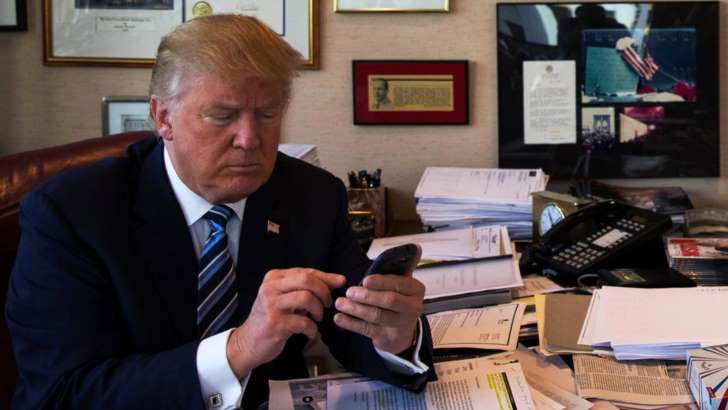
Donald Trump likes to crow about how he uses Twitter to “talk directly” to Americans, avoiding the “filter” of the “fake news” mainstream media.

The president, it appears to me, would have us believe he has been a trendsetter in this regard.

I would beg to differ.

Trump is a bit late to this game of sticking it in the ear of the media. Rick Perry, the energy secretary, blazed that trail in 2010 while running for what turned out to be his final re-election campaign as Texas governor.

I wrote about it then:

https://highplainsblogger.com/2010/01/perry-skips-the-ed-board/

Perry, too, wanted to forgo talking to newspaper editorial boards while campaigning for governor. He stiffed us in the business. He didn’t even come to Amarillo, where I worked at the time as editorial page editor of the Globe-News. He might have earned our newspaper’s editorial endorsement against the man he faced in that year’s general election, former Houston Mayor Bill White; the paper had a policy at the time of declining to make endorsements in contested partisan primaries.

The governor decided to stay away during the primary campaign in which he faced former U.S. Sen. Kay Bailey Hutchison and then later in the general election.

I don’t recall him using Twitter at the time; indeed, I cannot even remember that particular social medium becoming the tool it has become in the past couple of years.

I wrote at the time of Perry’s decision to stiff the media that we didn’t “take it personally.” I might have to walk that back just a bit. In truth, we did take it as a mild insult. “Who does this guy, Perry, think he is?” we thought at the time.

It turned out to be a stroke of genius. The media had become the whipping child for conservative politicians. Perry became the spokesman for the Stiff the Media crowd.

Newspapers all across the state ended up endorsing Mayor White for governor. White talked to the Globe-News and made a strong case for his candidacy. So, the Globe-News — a longtime ally of Republican politicians — endorsed a Democrat for governor; I say “longtime ally” of GOP pols understanding that in 1994, the newspaper endorsed the late Democratic Gov. Ann Richards in her bid for re-election, which she lost to George W. Bush.

So … sit down, Donald Trump and stop implying that you’re hacking your way through some sort of political wilderness with your continual Twitter tirades. You aren’t the first to stick it to the media.

Texas coast remains in dire peril

I want to give a shout out to my former neighbors along the Texas Gulf Coast.

They are working diligently to preserve one of the state’s most underappreciated resources: its beaches.

The Texas coast is in peril. It is disappearing before our eyes. It has been disappearing for, oh, many decades. I took an interest in the coast when I moved there in 1984 to take up my post writing editorials for the Beaumont Enterprise.

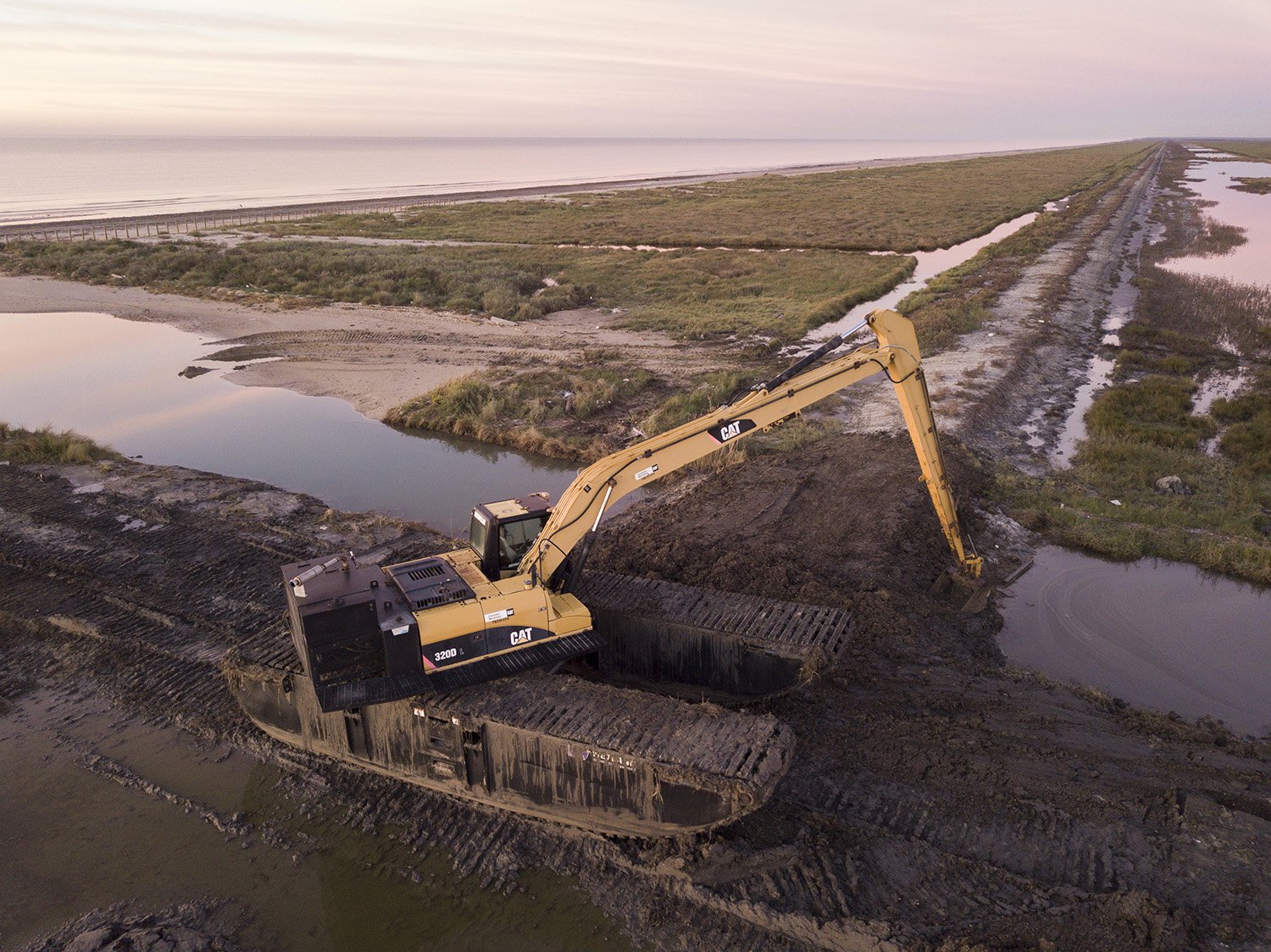
The Texas Tribune reports that Jefferson County officials are working with a consortium of industry officials, environmental activists, outdoorsmen and women and others to protect the coastal wetlands from drastic erosion.

According to the Tribune: Subsidence, sea level rise and storm surges have all contributed to significant land loss, averaging 4 feet per year along the state’s coastline, according to the Texas General Land Office. In some places, more than 30 feet of shoreline disappears underwater annually.

Todd Merendino, a manager at the conservation-focused group Ducks Unlimited, said sand dunes used to line the shore near the Salt Bayou marsh, forming a crucial buffer between the Gulf of Mexico and the millions of dollars’ worth of industrial infrastructure that lie inland. The dunes are “all gone now,” he said.

“One day, you wake up and you go, ‘Wow, we got a problem,'” Merendino said. “And it’s not just an isolated problem where one swing of the hammer is going to fix it.”

The problem has inspired a coalition of strange bedfellows in Jefferson County. Local leaders, environmental activists and industry representatives are working together to execute a variety of projects — some bankrolled by BP oil spill settlement funds — to rehabilitate the marsh and protect the area’s industrial complex.

The massive deep freeze that is paralyzing the Deep South and the Atlantic Seaboard notwithstanding, the worldwide climate change that produces rising sea levels is a major culprit.

Gulf Coast officials are seeking to build a berm along the coast at the McFaddin Wildlife Refuge. I’ve been there. It’s a jewel along the coast. It’s a haven for all manner of waterfowl. It is a gorgeous part of the coastal region.

It’s also vanishing.

Here is the Tribune story

The Texas General Land Office once placed coastal preservation near the top of its public policy agenda. I am unaware of where that issue stands today. The GLO has welcomed the likes of David Dewhurst, Jerry Patterson and now George P. Bush as land commissioner since Mauro left the office in the late 1990s. I trust they, too, are committed to saving the coastline for future generations of Texans to enjoy.

I am heartened to hear about the hard work being done along the coast. It’s good, though, to bear in mind that Mother Nature can take whatever she wants, whenever she wants.

At least the state is not going to give it away without a fight.

Welcome to Texoma

SHERMAN, Texas — I’ve discovered a new region.

Local media in the Sherman-Denison area of North Texas use an interesting and charming term to describe this part of the Lone Star State.

They call it Texoma.

Longtime Texans no doubt will scoff at me for posting this brief post. Too bad. Let ’em scoff all they want. I find the term vaguely enchanting.

My wife and I watch some local TV while we are holed up in our RV — when we’re not visiting with our granddaughter and her family down U.S. 75 just a bit south of us. I’ve been struck by the media’s use of Texoma to describe the region that is partly Texas and partly Oklahoma, given that Sherman is barely beyond spittin’ distance south of the Red River that serves as the common border between the states.

I don’t know when Texoma became the term of art to describe this region. It does kind of roll off the tongue.

This mini-discovery in a way reminds me of a community struggle that occurred in the mid- to late 1980s in the Golden Triangle region of Southeast Texas. It involved a regional name-change effort that was concocted by a committee of civic and business leaders who I guess grew tired of the region being known as the Golden Triangle.

They decided to launch a TV ad campaign featuring some actor dressed up as the late Army Gen. George S. Patton Jr. He would scold viewers about how the term “Triplex” was more suitable than “Golden Triangle.” The ad appeared throughout the cities of Beaumont, Port Arthur and Orange, which are the largest communities within the Golden Triangle.

We at the Beaumont Enterprise newspaper were instructed to use the term “Triplex” whenever we referred to the region in our news and editorial coverage.

The effort failed miserably. The residents of Jefferson, Orange and Hardin counties spoke out loudly and passionately against any such name-change effort. They hated the term “Triplex.” Some folks resorted to calling the outline of the three counties as the “Tri-Pot,” given the shape of the counties kinda/sorta looked like a commode.

Well … the campaign eventually fizzled out. It died a fairly quick death.

I trust the folks of Texoma didn’t endure a similar wrenching of its collective gut when someone decided to name this region. If they did, then they got over it.

Good for them. I like the sound of Texoma.

Lt. Gov. Patrick earns this ‘honor’

Texas Monthly has named Lt. Gov. Dan Patrick as its recipient of the Bum Steer of the Year Award.

Good call, Texas Monthly.

The magazine bestowed the “honor” on Patrick because of a monstrosity called Senate Bill 6, aka the Bathroom Bill.

TM notes that Patrick was hellbent to get this bill passed out of both legislative chambers in 2017. Except that he ran into a small — no, major — obstacle: House Speaker Joe Straus, a fellow Republican, was having none of it.

Straus, according to TM, said the Legislature had many more important issues to ponder than to decide whether to require people to use restroom facilities in accordance with the gender assigned on their birth certificates.

SB 6 was designed to discriminate against transgender individuals. Speaker Straus said “no can do.” He didn’t want the House to follow the Senate’s lead. He blocked SB 6 in the Legislature’s regular session and then followed suit during the special session that Gov. Greg Abbott called.

Texas Monthly called the Bathroom Bill effort “a master class in waste.”

Thanks, of course, to the efforts of Lt. Gov. Dan Patrick.

Yep, he’s the Bum Steer of the Year.

‘Conservative Republicans’ are selling their wares

COLLIN COUNTY, Texas — Driving around this North Texas county revealed to me something I never appreciated until now.

It is that Republicans who call themselves “conservative Republicans” must mean they are seriously committed to their ideology.

You see, it’s always been understood that Republicans are more conservative than Democrats.

As we enter the 2018 midterm election season, I noticed a number of campaign lawn signs touting a candidate’s conservative credentials.

Now, when I see the words “conservative” and “Republican” displayed in that sequence, I conclude that the individual is seriously Republican.

I know that this suburban Dallas county tilts heavily toward the GOP. Indeed, all of North Texas leans in that direction, with the notable exception of Dallas County, which voted twice for Barack Obama and then for Hillary Clinton in the past three presidential elections.

I thought today of how campaign signage is displayed in Potter and Randall counties. There, in the Panhandle — the symbolic birthplace of modern Texas Republicanism — one doesn’t even see candidates displaying their party affiliation. In Amarillo — which straddles the counties’ common border — it’s simply understood that candidates are running in the Republican Party primary.

The differences in the campaign characteristics of both regions seemed to jump out at me. In Amarillo, the candidates don’t boast about their conservatism. Here? Boy, howdy! They shout it, man!

Happy Trails, Part 66

COLLIN COUNTY, Texas — It appears that my wife and I have quite possibly narrowed our field of choices where we intend to relocate … after we sell our house in Amarillo.

We did something this morning that proved to be quite fruitful.

We awoke today, ate a light breakfast and then headed south from the RV park where we’ve hauled our fifth wheel RV. We left the RV behind and took off on a tour of small towns between Sherman and Allen in North Texas.

We wound our way through Howe, Anna, Melissa, Princeton, Lowry’s Crossing, scouting out neighborhoods and looking for the type of house we might consider purchasing were it to become available while we are available to buy it.

Then we ended up in Wylie, Murphy and Parker.

You know what happened then? We ended up thinking that the Wylie-Murphy corridor is most suitable for us. It’s a fascinating thought, when I think about it.

We went to Wylie some time back, actually before we even thought too much about retirement. We liked what we saw then. We liked it again today. Perhaps even more than we did the first time we laid eyes on the city of 41,500 residents.

(My wife, incidentally, believes the next census in 2020 is going to record a substantial population growth for Wylie since the most recent census in 2010. I think she’s on to something.)

Now I say all this understanding that nothing is cast is stone. It all could change if we find a specific piece of property that bowls us over in an entirely different community.

Wylie and Murphy, taken together, represent a modern, well-manicured greater community where we could get quite comfortable in reasonably short order.

This retirement journey, of course, has some more distance to travel. We’ll make the most of it, but our destination appears to be taking shape. I am not yet comfortable declaring we’ve found it just yet. We have just moved a little closer to that declaration.

Die, Bathroom Bill, just die

I am going to make a not-very-aggressive prediction.

It is that Texas House Speaker Joe Straus is going to bow out of politics at the end of 2018. He likely will ignore my plea that he reconsider his decision to not seek re-election from his San Antonio House district next year.

https://highplainsblogger.com/2017/12/speaker-straus-would-you-reconsider-quitting-the-house/

There. That all said, my hope now is that the next speaker of the House of Representatives will follow Straus’s lead and do whatever he or she can to derail that crazy Bathroom Bill that Lt. Gov. Dan Patrick and most of the Texas Senate wanted to enact into law this year.

The Bathroom Bill was the brainchild — if you want to call it that — of archconservative legislators who had this goofy notion that it would be OK to discriminate against transgender people. They sought to craft a bill that required individuals to use public restrooms in accordance with the gender designated on their birth certificate.

That means a man who becomes a woman must use the men’s room; same for women who become men.

They came up with this cockamamie idea that transgendered people would seek to assault people sexually in those restrooms.

The good news came from police chiefs and business executives across the state. They all came out in opposition to the Bathroom Bill. The speaker of the House, Straus, heard their concerns and said “No can do” when the Bathroom Bill made its way to the other end of the State Capitol from the Senate.

Straus was having none of it. The bill died in the regular session and then didn’t survive the special legislative session that Gov. Greg Abbott called.

Where do we stand now?

I’ll also presume that Lt. Gov. Patrick will be re-elected in 2018. He’ll then bring his nutty notion back to the Senate when the 2019 Legislature convenes. The House will be led by someone other than Speaker Straus. It well might be state Rep. Four Price, the Amarillo Republican who told me he was a big supporter of Straus and his agenda. Dare I presume, thus, that he, too, might block a future Bathroom Bill from becoming law? One can hope.

If it is someone else, then one can hope that whoever ascends to the speaker’s chair would do the same thing.

At least that’s my hope for the next legislative session: Kill the Bathroom Bill dead, man.