Category Archives: State news

LBJ truly loved being ‘of’ Texas

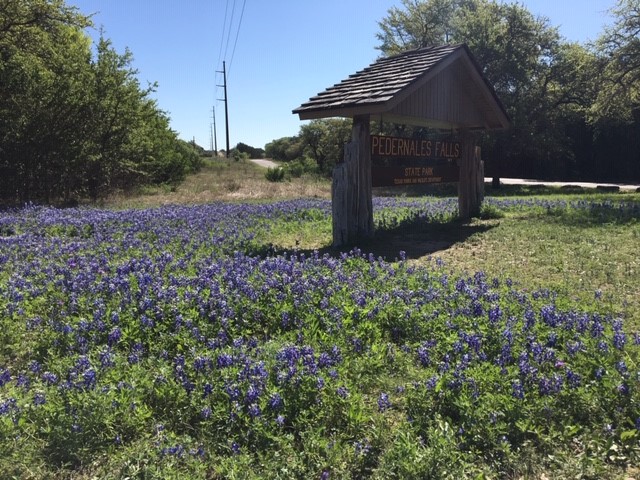
PEDERNALES FALLS STATE PARK, Texas — Lyndon Baines Johnson wasn’t just from Texas, he was of Texas.

The nation’s 36th president knew from where he came and where he would go after he left public life.

LBJ’s public life ended on Jan. 20, 1969 when Richard Nixon succeeded him as president. Johnson boarded the jet from Washington, which took him and his wife Lady Bird “home” to Texas.

My wife and I are spending a few days in the heart of what can be called “LBJ Country.” I surely do understand – indeed, I have understood it for the 35 years we have lived in this state – why he loved coming back to his beloved Hill Country.

We’re parked in an RV campground at Pedernales Falls State Park. It is a magnificent piece of real estate near Johnson City, Dripping Springs and a bit west of Austin. The bluebonnets and Indian paint brush are in their full spring blossom glory.

President Johnson ascended to the nation’s highest office under the worst circumstance imaginable, the assassination of President John F. Kennedy. The men’s styles could not have been more different; Kennedy was all Cape Cod, Ivy League and combat heroism, while LBJ was pure Texan, a bit unpolished and a supreme politician with decades of experience legislating in both chambers of Congress.

While he served as president for nearly six years, one often heard Johnson refer to his beloved Pedernales River, the Hill Country. He was known to speed around his sprawling ranch in Stonewall at the wheel of his Cadillac convertible.

He loved this place. He loved coming home. I often got the impression – perhaps burnished a bit in the decades since he left office – that he detested going to work in Washington. He lived in a nice house at 1600 Pennsylvania Ave. But it wasn’t his ranch house in the Hill Country.

The ravages of the office he inherited took their toll on Lyndon Johnson. They aged him far beyond his years. War does that to any man, especially a commander in chief whose duty included sending young Americans into battle against an intense and resourceful enemy. It’s not a stretch to say that the Vietnam War killed Lyndon Johnson.

However, he died where he always intended to die. At his ranch. He suffered a heart attack, notified the Secret Service detail that protected him that “something bad is happening.” That “something bad” killed him on Jan. 22, 1973. He wasn’t yet 65 years of age.

They buried LBJ and later his wife under a grove of trees on his ranch. It is the perfect place to lay this man of Texas to rest.

Texas might be a battleground? One can hope

Beto O’Rourke’s near-electoral miss in November 2018 has managed to turn Texas from a reliably red, staunchly Republican state into a potential battleground state in the 2020 presidential election.

Maybe . . . that is.

O’Rourke is now running for president of the United States. He damn near was elected to the U.S. Senate this past year. He came within 2 percentage points short of beating Ted Cruz. His close finish energized a once-moribund Texas Democratic Party.

So he decided to parlay that enthusiasm into a national bid.

Now, does his presence amid a gigantic — and still growing — field of Democratic presidential contenders automatically convert Texas into a battleground? Of course not.

He is going to campaign like all hell for Texas convention delegates. If he somehow manages to become the party’s presidential nominee –or even end up on the Democratic ticket as a VP nominee — then the state becomes the site of pitched battle between the two parties.

This is a dream come true for many of us. Me included.

I long have wanted Texas to become a two-party state. Even when Democrats controlled every public office in sight. It shifted dramatically over the past three decades. The GOP has control of every statewide office.

Presidential candidates haven’t given us the time of day. Why bother? The state’s electoral votes are going to the Republicans. So, the GOP has taken us for granted; Democrats have given up on us.

Beto O’Rourke well might have changed all that.

So, we might be in store for a barrage, a torrent, a tidal wave of political ads as we enter the summer and fall of 2020.

Forgive me for saying this, but I would welcome it.

Texas going into battle on behalf of . . . Chick-Fil-A?

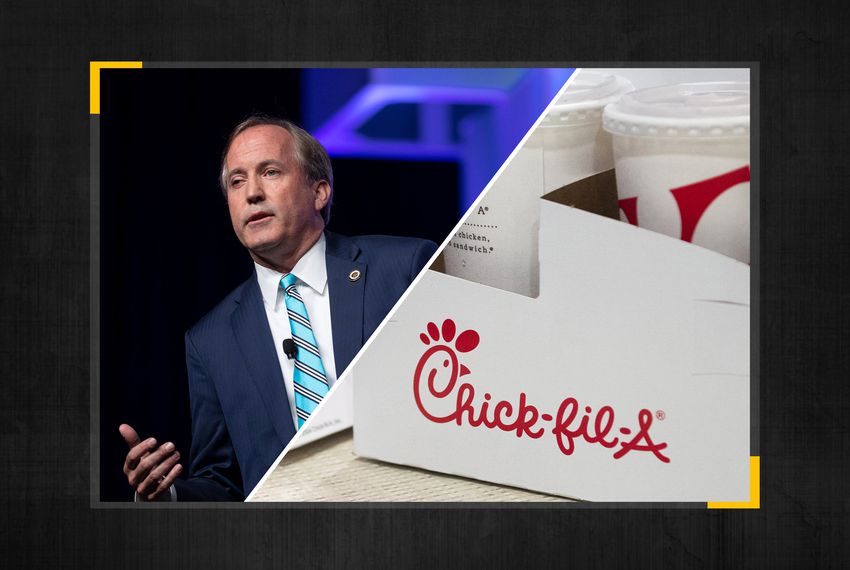
Texas Attorney General Ken Paxton put a message out via Twitter that said this . . .

The City of San Antonio’s decision to exclude Chick-fil-A based on the religious beliefs associated with the company and its owners is the opposite of tolerance. It’s discriminatory, and not only out of step with Texas values, but inconsistent with the Constitution and Texas law.

Sigh.

I am truly undecided on this one.

San Antonio officials have decided to remove Chick-Fil-A from its new airport terminal. Why? Because the fast-food owners have said they oppose same-sex marriage. The city said it cannot support a company that has “anti-LGBTQ” sentiments.

Paxton’s argument is that the prohibition violates the religious liberty clause in the U.S. Constitution and it runs counter to state law that bans discrimination on the basis of religion.

My own view is that I do not choose to patronize businesses on the basis of their politics. I don’t boycott films by actors whose politics differ from my own, either.

I have no particular bone to pick — no pun intended — with Chick-Fil-A one way or the other. Its food is OK. I do recall not long after the company CEO made his anti-gay-marriage comment that the lines grew long at the Chick-Fil-A in southwest Amarillo. I didn’t want to wait forever for a so-so chicken sandwich. I guess some folks in the Texas Panhandle were hot to trot over the CEO’s comment; they said, “Hell yes!” to his view and decided to demonstrate their support by waiting in line for a very long time.

It ain’t my bag, man.

This matter is much ado about nothing too much.

I think I can predict that the lines at Chick-Fil-A are going to grow long once again.

Fine. Knock yourselves out, folks.

Cornyn might face a lengthy list of challengers

John Cornyn is now Texas’s latest marked man, politically speaking.

The San Antonio Republican U.S. senator is running for re-election in 2020 and he is facing a lengthy list of Democratic primary candidates who will fight among themselves for the right to run against him directly in the fall.

I have to say that the list of possible foes is looking pretty impressive.

Two names jump out at me: U.S. Rep. Joaquin Castro, who also hails from San Antonio and former state Sen. Wendy Davis of Fort Worth. Given the premium voters place on name identification, I would have to rate those two as potential front runners in the Democratic Party primary. Joseph Kopser and MJ Hegar also are in the mix.

Castro is the identical twin brother of Julian, who’s running for president of the United States in 2020. The two are so identical, in fact, that Joaquin is growing a beard (more or less) to distinguish himself from Julian.

Joaquin Castro, I suppose you could say, comes from the more progressive wing of the party. I hesitate to label him a “democratic socialist” in the mold of Bernie Sanders, but he’s out there near the left-end fringe of the party. He hasn’t announced his candidacy for the Senate, just yet. My guess is that he’ll go all in soon.

Then there’s Sen. Davis. She made hay in 2013 with her filibuster in the Legislature against a restrictive anti-abortion bill. She gave Democrats hope that she could break the GOP stranglehold on statewide office — but then she lost to Greg Abbott in 2014 by more than 20 percentage points.

I keep thinking, too, that Beto O’Rourke of El Paso — who is widely considered to be getting set to announce a presidential campaign in 2020 — might enter the Senate donnybrook. I am not going to predict it. I’m just waiting for Beto to announce what he says he’s decided already.

Do I want Sen. Cornyn to lose? Yeah, but not with the passion I wanted O’Rourke to defeat Sen. Ted Cruz in 2018. I know John Cornyn. I actually like him personally. He and I have joked about our respective heads of gray hair and has assured me that he was that gray at a much younger age than I was; I believe him, too.

I want the 2020 race between Cornyn and whoever Democratic voters nominate to be as competitive as the 2018 contest turned out to be between O’Rourke and The Cruz Missile.

Texas needs two healthy major political parties and it appears — finally! — that Texas Democrats are awakening from their 30-year slumber/stupor to give Republicans a serious challenge to their superiority.

Just not caring about Daylight/Standard time

I guess I should care about this. Except that I don’t. Really, I don’t.

Some members of the Texas Legislature want the state to stop switching back and forth each year between Daylight Saving Time and Standard Time. They say the “spring forward” and “fall back” routine causes too much sleep deprivation at the front end, when we push our clocks forward an hour. We’re going to do it again Saturday night; we’ll awaken Sunday morning with one less hour of shut-eye to get our day started.

And, of course, many of us will bitch about it!

I just don’t see the significance of it all. I continue to recognize the motive behind enacting Daylight Saving Time in the first place. It was intended to help conserve energy by allowing us to not turn on our lights and, thus, burn electrical energy when we don’t need to do it.

As for the sleep deprivation, I learned long ago that however tired we might be on the first day of switching to Daylight time, we get over it quickly. We adjust. We human beings are adaptable creatures.

If we’re going to end the back-and-forth, though, I propose we stay on permanent Daylight Saving Time. I like having the sun in the sky a little longer at the end of the day.

Now . . . I am going to get back to the things that really matter, at least they do to me.

‘Right of privacy’ argument doesn’t work

I have made this point before, but it’s worth making again. A fellow who comments occasionally on this blog took note of how those who gripe about red-light cameras cite a phony infringement on their “right of privacy.”

He notes correctly that when motorists travel on public streets and are required to follow the law they surrender their “right of privacy.”

At issue is the future of red light cameras in cities across Texas. The Legislature is considering whether to pull back its authorization for cities to deploy the cameras to help deter motorists from running through red lights.

There is no such thing as a “right of privacy” when motorists put other motorists and pedestrians in peril when they break the law.

The cameras do have their critics. They say the timing of the light sequence from yellow to red can be unfair to motorists trying to sneak through under yellow.

Right of privacy, though, doesn’t cut it. I am reminded of the time then-Texas Gov. Rick Perry vetoed a bill that banned cell phone use while driving. He cited the legislation as an invasion of motorists’ right of privacy.

Gov. Perry’s thinking at the time was idiotic. The gripes now about red light cameras and the privacy issue are equally idiotic.

Waiting for Beto’s decision

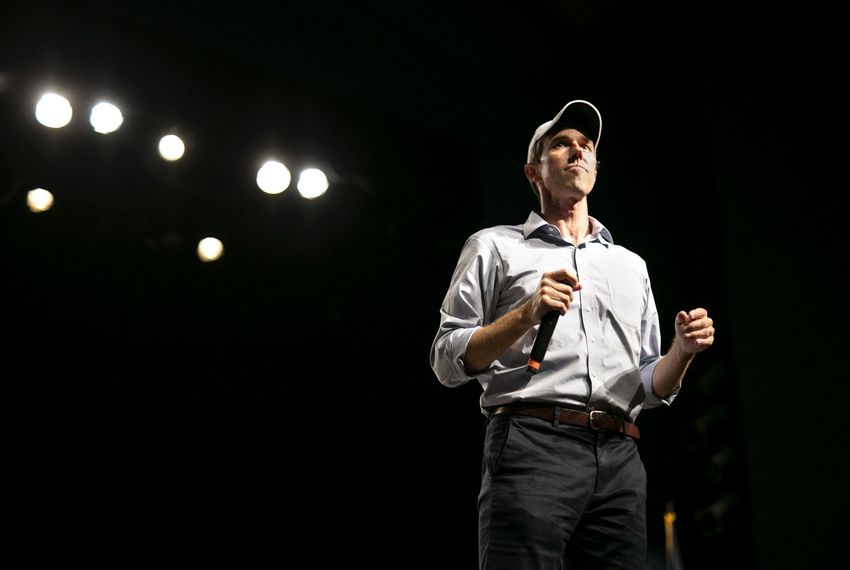
I think it’s a good bet that Beto O’Rourke, who says he’s made his decision regarding the 2020 political season, is not going to run for a seat on the El Paso County Commissioners Court.

Nor is he running for the U.S. Senate against John Cornyn, the senior Texas Republican senator.

Oh, I get it! He’s going to announce he is running for president of the United States. Is that it? Sure it is! Or so many observers are saying.

I am trying to get excited about it. I am not there. At least not yet.

O’Rourke came tantalizingly close to defeated U.S. Sen. Ted Cruz in 2018. He got Texas Democrats all fired up. He gave them hope that if a Democrat can come within a couple of percentage points of winning a statewide race, then perhaps there will be a chance for the party to break the GOP vise grip on the political structure.

But is the young man, a former El Paso congressman, ready for the Big Show? A big part of me wonders if he’s up for the biggest job on Earth.

Were he to be nominated and then run against Donald Trump for the presidency, O’Rourke would have my support. I just wonder if he’s able to defeat a gigantic field of Democrats lining up to take down the president of the United States.

He’s going to liven this contest up . . . even more than it is already.

Reps. Price, Smithee turn their backs on ‘local control’

I know these two men well and have developed a lot of professional respect for them, but Texas state Reps. Four Price and John Smithee of Amarillo have disappointed me.

The two Republican lawmakers have put their names on a bill that would allow the Legislature to disallow the deployment of red-light cameras. Cities that deem there is a need to use the equipment to stop motorists from breaking the law no longer would be allowed to use the cameras.

Amarillo — which Price and Smithee represent — is one of those Texas cities that has used the cameras to assist in the enforcement of traffic laws.

Gov. Greg Abbott has gone on record saying he wants the cameras pulled down. His statement suggests he will sign legislation that forbids cities from using the cameras.

Why does this bother me? Well, I support the city’s effort to crack down on red-light violations at signaled intersections. I say that as someone who has been caught running through an intersection, seeking to sneak through when the light had turned yellow; I wasn’t quick enough to avoid getting caught.

Moreover, Republicans have traditionally been the political party that espouses local control. They have been champions of cities operating under their charter, rather than allowing “big brother” state government to impose policies that determine issues that are best left to the cities’ discretion.

I guess that’s no longer the case.

Indeed, the Legislature’s decision just a few years ago to allow cities to use the cameras came after extensive discussion and debate. I believe the cameras have helped deter motorists from acting in a manner that endangers other motorists and pedestrians.

I wish Reps. Price and Smithee had held true to their view that local control is the preferred method of delivering good government.

Two-thirds rule likely to scuttle key Texas appointment

The Texas Senate operates on a rule that is designed ostensibly to promote bipartisanship.

It’s the two-thirds rule, which requires 21 of the Senate’s 31 members to approve legislation — and appointments.

However, all 12 of the Senate’s Democrats are going to oppose the nomination of David Whitley as the next Texas secretary of state. That leaves him with just 19 votes, all of which will come from Senate Republicans.

It seems that Whitley, who’s been acting as secretary of state, blew it when his office “flagged” several thousand voters who were thought to be illegal residents of Texas. It turns out that many of those flagged were quite legal. One of them happened to be a key member of a Senate Democrat’s staff.

Can we hear an “oops”?

Gov. Greg Abbott appointed Whitley to be the state’s top elections officer this past year, but the Legislature was not in session, meaning that the Senate hadn’t yet formally approved his nomination. With the Senate’s 12 Democratic members now on record as opposing his appointment, it appears that Abbott might have to look for someone else to run the state’s election system.

The Secretary of State’s Office committed a fairly embarrassing cluster flip with the flagging of those names. It sought to purge the system of what it said were illegal voters, only to determine that the list of flagged voters was significantly inaccurate.

Abbott said he still supports Whitley fully, which is what one would expect him to say.

I’ll offer this bit of advice: David Whitley needs to bow out; the governor needs to find another nominee. Then we can get back to the task of running our state elections instead of looking for bogeymen where they likely don’t exist.

Yes, the Texas Senate’s two-thirds rule works.

Sen. Paxton exhibits a form of tone deafness

Texas state Sen. Angela Paxton — who was just elected in 2018 — is new in her job as a legislator. The McKinney Republican, though, should have thought better than to propose a bill for consideration that involves her husband, the state attorney general.

Why is that? Attorney General Ken Paxton is awaiting trial on a securities fraud allegation. Sen. Paxton, though, has proposed Senate Bill 860, which broadens the AG’s regulatory power over those who market financial services. You see, AG Paxton is accused of failing to report his own involvement as a securities adviser to potential clients.

Therefore, I intend to accuse Sen. Paxton of being tone deaf.

She is one of 19 Republicans serving in the Texas Senate. I would doubt seriously any of the dozen Democrats who serve with her would buy into what she wants to do, so we’ll look briefly at her GOP colleagues.

It seems odd that the spouse of a statewide elected official who is set to stand trial for securities fraud would propose legislation that affects the official who’s about to become a defendant in a court trial.

They talk about whether legislation passes the “smell test.” This one doesn’t, at least not my olfactory glands.

Couldn’t the rookie Texas senator find a GOP colleague among the 18 of them who serve with her to carry this legislation forward?

AG might get new power

Don’t misunderstand me. I don’t necessarily endorse SB 860. It expands the power of the attorney general and seems to remove a level of transparency that should be required when it involves securities and financial regulation.

It’s just that Sen. Paxton carrying a bill that has a direct impact her husband, who’s facing potential prison time if he’s convicted of securities fraud, is a stinker.

Ethics watchdogs seem to believe it stinks, too. I’m on their side.