Category Archives: Sports news

Nix the talk about bringing back Baylor coach

Dear Baylor University Board of Regents:

I’ll get right to the point.

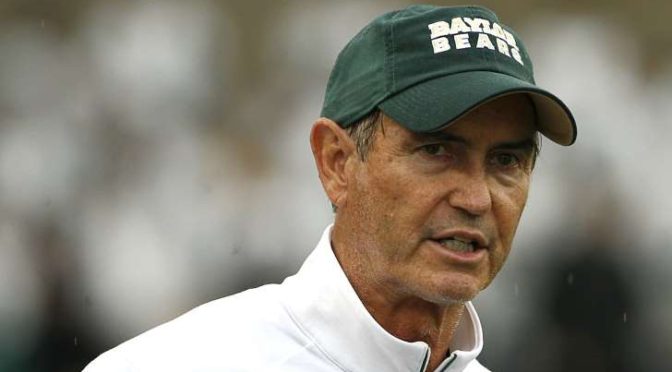
Do not even think for a moment about returning disgraced former head football coach Art Briles to the university that’s been scarred by his negligence.

There. I feel better already.

How quickly you seem to have forgotten about that nine-month investigation that concluded that under his watch, the Baylor football program “posed a risk to campus safety and the integrity of the University.”

The probe was damning on its face about the conduct of your athletic department in the face of the sexual assault convictions against two Baylor football players. Athletic officials covered it up … to their everlasting shame.

You did the right thing when you demoted university president Ken Starr; athletic director Ian McCaw’s resignation was correct, too.

Briles’ termination also was the right thing to do.

And yet …

We keep hearing about a high-dollar booster who wants to bring Briles back to the sidelines. Why? Probably because he produced a winning football program at the expense of the university’s stellar reputation.

You took no vote on Briles’ status. Fine.

Now take the next step and issue a formal statement declaring that there ain’t no way in the world the man’s coming back as head coach.

I’ll be waiting for your response.


Baylor announces much-needed reforms

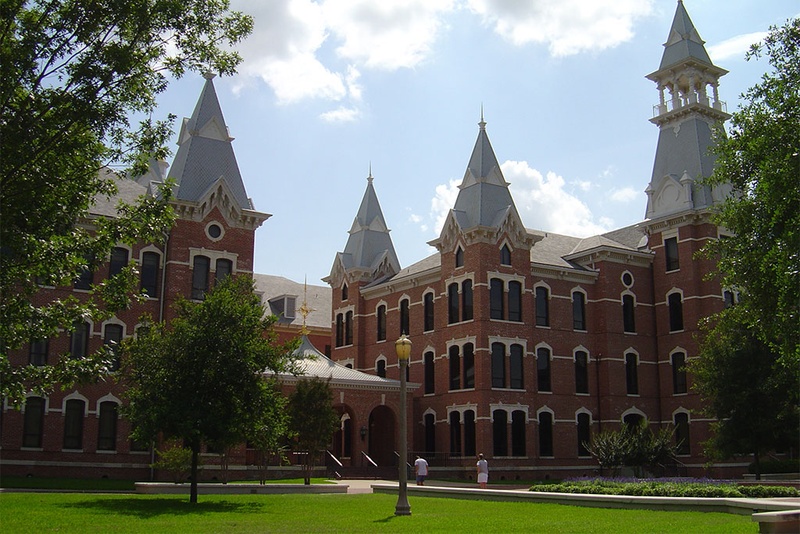
BayloruniversityCampus_jpg_800x1000_q100

It would seem logical to presume that an institution with Baylor University’s stellar reputation would be among the last places on Earth where one could expect to witness an unfolding sex scandal.

It’s a faith-based university known for its high moral standards. Isn’t that right?

It’s also known as a place where they play some pretty good college football.

So, some football players get entangled in a sexual assault case and the university allegedly turns its back on the complaints filed by students against the athletes.

The uproar has been ferocious. With absolutely justifiable reason.

Baylor now has announced plans to implement recommendations from a panel formed to fix what’s wrong at the school.

https://www.texastribune.org/2016/06/10/baylor-announces-sexual-assault-task-force/

The Pepper Hamilton commission has found a “fundamental failure” at Baylor to uphold federal Title IX provisions that are supposed to protect students from abuses such as what occurred at the school.

One player has been convicted of sexual assault, but the stuff hit the fan after it was revealed that university administrators tried to hide the complaints against athletes.

Head football coach Art Briles was fired. University president Ken Starr was kicked out of his office and he quit his ceremonial job as chancellor; he remains on the faculty as a law professor.  Athletic director Ian McCaw resigned.

All three of those individuals had to go.

Now it’s up to Baylor to pick up the pieces of its shattered reputation.

The Texas Tribune reports: “Let me assure you all that we are deeply sorry for the harm done to students in our care,” interim president David Garland wrote in a letter posted online. “Even during the course of Pepper Hamilton’s investigation, we began adopting improvements to our processes, and now we are pursuing the other improvements remaining in the recommendations.”

Pressure is mounting for the school to release the contents of the Pepper Hamilton report.

That seems like a good start to clearing the air and shining the light of accountability on what has occurred at the school.

I’m sure that somewhere in that report is a stern warning that Baylor needs to heed to the letter in the future: Do not, under any circumstances, even think of covering up a report of sexual assault.

Time revealed another side of Muhammad Ali

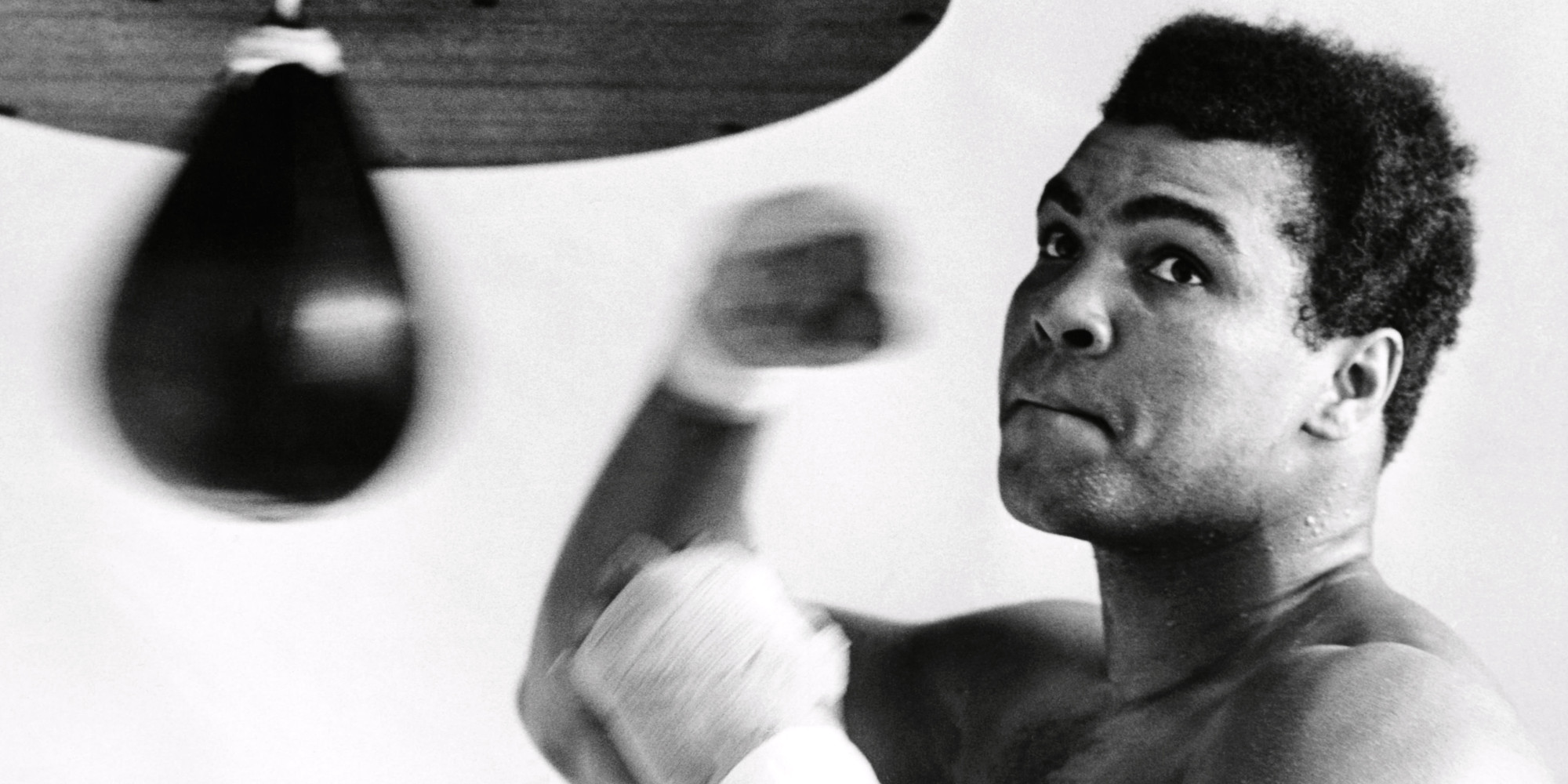
Muhammad-Ali-vs.-Joe-Frazier-in-Thrilla-in-Manila-Quezon-City-Metro-Manila-Philippines-1975-2

I guess you could say that time is no one’s friend.

It takes its toll on human skill. Of course, eventually it catches up to all of us for the final time.

These thoughts came to mind as I’ve been watching and listening to the tributes pour in to the late Muhammad Ali — yes, it’s strange to attach that word right before The Champ’s name.

Ali came to the world’s attention as young Cassius Clay, a boxer with tremendous hand and foot speed in the ring. He didn’t block punches with his elbows or gloves.

He dodged them with his head.

He’d pull his back while the big left hooks or straight rights would whistle by. Clay would dance out of the way, peppering his foe with lightning-quick jabs and multi-punch combinations.

Then he would pull away again.

Well, time does not allow the human body to perform like that forever.

After he changed his name to Muhammad Ali, the boxer lost more than three years of his prime athletic life. The U.S. government accused him of draft evasion, the boxing authorities denied him his right to box and he spent most of 1967 and all of 1968 and 1969 on the lecture circuit, speaking out against the Vietnam War and against racism.

Then he came back.

But he was a different kind of athlete.

Time had robbed him of a bit of that skill he demonstrated with his quick reflexes. He no longer was able to dodge and dance away with quite the flair and panache he demonstrated as a younger boxer.

No, the boxer then became a fighter.

Sure, he proved to be unafraid to fight against injustice in the world.

However, when he was able to lace the gloves back onto his powerful fists, he became a fighter. He showed the world that his quick feet and hands didn’t signify an unwillingness to fight. That speed merely was a demonstration of the rare skill he exhibited in a most-brutal sport.

He was able to lend an extra level of sweetness to the Sweet Science.

As time marched on, though, Ali was forced the absorb more punishment from foes who a decade earlier would have flailed in futility.

He demonstrated another skill that many boxing experts admitted at the time they never anticipated. The Champ demonstrated that he had a fighter’s heart.

He became a warrior in the ring.

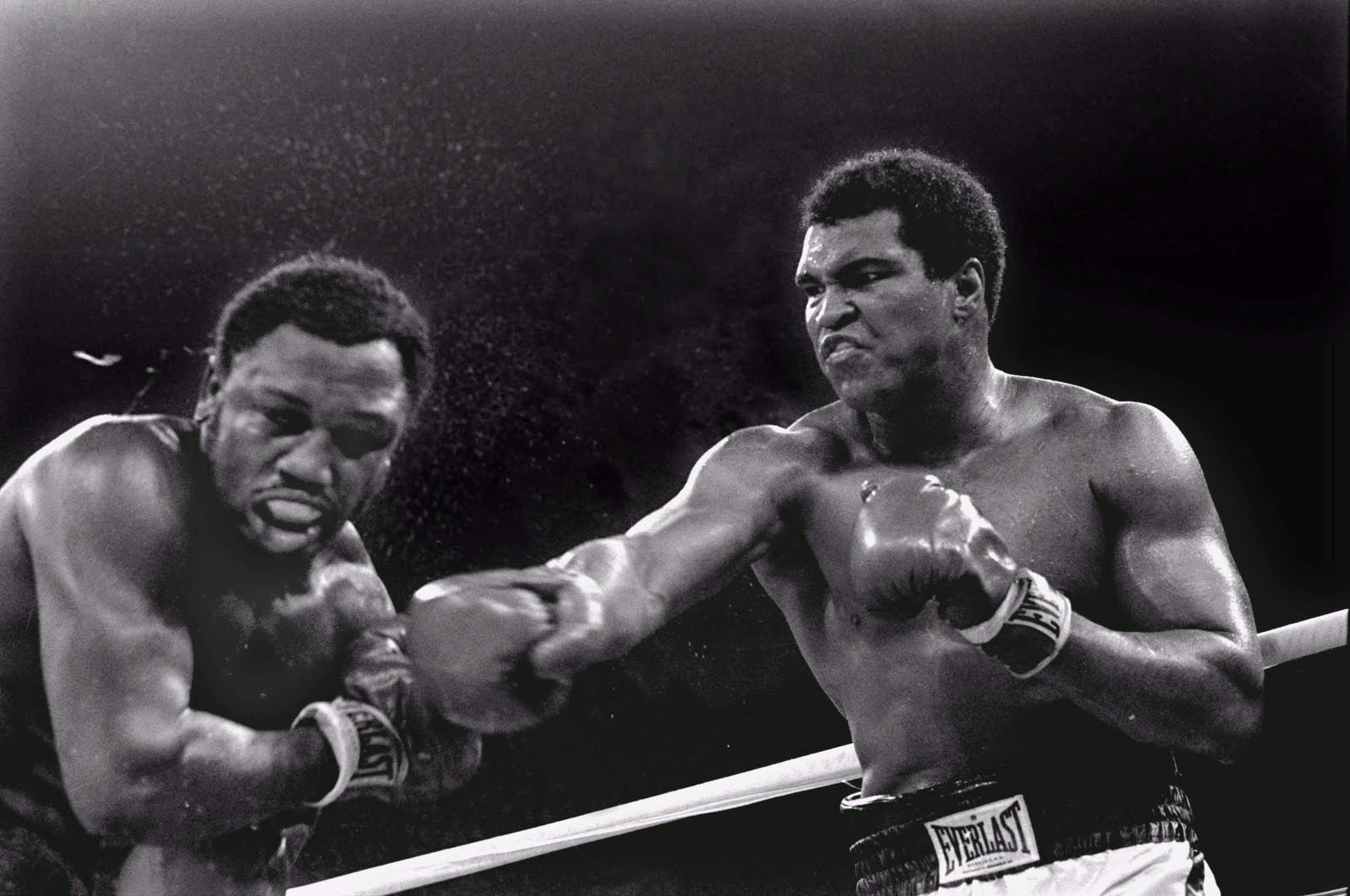
The Thrilla in Manila — his third epic fight with rival Joe Frazier, provided perhaps the most graphic example of his fighter’s heart.

In 1975, Ali was the champion. He started out quickly, trying to take Frazier out. Frazier survived that early-round blitz. He came back in the middle rounds, punishing his adversary with body blows.

Ali then summoned something from deep within him to rally in the later rounds. By the time the bell rang to end the 14th round, Frazier’s face was a bloody, swollen mess. Muhammad Ali the warrior had shown he had the heart of a champion — of a fighter.

Frazier’s trainer, Eddie Futch, stopped the fight — a drama in three acts — and made a decision I am certain to this day well might have saved his fighter’s life.

Smokin’ Joe said it best after the fight. “Man,” he said, “I hit him with punches that would have brought down the walls of a city. Lawdy, he’s a great champion.”

So he was. The boxer had become a fighter and revealed that time at least can be stalled a little while longer.

The Champ would revel in this reception

ali home

Just how far have race relations gone in the past five-plus decades?

Consider what is happening in Louisville, Ky., the city where a baby named Cassius Marcellus Clay Jr. came into this world.

It is getting ready for one of the most awe-inspiring salutes imaginable for the man that baby became.

Louisville didn’t react this way around, oh, 1960, when Cassius Clay came home from Rome with an Olympic gold medal in boxing. He returned from the Olympics and was met with overt racism in his home town.

This young black athlete who had ingratiated himself to the foreign press and to the other international athletes who gathered for the Olympics did not find such warmth when he came home.

His struggle for acceptance began.

That young man eventually grew into a gigantic figure on the world stage. He won the heavyweight professional boxing championship in 1964. Clay converted to Islam and changed his name.

He became Muhammad Ali.

Ali experienced plenty of wrath for becoming a Black Muslim. Then came his refusal to be inducted into the armed forces, citing his religious belief and his role as a Muslim minister. He couldn’t in good conscience serve his country during a time of war, in Vietnam.

More wrath came his way.

The boxing authorities stripped him of his title. They denied him the right to earn a living. He was banned from boxing.

Then he became an iconic figure on university campuses during his three-plus years in boxing exile. He spoke out against the Vietnam War, against the racism that pervaded the nation and against injustice.

Then he became the world’s most famous person.

The court overturned his conviction for draft evasion. He returned to the ring. He won the heavyweight title twice more.

He retired from boxing in 1981 and in 1984 was diagnosed with Parkinson’s disease.

Muhammad Ali died Friday at the age of 74.

Louisville, the city of his birth and the city where his neighbors formerly scorned him, now is preparing to say farewell to its most favorite son.

http://www.msn.com/en-us/sports/more-sports/hundreds-pay-tribute-to-muhammad-ali-at-his-boyhood-home/ar-BBtT1G5?li=BBnb7Kz

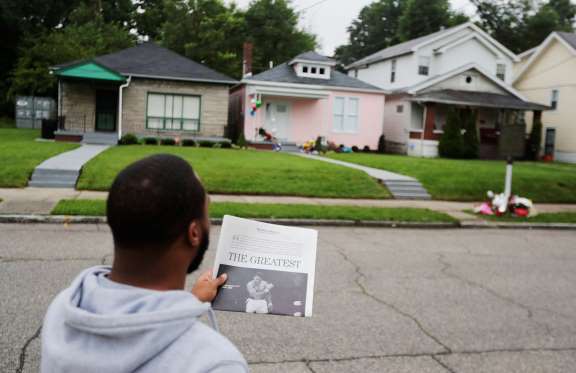
Crowds are gathering at Ali’s boyhood home. People are flocking to Louisville. The mayor will speak at Ali’s funeral. So will former President Bill Clinton, who was among 80,000 spectators in the stadium who wept in the summer of 1996 as Ali emerged to light the Olympic flame in Atlanta. The noted comedian Billy Crystal also will eulogize The Champ.

The city isn’t the same today as it was when Cassius Clay entered it. It’s a much better place that will bid farewell on Friday to Muhammad Ali.

The Champ would revel in the sendoff he’s about to receive.

Ali’s era: simple and complex all at once

Mohammed Ali

As I’ve spent the day pondering last night’s sad news about Muhammad Ali’s death, I was struck by a realization of the era in which he was such a dominant force.

It was that he flourished in a simpler and more complex time.

Ali died of Parkinson’s disease at the age of 74. He apparently had become quite frail in the final months of his life. But what a departure from the picture of strength he exhibited back in the day.

The simplicity of his era is marked by this fact: As the heavyweight boxing champion of the world, Muhammad Ali was the baddest man on the planet.

The night he stopped Sonny Liston after the sixth round to win the title the first of three times, he yelled, “I shook up the world! I’m a ba-a-a-a-d man!” Yes he was.

In those days, without the multitude of boxing commissions and sanctioning bodies we have today, you had an undisputed champ. Ali was that man.

Today, well, it’s far different. You’ve got at least three heavyweight champions of the world. There are times when you have something called “interim champion”; I don’t even know what the hell that means.

All these “world champs” are recognized only by certain governing bodies. If you’ve got the patience, you can slog through all of them.

I quit following the sport — certainly the heavyweight division of it — about the time Larry Holmes walked away from the championship.

The complexity of Ali’s prime time is reflected in the political climate of the era.

Ali got his draft notice from the Selective Service Administration. He had converted to Islam. He vowed never to take up arms against people. Ali refused to be inducted into the armed forces to protest the Vietnam War.

And by 1967, the political mood of the nation had turned against the war. We weren’t winning it the way to which we had grown accustomed. Ali’s refusal to serve rubbed many millions of Americans raw. How dare this brash, young fighter refuse to serve his country, many people said. Why, he had amassed tremendous wealth because of all that the country had offered him.

That didn’t matter to Ali. He stood on principle.

The boxing authorities — the few of them that existed at the time — stripped him of his title. They denied him permits to fight. He was denied an opportunity to do the one thing he did better than anyone on Earth: beat people up.

The Vietnam War raged on while Ali was denied permission to fight.

The champ did not recede quietly into the shadows. He spoke out against the war. He spoke against what he perceived to be the systemic racism that was denying him his right of free expression.

Muhammad Ali became “the most recognizable person on Earth.”

Who today can make that claim?

The U.S. Supreme Court finally would undo the injustice brought to Ali. It voted unanimously to throw out Ali’s conviction for draft evasion. He returned to the ring.

The rest became history … and what a story Muhammad Ali was able to tell.

Long live The Champ!

BBtPNxv

It well might be said in the next few days and weeks that Muhammad Ali was denied the greatest years of his boxing career because of his refusal in 1967 to be inducted into the U.S. Army.

There will be those who will bemoan the loss of those years because Ali had been stripped of his heavyweight boxing title because he chose to exercise his constitutional right to protest a government policy with which he disagreed.

My take on it, though, is that Ali’s refusal on religious grounds to take up arms against “them Viet Congs” and the punishment he endured by losing three-plus prime years of his boxing career only enhanced the legend that grew out of it all.

He would go on to become the “most recognized person in the world,” according to many surveys.

Muhammad Ali would stand for something far greater than just his blazing speed and power as, arguably, the greatest heavyweight boxer in history.

The Champ died Friday at age 74. Parkinson’s disease took him, finally. We knew this day would come, but oh man, this still hurts.

He was one of those sportsmen with whom I became enchanted as a youngster, dating back to the time before he won the heavyweight title — for the first of three times — in 1964. He boasted and bragged. He predicted the rounds his fights would end; the young man then known as Cassius Clay often would make good on his predictions.

Hey, the boxing world had never seen anything like him!

He beat the Big Old Bear, Sonny Liston. He then found Islam, changed his name eventually to Muhammad Ali. He kept fighting and winning.

Then came the day he was to be drafted into the Army. He couldn’t accept the order to report. It was a matter of religious belief. He made that statement that he didn’t “have anything against them Viet Congs.”

He was stripped of his title. Denied the right to make a living.

Ali didn’t go quietly. He became an iconic figure on college campuses, speaking out against the Vietnam War and against the racism that denied him his heavyweight title.

The U.S. Supreme Court would rule eventually in his favor, tossing out his banishment. Ali would return to the ring. He’d win some more. He lost The Fight of the Century to Joe Frazier, who then lost to George Foreman.

Then Ali showed the world how a “washed-up” fighter could regain the title. He knocked out Foreman in eight rounds a decade after winning the title the first time.

There would be more victories. Ali would lose his title once more, and then would regain it a third time.

Ali retired for good from boxing after getting thrashed by then-champ Larry Holmes and losing his final fight in 1981 to journeyman Trevor Berbick.

Then came the Parkinson’s diagnosis. Muhammad Ali would become a champion for another cause, becoming a spokesman for Parkinson’s awareness.

He kept fighting.

And who in this entire world could forget that electrifying moment at the 1996 Summer Olympics when The Champ stepped out of the shadows to light the torch in Atlanta? His hand was quivering, but he got the job done as the stadium crowd roared mightily. The swimmer, Janet Evans, who handed the torch to Ali said it was like “an earthquake.”

I will choose to remember Muhammad Ali as the vibrant young man who fought like hell with his fists, then fought even harder with his huge heart.

He wasn’t a perfect man. Ali merely was The Greatest.

Rest in peace, Champ. You earned it.

Ken Starr packs it in at Baylor

starr

Ken Starr’s resignation as chancellor at Baylor University because of a sex scandal might be the biggest non-surprise since, oh, when he helped engineer the impeachment of President Clinton in a case that also involved a sex scandal.

Yes, the irony is rich.

Starr quit as chancellor after the Baylor regents kicked him out of his job as president of the university. The chancellor’s job is a ceremonial one, with no actual administrative duties. The regents’ decision was based on Starr’s role in the university covering up reports of sexual abuse on its campus involving members of the school’s top-tier football team.

https://www.texastribune.org/2016/06/01/ken-starr-says-he-will-resign-baylor-chancellor/

Frankly, Starr ought to resign his other job at Baylor, as a law professor. His presence on the campus taints the school.

Former head football coach Art Briles was fired because of this scandal. Athletic Director Ian McCaw resigned after regents put him on probation because of the same scandal.

Regents kicked Starr out of his presidency because, as the “captain of the good ship Baylor,” he was ultimately responsible for all that occurs on the campus.

Starr professed “ignorance” regarding the many rape charges that have been filed against students at Baylor. Is that a sufficient defense? Of course not.

So, now he’s gone as chancellor, saying in an interview with ESPN, “We need to put this horrible experience behind us. We need to be honest.”

OK, professor, if honesty is what you want, how about just walking away from the campus altogether?

Doing so would enable himself a chance at a new start. Better still, it would give Baylor University a chance at renewal as well.


Another head rolls at Baylor

mccaw

Another head has been lopped off — proverbially, of course — at Baylor University.

This time it belongs to the athletic director, Ian McCaw, who quit in the wake of the sex scandal that already has cost the school its president and its head football coach.

McCaw clearly had to go. He had been put on probation just as Baylor president Ken Starr was getting demoted and head coach Art Briles was put on “suspension” prior to being fired.

Why the shakeup? Oh, just that scandal involving Baylor’s mishandling of the sexual assault charges — and conviction — of football stars. The scandal has roiled the Waco campus and has caused — one should hope — a tremendous re-examination of the way the school handles such cases. In the cases involved in this scandal, the school seemingly sought to sweep them away, hoping no one would notice.

Baylor’s regents issued the usual statement of regret in announcing McCaw’s resignation: “We understand and accept this difficult decision by Ian McCaw to resign as Athletic Director and are grateful for his service to Baylor University. We also appreciate Ian’s commitment and involvement in bringing a person of integrity such as Jim Grobe to the University before making this decision.” Grobe has been named interim head football coach.

Whatever, the regents are seeking to cushion McCaw’s fall.

I don’t wish ill on the former AD, but this fellow ran an athletic department that includes the conduct of its premier revenue-producing sports activity.

As the saying goes, “The fish rots from the head down.”

Baylor University needs to take care of its business.

‘Fired’ or ‘suspended’ at Baylor?

briles

I’m still scratching my noggin over this one.

Baylor University head football coach Art Briles has been “suspended” by the university’s board of regents, which eventually will get around to firing him.

Why wait? What’s the holdup?

Briles allegedly looked the other way while players on his team were sexually assaulting women. He did far too little to stop what was happening on the campus.

http://espn.go.com/college-football/story/_/id/15765205/ousted-baylor-bears-coach-art-briles-quotes-foreshadowed-demise

He’s going to be a “former coach” in due course, I reckon.

I always considered a firing for cause to have an immediate impact. If an employee does something wrong — or fails to do something right — then the employer has the right, if not an obligation, to get rid of the offending employee post haste.

What am I missing here?


Football isn’t exactly ‘king’ at Baylor University

briles

The hammer has dropped on two leading figures at Baylor University.

Kenneth Starr has been moved out of the president’s office and “demoted” to the role of Baylor chancellor. I guess within the Baylor system, the chancellor is more of a figurehead than an actual administrator.

Meanwhile, head football coach Art Briles has been “suspended.” Baylor regents, though, said they intend to fire the coach.

What’s more, Baylor Athletic Director Ian McCaw has been placed on probation.

This is a big deal. It centers on a sex scandal at the Waco school.

Two players were convicted of sexual assault. The trouble erupted, though, when allegations surfaced that the school didn’t take the charges seriously enough initially.

“We were horrified by the extent of these acts of sexual violence on our campus,” said Richard Willis, chair of the Baylor Board of Regents. “This investigation revealed the university’s mishandling of reports in what should have been a supportive, responsive and caring environment for students. The depth to which these acts occurred shocked and outraged us.”

And just why is this a big deal? Because, the football program had been rebuilt. Baylor was getting a lot of money because its football team was winning a lot of games. The school rebuilt its stadium. Coach Briles was seen a major celebrity at Baylor.

As for Starr, well, I’ve already commented on the rich irony of his dismissal. Recall that Starr served as special counsel to Congress, which charged him with looking into the Whitewater real estate deal involving President and Mrs. Clinton. The Whitewater probe then morphed into an investigation into a sexual relationship between President Clinton and a young White House intern.

That investigation culminated in the president’s impeachment on charges that he lied to a grand jury.

Sex consumed that investigation … just as it has consumed the university that Starr has led for the past couple of years.

Irony? You bet.

http://www.cnn.com/2016/05/26/us/baylor-kenneth-starr-art-briles/index.html

This isn’t the first time a big-name football has been taken down by a sex scandal. Penn State University fired the legendary Joe Paterno after one of his assistant coaches, Jerry Sandusky, was accused of sexual abuse of boys. Sandusky has been convicted of multiple felonies and is serving time in prison. The question became: What did JoePa know and when did he know it?

The same thing can be asked of Coach Briles and Kenneth Starr.

Someone has to be held responsible. Who better than two of the men at the top of the chain of command?