Category Archives: political news

Bernie channels Fritz Mondale

102694294-472283274.530x298

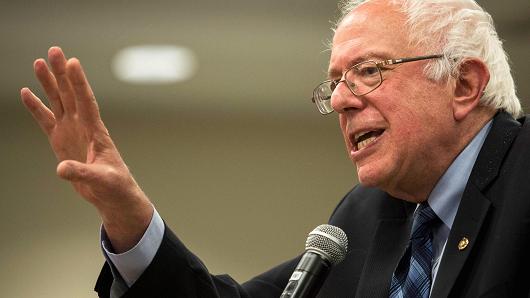
U.S. Sen. Bernie Sanders made a pledge last night at the CNN-sponsored Democratic Presidential Candidate Town Hall Forum.

The self-proclaimed “democratic socialist” said he will “raise taxes” to pay for his universal health insurance plan if he’s elected president of the United States.

Interesting, you know?

Here’s why.

The last national politician I can remember who made such a promise was the 1984 Democratic nominee for president, former Vice President Walter F. Mondale.

He stood before the party convention, accepted his party’s nomination and then said that President Ronald Reagan (against whom he ran that year) also will raise taxes. “He won’t tell you; I just did.”

I recall liking Mondale’s honesty at the time. It struck me that it was a bold statement to make.

But how well did it play with American voters that fall?

Not well . . . at all.

The president pulled in 59 percent of the popular vote; he beat Mondale by about 17 million ballots; President Reagan won 525 electoral votes; what’s more, he came within about 2,000 votes of winning all 50 states, losing only Mondale’s home state of Minnesota.

Promising to raise taxes never is a good idea, Sen. Sanders.


‘2 Corinthians’ gaffe lingers

Bible2

The gaffe that Donald J. Trump committed at Lynchburg University just won’t go away.

Sen. Ted Cruz, Trump’s chief rival for the Republican presidential nomination, took a poke at Trump over the verbal blunder.

The Hill reports:

“Presidential hopeful Ted Cruz joked Monday about rival Donald Trump’s flub of a Bible verse.
“While on the campaign trail in Iowa, Cruz began referencing the biblical verse 2 Chronicles 7:14 (‘Second Chronicles’) before he was interrupted by someone in the crowd at the town hall who joked he meant ‘Two Chronicles.’
“Cruz was making light of Trump’s gaffe during a speech at Liberty University last week where he referenced ‘2 Corinthians’ instead of ‘Second Corinthians,’ as it’s commonly known.
“Trump later blamed evangelical activist Tony Perkins for the gaffe, saying ‘he actually wrote out the 2’ for his speech and adding that people in other places of the world ‘say 2.'”
And to think that President Barack Obama’s critics keep criticizing him for his expert use of the TelePrompter.

Speaking of endorsements . . .

1453708367667

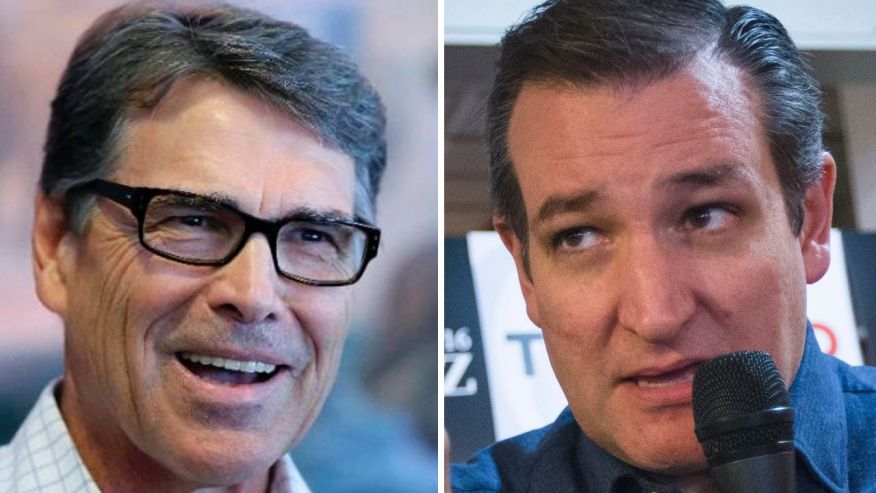
Rick Perry has weighed in.

The former Texas governor believes his fellow Texan, U.S. Sen. Ted Cruz, is the most “consistent conservative” running for president and, by golly, he wins the endorsement of the Pride of Paint Creek.

Is it a surprise?

Not even close.

You’ll recall, perhaps, when Perry — when he was still seeking the 2016 GOP presidential nomination — called Donald J. Trump a “cancer” on the conservative movement.

Not long after that, Perry dropped out, saying he was “suspending” his campaign. Trump laughed it off, as he does any time someone speaks ill of him.

I have no clue what kind of impact the Perry endorsement will have on this race. Indeed, whenever some former big hitter weighs in on this campaign, I keep hearing snarky comments from others — mainly on the right and far right — dismissing them as “has beens” or “losers.” Come to think of it, that’s what Trump calls them, too.

But ponder this for a moment.

Quite soon, the Republican presidential primary caravan will find its way to Texas, which has its primary on March 1.

Texas is where Perry’s views matter the most.

He was elected to several political offices: state legislator, agriculture commissioner, lieutenant governor and governor. He never lost an election. Why, he even was elected to the Legislature as a Democrat, for crying out loud.

It might not matter much in places such as New Hampshire or Iowa what Rick Perry thinks of the GOP contest.

It matters here, though. And the last time I checked, Texas still sends a lot of delegates to each party’s respective political convention.


Newspaper endorsements: do they matter?

newspapers

Near the end of my career in daily print journalism, I began to question the value of newspaper “endorsements.”

We didn’t really even like to refer to them out loud as endorsements. We preferred the term “recommendations.” We’d recommend a candidate of our choice while understanding that voters are independent thinkers — or so they say — and wouldn’t take whatever the newspaper said as gospel.

These days I’m beginning to wonder about voters’ independence. The plethora of social media and big-money advertising are having the kind of influence on voters’ thought process that, well, newspaper endorsements might have had a half-century or longer ago.

Former Texas Gov. Rick Perry perhaps demonstrated better than anyone in recent times how newspaper editorial endorsements’ value has diminished.

When he ran for re-election in 2010, Perry announced he wouldn’t even talk to newspaper editorial boards. He’d go straight to the voters. He didn’t need no stinkin’ newspaper editors’ approval.

How did Gov. Perry do at the ballot box that year? He thumped Republican primary opponent Kay Bailey Hutchison — no slouch as a Texas politician herself — and then clobbered Democratic nominee Bill White that fall. White, by the way, garnered virtually every newspaper endorsement there was to get in Texas — including from the Amarillo Globe-News, where I worked as editorial page editor; it did him virtually no good at all.

So now, in this presidential election cycle, newspapers are weighing in. The “influential” Des Moines Register endorsed Republican Marco Rubio and Democrat Hillary Clinton in advance of the Iowa caucuses. Over the weekend, the Boston Globe endorsed Clinton as the neighboring New Hampshire primary approaches.

There will be others coming along as the campaigns proceed along the long and winding road toward the parties’ conventions. Newspaper editors and publishers will extend the invitation for the candidates to make their cases. Some of them will accept; others will follow the Perry model.

In the end, however, none of these endorsements — or recommendations — likely will be decisive.

Voters are getting their heads filled by ideologues on both sides of the divide. Their minds are made up.

What’s more, during the more than three decades I practiced my craft in daily journalism, I never heard first-hand any voter say they changed their mind on an election based on a newspaper endorsement.

Maybe they’re out there.

Back to my initial question: Do these endorsements really matter?


What about the rest of the GOP field?

rs-trump-cruz

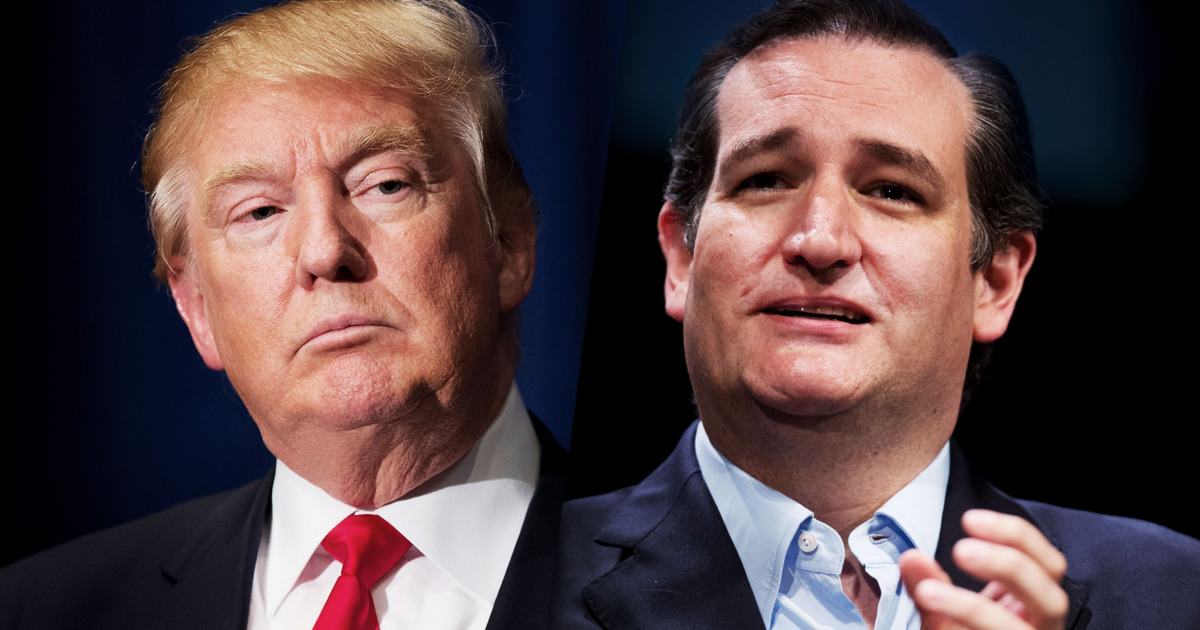
Donald Trump and Ted Cruz — to borrow a phrase — are “sucking all the air” out of the Republican Party primary campaign.

The two of them arguably are the most divisive, polarizing figures in the GOP. But here we are, watching them slug it out at the top of the primary field. What about the rest of the still-large gaggle of candidates? Huck, Carly, Kasich, Marco, Jeb!, Rand Paul, Santorum, Christie . . . and let’s not forget Jim Gilmore?

Some of those also-rans are actually pretty interesting and experienced individuals. They have executive experience, legislative experience, tangible accomplishments.

They’re being left choking in the dust being kicked up by Trump and Cruz.

I won’t go into why Trump troubles me so much. For that matter, Cruz’s record in the U.S. Senate — such as it is — amounts to next to nothing; he’s been there just three years and began preening for the presidency almost from the moment he arrived.

It is becoming clearer by the day that the GOP race is turning into a two-man contest.

I can hardly wait for the two of them — Trump and Cruz — to begin truly detesting each other.

Is there a major surprise in the offing once Iowans finish their caucus?

Well, for those of us who’ve become addicted to the unpredictability of this campaign, we only can hope.


When presidents cherished using their power . . .

theodore-teddy-roosevelt-1a1

Theodore Roosevelt was not a timid man.

The 26th president of the United States took office as the youngest man ever to ascend to the White House; he was thrust into the office in 1901 when President William McKinley was shot to death.

How did the brash man treat his office? Like he owned it.

I’m reading a book, “The American President,” by historian William E. Leuchtenburg. It examines every presidency of the 20th century — from TR to William Jefferson Clinton.

TR had written a letter to the British historian George Otto Trevelyan near the end of his time in office, according to Leuchtenburg. He wrote:

“While President, I have been president, emphatically; I have used every ounce of power there was in the office and I have not cared a rap for the criticisms of those who spoke of my ‘usurpation of power.’ . . . The efficiency of this government depends upon possessing a strong central executive and wherever I could establish a precedent for strength in the executive, I did.”

Leuchtenburg writes also that Roosevelt boasted after leaving office in 1909 about how things “were done by me without the assistance of Congress.”

Holy smokes!

Try to imagine the current president — or any recent president, for that matter — bragging about going over the heads of another “co-equal branch of government.”

The 44th president, Barack Obama, has issued some executive orders that have sent his congressional critics into apoplectic shock.

Theodore Roosevelt has, over time, gained stature as one of this country’s greatest leaders. His face is on Mount Rushmore, for crying out loud, right along with Abe Lincoln, Thomas Jefferson and the original George W. — Washington.

How did he get there?

By using the power of his office.


Cruz pays for lack of pandering

corn%20ethanol%20us%20policy

Iowa Gov. Terry Branstad has torn Sen. Ted Cruz a new one.

He calls Cruz an unfit Republican presidential nominee and is urging Iowa caucus participants to ensure he doesn’t win that state’s candidate selection process.

I’m going to say something good about Cruz, however, even though I do not believe he should be the next president of the United States.

Branstad’s dislike of Cruz well might have something to do with the Cruz’s refusal to pander to Iowans’ specific needs and desires — to which I say “bravo!” to the senator.

They grow a lot of corn in the Hawkeye State. They use much of that corn to produce ethanol fuel. Cruz has long opposed subsidizing ethanol. Branstad doesn’t like Cruz’s opposition to it. Thus, he says Cruz shouldn’t be the choice of Iowans.

Enlightened self-interest? That’s what they call it. Conservatives who used to love Cruz now think less of him. It’s all about the corn.

Cruz, though, has shied away from pandering to that particular constituency.

Cruz is taking his share of hits from other Republicans, not to mention from Democrats. Lord knows I’ve lobbed my share of stones at the Cruz Missile from this forum.

The ethanol argument, though, is an interesting back story in this Iowa Republican caucus kerfuffle.

The corn used to produce the fuel requires a lot of water. I repeat . . . a lot of water. There used to be a huge demand for it here, on the Texas Tundra. Then it dawned on many folks that the water it consumes is more valuable to the region than the fuel. The fever for ethanol production has cooled considerably in the Panhandle.

Not so in Iowa.

Cruz isn’t going to jump onto the ethanol train. He does favor more exploration for fossil fuel, which isn’t surprising, either, given that he represents Texas in the U.S. Senate. And yep, we produce a lot of oil and natural gas here, correct?

OK, so perhaps Sen. Cruz isn’t being totally and completely high-minded in his opposition to ethanol subsidies.

Still, a lot of politicians have journeyed to Iowa to sing the praises of ethanol production just because their audience wants to hear it from them.


Now Trump is insulting his own supporters

Donald-Trump_3372655b

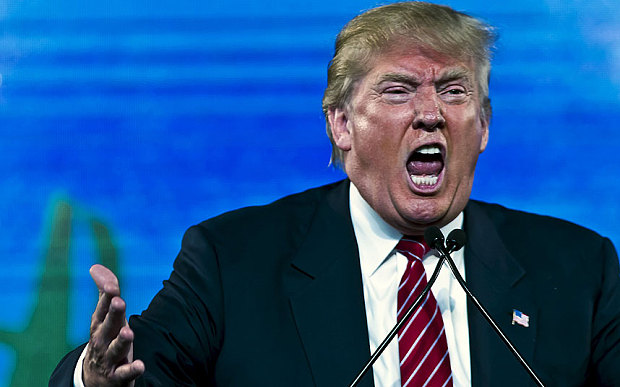
Donald J. Trump’s insult machine has pelted victims far and wide.

Now he has taken aim at the very people who support him.

Trump said the following — at a Christian school in Iowa, no less: It was that he could “shoot someone” while standing the middle of Fifth Avenue (I presume the one in New York City) and not lose the support of his followers.

Take a moment to digest that.

Those who support him, Trump said in effect, are so blindly loyal that their candidate could commit a felony and they’d still vote for him for president of the United States.

Am I missing something?

Some of my social media friends and acquaintances appear to be avid Trumpsters. They chide me for making anti-Trump statements on my blog or on Twitter. I don’t mind being needled for my opposition to his presidential candidacy.

It’s fair to ask, though: Are they really that blindly loyal to someone who would presume such a thing about them?

Constables: Who needs ’em?

Constable_Flag

Chris Johnson’s campaign signs are popping up all over southern Amarillo.

He is spending a good bit of dough seeking re-election to one of the more curious public offices I’ve ever seen.

He won’t get my vote. It’s not that I have anything against Johnson. I don’t know him. I’ve never had any dealings with him.

He’s a constable in Randall County, Texas.

Constable. What is that? He’s a politician/cop whose duties include (a) serving papers, such as subpoenas and summonses and (b) providing security for justice of the peace courts.

Let me stipulate a couple of things here.

One is that I’ve had a longstanding antipathy toward the very idea of electing constables. Why? We don’t need them. My wish would be for the Texas Legislature to propose a state constitutional amendment to do away with the office. The duties done by the constable can be done by sheriff’s deputies or municipal police officers.

But no-o-o-o-o! We’ve got to have another elected official assigned to do these things.

The other thing is that during my nearly 32 years living in Texas, I’ve voted for one man as a constable. Jeff Lester used to hold the office that Johnson now occupies. Lester, who retired recently from the Amarillo Police Department, ran for the office with one pledge: to get rid of it.

He held the title of constable, but didn’t do anything. He didn’t get paid. He referred all the duties to the sheriff’s department. He wanted to keep the office inactive long enough to enable the Randall County Commissioners Court to abolish the office, which state law empowers it to do after a period of time had lapsed.

Then came reapportionment after the 2010 census had been completed. The county had to redraw political boundaries based on shifts in population as required by state law. County commissioners then reapportioned Lester out of the precinct he had served as constable, meaning he couldn’t run for re-election.

That’s when Johnson ran — and won.

I must reiterate that I have nothing personal against Constable Johnson. It’s the office he holds that bugs the bejeebers out of me.

I get that some counties have a need for constables. The experience in Randall and Potter counties, though, has been spotty at best. We’ve elected constables who haven’t done anything while drawing their salaries. One Potter County constable — who’s since resigned — would suit up in all the gear and the requisite hardware just to serve legal papers.

I’m digging deep trying to remember a time I’ve ever heard of a constable in this part of the state making an arrest, or being involved in a high-profile criminal activity. Have I been asleep all these years?

So, I guess that Constable Johnson will get re-elected this year. Good for him. I’ll kick in my piddling portion to help pay his salary, although I won’t like doing it.

In this era when people say they’re sick of government inefficiency, I keep wondering: Where is the anger over paying for a superfluous law enforcement entity that — from my vantage point — need not exist?

We have plenty of county and municipal law enforcement personnel who are quite capable of doing the constables’ job.
 

Palin invites criticism

47791261.cached

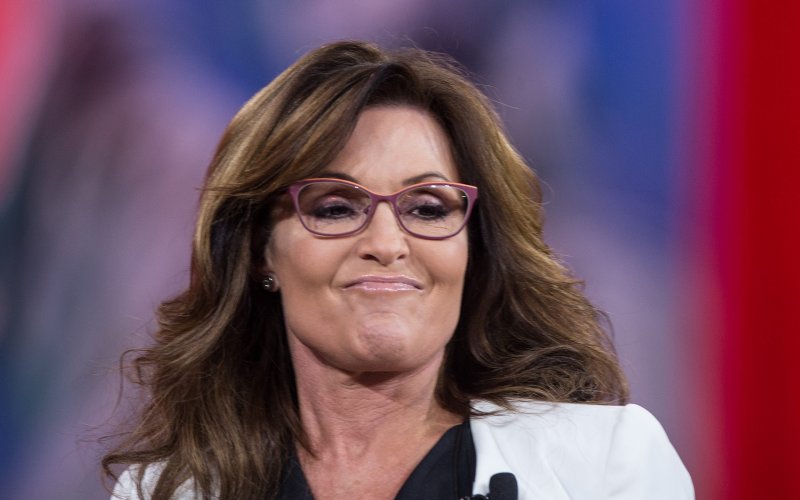
A former colleague of mine took me to task recently for some critical remarks I made about Sarah Palin, who endorsed Donald Trump for the Republican presidential nomination on the same day her son, Track, was arrested for domestic abuse.

I won’t respond to what he said, but I want to post these remarks from Kevin Drum, writing for Mother Jones magazine’s website:

“I know I said that last night’s Palin-palooza would ‘hold me for a year,’ but I guess I was wrong. Palin’s son Track was arrested Monday on domestic violence charges, and today Palin addressed this:

“‘My own family, my son, a combat vet having served in the Stryker brigade … my son like so many others, they come back a bit different, they come back hardened, they come back wondering if there is that respect … and that starts right at the top.’

“I’m not happy with liberals who use Track’s problems as a way of snickering at Sarah. Yes, when you use your kids as campaign props, you open yourself up to some of this. But parents do their best, and kids sometimes have problems. Whatever Track’s problems are, he and his family should be allowed to deal with them in their own way.

“That said, if you decide to use your son’s problems as a political cudgel, you can hardly expect to others to hold back forever. Palin should be ashamed of herself.'”

Indeed, this is the steep price any politician pays by dragging private, personal family grief into the public arena.